
Most homeowners think about their fireplace twice a year — once when they’re excited to light the first fire of the season, and once when something goes wrong. That second moment is almost always more expensive than it needed to be.
A proper fireplace inspection doesn’t take long, doesn’t cost a fortune, and can catch problems that genuinely put your household at risk. Whether you’ve had a fireplace for years or you just moved into a home that has one, understanding what an inspection actually involves makes you a smarter homeowner. This guide covers everything you need to know — from what inspectors look for, to what it costs, to how to avoid hiring the wrong person for the job.
The Short Answer
A fireplace inspection is a professional evaluation of your fireplace and chimney system to assess structural integrity, detect creosote buildup, and identify safety hazards. It prevents chimney fires, carbon monoxide risks, and costly repairs from going undetected.
Dwellify Home
At Dwellify Home, we help homeowners make practical, well-informed decisions about their living spaces — from everyday maintenance to thoughtful improvements. Our goal is to take complex home topics and present them in a way that’s clear, honest, and genuinely useful, so you can feel confident in the choices you make for your home.
What Is a Fireplace Inspection — and Why Does It Matter?
A fireplace inspection is a structured, professional evaluation of your fireplace and chimney system to verify that it’s structurally sound, free of dangerous buildup, and safe to operate. Governed by the NFPA 211 standard, inspections are categorized into three levels depending on the depth of examination required. The goal isn’t just cleanliness — it’s safety, performance, and catching problems before they escalate.
It’s Not Just About Soot — Here’s What Inspectors Are Really Looking For
A lot of people assume a chimney inspection is basically a cleaning appointment. It’s not. Cleaning removes material; inspection evaluates condition.
When a certified inspector goes through your system, they’re checking for things that aren’t visible to the naked eye from across the room — creosote buildup at dangerous levels, cracks in the flue liner, structural shifts in the masonry, blocked venting paths, and moisture damage that can quietly destroy a chimney from the inside over years.
Creosote is worth understanding on its own. It’s a byproduct of burning wood, and it accumulates in layers on the interior walls of the flue. At a certain thickness, it becomes highly flammable. Chimney fires often happen quietly — no dramatic explosion, just a hot fire burning inside the flue that most homeowners never realize occurred. The damage it leaves behind, though, is significant.
Carbon monoxide risk is the other serious concern. A cracked or blocked flue can send CO back into your living space, and because CO is odorless and colorless, it doesn’t give you a warning before it becomes dangerous.
What Happens If You Skip the Annual Inspection?
Skipping an annual chimney inspection doesn’t just mean deferred maintenance — it carries specific, documented risks. Chimney fires are the most immediate danger, caused primarily by unchecked creosote buildup. Beyond that, undetected cracks in the flue liner can allow heat and gases to escape into the structural framing of your home.
From a practical standpoint, many homeowner’s insurance policies require documented inspections. If a fire occurs and you can’t prove your chimney was maintained, your claim can be denied. And if you’re selling your home, a failed chimney inspection during the buyer’s due diligence can delay or collapse the sale entirely.
Quick Comparison Table — Fireplace Inspection Levels at a Glance
| Level | Best For | What’s Included | Typical Cost |
| Level 1 | Annual maintenance | Visual check of all accessible areas | $100 – $250 |
| Level 2 | Home purchase, storm damage, fuel change | Level 1 + camera scan of flue, attic/crawlspace check | $250 – $600 |
| Level 3 | Suspected structural failure | Level 2 + invasive access, masonry removal | $900 – $5,000+ |
Key Benefits of Getting a Fireplace Inspection
- Catches creosote buildup before it becomes a chimney fire risk
- Identifies flue liner cracks that allow carbon monoxide into living spaces
- Required for most home sales and real estate transactions
- Helps maintain homeowner’s insurance compliance
- Spots animal intrusion and blockages that restrict safe venting
- Extends the usable life of your fireplace and chimney system
The 3 Levels of Fireplace Inspection — Which One Do You Need?
Fireplace inspections are divided into three levels defined by NFPA 211. Level 1 is a routine visual check for chimneys in regular use with no recent changes. Level 2 includes video scanning of the flue and is required after major events or for real estate transactions. Level 3 is invasive and reserved for serious structural concerns.
Level 1 — The Standard Annual Check-Up
Level 1 is what most homeowners get on an annual basis, and it’s appropriate when your fireplace has been working normally, nothing significant has changed, and you haven’t had any unusual incidents.
The inspector examines all readily accessible areas — the firebox, damper, smoke chamber, visible portions of the flue, exterior masonry, chimney cap, and crown. No special tools are required. The process typically takes 30 to 60 minutes and produces a written summary of findings.
Level 2 — When You’re Buying a Home or After a Major Event
Level 2 is the one that matters most in high-stakes situations. If you’re purchasing a home with a fireplace, this is not optional — it’s essential. A general home inspector will look at the fireplace, but they’re not trained or equipped to give you a reliable picture of the chimney’s interior condition.
Level 2 includes everything in Level 1, plus a camera scan of the flue lining and an inspection of adjacent areas like the attic, crawlspace, and basement where relevant. It’s also required after a chimney fire, a significant storm, or if you’ve switched fuel types or made changes to the system.
Cost for a Level 2 inspection typically runs $250 to $600, depending on chimney size and location, and takes roughly one to two hours.
Level 3 — The Invasive Inspection (Rare but Critical)
Level 3 inspections are uncommon, and for good reason — they involve physically removing portions of the chimney structure, interior walls, or masonry to access hidden areas. This level is only warranted when a Level 2 inspection has found evidence of serious damage that can’t be evaluated without demolition.
Costs at this level can range from $900 to several thousand dollars, depending on what needs to be opened up. If your inspector is recommending Level 3 without a clear reason rooted in Level 2 findings, ask for a detailed explanation before proceeding.
Not Sure Which Level You Need? Use This Simple Guide
- Your chimney is in regular use with no known issues → Level 1
- You’re buying or selling a home with a fireplace → Level 2
- You’ve recently had a chimney fire, storm damage, or a fuel type change → Level 2
- A previous inspection revealed structural damage that couldn’t be fully accessed → Level 3
What Does a Fireplace Inspector Actually Check?
During a standard inspection, a certified technician evaluates the fireplace and chimney system from the ground up — exterior masonry, chimney crown, flashing, chimney cap, firebox, damper, smoke chamber, and flue liner. For gas fireplaces, the gas supply line, burner, and venting system are also assessed. The scope varies by inspection level.
Outside First — Chimney Crown, Cap, Flashing, and Masonry
The inspection starts outside. The chimney crown is the concrete or mortar slab that seals the top of the chimney structure — it takes a lot of weather abuse, and small cracks are surprisingly common. Left unaddressed, those cracks allow water in, which expands during freeze-thaw cycles and turns a minor crack into a structural problem.
The chimney cap sits over the flue opening and keeps rain, debris, and animals out. Missing or damaged caps are one of the most frequently overlooked issues. The flashing — the metal sealing where the chimney meets the roof — is another common source of water intrusion. Inspectors check all of this for deterioration, rust, gaps, and movement.
Inside the Firebox — Bricks, Mortar, Damper, and Smoke Chamber
Inside, the inspector looks closely at the firebox walls and floor for cracked bricks, deteriorating mortar, and spalling refractory panels. Factory-built fireplaces use ceramic refractory panels instead of traditional brick, and those panels crack over time from repeated heating and cooling. Many homeowners don’t know this is happening until an inspection flags it.
The damper — the plate that controls airflow between the firebox and the flue — is tested for smooth operation and a proper seal. A damper that doesn’t fully close wastes energy; one that doesn’t fully open creates draft problems and smoke backup. The smoke chamber above the damper is checked for any rough, unparked surfaces or cracks that could affect draft efficiency.
The Flue Liner — Why the Camera Goes Where Eyes Can’t
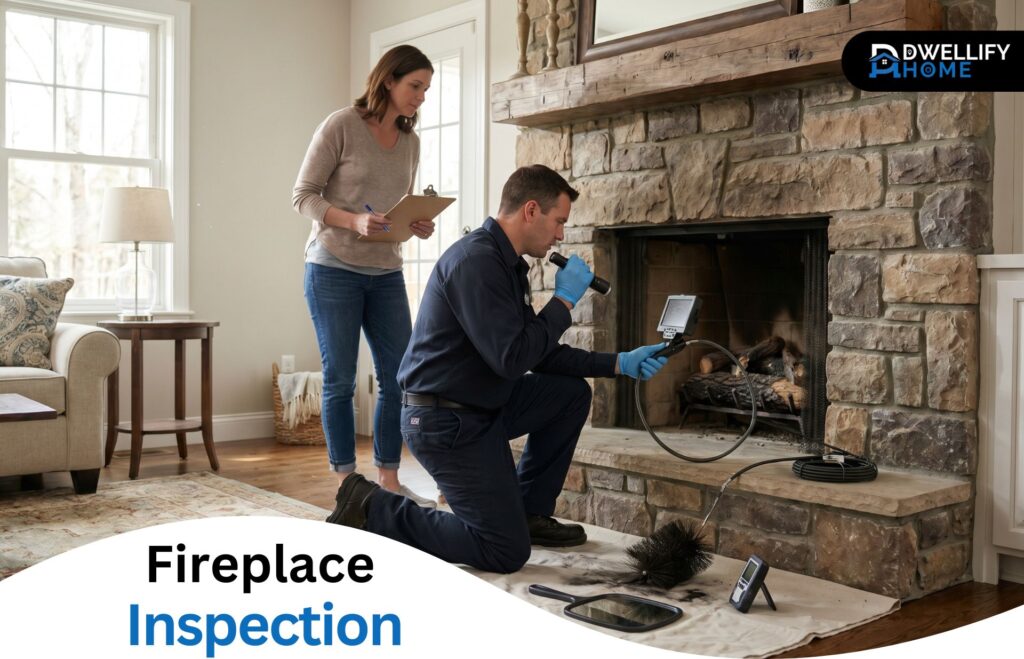
The flue liner is one of the most important components of your chimney and one of the hardest to evaluate without the right tools. During a Level 2 chimney inspection, a camera is lowered through the flue to capture footage of the interior lining.
What inspectors are looking for: cracks in clay tile liners, gaps between sections, deterioration that allows combustion gases to escape into surrounding materials, and evidence of prior chimney fires (which often shows as cracked or distorted tiles). A damaged flue liner isn’t a cosmetic issue — it’s a safety issue that directly affects your risk of fire and carbon monoxide exposure.
Gas Fireplaces — What the Inspection Adds
Gas fireplaces require a different checklist than wood-burning units. The inspection includes checking the gas supply line and connections for leaks or corrosion, examining the burner for proper ignition and flame pattern, testing the pilot light, and reviewing the venting system for blockages or improper installation.
Carbon monoxide risk is just as real with gas appliances as with wood-burning ones, and in some ways more insidious — there’s no visible creosote to signal a problem. A gas fireplace with degraded components or blocked venting can produce CO without any obvious symptoms until someone in the home is affected.
The One Thing Most Homeowners Overlook — Animal and Debris Checks
Animal intrusion is more common than most people expect. Birds, squirrels, and raccoons regularly take up residence in chimney flues, especially in early spring before homeowners start thinking about inspections. A nest sitting in your flue doesn’t just create a blockage — it’s dry material positioned directly above a future fire.
Inspectors check for nesting activity, animal droppings, scratch marks, and any signs that the chimney cap or chase cover has been compromised enough to allow entry. This is one of those things that’s obvious once you know to look for it but easy to miss entirely without a professional going through the system.
How to Prepare for Your Fireplace Inspection (Simple Checklist)
A little preparation makes the inspection go faster and gives the inspector better access. Here’s what to do before your appointment:
- Don’t burn a fire the night before. The inspector needs to access the firebox, and a recently used fireplace is hot, full of fresh ash, and harder to evaluate safely.
- Clear the area around the fireplace. Move furniture, rugs, and decorative items at least a few feet back from the hearth.
- Pull out any fireplace tools, screens, or decorations stored inside or immediately in front of the firebox.
- Locate your last inspection report if you have one. This helps the inspector know what was flagged previously and whether anything has changed.
- Note any symptoms you’ve observed — draft problems, smoke backing into the room, unusual smells when the fireplace is lit or idle. These details guide the inspection.
Before the inspector starts, it’s worth asking: Are you CSIA or NFI certified? Will I receive a written report today? And if you find something, do you provide a repair estimate separately or as part of this visit?
How Much Does a Fireplace Inspection Cost in 2026?
A fireplace inspection typically costs between $100 and $500 for most homeowners, with price varying primarily by inspection level, chimney complexity, and geographic location. Level 3 inspections involving structural access can run significantly higher.
Cost Breakdown by Inspection Level
- Level 1: $100 to $250. This covers a visual check of all accessible areas and a written report. Many companies include a basic cleaning as part of this fee.
- Level 2: $250 to $600. Includes video camera scanning of the flue, checks of adjacent spaces, and a more detailed report. If you have multiple flues, expect the higher end of that range.
- Level 3: $900 to $5,000+. Costs vary widely because the scope depends entirely on what needs to be opened up and accessed.
What Factors Push the Price Up or Down?
Chimney height matters — taller chimneys take longer and may require specialized ladder setups. Multiple flues add to both time and cost. Urban areas with higher labor costs (like the DC metro area, where companies like Bethesda Chimney and DC chimney sweep services operate) tend to run higher than rural markets. Emergency or same-day scheduling almost always carries a premium.
Inspector certification also affects price. A CSIA-certified technician or NFI-certified inspector typically charges more than a general home inspector doing a cursory fireplace review — but the report they produce is substantially more reliable and useful.
Is a “Free Fireplace Inspection” Actually Worth It?
Some companies advertise free inspections as a lead-generation tool, and that’s not inherently dishonest — it’s a common business model. The risk is that a free inspection from a company that also sells repairs creates an obvious incentive to find problems.
A genuinely useful free inspection does happen, particularly when a company includes it as part of a paid cleaning appointment. The key question is: will I receive a written report? If the answer is no, what you’re getting is a sales visit, not a professional evaluation.
Does Homeowner’s Insurance Cover Fireplace Inspections?
Routine annual inspections are generally not covered by homeowner’s insurance. They’re considered normal maintenance, which policies typically exclude. However, if an inspection is required following a covered event — a chimney fire, storm damage, or similar incident — the cost may be reimbursable as part of the damage claim. Check your specific policy and ask your insurer before assuming coverage either way.
Wood-Burning vs. Gas Fireplace Inspection — Are They the Same?
No — wood-burning and gas fireplace inspections share a common framework but focus on different hazards. Wood-burning inspections prioritize creosote assessment and structural integrity of the flue. Gas inspections focus on gas supply connections, ignition systems, burner performance, and venting safety. Both require annual attention.
Key Differences Between Wood and Gas Inspections
For wood-burning fireplaces, creosote buildup is the primary safety concern. The inspector measures buildup depth and recommends cleaning based on what’s found. Clay tile liner integrity and the condition of the smoke chamber and firebox bricks are closely evaluated.
For gas fireplaces, creosote isn’t the issue — the flue doesn’t accumulate it the same way. Instead, inspectors focus on the integrity of the gas line and connections, the functionality of the ignition and thermocouple, burner performance, and whether the venting system is clear, properly connected, and free of corrosion or blockage.
Do Gas Fireplaces Really Need Annual Inspections?
Yes, and this is one of the most commonly misunderstood points in fireplace maintenance. Because gas fireplaces don’t produce visible creosote, many homeowners assume they’re low-maintenance. They’re not. Gas fireplaces can develop blocked vents from bird nests or debris, degraded burner components, thermocouple failures, and slow gas leaks that are impossible to detect without proper equipment.
The same principle applies to pellet stoves and wood inserts — both require their own specific inspection protocols and shouldn’t be lumped in with a standard wood-burning fireplace evaluation when you’re comparing service quotes.
Fireplace Inspection vs. Chimney Sweep — What’s the Difference?
An inspection evaluates the condition and safety of your chimney system. A chimney sweep cleans it. These are two distinct services, though they’re often performed during the same visit. An inspection without cleaning doesn’t remove buildup; a cleaning without inspection doesn’t assess structural safety.
In practice, most certified chimney sweeps perform a basic Level 1 inspection as part of a cleaning appointment. But if you specifically need a Level 2 inspection — for a home purchase, after a storm, or following a chimney fire — that’s a separate, more detailed service that goes well beyond what’s included in a routine sweep.
Booking both together is usually the most cost-effective approach for annual maintenance. The chimney sweep clears out material that might otherwise obscure the inspector’s view, and the inspection confirms the system is safe to use going forward.
When Should You Schedule a Fireplace Inspection?
The National Fire Protection Association recommends at minimum one chimney inspection per year, regardless of how often you use your fireplace. Annual inspections apply to all fuel types — wood, gas, and pellet.
The Best Time of Year to Book (And Why Spring Wins)
Spring is the best time to schedule, and there’s a practical reason for it: chimney professionals are significantly less busy in the off-season. Book in March or April and you’ll get your pick of appointment times, often at a lower price than you’d find in October when everyone is scrambling to get their fireplace ready before the first cold snap.
More importantly, scheduling in spring gives you the full summer and early fall to address any repairs that come up. If an inspector finds that your flue liner needs relining or your chimney crown needs rebuilding, those repairs take time to schedule and complete. Waiting until fall leaves you with no buffer.
Signs You Need an Inspection Right Now — Don’t Wait for the Annual Date
Some situations call for an inspection regardless of when you last had one:
- Smoke is backing into the room when you light a fire
- You notice a burning smell when the fireplace hasn’t been used
- You’ve moved into a home and don’t know the chimney’s inspection history
- There’s been a significant storm with high winds or hail recently
- You heard unusual sounds during a fire — popping, rumbling, or loud crackling
- Visible cracks have appeared in the exterior masonry or chimney crown
- Your gas fireplace is producing yellow or uneven flames
Any of these is reason enough to call a professional before your next use.
How to Find and Choose a Qualified Fireplace Inspector
The right inspector is someone with verifiable credentials, a clear process, and a commitment to giving you an honest written report — not someone whose business model depends on finding problems to fix.
CSIA and NFI Certification — What These Actually Mean
The Chimney Safety Institute of America (CSIA) and the National Fireplace Institute (NFI) are the two primary credentialing bodies in this industry. CSIA certification means the technician has passed a standardized exam covering chimney structure, safety standards, and inspection procedures, and is required to renew their certification regularly with continuing education.
NFI certification is specific to fireplace and hearth product installation and service — particularly relevant for gas systems. An NFI Gas Specialist has demonstrated knowledge of gas appliances, venting requirements, and safety protocols beyond what a general chimney sweep is trained for.
A general home inspector can flag obvious fireplace issues during a home sale inspection, but they’re not equipped to assess the flue lining or provide the kind of detailed report a CSIA-certified sweep can. For anything involving real estate transactions, structural concerns, or gas systems, you want a specialist.
Questions to Ask Before You Hire
- Are you CSIA or NFI certified? (Ask for the certification number — it’s verifiable)
- Will I receive a written inspection report with photos?
- Do you charge for the inspection separately from any repairs you recommend?
- How long have you been inspecting chimneys in this area?
- If you find something, who do you recommend for repairs — and do you have a financial relationship with them?
That last question matters more than most people realize. Some companies function as both inspector and repair contractor, which isn’t a problem by itself, but you should know the arrangement upfront.
Red Flags That Signal an Unqualified Inspector
Be cautious of any inspector who gives you a verbal summary and calls it done — a legitimate inspection produces a written report. Be equally wary of someone who quotes an unusually low price and then pushes aggressively for immediate repairs during the visit.
Other warning signs: no verifiable certification, no clear explanation of what the inspection includes, pressure to sign a repair contract before the report is even written, and reluctance to answer straightforward questions about their process.
What to Do After the Inspection — Understanding Your Report
A chimney inspection report isn’t a pass/fail grade. It’s a documented record of your chimney’s condition at the time of inspection, and knowing how to read it helps you make smart decisions about what to do next.
How to Read Your Fireplace Inspection Report
A standard report from a certified inspector should include a description of each component examined, the condition found, photographic documentation of any issues, and a recommendation for each finding — whether that’s “no action needed,” “monitor over time,” or “repair before next use.”
Pay attention to how findings are classified. Responsible inspectors distinguish between safety-critical issues and maintenance items that are worth addressing eventually. Not everything flagged in a report is equally urgent.
Priority Repairs vs. Routine Maintenance — What to Act On First
Safety-critical findings need to be addressed before you use the fireplace again. These include: flue liner damage that allows gases or heat to escape into the structure, active carbon monoxide risk from a blocked or cracked venting path, and firebox damage that creates a direct fire hazard.
Routine maintenance items — repointing deteriorated mortar joints, replacing a worn chimney cap, applying a waterproofing sealant — can be planned over the next season if they’re not creating an immediate risk.
If you’re uncertain whether a finding is urgent, ask the inspector directly: “Is it safe to use the fireplace before this is repaired?” That’s a simple question with a clear answer, and any qualified inspector will give you one.
What If Your Fireplace Fails the Inspection?
“Failed” is informal language — reports don’t technically pass or fail a fireplace the way a car passes an emissions test. What the report tells you is whether the system is safe to use as-is or whether specific issues need to be resolved first.
If the inspector indicates the fireplace shouldn’t be used until repairs are made, take that recommendation seriously. The good news is that most issues found during inspections are fixable, and knowing about them early almost always means a smaller repair bill than discovering them after damage has occurred.
Frequently Asked Questions About Fireplace Inspection
How long does a fireplace inspection take?
A Level 1 inspection typically takes 30 to 60 minutes. A Level 2 inspection, which includes camera scanning of the flue and checks of adjacent spaces, usually runs one to two hours. Level 3 inspections involving structural access can take significantly longer depending on what’s being examined.
Can I use my fireplace before getting it inspected?
If you know the fireplace was recently inspected and nothing has changed since, using it is generally reasonable. But if you’ve moved into a new home, haven’t used it in more than a year, or noticed any changes in performance or appearance, get an inspection first. The risk of using an uninspected system isn’t worth it.
Do brand-new fireplaces need an inspection?
Yes — and sooner than most people expect. A newly installed fireplace should be inspected partway through its first heating season to confirm the installation is holding up correctly and that all components are performing as they should. This gives you time to address any settling or installation issues before they become serious.
What is creosote, and how do I know if it’s a problem?
Creosote is a byproduct of burning wood — a dark, sticky substance that accumulates on the interior walls of the flue over time. It exists in three stages, with Stage 3 (hardened, tar-like buildup) being the most dangerous and difficult to remove. A certified chimney sweep can assess the stage of buildup during an inspection. Visible dark deposits around your firebox or a strong smoky odor when the fireplace isn’t in use can be early indicators.
Does a general home inspector check the fireplace during a home purchase?
A general home inspector will perform a visual review of the fireplace and chimney exterior, but they’re not equipped to assess the flue lining or interior chimney condition. For a property with a fireplace, a Level 2 chimney inspection by a CSIA-certified professional is a separate, necessary step — not a substitute for the general home inspection.
What is the difference between a chimney inspection and a fireplace inspection?
The terms are often used interchangeably, and in practice the two services overlap significantly. A chimney inspection typically focuses on the flue, liner, exterior masonry, and venting system. A fireplace inspection covers the interior components — firebox, damper, smoke chamber, and hearth. A complete evaluation includes both, and most certified inspectors assess the entire system during a single visit.
How often should a fireplace be inspected if I rarely use it?
The NFPA recommends annual inspections even for fireplaces that see minimal use. Chimneys can deteriorate from moisture, wildlife activity, and settling regardless of whether they’re being used. A fireplace that sits unused for years can develop blockages and structural issues that aren’t obvious until you actually light it — by which point the risk is already present.
Conclusion
Getting a fireplace inspection done isn’t complicated, and it doesn’t have to be expensive. A Level 1 inspection once a year, booked in the off-season with a CSIA-certified professional, covers the vast majority of homeowners in the vast majority of situations. The cost of the inspection is a fraction of what chimney repairs cost when problems are caught late — and a small fraction of what a chimney fire costs in every possible sense.
Your fireplace is one of the most used features in your home during the cold months. Treating it with the same basic maintenance mindset you’d apply to any other major home system is simply good ownership. Schedule the inspection, read the report, and act on what matters. That’s the whole job.
Disclaimer
The content on Dwellify Home is provided for general informational purposes only. It is not a substitute for professional advice from a certified chimney inspector, contractor, or home safety specialist. Costs, recommendations, and standards may vary based on your location, property type, and individual circumstances. Always consult a qualified professional before making decisions about your fireplace or chimney system.