
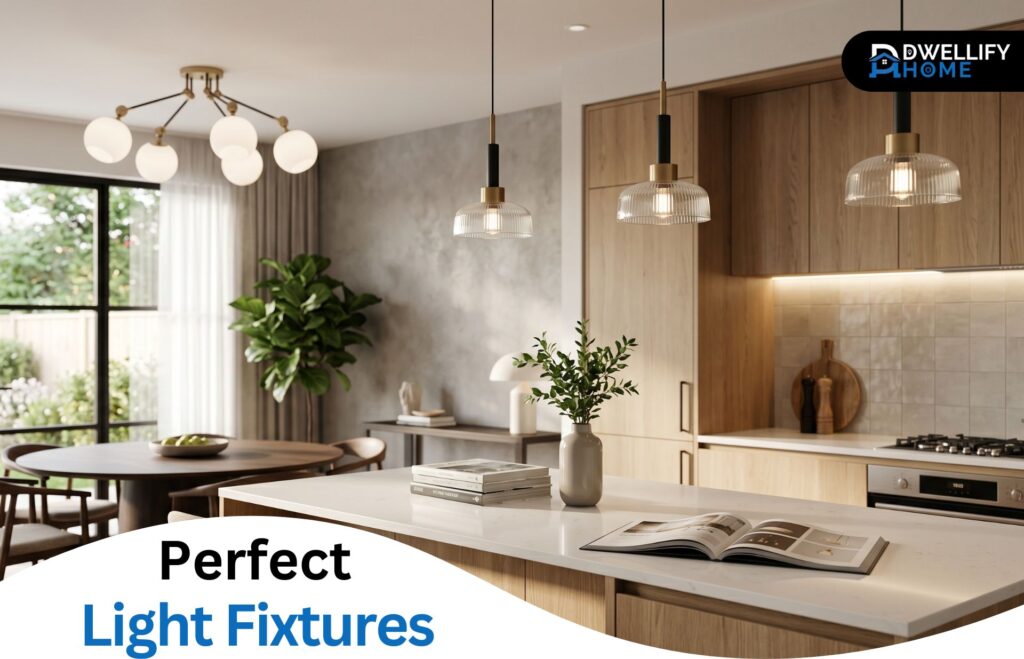
Most people pick light fixtures the same way they pick artwork. They see something they like and buy it. Then they hang it, turn it on, and wonder why the room still does not feel right. The fixture looks fine. The room just does not work. Here is how to actually choose light fixtures that both look good and make the room feel the way it should.
Why Most People Get Light Fixtures Wrong
1. The Difference Between a Fixture That Looks Good and One That Works
A fixture that looks good in a showroom or on a product page is doing one job and looking good in isolation. A fixture that works in your home is doing something harder.
It is distributing the right amount of light at the right color temperature, at the right height, scaled correctly to the room, and working alongside every other light source in the space.
Most lighting mistakes come from treating fixtures as decoration rather than as functional objects that happen to look nice. The result is rooms that are either too bright, too dim, too cold, too warm, or just somehow flat.
2. Why Lighting Is the Most Overlooked Design Decision in Any Room
People spend serious money on furniture, paint, and flooring, and then pick whatever light fixture is left in the budget. That order of priorities is backwards.
Lighting determines how every other element in the room looks. The paint color shifts under different light temperatures. The furniture looks different under harsh overhead light versus layered warm light.
A room that is beautifully furnished but poorly lit will always feel like something is missing because something is. Get the lighting right first, and everything else in the room performs better.
How to Choose Light Fixtures for the Living Room
1. Layering Light (Ambient, Task, and Accent)
The living room is the room where layered lighting pays off most visibly. A single overhead fixture trying to do everything creates flat, unflattering light that makes the room feel like a waiting room.
Layering ambient light from the ceiling, task light from floor or table lamps, and accent light to highlight artwork or architectural features, creating depth, warmth, and flexibility.
Ambient light provides the base level of illumination. Task lighting brings focused light to where it is needed, beside a reading chair or next to a sofa. Accent lighting adds the depth and visual interest that makes a room feel considered rather than just lit.
2. Fixture Styles and Sizes That Work in Living Spaces
For the ceiling fixture in a living room, scale is everything. A fixture that is too small floats disconnected from the room and looks like an afterthought. A fixture that is too large dominates and feels oppressive.
A rough guide — add the room’s length and width in feet, and the result in inches is a reasonable starting diameter for a ceiling fixture. A room measuring 12 by 15 feet suggests a fixture with a diameter of around 27 inches.
Style-wise, the living room gives you the most freedom of any room in the house. The fixture should relate to the overall aesthetic, and a clean-lined pendant in a contemporary space, a softer drum shade in a more traditional room
How to Choose Light Fixtures for the Dining Room
1. Why the Dining Room Is the Most Fixture-Dependent Room in the Home
No room in the house is more dependent on a single fixture than the dining room. In most dining rooms, the fixture above the table is doing the majority of the decorative and functional work simultaneously.
It sets the mood for every meal, defines the room’s visual center, and determines whether the space feels intimate and inviting or flat and clinical.
This is the room where investing in the right fixture pays the highest return — and where getting it wrong is most obvious. A dining room with a poorly chosen or poorly positioned fixture feels wrong at every meal, every gathering, every time you walk through the door.
2. Getting the Height, Size, and Style Right
Height is the most commonly mishandled element in dining room lighting. The bottom of the fixture should sit approximately 75 to 90 centimeters above the table surface.
Too high, and the light spills outward instead of focusing on the table and the people around it. Too low, and it feels cramped and creates glare at eye level for anyone seated.
Size should relate to the table, not the room. A fixture roughly half to two-thirds the width of the table is a reliable starting point. For a rectangular table, an elongated pendant or a series of pendants in a line works better than a single round fixture that leaves the ends of the table in relative darkness.
How to Choose Light Fixtures for the Kitchen
1. Why Kitchens Need More Than One Type of Light
A kitchen lit only by a single overhead fixture will have shadows on every work surface, cast by the person standing at the counter.
Those shadows are not just inconvenient, but they are genuinely hazardous when you are working with knives and heat. A kitchen needs ambient light for general illumination and task lighting specifically positioned to eliminate shadows on work surfaces.
Under-cabinet lighting handles the task layer, positioned to throw light forward onto the counter rather than downward from above, where the cabinets block it. Island pendants add visual interest and focused light over a preparation or eating surface without covering the whole room.
2. Task Lighting, Under-Cabinet Options, and Overhead Fixtures
Under-cabinet lighting is the most impactful upgrade in a kitchen and the most commonly skipped. LED strip lighting fitted to the underside of upper cabinets throws clean, shadow-free light directly onto the work surface where it is needed.
It is relatively inexpensive to install and makes the kitchen noticeably more functional and pleasant to work in. For overhead fixtures, the kitchen calls for higher color rendering than most rooms, where you want to see food accurately.
Look for fixtures with a CRI of 90 or above and a color temperature between 2700K and 3000K for a warm but accurate light that makes the kitchen feel inviting without sacrificing visibility.
How to Choose Light Fixtures for Bedrooms and Bathrooms
1. Bedroom Lighting (Warmth, Layering, and Avoiding Harsh Overhead Light)
The most common bedroom lighting mistake is a single bright overhead fixture as the only light source. It is the least flattering light in the house, creates no warmth or atmosphere, and is the wrong kind of light for a room meant to support rest and winding down.
Bedroom lighting should layer the same way living room lighting does, with a soft overhead fixture or recessed lighting for general illumination, bedside lamps for reading and pre-sleep wind-down, and, if the room has architectural features worth highlighting, an accent light.
Dimmability is important in the bedroom with the ability to drop the light level significantly in the evening, signaling to the brain that it is time to shift toward sleep, which is more valuable than most people realize.
Warm color temperature—2700K or below is the right choice for bedrooms. Cool or bright white light in a bedroom actively works against the room’s purpose.
2. Bathroom Lighting (Mistakes and How to Fix Them)
The two most common bathroom lighting mistakes are using a single overhead fixture and placing a light behind the person rather than in front of them. Both create unflattering shadows across the face, exactly the opposite of what you need in a room where you are checking your appearance.
Vanity lighting positioned on either side of the mirror at roughly eye height, or a horizontal bar across the top of the mirror, throws light forward onto the face evenly and without shadows.
This is how professional makeup mirrors are lit, and it works for the same reason. Supplement it with a separate ambient fixture for general illumination, and the bathroom becomes both more functional and significantly more flattering.
Don’t Forget the Exterior Scale
Lighting your home correctly doesn’t stop at the front door. The scale of your outdoor fixtures is just as critical for curb appeal as your indoor chandelier is for the dining room. If you are looking to create a cohesive look from the driveway to the porch, you can find some of the best modern outdoor lamp post lights in Canada that mirror the clean, architectural lines found in 2026 interior trends.
Ceiling Height, Room Size, and Scale
1. How to Size a Fixture Correctly for a Room
Scale is where most fixture choices go wrong, even when the style is right. A fixture correctly sized for the room disappears into the design in the best possible way; it feels like it belongs.
For ceiling fixtures, enter the room dimensions in feet, then use that number in inches as a guide for fixture diameter. For pendant height over islands or tables, measure from the surface below to the ceiling above and position the fixture so there is a clear sightline across the space while keeping focused light where it is needed.
For rooms with ceilings above three meters, fixtures can scale up proportionally. Low ceilings call for flush-mount or semi-flush options that do not consume the limited vertical space.
2. What Happens When Fixtures Are Too Small or Too Large
A fixture that is too small for a room makes the space feel unfinished and under-considered. It also typically fails to provide adequate light coverage, leaving the edges of the room in relative darkness.
A fixture that is too large dominates the room visually and can feel oppressive, particularly in lower-ceilinged spaces.
Getting scale right is one of those things that nobody notices when it is correct, and everyone notices immediately when it is not
The Role of Linear Lighting in Modern Home Design
1. Where Linear Lighting Works Best and Why It Is Trending in 2026
Linear lighting, elongated fixtures that run along a line rather than distributing light from a central point, is one of the most significant trends in residential lighting in 2026.
Linear fixtures work exceptionally well over kitchen islands, dining tables, in hallways, along shelving, and in any space where you need consistent light coverage across a length rather than a radius.
They create a clean, architectural quality that works with contemporary interiors without looking cold or industrial when chosen and positioned correctly.
2. How to Use Linear Lighting Without It Looking Clinical or Office-Like
The clinical association with linear lighting stems from the use of the wrong color temperature and improper application. Bright, cool-white linear fixtures in a low-ceiling space will make the space look like an office.
Warm linear fixtures used as one layer in a properly lit room over a kitchen island, alongside recessed lights, or above a dining table, alongside wall-mounted accent lights, feel intentional, architectural, and genuinely residential.
One that is undersized for the surface below it looks like a mistake. For well-designed residential Light house Co linear lighting options that work in living spaces rather than just commercial settings, the kind of fixtures that bring the architectural quality of linear light without the clinical feel.
Frequently Asked Questions
1. How do I know what size light fixture to choose for a room?
Adding the room’s length and width in feet, then converting to inches, gives you a reasonable guide for the diameter of a ceiling fixture. A 12-by-14-foot room suggests a fixture with a diameter of around 26 inches.
2. What is the right height to hang a pendant or chandelier?
Over a dining table, the bottom of the fixture should sit 75 to 90 centimeters above the table surface. A kitchen island used for food preparation, slightly higher, around 80 to 90 centimeters, gives enough clearance for comfortable working.
3. Can I mix different fixture styles in the same home?
Yes, and in most homes it is the right approach. Trying to match every fixture in the house results in a space that feels more like a showroom than a home. The key is maintaining consistency in one or two elements across different fixtures and metal finishes, color temperature, or overall aesthetic direction.
And before you go, be sure to check out some of our other helpful articles! Please note that some of the links in this article may be affiliate or sponsored links. These links may generate a small commission if you make a purchase, which helps support and grow our website. The opinions and views expressed in this post are solely those of the author and do not necessarily reflect the views or policies of Dwellifyhome.com.