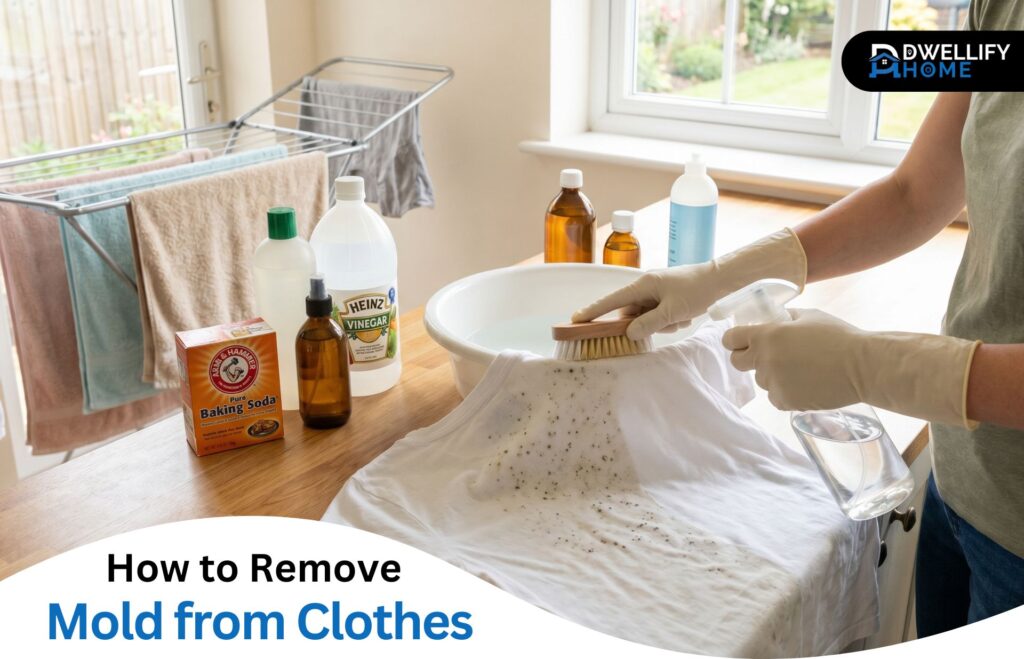
Mold doesn’t announce itself. You pull a jacket out of storage, open a laundry basket you left a little too long, or unpack a suitcase from a humid trip — and there it is. Dark spots, a stale musty smell, or both.
Most people’s first instinct is to throw everything straight into the washing machine. That’s actually one of the most common mistakes. Washing mold without preparation often spreads spores, sets the stain deeper into the fiber, and leaves the underlying problem unsolved.
The good news is that most moldy clothes can be saved. What determines whether the treatment works isn’t just which product you use — it’s the sequence of steps, the fabric in front of you, and whether you’ve identified what actually caused the mold in the first place. This guide covers all of it.
Snippet-Ready Definition
To remove mold from clothes, brush off loose spores outdoors, pre-soak the garment in white vinegar or borax solution for one hour, then machine wash on the hottest safe temperature. Air dry in direct sunlight. Acting quickly prevents stains from setting permanently into the fabric.
Mission Statement
At Dwellify Home, we help homeowners make practical, confident decisions about their living spaces — from everyday care and maintenance to styling and improvement. Every guide we publish is built around real situations, honest advice, and information you can actually use.
Mold vs. Mildew on Clothes — Is There Actually a Difference?
Mold and mildew are both fungi that grow on fabric in damp conditions, but they behave differently. Mildew sits on the surface and appears as flat, powdery white or grey patches. Mold penetrates fabric fibers, shows up as darker discoloration — often black, green, or brown — and typically requires more thorough treatment to fully remove.
In most real-world situations, you’re dealing with mildew when clothes smell musty but look mostly clean. When you can actually see spots or staining on the fabric, that’s mold. The treatment for both overlaps, but true mold usually needs a longer soak and sometimes a second wash cycle to clear completely.
Quick Method Comparison — Choosing the Right Approach
| Method | Best For | Fabric Safety | Effectiveness |
| White Vinegar Soak | Most fabric types | Color-safe | Strong |
| Borax Solution | Cotton and synthetics | Color-safe | Strong |
| Oxygen Bleach | Colored fabrics with heavy staining | Color-safe | Strong |
| Chlorine Bleach | White fabrics only | Whites only | Very strong |
| Enzyme Cleaner | Wool, silk, delicates | Color-safe | Moderate |
| Lemon Juice + Salt | Light surface spots | Light fabrics only | Mild |
Key Things to Know Before You Start
- Always check the care label before choosing any cleaning method
- Take clothes outside first — brushing off spores indoors spreads them through the air
- Pre-soaking before machine washing makes the entire process significantly more effective
- Never mix chlorine bleach and vinegar — the combination produces toxic fumes
- Sunlight after washing helps kill remaining spores and naturally reduces residual odor
- A musty smell from freshly washed clothes often means the washing machine needs cleaning too
Is Mold on Clothes Actually Dangerous?
Yes, mold on clothing can pose real health risks, primarily through skin contact and inhaling spores during handling. Most healthy adults will experience only mild reactions — sneezing, skin irritation, or watery eyes. The concern becomes more serious for anyone with asthma, allergies, or a weakened immune system, where exposure can trigger or worsen respiratory symptoms.
Who Faces the Highest Risk at Home
Children, elderly individuals, and anyone managing chronic respiratory conditions should avoid direct handling of heavily molded garments. Always wear rubber gloves and a close-fitting mask — an N95 is ideal — before picking up or brushing off mold-affected clothing. Mold spores become airborne the moment the fabric is disturbed, so protective gear isn’t overcaution; it’s just smart practice.
What Causes Mold to Grow on Clothes?
Moisture Trapped Too Long — The Primary Trigger
The single most common cause is damp fabric left in an enclosed space. Wet clothes sitting in a washing machine for more than a few hours, workout gear stuffed into a gym bag, or swimwear packed away before it fully dries — any of these can lead to mold growth within 24 to 48 hours in warm conditions.
Poor Closet Ventilation and Dark Storage
Closets are naturally dark and often poorly ventilated. Pack clothes in tightly without adequate airflow — especially in a humid climate or after a rainy season — and the moisture trapped in fabric has nowhere to go. This is one of the most overlooked causes of mold on stored clothes.
A Moldy Washing Machine You May Not Know About
This one surprises people. Front-loading washing machines are particularly prone to mold growth around the door seal and inside the drum. If clothes come out of a fresh wash already smelling musty, the machine itself is likely the source — not the clothes. There’s a full section on this further down, because treating the clothes without fixing the machine just creates a loop.
What You’ll Need Before You Start
Check the care label on every affected garment before doing anything else. That label overrides all other instructions. If it says dry clean only, skip to the dedicated section below.
For everything else, gather:
- Rubber or latex gloves
- An N95 mask or well-fitting dust mask
- A soft-bristled brush or old toothbrush
- White distilled vinegar
- Borax powder
- Regular laundry detergent
- A plastic bucket or basin
Two Steps to Take Before Any Washing Begins
Step 1 — Take Clothes Outside and Brush Off Loose Spores
Carry the garment outside before anything else. Use a soft brush to gently sweep visible mold from the surface while holding the fabric away from your face. Do this outdoors specifically to keep spores out of your home’s air. Avoid shaking or flicking the fabric — that sends spores airborne directly toward you.
Step 2 — Check All Nearby Items for Mold Spread
Go through everything that was stored near or touching the affected garment. Mold spreads to neighboring fabrics faster than most people expect. Even if something looks clean, give it a close smell. A musty odor without visible spots usually means mold spores are already present, even if active growth isn’t visible yet.
How to Remove Mold from Clothes — The Full Step-by-Step Process
Pre-Soak First — This Step Makes the Real Difference
Skipping the pre-soak is the most common mistake. Sending mold-affected clothes straight into the washing machine without soaking first often leaves spores embedded in the fabric fibers. A proper soak loosens the mold’s grip on the material and makes the wash dramatically more effective.
The White Vinegar Soak Method
Mix one part white distilled vinegar with four parts warm water in a bucket. Submerge the garment completely and let it soak for at least one hour — longer for heavier staining. Vinegar disrupts the cellular structure of mold and neutralizes musty odors at the same time. It’s one of the most reliable and widely applicable mold stain removers for home use.
The Borax Solution Method
Dissolve half a cup of borax in one to two cups of very hot water, then add it to a bucket of warm water. Submerge the clothes and soak for one hour. Borax raises the pH of the water to a level mold cannot survive in. It’s particularly effective on cotton and synthetic fabrics, and it leaves no scent behind — a genuine advantage over vinegar for many people.
Machine Washing — Temperature, Detergent, and What to Add
After soaking, transfer the clothes directly to the washing machine. Set it to the hottest temperature the care label allows — heat kills mold spores more effectively than cold or warm water. Add your regular detergent along with either one cup of white vinegar or the borax solution (not both together) directly into the drum. For heavily affected items, run a second cycle.
Drying Clothes After Mold Treatment — Why Sunlight Works Best
Hang treated clothes in direct sunlight whenever possible. UV rays act as a natural disinfectant and help kill any remaining spores. If outdoor drying isn’t an option, use the dryer on the highest heat setting the fabric can safely handle. Either way, make sure the garment is completely dry before it goes near a wardrobe or storage area.
Inspect Before You Put Clothes Away
Once dry, check every seam, fold, and pocket closely. Look for any remaining discoloration and smell the fabric. If any musty odor persists after a full treatment cycle, repeat the soak-and-wash process before storing. Putting clothes away with lingering mold — even a small amount — will restart the cycle.
Natural Ways to Remove Mold from Clothes Without Bleach
White Vinegar — How and When to Use It
White vinegar works on most fabric types and is safe for both colored and white garments. For spot treatment, apply it undiluted directly to the affected area, let it sit for 30 minutes, then wash. For full garments, use the soaking method described above. It’s the most practical first-choice option for how to remove mold from clothes naturally.
Baking Soda — Best Used as a Booster, Not a Standalone
Baking soda alone won’t kill mold, but it works well when added alongside detergent or vinegar in a wash cycle. Add half a cup to the drum to neutralize odors and help lift staining. Think of it as a supporting ingredient — useful for how to remove mold from clothes with baking soda when combined with a proper soak, not as a replacement for one.
Lemon Juice and Salt — For Spot Treatment on Light Fabrics
Mix fresh lemon juice with salt to form a thin paste and work it into small mold spots on light-colored fabric. Leave it for 30 minutes, then rinse with cool water before washing. This works better as a pre-treatment on surface stains than as a deep mold remover.
Tea Tree Oil — The Overlooked Option
Add 10 to 15 drops of tea tree oil to a bucket of warm water and soak the garment for an hour before washing. Tea tree oil has natural antifungal properties and leaves no harmful residue on fabric. It’s a good choice for people who want to avoid both bleach and strong acids.
Borax — The Most Underrated Natural Mold Fighter
Borax is affordable, widely available, and genuinely effective against mold spores on fabric. Unlike vinegar, it leaves no scent behind, which many people prefer. It works well in both the soak and the wash cycle, and it’s safe for most fabric types.
Removing Mold from Colored Clothes Without Damaging Them
Why Chlorine Bleach Is Off the Table for Most Colors
Chlorine bleach will remove the mold — along with the color itself. Even a small amount on colored fabric can leave permanent bleached patches. Unless the garment is fully white, don’t use it.
Oxygen Bleach as the Safe Alternative
Oxygen bleach — OxiClean being the most common — is color-safe and effective against mold staining. Follow the product’s soaking instructions, then wash on the appropriate cycle. It’s considerably gentler than chlorine bleach while still providing meaningful stain removal on coloured fabric.
Vinegar and Borax for Color-Safe Mold Removal
Both white vinegar and borax are safe for colored garments and are the most practical everyday options for removing mould stains from coloured fabric at home. Use either one in the soak phase, then run a color-safe wash cycle. Don’t combine them in the same soak — use one or the other.
Removing Mold from White Clothes
When Chlorine Bleach Is Appropriate
For fully white, bleach-safe cotton or linen, chlorine bleach is the most effective option for heavy mold staining. Add one cup to a full machine load and run a complete cycle. Check the care label first — some whites, especially blended or synthetic fabrics, are not bleach-safe even if they look plain white.
One Rule You Must Follow — Never Mix Bleach With Vinegar
Combining bleach and vinegar creates chlorine gas — a toxic fume that’s genuinely dangerous in an enclosed space like a laundry room. If you’ve used vinegar in a pre-soak, rinse the garment thoroughly with clean water before introducing bleach. Treat them as separate steps, never used together.
Removing Mold from Delicate Fabrics Like Wool, Silk, and Linen
Enzyme-Based Cleaners — Gentle but Effective
Enzyme-based laundry cleaners break down organic matter — including mold — without the harsh impact of bleach or strong acids. They’re the right choice for wool, silk, and fine linen. Look for enzyme-based stain removers labeled safe for delicates, and follow product directions carefully rather than improvising with quantities.
The Hand Wash Method for Fabrics That Can’t Take Heat
Fill a basin with cool water and a small amount of enzyme cleaner or gentle detergent. Submerge the garment and agitate gently by hand for several minutes, then let it soak for 20 to 30 minutes. Rinse thoroughly and lay flat to dry in indirect sunlight. Avoid wringing or twisting — delicate fibers break down quickly under that kind of mechanical stress.
How to Remove Mold from Fabric That Can’t Be Washed
Dry-Clean-Only Garments — The Right Way to Handle Them
Place the garment in a sealed plastic bag as soon as you find the mold. This contains the spores and prevents further spread. Take it to a professional dry cleaner and point out the affected areas specifically. Inform them it’s mold — not just a stain — so they treat it with the appropriate process rather than a standard clean.
Spot Treatment for Non-Machine-Washable Items
For structured garments, decorative pieces, or clothing accessories that can’t go in the wash, use a dry brush outdoors first to remove loose spores. Then apply white vinegar or diluted tea tree oil solution to a clean cloth and dab — don’t rub — the affected spots. Let the area air dry completely in a ventilated space before storing.
Fresh Mold Spots vs. Old Set-In Stains — Does Your Approach Need to Change?
Treating Mold You Caught Early (Within 24–48 Hours)
Mold caught within the first day or two is typically surface-level and hasn’t fully penetrated the fabric fibers yet. A standard one-hour vinegar soak followed by a hot machine wash is usually enough. The stain should lift cleanly, and the smell should be gone after one cycle.
Breaking Down Stubborn, Old Mold Stains That Won’t Budge
Older stains that have set into the fabric need a longer soak — two to three hours minimum — and a gentle scrubbing step with a soft brush on the affected areas before washing. Repeat the full cycle if staining remains after the first wash. Adding oxygen bleach to the second cycle helps on lighter-colored fabrics without risking damage.
When to Accept That a Stain Won’t Come Out Completely
Some mold stains — particularly dark mold that has sat on fabric for several weeks — cause permanent discoloration in the fibers themselves. The mold can be killed and all spores removed, but the color change may remain. At that point, you’re treating for safety rather than appearance. A faint shadow of a stain on an otherwise clean, odor-free garment doesn’t mean the treatment failed.
Is Your Washing Machine the Hidden Source of the Problem?
Signs That Your Washer Has Mold Inside It
The clearest sign is clothes that smell musty right out of a fresh wash — despite clean detergent and a proper temperature setting. Other indicators include visible dark buildup around the rubber door seal of a front-loader, a damp smell when you open an empty machine, or dark residue around the detergent drawer.
How to Clean a Moldy Washing Machine Before Rewashing Clothes
Run an empty hot cycle with two cups of white vinegar added directly to the drum. Follow that with a second empty cycle using half a cup of baking soda. For front-loaders, wipe the rubber door seal thoroughly with a vinegar-soaked cloth and leave the door open between uses. Do this before rewashing any mold-treated garments — otherwise you’re putting clean clothes back into a contaminated drum.
When Should You Throw Out Moldy Clothes Instead of Cleaning Them?
Not everything can or should be saved. A few honest markers:
- If the mold covers a large portion of the garment and the fabric has visibly deteriorated — thin patches, weakened fibers, or structural damage — cleaning won’t restore it.
- If a strong musty odor persists after two full treatment cycles, the mold has penetrated deeply enough that removal is no longer practical at home.
- If the garment is inexpensive and the cleaning process costs more in time and product than simply replacing it, let it go.
- If anyone in the household is immunocompromised or has respiratory conditions, be more conservative about what you attempt to clean versus discard.
The goal is a clean, safe wardrobe — not preserving every item regardless of condition.
How to Stop Mold from Growing on Clothes Again
Always Dry Clothes Fully Before Storing Them
Any residual moisture in a folded or hung garment creates exactly the right conditions for mold. This is the single most important preventive habit. If something feels even slightly damp, leave it out longer before putting it away.
Improve Airflow in Your Closet
Overcrowded closets with tightly packed garments restrict airflow between fabrics. Leave space between hanging items, avoid long-term storage in sealed plastic bags, and consider louvered closet doors if mold is a recurring problem in your home.
Use Moisture Absorbers in Storage Areas
Silica gel packets or hanging moisture absorbers work well in wardrobes, drawers, and storage boxes — particularly in humid climates. Replace them regularly, most have a visible indicator when they’ve become saturated and need changing.
Don’t Leave Wet Clothes Sitting in the Washer
Transfer clothes to the dryer or a drying rack as soon as the wash cycle ends. Even two to three hours in a closed machine drum is enough for mold to begin developing, particularly during warm months.
Clean Your Laundry Hamper More Often Than You Think
Laundry hampers accumulate damp fabric, warmth, and organic material — exactly the conditions mold needs. Wipe solid hampers down with a diluted vinegar solution weekly. Wash fabric hamper liners regularly. This small, consistent habit removes one of the most overlooked sources of recurring mold in a household.
Frequently Asked Questions
Does vinegar actually kill mold on clothes?
Yes. White distilled vinegar is acidic enough to disrupt mold growth and eliminate most common mold species found on fabric. It works best as a direct soak before washing rather than just being added to the machine. A one-hour soak in a 1:4 vinegar-to-water solution is significantly more effective than a quick pour into the drum mid-cycle.
Can mold on clothes make you sick?
Yes, particularly through skin contact and inhaling spores during handling. Healthy adults usually experience mild symptoms like skin irritation or sneezing. For people with asthma, allergies, or compromised immune systems, the risk is higher and warrants extra caution during handling and treatment.
Will mold come out after just one wash?
Often yes, if the mold is recent and a proper pre-soak was done first. For older or heavier growth, a second cycle is typically needed. Skipping the soak and going straight to the machine rarely removes mold completely in a single attempt.
Can I wear clothes that had mold on them?
Once they’ve been properly treated — soaked, washed at the appropriate temperature, and fully dried — yes. The deciding test is no remaining smell and no visible spots. If either is still present after treatment, repeat the process before wearing.
Does dry cleaning remove mold from clothes?
A professional dry cleaner can treat mold on garments unsuitable for home washing, but it’s important to tell them about the mold specifically when you drop off the item. Not all dry cleaners include mold treatment as part of a standard clean, and the garment may require a specific process.
Can mold spread from one garment to others in the wash?
Yes. Washing a heavily molded garment alongside clean clothes risks spreading spores to everything in the load. Treat and wash moldy items separately — ideally after cleaning the machine itself — before returning to regular laundry loads.
What’s the best mold stain remover for clothes?
For most fabrics, a white vinegar pre-soak followed by a hot wash with regular detergent handles the majority of cases. For heavier staining, oxygen bleach on color-safe fabrics or chlorine bleach on whites provides stronger results. Enzyme-based stain removers are the right choice for delicate fabrics that can’t handle heat or strong chemical solutions.
The Right Approach Makes All the Difference
Mold on clothes is one of those problems where acting fast without thinking it through often makes things worse. Taking a few extra minutes to pre-soak, matching the method to the fabric in front of you, and checking whether the washing machine itself is contributing — these are the things that determine whether the treatment actually works.
Most garments can be fully recovered when you remove mold from clothes using the right sequence of steps. Handle it correctly, take a few consistent prevention habits going forward, and it’s rarely a problem that comes back.
Disclaimer
The content on Dwellify Home is provided for general informational purposes only. Results may vary depending on fabric type, mold severity, product availability, and individual circumstances. Always follow the care instructions on your garments and use any cleaning products according to their manufacturer’s guidelines.