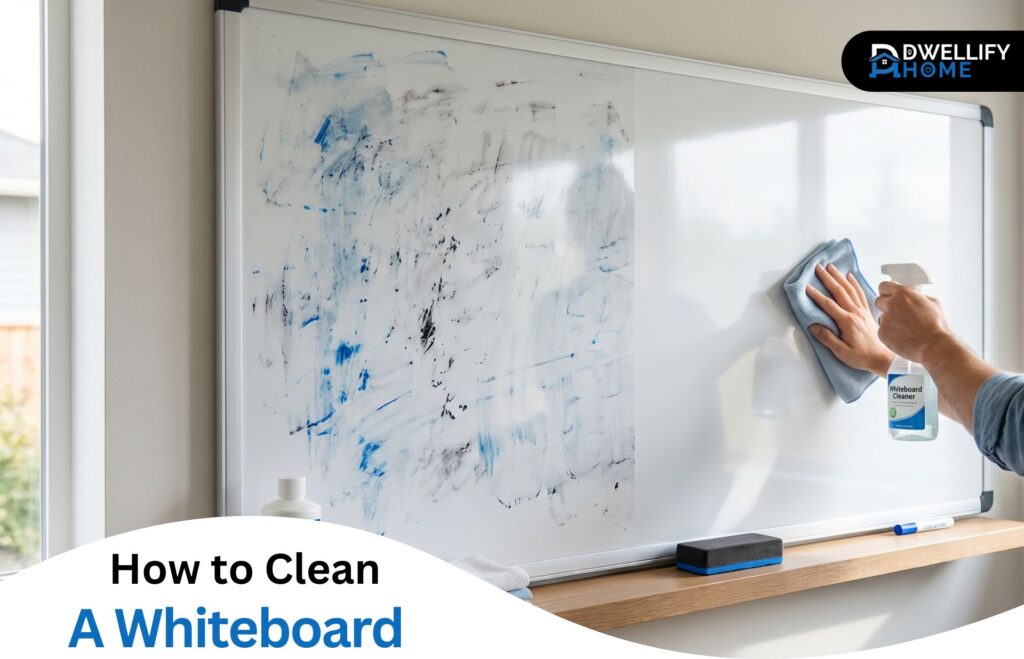
A whiteboard that erases cleanly is something most people take for granted — until it stops working the way it should. What starts as faint ghost marks turns into a board that looks permanently dirty no matter how hard you wipe it. The good news is that most whiteboard problems, including stubborn stains and ghosting, are fixable. The bad news is that a lot of people make the situation worse by reaching for the wrong cleaner.
This guide covers everything you need — from basic daily upkeep to deep cleaning and full surface restoration — in a way that actually works in real-world conditions.
Snippet-Ready Definition
Cleaning a whiteboard means removing dry-erase ink, stains, and ghosting using the right tools and solutions for your surface type. It keeps the board writing cleanly, prevents permanent staining, and extends its usable life significantly.
Mission Statement
At Dwellify Home, our focus is simple — helping homeowners make practical, well-informed decisions about their living spaces. Whether it’s maintaining what you already have or finding better solutions for everyday home challenges, we share honest guidance grounded in real experience. No trend-chasing, no filler — just straightforward advice you can actually use.
Know Your Whiteboard Surface Before You Clean It
Not all whiteboards are the same, and the wrong cleaner on the wrong surface can cause permanent damage. The three most common surfaces — melamine, porcelain, and glass — each respond differently to cleaning products. Identifying yours first takes seconds and protects the board from irreversible scratching, staining, or coating damage.
Melamine Whiteboards
Melamine is the most common and the most affordable surface type. It’s also the most sensitive. The coating is relatively soft, which means it scratches easily and absorbs ink over time — especially if harsh chemicals or abrasive materials are used. Most budget whiteboards in homes and classrooms are melamine.
Porcelain and Ceramic Whiteboards
Porcelain boards have a harder, baked-on surface that resists staining far better than melamine. They’re more durable, hold up well to heavy daily use, and can handle a broader range of cleaners. Most commercial and school-grade boards are porcelain.
Glass Dry-Erase Boards
Glass boards are the most resistant surface you’ll find. They don’t absorb ink at all, making them the easiest to keep clean. Standard glass cleaners work well on them, and ghosting is rarely a serious problem.
Whiteboard Paint and Adhesive Film Surfaces
These are painted walls or applied film surfaces that function as dry-erase boards. They’re the most delicate of all — pH-neutral cleaners only, and gentle wiping technique is essential. Anything stronger can break down the coating.
Why the Surface Type Changes Everything
A product that works brilliantly on a porcelain board can strip the coating off a melamine one. Before you grab any cleaner — commercial or homemade — know what surface you’re working with.
Quick Reference Guide — Whiteboard Cleaning by Problem Type
| Problem | Best Solution | Avoid |
| Fresh marker residue | Dry microfiber cloth | Paper towels |
| Light ghosting | Isopropyl alcohol + microfiber | Bleach or acetone |
| Dried dry-erase ink | 70%+ alcohol, multiple passes | Scrubbing pads |
| Permanent marker | Dry-erase overwrite + alcohol | Magic Eraser repeatedly |
| Heavy buildup / old stains | Multi-pass alcohol restoration | Scouring sponges |
| Routine daily cleaning | Microfiber cloth, no product needed | Windex on melamine |
Key Things to Know Before You Start
- Surface type matters — melamine, porcelain, and glass each need different care
- Isopropyl alcohol (70% or higher) is the most reliable cleaner for most whiteboard problems
- A dirty eraser causes more ghosting than the marker itself — clean it regularly
- Leaving writing on the board overnight is the leading cause of long-term staining
- Never use bleach or abrasive pads on any whiteboard surface — the damage is permanent
What You Actually Need to Clean a Whiteboard
For most cleaning tasks, you need just three things — a microfiber cloth, a spray bottle with your chosen solution, and a dry cloth for finishing. The type of cloth matters more than most people realize. Paper towels, for example, can cause micro-scratches that make future staining worse.
Basic Supplies Checklist
- A clean microfiber cloth (at least two — one for cleaning, one for drying)
- A spray bottle
- Isopropyl alcohol (70% or higher) or a commercial whiteboard cleaner
- A dry-erase eraser in good condition
- Optional: a soft-bristled brush for eraser cleaning
Microfiber Cloth vs. Felt Eraser vs. Paper Towel — What to Use and Why
Microfiber cloths are the best tool for whiteboard surfaces. They lift ink particles without scratching, and they don’t leave behind lint. Felt erasers handle day-to-day ink removal but build up residue quickly. Paper towels feel convenient, but the wood fibers are coarse enough to create hairline scratches on melamine boards over time — and those scratches are where ink starts to permanently settle.
How to Clean a Whiteboard — Step by Step
Cleaning a whiteboard properly takes five steps: erase first, apply your chosen solution to a cloth (not directly to the board), wipe in smooth horizontal strokes, rinse with a clean damp cloth, then dry completely. Skipping the final dry step causes streaks and allows ink residue to settle back into the surface.
Step 1 — Always Erase Before You Wet the Surface
Use your dry-erase eraser to remove as much surface ink as possible before applying any liquid. Wetting a board that still has heavy dry-erase ink on it turns everything into a smeared mess.
Step 2 — Apply Your Cleaning Solution to the Cloth, Not the Board
Spraying directly onto the board lets liquid seep into the edges and frame, which causes long-term damage. Dampen the cloth, then clean the surface.
Step 3 — Wipe in Controlled, Even Strokes
Work in horizontal passes from top to bottom. Circular scrubbing can push residue around rather than lifting it — especially on melamine boards.
Step 4 — Rinse Away Any Cleaning Residue
Use a second cloth dampened with plain water to wipe down the board after cleaning. Leaving isopropyl alcohol or vinegar on the surface can leave a film that interferes with future writing.
Step 5 — Dry the Surface Completely Before Writing Again
This is the step most people skip. A damp board causes fresh marker ink to bleed and spread, making the next cleaning harder. Thirty seconds with a dry microfiber cloth is all it takes.
Quick Daily Maintenance — Keeping Your Whiteboard Clean Between Deep Cleans
A 60-second daily wipe with a clean microfiber cloth prevents ink from bonding to the surface and eliminates the need for aggressive cleaning later. The biggest cause of long-term whiteboard staining is simply leaving marker on the surface for too long.
The Right Way to Wipe a Whiteboard Every Day
Erase writing promptly after use. Follow with a light wipe using a clean microfiber cloth. You don’t need any product for this — the cloth alone handles fresh ink easily.
How Often Should You Deep-Clean a Whiteboard?
For boards used daily, a proper wet clean every two to three days keeps the surface in good condition. Monthly, do a full deep clean regardless of how the board looks — residue builds up even when it isn’t visible yet.
How to Remove Ghosting from a Whiteboard
Ghosting is the faint shadow left behind after erasing, caused by dry-erase ink gradually bonding with the board’s surface coating. It is not a sign of a ruined board. The most effective fix is rubbing alcohol applied to a microfiber cloth, wiped in slow circular motions until the ghost marks lift completely.
What Is Ghosting and Why Does It Happen?
Dry-erase marker ink contains pigment, solvents, and a release agent. When you erase promptly, the release agent does its job and the ink lifts cleanly. But when marker sits on the board for hours or days, the solvents evaporate and the pigment starts bonding directly to the surface coating. What’s left is a faint but stubborn shadow — ghosting.
The Dry-Erase Marker Trick That Reactivates Old Ink
Take a fresh dry-erase marker and draw directly over the ghost marks. The solvents in the fresh ink temporarily reactivate the dried pigment underneath, allowing both to be wiped away together. Use a dark color like black or blue for the best coverage, and wipe immediately before the fresh ink dries.
Using Rubbing Alcohol to Clear Stubborn Ghost Marks
Isopropyl alcohol at 70% or higher is the most reliable option for whiteboard ghosting. Apply it to a microfiber cloth and rub in slow, firm circles. For older buildup, you may need two or three passes.
Hand Sanitizer as a Fast, On-Hand Alternative
Liquid hand sanitizer contains isopropyl alcohol and works well in a pinch. Avoid gel formulas — they leave a residue that creates its own problems. Apply a small amount to a cloth and use the same circular technique.
How to Clean Old or Dried Marker Off a Whiteboard
Dried dry-erase marker is harder to remove because the solvent in the ink has fully evaporated, leaving pigment that has started to adhere to the surface. A single wipe won’t be enough — you need a solvent-based cleaner like isopropyl alcohol and multiple slow passes to fully lift the old ink.
Why Dried Marker Behaves Differently from Fresh Marks
Fresh ink lifts easily because the solvents are still active. Ink that’s been sitting for days has essentially cured into a thin layer of pigment. It needs to be chemically reactivated before it will release from the surface.
Step-by-Step Removal Method for Dried Dry-Erase Ink
Apply isopropyl alcohol generously to a microfiber cloth. Press the cloth against the stained area and hold it for about ten seconds before wiping — this gives the alcohol time to break down the dried pigment. Then wipe firmly in one direction, not back and forth.
When One Pass Isn’t Enough — How to Know You Need to Repeat
If the stain is still visible after the first pass, don’t increase pressure. Apply fresh alcohol and repeat. Forcing harder pressure on a stubborn stain risks scratching the surface. Patience with multiple light passes works better every time.
How to Remove Permanent Marker from a Whiteboard
The fastest method is to trace over the permanent marker with a fresh dry-erase marker and immediately wipe both away together. The solvents in the dry-erase ink temporarily reactivate the permanent marker, allowing both to lift off cleanly. For stubborn marks, follow up with rubbing alcohol on a microfiber cloth.
The Dry-Erase Overwrite Method — Why It Works
Permanent marker ink and dry-erase ink use similar solvent bases. When you write over a permanent mark with a dry-erase marker, the solvents in the fresh ink dissolve the bond the permanent marker has formed. Wipe immediately — if you let the dry-erase ink dry, you’re back to square one.
Rubbing Alcohol for Persistent Permanent Marks
For marks that the overwrite method doesn’t fully remove, isopropyl alcohol applied with a microfiber cloth handles the rest. Work slowly and don’t scrub — let the alcohol do the work.
Nail Polish Remover as a Last Resort
Nail polish remover (acetone-based) is effective on permanent marker but should only be used on porcelain or glass surfaces. On melamine, it can strip the coating. Test a small corner first and use it sparingly.
What Makes Permanent Marker Worse — Mistakes to Avoid
Scrubbing immediately with a dry cloth without any solvent just pushes the pigment deeper into surface micro-pores. And using bleach — a common instinct — doesn’t remove permanent marker and damages the board’s coating in the process.
Household Products and Homemade Solutions That Actually Work
Several common household products clean whiteboards effectively — rubbing alcohol, white vinegar, toothpaste, and even WD-40 each work in different situations. The key is knowing which to reach for and how to apply it safely, since the wrong product on the wrong surface can strip the protective coating.
White Vinegar and Water — A Gentle Natural Option
Mix equal parts white vinegar and water in a spray bottle for a mild everyday cleaner. It works well on light residue and is safe for all surface types. It won’t touch heavy ghosting, but for routine cleaning it’s a solid option.
Isopropyl Alcohol and Water Spray — The Most Reliable DIY Cleaner
A 1:1 mix of isopropyl alcohol and water makes the best all-purpose homemade whiteboard cleaning spray. It removes ghosting, dry-erase residue, and light permanent marker stains. Use 70% alcohol or higher for it to be effective.
Toothpaste (Non-Gel Only) — For Tough Residue
White, non-gel toothpaste contains mild abrasives that can break up stubborn dry-erase residue without damaging the surface. Apply a small amount, rub gently with a damp cloth in circles, then wipe clean and rinse thoroughly.
WD-40 — Effective, But Always Follow Up
WD-40 works well for dried marker and ghosting but leaves an oily residue that attracts dust and causes future ink to smear. Always follow up with an alcohol wipe to remove the oil before writing on the board again.
Dish Soap and Warm Water — Best for Light Daily Cleaning
A drop of mild dish soap in warm water is gentle enough for daily use. It won’t remove serious staining, but it’s a good option for routine upkeep when you don’t have a spray cleaner on hand.
Hairspray and Nail Polish Remover — Situational Use Only
Hairspray works on stubborn stains in small areas but leaves a sticky film that needs a secondary clean. Nail polish remover is powerful but aggressive — reserve it for porcelain or glass surfaces only, and use it sparingly.
Simple DIY Whiteboard Cleaning Spray Recipes
Everyday cleaner: 1 part white vinegar + 1 part water Deep-clean spray: 1 part isopropyl alcohol (70%+) + 1 part water Tough-stain blend: isopropyl alcohol used undiluted, applied to the cloth
What You Should Never Use on a Whiteboard
Avoid bleach, acetone on melamine, abrasive pads, and standard kitchen scouring sponges — all of these strip the protective coating from the whiteboard surface, creating microscopic grooves that trap ink permanently. Even paper towels can cause enough micro-abrasion to gradually damage a melamine board over time.
Why Abrasive Pads Ruin Whiteboards Permanently
Scouring pads and rough sponges scratch through the smooth surface layer of a whiteboard. Once those scratches are there, ink particles settle into them during normal use and become impossible to fully remove. The board will look perpetually stained no matter what you clean it with.
Bleach, Acetone, and Strong Chemicals — What They Actually Do
Bleach doesn’t remove dry-erase or permanent marker stains from most surfaces — it oxidizes the pigment at best, and on melamine boards it degrades the coating. Acetone is too aggressive for melamine but can be used very carefully on porcelain or glass in small amounts.
The Truth About Magic Erasers on Whiteboards
Magic Erasers (melamine foam) are mildly abrasive. They remove stains effectively, but repeated use on a melamine board gradually wears down the surface. Use them only occasionally for genuinely tough stains — not as a routine cleaning tool.
Windex on a Whiteboard — Safe or Not? It Depends on the Surface
Windex works well on glass and porcelain dry-erase boards. On melamine boards, the ammonia in standard glass cleaners can damage the coating over time. If you’re not sure what surface you have, skip Windex and use an alcohol-based cleaner instead.
Why Paper Towels Are Worse Than You Think
Paper towels feel smooth, but under a microscope their wood-fiber structure is coarse. Regular use on a melamine board creates cumulative micro-scratches that slowly degrade the surface’s ability to release ink. A microfiber cloth does the same job without the damage.
How to Clean a Whiteboard Eraser Properly
A dirty whiteboard eraser spreads old ink back onto the board instead of removing it. Tap it firmly against a hard surface to dislodge dry residue, then use a soft brush to remove deeper buildup. For a full clean, scrub gently with dish soap and water, rinse thoroughly, and allow it to dry completely before use.
Quick Dry Method — Tapping and Brushing Out Residue
Take the eraser outside or over a bin and tap it firmly against a hard surface. Follow with a soft brush — an old toothbrush works — to pull out deeper ink particles from the felt. This takes thirty seconds and significantly improves erasing performance.
Deep Wet Clean for Heavily Saturated Erasers
For an eraser that’s dark with ink buildup, scrub the felt surface gently with a small amount of dish soap and warm water. Rinse until the water runs clear. Squeeze out excess moisture and allow it to air dry completely — using a damp eraser on a whiteboard creates smearing.
Signs Your Whiteboard Eraser Needs to Be Replaced
If the felt surface is completely matted with dry ink and cleaning no longer restores it, the eraser is done. A saturated eraser is one of the leading reasons whiteboards develop persistent ghosting — it’s worth replacing before you blame the board.
Cleaning Rules for Different Types of Whiteboards
Portable, smart, and wall-mounted whiteboards each have different cleaning requirements. Smart and interactive boards require specific non-streak cleaners and should never be cleaned with anything abrasive or alcohol-heavy unless the manufacturer explicitly approves it. Whiteboard painted walls need pH-neutral solutions only.
How to Clean a Smart or Interactive Whiteboard Without Damaging It
Smart and interactive whiteboards have touch-sensitive surfaces with embedded electronics. The cleaning rules are strict: use only a lightly dampened microfiber cloth with plain water or a manufacturer-approved solution. No spraying directly onto the surface, no alcohol unless the manual specifically permits it, and no pressure on the display edges where moisture can seep in.
Cleaning a Portable or Rolling Whiteboard
Portable whiteboards are often melamine and typically have thinner coatings than wall-mounted boards. Treat them gently — a diluted alcohol spray and microfiber cloth is all you need. Pay attention to the frame edges, where moisture sitting after cleaning can cause the board material to warp over time.
How to Clean a Whiteboard Wall or Paint Surface
Whiteboard paint surfaces are the most delicate. Use a pH-neutral cleaner only — white vinegar diluted in water works well. Avoid anything with a high alcohol concentration, and never use abrasive materials of any kind. Wipe gently and dry immediately.
How to Restore an Old or Badly Stained Whiteboard
If your whiteboard has years of built-up residue that basic cleaning no longer removes, a multi-pass restoration using isopropyl alcohol followed by a thin coat of car wax can bring the surface back to near-original condition. The car wax fills in micro-scratches and creates a temporary protective barrier.
How to Assess How Far Gone Your Whiteboard Is
Write on a small corner of the board with a fresh dry-erase marker and erase it. If the ink wipes away cleanly, the surface is still functional and just needs a proper clean. If the erased area still shows a shadow, the surface has significant buildup or micro-damage — but restoration is still worth attempting before replacing.
Multi-Pass Deep Restoration — The Full Method
Apply undiluted isopropyl alcohol to a clean microfiber cloth and wipe the entire board in slow, firm horizontal passes. Let it dry completely, then repeat. Three to four passes are typical for a board that hasn’t been properly cleaned in months. Between passes, rinse the cloth to avoid spreading dissolved ink back onto the surface.
Reconditioning the Surface with Car Wax or Dry Lubricant
After deep cleaning, apply a thin coat of carnauba-based car wax to the dry surface. Buff it off with a clean cloth until the surface is smooth and lightly shiny. This fills in surface micro-scratches and restores the board’s release properties — allowing ink to erase cleanly again. Repeat every few months with heavy use.
How to Prepare a New Whiteboard Before Its First Use
Brand new whiteboards should be conditioned before first use. Wipe the surface with a clean dry cloth to remove factory dust, then apply a very thin layer of dry-erase conditioner or car wax, buff it off, and do a test write-and-erase. Skipping this step is one of the most common reasons new boards stain quickly from the very beginning.
Why New Whiteboards Need a First-Use Prep Step
Fresh from the packaging, a whiteboard surface often has residual manufacturing dust, oils from handling, and a coating that hasn’t been activated yet. Writing on it immediately without any prep means the first marker strokes go directly onto an unprotected surface — and the ink can bond more than it should.
The Conditioning Process — Simple and Takes Under Five Minutes
Wipe the board down with a clean, dry microfiber cloth. Apply a very thin layer of carnauba car wax or a dry-erase conditioning spray, then buff it off completely until no residue remains. Write a test line with a dry-erase marker and erase it. If it wipes cleanly, the board is ready.
How to Prevent Ghosting and Staining from Coming Back
The most effective way to prevent whiteboard ghosting is to clean the board within 24 hours of use, use quality dry-erase markers, and maintain a clean eraser. Leaving marker on the board for days at a time is the single biggest cause of surface staining in both home and office settings.
Choose Quality Dry-Erase Markers — Ink Formulation Matters
Cheaper markers often use denser pigment formulations that bond to the surface more aggressively. Quality markers from established brands are formulated to release cleanly during erasing. It’s a small cost difference that makes a noticeable difference in how the board performs over time.
Don’t Leave Writing on the Board Longer Than Necessary
This is the simplest and most overlooked prevention step. The longer ink sits on a whiteboard, the more the pigment bonds to the surface. In a classroom or meeting room, make it standard practice to erase the board at the end of each session — not the next morning.
The Right Erasing Technique Makes a Difference
Erase in full, firm strokes across the entire marking rather than rubbing back and forth in small sections. Short, scrubby motions grind ink residue into the surface instead of lifting it. One clean pass with a fresh eraser is more effective than repeated short strokes.
Regular Eraser Maintenance as a Prevention Tool
A clean eraser is as important as any cleaning product. When an eraser is saturated with old ink, it stops removing marks and starts redepositing them. Clean your eraser weekly if the board gets daily use.
When Is It Time to Replace Your Whiteboard?
If repeated deep cleaning no longer restores the surface and erasing consistently leaves visible marks, the coating is likely worn through. Before buying a full replacement, consider a whiteboard resurfacing panel or dry-erase adhesive film — both are cost-effective solutions that extend the life of the existing frame by years.
Signs the Surface Has Gone Beyond Cleaning
- Erasing leaves dark streaks even on a freshly cleaned surface
- The board surface feels rough or uneven to the touch
- Ink absorbs into the surface rather than sitting on top of it
- Deep cleaning with alcohol no longer removes ghosting
Any one of these signs alone isn’t necessarily the end — but two or more together usually means the coating is worn through.
Resurfacing Panels and Dry-Erase Film — What They Are and When They Make Sense
Whiteboard resurfacing panels are thin, adhesive-backed sheets that bond to the existing board surface and give it a brand-new dry-erase coating. Dry-erase adhesive film works similarly. Both options cost significantly less than a full replacement board and take minutes to apply. They’re a practical choice when the frame is still in good condition but the surface has reached the end of its useful life.
Frequently Asked Questions About Cleaning Whiteboards
Can you use Windex to clean a whiteboard?
Windex is safe for glass and porcelain dry-erase boards. For melamine boards, the ammonia content can degrade the surface coating with repeated use. If you’re unsure which surface you have, use a diluted alcohol spray instead — it’s effective on all surface types.
How do you clean a whiteboard without an eraser?
A folded microfiber cloth works as a dry eraser for surface ink. For deeper cleaning, dampen the cloth with your cleaning solution and wipe as normal. You don’t need a traditional felt eraser — the cloth handles both steps.
How do you clean a whiteboard without alcohol?
White vinegar diluted with water is a reliable alcohol-free option for routine cleaning. For tougher whiteboard stains, non-gel white toothpaste applied with a damp cloth can lift dried residue. Both are gentle enough for melamine surfaces.
What is the best homemade whiteboard cleaning solution?
A 1:1 mix of isopropyl alcohol (70%+) and water in a spray bottle is the most effective DIY whiteboard cleaner. For a gentler daily option, equal parts white vinegar and water works well for routine upkeep and light residue.
Why does my whiteboard stain so easily even with regular erasing?
Usually this comes down to one of three causes: a dirty eraser redepositing ink, leaving marker on the board for too long before erasing, or using low-quality markers with aggressive pigment formulations. Start by replacing or deep-cleaning the eraser — it solves the problem more often than people expect.
How do you get permanent marker off a whiteboard?
Trace over the permanent marker with a dark dry-erase marker and wipe both away immediately. The solvents in the fresh ink reactivate the permanent marker, allowing them to lift together. For anything that remains, apply isopropyl alcohol with a microfiber cloth and wipe in slow, firm strokes.
How often should a whiteboard be deep-cleaned?
For boards in daily use, a proper wet clean every two to three days keeps the surface in good condition. At minimum, do a full deep clean monthly — dry-erase residue accumulates even when the board looks clean after regular erasing.
Conclusion
A whiteboard that’s maintained properly stays usable for years without ever reaching the point of looking permanently dirty. Most of the problems people deal with — ghosting, dried marker, stubborn whiteboard stains — come down to a few habits: erasing promptly, cleaning with the right tools, and never reaching for harsh chemicals when a simple solution will do.
Start with the basics, know your surface type, and keep a clean microfiber cloth and a bottle of diluted alcohol nearby. That combination handles the vast majority of what a whiteboard will ever throw at you.
Disclaimer
The content on Dwellify Home is provided for general informational purposes only. Cleaning methods and results may vary depending on your specific whiteboard surface, product brands, and usage conditions. Always test any cleaning solution on a small, inconspicuous area before applying it to the full surface. Dwellify Home is not responsible for outcomes resulting from the application of any advice shared on this site.