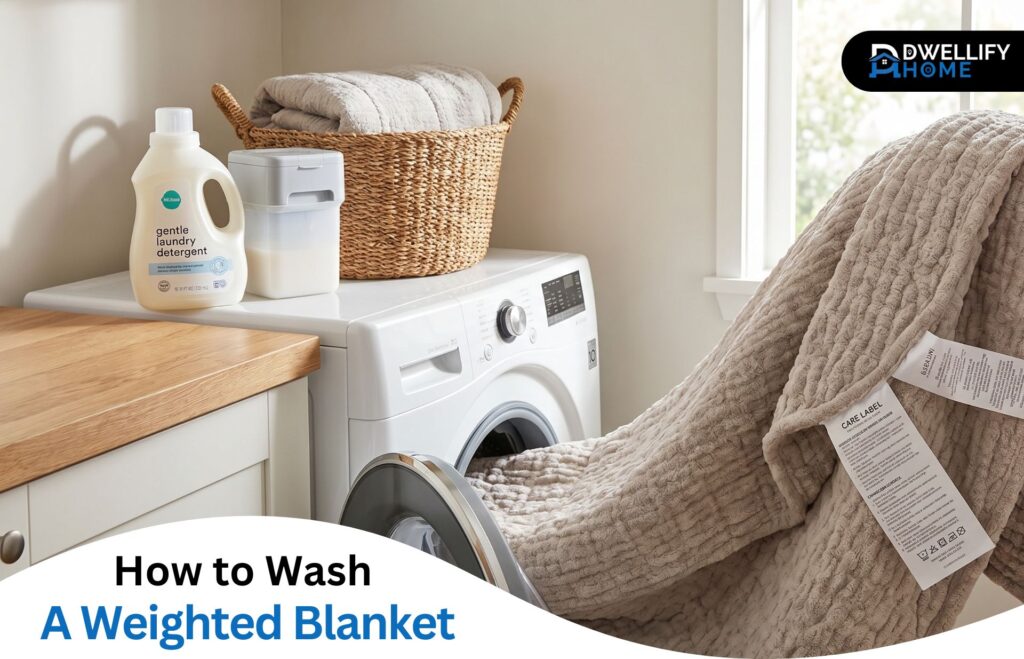
Weighted blankets take a lot of abuse — nightly use, body heat, sweat, the occasional spilled drink. And yet most people put off washing them far longer than they should, mostly out of fear. Fear of the beads clumping. Fear of damaging the seams. Fear of the machine struggling under all that weight. That hesitation is understandable, but it’s also usually based on not having the right information.
Washing a weighted blanket safely comes down to three things: knowing your fill type, respecting your washer’s limits, and following the right drying process all the way through. Get those three things right and you won’t ruin anything.
The Short Answer
To wash a weighted blanket safely, check the fill type and care label first. Machine wash on cold gentle cycle for washable fills, hand wash heavier or delicate blankets, and always air dry or tumble dry on low heat to prevent damage and clumping.
Mission Statement
At Dwellify Home, we help homeowners take better care of their living spaces — with practical, straightforward guidance on everything from bedding and laundry care to home styling and property decisions. Our goal is to make the right choice feel obvious, not overwhelming.
Can You Wash a Weighted Blanket at Home?
Yes — most weighted blankets can be washed at home, but not all of them. Whether yours can be safely cleaned at home depends on its fill material, its weight, and what the care label says. Blankets under 15 to 20 pounds with washable fills like glass beads or plastic pellets are generally safe for a standard large-capacity home washer.
Which Weighted Blankets Are Safe to Wash — And Which Are Not
Washable fill types include micro glass beads, plastic poly pellets, and steel shot beads. These materials hold up well in water and won’t break down with a proper cold wash.
Non-washable fills are a different story. Sand, rice, corn, and beans absorb water, swell, clump together, and can develop mold inside the blanket. Submerging these blankets — even once — can permanently ruin them. Spot cleaning is the only safe option for organic-filled blankets.
What to Do If Your Blanket Has No Care Label
Labels fade, get cut off, or simply weren’t attached well to begin with. Without one, don’t guess — work through a simple process. Check the manufacturer’s website first; most brands list care instructions by product name or style.
If that’s not possible, try to identify the fill type by feel. Glass beads feel like fine sand shifting inside. Plastic pellets are slightly larger and make a subtle rustling sound. If you genuinely can’t tell and the blanket is on the heavier side, default to hand washing in a bathtub using cold water and mild detergent. It’s always the safer fallback.
Quick Method Guide — Choose the Right Washing Approach
| Blanket Type | Best Washing Method | Drying Method |
| Under 15 lbs, washable fill | Home washing machine | Air dry or low tumble |
| 15–20 lbs, glass/steel beads | Front-load home or laundromat | Air dry flat |
| Over 20 lbs, any fill | Commercial laundromat or bathtub | Air dry flat |
| Organic fill (sand, rice, corn) | Spot clean only | Air dry spot only |
| Silk or wool outer fabric | Dry clean only | Professional dry |
| Minky or fleece outer fabric | Cold gentle machine wash | Air dry only |
Key Things to Know Before Washing
- Always check the care label before choosing any washing method
- Weighted blankets over 20 lbs should not go into a standard home washer
- Never use fabric softener, bleach, or hot water on any weighted blanket
- The fill type — not just the fabric — determines how the blanket must be washed
- Incomplete drying causes mildew inside the fill pockets within 24 to 48 hours
- Inspect seams for loose stitching before washing to prevent bead leakage
Before You Wash: A Quick Pre-Wash Checklist
Check for Ripped Seams or Loose Stitching First
This step gets skipped constantly, and it causes real problems. Before any washing method, run your hands across every seam and the quilted pocket edges. Even a tiny opening can allow beads or pellets to escape into your washer drum during the spin cycle. Once that happens, there’s no getting them back into the blanket evenly — the fill distribution is gone permanently.
Find a loose thread? Take five minutes to hand-stitch it closed before washing. It’s worth it.
Pre-Treat Any Stains Before the Full Wash
Spot treatment before a full wash gives you much better results than relying on the machine to handle set stains. Apply a small amount of mild liquid detergent directly onto the stain, let it sit for five minutes, then work it gently with a soft cloth.
Avoid aggressive stain removers with strong enzymes or bleaching agents on weighted blankets — they can weaken the outer fabric over time.
Remove the Duvet Cover and Wash It Separately
If your blanket has a removable cover, take it off before washing. The cover goes in as a regular laundry item. The blanket insert gets washed alone. This also extends how often you need to do a full blanket wash, since the cover absorbs most of the daily contact.
How to Wash a Weighted Blanket in a Washing Machine
The machine wash method works well for most blankets under 15 to 20 pounds with washable fill types. The key is using the right settings and giving the blanket enough room to move.
How Heavy Is Too Heavy for Your Home Washer?
The general rule is this: if your blanket weighs more than 20 pounds, your standard home washer is not the right tool. Even at 15 pounds, some older or smaller machines will struggle.
Front-load washers are significantly better for weighted blankets than top-load machines with agitators. The agitator in a top-loader can catch on the quilted pockets and put serious strain on the seams. If you only have a top-loader and your blanket is on the heavier side, hand washing or a commercial laundromat is the smarter choice.
Step-by-Step: Machine Washing a Weighted Blanket
- Load the blanket alone — no other laundry sharing the drum
- Select the gentle or delicate cycle, or the bulky/blanket cycle if your machine has one
- Set the water temperature to cold — always cold, regardless of fabric type
- Add one to two tablespoons of mild, fragrance-free, bleach-free liquid detergent
- Run an extra rinse cycle at the end to clear any detergent trapped in the fill pockets
- Set the spin speed to low — this reduces stress on the seams and keeps the machine balanced
Detergent, Water Temperature, and Cycle Settings — What Actually Matters
Cold water is the right choice for every weighted blanket, regardless of what the outer fabric is. Hot water risks shrinking the fabric, warping plastic pellets, and weakening the stitching that holds the fill pockets in place.
Never use fabric softener. It sounds harmless, but over repeated washes it builds up inside the fill pockets and on the fabric surface, leaving the blanket feeling stiff and less breathable. Bleach is equally off the table — it degrades both the outer fabric and the fill material over time, often in ways you don’t notice until the seams start giving out.
How to Wash a Weighted Blanket by Hand
When Hand Washing Is the Better Option
Hand washing is the right call when the blanket exceeds your washer’s weight limit, when the outer fabric is delicate (silk, wool), when you’re working with a glass bead fill and want maximum control, or when you simply don’t have access to a large-capacity machine.
Step-by-Step: Hand Washing in a Bathtub
- Clean the bathtub first — any residual cleaning product can transfer to the blanket
- Fill the tub with cold or lukewarm water
- Dissolve a small amount of mild detergent in the water before the blanket goes in
- Submerge the blanket fully and use gentle kneading motions — no scrubbing, no wringing
- Let it soak for 10 to 15 minutes
- Drain the tub and refill with clean water — rinse at least two to three times until the water runs completely clear
- Press down on the blanket firmly to push out excess water, then support it fully when lifting
One practical note: a wet weighted blanket is genuinely heavy. What weighed 15 pounds dry can feel closer to 30 pounds saturated with water. Have someone help you lift it from the tub to avoid straining yourself or dropping it.
How to Spot Clean a Weighted Blanket (No Machine Needed)
Spot cleaning is for situations where only part of the blanket needs attention — a small spill, a surface mark, or a smell coming from one area. It’s also the only appropriate method for blankets with organic fills.
Step-by-Step Spot Cleaning for Small Stains
Dampen a clean cloth with cold water and apply a small drop of mild soap. Work the cloth in a gentle circular motion over the stain, then use a second damp cloth to rinse the area thoroughly. Let that spot air dry completely before using the blanket again.
How to Handle Different Stain Types
Different stains respond to different approaches:
- Food and drink stains — mild dish soap diluted in cold water works well applied with a damp cloth
- Body oil and sweat stains — a diluted white vinegar solution (equal parts vinegar and water) helps break down the residue without damaging the fabric
- Pet accidents — use a cold-water enzyme-based cleaner; never use hot water on urine stains as heat sets the protein and makes the smell permanent
Washing by Fill Type — What’s Inside Your Blanket Changes Everything
Glass Beads — Machine Washable With Care
Glass beads are heat-stable, which makes them one of the safer fills for machine washing. The concern is abrasion — at high temperatures or with aggressive spin cycles, beads can become abrasive against the inner fabric. Always use cold water and a low spin setting. For extra protection, placing the blanket inside a large mesh laundry bag keeps the beads contained and reduces friction during the wash.
Plastic Poly Pellets — Cold Water Only, No Dryer Heat
Plastic pellets are not heat-stable. Even low dryer heat can cause them to warp or partially melt, which changes the way the weight distributes inside the blanket. Cold water washing is mandatory, and air drying is strongly recommended. If the care label specifically permits low dryer heat, keep the setting at the lowest option and check frequently.
Steel Shot Beads — Most Durable Fill Type
Steel shot beads are the most forgiving fill type when it comes to washing. They’re heat-stable and handle machine washing well. The only consideration is weight — steel beads are dense, so even a mid-sized blanket can push the limits of a home washer. Always check the machine’s weight capacity before loading.
Organic Fillings (Sand, Rice, Corn, Beans) — Do Not Submerge
Water destroys organic fills. They absorb moisture, swell, clump, and create conditions for mold growth inside the sealed pockets — which you won’t even be able to see until it’s too late. Spot cleaning is the only option. Using a washable duvet cover over these blankets is the most practical way to keep them manageable long term.
Washing by Fabric Material — Your Outer Shell Matters Too
Cotton — Straightforward but Watch the Temperature
Cotton weighted blankets handle cold or warm machine washing well. Hot water is the only thing to avoid — it causes noticeable shrinkage. Wash alone on a gentle cycle and you’ll have no issues.
Fleece and Minky — Gentle Cycle, Air Dry
Both fleece and minky fabrics pill with aggressive washing. Turn the blanket inside out if possible, use a cold gentle cycle, and skip the dryer entirely. Air drying keeps the texture intact.
Bamboo — Hand Wash Preferred for Longevity
Bamboo can technically go in the machine on a delicate cycle, but the fibers hold up significantly longer with hand washing. If machine washing is more convenient, keep the cycle gentle and water cold.
Linen Blends — Cold Only, No Tumble Drying
Linen is prone to shrinkage and doesn’t respond well to heat at any stage. Dry cleaning is the safest method. If that’s not practical, a cold gentle machine wash followed by flat air drying is the fallback.
Silk — Dry Clean Only
Silk weighted blankets should not go into a washing machine under any circumstances. The agitation damages the fibers even on the most delicate settings. Professional dry cleaning is the correct method. In a genuine emergency, hand washing in cold water with minimal detergent and no wringing is the absolute limit of what silk can handle safely.
How to Dry a Weighted Blanket Without Ruining It
Getting the wash right matters. But incomplete or improper drying causes just as many problems — and they often show up days later in the form of mildew, persistent odor, or clumped fill.
Air Drying — The Safest Method for Any Fill Type
Lay the blanket completely flat on a clean, ventilated surface. Never hang a weighted blanket from a single point — the concentrated weight stretches the seams and forces the fill to one end. Flip it every four hours to ensure even drying throughout. Expect the process to take 24 to 48 hours depending on the blanket’s weight and the humidity in your space. Pointing a fan directly at the blanket significantly speeds up indoor drying.
Tumble Drying on Low Heat — When It’s Safe and How to Do It
Low heat tumble drying is safe for cotton, fleece, and steel shot bead blankets when the care label allows it. Add two clean dryer balls to the drum — they help redistribute the fill and prevent pockets of damp fill from compressing together. Pause the dryer every 30 minutes, open the drum, and manually shake and reposition the blanket before continuing.
How to Tell If Your Blanket Is Fully Dry (And Why It Matters)
Press your hand firmly into every corner and along each quilted section. The outer fabric will feel dry long before the fill pockets are. Damp fill inside a sealed blanket will develop mildew within 24 to 48 hours of being folded and put away. If any section still feels dense or cool to the touch, keep drying. Don’t rush this step.
Why Is My Weighted Blanket Clumping After Washing — And How Do I Fix It?
Why Clumping Happens and How to Prevent It
Clumping is almost always caused by two things: the spin cycle moving fill to one end of each pocket, and the blanket drying flat without any redistribution in between. High spin speeds make this worse. Preventing it starts with using a low spin setting during washing and pausing the drying process partway through to manually work the fill back into position.
How to Redistribute Fill After Washing
While the blanket is still slightly damp — not wet — lay it flat and use both hands to firmly massage each quilted pocket. Work from the corners inward. Pat each section back into a flat, even layer. If you’re using a dryer, the dryer balls do most of this work for you by tumbling against the blanket continuously.
Mistakes That Can Ruin a Weighted Blanket (And Are Easy to Avoid)
- Using hot water — shrinks fabric, warps plastic pellets, and weakens the thread holding the seams
- Adding fabric softener — builds up over time and makes the blanket stiff and less breathable
- Using bleach — breaks down fiber integrity and degrades fill material gradually
- Overloading the washer — the blanket doesn’t get cleaned properly and machine strain increases seam damage risk
- Skipping the extra rinse — detergent trapped in thick fill pockets irritates skin and causes stiffness after drying
- Not checking seams before washing — a small opening becomes a major problem the moment the spin cycle starts
- Drying on high heat — melts plastic pellets and can crack glass beads, permanently altering how the weight distributes
- Hanging a heavy blanket to dry — shifts fill toward the lowest point and puts concentrated stress on the top seam
How to Freshen Up Your Weighted Blanket Between Washes
How to Remove Odors Without a Full Wash
Lightly dust baking soda across the blanket’s surface and leave it for 30 minutes before shaking it off thoroughly. Alternatively, a light mist of a fabric-safe enzyme spray — not saturated, just a fine mist — neutralizes odors at the source without needing a full wash. Hanging the blanket outdoors in indirect sunlight for two to three hours also does more than most people expect.
Using a Duvet Cover to Cut Down on Wash Frequency
A removable, washable duvet cover is one of the most practical investments for weighted blanket care. It absorbs the daily contact — skin oils, sweat, dust — so the blanket itself stays clean much longer. Wash the cover every one to two weeks like regular bedding. The blanket itself, with a cover in place, typically only needs a full wash every one to two months.
How Often Should You Wash a Weighted Blanket?
There’s no single answer that works for every household. The right frequency depends on how you use it.
| Usage Pattern | Recommended Wash Frequency |
| Used nightly, no cover | Every 2–4 weeks |
| Used nightly, with duvet cover | Every 1–2 months |
| Shared or used by children | Every 2–3 weeks |
| Occasional use or stored | Every 3–6 months or before storage |
| After illness or pet contact | Wash immediately |
| Seasonal use (stored away) | Wash before storing and before first use |
The calendar is just a guide. A blanket that’s heavily used every night without a cover needs more frequent washing than one used occasionally on the sofa. Let the actual condition of the blanket inform your decision.
When Should You Take a Weighted Blanket to a Professional?
Some situations genuinely call for professional handling. If your blanket weighs more than 20 pounds and you don’t have access to a large-capacity washer, the risk of home washing outweighs the convenience. The same applies to blankets labeled dry clean only, those with silk or delicate outer fabric, and any blanket that has visible seam damage that needs repair before cleaning.
Before going straight to a dry cleaner, consider a commercial laundromat. Front-load machines at laundromats typically handle 20 to 40 pounds comfortably and cost a fraction of professional dry cleaning. For most heavy blankets, it’s the most practical middle ground.
How to Store a Weighted Blanket After Washing
Complete drying is non-negotiable before storage. Even slightly damp fill in a folded blanket stored in a closet will develop mildew — and by the time you smell it, the damage is already done.
Fold the blanket loosely rather than compressing it tightly. Tight folding puts repetitive stress on the same seam lines and can cause fill to shift to the edges over time. Store it in a breathable cotton bag or a large pillowcase — never in a sealed plastic bag, which traps any remaining moisture. Keep it somewhere cool and dry, away from direct sunlight.
Frequently Asked Questions
Can you wash a weighted blanket with glass beads in a washing machine?
Yes. Glass bead blankets can be machine washed on a cold gentle cycle with a low spin setting and mild detergent. Placing the blanket in a large mesh laundry bag before loading gives the beads extra protection against abrasion during the wash cycle. Avoid heat at every stage.
How do you wash a weighted blanket with sand filling?
Do not submerge a sand-filled blanket in water. Sand absorbs moisture, becomes permanently compacted, and creates conditions for mold inside the sealed pockets. Spot cleaning with a damp cloth and mild soap is the only appropriate method. A washable duvet cover is the best way to protect it between cleanings.
How do you wash a 20 lb weighted blanket?
A 20 lb blanket exceeds the safe capacity of most standard home washers. The safest options are a large-capacity front-load commercial washer at a laundromat, or hand washing in a bathtub using cold water and mild detergent. Attempting to machine wash it at home risks damaging both the blanket and the machine.
Can a weighted blanket go in the dryer?
It can, under the right conditions. Low heat or air-only settings are the only safe options, and always check the fill type first. Plastic pellets should not go in the dryer unless the label explicitly allows low heat. Add dryer balls, pause every 30 minutes to redistribute the fill, and confirm the blanket is fully dry before removing it.
How long does it take a weighted blanket to dry?
Air drying takes 24 to 48 hours depending on the blanket’s weight and the humidity level in your space. Tumble drying on low heat takes roughly two to four hours with periodic pausing and fluffing. Rushing either method risks leaving damp fill inside — which leads to mildew within a day or two of storage.
What detergent is safe for a weighted blanket?
A mild, fragrance-free, bleach-free liquid detergent is the right choice. Use one to two tablespoons per wash — significantly less than a standard laundry load. Powder detergents can leave residue in thick fill pockets. Fabric softener should never be used, regardless of the fabric type.
How do you wash a weighted blanket that was peed on?
Remove it immediately and do not let it dry before treating. Cold water only — hot water sets urine protein into the fabric permanently. Apply an enzyme-based cleaner directly to the affected area and let it work for five to ten minutes before rinsing. Then machine wash alone on a cold gentle cycle with mild detergent and an extra rinse.
Can I wash a minky weighted blanket in the washing machine?
Yes, but carefully. Use a cold gentle cycle, wash the blanket alone, and turn it inside out before loading if possible. Skip the dryer entirely — air drying is the only way to preserve the soft texture of minky fabric over time. Heat causes pilling that can’t be reversed.
Conclusion
Washing a weighted blanket doesn’t have to be complicated — but it does need to be deliberate. Once you know your blanket’s fill type, understand your machine’s limits, and follow the drying process all the way through, there’s genuinely very little that can go wrong. The blanket that felt like a risk to wash is usually just one careful cycle away from feeling completely fresh again.
Disclaimer
The content on Dwellify Home is provided for general informational purposes only. Weighted blanket care instructions can vary based on brand, construction, fill material, and individual washing equipment. Always follow the manufacturer’s care label as the primary guide. Results and suitability may vary depending on your specific blanket and home setup.