
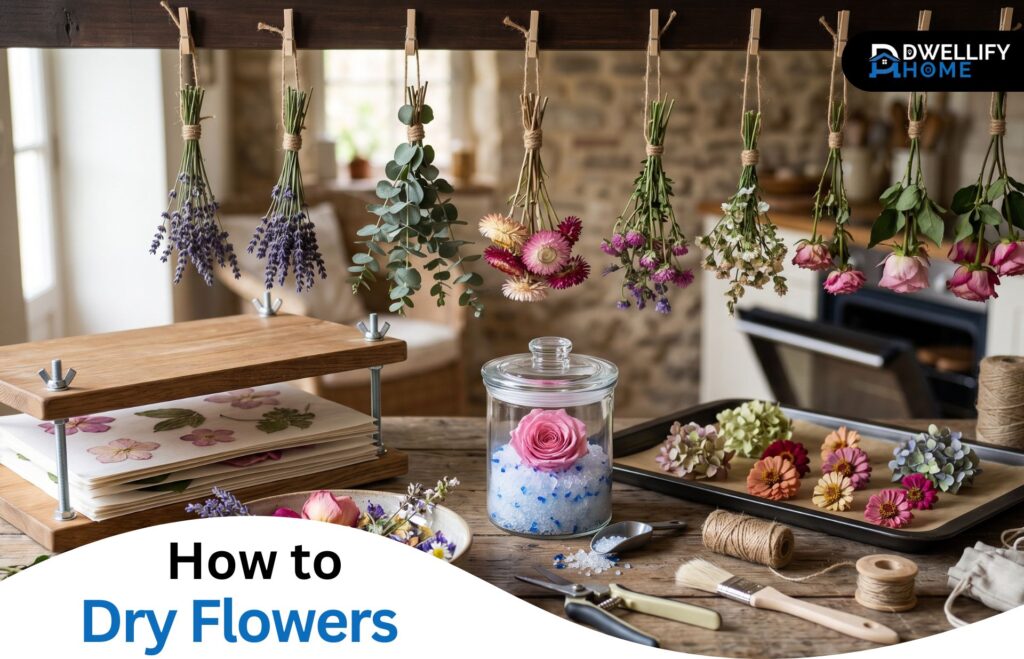
There’s a moment most people recognize — standing over a vase of flowers that are just starting to turn, knowing they’re beautiful right now but won’t be in two more days. Maybe it’s a bouquet someone gave you that carries a little weight behind it. Maybe it’s the roses from your garden that only bloom once a year. Maybe you spent real money on them and throwing them away feels wasteful.
Whatever the reason, the impulse to hold onto flowers is completely natural. And the good news is, you don’t need a professional setup to do it well. Drying flowers at home is genuinely achievable — you just need to understand which method fits your situation, because not all methods work the same way, and using the wrong one for the wrong flower is where most people go wrong.
This guide covers every reliable method for drying and preserving flowers at home, from the simplest free technique you can start today to more precise approaches that give you results worth displaying for years. It also covers what most articles skip: what to do before you dry, how to match the method to your goal, and how to keep dried flowers looking good long after they’re done.
The Short Answer
Drying flowers is the process of removing moisture from blooms to preserve their shape, color, and structure long-term. It extends the life of fresh flowers from days to years and is used for home décor, keepsakes, crafts, and resin projects.
Dwellify Home
At Dwellify Home, our goal is straightforward: to help homeowners make practical, well-informed decisions about their living spaces. Whether it’s home décor, garden ideas, outdoor living, or everyday home solutions, we focus on real guidance that fits real homes — no filler, no trends for the sake of it, just honest advice you can actually use.
Why Drying Flowers Is Worth the Effort
Preserving Flowers That Mean Something
Some flowers carry a story. A wedding bouquet. Roses from a partner. The first blooms from a garden you planted yourself. These aren’t purely decorative — they’re sentimental objects, and preserving them properly means holding onto something real.
The key here is acting early. Sentimental flowers are the ones people most often wait too long to preserve, trying to enjoy them fresh for a few more days. That delay costs you color, shape, and petal integrity. The best dried versions always come from flowers that were dried while still close to their peak.
A Cost-Effective Way to Decorate Your Home
Dried flower arrangements have had a real design moment in recent years, and for good reason. A well-executed dried arrangement lasts indefinitely when cared for properly, and learning to dry your own means you’re not paying the premium that pre-dried stems from florists or home décor shops typically carry.
With practice, you can refresh your home’s look seasonally using whatever is growing in your garden or picked up at a local market — at almost no cost beyond a little time.
The Sustainable Side of Dried Flowers
Most cut flowers end up in landfill within two weeks of purchase. Drying them extends that life by months or even years. If you already buy fresh flowers regularly, developing the habit of drying some before they turn is a low-effort way to reduce waste and get more from blooms you’re already bringing home.
Quick Method Comparison Guide
| Method | Time Required | Best For | Skill Level |
| Air Drying | 2–4 weeks | Bouquets, décor, bulk drying | Beginner |
| Vase Drying | 3–4 weeks | Hydrangeas, upright shapes | Beginner |
| Silica Gel | 3–7 days | Color & shape retention, wedding bouquets | Intermediate |
| Microwave | Under 1 hour | Speed, single flower heads | Intermediate |
| Oven Drying | 2–4 hours | Small batches, sturdy blooms | Beginner |
| Pressing (Book) | 2–4 weeks | Flat flowers, framing, resin coasters | Beginner |
| Food Dehydrator | 4–12 hours | Bulk drying, even results | Beginner |
| Glycerine Method | 2–6 weeks | Foliage, branches, soft stems | Intermediate |
Key Benefits of Drying Flowers at Home
- Preserves flowers from weddings, anniversaries, or personal gardens for years
- Creates long-lasting home décor at a fraction of the cost of pre-dried arrangements
- Reduces waste by extending the life of cut flowers before they turn
- Gives full control over color, shape, and finish depending on the method used
- Supplies dried blooms for resin crafts, pressed flower art, potpourri, and wreaths
- No professional equipment required for most methods
How to Pick and Prepare Flowers Before You Dry Them
This is the section most people skip — and it’s the reason most first attempts don’t turn out the way they hoped. The quality of a dried flower starts entirely with what you put into the process.
The Best Time to Cut Flowers for Drying
Cut flowers in the morning, after any dew has evaporated but before the heat of the day builds. Flowers hold more moisture during afternoon heat, which makes them more prone to drooping and color loss during drying.
On bloom timing: aim for flowers that are at about three-quarters open, not fully bloomed. A flower at three-quarters will continue opening slightly as it dries and end up looking full and complete. A fully blown flower will shed petals and lose structure. Also avoid cutting after rain or on humid days — wet blooms dry slowly and are much more prone to developing mold before the process is done.
Which Blooms Are Worth Drying (and Which Aren’t)
The flowers that dry most reliably have two things in common: relatively low water content in their petals, and enough structural strength to hold their shape as moisture leaves.
Roses, lavender, hydrangeas, strawflowers, statice, celosia, baby’s breath, yarrow, peonies, and pampas grass all perform well across most drying methods. Flowers with very thin petals — like soft-petaled daisies and asters — are harder to dry without significant petal loss. High-moisture flowers like tulips and lilies are the most challenging and are best attempted once you’ve had some practice with more forgiving varieties.
How to Prep Your Stems Before Any Method
Regardless of which method you choose, the preparation is the same. Strip all foliage from the stem — leaves trap moisture and slow drying considerably, and they rarely dry attractively. Remove any petals that are bruised, browning, or damaged. Trim the stem to a length that suits your intended use, erring slightly longer since you can always cut down later.
For roses, consider leaving the outer guard petals on — those slightly rough outer petals protect the bloom during drying and often create a more interesting final shape.
Which Drying Method Should You Use?
With eight methods covered in this guide, knowing which one fits your situation before you begin saves a lot of time and frustration.
Do You Want to Keep the Shape or Flatten the Flower?
This is the most important question, and it immediately narrows your options. For three-dimensional flowers — ones that will sit in a vase, go into a wreath, or be used in resin pours — you need a shape-preserving method: air drying, the vase method, silica gel, microwave, oven, or a food dehydrator. For flat flowers suited to framing, botanical prints, resin coasters, or greeting cards, pressing is the right choice.
How Much Time Do You Have?
Air drying and pressing both take two to four weeks. Silica gel takes three to seven days. The oven takes a few hours. The microwave takes under an hour. If you need results quickly, microwave and oven methods are your fastest options. If patience isn’t the issue and simplicity matters most, air drying requires almost no effort beyond setup.
What Will You Use the Dried Flowers For?
For resin work, you need bone-dry flowers — silica gel and the microwave method are the most reliable. For home décor and vase arrangements, air drying and the vase method work well. For wedding bouquet preservation where color matters most, silica gel is consistently the best performer. For potpourri, any method that retains some fragrance works, with lavender being a standout for air drying specifically.
Method 1 — Air Drying: The Simplest Way to Dry Flowers
Air drying is the oldest and most accessible flower preservation technique. It requires no special equipment and almost no skill. What it does require is time and the right conditions.
What You’ll Need
- Fresh, prepared flower stems
- Rubber bands or twine
- A hook, rod, or length of string to hang from
- A dry, dark, well-ventilated space
Step-by-Step: How to Hang Flowers Upside Down
Group your flowers into small bunches of five to six stems maximum. Smaller bunches allow air to circulate through the center of each bundle, which matters more than most people expect. Large bunches create a dense core where moisture stays trapped — stems in the middle either stay soft or develop mold while the outer flowers look fine.
Secure each bunch at the base with a rubber band rather than string. Rubber bands contract as stems shrink during drying, keeping the bunch firmly together. String tied tight at the start often becomes loose as the stems reduce in diameter.
Hang the bundles upside down from your chosen support. This position encourages flower heads to dry in their natural shape rather than drooping to one side.
Where to Hang Them in Your Home
Look for somewhere dark, warm, and with reasonable airflow. Direct sunlight bleaches petals quickly, and high humidity slows the process and risks mold.
Practical options in a real home include the inside of a wardrobe left slightly ajar, a spare room without much light, a cupboard under the stairs, a dry basement, or an attic with good airflow. Kitchens seem like a logical choice but are actually poor environments because of the steam and humidity generated during cooking. Bathrooms are equally unsuitable for the same reason.
How to Tell When They’re Fully Dry
The petals should feel dry and slightly crisp — not papery and crumbling, but no longer soft. When you gently squeeze the stem, it should feel firm rather than flexible. If the stem still bends without cracking, give it another week.
Most flowers are ready in two to three weeks. Thicker stems and higher-moisture varieties like hydrangeas can take four weeks. Removing flowers too early is the most common cause of them going soft or floppy after being displayed.
Best Flowers for Air Drying
Lavender, roses, baby’s breath, statice, celosia, strawflowers, yarrow, pampas grass, eucalyptus, poppy seed heads, dried grasses, and most herbs all air dry reliably. Hydrangeas are a particular standout — cut them when the petals already feel slightly papery on the plant and they’ll air dry with excellent shape and longevity.
Method 2 — Drying Flowers Upright in a Vase
This method differs from air drying in one meaningful way: the flowers stand upright rather than hanging. The result is a slightly different, more natural head shape that works especially well for certain varieties.
When This Method Works Best
Hydrangeas are the prime candidate here. Dried upright in a vase without water, they develop a full, papery, sculptural shape that holds together extremely well. Peonies cut later in their bloom cycle, and some rose varieties, also respond well to this approach.
This method is also useful when you want to display flowers while they dry. You don’t need to hide them in a dark space — they can sit in a vase on a shelf and continue to look presentable as they slowly preserve themselves.
Step-by-Step: How to Dry Flowers in a Vase
Cut the stems to your desired length, remove all foliage, and place the flowers in a clean, dry vase — no water. Position the vase somewhere with reasonable airflow and away from direct sunlight. Leave them undisturbed for three to four weeks. Check occasionally for any sign of mold around the base of the stems, and remove any affected flowers immediately if you spot it.
Method 3 — Silica Gel: The Best Method for Color and Shape
Silica gel consistently produces the most vibrant, lifelike dried flowers of any method. It’s not the simplest, but if color retention and shape matter — particularly for display or wedding keepsakes — it’s the one worth learning.
How Silica Gel Works on Flowers
Silica gel is a desiccant — it actively draws moisture out of whatever it’s in contact with. When flowers are buried in it, the gel absorbs the moisture from petals and stems before the petals can shrink, wilt, or discolor. The result is a dried flower that looks remarkably close to its fresh state. Silica gel can be purchased at craft stores and online, and despite the initial cost, it’s reusable many times over.
One safety note worth mentioning: some silica gel products, particularly older formulations containing blue color indicators, contain copper compounds. Wear gloves and a basic dust mask when handling any silica gel — the fine particles aren’t something you want to inhale or get in your eyes.
Step-by-Step: Drying Flowers with Silica Gel
Pour a layer of silica gel about one and a half inches deep into an airtight container. Place your prepared flowers on top — face up for single flowers, or nestled carefully to maintain petal position. Gently pour more silica gel over and around the petals, working carefully into the spaces between them so every part of the bloom is surrounded.
Seal the container and store it somewhere dry and undisturbed. Check after two days by carefully brushing back a little gel near one flower. Most flowers are ready in three to seven days depending on their density and moisture content.
When ready, gently remove the flowers and use a soft brush — an artist’s brush or a clean makeup brush works perfectly — to dust off any remaining gel from the petals.
How to Reuse Silica Gel After Drying
Once the gel has absorbed moisture it changes color (usually from blue to pink, or from white to translucent depending on the type). Spread it on a baking tray and place it in an oven at a low temperature — around 120°C — for an hour. This drives out the absorbed moisture and the gel returns to its original color, ready to use again. Stored in a sealed container, it lasts indefinitely.
Best Flowers for the Silica Gel Method
Roses, peonies, dahlias, zinnias, daffodils, daisies, and hydrangeas all respond particularly well to silica gel drying. It’s also the recommended method for preserving wedding bouquets where color fidelity matters most.
Method 4 — How to Dry Flowers in the Microwave
The microwave method is the fastest way to dry individual flower heads or small blooms while retaining good color. The trade-off compared to conventional silica gel drying is a slight reduction in color vibrancy, but it’s still far better than air drying when speed is the priority.
What You’ll Need
- Silica gel
- A microwave-safe container with a lid
- A microwave
- A soft brush for cleanup
- Gloves for handling the gel
Step-by-Step: Microwave Drying with Silica Gel
Place a one-inch layer of silica gel in a microwave-safe container. Position your flower head face up and gently pour more gel over it until completely covered. Place the container in the microwave without the lid.
Microwave on medium power in 30-second bursts, checking the flower between each burst. Different flowers need different times — thin-petaled blooms may be done in one to two minutes, while denser flowers like roses can take two to three minutes total. Stop when the petals feel dry but not brittle.
Leave the lid off and allow the container to cool completely — this can take up to 24 hours, as silica gel retains heat. Only remove the flower once everything has fully cooled.
How to Avoid Burning or Over-Drying
Never microwave on full power — it concentrates heat unevenly and scorches petals fast. Always use medium or low settings and check frequently. Keep a small glass of water in the microwave alongside the container to reduce the risk of overheating. If petals start to look translucent or feel papery and crumbling rather than just dry, you’ve gone slightly too far — dial back the time for your next flower.
Method 5 — How to Dry Flowers in the Oven
Oven drying is a practical middle-ground method — faster than air drying, more straightforward than silica gel, and good for small to medium flowers with some structural firmness.
Step-by-Step: Oven Drying at Low Temperature
Preheat a convection oven to its lowest setting — ideally around 40°C (100°F). If your oven doesn’t go that low, crack the door slightly to let heat escape. Remove stems, leaving just the flower head and a short length of stem for handling. Place flowers face up on a baking rack set over a lined tray — the rack allows airflow underneath, which matters.
Check every 30 minutes. Most flowers take between two and four hours depending on thickness. They’re ready when petals feel crisp but not crumbling. Remove and allow to cool completely before handling or displaying.
Best Flowers for Oven Drying
Chrysanthemums, small rose varieties, lavender, and celosia all respond well to oven drying. Roses should have their petals separated rather than dried whole, as the dense center is difficult to dry completely without browning. Very delicate or thin-petaled flowers generally don’t suit this method.
Oven vs. Microwave — Which Is Faster?
The microwave wins on speed for individual flowers — under an hour versus two to four hours for the oven. However, the oven handles more volume at once and doesn’t require silica gel, making it more practical when you’re drying a larger batch. For a single rose head, the microwave is faster. For half a dozen mixed blooms, the oven is more manageable.
Method 6 — How to Press and Flat-Dry Flowers
Pressing produces flat, two-dimensional flowers with defined petal structure — ideal for framing, resin coasters, botanical prints, cards, and craft projects. It’s the go-to when shape isn’t the goal and a delicate, detailed result is.
The Book Method: Free and Beginner-Friendly
Place a sheet of absorbent paper — blotting paper, newspaper, or plain paper towel — on an open page of a large, heavy book. Lay flowers face down in a single layer, making sure petals don’t overlap. Cover with another sheet of paper, then close the book carefully.
Stack additional heavy books or objects on top to increase pressure. Store somewhere warm and dry. Replace the paper after the first week to absorb released moisture and reduce the risk of mold. Most flowers are fully pressed in two to three weeks.
Using a Flower Press for Cleaner Results
A flower press — a wooden frame with tightening bolts — applies more even, consistent pressure than a book and produces cleaner pressed results with less curling at the edges. The process is the same: layer cardboard, absorbent paper, flowers, paper, cardboard, and tighten. Check and replace paper after the first week. Results are typically ready in two to four weeks.
The Iron Method for Quick Pressing
For a faster result, place the flower between two sheets of parchment paper and press with a warm — not hot — iron for 10 to 15 seconds at a time. Empty the iron of water first. Repeat, checking between each press until the flower feels dry and flat. This method takes minutes rather than weeks but produces less refined results and can scorch delicate petals if the iron is too warm.
Best Flowers to Press Flat
Pansies, violas, daisies, delphinium, small lavender sprigs, anemones, and ferns all press beautifully. Avoid thick, multi-layered flowers like full roses or peonies — the center never dries flat and tends to go moldy. Those are better suited to three-dimensional methods.
Method 7 — Using a Food Dehydrator for Bulk Drying
A food dehydrator is genuinely useful when you’re drying flowers in volume — at the end of a garden season, for instance, or when you want to work through a large harvest efficiently. It’s steady, hands-off, and more controllable than an oven.
Step-by-Step: Drying Flowers in a Dehydrator
Remove stems so only the flower head remains. Place flowers in a single layer on the dehydrator trays, making sure none overlap. Set the temperature to 35–40°C (95–105°F). Check every two to three hours. Small, open-faced flowers like lavender and chamomile typically finish in four to six hours. Denser blooms can take eight to twelve hours.
Designate a specific tray for flowers only — dehydrators can retain scent between uses, and you don’t want your next batch of dried fruit to carry floral overtones.
Dehydrator vs. Oven — What’s the Real Difference?
The main practical difference is consistency. Dehydrators maintain a very steady low temperature with good airflow throughout, which reduces the risk of accidentally browning petals. Ovens can have hot spots and aren’t always reliable at the lowest settings. For bulk volume with less monitoring, a dehydrator is more reliable. For occasional use with a small number of flowers, an oven is perfectly adequate.
Method 8 — The Glycerine Method for Foliage and Stems
This method is rarely covered in most flower drying guides, which is a missed opportunity — it’s the most effective technique for preserving foliage and woody stems, and the results are distinctly different from anything the other methods produce.
What the Glycerine Method Does to Foliage
Rather than removing moisture and leaving the plant dry and brittle, glycerine replaces the moisture within the plant’s cells with glycerine itself. The result is foliage that remains soft, supple, and leathery — flexible rather than crisp. Colors deepen and shift rather than fade: greens become darker or bronze-toned, which creates a rich, earthy aesthetic that works beautifully in autumn and winter arrangements.
Step-by-Step: How to Preserve Foliage with Glycerine
Mix one part glycerine with two parts hot water and stir until fully combined. Pour the mixture into a clean jar or vase to a depth of about 10 centimetres. Trim the stem ends cleanly and place the foliage or branches into the solution. Keep them in a stable environment away from direct light.
Leave for two to six weeks, checking regularly. The glycerine has been absorbed fully when the leaves feel completely supple and leathery throughout — including the tips. Some foliage will also show visible color change, which is a reliable indicator of completion.
Best Foliage and Stem Types for This Method
Beech branches, eucalyptus, ferns, box (Buxus), ivy, magnolia leaves, and olive branches all preserve well using this method. It’s less suited to flower heads and works specifically with foliage and stems that can draw liquid up through their stems.
The Best Flowers for Drying — and a Few That Don’t Work
Flowers That Dry Beautifully at Home
The most reliable flowers for home drying are: roses, lavender, hydrangeas, peonies, strawflowers, statice, baby’s breath, celosia, yarrow, zinnias, marigolds, amaranth, gomphrena, and most ornamental grasses and seed heads. These varieties hold their structure well, lose color gradually rather than completely, and give consistently good results across most drying methods.
Flowers That Are Difficult to Dry (and Why)
Tulips, lilies, and most tropical flowers have very high water content and delicate petal structures that don’t survive the slow moisture-removal process without significant distortion or discoloration. Sunflowers can be tricky — the petals often fall out during air drying, though the seed heads themselves dry well. Soft-petaled daisies tend to shrivel rather than dry neatly. These aren’t impossible to work with, but they require silica gel or the microwave method rather than the simpler approaches.
Which Flower Colors Hold Best After Drying?
Deep purples, blues, and pinks tend to retain color best through most drying processes. Bright reds often deepen to a wine or burgundy tone, which some people actually prefer. Yellows and oranges tend to mute and may brown slightly. White flowers can develop a cream or ivory quality that reads beautifully in arrangements. Keeping dried flowers out of direct sunlight after drying preserves whatever color remains for far longer.
How to Dry Flowers for Specific Uses
How to Dry Flowers for Resin
For resin work, complete dryness is non-negotiable. Any residual moisture trapped inside a flower will cause cloudiness, bubbling, or mold to develop inside the resin over time. Silica gel drying is the most reliable method for resin flowers — followed by the microwave method if speed is needed. After removing from silica gel, leave flowers on a paper towel in a warm, dry space for an additional 24 hours before embedding in resin, just to ensure no surface moisture remains.
Flat flowers pressed using the book or press method also work well for resin coasters and trays, where a two-dimensional look is the goal.
How to Dry Flowers for Home Decoration
For vases, wreaths, wall hangings, and table centerpieces, air drying and the vase method produce the most naturally decorative results. The slight color shifting and textural change that happens with air drying actually adds to the visual character of a dried arrangement — that warm, earthy quality is part of the appeal.
Seal finished arrangements lightly with unscented hairspray to protect against petal loss. Keep them away from humid rooms like bathrooms and kitchens, and out of direct sunlight.
How to Preserve a Wedding Bouquet at Home
Wedding bouquets are best preserved with silica gel, ideally started within 24 to 48 hours of the wedding. Air drying works but produces more color fading and some petal loss, which may be acceptable for a rustic display but less so if fidelity to the original bouquet matters.
If the bouquet is complex — multiple flower types at different stages of bloom — separate the flowers by variety and dry them individually, then reassemble once dried. Different flowers have different drying times, and mixing them in one silica gel container risks over-drying some while under-drying others.
How to Dry Flowers for Potpourri
For potpourri, fragrance retention is the priority alongside visual appeal. Lavender, rose petals, chamomile, and marigold petals all dry well for this use. Air drying preserves fragrance better than heat-based methods, so if scent matters — and for potpourri it does — stick to air drying or silica gel over the oven or microwave.
Once dry, you can add essential oils to boost or restore fragrance. Rose essential oil with dried rose petals, or lavender oil with dried lavender — kept in a shallow bowl or fabric sachet — makes a simple, effective home fragrance display.
How to Store and Care for Your Dried Flowers
How Long Do Dried Flowers Actually Last?
With proper care, dried flowers last between one and three years before significant fading or deterioration. Some — particularly silica-dried flowers kept out of light — hold well for longer. The most common causes of early deterioration are direct sunlight, humidity, and physical damage from being handled too frequently.
The Right Way to Store Dried Flowers
If you’re storing dried flowers rather than displaying them, place them in a cardboard box (not plastic — plastic can trap residual moisture). Lay them with care and fill gaps gently with crumpled tissue paper to prevent movement and breakage. Keep the box somewhere cool, dark, and dry. A storage cupboard or under a bed away from exterior walls works well.
Never store dried flowers in a garage or garden shed — temperature fluctuations and humidity will cause rapid deterioration.
How to Clean and Dust Dried Arrangements Over Time
Dust is inevitable. The simplest way to clean dried arrangements is with a hairdryer set to its lowest heat and speed, held at a distance of about 30 centimetres. This blows dust off without disturbing delicate petals the way touching them would.
For light surface dust on sturdier varieties, a soft watercolor brush works well. Never use a damp cloth or any water-based cleaning method — moisture and dried flowers are incompatible.
How to Seal Dried Flowers and Protect Their Color
Spraying finished arrangements lightly with unscented hairspray is the most practical way to protect them. It adds a small amount of structural support to petals and reduces the rate of color fading. Apply lightly from a distance of around 30 centimetres — you want a light mist, not a saturated coat. Repeat every few months for arrangements on permanent display.
Mistakes That Ruin Dried Flowers (and How to Avoid Them)
Drying Flowers That Are Already Past Their Best
The single most common mistake, and the hardest to fix. If a flower is already soft, browning at the edges, or has lost its structural integrity, no drying method will save it. The flower will dry in its compromised state. Catch flowers one to two days before they reach peak fullness for the best results.
Skipping the Foliage Removal Step
Leaving foliage on the stem during drying dramatically slows the process and creates dense pockets where moisture lingers. That trapped moisture is where mold develops. Stripped stems dry faster and cleaner, every time.
Exposing Flowers to Light During Drying
Color loss during drying is primarily caused by light, not the drying method itself. A flower air-dried in a bright room will lose most of its color in the first week. The same flower dried in a dark cupboard will hold its color through the full drying period and beyond. Darkness during drying is not optional — it makes a significant difference.
Making Air-Dry Bunches Too Large
A common beginner assumption is that more flowers per bunch means more efficient drying. It’s actually the opposite. Dense bunches restrict airflow to the center, extend drying time, and create conditions where mold can establish itself on inner stems before the bunch is done. Five to six stems is the practical maximum per bunch.
Taking Flowers Out of Silica Gel Too Early
Silica gel drying looks like it could be done after a day or two, especially with smaller flowers. Removing them too early, even when the outer petals feel dry, often means moisture is still present deeper in the bloom — particularly in the calyx and at the base of petals. Patience here pays off. Follow the recommended timelines and resist the urge to check early.
Frequently Asked Questions
Can you dry flowers without silica gel?
Yes. Air drying, the vase method, oven drying, pressing, and the dehydrator method all work without silica gel. Silica gel gives the best color retention and shape for three-dimensional flowers, but it’s not required for most drying purposes. For simple bouquets and home décor, air drying alone produces perfectly good results.
How do you dry flowers quickly at home?
The fastest methods for drying flowers at home are the microwave (under one hour using silica gel) and the oven (two to four hours at low temperature). Both require a bit of attention during the process to avoid overheating, but they’re genuinely fast compared to the two-to-four-week timeline of air drying.
Why are my dried flowers going mouldy?
Mold during drying is almost always caused by one of three things: flowers that were too wet when the process started (cut after rain or on a humid day), bunches packed too densely for air to circulate, or being stored in a room with too much humidity. Strip all foliage, keep bunches small, and choose a dry, well-ventilated space to solve most mold problems.
Do dried flowers still have a scent?
Some do, noticeably. Lavender retains its fragrance very well through air drying and stays fragrant for months. Roses hold a faint scent, though it diminishes over time. Most other flowers lose most of their natural scent during the drying process. Adding a few drops of a matching essential oil to dried arrangements is a simple way to restore fragrance to a display.
Can you dry flowers in a book without damaging the pages?
With reasonable care, yes. The key is placing absorbent paper — plain paper towels, newspaper, or blotting paper — between the flower and the book pages on both sides. The paper absorbs the moisture released by the flower during drying and protects the pages. Changing that paper after the first week prevents staining and mold. Thick or art books are better than paperbacks, which can warp under the moisture.
How do you make dried flowers last longer?
Keep them out of direct sunlight — this matters more than anything else. Display them away from humidity sources like kitchens and bathrooms. Spray lightly with unscented hairspray every few months. Store any non-displayed flowers in a dry cardboard box rather than in plastic. Handle them as little as possible, since physical contact causes petal loss over time.
Conclusion
Drying flowers at home is one of those skills that seems complicated before you try it and then turns out to be mostly about timing and conditions. Choosing the right method for the right flower and the right purpose makes the difference between a result that holds up beautifully for years and one that disappoints within weeks.
Start with air drying if you’re new to it — it’s forgiving, it’s free, and it teaches you a lot about how flowers respond to the drying process. Move to silica gel when color and shape matter more. Use the oven or microwave when time is short. And don’t overlook pressing if you’re working on resin projects or botanical art — the results are distinct and worth the wait.
The most important thing is not to wait too long. The flower in your vase right now is closer to its drying window than you think.
Disclaimer
The content published on Dwellify Home is intended for general informational purposes only. Results, outcomes, and experiences with the methods described may vary depending on individual circumstances, flower types, environmental conditions, and personal technique. We recommend using your own judgment and adapting any guidance to suit your specific situation.