There is something deeply satisfying about stepping out of your back door onto a well-built deck. Whether you are sipping your morning coffee, hosting friends on a warm summer evening, or simply watching the garden change with the seasons, a deck becomes an extension of your home’s personality. Yet for many homeowners, the excitement of planning an outdoor living space quickly gives way to confusion when it comes to materials. Wood, composite, PVC — the options can feel overwhelming, and the wrong choice can mean years of regret. Choosing the right decking material is not just a practical decision; it is one of the most impactful investments you can make in your home’s comfort, value, and long-term appeal.
Understanding What You Actually Need
Before you settle on a material, it pays to think honestly about how your outdoor space will be used. A family with young children needs a surface that stays cool underfoot and resists splinters. A homeowner in a wetter climate should prioritise materials with strong moisture resistance to prevent warping, swelling, and the gradual creep of mould. Someone with a coastal property must consider salt air, UV exposure, and the accelerated weathering that comes with proximity to the sea. These are not abstract concerns — they are the practical realities that separate a deck that looks beautiful after a decade from one that begins to deteriorate within a few years of installation.
Maintenance appetite matters just as much as environmental conditions. Natural timber has an undeniable warmth and authenticity, but it demands regular oiling, staining, and sealing to maintain its appearance. If your weekends are already full, the idea of annual deck maintenance may quickly lose its appeal. This is why so many modern homeowners find themselves gravitating toward lower-maintenance alternatives that do not compromise on aesthetics.
The Case for Composite Materials
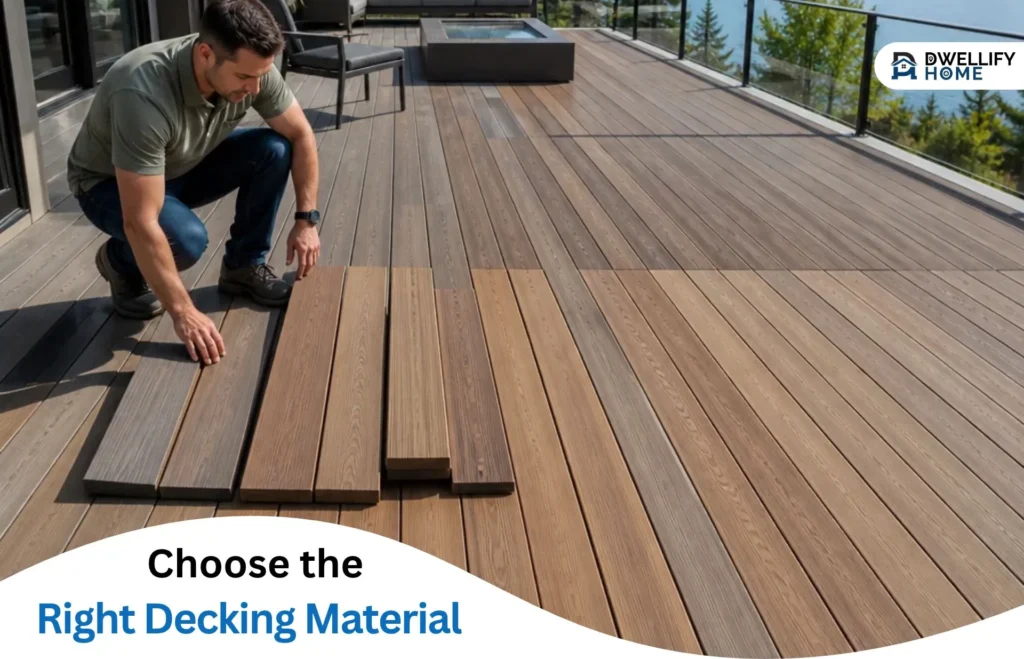
In recent years, no category of outdoor building products has grown more rapidly than composite decking. Made from a blend of recycled wood fibres and polymer, composite boards are engineered to deliver the visual warmth of timber without the high-maintenance demands that come with natural wood. They resist moisture, they do not splinter, and they maintain their colour far better than untreated softwood alternatives. For homeowners who want a beautiful outdoor space without committing to a demanding maintenance schedule, composite materials offer a genuinely compelling solution.
Modern composite decking has also come a long way aesthetically. Early versions of the product had a plasticky appearance that was easy to distinguish from natural timber, but today’s boards are produced with realistic wood-grain textures and a range of tones that closely mirror the look of hardwood. Capped composite boards, in particular, feature a protective outer layer that significantly improves fade resistance and makes cleaning as simple as a quick rinse with a garden hose. For busy households, that kind of simplicity is not a luxury — it is a genuine quality-of-life improvement.
Environmental Credentials Worth Considering
Sustainability has become an increasingly important factor in home renovation decisions, and composite materials score well in this area. Because they are manufactured using recycled content — often including waste wood and reclaimed plastic — they divert material from landfill and reduce the demand for virgin timber. For homeowners who are mindful of their environmental footprint, this is a meaningful consideration alongside the practical performance benefits.
Timber Still Has Its Place
It would be unfair to dismiss natural timber entirely. Hardwoods such as oak, ipe, and cumaru possess a character and warmth that many homeowners find irreplaceable. The way light plays across a naturally aged hardwood board, the organic variation in grain patterns, the sense of connection to something genuinely natural — these are qualities that even the most sophisticated composite products work hard to replicate. For heritage properties, period homes, or situations where visual authenticity is paramount, a well-maintained hardwood deck can be a spectacular choice.
Pressure-treated softwood sits at the more affordable end of the natural decking spectrum. It is widely available, easy to work with, and entirely capable of producing a functional, attractive outdoor space when properly treated and maintained. The trade-off, as with all natural materials, is the ongoing maintenance commitment. Left untreated, softwood will grey, crack, and eventually rot. Treated attentively, it can last for many years and provide a solid return on investment.
Balancing Budget and Longevity
One of the most common mistakes homeowners make is evaluating decking materials based on upfront cost alone. Natural timber often appears cheaper at the point of purchase, but the cumulative cost of stains, sealants, cleaning products, and occasional board replacement can erode that initial saving significantly over a ten-year period. Composite and premium hardwood options tend to carry a higher purchase price, but when you calculate total cost of ownership — including maintenance time and materials — the comparison often looks quite different. A well-built, low-maintenance deck also adds measurable value to a property, which matters if you ever intend to sell.
About Neotimber
Neotimber is a specialist supplier of high-quality outdoor decking products, with a focus on combining contemporary design with practical performance. The company offers a carefully curated range of composite and timber solutions designed for residential and commercial projects across the United Kingdom. With a commitment to quality materials, thoughtful engineering, and customer support that extends from the planning stage through to installation, Neotimber has built a strong reputation among homeowners, architects, and landscaping professionals alike. Their products are designed to weather the demands of the British climate while maintaining the aesthetic qualities that make outdoor spaces genuinely enjoyable to use year after year.
Making the Decision with Confidence
There is no single right answer when it comes to decking materials. The best choice depends on your property, your climate, your lifestyle, and your long-term intentions for the space. What matters most is approaching the decision with clarity rather than defaulting to whatever is cheapest or most familiar. Take the time to consider how you actually live in your outdoor space, how much maintenance you are genuinely willing to undertake, and what kind of aesthetic you want to achieve. Talk to suppliers who can walk you through the specific performance characteristics of each product rather than simply selling you whatever is most convenient.
A thoughtfully chosen deck is not merely a platform at the back of your house. It is a place where family moments happen, where the boundary between indoors and outdoors softens, and where the investment you have made in your home becomes tangible and enjoyable every single day. Choose well, and it will reward you for decades.
This article may include links associated with affiliate programs or paid sponsorships. Dwellifyhome.com may receive compensation through these arrangements, depending on the terms of the partnership and any qualifying transactions.