A rug and a wall-to-wall carpet can look almost the same from across the room. Both feel soft underfoot, both trap dust, and both get vacuumed on the same day. Underneath, they are built very differently.
That difference changes how each one should be cleaned. Most fiber damage does not come from dirt at all. It comes from the cleaning itself: too much water, the wrong soap, too much heat, or a stiff brush.
A method that works fine on nylon carpet can bleed the dyes on a wool rug. It can also leave a viscose rug dull and matted for good.
Here is how to clean both surfaces safely, and how to spot the jobs that need extra care.
Why Rugs and Carpet Need Different Care
Same floor, same room, very different fibers.
Most wall-to-wall carpet is made from synthetic fibers like nylon or polyester. It is stretched over padding and fixed to the floor. These fibers handle warm water, strong suction, and regular deep cleaning well.
Area rugs are far less predictable. One home might have a polypropylene rug in the hallway, a hand-knotted wool rug in the living room, and a viscose rug in the bedroom. Each fiber reacts to water, heat, and soap in its own way.
Dyes matter just as much. Many hand-made rugs use dyes that can run once they get wet. This is why services that handle Rug Cleaning Los Angeles homes test the fiber and dyes before any water touches the rug.
That one test prevents most of the damage people blame on “bad cleaning.” Carpet rarely needs it. Rugs almost always do.
Know What Your Rug Is Made Of
Five minutes of checking can save a rug you love.
Start by reading the label on the back of the rug. It usually lists the fiber and any cleaning code. If the label is missing, use this quick guide:
- Synthetic (nylon, polyester, polypropylene): Tough and easy to clean. These rugs handle mild soap and warm water well.
- Wool: Durable but sensitive. Heat, harsh soap, and slow drying can shrink the rug or turn it brown.
- Silk and viscose: The most delicate fibers. Too much water weakens them, dulls their shine, and makes dyes bleed.
- Cotton and flatweaves: Light and washable in theory, but their dyes often run.
- Sisal, jute, and other plant fibers: Water leaves brown stains and can weaken the weave. Stick to dry methods.
To test the dyes, dampen a white cloth and press it on a hidden corner for a few seconds. If any color comes off, the rug is not safe to wet clean at home.
Cleaning Mistakes That Damage Fibers
Most damage happens with good intentions and too much effort.
Using Too Much Water
Soaking a rug or carpet pushes water into the backing and padding. Slow drying can lead to a musty smell, brown marks on wool, and backing that separates on hand-tufted rugs.
Scrubbing a Fresh Stain
Hard scrubbing untwists the fibers and leaves a fuzzy, worn patch. It also spreads the stain wider. Blot from the outside edge toward the center instead.
Reaching for the Strongest Cleaner
Bleach and high-pH cleaners strip the natural oils from wool and fade dyes. Even on carpet, heavy soap leaves a sticky residue. That residue grabs new dirt, so the area looks dirty again within weeks.
Drying a Rug in the Sun
Direct sunlight fades dyes fast. Hanging a wet rug over a railing can also stretch its foundation out of shape. Dry rugs flat, with a fan and open windows.
Skipping the Rinse
Leftover soap stays sticky after it dries. It pulls in dust from shoes and pets, so the clean spot turns gray faster than the rest of the floor. Rinse with clean water and blot until the cloth comes up dry.
How to Clean an Area Rug Safely at Home
Gentle and dry beats strong and soaked every time.
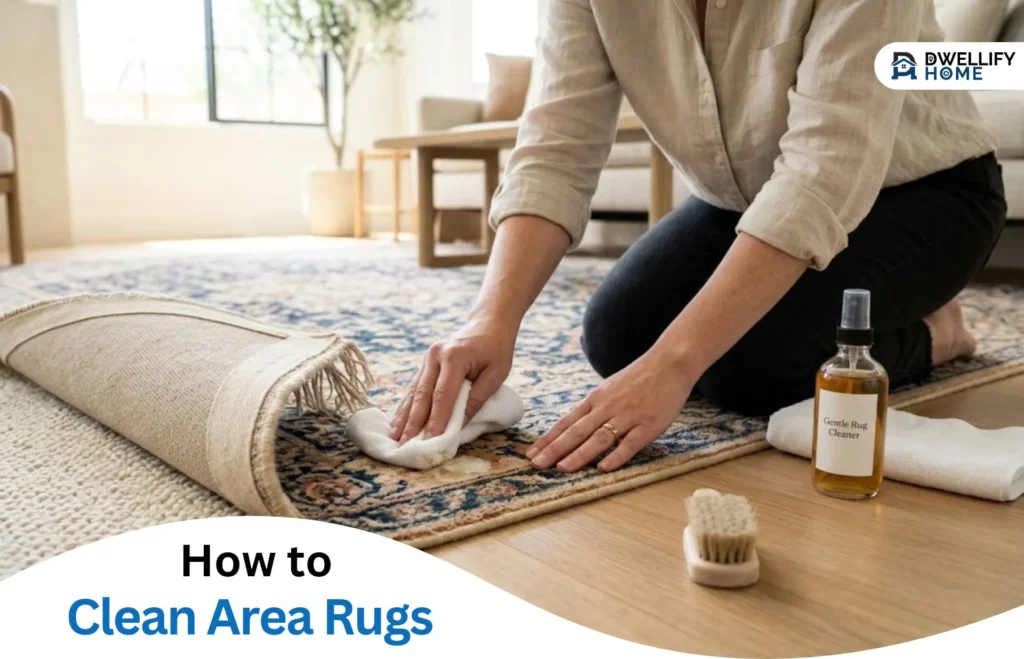
For everyday rugs with light soiling, this simple routine works well:
- Vacuum both sides
Flip the rug and vacuum the back. This shakes loose grit that works down to the base and wears fibers from below. - Test the cleaner
Try a small amount of wool-safe or pH-neutral rug cleaner on a hidden spot first. - Clean in small sections
Use as little liquid as possible. Work it in gently with a soft brush or cloth. - Rinse with a damp cloth
Lift away the soap with clean water so no residue stays behind. - Dry it fast
Lay the rug flat, raise it slightly if you can, and run a fan. Keep it off wood floors until it is fully dry.
Some rugs should never be cleaned at home. These include silk, viscose, antique, and hand-knotted rugs, as well as any rug soaked through with pet urine. These need a full wash and controlled drying that a home setup cannot match.
A full facility wash starts by shaking out years of dry grit from the base. The rug is then washed on both sides and dried flat in a controlled room. That process is slow on purpose, and it keeps delicate fibers safe.
How to Deep Clean Carpet Without Wearing It Out
Carpet lasts longer when dirt never gets the chance to settle.
Grit acts like sandpaper inside carpet fibers. Each step grinds it deeper and dulls the pile. Regular vacuuming is the single best way to slow that wear.
- Vacuum slowly
Make several passes in different directions, especially in hallways and other high-traffic paths. - Treat spills right away
Blot with a clean cloth, then use cold water and a mild cleaner. - Choose hot water extraction for deep cleaning
Most carpet makers recommend this method because it rinses dirt out instead of hiding it. - Use doormats and runners
A good mat at each entry catches grit before it reaches the carpet. Taking shoes off at the door helps even more. - Go easy with rental machines
Use light passes and extra dry passes. Heavy spraying leaves the padding wet and the fibers coated in soap.
Most homes need a deep carpet clean every 12 to 18 months. Homes with pets, kids, or busy entryways may need it every 6 to 12 months.
Keep Rugs and Carpet Soft for Years, Not Months
The right method protects your floors long after the cleaning is done.
Rugs and carpet wear out for the same reason: the wrong kind of cleaning. Match the method to the fiber, use less water than you think you need, and give every surface time to dry.
Some jobs are worth handing to trained hands. Pet odor that has reached the padding, dark traffic lanes, and rugs you cannot replace all fall into that group.
For LA homeowners, booking Carpet Cleaning Los Angeles and adding everyday rugs to the same visit keeps both surfaces on one simple schedule. Your floors stay clean, and the fibers stay soft for years.
Some links featured on this page may provide financial support to Dwellifyhome.com through affiliate commissions or sponsored arrangements. Any applicable compensation helps us cover the costs of running our website.