
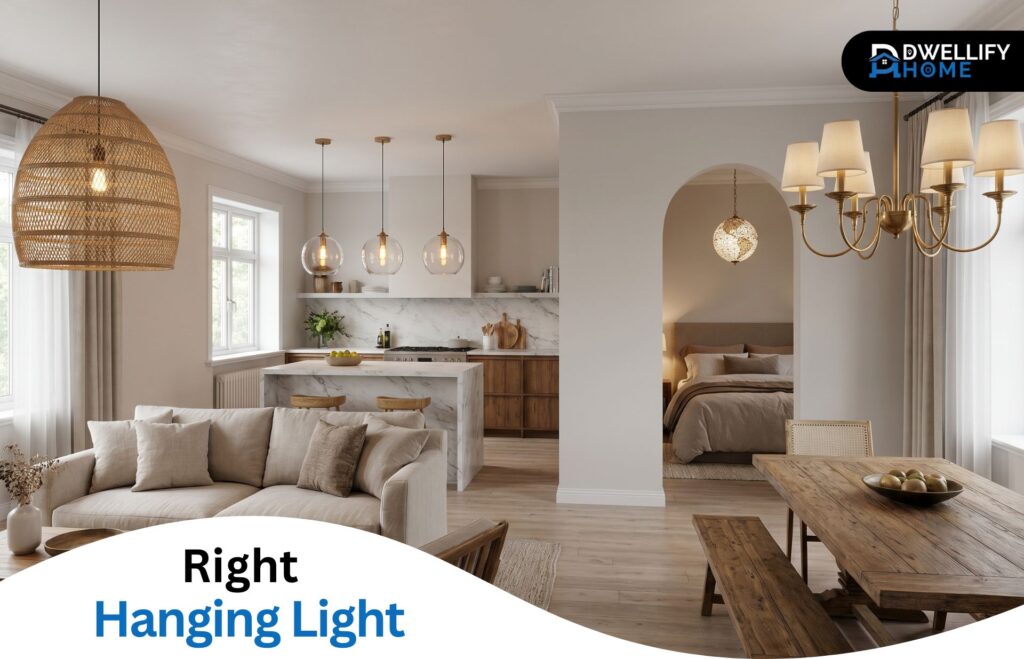
The right overhead light does something no other fixture can — it changes how a room feels the moment you step into it. Walk into a space with a well-chosen pendant or chandelier and you immediately sense the warmth, the scale, and the intention behind it. Walk into one with the wrong fixture and something just feels off, even if you can’t pinpoint exactly why.
That feeling comes down to one thing: the light fitting was chosen without enough thought for the room it lives in. Hanging lights span everything from single bare-bulb pendants with industrial roots to multi-arm chandeliers with sculpted glass shades — and knowing how to match one to your space is the skill that separates a finished interior from one that’s still a work in progress.
Why Hanging Lights Are a Design Powerhouse
A hanging light doesn’t just sit in a room — it commands it. Unlike a recessed can or a floor lamp tucked in a corner, a pendant or chandelier occupies real visual space. It pulls the eye upward, creates a clear focal point, and gives a room a sense of vertical dimension that flat ceiling lighting simply can’t produce.
There’s also the layering effect. Good interior lighting isn’t one source doing all the work — it’s multiple sources working together. A pendant or chandelier operating alongside natural light, recessed ambient fixtures, and task lamps creates depth and atmosphere. Rooms lit this way feel considered and lived-in, not staged or flat.
Even one well-placed pendant over a kitchen island or dining table can shift the entire energy of a space. At that scale, the fixture works as much as a visual anchor as it does a source of light.
How to Choose the Right Size Hanging Light
Getting the scale right is where most people go wrong — and it’s the one mistake that’s hard to fix without replacing the fixture entirely.
The general rule for dining rooms and larger living spaces: add the room’s length and width in feet, then convert that number directly to inches. That figure gives you a reliable starting diameter for a chandelier in that space. It’s not an exact science, but it’s a useful check against fixtures that are obviously too small or too large.
For kitchen islands, pendant lights typically sit 30–36 inches above the countertop. If you’re hanging multiple pendants in a row, 24–30 inches of spacing between each one keeps the arrangement balanced without feeling crowded.
In a dining room, aim for the bottom of the fixture to clear the tabletop by roughly 30–36 inches. Rooms with higher ceilings can support the fixture hanging slightly lower — which actually helps preserve the intimate, close-feeling atmosphere a dining space should have.
Matching Your Hanging Light to Your Interior Style
The finish and form of a ceiling fixture should work with the room, not against it. A matte black pendant reads as clean and contemporary, which suits industrial lofts and modern open-plan kitchens. Woven rattan shades belong in coastal, bohemian, or organic modern spaces. Clear glass globes and angular geometric frames feel natural in mid-century modern or Scandinavian-influenced interiors.
Warm metallic tones have held steady as a leading choice in residential lighting, and it’s not hard to see why. Pairing pendant selections with gold light fixtures brings a richness and warmth to an interior that cooler finishes rarely achieve. Aged brass and gold sit comfortably next to warm wood surfaces, natural stone, and deep accent colors — they layer rather than compete.
Before committing to a fixture, look at what’s already in the room: cabinet hardware, faucet finishes, curtain rods, door handles. Repeating a finish two or three times across a space builds cohesion quietly and naturally, without the room feeling over-coordinated.
The Best Rooms for a Statement Hanging Light
Not every room calls for a dramatic overhead fixture, but several spaces genuinely benefit from one. Here’s where hanging lights make the most meaningful difference:
Dining Rooms — The table gives you a natural anchor point. A chandelier or grouped pendants above it creates the enclosed, convivial atmosphere that makes meals feel like an occasion rather than a routine.
Kitchen Islands — Two or three pendants spaced along a kitchen island handle task lighting while adding a strong visual layer to one of the most-used surfaces in the home.
Entryways and Foyers — The first thing guests see sets the tone for everything else. A statement fixture in the entry communicates the home’s design direction immediately and confidently.
Bedrooms — Replacing a basic flush-mount ceiling light with a pendant or chandelier — centered above the bed or flanking it on each side — brings real personality to a space that’s often treated as an afterthought.
Living Rooms — In a larger living area, an oversized pendant or chandelier anchors the seating arrangement and provides the ambient base that table lamps and floor lamps can build on.
Getting the Light Right: Bulbs and Dimming
The fixture itself is only part of the equation. The bulb determines the actual quality of light in the room — its warmth, its softness, and how it interacts with the surfaces and colors around it.
For living spaces and bedrooms, a warm white bulb in the 2700K–3000K range produces the kind of relaxed, flattering glow most people want at home. Color temperatures above 4000K lean cooler and sharper — better suited to home offices or utility areas where clarity matters more than comfort.
Edison-style filament bulbs are a natural pairing for exposed-socket pendants. They reinforce the warm, slightly vintage quality of the light and contribute to the fixture’s overall character. LED versions of these bulbs are now widely available, and they produce the same visual result at a fraction of the energy cost.
Adding a dimmer switch extends the usefulness of any hanging light considerably. With dimmable bulbs and a compatible dimmer, one fixture can serve as task lighting at full brightness and transition to soft ambient light by evening — without changing a thing.
A Note on Installation
Installing a pendant light or chandelier is well within reach for anyone comfortable with basic electrical work, but a few things are worth getting right from the start.
Always shut off the circuit at the breaker before touching any wiring — and use a voltage tester to confirm the power is actually off before you proceed. A tester costs very little and removes any doubt.
Check that your ceiling has a junction box rated to carry a hanging fixture. Standard drywall anchors aren’t built to support the sustained weight of a chandelier or heavy pendant, and a fixture that’s improperly supported is a safety issue. If a rated box isn’t already in place, installing one before mounting the light is a necessary step.
For heavier fixtures or more complex ceiling configurations, a licensed electrician is the straightforward choice — it takes the guesswork out entirely.
Final Thoughts
Choosing a hanging light carefully is one of the more rewarding decisions you’ll make in any room. A well-matched fixture shapes how the space feels at every hour of the day — affecting atmosphere, scale, and the quality of light in ways that recessed lighting and table lamps simply can’t replicate.
Whether you’re drawn to clean contemporary forms, warm vintage character, or something with a little more visual weight, the right pendant or chandelier has a way of pulling a room together and making it feel genuinely complete. Take your time with scale and style, pay attention to the finishes already in the room, and trust that the fixture you choose will do more work than you expect.
We hope you found this article helpful! Just so you know, some links included here may be affiliate links, meaning we could earn a small fee if you purchase through them — at no additional cost to you. All views expressed are the author’s own and not necessarily endorsed by Dwellifyhome.com.