
Living near the water brings sea breezes, long summers, and a steady layer of moisture that settles into everything. Wood absorbs it, metal corrodes in it, and sealants break down under it. Over the years, those slow changes turn a tight house into one with small openings and damp pockets, and pests find them quickly. Ants, cockroaches, spiders, and termites all respond to moisture and shelter. The sections below describe how coastal conditions wear on a home, how that wear creates opportunities for pests, and which maintenance habits keep small weaknesses from becoming infestations.
How Humidity, Salt Air, and Rain Wear Down a Home
Coastal air carries both water vapor and salt. Humidity keeps wood and insulation slightly damp, and salt accelerates corrosion on screens, fasteners, flashing, and vent covers. A rusted screen with a hole no bigger than a dime lets insects pass freely, and a corroded fastener can loosen a panel or cover plate.
Rain adds to the load. Wind-driven rain pushes water into joints, behind siding, and under trim, where it may linger. Repeated wet and dry cycles cause materials to swell and shrink, and paint and caulk gradually crack as a result. The damage is rarely dramatic. It builds over several seasons, so a house that looked fine two years ago can have a dozen small failures today. Understanding how coastal weather works on exterior surfaces explains why regular inspection matters more near the water than inland.
Where Wear Becomes an Entry Point
Deteriorating seals are the most common route. Weatherstripping around doors flattens, window caulk separates, and gaps open where siding meets trim. Ants slip through hairline cracks, and spiders settle into protected corners. Cockroaches follow moisture and warmth into walls through utility penetrations that were once sealed.
Damp wood is a separate concern. Fascia, deck posts, door frames, and the lower edge of siding absorb moisture and soften, creating shelter for carpenter ants and an attractive food source for termites. Subterranean termites are a well-known concern in Virginia, and they depend on moisture and soil contact. Wet soil beside the foundation, mulch piled against siding, and wood touching the ground all invite them. Moisture also lets small gaps become larger as materials rot, so a neglected joint can turn into a pathway in a single season.
Maintenance Steps That Limit Moisture and Gaps
A seasonal routine handles most of what coastal weather throws at a house:
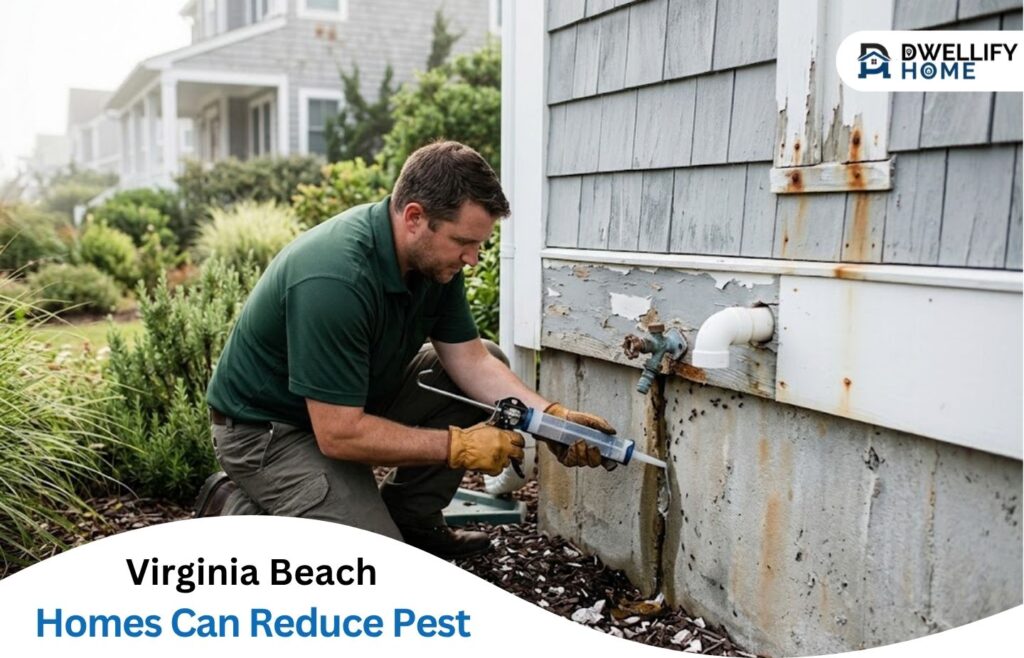
- Inspect exterior joints around windows, doors, trim, and utility lines, and reseal any cracks.
- Repair or replace weathered trim, rotted boards, and corroded screens.
- Clear gutters and extend downspouts so water drains away from the foundation.
- Grade soil so it slopes away from the house, and keep mulch a few inches below siding.
- Check crawl space vents, attic vents, and dryer exhausts for damage and secure covers.
Use sealants rated for exterior conditions and flexible enough to handle seasonal movement. Stainless steel or coated fasteners hold up better in salt air. Paint and stain protect wood, but they need renewal when they begin to chalk or peel. A quick walk around the house after a heavy rain shows where water pools or runs down walls, which is often the best clue to where repairs are needed.
Monitoring Moisture-Prone Areas Over Time
Some spaces hide moisture from view. Crawl spaces, basements, attics, and the areas under sinks and around water heaters can stay damp for long periods. A simple hygrometer shows whether humidity stays high, and a flashlight reveals stains, mold, or soft wood. Leaks around window frames and roof penetrations often show up first as discoloration on ceilings or walls.
Keep notes. A short record of what you checked, what you found, and what you repaired makes patterns visible. If the same corner of a crawl space is damp every spring, drainage or ventilation may need improvement. A dehumidifier can help in enclosed areas, though it treats the symptom rather than the source. Persistent dampness deserves a fix at its origin, whether that means regrading, repairing a gutter, or sealing a plumbing leak.
When Recurring Activity Calls for a Professional Look
Maintenance reduces risk, but it cannot see everything. If ants return after repairs, roaches continue to appear, or you notice mud tubes, discarded wings, or soft, hollow-sounding wood, the cause may be hidden behind a wall or under a slab. A trained inspector can examine places that are hard to reach and identify which species is present, which shapes the response.
Homeowners who see signs of ongoing activity can consider Virginia Beach pest control from Sage Pest Control as one way to confirm what is happening and where moisture or structural wear may be contributing. Bringing your notes about damp areas and repairs helps the inspector focus on likely trouble spots. Virginia Beach pest control from Sage Pest Control, like any licensed provider, works best when paired with the maintenance habits described above, since treatment alone does not remove the moisture that attracts pests.
Key Takeaways
Coastal humidity, salt air, and rain wear down seals, trim, and fasteners, and each failure can become an entry point or a shelter for pests. Check exterior joints, repair weathered materials, improve drainage, and monitor damp areas on a regular schedule. Consistent upkeep removes the conditions that ants, termites, and roaches prefer. When activity continues despite those efforts, a professional inspection can find what a homeowner cannot see. A house near the water needs attention more often, and it rewards that attention with fewer surprises.
Disclosure: This article may include affiliate or sponsored links that provide compensation to Dwellifyhome.com. We may earn a small commission from qualifying purchases, which contributes to the ongoing maintenance and development of our website.



