
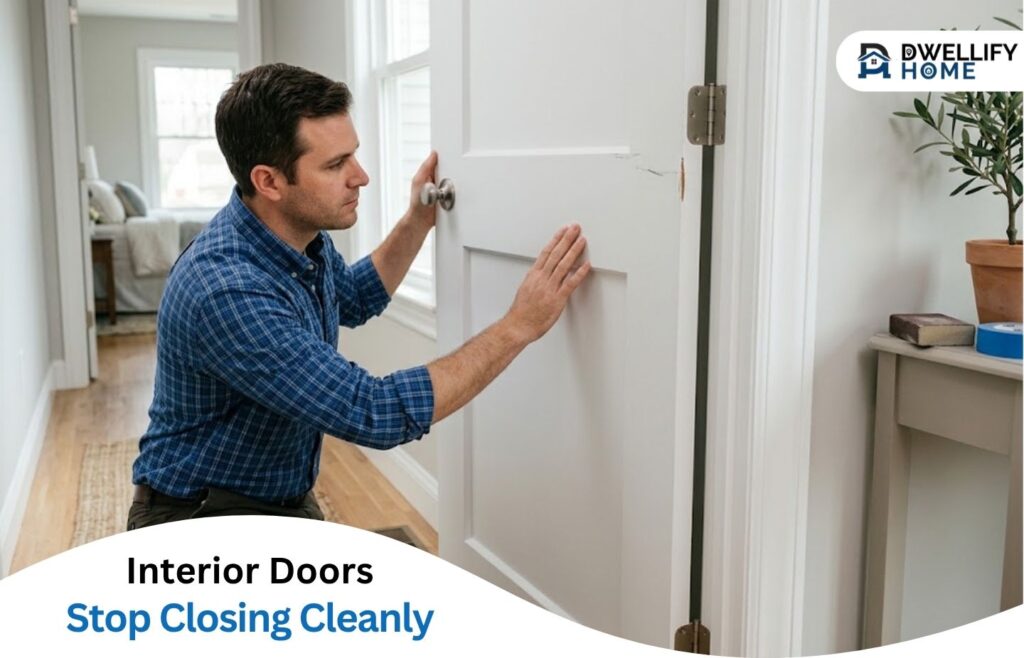
A renovated room can look sharper while its door suddenly feels worse. The slab rubs at one corner, the latch misses, or the door swings away from the position where it is left. Because the change appears after finish work, the door itself is often blamed first.
The cause may involve paint buildup, hinge movement, new flooring, humidity, hardware changes, or a frame that was disturbed during nearby work. A useful response begins by locating the contact point rather than sanding or trimming immediately.
Find Where the Movement Changes
Open and close the door slowly while watching the gap around the slab. Note the first place where spacing changes or contact occurs. A rub at the upper latch corner suggests a different question from contact along the entire bottom edge.
Check both sides because the symptom may be easier to see from one room. Use normal pressure and stop if the hinge feels loose, the frame moves, or the door requires force.
Do not assume that every uneven gap means the frame is permanently distorted. Doors and wood trim can respond to humidity, while fresh paint can reduce already narrow clearances.
Look at What Changed Around the Opening
New flooring is a common clue. A thicker surface, transition strip, or rug may reduce bottom clearance. If the door swings over the new material but catches only near the end, identify the exact point before cutting anything.
Paint can create friction at edges, stops, and hinge mortises. Drips or heavy layers may be visible, but stripping finish without understanding the contact can damage the renovation and still leave an alignment problem.
Wall repair, trim replacement, and new hardware can also alter the relationship between slab, hinges, strike plate, and frame. Compare screws, hinge leaves, and latch position without removing structural parts during the first inspection.
Test Hinges and Latch Without Forcing Them
Watch each hinge while the door moves. Loose screws, movement between the hinge and frame, or a leaf that is not seated evenly can change the door position. Avoid repeatedly tightening a screw that no longer holds; the attachment may need a proper repair.
Close the door gently and note where the latch meets the strike. A shiny rub mark can show repeated contact. Do not enlarge the opening or move the strike until the door position and hinge condition have been considered.
If a recently installed handle or latch is involved, confirm that the components are compatible with the door thickness and existing preparation. Decorative hardware still needs to support reliable everyday movement.
Separate Seasonal Movement From a Persistent Problem
Record whether the issue changes with weather, indoor humidity, or HVAC use. A wood door that rubs during a humid period may behave differently later, while a loose hinge usually produces a repeatable mechanical symptom.
Do not wait indefinitely if the door protects privacy, provides access, or must latch for safety. Seasonal observation is useful only when the opening remains stable and usable.
Chicago-area homeowners can find window and door repair options at capahome.com when the symptom persists after simple observation. The link should sit inside a practical repair decision, not a paragraph that turns the article into an advertisement.
Prepare a Clear Repair Note
Photograph the full door from both sides, the contact point, each hinge, and the latch-to-strike relationship. Note what changed during renovation and whether the door operated normally before the work.
- Room and door location
- First point of rubbing or gap change
- Whether hinges or frame move
- Recent flooring, paint, trim, or hardware work
- Weather or humidity pattern
This brief helps a professional test the likely sequence instead of starting with irreversible trimming. It also creates a record if more than one trade worked near the opening.
Avoid Quick Fixes That Damage New Finishes
Sanding the first visible rub mark may create clearance without correcting why the slab moved. Repeated trimming can leave an uneven edge, expose unfinished material, or make a seasonal gap excessive when humidity changes.
Moving a strike plate can help only when latch position is the actual problem. If loose hinges or a shifting frame changed the door position, enlarging the strike opening may hide the symptom while allowing further movement.
Adding longer screws without knowing the frame and substrate can also create damage. Hardware repairs should use an appropriate attachment method, especially when earlier holes no longer hold or decorative trim limits access.
Protect the floor and painted surfaces during evaluation. Use removable tape for temporary marks, avoid metal tools against finished edges, and keep a record of the original contact point before any approved adjustment begins.
Coordinate the Door With Adjacent Trades
A door problem after renovation may sit between several scopes. Flooring affects bottom clearance, painting affects edge thickness, carpentry affects the frame and trim, and hardware installation affects hinges and latch alignment. Record who changed each nearby element and share one set of photographs rather than asking every trade to correct the symptom independently. The goal is not to assign blame before the cause is known. It is to prevent a sequence in which one adjustment creates another conflict. When the responsible condition is identified, the appropriate trade can make a measured correction and the remaining finishes can be restored once, at the end, instead of repeatedly.
Finish the Renovation With Reliable Movement
An interior door is part of the room’s finish because people touch and move it every day. Correcting the reason it rubs or misses the latch is more important than hiding the mark with another coat of paint.
Locate the symptom, review what changed, test hardware gently, and document the pattern. A proportionate repair can then protect the new surfaces while restoring the quiet, predictable movement that makes the renovation feel complete.
Before you explore further, we’d like to mention that some links in this article may be affiliate or sponsored links. If you make a qualifying purchase through them, we may receive a small commission to help support Dwellifyhome.com.



