
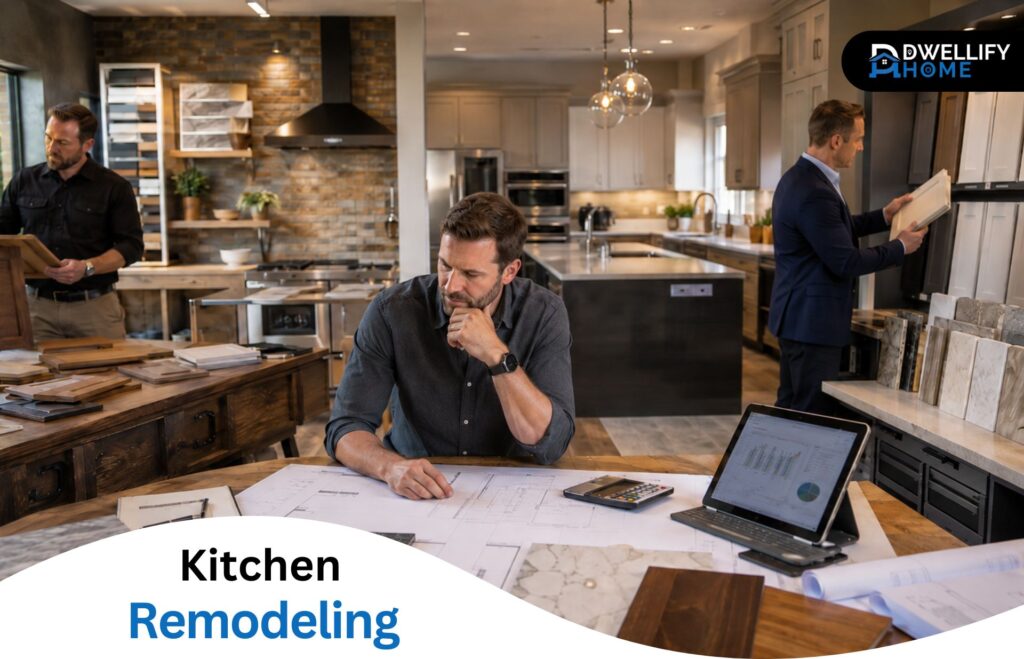
The kitchen remodeling industry continues to experience strong growth as homeowners invest in improving property value, functionality, and lifestyle. For entrepreneurs, contractors, and building material dealers, this demand presents an attractive business opportunity. However, one important question often arises before entering the market:
Should you start an independent kitchen remodeling business or invest in a kitchen remodel franchise?
Both models offer unique advantages and challenges. An independent business provides complete control and flexibility, while a franchise offers an established system with proven operational support.
This guide compares both options from an investor’s perspective, helping you determine which business model delivers the strongest long-term profitability.
Understanding the Two Business Models
What Is an Independent Kitchen Remodeling Business?
An independent kitchen remodeling business is built entirely under your own brand. You create your business strategy, develop supplier relationships, establish marketing channels, and design your customer experience.
Business owners typically handle services such as:
- Custom kitchen design
- Cabinet installation
- Countertop replacement
- Flooring and lighting upgrades
- Project management
- Complete kitchen renovations
Since you control every aspect of the business, profit margins can be higher once operations become efficient.
What Is a Kitchen Remodel Franchise?
A kitchen remodel franchise allows entrepreneurs to operate under an established brand using a proven business model. Franchise owners pay an initial franchise fee and ongoing royalties in exchange for operational systems, marketing support, training, technology, and brand recognition.
Many investors consider a kitchen remodeling franchise because it reduces some of the uncertainty associated with launching a new business.
The tradeoff is that franchise owners have less operational freedom and must follow corporate guidelines.
Initial Investment Comparison
One of the biggest differences between the two business models is startup cost.
Independent Business
Startup expenses typically include:
- Business registration
- Design software
- Showroom (optional)
- Tools and equipment
- Marketing
- Website development
- Hiring employees
- Supplier relationships
Depending on your business size, startup costs generally range from moderate to high but remain flexible.
You can begin small and scale gradually.
Kitchen Remodel Franchise
A franchise often requires:
- Franchise fee
- Royalty payments
- National advertising fees
- Branded showroom requirements
- Required software subscriptions
- Initial inventory
- Corporate training
While the franchise provides valuable support, the initial investment is often significantly higher than starting independently.
Brand Recognition
Brand awareness can influence customer trust, especially during the first few years.
Franchise Advantage
An established kitchen renovation franchise already has:
- Consumer recognition
- Marketing materials
- Online reputation
- Customer reviews
- Professional branding
This may reduce customer acquisition costs in competitive markets.
Independent Advantage
An independent company starts without brand recognition, but modern digital marketing has leveled the playing field.
Strong local SEO, Google Business Profile optimization, customer reviews, and social media marketing allow smaller companies to compete effectively with larger brands.
Many successful local remodeling companies have built million-dollar businesses without franchise support.
Profit Margins
From an investment standpoint, profitability depends on more than annual revenue.
Independent Business
Potential advantages include:
- No royalty payments
- Freedom to negotiate supplier pricing
- Ability to choose higher-margin product lines
- Greater pricing flexibility
- Complete ownership of profits
Once the company develops a strong reputation, profit margins can become significantly higher.
Franchise
Franchise owners benefit from established systems but often pay:
- Monthly royalties
- Marketing contributions
- Technology fees
- Brand compliance expenses
These recurring costs reduce overall profit, even when revenue increases.
For many investors, long-term profitability favors independent ownership after the business reaches maturity.
Operational Flexibility
The remodeling industry changes rapidly.
Consumer preferences evolve.
Cabinet styles change.
Technology improves.
Material suppliers shift pricing.
Independent Business
Independent owners can quickly adapt by:
- Introducing new cabinet collections
- Partnering with different manufacturers
- Expanding into luxury remodeling
- Adding smart kitchen solutions
- Offering custom products
There is no corporate approval process.
Franchise
Franchise owners typically must follow corporate standards regarding:
- Approved suppliers
- Product offerings
- Marketing campaigns
- Pricing structures
- Branding guidelines
While consistency benefits the franchise network, it may limit innovation.
Supplier Relationships
Material costs significantly influence profitability.
Independent companies have complete freedom to source products from manufacturers offering better pricing, quality, or customization.
This flexibility allows owners to negotiate directly with cabinet manufacturers and improve margins.
A franchise may require purchasing from approved vendors, even if better alternatives exist.
For experienced contractors and dealers, supplier flexibility can become a major competitive advantage.
Marketing and Lead Generation
Marketing is often the greatest challenge for new remodeling companies.
Franchise Benefits
A kitchen remodeling franchise usually provides:
- National advertising
- Professional websites
- Marketing templates
- Digital campaigns
- CRM systems
- Lead management
These resources help new owners generate business more quickly.
Independent Business
Independent businesses must develop their own marketing strategy.
However, digital marketing has become increasingly affordable.
Effective tactics include:
- Local SEO
- Google Ads
- Content marketing
- Customer referrals
- Facebook advertising
- Instagram project galleries
- Video testimonials
Over time, independently owned companies often achieve lower customer acquisition costs because they fully own their marketing assets.
Business Scalability
Scalability affects long-term investment returns.
Independent companies can expand by:
- Opening multiple showrooms
- Serving commercial projects
- Launching cabinet wholesale operations
- Adding interior design services
- Partnering with builders
- Creating regional brands
There are few restrictions.
Franchise businesses can also grow, but expansion usually depends on franchise territory agreements and corporate approval.
Risk Assessment
Every business model involves risk.
Independent Business Risks
- Building brand awareness
- Creating operational systems
- Recruiting skilled employees
- Developing supplier networks
- Managing marketing
Success depends heavily on management experience.
Franchise Risks
While franchises reduce startup uncertainty, they introduce different risks:
- High initial investment
- Ongoing royalty obligations
- Dependence on franchise reputation
- Limited operational flexibility
- Contract restrictions
If the franchise brand experiences negative publicity, every franchise location may be affected.
Which Business Model Is More Profitable?
From an investment perspective, profitability depends on your experience and business objectives.
A kitchen remodel franchise can generate faster early-stage revenue because of its established systems and recognized brand.
However, experienced contractors, cabinet dealers, and entrepreneurs often achieve stronger long-term returns by building an independent business.
Without royalty payments or franchise restrictions, independent owners retain more profit while maintaining complete control over pricing, suppliers, product selection, and expansion strategy.
For professionals who already understand construction, cabinetry, or home improvement, an independent model frequently delivers higher lifetime business value.
A Third Option: Partner with a Cabinet Manufacturer
There is another business model that combines many benefits of both approaches.
Rather than purchasing a franchise, many entrepreneurs choose to partner directly with a cabinet manufacturer.
This approach offers:
- Lower startup costs
- Access to premium custom cabinetry
- Manufacturing expertise
- Product training
- Design support
- Marketing resources
- Greater operational independence
Instead of paying ongoing franchise royalties, business owners can focus on growing their local brand while leveraging a reliable manufacturing partner.
This model has become increasingly popular among contractors, kitchen designers, distributors, and showroom owners looking for sustainable growth.
Conclusion
Choosing between an independent business and a kitchen remodel franchise depends on your experience, available capital, and long-term goals.
For many entrepreneurs, the ideal solution lies somewhere in between: partnering with a trusted cabinet manufacturer while maintaining complete ownership of the business. This approach provides professional support without sacrificing independence or paying recurring franchise fees.
Looking for cabinet dealer opportunities? OPPOLIA works with entrepreneurs, distributors, and showroom owners worldwide, providing access to custom cabinetry solutions, manufacturing expertise, and business support.
Visit OPPOLIA website and start building a successful kitchen renovation business with a trusted global manufacturing partner.
Before leaving, don’t forget to browse our other helpful posts. Some links in this article may be sponsored or affiliate-based, allowing us to earn a small commission from qualifying purchases. The opinions expressed are the author’s own and do not represent official policies of Dwellifyhome.com