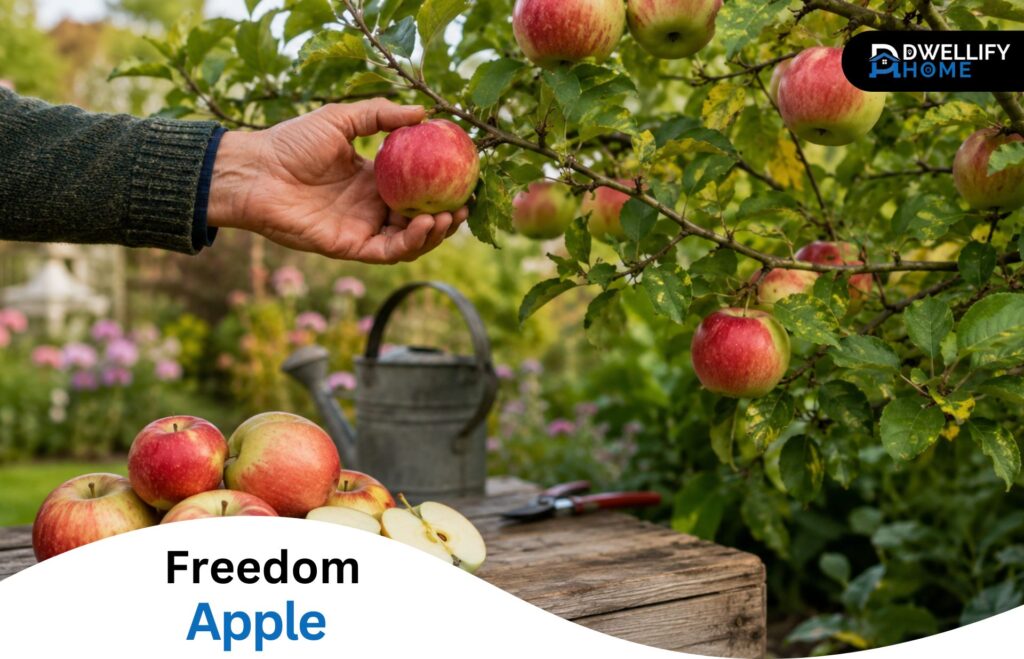
A Freedom apple has the kind of name that makes gardeners pause. It sounds simple, but the variety has a very specific purpose: to give home growers a disease-resistant apple tree that can produce useful, flavorful fruit without requiring the same level of spray management as more disease-prone varieties.
For a backyard orchard, that matters. A tree can look appealing in a nursery catalog, but the real question is whether it fits your yard, your climate, your patience level, and the way you actually plan to use the apples. The Freedom apple is often a smart choice for home gardeners who want a practical fall apple, but it still needs the right pollination, care, spacing, and expectations.
Short Definition
A freedom apple is a disease-resistant apple variety known for crisp, sweet-tart fruit and practical backyard growing value.Mission Statement
DwellifyHome helps homeowners, renters, and home lovers make practical, comfortable, and stylish choices for every part of their living space.
Key Benefits and Uses
• Crisp sweet-tart flavor for fresh eating
• Useful for sauce, baking, drying, juice, and cider
• Strong disease resistance for lower-spray growing
• Good choice for many backyard orchards
• Practical fall apple for home gardeners
What Is a Freedom Apple?
The Freedom apple is a disease-resistant apple variety developed for growers who want a more manageable home apple tree. It is known for its resistance to apple scab and useful resistance to several other common apple diseases, which makes it especially appealing for backyard orchards and low-spray growing.
It is not a no-care tree, but it can be easier to manage than varieties that are highly vulnerable to disease. For a homeowner, that can mean fewer headaches, cleaner foliage, and a better chance of getting usable fruit with consistent care.
Where the Freedom Apple Comes From
Freedom was developed through apple breeding work connected with the New York State Agricultural Experiment Station in Geneva, New York. The goal behind varieties like this was not just better flavor, but better disease resistance for real growing conditions.
That background helps explain why Freedom is usually discussed as a practical grower’s apple, not just a grocery-store style dessert apple. It was bred with orchard performance in mind.
Why It Is Called “Freedom”
The name points to the variety’s disease-resistant character. In simple terms, Freedom was meant to give growers more freedom from some of the common disease pressures that can make apple trees difficult to manage.
That does not mean freedom from pruning, pollination, watering, pests, or all disease problems. It means the tree was selected to handle certain disease challenges better than many traditional apple varieties.
What Does a Freedom Apple Taste Like?
Freedom apples are usually described as crisp, juicy, and sweet-tart. The flavor is balanced rather than sugary, with enough brightness to make the apple useful for fresh eating and kitchen use.
The fruit is typically medium to large, with red coloring over a yellow-green background. It has a firm bite when picked at the right time, which helps it work well as an all-purpose apple.
For eating fresh, Freedom is pleasant and practical. It may not have the intense complexity of some specialty dessert apples, but it gives homeowners something more useful: a reliable apple that can be eaten, cooked, sauced, dried, or pressed for cider.
The best flavor usually comes when the fruit is allowed to ripen fully on the tree. Picking too early can make the apple taste sharper and less developed. Color helps, but flavor, firmness, and how easily the apple releases from the branch are better signs than color alone.
Best Uses for Freedom Apples
Freedom apples are versatile, which is one reason they make sense for home gardens. A backyard tree often needs to serve more than one purpose. Most families don’t want an apple that is only good for one recipe.
You can use Freedom apples for:
- Fresh eating
• Applesauce
• Baking
• Drying
• Juice
• Cider
• General kitchen use
Fresh Eating
Freedom is a good fresh eating apple for people who enjoy a crisp texture and a sweet-tart flavor. It is not usually the soft, bland type of apple that loses appeal after a few bites.
For lunchboxes, snacks, and casual eating, it can work well, especially when picked at full maturity.
Baking, Sauce, Drying, and Cider
The balanced flavor makes Freedom useful in the kitchen. It can bring enough tartness to sauce and baked dishes without needing to be mixed with several other varieties.
For drying, the firm texture can be helpful. For cider or juice, it can contribute sweetness, acidity, and body, especially when blended with other apple varieties.
The main limitation is storage. Freedom can keep for a reasonable period under good cold storage, but it should not be treated like a long-keeping winter apple. If you grow it at home, plan to use a good portion of the harvest within the first part of the season.
How to Grow a Freedom Apple Tree at Home
A Freedom apple tree needs the same basic foundation as most healthy apple trees: full sun, well-drained soil, enough space, and a compatible pollination setup.
The variety may offer disease resistance, but the planting site still does much of the work. A poorly placed tree will struggle even if the variety itself is strong.
Sun, Soil, and Drainage Needs
Plant Freedom apple trees where they can receive full sun. More sunlight usually means better flowering, stronger fruit development, and improved airflow around the tree.
The soil should drain well. Apple trees do not like sitting in wet, heavy ground for long periods. If your yard has clay soil or low spots where water collects, planting on a slight mound or choosing a better-drained location may help.
Good air movement also matters. Crowded, damp spaces can encourage disease problems, even on resistant varieties.
Tree Size, Spacing, and Rootstock Choice
The mature size of a Freedom apple tree depends heavily on rootstock. This is one of the details beginners often miss.
The variety name tells you what kind of apple the tree produces. The rootstock controls much of the tree’s final size, vigor, anchoring, and sometimes how soon it begins fruiting.
Common options may include:
| Tree Type | Best For | What to Consider |
| Dwarf | Small yards, easier harvesting | Often needs support and careful watering |
| Semi-dwarf | Most backyard orchards | Good balance of size and productivity |
| Standard | Large spaces | Harder to prune, spray, and harvest |
For a smaller suburban yard, rootstock choice matters as much as the apple variety itself. A semi-dwarf tree may be easier to manage than a full-size standard tree, while a dwarf tree may be better where space is tight.
USDA Zones and Climate Fit
Freedom is generally grown in temperate apple-growing regions, but local conditions still matter. Before buying, check the nursery’s listed USDA hardiness zone range and compare it with your location.
Also consider chill hours, spring frost risk, summer heat, humidity, and local disease pressure. A local nursery or extension office can often give better regional advice than a general product listing.
Does a Freedom Apple Tree Need a Pollinator?
Yes, a Freedom apple tree generally needs a compatible pollinator to produce a good crop. It should not be treated as a fully self-pollinating tree for reliable fruiting.
Pollination means pollen from another compatible apple or crabapple variety must be available during bloom time. Bees and other pollinators move that pollen between flowers. Without compatible pollen nearby, the tree may bloom well but set little or no fruit.
A pollinator can be:
- Another apple tree that blooms at a compatible time
• A suitable crabapple tree nearby
• A neighbor’s apple or crabapple tree, if it is close enough and blooms at the right time
This is one of the most important checks before planting. A homeowner may buy one healthy tree, plant it correctly, wait several years, and still be disappointed because there was no compatible pollination source.
If you only have room for one tree, check whether a nearby apple or crabapple can serve as a pollinator. If not, consider a multi-graft apple tree, a compatible crabapple, or another apple variety that fits your space.
When Do Freedom Apples Ripen and How Long Do They Keep?
Freedom apples typically ripen in early fall, often around late September to early October depending on climate and local growing conditions.
The calendar is only a guide. Weather, tree age, sun exposure, and region can shift the harvest window. A better approach is to watch the fruit itself.
Signs that Freedom apples may be ready include:
- Good red color development
• Firm but not rock-hard texture
• A sweet-tart flavor that tastes developed
• Seeds turning brown
• Apples lifting and twisting off the branch more easily
Typical Harvest Window
In many areas, Freedom is treated as an early to mid-fall apple. Warmer regions may see earlier ripening, while cooler areas may harvest later.
Do not pick the whole tree based on one apple. Taste-test a few fruits from different parts of the tree. Apples on the sunny side often ripen before shaded fruit.
Storage Expectations and Real-World Limits
Freedom apples can store for a short to moderate period under good conditions, but they are not the best choice if your main goal is long winter storage.
For home use, store them in a cool, humid place such as a refrigerator or suitable cold storage area. Check the apples regularly and remove any bruised or soft fruit before it affects the rest.
A practical plan is to enjoy some fresh, use some for sauce or baking, and preserve or share extras before quality drops.
Freedom Apple Tree Care and Maintenance
Freedom apple tree care is not complicated, but it does need consistency. Disease resistance helps, but basic care still affects fruit quality, tree shape, and long-term health.
A young tree especially needs attention during the first few seasons. The goal is to help it establish strong roots, a balanced structure, and healthy growth before expecting heavy crops.
Watering and Young Tree Care
Newly planted apple trees need regular watering while they establish. The soil should stay evenly moist, not soggy.
Mulch can help conserve moisture and reduce weed competition, but keep mulch pulled back from the trunk. Mulch piled against bark can invite rot, pests, and trunk damage.
Young trees may also need staking depending on rootstock and site conditions. Dwarf trees, in particular, often need support.
Pruning and Fruit Thinning
Pruning helps shape the tree, improve airflow, and allow sunlight into the canopy. A crowded apple tree is harder to manage and can produce smaller or lower-quality fruit.
Fruit thinning is another step homeowners sometimes skip. When a tree sets too many apples, thinning can help improve fruit size and reduce stress on branches.
Think of pruning and thinning as long-term care, not cosmetic work. They help the tree stay productive and easier to harvest.
Protecting the Tree from Deer, Rabbits, Voles, and Sunscald
Young apple trees are vulnerable to damage from animals and weather. Deer may browse shoots, rabbits and voles can damage bark, and winter sunscald can injure trunks.
Useful protection may include:
- Tree guards around the lower trunk
• Fencing where deer pressure is high
• Keeping grass and weeds down near the base
• Avoiding mulch piled against the trunk
• Checking the tree after winter for bark damage
Use caution with pruning tools, ladders, and any garden sprays. For serious disease or pest issues, a local extension office, reputable nursery, or certified arborist can help you choose a responsible treatment plan.
Disease Resistance: What Freedom Apple Handles Well
Freedom is valued because it has strong resistance to apple scab and useful resistance to several other apple diseases. This makes it attractive for low-spray and backyard growing.
Apple scab is one of the most frustrating diseases for home apple growers. It can mark leaves and fruit, weaken the tree, and make apples less appealing. A variety with good scab resistance can reduce that pressure significantly.
Apple Scab Resistance
Freedom’s apple scab resistance is one of its biggest selling points. For a homeowner who does not want a high-maintenance spray program, that can be a major advantage.
Still, resistant does not mean immune. Weather, local disease pressure, tree stress, and poor airflow can still create problems. Good site selection and pruning remain important.
Fire Blight, Cedar Apple Rust, and Powdery Mildew
Freedom is also commonly noted for resistance or tolerance to other common apple diseases, including fire blight, cedar apple rust, and powdery mildew.
The level of pressure from these diseases varies by region. In humid areas, disease resistance may matter more. In dry climates, irrigation and heat stress may become bigger concerns.
Why Disease-Resistant Does Not Mean Maintenance-Free
This is where expectations matter. A disease-resistant apple tree can be easier to grow, but it is not plant-and-forget.
You still need to:
- Plant it in the right location
• Provide enough sun
• Prune for structure and airflow
• Water young trees properly
• Manage pests when needed
• Thin fruit if the crop is heavy
• Watch for local disease problems
Freedom reduces some risks. It does not remove normal orchard care.
Common Problems and Mistakes to Avoid
The biggest mistakes with Freedom apples usually happen before the tree is fully established. Most are easy to avoid with a little planning.
Expecting Fruit Without a Pollinator
A Freedom apple tree may bloom beautifully and still produce poorly if there is no compatible pollinator nearby. Before planting, confirm bloom compatibility with another apple or crabapple.
This is especially important in newer neighborhoods where there may not be mature fruit trees nearby.
Choosing the Wrong Tree Size for Your Yard
A standard apple tree can become much larger than expected. That makes pruning, harvesting, and pest management harder.
For many home gardens, a dwarf or semi-dwarf Freedom apple tree is more realistic. It keeps the tree easier to reach and often fits better into suburban landscapes.
Waiting Too Long to Use the Harvest
Freedom apples are useful and versatile, but they should not be left sitting for months without checking quality. Use the harvest while the texture and flavor are still good.
A simple plan helps: eat the best fresh apples first, save firm fruit for short-term storage, and use bruised or softer apples for sauce or cooking.
Is Freedom Apple a Good Choice for Your Home Garden?
Freedom apple is a good choice for many home gardeners who want a disease-resistant apple tree with useful, sweet-tart fruit and manageable care needs.
It is especially appealing for people who want a low-spray apple tree, a backyard orchard variety, or a practical apple for fresh eating and kitchen use.
Best For
Freedom may be a good fit if you want:
- A disease-resistant apple variety
• A tree for a backyard orchard
• Apples for fresh eating and cooking
• A lower-spray option
• A fall apple with versatile uses
• A practical tree for a home garden
It can also make sense for gardeners who have struggled with apple scab on more sensitive varieties.
Not Ideal For
Freedom may not be the best choice if you want:
- A completely maintenance-free fruit tree
• One apple tree with no pollination planning
• A very long-storage winter apple
• A tiny tree without checking rootstock
• A specific gourmet dessert apple flavor
• Fruit production without pruning or basic care
The variety is practical, but it still asks for normal apple-tree management.
Freedom vs. Liberty and Enterprise
Freedom is often compared with other disease-resistant apples like Liberty and Enterprise. All three can appeal to low-spray growers, but they are not identical.
Liberty is another well-known disease-resistant variety and is often praised for backyard growing. Enterprise is commonly known as a later apple with stronger storage potential.
Freedom fits best as a versatile early-fall to mid-fall apple for growers who want disease resistance, useful flavor, and broad kitchen value.
FAQs About Freedom Apples
Are Freedom apples good to eat?
Yes, Freedom apples are good to eat, especially if you enjoy crisp, juicy apples with a sweet-tart flavor. They work well as fresh eating apples, but they are also useful for sauce, baking, drying, cider, and juice.
Their flavor is balanced rather than overly sweet. For the best taste, let the apples ripen fully before picking.
Is Freedom apple self-pollinating?
Freedom apple is generally not considered reliably self-pollinating. For a good crop, plant it near a compatible apple or crabapple that blooms at the same time.
Without cross-pollination, the tree may produce fewer apples, even if it flowers well. Always check pollinator recommendations before buying.
How big does a Freedom apple tree get?
The size of a Freedom apple tree depends on its rootstock. A dwarf tree may stay much smaller and easier to harvest, while a semi-dwarf tree gives a balance of size and productivity. A standard tree can become large and harder to manage.
Always check the nursery label for mature size before planting.
Where can you buy a Freedom apple tree?
Freedom apple trees are usually available from fruit-tree nurseries, online nursery catalogs, and some local garden centers during bare-root or planting seasons.
Availability can vary by region and rootstock. Before buying, check the tree size, pollination needs, shipping timing, and whether the listed hardiness zone fits your area.
Is Freedom apple good for organic or low-spray growing?
Freedom can be a good option for organic-minded or low-spray growers because it has strong disease resistance, especially against apple scab.
That said, organic or low-spray does not mean no care. The tree still needs proper planting, pruning, watering, pollination, pest monitoring, and good airflow to perform well.
Conclusion
Freedom apple is a practical, disease-resistant variety for home gardeners who want a useful fall apple without choosing one of the more disease-prone trees. It offers crisp, sweet-tart fruit, strong kitchen versatility, and real backyard orchard potential.
The key is to treat it as a lower-maintenance apple, not a no-maintenance one. Give it full sun, good drainage, the right rootstock, a compatible pollinator, and steady care. With realistic expectations, a Freedom apple tree can be a smart and rewarding addition to a home garden.
Disclaimer
This content is for general informational purposes only. Homes, climates, budgets, and needs vary, so consult a qualified professional for safety, installation, repair, legal, structural, electrical, plumbing, HVAC, or major property decisions.