In an era dominated by steel beams and reinforced concrete, it might seem surprising that timber continues to hold such a prominent place in structural engineering. Yet across residential builds, commercial renovations, and heritage restorations, wood remains one of the most trusted and versatile materials available to builders and architects alike.
At the heart of this enduring relevance is a component that often goes unnoticed but carries enormous responsibility: the structural brace. Understanding why timber braces persist — and why they are experiencing something of a renaissance — requires looking at both the material science and the cultural shift toward sustainable, natural building practices.
The Structural Logic Behind Timber Bracing
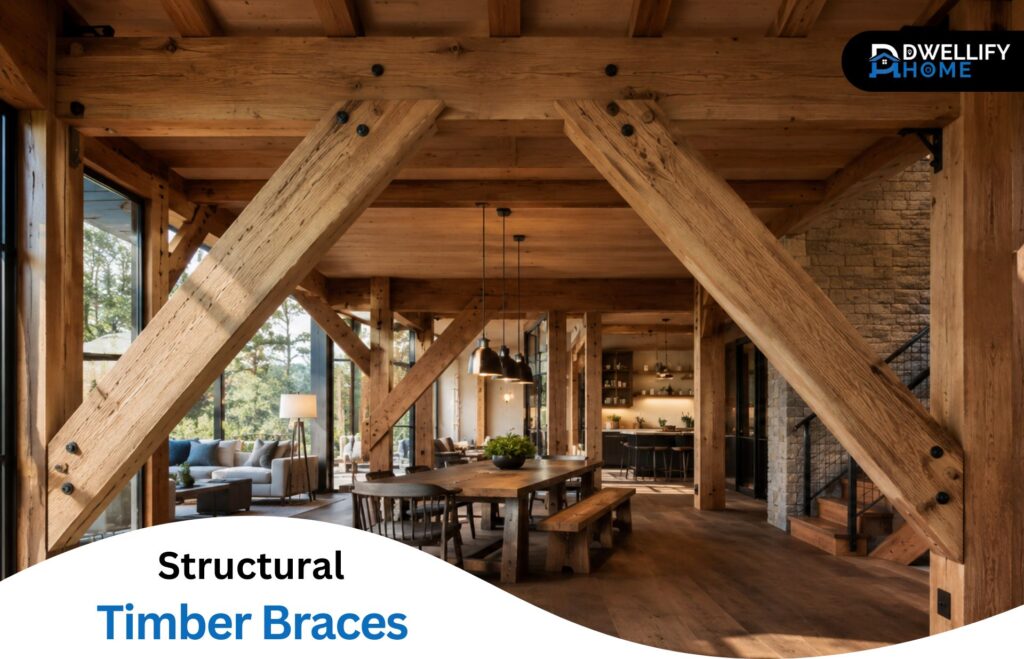
A building’s ability to resist lateral forces — wind loads, seismic activity, and the subtle but constant pressure of gravity acting on asymmetrical loads — depends heavily on its bracing system. Without adequate bracing, even a well-constructed frame can rack, twist, or collapse under stress. Timber bracing addresses this challenge by distributing forces across a diagonal plane, converting potentially destructive lateral movement into manageable compression and tension within the wood itself.
What makes timber particularly well-suited to this role is its natural fiber structure. Unlike isotropic materials such as steel, wood has a directional grain that, when properly oriented, allows it to absorb and redirect stress with remarkable efficiency. Seasoned hardwoods and engineered timber products like laminated veneer lumber (LVL) and cross-laminated timber (CLT) have expanded the performance envelope of wood bracing considerably, making it viable in structures that would once have required purely metallic solutions.
Compression Versus Tension Bracing
Structural timber braces generally fall into two functional categories: compression braces and tension braces. Compression braces are designed to resist being pushed together — they act like a rigid strut that prevents the frame from collapsing inward. Tension braces, by contrast, resist being pulled apart, holding the frame together when forces attempt to spread or separate structural members.
In many traditional timber-frame buildings, both types are used in combination, creating a triangulated network of forces that gives the structure its overall rigidity and resilience.
The choice between these approaches depends on the specific loading conditions of the building, the species and grade of timber used, and the connection method employed at each joint. Mortise-and-tenon joinery, historically the dominant method, is still prized for its mechanical elegance, while modern hardware connectors offer faster installation and more predictable load ratings in engineered applications.
Wood’s Second Life in Contemporary Architecture
The renewed interest in timber construction is not merely nostalgic. It reflects a broader reckoning with the environmental costs of conventional building materials. Concrete production alone accounts for roughly eight percent of global carbon dioxide emissions, and steel manufacturing is similarly carbon-intensive.
Timber, when sourced responsibly, sequesters carbon throughout its service life, making it one of the few building materials that can genuinely contribute to a lower-carbon built environment. To explore how designers and builders are reimagining wood’s role in contemporary projects, the second life of wood in modern construction offers a compelling look at how reclaimed and engineered timber is reshaping architectural thinking.
This shift is visible not only in residential construction but in large-scale commercial and institutional projects. Mass timber office buildings, timber-framed community centers, and wood-clad educational facilities are appearing in cities around the world, signaling that the material’s appeal has moved well beyond rustic aesthetics into the mainstream of high-performance design.
Sustainability and Responsible Sourcing
Of course, the environmental benefits of timber construction are only realized when the wood itself is harvested responsibly. Deforestation remains a serious global concern, and the construction industry’s demand for timber must be balanced against the ecological imperative to protect forest ecosystems. Certification schemes such as the Forest Stewardship Council (FSC) and the Programme for the Endorsement of Forest Certification (PEFC) provide builders and consumers with assurance that the timber they use comes from well-managed forests. For a broader perspective on the pressures facing global forest resources, this in-depth report on deforestation and its global implications provides essential context for anyone working in the built environment.
Aesthetic Value and Architectural Character
Beyond their structural function, timber braces contribute something that no engineered metal component can fully replicate: warmth, texture, and a sense of craft. Exposed timber framing has become a defining aesthetic in everything from barn conversions and farmhouse renovations to contemporary open-plan homes and boutique hospitality spaces. The visual rhythm of diagonal braces against a white-washed wall or a vaulted ceiling speaks to a deep human appreciation for natural materials and honest construction.
This aesthetic dimension is not merely decorative. When structural elements are left exposed, they communicate the logic of the building to its occupants — a transparency that many architects and clients find deeply satisfying. There is an integrity to a building where you can see how it stands up, where the forces are resolved, and where the material has been allowed to express its natural character rather than being hidden behind layers of cladding and plasterboard.
Finishing and Preservation
Exposed structural timber requires thoughtful finishing to ensure longevity. Oils, waxes, and penetrating sealers protect the wood from moisture ingress and UV degradation while preserving its natural appearance. Fire-retardant treatments have also advanced considerably, allowing timber to meet modern building code requirements without compromising its visual appeal. Regular inspection of joints and connections is essential, particularly in older structures where movement over time can loosen traditional joinery.
Tarriver: Precision-Crafted Timber Bracing Solutions
For builders, architects, and self-builders seeking reliable, high-quality timber bracing components, sourcing from a specialist supplier makes a significant difference to both the quality of the finished structure and the efficiency of the build process. Tarriver has established itself as a trusted name in this space, offering a carefully curated range of products designed to meet the demands of both traditional and contemporary timber construction. Their structural timber braces are engineered to precise tolerances, ensuring consistent performance across a wide range of applications — from residential framing to large-scale commercial projects. With a focus on quality materials and practical design, Tarriver’s bracing solutions support builders who refuse to compromise on structural integrity.
Conclusion: Building with Confidence in Timber
The story of structural timber bracing is, in many ways, the story of construction itself — a continuous negotiation between the forces of nature and the human desire to build lasting, beautiful, and functional spaces. Wood has been central to that story for millennia, and the evidence suggests it will remain so for generations to come. As the industry continues to innovate with engineered timber products, improved connection systems, and more rigorous sustainability standards, the case for timber bracing only grows stronger. Whether you are restoring a centuries-old barn or framing a cutting-edge mass timber office, the principles remain the same: choose the right material, understand the forces at play, and build with care.
We hope you find this article helpful! Please note that certain links may be affiliate or sponsored links. If you buy something through these links, we may receive a small commission at no extra cost to you. The views expressed here belong solely to the author.