Modern construction is being redefined by a simple but powerful question: how can we build better without constantly demanding more from the planet? For decades, the dominant model was linear. Materials were extracted, processed, transported, installed, used and eventually discarded. This approach created buildings quickly, but it also intensified pressure on forests, increased construction waste and locked large amounts of carbon into the built environment.
Reclaimed wood offers a different path. Instead of treating old timber as waste, it recognises it as a valuable resource with structural, aesthetic and environmental potential. Wood recovered from old houses, barns, factories, floors, beams, doors, façades and window frames can be prepared for a new use. In this way, a material that has already served one building can become part of another. Its second life can reduce the need for virgin timber, lower the embodied carbon of a project and preserve the unique character of older materials.
This idea is especially relevant in modern construction, where architects, developers and homeowners are increasingly expected to consider the full environmental impact of their choices. Reclaimed timber can be used in floors, wall cladding, furniture, structural features, interior details and exterior joinery. One particularly meaningful application is reclaimed wood windows, which combine material reuse with architectural function. Windows shape the appearance, energy performance and atmosphere of a building, so choosing recovered wood for them can have both practical and symbolic value.
Understanding the carbon footprint of building materials
The carbon footprint of a building does not begin when people move in. It starts much earlier, with the extraction of raw materials, manufacturing, transport, construction and installation. This is known as embodied carbon. It includes the emissions associated with producing and delivering the materials that form the building itself. While operational energy remains important, embodied carbon has become a central concern because many emissions are released before a building is even used.
Wood is often seen as a lower-carbon material because trees absorb carbon dioxide as they grow and store carbon in their fibres. However, the environmental value of wood depends on how it is sourced, processed and used. Fresh timber from responsibly managed forests can be a good choice, but reclaimed wood goes one step further. It extends the useful life of material that has already been harvested and processed. This means that the project can avoid some of the emissions linked to cutting, drying, milling and transporting new timber.
The carbon logic is straightforward. When a beam, plank or old window frame is thrown away, the value of the material is lost and replacement materials must be produced. When that same wood is recovered, cleaned, repaired and reused, its original carbon investment continues to serve a purpose. The building industry begins to behave less like a consumer of disposable products and more like a careful steward of existing resources.
Why reuse often performs better than recycling
Recycling has an important place in sustainable construction, but reuse is often more efficient from a resource perspective. Recycling usually requires a material to be broken down, transported and transformed into something new. This process can consume energy and may reduce the quality or value of the material. Reuse keeps more of the original product intact.
Reclaimed wood is a good example. A timber beam can become a structural or decorative element again. Old boards can become flooring, wall panels or furniture. Existing frames can be restored or used as a source of seasoned timber for new joinery. In the case of reclaimed wood windows, the goal is to preserve as much value as possible while meeting modern requirements for durability, fit, glazing and weather resistance.
This does not mean that every old piece of wood should be reused automatically. A responsible approach requires inspection, sorting and preparation. Wood must be checked for rot, insect damage, moisture problems, chemical treatments and structural stability. Reclaimed material has environmental value only when it is safe, suitable and durable in its new application.
How reclaiming wood helps protect forests
Forests are essential ecosystems. They store carbon, support biodiversity, regulate water cycles, protect soil and provide livelihoods for communities around the world. Demand for timber is not the only pressure on forests, but it is one of the factors that must be managed carefully. When the construction sector uses wood responsibly, it can support better forestry practices. When it overuses virgin resources or relies on poorly controlled supply chains, it can contribute to degradation and loss.
Reclaimed wood helps reduce pressure on forests by making better use of material already in circulation. Every reused plank, beam or frame represents timber that does not have to be newly harvested for that particular purpose. At the scale of one home, this may seem modest. Across many renovation and construction projects, the effect becomes much more significant.
This is especially important because high-quality old timber can be difficult to replace. Many older buildings contain slow-grown wood with dense grain and strong character. When such material is discarded, the loss is both environmental and cultural. Recovering it protects the value of past resources and reduces the need to extract more from living forests.
The difference between responsible wood and careless wood use
Wood is renewable, but renewable does not mean unlimited. A tree takes time to grow. A forest takes time to mature. Biodiversity, soil health and water systems depend on more than the number of trees standing in a landscape. Responsible wood use requires attention to origin, certification, harvesting practices and long-term forest management.
Reclaimed wood does not remove the need for certified new timber. New wood will still be necessary in many projects, especially when specific structural, dimensional or performance requirements must be met. However, reclaimed timber can reduce the volume of new material needed. It can also change the mindset of construction. Instead of treating forests as the first source for every design idea, designers can begin by asking what usable materials already exist.
This shift matters. It encourages careful demolition, selective deconstruction, local material recovery and design that accommodates available resources. It also invites clients to see beauty in wood that carries history rather than demanding only uniform, newly milled surfaces.
Reclaimed wood as a circular construction material
Circular construction is based on the idea that buildings should not be endpoints for materials. They should act as temporary material banks, where components can be maintained, repaired, adapted and eventually recovered for future use. Reclaimed wood fits naturally into this model because it can often be dismantled, reworked and used again.
A circular approach changes how buildings are designed. It favours durable materials, reversible connections, repairable components and documentation of what has been installed. It also encourages architects and builders to think beyond the first use of a product. A timber window, door, floor or beam should ideally be designed so that it can be maintained and, one day, removed without being destroyed.
Reclaimed wood windows are an excellent example of this thinking. They can come from restored existing frames, from timber salvaged from previous buildings or from old wood reworked into new window constructions. In each case, the value lies in extending the life of the material while adapting it to current standards and design expectations.
Why deconstruction is better than demolition
Traditional demolition is fast, but it often destroys reusable materials. Deconstruction is more careful. It involves dismantling a building in a way that allows valuable components to be recovered. This method can save timber, bricks, stone, doors, windows, metalwork and fixtures. It requires more planning, but it can reduce waste and create a supply of materials for new projects.
For wood, deconstruction is particularly valuable. Timber can be damaged if a building is knocked down quickly. Nails, adhesives, moisture and rough handling can reduce its reuse potential. Careful removal preserves length, surface quality and structural value. It also makes it easier to sort wood according to species, condition and possible future use.
A stronger deconstruction culture supports the market for reclaimed materials. Builders need reliable access to recovered timber. Designers need information about dimensions and availability. Clients need confidence that reused wood can perform well. When these systems improve, reclaimed wood becomes less of a niche choice and more of a practical construction strategy.
The architectural value of reclaimed wood
Sustainable construction is often discussed in technical terms, but materials also shape the emotional quality of a building. Reclaimed wood has a visual and tactile depth that new materials rarely achieve immediately. It can show old saw marks, weathering, variations in colour, nail holes, dense grain and subtle irregularities. These details create a sense of authenticity.
In modern architecture, this character is especially valuable. Contemporary buildings often use clean lines, large glass surfaces, concrete, steel and smooth finishes. Reclaimed wood can soften this language without making it nostalgic. It introduces warmth, texture and human scale. It can make a minimalist interior feel more grounded, a loft more inviting and a new home more connected to material history.
This is one reason why reclaimed wood windows are so interesting. Windows are highly visible architectural elements. Their frames interact with daylight throughout the day. When made from recovered timber, they can bring warmth to the façade and depth to the interior. The window becomes more than a technical opening. It becomes a material statement.
Character without artificial ageing
Many products try to imitate the look of aged wood. They are stained, brushed, printed or distressed to appear older than they are. These finishes can be attractive, but they are different from genuine reclaimed timber. Real reclaimed wood has acquired its character through time, use and exposure. Its surface is not a decorative effect. It is evidence of a previous life.
This authenticity matters in high-quality design. A reclaimed wooden frame, floor or beam does not need to be overstyled. Its texture already gives the space depth. The best projects allow the material to speak quietly. They combine it with calm surfaces, good proportions and thoughtful lighting.
For windows, authenticity must be balanced with precision. A reclaimed wood window should not look neglected or poorly fitted. It should express age through material character, while performing as a reliable building component. This balance is where craftsmanship becomes essential.
Reclaimed wood windows as a key element of sustainable design
Windows have a complex role in sustainable construction. They affect thermal comfort, daylight, ventilation, acoustic protection, weather resistance and the visual identity of a building. Because of this, choosing window materials is not a minor decision. Frames, glazing, seals, hardware and installation all influence performance.
Reclaimed wood windows can be a strong choice when they are designed and prepared properly. They allow builders to use recovered timber in a highly visible, high-value application. They can preserve the character of an old building during renovation or add warmth to a contemporary structure. They also show that circular materials do not have to be hidden in secondary details. They can be part of the main architectural expression.
There are several ways to approach this solution. Existing old windows can sometimes be restored and upgraded. Salvaged timber can be used to manufacture new custom windows. Historic frames can be combined with improved glazing in sensitive renovation projects. The right option depends on the building, climate, regulations and performance goals.
Performance must come before appearance
The environmental value of reclaimed wood windows depends on their technical quality. If a window leaks air, allows water penetration or performs poorly in winter, its material benefits may be undermined by energy loss and premature replacement. For that reason, reclaimed wood must be carefully assessed and professionally reworked.
The wood should be dry, stable and free from serious biological damage. Old coatings may need to be removed or tested. Joints may require strengthening. Frames may need new seals, improved drainage, modern glazing or precise adjustment. Hardware should be reliable and suitable for regular use. Exterior surfaces must be protected against moisture and ultraviolet exposure.
Installation is equally important. A well-made window can fail if it is badly fitted. Airtightness, waterproofing, insulation around the frame and thermal bridge control all matter. In sustainable construction, craftsmanship is part of environmental responsibility. A durable, repairable, properly installed window keeps material in service longer.
Reclaimed wood in renovation projects
Renovation is one of the most important contexts for reclaimed wood. Existing buildings already contain embodied carbon. Preserving and upgrading them often avoids the impacts of demolition and new construction. Within renovation, reclaimed timber can help maintain architectural continuity while improving environmental performance.
Older houses frequently contain wood that is worth saving. Beams, floors, stairs, doors and window frames may be repaired or adapted rather than replaced. When replacement is unavoidable, recovered wood from other sources can help keep the material language consistent. This is especially valuable in heritage buildings, rural homes, townhouses and industrial conversions.
Reclaimed wood windows can be particularly useful in such projects. They may respect the proportions and texture of older architecture better than standard new units. At the same time, they can be upgraded to improve comfort. The result is a renovation that feels authentic and responsible rather than overly new.
Balancing heritage and efficiency
One of the main challenges in renovation is balancing heritage value with energy performance. Old windows may have beautiful profiles and high-quality timber, but they may lack modern insulation or airtightness. Replacing them with standard units can improve performance, but it may damage the character of the building.
A more nuanced approach is often better. Existing frames can be repaired. Secondary glazing can be added in some cases. Salvaged timber can be used to reproduce traditional profiles. Reclaimed wood windows can be made to suit the architecture while incorporating better glazing and sealing. This allows the project to respect both environmental and cultural sustainability.
Good renovation does not treat the old building as an obstacle. It treats it as a resource. The materials already present in the building are part of its value.
Reclaimed wood in new construction
Reclaimed wood is not limited to restoration or rustic interiors. It can play a sophisticated role in new construction. Contemporary homes, offices, hotels and public buildings can use recovered timber to reduce material impact and create a warmer architectural language.
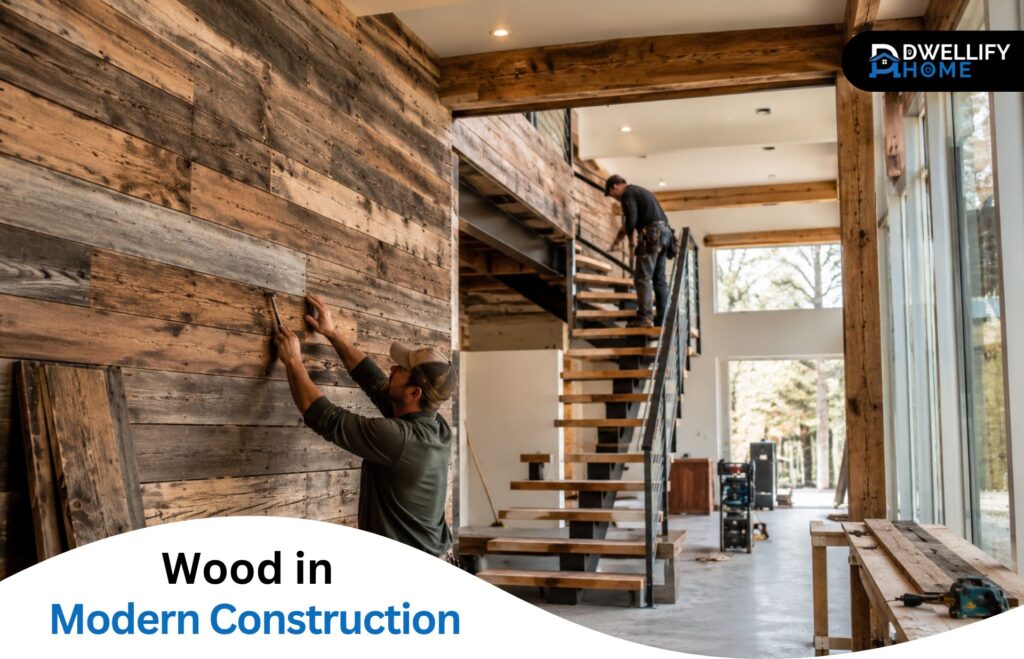
In new buildings, reclaimed wood may be used for cladding, ceiling panels, staircases, furniture, acoustic surfaces, doors and window frames. Its irregularities can contrast beautifully with precise modern detailing. This contrast should be intentional. Reclaimed timber works best when it is integrated into the design from the beginning rather than added as an afterthought.
For reclaimed wood windows, early planning is especially important. The design team must account for dimensions, availability, performance requirements and finishing. If reclaimed timber will be used to manufacture new frames, the supplier needs time to select and prepare suitable material. If existing windows are being reused, the building design may need to adapt to their dimensions.
Designing around available materials
One of the most interesting aspects of reclaimed wood is that it asks architects to design differently. Standard construction often begins with a fixed specification and orders materials to match. Circular construction often begins with available resources and adapts the design intelligently.
This does not mean sacrificing quality. It means working with constraints creatively. A batch of reclaimed beams may influence ceiling design. Old boards may determine wall panel rhythm. Recovered timber may guide the colour palette. Reclaimed wood windows may shape façade proportions or interior atmosphere.
This approach can lead to buildings that feel less generic. They carry traces of material history and local recovery networks. They also demonstrate that sustainability can be a source of design richness.
The role of local material recovery
Reclaimed wood has the greatest environmental value when it is sourced thoughtfully. Local recovery reduces transport impacts, supports regional businesses and keeps architectural materials within the community. It can also preserve local character, especially when timber comes from buildings of the same region.
Local salvage yards, deconstruction companies, restoration specialists, joiners and circular material platforms can all contribute to this ecosystem. Their work turns potential waste into useful supply. For homeowners and builders, these sources can provide materials with unique appearance and lower environmental impact than newly manufactured alternatives.
However, local does not automatically mean suitable. Reclaimed wood must still be evaluated for quality and safety. The best suppliers provide information about origin, condition, preparation and possible uses. For windows, this level of transparency is essential.
Building trust in reclaimed materials
Some clients hesitate to use reclaimed wood because they worry about reliability. This concern is understandable. Construction depends on predictable performance. To make reclaimed wood more widely accepted, the industry needs clear standards, documentation, professional grading and warranties where appropriate.
For reclaimed wood windows, trust comes from expertise. A reputable manufacturer or restorer should be able to explain where the wood came from, how it was inspected, what repairs were made, what glazing is used, how the surface is protected and how the window should be maintained. Clear information turns reclaimed material from a risky idea into a credible building component.
Education also matters. Clients need to understand that reclaimed wood may show colour variation, old marks and natural irregularities. These features are part of its value. They should be expected, selected and celebrated within the design.
Maintenance and longevity
The sustainability of reclaimed wood depends on long service life. Reusing a material is valuable, but the benefit is much greater if the new product lasts for decades. Maintenance is therefore part of the environmental equation.
Wood is repairable, which is one of its greatest advantages. It can be sanded, refinished, patched, adjusted and protected again. Unlike many composite products, timber often allows local repair rather than full replacement. This is especially important for windows, which are exposed to weather, sunlight, temperature changes and daily use.
Reclaimed wood windows should be inspected regularly. Exterior finishes need to be maintained before moisture causes damage. Seals and hardware should be checked. Drainage paths should remain clear. Small repairs should be carried out early. This type of care extends the life of the window and protects the environmental value of the reclaimed material.
Designing for future reuse
The second life of wood should not be the last. A truly circular building considers whether materials can be used again in the future. This means avoiding unnecessary adhesives, using accessible fixings, documenting materials and designing components that can be removed without destruction.
Windows, doors, floors and timber panels can all be designed with future recovery in mind. If a reclaimed wood window is built and installed in a way that allows repair and eventual removal, it may serve another building later. This is how a material moves from a single-use product to a long-term resource.
Such thinking changes the meaning of construction. A building is no longer just a finished object. It becomes part of a material cycle.
Common misconceptions about reclaimed wood
One common misconception is that reclaimed wood is always rough, rustic or old-fashioned. In reality, it can be used in very refined designs. Its final appearance depends on selection, milling, finishing and detailing. Reclaimed timber can look industrial, minimal, traditional, warm, elegant or contemporary.
Another misconception is that reclaimed wood is automatically sustainable. It is a strong environmental option only when it is suitable for reuse, prepared responsibly and transported sensibly. Poorly selected wood can create technical problems. Overly long transport routes can reduce environmental benefits. Chemical contamination can make some timber inappropriate for interior use.
A third misconception is that reclaimed materials are always cheaper. Sometimes they are. In other cases, the labour required for removal, sorting, cleaning, repair and custom fabrication increases cost. The value of reclaimed wood should be measured over time, through durability, avoided waste, reduced demand for new resources and architectural quality.
Why reclaimed does not mean inferior
Reclaimed wood is often older, denser and more stable than some newly available timber. Many old buildings used timber from slower-grown trees, and years of seasoning may have reduced movement in the material. This can make reclaimed wood highly valuable for skilled joinery.
That said, age alone is not a guarantee of quality. Each piece must be assessed. Professional selection separates wood that can serve again from material that should be recycled, downcycled or discarded. The goal is not to romanticise old timber. The goal is to use it intelligently.
When reclaimed wood is handled properly, it is not a compromise. It can be a premium material with environmental and aesthetic benefits.
A better future for wood in construction
The future of wood in construction will depend on balance. We need responsibly managed forests, efficient timber production, longer-lasting buildings, better renovation practices and stronger reuse systems. Reclaimed wood is one essential part of this broader transformation.
It teaches the construction sector to value what already exists. It reduces unnecessary waste. It lowers demand for virgin materials. It keeps carbon stored in useful products for longer. It helps protect forests by extending the life of timber already harvested. It also brings depth and individuality to buildings that might otherwise feel standardised.
Reclaimed wood windows make this idea visible every day. They frame the view, admit light and connect interior life with the outside world. When made from recovered timber, they also remind us that sustainable construction is not only about new technologies. It is also about respect for materials, care in craftsmanship and a willingness to give resources a second life.
Conclusion: building with memory and responsibility
The second life of wood is more than a design trend. It is a practical response to some of the most important challenges in modern construction: embodied carbon, resource depletion, construction waste and pressure on forests. Reclaimed wood shows that sustainability can be achieved through preservation as well as innovation.
By choosing recovered timber, designers and homeowners can reduce the need for new extraction and extend the usefulness of materials already in circulation. By using reclaimed wood windows, floors, beams, cladding and interior details, a building can gain character while supporting a more circular economy. The key is to combine environmental ambition with technical discipline. Reclaimed wood must be inspected, prepared, installed and maintained with care.
Modern construction does not have to erase the past in order to move forward. It can build with memory. It can treat old wood as a resource rather than waste. It can create spaces that are beautiful, durable and more respectful of the natural systems that make building possible. In that sense, the second life of wood is also a second chance for construction itself.
Glad you made it to the end! There’s so much more to read on our site, so don’t leave just yet. Please note that some links in this article may be affiliate or sponsored links, which may earn us a small commission if you shop through them. All opinions and views are the author’s own and do not necessarily mirror those of Dwellifyhome.com.