
Windows quietly shape how a home feels — they influence comfort, energy use, security, and the way each room looks inside and out. Most homeowners don’t give them much thought until something obvious goes wrong, yet aging windows usually send smaller signals long before they stop working altogether. Learning to read those signals early can save you from bigger repair bills and help your home stay comfortable across every season.
Rooms that feel stuffy in July or uncomfortably chilly in January are often the first hint that your windows have slipped past their prime. Homeowners looking into replacement windows in Indianapolis frequently start that search after spotting shifts in comfort and energy costs. Harsh seasonal swings, humid summers, and steady wear over the years all chip away at window performance, which is why knowing the sign to replace your windows matters for long-term value.
Whether your home is a century-old character property, a mid-century ranch, or a newer build, catching window failure early helps you act before small issues snowball. The sections below walk through the most common indicators that replacement is worth serious thought.
1. Drafts and Air Leaks Around the Window
Feeling a cool breeze near a closed window is one of the most direct clues that something’s off. Cold air sneaking in during winter or warm air pushing through in summer usually points to worn weatherstripping, tired seals, or a frame that has shifted over time.
Those small leaks force your heating and cooling system to run longer than it should, which slowly drives up utility costs while leaving rooms feeling uneven. Even drafts that seem minor on their own add up quickly across multiple windows.
What to watch for:
- Cool spots when you stand near a closed sash
- Curtain fabric that moves even with the window shut
- A room that never quite matches the thermostat setting
- Steadily rising heating and cooling bills
2. Rising Energy Bills Without Explanation
Utility statements creeping higher without any real change in how you live at home is another telling clue. Older single-pane glass and tired frames let heat pass through far more easily than today’s insulated units, and the difference shows up on your monthly bill.
Modern replacement windows use better glass coatings, insulated spacers, tighter weatherstripping, and stronger seals to hold indoor temperatures steadier. Swapping out inefficient windows takes pressure off your HVAC system and tends to pay back some of its cost through lower bills over time.
3. Windows Are Hard to Open or Close
A window should glide open, close firmly, and lock without a struggle. When you find yourself wrestling with a sash or jiggling a latch, the frame has probably warped, the hardware has worn out, or moisture has changed how the pieces fit together.
This goes beyond daily annoyance. Windows often serve as a secondary exit during emergencies, so smooth operation is also a safety concern worth taking seriously.
Typical causes include:
- Swollen or rotted wood frames
- Corroded or broken hardware
- Minor foundation settling
- Damaged tracks in slider-style windows
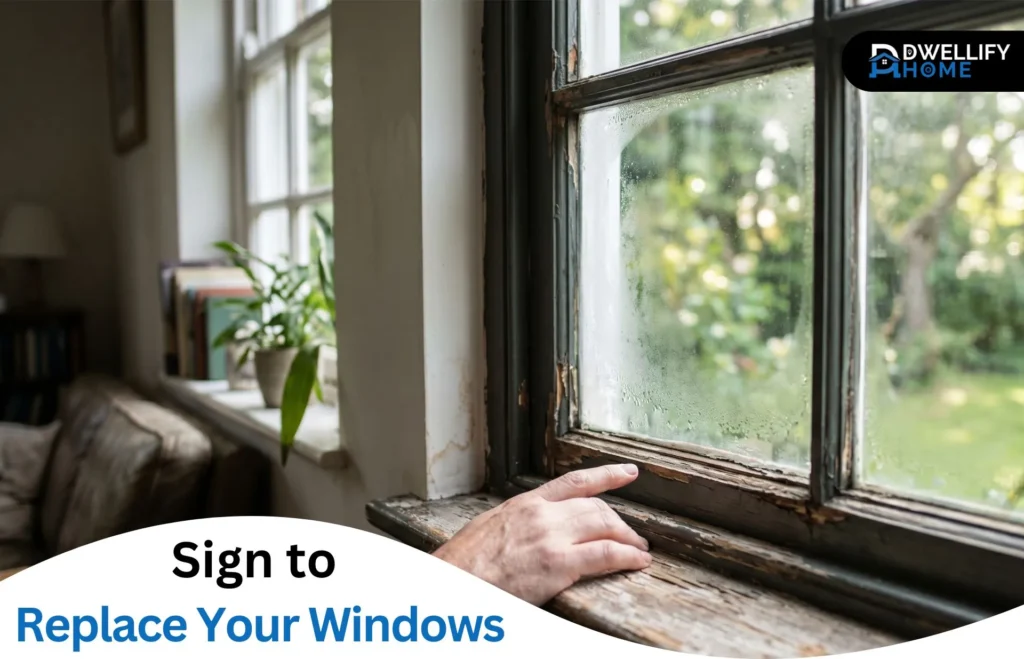
4. Condensation Between Glass Panes
Fog or moisture trapped between the layers of glass almost always means the insulating seal has failed. Double- and triple-pane windows depend on a sealed pocket of inert gas or dry air between panes, and once that seal breaks, humidity seeps in and insulating performance drops.
Wiping the glass won’t help because the moisture sits inside the sealed unit, not on the surface. Persistent cloudiness, water droplets between panes, or a hazy view through a window that used to be clear all point to this kind of failure.
5. Outside Noise Seems Louder Than Before
Have you started noticing traffic, lawn equipment, barking dogs, or storms more than you used to? Weakened seals and thinning glass performance let sound travel through more easily than when your windows were new.
Newer replacement windows handle outside noise better thanks to multi-pane construction, tighter seals, and more rigid frame materials. For homes near busy roads, schools, or downtown districts, that quieter indoor feel can be a real quality-of-life upgrade.
6. Visible Damage to Frames or Glass
Some warning signs hide inside the wall, but others stare right back at you. Cracked glass, soft or rotting wood, peeling paint, bent tracks, and broken locks all suggest a window has simply aged out.
Small cosmetic flaws can sometimes be patched, but widespread damage usually makes replacement the more sensible call. Look closely for:
- Soft or spongy sections of wood frame
- Chipped, cracked, or pitted glass
- Rust spots on metal hardware
- Water staining near the trim
- Loose or flimsy locks
7. Water Leaks Around the Window
Water sneaking in around a window is among the more urgent problems you can face as a homeowner. Damp drywall, bubbling paint, discoloration along the sill, or any sign of mildew near the frame calls for fast attention.
Leaks can trace back to failed caulk lines, damaged flashing, a worn frame, or a poor installation from years earlier. Left alone, moisture spreads into insulation, trim, and even the wall framing behind the drywall, which turns a window issue into a much bigger structural repair.
8. Your Home Still Has Single-Pane Windows
Plenty of older homes still have their original single-pane glass in place. Those windows often carry charm and character, but they can’t match the comfort, efficiency, or quiet of modern insulated units.
Replacing single-pane windows often delivers a difference you can feel within days — rooms hold temperature better, outside noise softens, and the buildup of winter condensation drops noticeably. The visual refresh is a welcome bonus.
9. Fading Furniture and Flooring
Natural light is a good thing, but concentrated UV exposure isn’t kind to what’s inside the room. Hardwood floors near sunny windows tend to lighten over the years, sofa fabrics lose their color, and rugs or artwork can turn dull.
Today’s windows come with low-E coatings and UV-filtering glass that protect interior finishes while still letting plenty of light through. Bleached floorboards near the windows, uneven fading on upholstery, or discoloration on drapes all suggest your current glass isn’t blocking much UV.
10. Your Windows Look Outdated
Performance usually gets top priority, but appearance still matters — especially when the rest of the home has been updated around them. Old windows can drag down the look of a house with fresh siding, a new roof, or refreshed landscaping, making the whole exterior feel uneven.
New windows sharpen curb appeal, brighten interior spaces, and modernize the look from both sides of the glass. For homeowners thinking about selling within the next few years, updated windows are one of the first details buyers pick up on during showings.
Repair or Replace: How to Decide
Not every window problem calls for a full replacement. A worn seal, broken lock, or a section of failed caulk can often be handled with a targeted fix. The question shifts when problems start showing up on several windows at once or keep coming back after minor repairs.
Replacement usually makes more sense when:
- Multiple units have fogged glass from failed seals
- Frames are warping, rotting, or out of square
- Drafts show up across different rooms
- Energy bills stay high despite maintenance
- Repairs keep piling up month after month
- The windows are already a few decades old
A mix of any three or four of these signs usually tips the scale toward replacing rather than patching.
Why Professional Evaluation Matters
Some window issues are easy for a homeowner to spot, but others sit behind trim, inside the frame, or at the installation seam where you can’t see them. A qualified installer can tell the difference between a quick fix and a hidden problem that will resurface later.
A professional assessment typically covers:
- Overall frame condition and squareness
- Air leakage points detected with simple tests
- Hidden moisture damage around the opening
- Current energy performance of the glass
- Condition of the seals and hardware
- Quality of the original installation
Getting that kind of informed opinion helps you decide based on real conditions rather than guesswork, and it also makes it easier to plan the project in the right order if multiple windows need attention.
Choosing the Right Replacement Windows
Once you’ve decided to move forward, the next step is matching the window style and material to how each room is actually used.
Common style options:
- Double-hung windows — the classic choice, with both sashes operable for flexible ventilation.
- Casement windows — crank open outward and seal tightly against the frame when shut.
- Sliding windows — practical for wide openings where a swing path isn’t available.
- Picture windows — fixed glass that maximizes daylight and outward views.
- Awning windows — hinged at the top, useful in bathrooms, basements, or above kitchen counters.
Material considerations:
- Vinyl keeps maintenance low and costs reasonable.
- Wood brings a warm, traditional look best suited to homeowners who don’t mind upkeep.
- Fiberglass resists warping and handles temperature swings well.
- Composite blends the strengths of wood and synthetic materials for balanced performance.
Match each choice to the room’s light, ventilation needs, and how the window will be used day to day.
Final Thoughts: Don’t Wait for Total Failure
Too many homeowners hold off on replacement until a window gives out completely. The better approach is to act on the early warning signs — drafts, fogged glass, noisy rooms, climbing energy bills, and stubborn sashes — before small issues turn into structural ones.
New windows deliver steadier indoor temperatures, less outside noise, easier maintenance, and a cleaner look for the whole home. When you’ve noticed even a few of the issues above, that’s usually the sign to replace your windows and move toward units built to perform reliably for the long haul.
Thank you for visiting — don’t forget to read our other valuable articles! Please note that this article may contain affiliate or sponsored links. If you make a purchase through these links, we may earn a small commission at no additional cost to you, which helps us keep creating content. The author’s views expressed here do not necessarily reflect those of Dwellifyhome.com.