
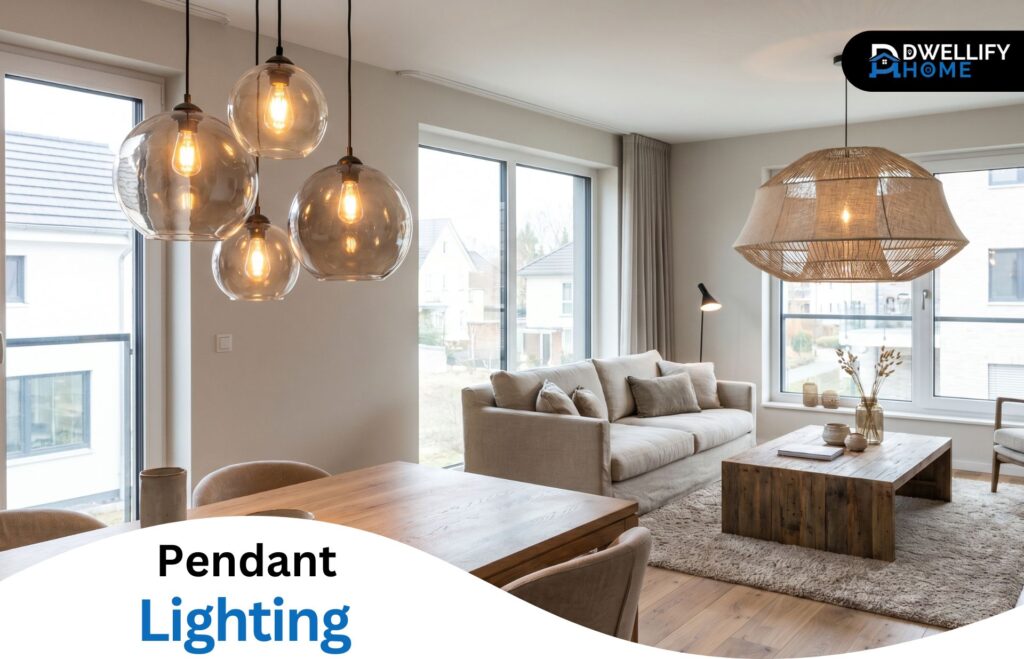
Lighting has quietly moved from background necessity to front-and-center design decision. Walk into any well-designed home today and you’ll notice that light sources aren’t just there to brighten corners — they’re placed with intention, creating mood, guiding the eye, and contributing to how the entire space feels.
Pendant lighting sits at the center of this shift. Suspended from the ceiling, these fixtures do something most others can’t: they deliver focused, functional light while also making a clear visual statement. Whether positioned above a kitchen island, centered over a dining table, or used to bring warmth to a hallway, pendant lights have consistently influenced how designers and homeowners approach interior spaces.
As the demand for homes that feel both livable and visually cohesive continues to grow, pendant lighting holds its ground as one of the most versatile tools available.
Why Lighting Has Become Part of Interior Design
For a long time, lighting decisions came down to one question: is it bright enough? Fixtures were selected based on wattage and cost, and that was largely the end of the conversation.
That approach has changed considerably.
Modern interior design treats light as a layering tool — something used to establish depth, create contrast, and shift the mood of a room depending on the time of day or the activity taking place. Rather than relying on a single overhead source, many homes now combine task lighting, ambient light, and accent fixtures to achieve a balanced result.
Pendant lighting fits naturally within this layered approach. It offers something that recessed or flush-mount fixtures simply don’t: illumination that is both directed and deliberately visible.
A recessed light disappears into the ceiling. A pendant fixture draws attention. That difference matters more than it might seem — because when a lighting fixture becomes part of the visual composition of a room, it contributes to the overall design in a way purely functional lighting never could.
What Makes Pendant Lighting Different From Other Fixtures
Pendant lights hang from the ceiling using rods, cables, or chains, which positions them lower than standard overhead fixtures. That suspended placement fundamentally changes how light reaches a room.
Rather than washing a space from directly above, pendant fixtures concentrate light at a more human level — closer to surfaces, closer to activities, and closer to the eye line. That quality makes them especially effective in spaces where visibility matters.
They’re regularly used in:
- Kitchen islands and prep areas
- Dining rooms and breakfast nooks
- Entryways and hallways
- Bedside and reading areas
- Living rooms and lounges
- Commercial spaces like cafés, hotel lobbies, and retail interiors
What keeps pendant lights relevant across all these settings is their dual role. A single fixture can serve as both a practical light source and a design element that defines the character of a space. That combination is harder to achieve with most other fixture types.
Why Pendant Lights Continue to Stay Popular
Interior trends cycle through phases quickly, yet pendant lighting has remained a consistent presence across decades of shifting styles. There are a few clear reasons for that staying power.
They Help Define Spaces
Open floor plans — especially in kitchens and living areas — create a visual challenge. Without walls to separate functions, rooms can feel undefined.
Pendant lighting helps solve this without construction. A cluster of pendants above a kitchen island signals that area as a work zone. A single fixture centered over a dining table gives that corner its own identity. Even in compact homes, well-placed pendants create a sense of purpose and structure that purely ambient lighting rarely achieves.
They Combine Style and Function
Most lighting fixtures lean one way or the other — either they’re functional or they’re decorative. Pendant lights tend to occupy both categories at once.
The materials, proportions, and finishes of a pendant fixture contribute to a room’s aesthetic the same way furniture or textiles do. At the same time, they’re still doing the practical work of lighting a space. That dual contribution is part of why pendant lighting works across so many different interior styles and settings.
A Wide Range of Designs Makes Them Adaptable
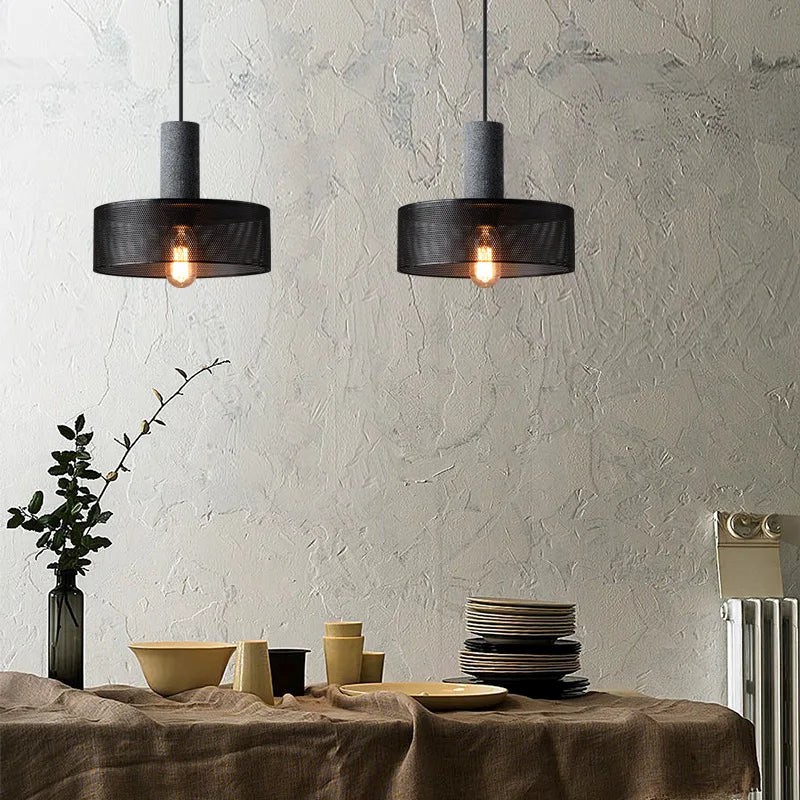
The variety available in pendant lighting is genuinely broad. Minimalist spaces often suit clear glass or brushed metal designs. Industrial interiors lean toward matte black finishes and exposed bulb configurations. Warmer, more relaxed spaces may call for fabric shades or natural materials.
This range means pendant lighting rarely feels out of place — it’s a matter of matching the right fixture to the right environment rather than forcing a compromise.
Flexible Placement Options
Some spaces work best with a single, larger pendant that anchors the room. Others benefit from a row of smaller pendants spaced evenly above a surface.
This flexibility allows pendant lighting to adapt to different room dimensions, ceiling heights, and design intentions without requiring a complete rethink of the approach.
Different Pendant Light Styles and Where They Work Best
Not every pendant fixture suits every space. Understanding how different styles behave makes it easier to choose well.
Single Pendant Lights
A single pendant works best where the goal is focused illumination in one defined area.
Above a bedside table, beside a reading chair, over a compact dining space, or in a narrow entryway — these are situations where one well-positioned fixture provides exactly what’s needed without cluttering the visual space.
Paper Lantern Pendant Lights
A paper lantern pendant light produces a softer, more diffused output than glass or metal alternatives. Because light passes through the material rather than reflecting off it, the result feels gentler and less directional.
These designs tend to suit bedrooms, lounges, and spaces where a calm, comfortable atmosphere is the priority. In recent years, paper lantern pendants have seen renewed interest among homeowners drawn to minimalist or nature-influenced interiors that favor soft textures over sharp contrasts.
Globe and Lantern Pendant Styles
Globe-shaped pendants offer clean, balanced illumination and tend to complement contemporary or transitional spaces where simplicity is valued.
Lantern-style pendants carry more decorative weight and often feel at home in farmhouse, rustic, or traditionally influenced interiors where visual character matters as much as light output.
Linear Pendant Lighting
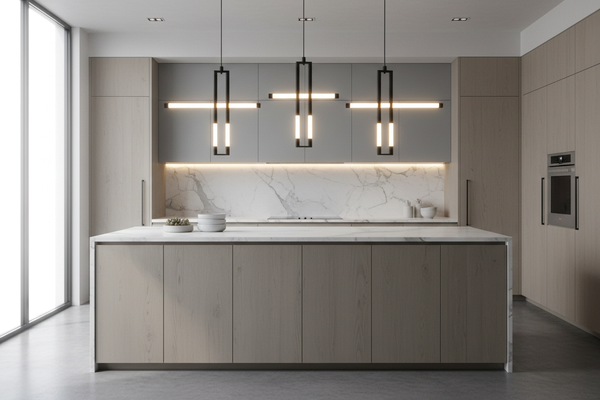
Longer, linear pendant fixtures are purpose-built for wide horizontal surfaces — dining tables, kitchen islands, and breakfast bars being the most common applications.
Instead of concentrating brightness in one spot, these designs spread light evenly across the surface below, which reduces shadows and improves practical usability without requiring multiple individual fixtures.
What Actually Matters Before Choosing Pendant Lighting
Style decisions matter, but getting the practical details right is what determines whether pendant lighting actually works in a given space.
Ceiling Height and Hanging Distance
Pendant placement is more sensitive than most people expect. A fixture hung too low creates a cramped feeling and can obstruct sightlines. One hung too high loses both its visual impact and its lighting effectiveness.
Most guidelines suggest keeping pendant lights above dining tables at a height that clears seated eye level comfortably — typically around 28 to 36 inches above the surface. For kitchen islands, slightly lower placement often improves task visibility. Adjustable hanging lengths make it easier to dial in the right position during installation.
Room Size and Fixture Scale
A large statement pendant can anchor a spacious room beautifully. In a smaller space, the same fixture may feel visually overwhelming.
Matching fixture scale to room size is one of the simpler ways to avoid a result that feels off. As a general rule, a pendant’s diameter in inches should roughly correspond to the room’s dimensions in feet — though this is a guideline rather than a strict formula.
Light Direction and Brightness
Some pendants direct light downward in a focused beam, making them well-suited for task areas. Others diffuse light in multiple directions, producing a softer ambient effect.
The right choice depends on how the room is actually used. A kitchen island needs clear, direct visibility. A bedroom or lounge usually calls for something more relaxed and even.
Materials and Light Diffusion
The material of a pendant shade has a direct effect on how light behaves.
Clear or transparent glass produces bright, direct output. Frosted glass softens the light without reducing it significantly. Fabric and paper shades diffuse light broadly and gently. Metal shades concentrate light in one direction while blocking it in others.
Knowing this makes it easier to predict how a fixture will actually perform before it’s installed.
LED Compatibility and Energy Efficiency
LED bulbs have become the practical default for most pendant lighting applications. They use less energy, run cooler, and last considerably longer than older bulb types.
For spaces where pendant lights are in use for extended periods — kitchens, dining areas, and home offices — LED compatibility is worth confirming before purchasing a fixture.
Exploring Pendant Lighting Options
Because every room has different proportions, ceiling heights, and lighting needs, it’s worth taking time to compare fixture options before committing to a purchase.
Reviewing a range of pendant lighting designs allows homeowners to assess hanging lengths, shade materials, light diffusion characteristics, and overall scale — all of which affect how a fixture will actually perform once it’s in place.
Why Pendant Lighting Remains a Design Staple
Design preferences shift, technologies improve, and new fixture types emerge regularly. Yet why pendant lighting continues to shape modern interior design comes down to something straightforward: these fixtures solve two problems at once.
They provide practical, well-directed illumination. And they contribute meaningfully to how a room looks and feels.
That combination is harder to find than it might seem. Purely functional lighting rarely adds anything visual. Purely decorative fixtures don’t always serve the room well. Pendant lights consistently do both — and that balance is what has kept them relevant across different eras of interior design.
For homeowners considering lighting updates, brands like LEDLights.io offer a range of pendant styles suited to different room layouts and everyday living environments.
We’d love for you to stick around and read more! A friendly reminder that some links in this article may be affiliate or sponsored. Clicking and purchasing through these links may provide us with a small commission. The views and opinions in this article are strictly the author’s and may not reflect those of Dwellifyhome.com.