You wipe down your stainless steel fridge, step back, and it looks worse than before. There are streaks, smudges, and what appear to be faint scratches that weren’t there this morning. Sound familiar? You’re not doing something wrong because you don’t care — you’re doing something wrong because no one ever explained how stainless steel actually works.
This guide covers everything: how to clean stainless steel surfaces properly, the methods that work for sinks, appliances, cookware, utensils, and even jewelry, and — just as importantly — what you should never do, even when it seems reasonable. Get these basics right and you’ll spend less time cleaning and get far better results.
Snippet-Ready Definition
To clean stainless steel, wipe with a damp microfiber cloth and mild dish soap, always moving in the direction of the grain. This method removes smudges, prevents scratches, and preserves the protective chromium layer that keeps stainless steel resistant to rust and staining.
Mission Statement
At Dwellify Home, our goal is straightforward: help homeowners make practical, well-informed decisions about their living spaces. Whether it’s cleaning, maintenance, home styling, or outdoor living, we focus on advice that is grounded in real experience and easy to act on — not trends for their own sake.
Why Stainless Steel Stains — and Why Your Cleaning Method Matters More Than the Product
Stainless steel doesn’t stain because it’s weak. It stains because something damaged the thin protective film on its surface. That film is called the chromium oxide layer — it forms naturally when chromium in the steel reacts with oxygen in the air. This layer is what makes stainless steel resistant to rust and corrosion. When you use the wrong cleaner, the wrong tool, or wipe in the wrong direction, you break that layer down faster than it can repair itself. The result is dullness, rust spots, pitting, and permanent surface damage.
The product matters less than most people think. A cheap dish soap used correctly will outperform an expensive stainless steel spray used carelessly.
What Is the Grain on Stainless Steel — and Why Should You Always Follow It?
The grain is the faint pattern of fine lines running across the surface of stainless steel. It’s created during the manufacturing process as the metal is brushed or polished in one direction. Always wipe in the same direction as these lines — never across them.
When you wipe against the grain, your cloth pushes debris into those tiny grooves instead of lifting it out. Over time, this creates micro-scratches that catch light unevenly, making the surface look dull. These scratches also trap moisture, which accelerates rust. Before you do anything else, find the grain direction on your surface. Hold it at an angle to the light — you’ll see it clearly.
Quick Method Guide by Surface
| Surface | Best Method | Key Rule |
| Appliances (fridge, dishwasher) | Dish soap + microfiber cloth | Always wipe with the grain |
| Kitchen sink | Baking soda scrub + vinegar spray | Dry immediately after rinsing |
| Cookware & pans | Baking soda + vinegar boil method | Never use steel wool |
| Utensils & cutlery | Warm soapy water soak | Dry fully before storing |
| Jewelry | Mild soap + soft toothbrush | Rinse thoroughly, air dry |
| Rust spots | Baking soda paste or Bar Keepers Friend | Rub with the grain only |
Key Takeaways
- Always clean in the direction of the grain — wiping against it causes micro-scratches
- Dry stainless steel immediately after every clean to prevent water spots and mineral deposits
- Never use bleach, steel wool, or chloride-based cleaners — they damage the protective surface layer
- A thin coat of mineral oil after cleaning repels fingerprints and keeps surfaces cleaner longer
- Most stains, rust, and discoloration can be treated with everyday items: white vinegar, baking soda, and dish soap
What You Need Before You Start
Having the right supplies ready takes two minutes and saves you from reaching for something damaging mid-clean. Here’s what actually works:
Use these:
- Microfiber cloths (at least two — one damp, one dry)
- Mild dish soap
- White distilled vinegar
- Baking soda
- Mineral oil or olive oil
- Bar Keepers Friend (for tough stains and rust)
Avoid these entirely:
- Steel wool or wire brushes
- Abrasive scrubbing pads
- Bleach or chlorine-based cleaners
- Ammonia-based glass cleaners
- Paper towels (more on this below)
Which Cleaning Products Are Safe — and Which Ones Cause Hidden Damage?
Safe commercial cleaners for stainless steel are chloride-free and non-abrasive. Look for those terms on the label. Products containing chlorides — even some that seem mild — break down the chromium oxide layer over time, causing pitting and surface corrosion that looks like rust but is actually structural. Bleach is the most common offender. Ammonia-based products won’t corrode the metal immediately, but they do strip protective coatings and leave surfaces more vulnerable.
If you’re unsure about a product, apply a tiny amount to a hidden spot, wait five minutes, then rinse and inspect before using it across the whole surface.
How to Clean Stainless Steel for Everyday Smudges and Fingerprints
For daily cleaning, you don’t need anything special. This simple method handles most smudges and surface grime without risking damage.
Step-by-step:
- Add a few drops of mild dish soap to warm water.
- Dampen a microfiber cloth in the solution and wring it out — it should be damp, not wet.
- Wipe the surface in the direction of the grain, using firm, even strokes.
- Rinse the cloth thoroughly, wring it out again, and wipe once more with plain water.
- Immediately dry the surface with a second, clean dry microfiber cloth.
That last step — drying right away — is where most people stop short, and it’s the step that matters most. Water left to air dry leaves mineral deposits that appear as white spots or cloudy patches.
How to Get Rid of Streaks After Cleaning
Streaks almost always come from one of three things: soap residue left on the surface, wiping against the grain, or letting the surface air dry. The fix is straightforward — take a clean, dry microfiber cloth and make one firm pass along the grain. No product needed. If streaks persist, your cloth likely has soap residue in it. Rinse it fully, wring it dry, and go over the surface once more.
How to Clean Stainless Steel with Vinegar
White distilled vinegar is an effective cleaner for stainless steel because it cuts through grease and dissolves the mineral deposits that cause spotting. It works well on appliance exteriors and sinks.
How to use it:
- Pour one cup of white vinegar into a spray bottle and add one to two tablespoons of water.
- Spray lightly and evenly across the surface — cover a small area at a time.
- Wipe with a microfiber cloth in the direction of the grain.
- Rinse thoroughly with a cloth dampened with plain water.
- Dry immediately with a clean dry cloth.
One important caution: don’t let vinegar sit on stainless steel for more than a few minutes. Vinegar is acidic, and while it’s safe for short contact, prolonged exposure can dull the finish. Always rinse after using it.
How to Clean Stainless Steel with Baking Soda
Baking soda is mildly abrasive in a way that lifts stuck-on grime without scratching the surface — as long as you apply it correctly. It’s particularly useful for sinks, pan exteriors, and areas with heavier buildup.
How to use it:
- Make a paste by mixing two tablespoons of baking soda with just enough water to form a thick consistency.
- Apply the paste to the surface using a damp microfiber cloth.
- Rub gently in the direction of the grain.
- Rinse thoroughly with warm water.
- Dry immediately.
Don’t scrub hard. The baking soda does the work — pressure isn’t needed and will increase the risk of scratching.
How to Clean Stainless Steel Pans with Baking Soda and Vinegar
For burnt-on food or heavy discoloration inside cookware, a combination of baking soda and vinegar works well — especially when applied with heat.
Step-by-step:
- Sprinkle one tablespoon of baking soda into the pan.
- Add one part white vinegar and two parts water — enough to cover the stained area.
- Bring the mixture to a boil on medium heat and hold for five minutes.
- Remove from heat and let it cool completely.
- Pour out the liquid, then scrub gently with a non-scratch sponge along the grain.
- Rinse and dry fully.
This method is especially good for rainbow discoloration and stuck-on residue that soaking alone won’t shift.
How to Fix Rainbow Discoloration on Stainless Steel Cookware
That iridescent rainbow effect you sometimes see inside stainless steel pans isn’t rust and it’s not damage in the traditional sense. It happens when the pan gets overheated — high temperatures cause the chromium oxide layer to temporarily oxidize at different rates across the surface, creating those blue, gold, and purple tones.
The fix is simple: splash a small amount of white vinegar into the pan, rub it gently with a soft cloth along the grain, then rinse and dry. The acidity neutralizes the oxidation and restores the surface. It usually clears in one go.
How to Clean a Stainless Steel Sink
Stainless steel sinks take more daily punishment than any other surface in the kitchen. Food particles, standing water, soap, and metal utensils all leave their mark. A quick daily wipe-down prevents buildup, but a weekly deep clean keeps the sink looking its best long-term.
Weekly deep clean:
- Clear and rinse the sink.
- Sprinkle baking soda generously across the entire basin.
- Using a damp non-scratch sponge, scrub with the grain — work in long strokes from back to front.
- Spray white vinegar directly onto the baking soda. Let it fizz for 30 seconds.
- Rinse thoroughly with warm water.
- Dry with a microfiber cloth.
- Apply a few drops of mineral oil and buff lightly along the grain.
The oil step at the end is something most people skip, but it makes a real difference. It leaves a thin protective layer that repels water spots and makes the surface easier to wipe clean between sessions.
How to Remove Hard Water Stains from a Stainless Steel Sink
Hard water stains are mineral deposits — primarily calcium and magnesium — left behind when water evaporates. They look like a white haze or chalky patches and feel slightly rough to the touch. They’re not damage; they’re buildup, and they come off reliably with acid.
Spray undiluted white vinegar directly onto the stained area and let it sit for three to five minutes. For heavier deposits, mix one tablespoon of cream of tartar with enough white vinegar to form a paste, apply it to the stain, and let it sit for ten minutes before scrubbing gently with the grain. Rinse thoroughly and dry immediately.
How to Remove Odors from a Stainless Steel Sink
Sink odors usually come from the drain area, not the steel itself. Here’s a reliable fix: drop a handful of ice cubes into the drain, add a splash of white vinegar and a tablespoon of baking soda. Run the disposal if you have one. The combination breaks up grease and organic buildup that causes the smell. Follow with a rinse of hot water. Do this once a week and odors rarely become a problem.
How to Clean Stainless Steel Appliances the Right Way
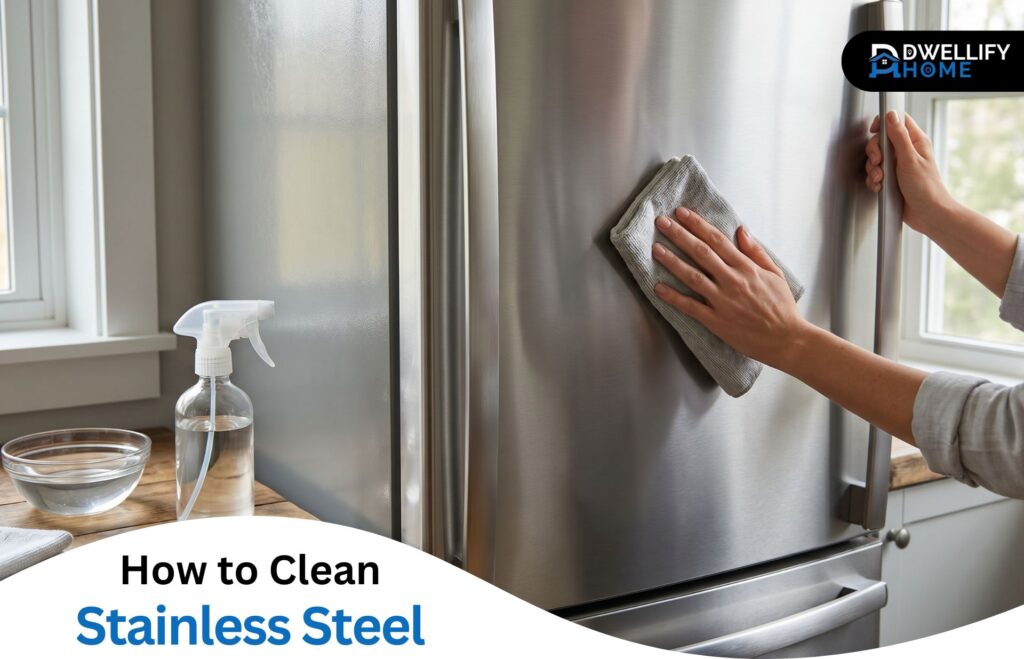
Large appliance panels — fridges, dishwashers, microwaves — are fingerprint magnets. The same grain rule applies here, but there’s an added complication: the grain direction isn’t always consistent across an entire appliance. On some models, panels run vertically. On others, they run horizontally. Check each panel individually before you start.
Use the warm soapy water method for routine cleaning — dampen a microfiber cloth, wipe with the grain, follow with a plain water rinse, and dry immediately. For a better finish, buff lightly with a dry microfiber cloth after drying. This lifts any remaining haze and gives the surface a cleaner appearance without any product.
How to Clean a Stainless Steel Fridge Without Leaving Streaks
Refrigerators present a specific challenge because of their size. It’s tempting to use long, sweeping strokes that cross panel seams — but this is exactly where streaks come from. Work one panel section at a time, always moving with the grain.
Use two cloths: one damp with your cleaning solution, one dry. Work top to bottom on vertical grain, side to side on horizontal grain. When you reach a seam, stop and treat the next section as a separate surface. After drying, a very thin application of mineral oil buffed along the grain will help repel fingerprints for days rather than hours. A little goes a long way — wipe off any excess fully.
How to Clean Stainless Steel Cookware and Utensils
Pots, pans, and everyday cutlery need consistent care to stay looking sharp. For routine cleaning, warm soapy water and a non-scratch sponge are all you need. Wash with the grain where visible — most pans have a brushed interior that runs in one direction. Rinse fully and dry immediately to prevent water spots from forming inside the pan.
For utensils and cutlery, soak them in warm soapy water for a few minutes if there’s stuck food, then wipe clean with a soft cloth. Don’t leave them soaking for extended periods — prolonged water exposure, especially in hard water areas, contributes to spotting and dulling over time.
How to Remove Burnt-On Food from Stainless Steel Pans
Fill the pan with enough warm water to cover the burnt area and add a tablespoon of dish soap. Let it soak for 15 to 30 minutes — longer if the residue is heavy. Then sprinkle baking soda over the softened residue and scrub gently with a non-scratch sponge, moving with the grain of the pan’s interior.
If the residue still won’t release, try the boiling baking soda and vinegar method described in the earlier section. Avoid the temptation to reach for steel wool or an abrasive pad — they will remove the burnt food and damage the surface permanently at the same time.
How to Remove Rust from Stainless Steel
Rust on stainless steel surprises people because the name implies it shouldn’t happen. But stainless steel is resistant to rust — not immune to it. When the chromium oxide layer is compromised — by abrasive cleaning tools, harsh chemicals, or prolonged exposure to moisture — iron in the steel is exposed to oxygen and rust forms. Contact with steel wool or iron particles from cast iron cookware left sitting in a steel sink is another common cause.
Catching rust early makes it much easier to treat.
Home Remedies That Actually Remove Rust (Baking Soda, Vinegar, Lemon Juice)
Baking soda paste: Mix baking soda with a small amount of water to form a thick paste. Apply directly to the rust spot and let it sit for 15 minutes. Scrub gently with a soft cloth along the grain, then rinse and dry.
White vinegar: For rusted utensils, soak them in undiluted white vinegar overnight. For surface rust on sinks or appliances, spray or apply vinegar directly, leave for five to ten minutes, then scrub gently with the grain, rinse, and dry.
Lemon juice: Apply fresh lemon juice to the rust spot, let it sit for five minutes, then scrub gently and rinse. Lemon juice works well on light surface rust and is a good option when you want to avoid any risk of vinegar residue.
When to Use a Commercial Rust Remover Like Bar Keepers Friend
When home remedies fall short, Bar Keepers Friend is the go-to. It contains oxalic acid, which breaks down iron oxide (rust) without requiring aggressive scrubbing. Apply a small amount to a damp cloth, rub gently along the grain, and leave it for no more than one minute before rinsing thoroughly. Dry completely straight after.
The key word is thoroughly — any residue left on the surface can itself cause issues over time. Always rinse more than you think you need to.
When Rust Is Too Deep to Remove at Home
Surface rust — the kind that appears as orange-brown spots — responds well to the methods above. But if you’re seeing pitting, which looks like small craters or holes in the metal, that’s structural corrosion. Pitting means the chromium layer has been compromised at depth, and no home treatment will fully repair it. At that point, it’s worth consulting a professional, or for smaller items like cookware, replacing them is often the more practical choice.
How to Clean Stainless Steel Jewelry
Stainless steel jewelry is durable and tarnish-resistant, but it still picks up skin oils, soap residue, and lotion buildup over time. The cleaning method is gentler than for surfaces and appliances.
Fill a small bowl with warm water and add a drop or two of mild dish soap. Place the jewelry in the bowl and let it soak for five minutes. Then use a soft toothbrush to gently scrub along the grain or texture of the piece. Rinse thoroughly under clean running water — soap residue left in crevices will dull the finish over time. Pat dry with a clean soft cloth and let it air dry fully before storing.
Avoid chlorine — swimming pools, hot tubs, and chlorine-based household cleaners all degrade the surface finish of stainless steel jewelry. Ultrasonic cleaners can be used for plain stainless steel pieces but are not recommended for jewelry with stones or coatings.
How to Polish Stainless Steel for a Long-Lasting Shine
Once a surface is clean, a thin coat of mineral oil or olive oil applied after drying does something useful: it fills the microscopic grooves in the surface and creates a barrier that slows down fingerprint and dust adhesion. The result is a surface that stays cleaner between sessions and has a noticeably richer appearance.
Apply just a few drops to a dry microfiber cloth — not to the surface directly. Wipe along the grain in smooth, even strokes. Then take a second clean, dry cloth and wipe off any excess. You should be left with a subtle sheen, not an oily finish. If it looks greasy, you’ve used too much.
Should You Use a Commercial Stainless Steel Protectant?
Commercial protectants — sprays that clean and protect in one step — are worth using if you want longer-lasting protection than oil alone provides. Look for products that are specifically labeled chloride-free and designed for stainless steel. Avoid multi-surface sprays that aren’t formulated for metal.
They work best on appliance exteriors and large surface areas. For cookware, stick with the oil method since protectant sprays aren’t intended for food contact surfaces.
What You Should Never Use on Stainless Steel
This list is worth keeping somewhere accessible. These are the most common mistakes, and most of them happen because the products seem perfectly reasonable.
Never use:
- Steel wool or wire-bristled brushes (immediate and permanent scratching)
- Abrasive scrubbing pads, including the green ones
- Bleach or any cleaner containing sodium hypochlorite
- Chloride-based cleaners
- Ammonia-based glass cleaners
- Scouring powders not specifically formulated for stainless steel
- Salt in direct contact with the surface — it accelerates corrosion
Why Paper Towels Are a Bigger Problem Than Most People Realize
Paper towels seem gentle but they’re actually made from wood pulp fibers that are stiff enough to cause micro-scratches on stainless steel over time. These scratches are too fine to feel but they build up, dulling the finish gradually. The surface starts to look hazy and harder to clean.
Switch to microfiber cloths. They’re softer, more effective at picking up residue, and reusable. Keep a dedicated set for stainless steel — cloths that carry grease or soap from other cleaning tasks will transfer residue to your surfaces.
The Cleaning Products That Can Void Your Appliance Warranty
This is something most people only find out after the fact: using bleach, chlorine-based cleaners, or harsh abrasives on stainless steel appliances can void the manufacturer’s warranty. Appliance warranties typically cover defects in materials and workmanship — they don’t cover surface damage caused by improper cleaning, and corrosion from chemical exposure is classified as improper use.
If you’re ever unsure about a product, check the care instructions in your appliance manual before using it. Most manufacturers list their approved cleaning methods explicitly.
How to Keep Stainless Steel Looking Clean — A Simple Routine That Works
The surfaces that look consistently good aren’t cleaned more often — they’re cleaned smarter. A short daily habit prevents the kind of buildup that requires real effort to remove.
Daily: After use, wipe down with a damp microfiber cloth and dry immediately. This takes thirty seconds and prevents water spots and fingerprints from setting.
Weekly: Do a proper clean with dish soap or vinegar, rinse thoroughly, dry completely, and apply a small amount of mineral oil if the surface gets heavy use.
Monthly: Inspect for early signs of rust or mineral buildup and treat them promptly. Check that your cloths are in good condition — worn or contaminated cloths are often the reason surfaces start looking worse despite regular cleaning.
Frequently Asked Questions
Can I clean stainless steel with WD-40?
WD-40 can temporarily remove fingerprints and leave a slight shine on stainless steel surfaces. However, it’s a petroleum-based product not formulated for this purpose, and it attracts dust and grime over time, making the surface harder to keep clean. Mineral oil is a more appropriate and longer-lasting alternative.
Is baking soda safe to use on stainless steel surfaces?
Yes, when used correctly. Baking soda is mildly abrasive but non-scratching when applied with a soft cloth along the grain. The key is to avoid scrubbing hard and to rinse thoroughly after use. Don’t leave baking soda paste sitting on the surface longer than necessary — always follow with a complete rinse.
Why does my stainless steel look dull after cleaning?
Dullness after cleaning usually means either the surface wasn’t dried quickly enough (allowing minerals in tap water to deposit), soap residue was left on the surface, or the cleaning was done against the grain and caused micro-scratches. In most cases, a proper clean followed by a light application of mineral oil will restore the finish.
How often should stainless steel appliances be cleaned?
For most households, a quick daily wipe-down and a proper weekly clean is enough to keep stainless steel appliances looking sharp. High-traffic items like refrigerator handles may need attention more frequently. The more consistently you clean, the less time each session takes.
Can stainless steel go in the dishwasher?
Most stainless steel cookware and utensils are dishwasher safe, but repeated dishwasher cycles can gradually dull the finish due to the high temperatures and harsh detergents involved. Hand washing preserves the appearance much longer. Check manufacturer guidance for any specific cookware before putting it in the dishwasher.
What is the best everyday cleaner for stainless steel?
For most surfaces, warm water with a small amount of mild dish soap applied with a microfiber cloth is the most effective and safest everyday cleaner. It removes grease, smudges, and light buildup without risking the surface. Vinegar is the next step up for mineral deposits, and baking soda paste for tougher stains.
Conclusion
Learning how to clean stainless steel properly comes down to three things: understanding the grain and always following it, drying surfaces immediately after every clean, and choosing gentle tools over harsh chemicals. Get those three habits right and stainless steel is genuinely one of the easiest materials to maintain.
The right method, done consistently, will always outperform the most expensive product used carelessly. Your appliances, sink, cookware, and jewelry will look better, last longer, and require far less effort over time.
Disclaimer
The content published on Dwellify Home is intended for general informational purposes only. Results may vary depending on your specific appliance, surface type, water quality, and cleaning products used. Always refer to your manufacturer’s care guidelines before applying any cleaning method to your appliances or fixtures.