Rustic outdoor patio furniture is outdoor furniture with visible wood grain, chunky frames, and a lived-in finish — cedar, teak, reclaimed wood, and wrought iron in earthy tones — built to look better the longer it sits outside. A rustic acacia loveseat set runs about $651 at Target, a rustic acacia sofa about $635 to $792, and a six-seat acacia set about $1,480 at Wayfair, all checked November 16, 2026. This guide covers the look, the woods and metals that last, the rustic-versus-modern choice, the real prices, and the care routine that keeps the character without the rot.
One buying mistake ruins more rustic patios than weather ever does, and it has nothing to do with the finish you pick. It sits in the materials section below, and most buyers make it before the first winter ends. First, the style itself deserves a clear look, because rustic is a feeling before it is a furniture list.
What Is Rustic Outdoor Patio Furniture?
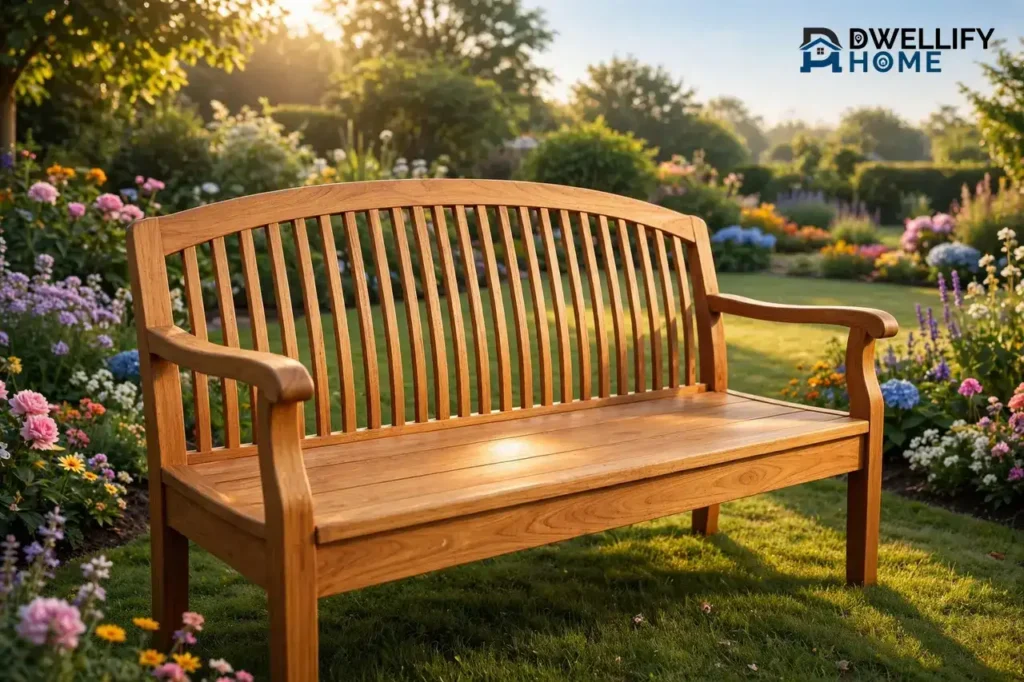
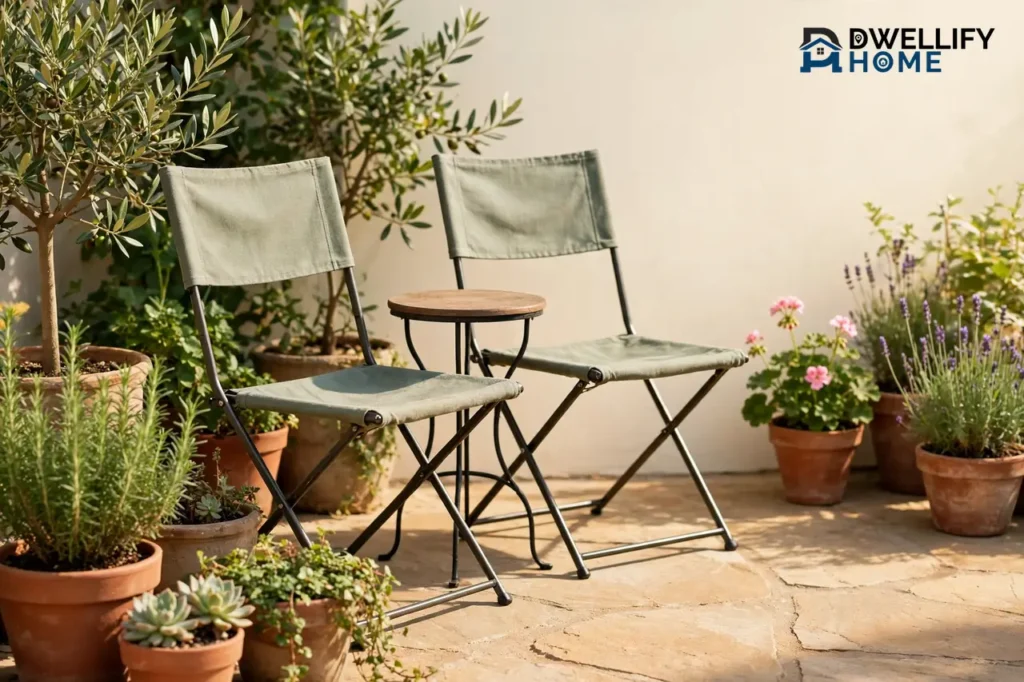
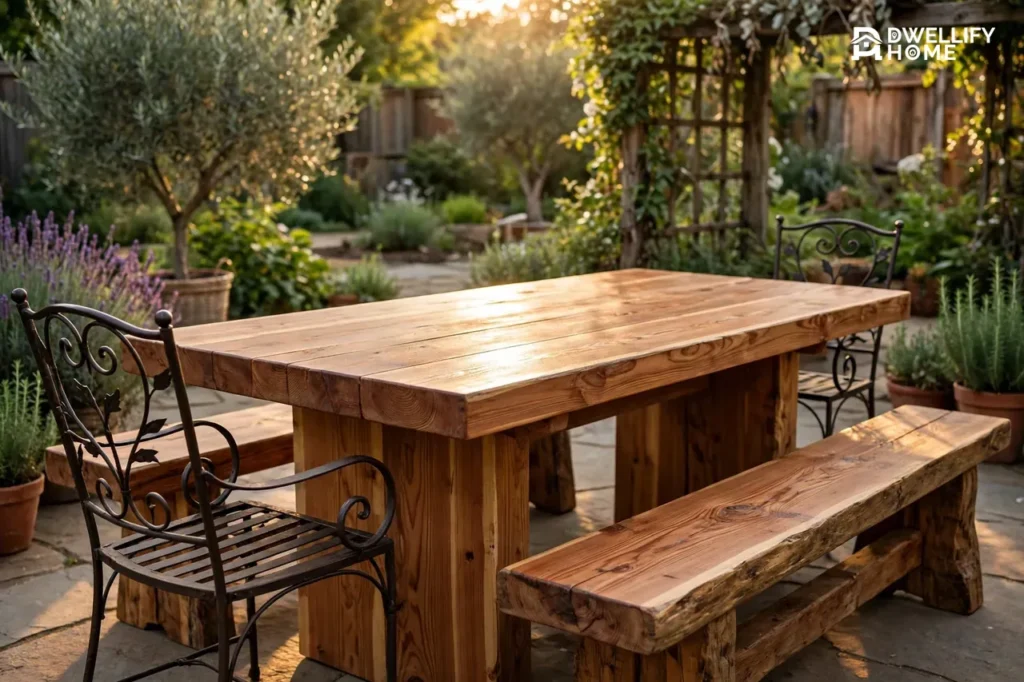
Rustic outdoor patio furniture is outdoor furniture that shows its natural materials — wood grain, knots, and imperfections on display, chunky substantial pieces, distressed or weathered finishes, and an earth-toned palette — instead of hiding them under paint or polish. The look comes from farmhouse and lodge traditions: hand-crafted pieces, solid wood tables, woven fibers, and iron accents that feel lived-in from day one.
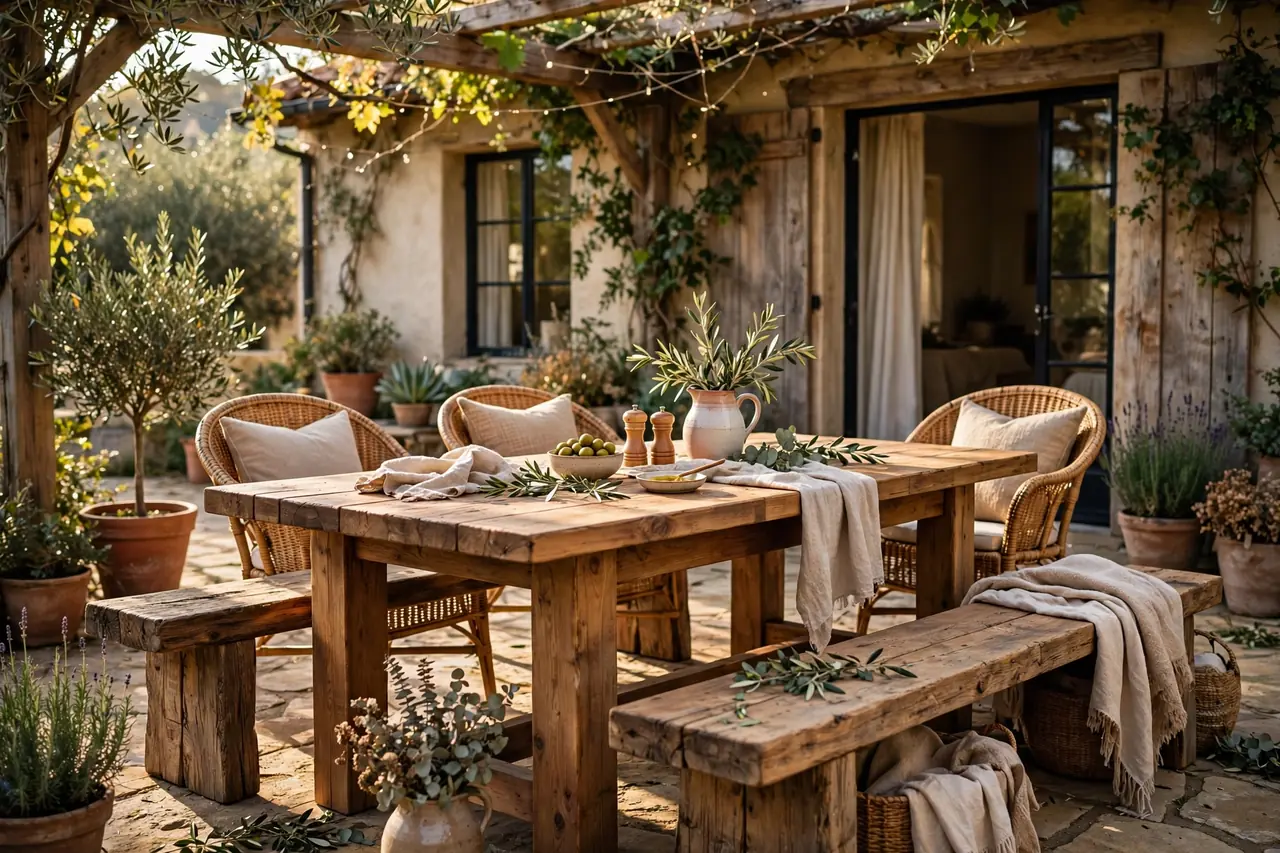
The style has a clear signature. Palm Casual’s rustic-versus-modern guide lists the markers: natural wood grains and textures, a hand-crafted appearance with visible knots and imperfections, an earth-toned color palette, chunky substantial pieces, woven materials like wicker and rattan, distressed finishes, and traditional craftsmanship details. Nothing in the list is delicate or formal, and that is the point — rustic furniture invites you to sit down and stay a while. Read the comparison at Palm Casual’s rustic vs modern patio furniture guide.
The pieces buyers search for most are the classics. Rustic garden furniture means the same look in a garden setting — a solid wood bench, a slatted table, a woven lounge chair. Rustic lounge furniture and rustic couches are deep-seated wood-frame sofas with thick cushions, rustic accent chairs are the single seats that anchor a corner, and a rustic outdoor table is usually a thick plank table with X-braced legs. Even the indoor-sounding variants — a rustic buffet or a rustic sideboard — follow the same rule outdoors: solid wood, visible grain, iron hardware, nothing glossy.
The style also fits the front porch and the fire pit equally well. An Adirondack chair in weathered wood, a rocking chair on the porch, a long farmhouse table with bench seating — all of them are rustic before they are anything else. Our adirondack chair set guide covers the set version of the classic rustic seat, and our outdoor wooden bench guide covers the bench that anchors a rustic dining table.
Visible grain, chunky frames, earthy tones. If the wood looks perfect, it is not rustic — it is just brown.
Which Materials Make Rustic Furniture Last Outdoors?
Rustic furniture lasts outdoors when the wood resists rot and insects on its own and the metal resists rust with a real coating. Cedar and teak are the woods that do this naturally, reclaimed wood adds character with an eco-friendly story, wrought iron and galvanized steel add the industrial accent, and solid HDPE lumber gives the rustic look with almost no maintenance. Untreated pine and natural rattan are the two materials that fail first.
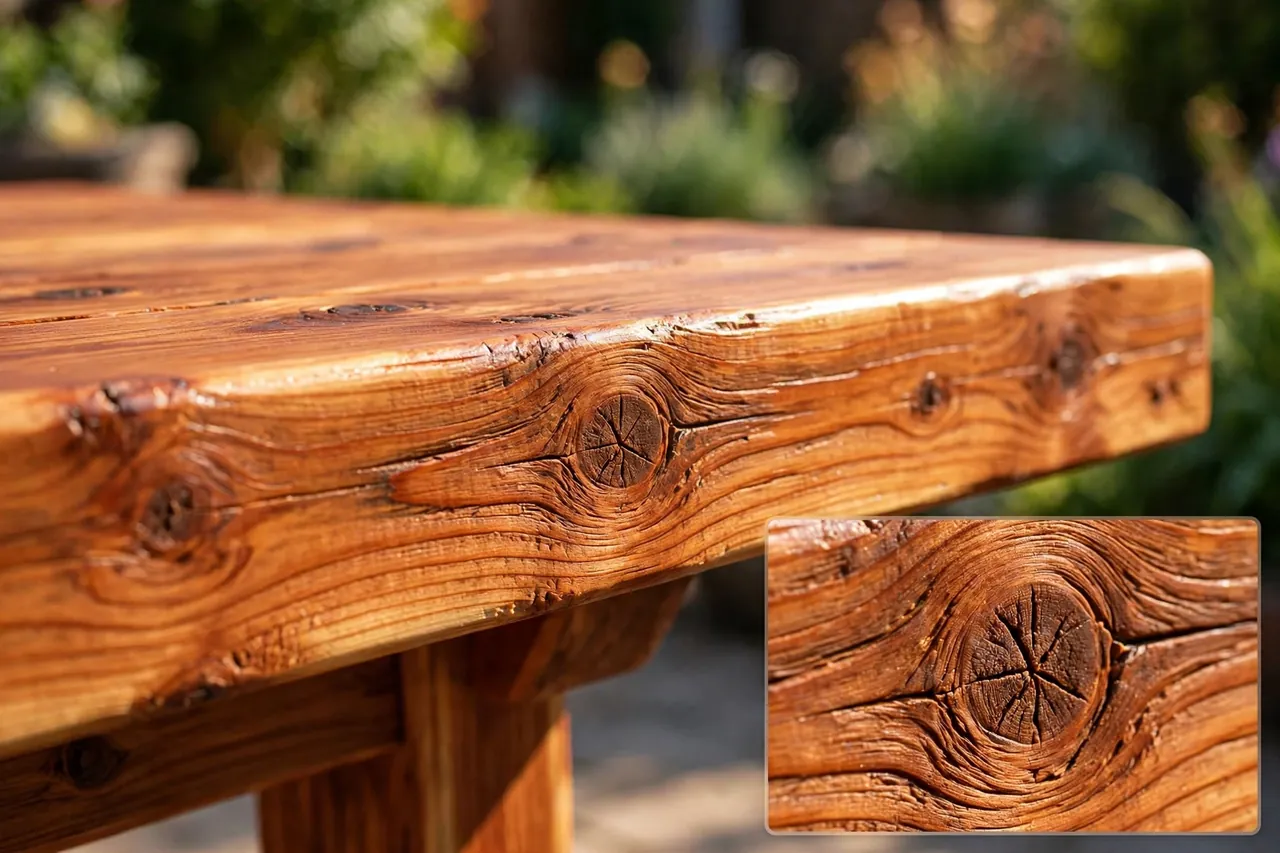
Cedar is the workhorse of the rustic look. It resists rot and insects naturally, and over time its rich hue deepens and gains character instead of fading. Teak is the premium choice: its natural oils protect it for decades outdoors, and if you want to keep its honey color you seal it every one to two years — otherwise it weathers to a silver-grey patina that many rustic buyers actually prefer. Household Rescue’s farmhouse guide puts cedar and teak first for exactly this reason, with reclaimed wood as the character pick that lowers the environmental footprint. Read it at Household Rescue’s farmhouse outdoor furniture guide.
Rustic outdoor furniture materials at a glance
| Material | Durability | Maintenance | Cost |
|---|---|---|---|
| Cedar | High, resists rot and insects | Oil once a year | Medium |
| Teak | Very high, decades outdoors | Seal every 1–2 years | High |
| Reclaimed wood | High with sealing | Seal and inspect yearly | Medium to high |
| Wrought iron | Very high | Low, check for rust | Medium |
| HDPE poly lumber | Very high, no rot | Almost none | Medium to high |
| Natural rattan | Low outdoors | Constant | Low — skip it outside |
The table follows Household Rescue’s material comparison, with HDPE poly lumber added from the farmhouse-porch research: poly lumber in weathered wood tones and driftwood gray holds its color without fading, cracking, or annual refinishing, and its slatted Adirondack profile is quintessentially farmhouse. The Porch Swing Store’s farmhouse patio guide makes the same point — poly wood furniture in classic farmhouse colors achieves the aesthetic while eliminating the maintenance burden of real wood. Read it at The Porch Swing Store’s farmhouse patio guide.
Metal accents need the same honesty. Galvanized steel carries a protective zinc coating that inhibits rust and looks properly industrial, while powder coating — pigment and resin cured onto the metal — is the more robust treatment. EngineerFix’s farmhouse patio guide warns that teak needs a sealer every one to two years to hold its color, and that metal elements rely entirely on their coating for corrosion resistance. Read it at EngineerFix’s guide to choosing a farmhouse patio set. Our cedar outdoor furniture guide covers cedar in depth, and our outdoor furniture wood guide compares every outdoor wood side by side.
Cedar or teak for the wood, coated iron for the accent. Untreated timber in a wet spot rots, and a coating chip on steel is where the rust starts.
Rustic vs Modern Patio Furniture: Which Fits Your Home?
Rustic patio furniture fits a home that wants warmth, texture, and traditional craft, while modern patio furniture fits a home that wants clean lines, minimal color, and smooth surfaces. The two styles are design opposites, and the house itself usually decides: a farmhouse, cabin, or cottage takes rustic naturally, while a new build with glass and concrete takes modern. Mixing them works only when one style leads and the other accents.
Rustic and modern at a glance
| Feature | Rustic | Modern |
|---|---|---|
| Materials | Teak, cedar, natural wicker, wrought iron | Aluminum, resin wicker, tempered glass |
| Colors | Earth tones, whites, creams, muted greens | Black, grey, white, bold single accent |
| Shapes | Chunky, substantial, hand-crafted | Slim, geometric, low-profile |
| Details | Knots, distressed finish, X-bracing | Smooth joints, hidden hardware |
| Feeling | Warm, lived-in, welcoming | Clean, open, uncluttered |
The table follows Palm Casual’s style breakdown, which also notes the Jacksonville twist: coastal homes mix rustic wood with driftwood accents, rope details, and weathered finishes to tie the style to the region. The same mixing logic works anywhere — a rustic teak dining set with a modern black aluminum frame chair, or a modern low sofa with a reclaimed wood coffee table, reads as deliberate when one style clearly leads.
Do not split the patio down the middle. Two focal points — a full rustic dining set and a full modern lounge set — fight each other, and the patio ends up looking like two showrooms. Pick the lead style for the biggest pieces, then let the other style appear in one or two small accents. That fixes the symptom of a patio that feels confused. The part that actually costs money is the price tier, which is the next section.
One style leads, the other accents. A patio with two bosses has no character at all.
How Much Does Rustic Outdoor Patio Furniture Cost?
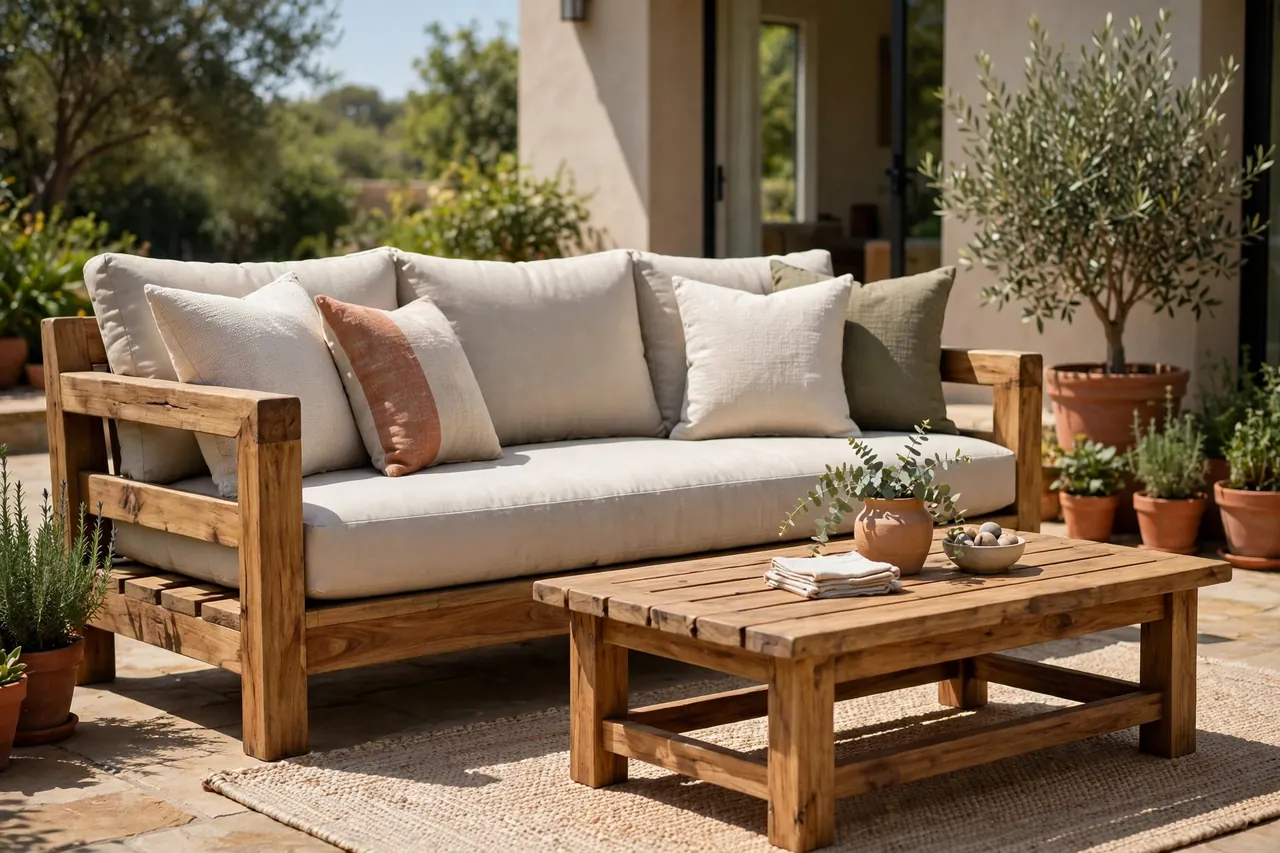
Rustic outdoor patio furniture costs about $320 for a four-piece acacia set, $635 to $792 for a rustic acacia sofa, $651 for a two-piece rustic loveseat set, and $1,480 for a six-seat acacia set, all checked November 16, 2026. Budget acacia sets start near $210, mid-range solid-wood sets land between $600 and $1,500, and a handcrafted cedar or teak dining set runs higher. The wood species decides the price more than the style name does.
Rustic outdoor patio furniture prices at a glance
| Piece | Price | What you get |
|---|---|---|
| Costway 3-piece acacia conversation set | $209.99–$225.99 | Wicker rattan, acacia legs, 3 pieces |
| Costway 4-piece acacia sofa set | $319.99 | Acacia frame, cushioned sofa and chairs |
| Christopher Knight Home Zack rustic acacia sofa | $634.99–$791.99 | 3-seater, water-resistant cushions |
| Christopher Knight Home Ouranion rustic loveseat set | $650.99 | 2-piece loveseat and coffee table |
| Highland Dunes 3-seater acacia sectional set | $699.99 | Modular sofa, ottoman, coffee table |
| Latitude Run 6-seat acacia seating set | $1,480 | 6 seats, table, was $1,670 |
All six prices above come from live Target and Wayfair listings checked November 16, 2026. See the rustic acacia listings at Target’s rustic acacia patio furniture listings and the acacia conversation sets at Wayfair’s beige patio conversation sets. The spread tells the real story: the $210 set and the $1,480 set both call themselves rustic acacia, but the cheap one buys thin frames and thin cushions, while the expensive one buys solid acacia throughout, naturally moisture and insect resistant, with full assembly and real weight.
Guess which set costs less over five years: the $320 acacia set with thin polyester cushions, or the $700 set with thick water-resistant cushions and a solid frame? The cheap cushions flatten and fade within two seasons and need replacing, while the solid frame carries the set through five summers with one oiling a year. The expensive set is the one you buy once, so compare the five-year total, not the price on the tag.
Compare the five-year total, not the tag. Thin cushions and thin frames are the parts you replace first.
How to Style a Rustic Patio Without Overdoing It
Style a rustic patio in three moves: anchor it with one big wood piece, soften it with neutral cushions and woven texture, and finish it with one iron accent. A long farmhouse table with bench seating, a pair of rocking chairs, or a deep wood-frame lounge set each anchor a zone on their own, and everything else supports them.
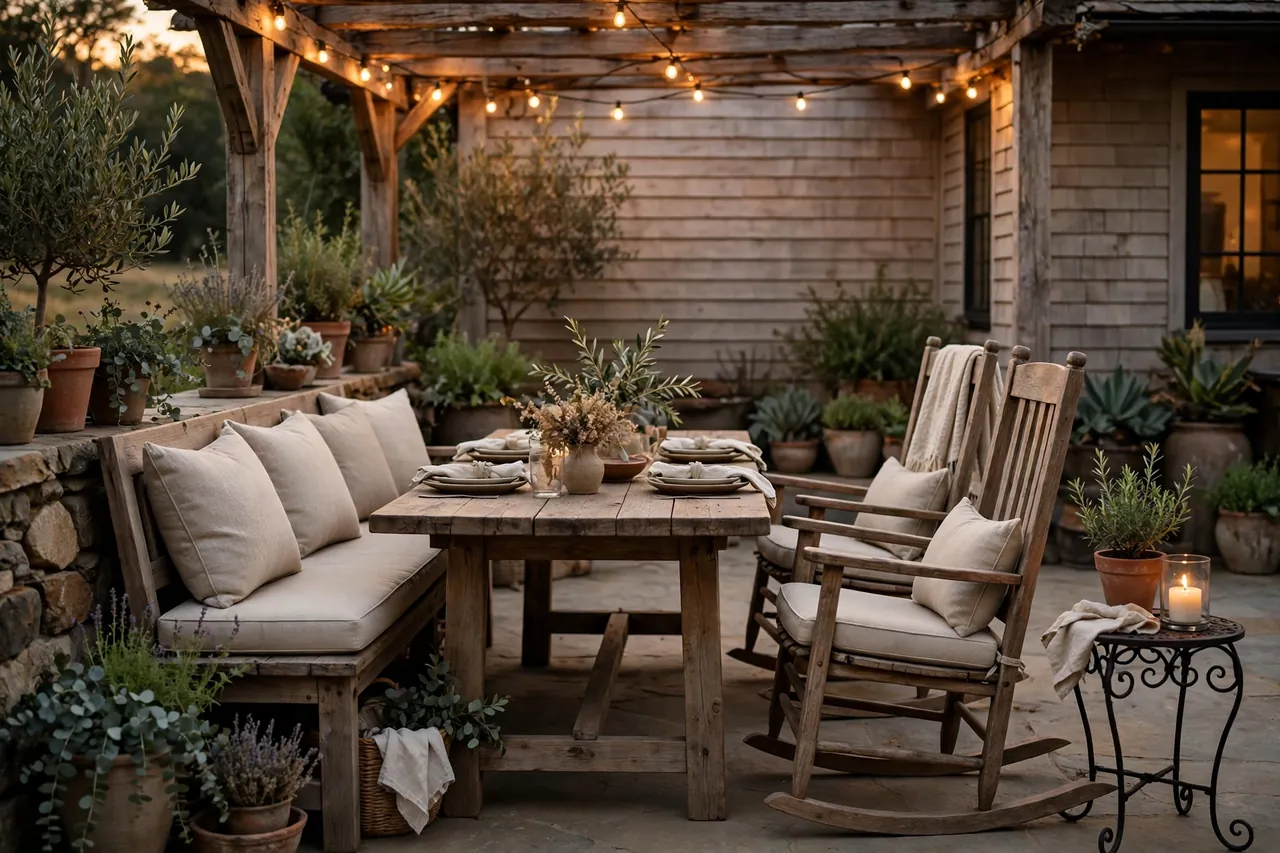
Start with the anchor. A handcrafted cedar dining set with a natural oil finish is the timeless choice for outdoor meals, and it pairs well with wrought iron chairs for a balanced look. A woven rattan lounge set brings a relaxed, airy feel, and an industrial wrought iron coffee table adds the bold accent that keeps the wood from feeling too soft. The Porch Swing Store’s guide builds the classic farmhouse porch the same way: rocking chairs or a porch swing first, a small white or weathered gray side table between them, then the dining table with bench seating in the backyard.
Keep the palette neutral. Soft whites, creams, muted grays, and natural wood tones carry the look, with a distressed or whitewashed finish to simulate age. EngineerFix’s guide adds the practical rule: maintain 30 to 36 inches of clearance for main walkways around the pieces, and outline the furniture dimensions with chalk or painter’s tape before you buy, so the chunky pieces do not swallow the patio. Our how to arrange outdoor furniture guide covers the full layout routine, and our patio conversation furniture sets guide matches the set to the space.
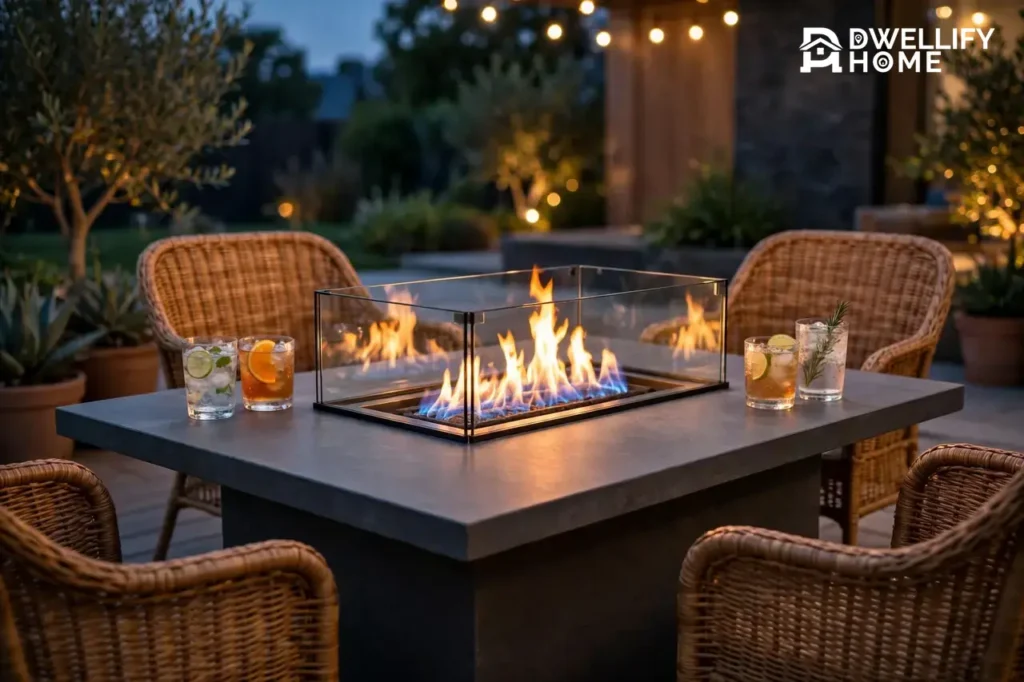
Finish with the small pieces. A rustic outdoor table needs a bench or two, not a second table. A fire pit seating area wants Adirondack chairs around a simple stone or steel fire pit — farmhouse outdoor living at its most iconic. Our fire pit tables guide covers the table that anchors the fireside circle, and our outdoor coffee tables guide covers the low table between the lounge seats.
One big wood anchor, neutral cushions, one iron accent. Everything after that is decoration, and decoration is the cheap part to add later.
What Most People Get Wrong About Rustic Outdoor Furniture
Most people get rustic outdoor patio furniture wrong in three ways: they believe any wood works outside, they believe distressed means damaged, and they believe rustic means no maintenance. All three beliefs cost money, and the first one is the most common.
The any-wood myth is the big one. Untreated timber in a humid or rainy spot warps, rots, and becomes a breeding ground for pests within a year — Household Rescue warns about this directly. Only rot-resistant woods like cedar and teak, sealed reclaimed wood, or HDPE lumber belong outside uncovered. A pine table with a rustic stain is an indoor table with outdoor paint, and the rain finds that out fast.
The distressed myth runs the other way: a distressed finish is a deliberate surface treatment, not damage. Real damage is a cracked joint, a split board, or a rusted bolt, and no finish hides it. When buying second-hand rustic furniture, inspect for rot, rust, and structural soundness first, then clean and protect the piece before using it. Here’s the problem with that advice: it sounds like a shopping rule, but it is really a money rule — a rotten frame is the piece you replace first.
The no-maintenance myth is the quiet one. Rustic looks low-maintenance because the finish hides wear, but the wood still needs oil or sealant once a year, the iron still needs a rust check, and the cushions still need washing. Poly lumber is the one honest exception: it holds its color without fading, cracking, or annual refinishing, which is why it suits buyers who want the look without the yearly routine.
Rustic hides wear; it does not prevent it. The oil can is part of the style, not an apology for it.
How to Care for Rustic Outdoor Furniture
Care for rustic outdoor furniture with a short yearly routine: wash wood with mild soap and water, apply a protective oil or sealant once a year, wipe metal with a damp cloth and dry it fully, and cover or store the pieces during the off-season. The whole routine takes an afternoon, and it is what turns a five-year set into a fifteen-year set.
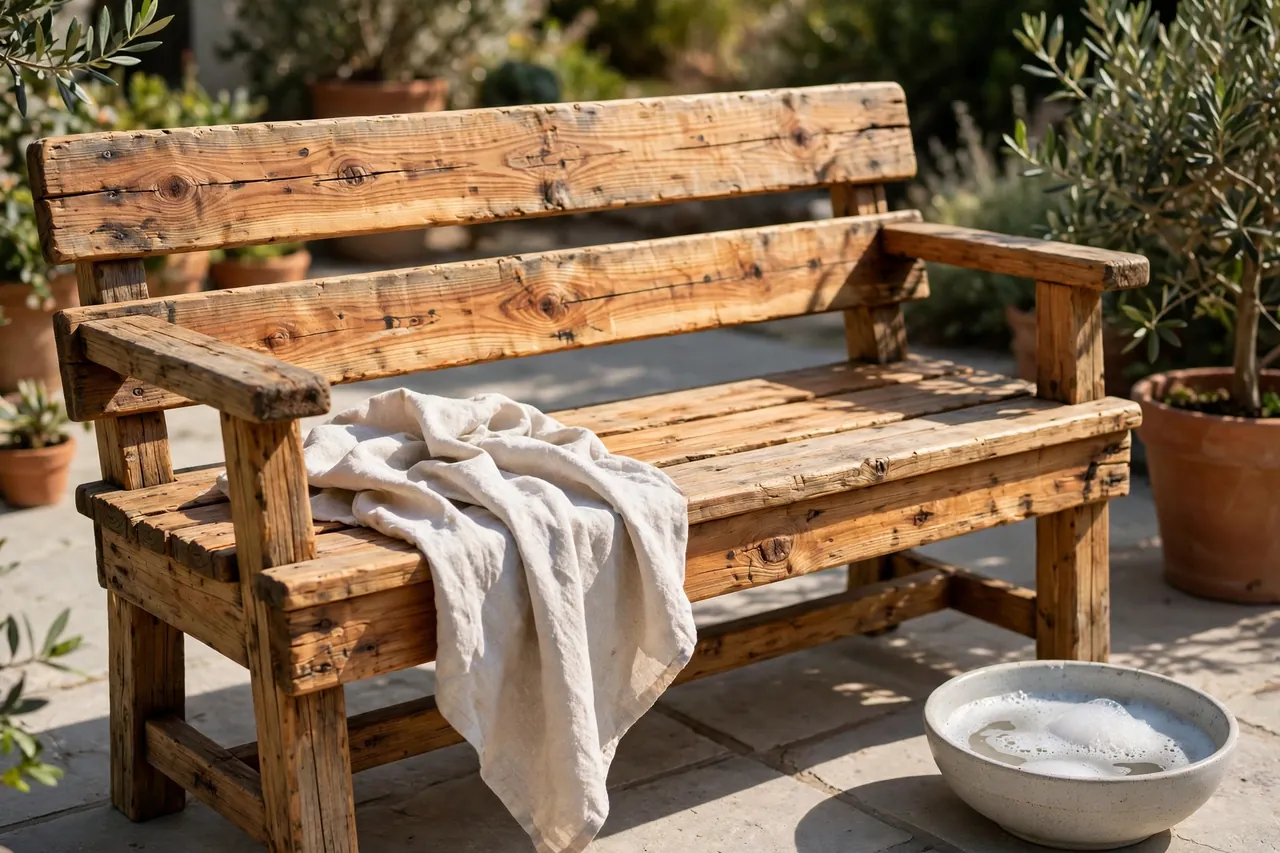
Start each season by cleaning wood furniture with a mild soap and water solution, steering clear of harsh chemicals that strip the finish. Apply a protective oil or sealant once a year to keep the wood looking good and lasting longer. For metal furniture, wipe surfaces with a damp cloth and dry thoroughly to prevent rust, and clean wicker pieces with a soft brush and mild soap. Store wicker items indoors during harsh weather to avoid damage.
Winter care is where rustic furniture lives or dies. Invest in weather-resistant covers to shield the pieces during off-seasons, and whenever feasible store delicate pieces indoors. Never leave untreated timber in a wet spot over winter — it swells, cracks, and rots from the inside. Our how to care for outdoor furniture guide covers the season-by-season routine for every material, our outdoor covers for furniture guide shows which covers breathe and which ones trap damp, and our how to store outdoor furniture guide covers the full winter routine.
Check the joints once a season while you clean. Rustic pieces carry their weight on chunky joints and X-bracing, and a loose joint is what turns a solid table into a wobbly one. Tighten bolts after the winter thaw, touch up any chip in a powder-coated iron piece at once, and wash cushion covers promptly after rain rather than letting them dry on the foam. Our outdoor furniture repair guide covers the fixes worth doing yourself, and our washing outdoor cushions guide covers the wash itself.
Wash the wood, oil it once a year, cover the set. An afternoon of care beats a spring of scrubbing rot.
Related Guides
If you are planning the whole rustic space, these guides pick up where this one leaves off:
- Cedar Outdoor Furniture — cedar in depth, from dining sets to benches.
- Outdoor Furniture Wood — every outdoor wood compared side by side.
- Adirondack Chair Set — the classic rustic seat, in set form.
- Outdoor Wooden Bench — the bench that anchors a rustic dining table.
- How to Arrange Outdoor Furniture — traffic flow, rug sizing, and clearance numbers.
- Patio Conversation Furniture Sets — match the set to the space.
- Fire Pit Tables — the table that anchors the fireside circle.
- Outdoor Coffee Tables — the low table between the lounge seats.
- How to Care for Outdoor Furniture — the season-by-season routine for every material.
- Outdoor Covers for Furniture — which covers breathe and which ones trap damp.
- How to Store Outdoor Furniture — keep it clean, dry, and ready for spring.
- Outdoor Furniture Repair — the fixes worth doing yourself.
- Washing Outdoor Cushions — the wash routine for rustic cushions.
- Coastal Outdoor Furniture — the light beach-house style, for the other end of the patio.
- Outdoor Furniture Weights — how heavy each piece is, and what stays put in wind.
Frequently Asked Questions
What materials are best for farmhouse outdoor furniture?
For farmhouse outdoor furniture, weather-resistant woods like cedar or teak, along with wrought iron and synthetic wicker (polyrattan), offer the perfect blend of durability and rustic charm.
How do I maintain farmhouse-style outdoor furniture?
Keep farmhouse-style outdoor furniture in top shape with regular cleaning using mild soap and water. Apply a protective finish to wood surfaces annually and cover pieces during off-seasons.
Can I mix different styles in your outdoor space?
Absolutely. Blending rustic wood with industrial metal accents crafts a distinctive, layered aesthetic. To ensure a cohesive design, verify that the materials harmonize in both color and texture.
Are there eco-friendly options for farmhouse-style outdoor furniture?
Indeed, reclaimed wood and synthetic wicker offer sustainable alternatives. These materials lower environmental impact without sacrificing the rustic appeal central to farmhouse design.
How do I protect my furniture from weather damage?
Protect your furniture with weather-resistant covers, store delicate items indoors during severe conditions, and refresh protective finishes routinely.
Pick the wood for the weather first, then the finish. A cedar or teak set with neutral cushions and one iron accent looks like a farmhouse on day one, and with one oiling a year it still looks like one fifteen summers from now. Start with the anchor piece — the table or the lounge — and let the rest of the patio grow around it.