An outdoor coffee table is the low table in front of your patio sofa or lounge chairs, and the one that fits sits 16 to 18 inches high, runs about two-thirds the length of your sofa, and leaves 14 to 18 inches of clearance to the seating. Get those three numbers right and the table disappears into the conversation; get the height wrong by two inches and every drink feels like a reach. This guide covers sizing, materials, real prices from $80 to $2,500, shapes, and the care routine that keeps a table looking good for years.
One buying mistake wastes more money than any other, and it has nothing to do with the material you pick. It sits in the mistakes section below, and most buyers make it before they ever measure their sofa. Before that, you need the size rules right, because no beautiful table fixes a table that crowds the walkway.
What Is an Outdoor Coffee Table?
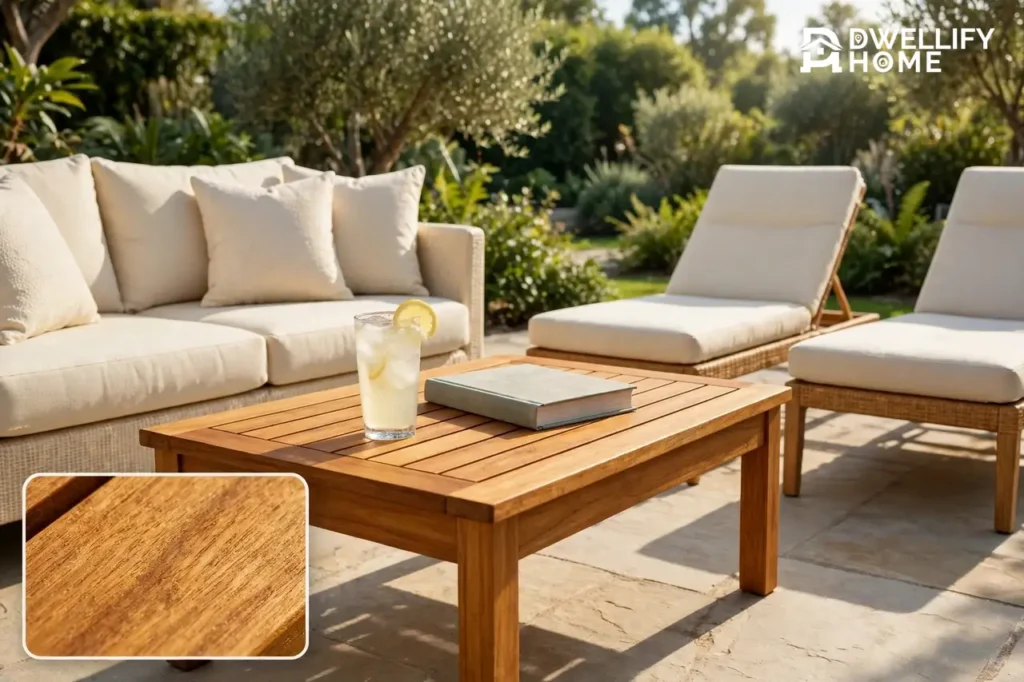
An outdoor coffee table is a low table built to live outside at the center of a patio conversation area, typically 16 to 18 inches high, holding drinks, books, and snacks within arm’s reach of sofas and lounge chairs. Unlike an indoor coffee table, it uses weather-resistant finishes, rust-proof hardware, and materials that resist UV fading, moisture damage, and insects.
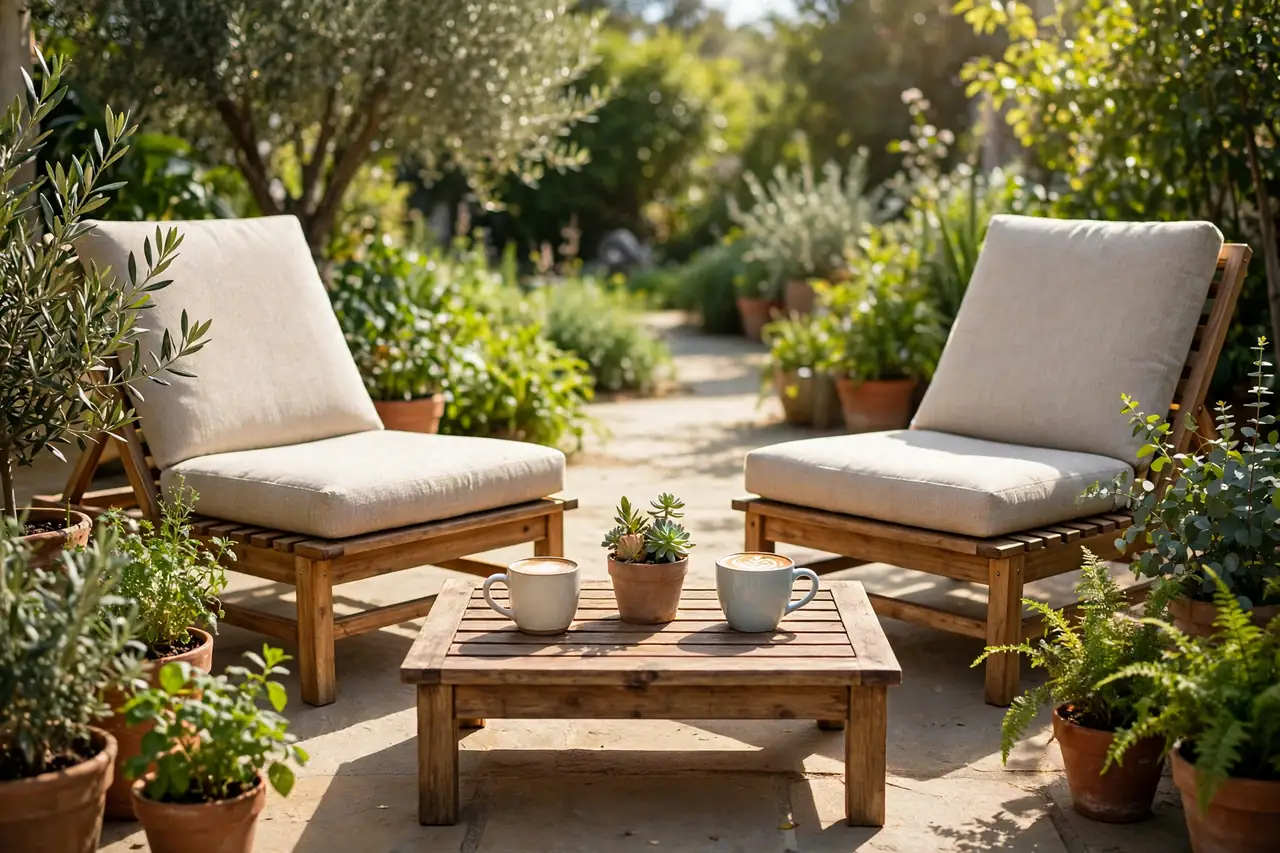
The height is what makes it a coffee table and not a dining table or a side table. Dining tables stand 28 to 30 inches high for eating, side tables stand 18 to 24 inches high beside one seat, and coffee tables sit low at 16 to 18 inches so they pair naturally with sofas and lounge chairs. A table that is too tall blocks the view across the seating area, and a table that is too low turns every coffee into a bend-and-reach. If your lounge chairs sit unusually low, look for a 14 to 16 inch table instead.
A good outdoor coffee table does three jobs at once. It anchors the seating area, giving the sofa and chairs a center to face. It holds what people actually use outside: drinks, a book, sunscreen, a phone, a snack plate. And it ties the patio design together, because the table is the piece every eye lands on between the seats. A table that looks beautiful but warps after one rainy season is a poor investment, and a table that survives everything but clashes with your patio undermines the whole space.
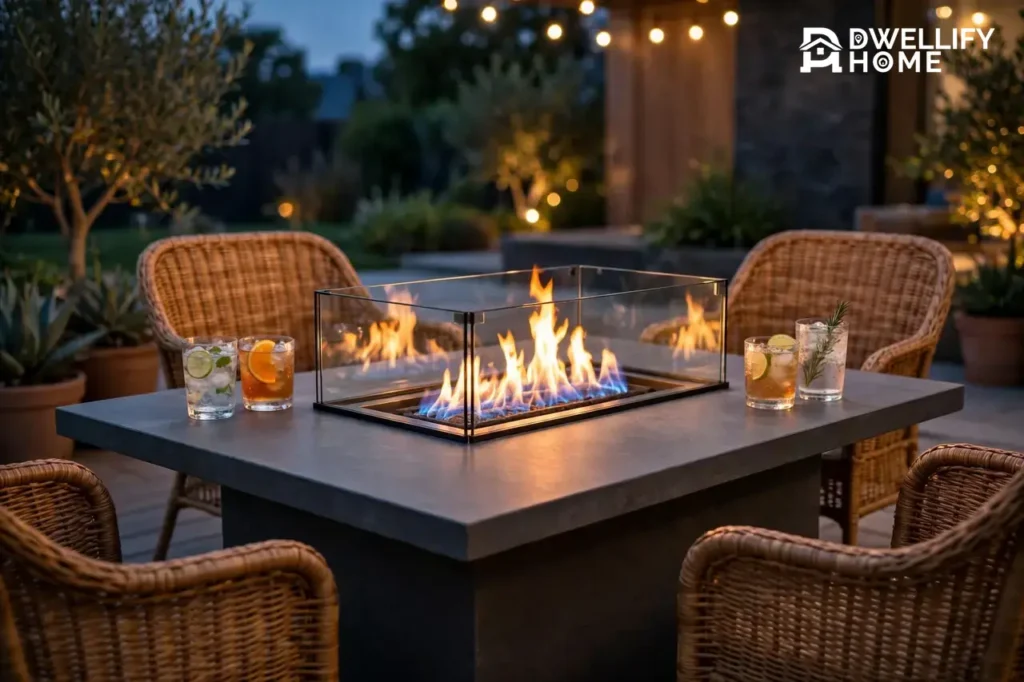
Outdoor coffee tables also come with features indoor tables never need. Some have lower shelves or lift-top surfaces for storing cushions and throws, some have umbrella holes for shade, and combination coffee table and fire pit units extend the patio season into cooler months. If storage matters on a small patio, pair the table with an outdoor bench with storage so every piece multitasks.
Height defines the table. Sixteen to eighteen inches is the range that works with real lounge seating.
What Size Outdoor Coffee Table Do You Need?
Choose an outdoor coffee table about two-thirds the length of your sofa: for a 72-inch sofa, look for a 44 to 48 inch table, 20 to 30 inches wide, and 16 to 18 inches high, with 14 to 18 inches of clearance between the table edge and the seating. A table longer than two-thirds of the sofa looks oversized and blocks the walkway.
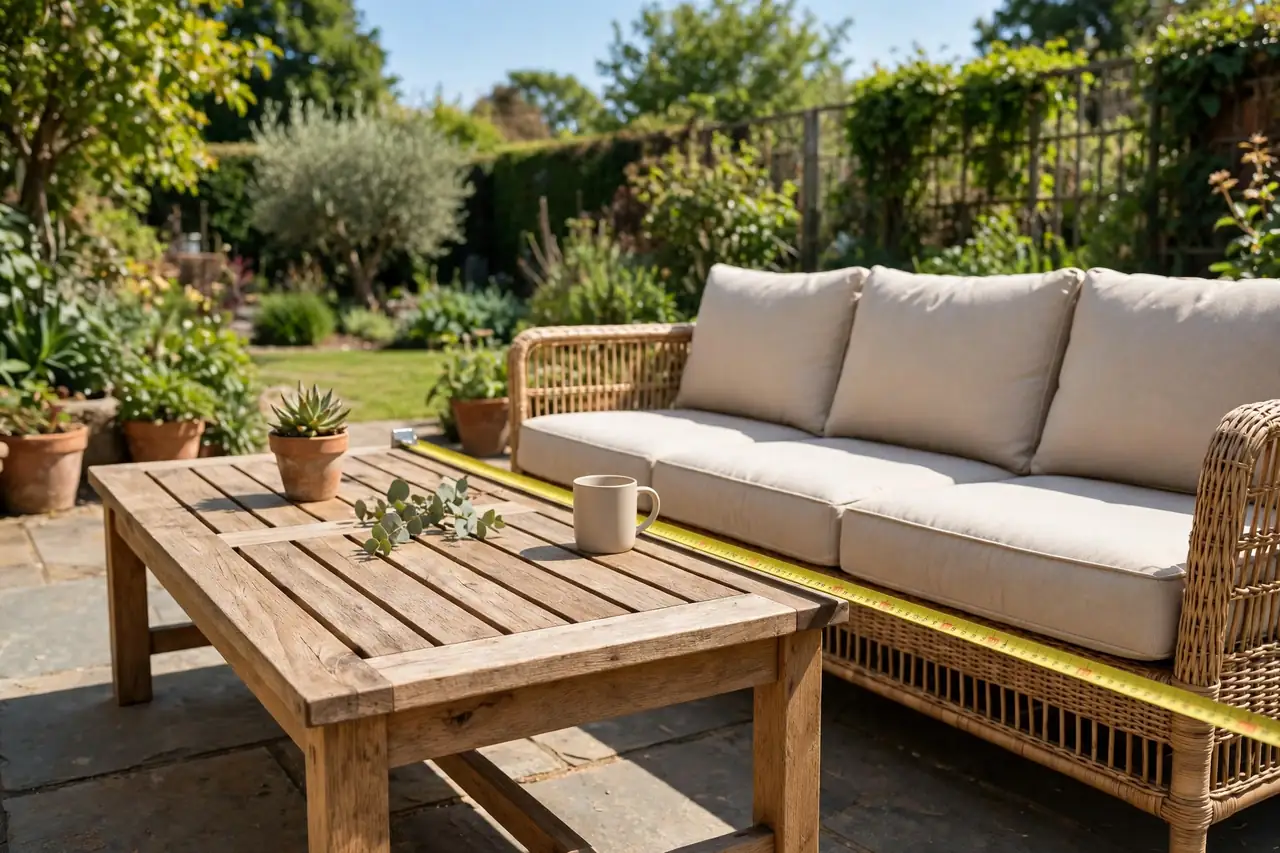
Size is the most common mistake buyers make, so measure before you shop. A table that is too large crowds the seating area, and one that is too small feels lost and cannot hold what you need. The two-thirds rule works because it keeps the table within easy reach of every seat while leaving room to walk around it. For a 48 to 60 inch loveseat, a 30 to 36 inch table fits; for a 66 to 78 inch three-seat sofa, a 40 to 48 inch table fits; for a large 84 to 120 inch sectional, a 48 to 60 inch table fits. On a balcony or small patio, a 24 to 30 inch table, 16 to 20 inches wide, and 14 to 16 inches high is the right scale.
Clearance is the number people forget. Leave 14 to 18 inches between the table edge and the front of your sofa so legs fit comfortably and drinks stay within reach, and leave at least 30 to 45 centimeters — about 12 to 18 inches — of walking space around the other sides. A table that fits the sofa may still overcrowd the walkway to the door, so tape the footprint on the patio floor before you order. Our outdoor furniture for small spaces guide shows seven layouts where a right-sized table earns its footprint.
Height must match the seating, not the catalog photo. Outdoor lounge chairs sit lower than dining chairs, so a coffee table around 16 to 18 inches high usually lines up well, with the top level with the sofa cushions or slightly lower. If your chairs are unusually low or high, confirm the number before ordering: most listings state length and width but hide the height, and only three of the eighteen tables in one recent roundup stated full dimensions at all.
Measure the gap first, then the table. The space between the seats decides the size, not the catalog.
Which Material Lasts Longest Outdoors?
Powder-coated aluminum lasts longest outdoors for most buyers with almost no care, because it never rusts, it is light enough to move, and it holds up in rain, sun, and coastal air. Teak lasts decades too and looks warmer, but it costs more and needs oiling to hold its color, while HDPE resin wicker gives you the lowest maintenance of all.
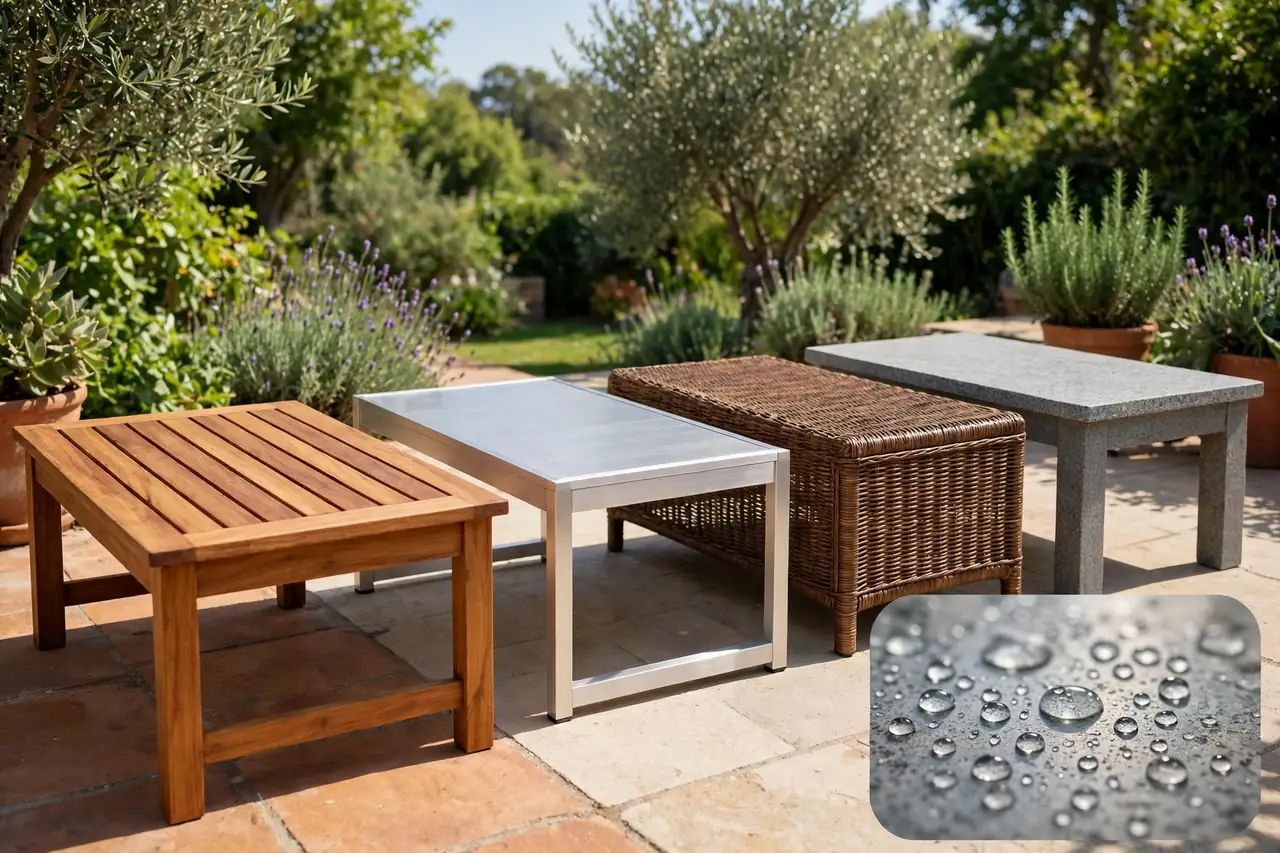
Material is the single most important decision after size, so here is the honest comparison in one place. Guess which material costs the least over ten years: the $300 aluminum table or the $900 teak table? The answer is in the table, and it depends on how much care you are willing to give.
Best outdoor coffee table materials at a glance
| Material | Weather handling | Yearly care | Typical price |
|---|---|---|---|
| Teak wood | Excellent — natural oils resist rot | Oil or seal to hold color | $200–$900 |
| Powder-coated aluminum | Excellent — rust-proof, light | Wipe clean | $150–$1,200 |
| Resin wicker (HDPE) | Excellent — UV-stabilized, waterproof | Rinse with hose | $120–$500 |
| Stone / concrete | Excellent — heavy, heat-proof | Seal porous stone | $300–$1,500 |
| Wrought iron / steel | Good — rusts if chipped | Touch up paint fast | $150–$1,200 |
Price ranges in this table come from the outdoor coffee table guide at Outdoor Furniture Atlas, checked November 16, 2026. Teak is the gold standard for warmth: naturally oily, insect-resistant, and able to last decades with minimal care, aging to a silver-gray if you let it. Aluminum is the gold standard for ease: rust-proof, light, and available in countless colors. Read the full material breakdown at Outdoor Furniture Atlas’s outdoor coffee table guide.
Wood: teak, acacia, eucalyptus, and cedar
Wood remains the most popular choice for its natural warmth and timeless appeal. Teak leads, acacia and eucalyptus offer similar looks at lower prices but need more frequent sealing, and cedar resists rot naturally and ages gracefully. Wood tables typically cost $200 to $900 depending on species and size, and they suit rustic and coastal themes best. Keep in mind that wood requires periodic oiling or sealing to maintain its appearance, and a wood table left in constant wet weather without care will gray, check, and crack.
Metal, wicker, and stone
Powder-coated aluminum is lightweight, rust-resistant, and ideal for modern patios, while wrought iron offers classic elegance and heavy stability but needs rust protection in humid climates, and stainless steel delivers premium durability at a higher price. HDPE resin wicker mimics natural rattan without the fragility: it resists moisture, UV fading, and cracking, and it costs $120 to $500. Natural wicker looks stunning but deteriorates quickly outdoors unless kept under cover. Stone and concrete tables are exceptionally durable and heat-resistant, which makes them ideal near fire pits, but they are heavy and difficult to move, and some porous stones stain easily.
Aluminum wins on ease, teak wins on warmth. Pick the one that matches your climate and your patience.
How Much Does an Outdoor Coffee Table Cost?
An outdoor coffee table costs $80 to $2,500, with budget resin and plastic tables at $80 to $200, mid-range aluminum, wicker, and acacia tables at $200 to $600, and premium teak, stainless steel, and designer tables at $600 to $2,500 or more, all checked November 16, 2026. Tables with built-in storage or fire pit features cost more.
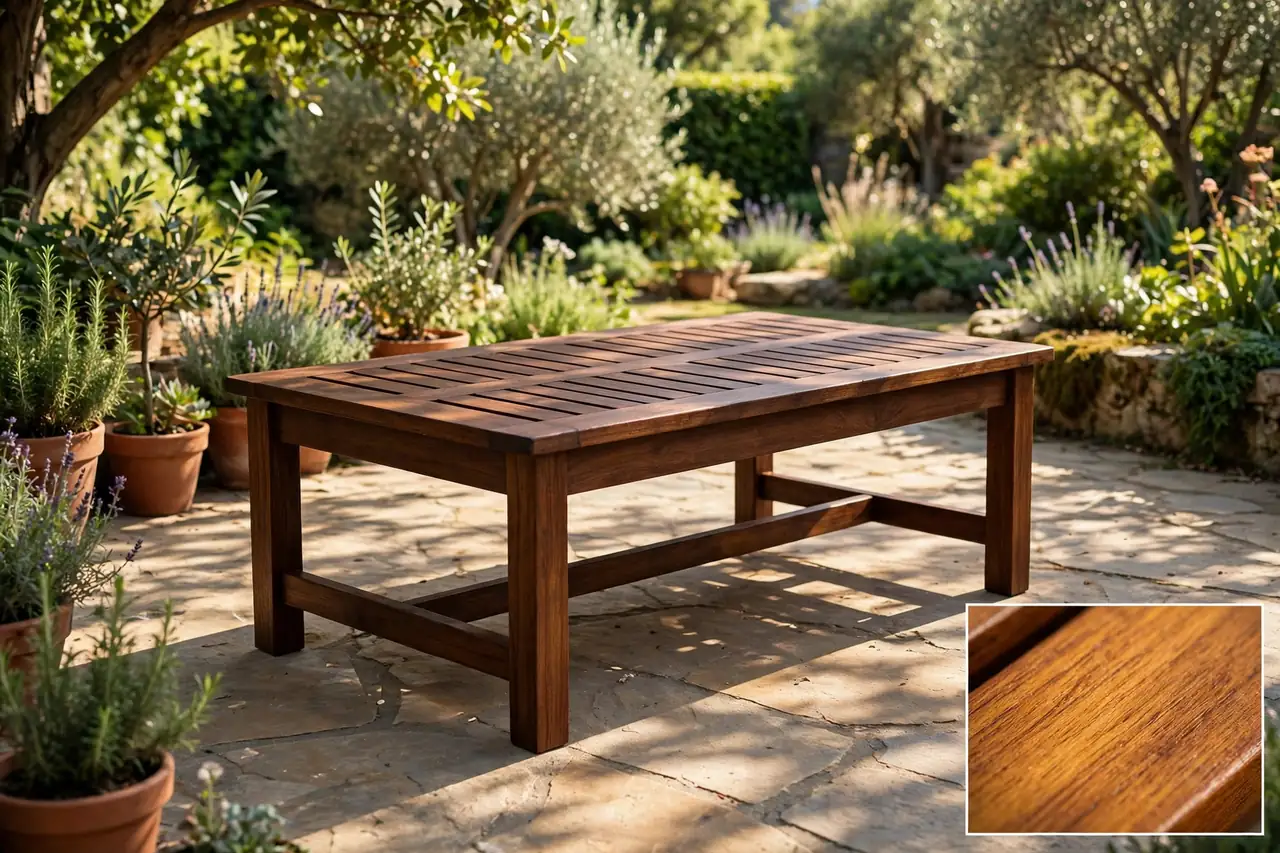
The price bands track the material table above, and they tell you what to expect before you shop. A $120 resin wicker table is a fine buy for a covered balcony, and a $900 teak table is a fine buy for a patio that gets full sun and rain. The bad buy is the one in the middle that pretends to be both: a $400 “teak-look” table made of stained softwood will not last like teak and will not cost like plastic. Check the listing for a named species or a named material, and be wary of any listing that says only “solid wood” or “metal.”
Three things push the price up beyond the material. Size adds cost fast: a 60-inch table for a big sectional uses far more material than a 30-inch balcony table. Features add cost too: a lower shelf, a lift-top, an umbrella hole, or a built-in fire pit each add $100 or more. And a matched set costs less per piece than buying separately: if you are furnishing an entire patio, a conversation set that includes the coffee table usually beats buying the table alone. Combination coffee table and fire pit units typically cost $400 to $1,500 and need a propane tank or gas line.
Do not judge a table by its sticker price alone. A $200 aluminum table with zero maintenance costs $200 over five years, while a $300 acacia table plus oil and a cover costs roughly $375 over the same five years. The expensive table is the one you buy twice, so compare the five-year total, not the price on the tag. See real model prices and dimensions at Tiny Space Picks’ patio coffee table roundup, which states full dimensions for the tables that actually list them.
Compare the five-year total, not the tag. Oil, covers, and a replacement table all count.
What Most People Get Wrong About Outdoor Coffee Tables
Most people get outdoor coffee tables wrong in three ways: they buy an indoor table and put it outside, they buy the wrong height for their seating, and they pick a glass top for a high-traffic patio. All three mistakes cost money, and the first one is the most common.
The indoor-table mistake is the big one. An indoor coffee table uses untreated wood, unsealed joints, and hardware that rusts, and one rainy season swells the joints, stains the top, and loosens the legs. Outdoor tables are engineered differently: weather-resistant finishes, rust-proof hardware, and materials that resist UV fading and moisture. If the listing does not say “outdoor” or “all-weather” in the material specs, it is not an outdoor table, no matter how good it looks in the photo.
The height mistake runs the other way: a table bought to match the sofa in the showroom does not match the lounge chairs at home. Outdoor lounge chairs sit lower than dining chairs, and a table even two inches too tall blocks the view across the seating area and turns every drink into a lift. Measure your own seat height, then buy a table 16 to 18 inches high, or 14 to 16 inches for low-profile seating.
The glass-top mistake is the quiet one. Glass looks clean and modern, but in a high-traffic zone it shows every fingerprint and water spot, and a dropped mug or a hailstone can crack it. In a household with kids or a fire pit nearby, a slatted wood, metal, or stone top is the safer pick. If you love glass, put it on a covered porch where it stays out of the weather and the foot traffic.
Outdoor means engineered, not just styled. The specs decide, not the photo.
Round, Square, or Rectangular: Which Shape Fits Your Patio?
Rectangular tables fit most patios best, because they match the long shape of a sofa or sectional and give every seat an equal reach. Round tables suit small patios and tight corners, because they have no corners to bump into, and square tables suit a pair of club chairs or a small balcony.
Start with the seating shape. A three-seat sofa or a sectional wants a rectangular table 40 to 60 inches long, so the table runs parallel to the seats and everyone reaches it the same way. A pair of club chairs wants a square or round table 30 to 36 inches across, so the table sits between them without crowding either chair. A small balcony with two chairs wants a round table 24 to 30 inches across, because the curve leaves walking room on every side.
Round tables have one real advantage and one real cost. The advantage is flow: no corners means nobody bruises a shin in the dark, and chairs slide in from any angle. The cost is surface: a 36-inch round table holds less than a 48-by-24 rectangular table, so it suits drinks for two better than snacks for six. Rectangular tables hold the most, square tables split the difference, and an oval table gives you the capacity of a rectangle with the flow of a round one.
Shape also changes the look. A rectangular teak table reads classic and grounded, a round metal table reads modern and light, and a square stone table reads formal and heavy. Match the shape to the seating first and the style second, because a beautiful table in the wrong shape is still the wrong table. If the table anchors a lounge corner beside an outdoor sectional couch, measure the sectional before you shop, and read our patio dining set guide if the same patio also needs a dining table, so the two tables do not fight for space.
Match the shape to the seats, not the style board. Reach and flow decide first.
How to Care for an Outdoor Coffee Table
Care for an outdoor coffee table with a weekly wipe, a monthly hardware check, a seasonal deep clean, and a cover or storage in winter: wipe surfaces with a damp cloth each week, inspect hardware for rust or looseness each month, deep-clean by material each season, and store or cover the table through harsh winters.
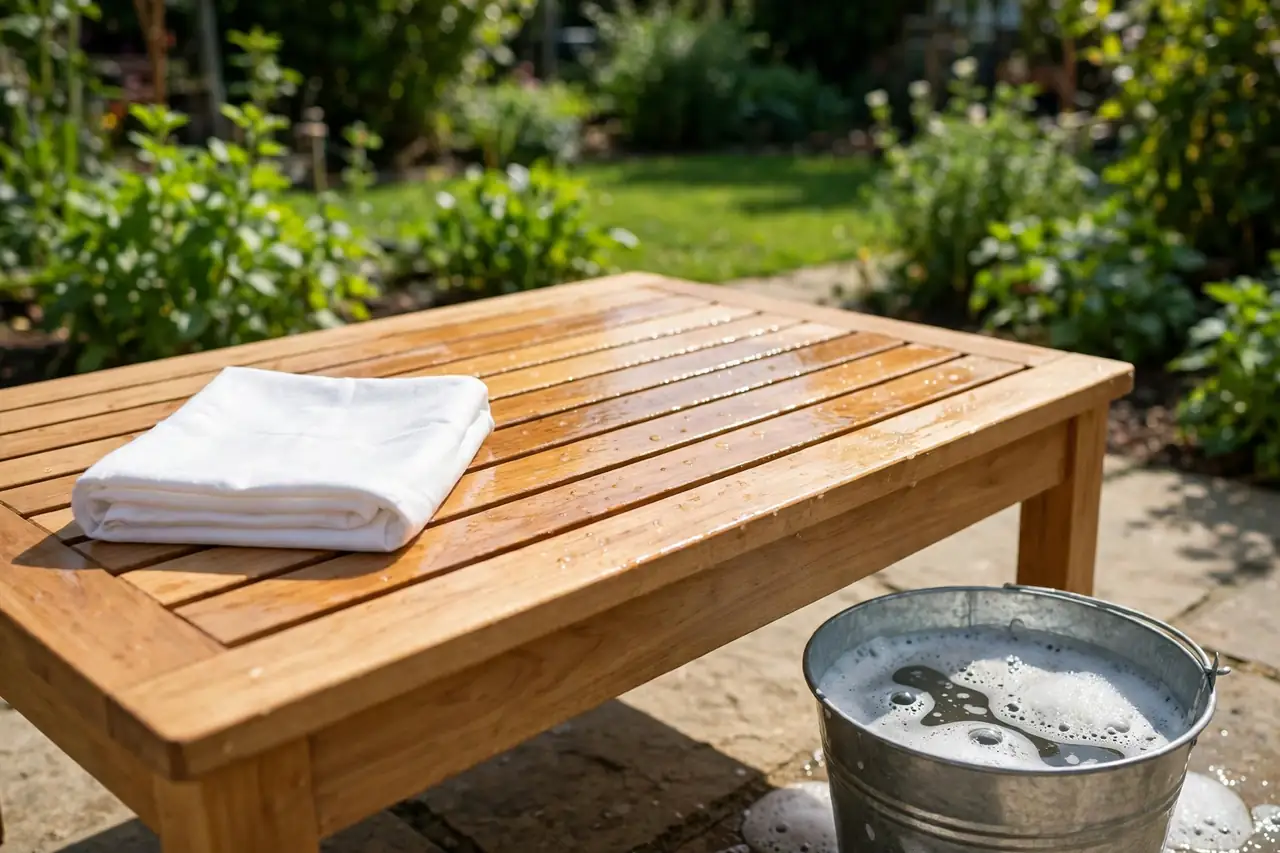
Weekly care takes two minutes. Wipe the top with a damp cloth, remove leaves and debris from crevices, and dry any standing water. Leaves left on a wood top stain it, and debris in a wicker weave holds moisture against the frame. Monthly, inspect the hardware: tighten loose bolts, touch up any paint chip on steel or iron before it rusts, and check the feet for wobble on uneven pavers.
Seasonal care depends on the material. Oil wood once or twice a year with a penetrating oil, working along the grain and wiping off the excess. Touch up metal paint the moment you see a chip, because rust starts at the chip and spreads under the coating. Scrub resin wicker with a soft brush and soapy water, then rinse and let it dry. Seal porous stone or concrete every year or two so it does not stain.
Winter care is where tables live or die. Aluminum, stainless steel, HDPE resin, and teak can typically stay outside year-round with minimal care, but wood tables may need covering or storage during harsh winters, and in freezing climates you should bring porous stone or ceramic tables indoors, because trapped water freezes, expands, and cracks them. Even weatherproof tables benefit from covers during harsh winters, so pair your table with a quality cover and follow the seasonal routine in our how to store outdoor furniture guide. If the cushions on your seating need replacing after a season outside, our replacement cushions for patio furniture guide shows how to get the fit and fabric right.
Two minutes a week beats a new table every three years. Wipe, check, oil, cover.
Related Guides
If you are planning the whole outdoor space, these guides pick up where this one leaves off:
- Outdoor Sectional Couch — deep seating for the lounge corner your table anchors.
- Outdoor Furniture for Small Spaces — seven layouts that make a tiny patio feel big.
- Patio Dining Set — size a dining table so it does not fight your coffee table.
- How to Store Outdoor Furniture — keep it clean, dry, and ready for spring.
- Replacement Cushions for Patio Furniture — get the fit, fabric, and price right the first time.
- Outdoor Bench With Storage — sit down, stash the clutter, and reclaim your patio.
- Balcony Cover Ideas — stay dry and cool on a small balcony.
- Small Patio Decorating Ideas — make a small space feel finished, not crowded.
Frequently Asked Questions
What size outdoor coffee table do I need?
The ideal size depends on your seating. For a standard patio sofa or sectional, choose a table roughly two-thirds the length of the sofa. Typical dimensions are 36 to 48 inches long, 20 to 30 inches wide, and 16 to 18 inches high, with 14 to 18 inches of clearance to the seating.
What is the best material for an outdoor coffee table?
The best material depends on your climate and maintenance preference. Teak, acacia, and eucalyptus offer natural beauty and durability. Powder-coated aluminum and stainless steel resist rust with minimal care, while HDPE resin wicker and poly lumber are low-maintenance and weatherproof.
How much should I pay for an outdoor coffee table?
Prices vary widely by material and brand. Budget-friendly resin and plastic options start around $80 to $200. Mid-range aluminum, wicker, and acacia tables typically cost $200 to $600, while premium teak, stainless steel, and designer tables range from $600 to $2,500 or more.
Can I leave my outdoor coffee table outside all year?
It depends on the material and your climate. Aluminum, stainless steel, HDPE resin, and teak can typically stay outside year-round with minimal care. Wood tables may need covering or storage during harsh winters, and porous stone or ceramic tables should come indoors in freezing climates.
How do I protect my outdoor coffee table from rust?
Choose rust-resistant materials like aluminum or stainless steel. For wrought iron or steel tables, apply touch-up paint to scratches immediately and keep the surface dry. Regular waxing or oiling can add a protective barrier against moisture.
Disclaimer: This guide gives general advice for choosing and caring for outdoor furniture, not professional safety or structural instructions. Check weight limits before standing or sitting on a table, keep glass tops out of high-traffic zones with children, and follow the manufacturer’s care instructions for your material.
Measure the gap, then buy the table. Two-thirds the sofa, 16 to 18 inches high, 14 to 18 inches of clearance, and a material that matches your weather. Do that, and the table you buy this year is still the center of the conversation ten summers from now.