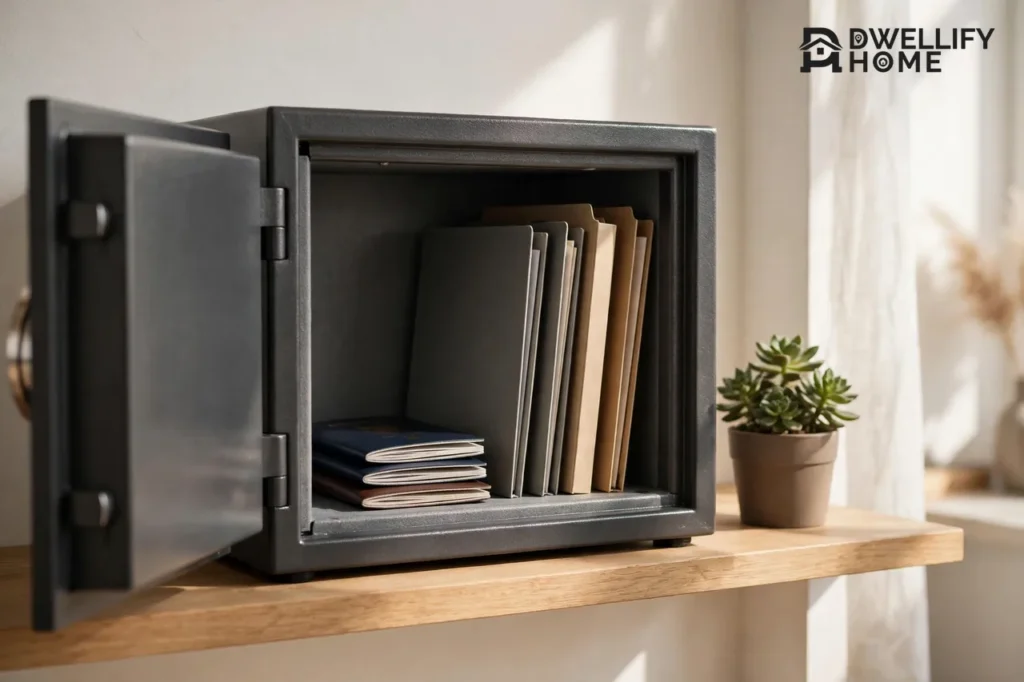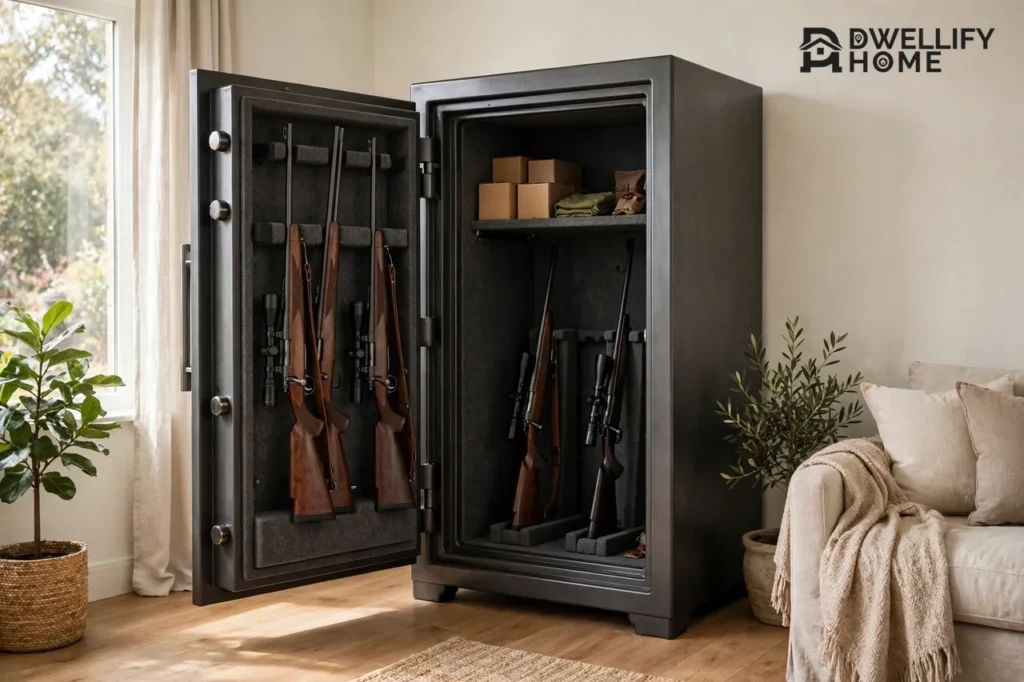
No, gun safes are not fireproof. No safe of any kind is fireproof, at any price, from any maker. A gun safe can be fire resistant, which means its inside stays below a set temperature for a rated number of minutes while the outside burns. That rating is a stopwatch, not a shield, and a long enough fire beats every safe.
That sounds blunt, but it changes how you should shop. Once you stop looking for a box that cannot burn and start looking for a box that buys enough time, the numbers on the label start to make sense. This guide explains what a fire rating really measures, who actually tested it, and how much protection your guns need.
Fireproof vs. Fire Resistant: What the Words Really Mean
A fireproof box would protect its contents no matter how long or how hot the fire burns. No such box exists. Steel conducts heat, every seam is a path for hot gas, and insulation only slows heat down. Given enough time, the inside of any safe reaches the temperature of the fire outside it.
Fire resistant means something smaller and honest. The safe held its inside below a stated temperature for a stated time in a test. A safe rated for 60 minutes at 1,400°F kept its interior cool enough for paper and guns for one hour while the test furnace sat at 1,400°F. After that hour, the maker promises nothing.
Watch out for the word fireproof on a listing. It is a sales word, not a test result. Rhino Safe, a maker that sells gun safes for a living, says it plainly on its own blog: there is no such thing as a fireproof gun safe, and buyers should be careful with anyone who says otherwise. The honest question is never “is it fireproof?” It is “how many minutes, at what temperature, and who measured it?”
How a Fire Rating Actually Works
A fire rating has four parts, and a label that misses any one of them tells you very little. Learn the four parts once and you can read any safe label in ten seconds.
The four parts of a real fire rating
First, the class: the highest temperature the inside may reach. For paper that limit is 350°F, because paper chars above that point. Second, the time: how long the inside stayed under that limit, usually 30 minutes, one hour, or two hours. Third, the furnace temperature outside the safe during the test, such as 1,550°F or 1,700°F. Fourth, the tester: UL, Intertek (the ETL mark), or the maker itself.
The tester matters most, because it decides how much weight the other three numbers deserve. A rating from an independent lab was measured by someone with nothing to sell you. A maker rating was measured by the company selling the safe. Both can be honest, but only one was checked by an outsider.
UL 72 classes: 350, 150, and 125
The standard behind most home safe fire labels is UL 72, Tests for Fire Resistance of Record Protection Equipment, from Underwriters Laboratories. It sorts protection by what the safe is meant to protect, and the class number is the highest interior temperature allowed during the test.
Fire ratings at a glance:
| UL 72 class | Inside stays below | Built to protect | Typical home use |
|---|---|---|---|
| Class 350 | 350°F | Paper records | Documents, cash, gun papers |
| Class 150 | 150°F | Film, photos, magnetic tape | Photo negatives, old tapes |
| Class 125 | 125°F | Digital media | Hard drives, USB sticks, discs |
Most gun safes that carry any fire claim are really Class 350 safes in practice, even when the maker does not use the UL 72 name. Paper chars at about 451°F, so the 350°F ceiling keeps paper readable. Guns are tougher than paper in some ways and weaker in others: steel parts survive heat that ruins paper, but wood stocks scorch, plastic grips melt, optics fog, and ammunition cooks off long before steel fails.
One detail buyers miss: the cool-down counts. Under UL 72 the interior limit must hold through the whole test, including the cooling period after the furnace shuts off. A safe keeps soaking up heat after the flames die, and the inside often peaks after the fire is out. That is why you should never open a hot safe right after a fire, even if the outside feels cool enough to touch.
Who Actually Tested That Number?
Here is the uncomfortable truth about gun safes. The large majority of gun safes sold in the United States do not carry a UL 72 fire listing. The fire numbers on most gun safe spec sheets come from the maker’s own testing, not from an independent lab listing to UL 72. Rhino Safe admits this about its own safes, and the same is true across the industry.
That does not make every maker rating a lie. It makes the evidence uneven, so you have to sort claims by quality instead of comparing the numbers head to head. A useful way to sort them, from strongest to weakest evidence:
- Independent lab verified: a named lab such as UL or Intertek (ETL) tested the safe. American Security (AMSEC) is the rare gun safe brand with an ETL-verified fire rating, 60 minutes at 1,200°F on its SF6030 model, according to dealer listings tracked by Bolt & Vault.
- Maker-run, protocol published: the maker ran its own test but published how it tested. Browning publishes its gas-furnace protocol, including its interior temperature-rise rule, so buyers can judge the claim.
- Maker claim, conditions stated: the maker gives time, temperature, and construction detail, such as Rhino’s Raptor RX7241, rated for 80 minutes at 1,400°F with fireboard lining on the ceiling, walls, floor, and door.
- Maker claim, conditions missing: a bare number such as “fireproof for 2 hours” with no temperature, no interior limit, and no lab. Treat this as marketing until the maker fills in the blanks.
One more trap: the UL RSC mark is not a fire rating. UL RSC (Residential Security Container) rates burglary resistance, how long the safe resists a break-in attempt. Many gun safes carry a UL RSC mark and no fire listing at all. A safe can be hard to break into and still cook its contents in a fire, or the other way around. Check for both marks separately.
What Happens to a Gun Safe in a Real House Fire
Lab tests are neat. House fires are not. In a test furnace the temperature rises on a fixed schedule and the safe sits still. In a real fire the temperature spikes, the floor can give way, water pours in from hoses, and the safe may fall a full story onto rubble while it is still hot.
Most residential gun safes give you 30 to 60 minutes of real protection. That is the honest range for the safes most people buy, and it matches what the better review sites report. A few heavy, expensive models reach 90 minutes to two and a half hours on the maker’s own test, such as Liberty’s Presidential series at up to 150 minutes. But those numbers come from the maker’s furnace, not from your living room.
Several things decide whether your safe beats the lab number or falls short of it:
- Where it stands. A safe on a ground-floor concrete slab does better than one upstairs, where a burning floor can drop it and crack its seal. A safe in a garage faces faster, hotter fires from fuel and chemicals.
- How long the fire burns. Most house fires are knocked down or burn out well before the two-hour mark, which is why a 60-minute rating covers most real fires. Rural homes with slow fire department response need longer ratings.
- Water and steam. Fireboard insulation releases steam as it heats, so the inside of a safe can get damp even when the fire never gets in. Hoses add more water. Papers in a fire bag inside the safe survive far better than loose papers.
- Ammunition inside. Ammunition stored in a safe during a fire can cook off as the interior heats. Store ammunition separately from firearms when you can, and never open a safe that has been in a fire until firefighters and a qualified professional say it is safe.
There are real cases where safes did their job. A Liberty Franklin 50 survived a catastrophic rural Texas house fire that took firefighters more than 45 minutes to reach; the home was a total loss, yet every firearm stored properly inside was salvageable, as the owner shared on Reddit. A Liberty Colonial survived a detached garage fire from a propane leak with its contents recoverable. These stories prove a good safe buys time. They do not prove any safe is fireproof.
How Much Fire Protection Do You Actually Need?

Start with your fire department, not the catalog. If you live close to a staffed station in a town with hydrants, a 30-minute rating at 1,200°F is a reasonable baseline for most homeowners, and 60 minutes gives real comfort. If you live rural, with a volunteer department and a long response time, aim for 60 to 90 minutes at 1,400°F.
Then match the rating to what sits inside. Paper documents need the 350°F interior limit. Guns need the same limit in practice, because wood, plastic, and optics fail near or below it. If you also store hard drives or USB sticks in the gun safe, a paper-rated safe is not enough: drives fail near 125°F, so keep a second copy somewhere else or use a media-rated inner box.
Budget matters too, and honesty helps here. A $500 safe with a maker-rated 30 minutes at 1,200°F protects a small collection far better than no safe at all. A $1,800 safe with a 60-minute rating and thicker steel protects a large collection better still. What wastes money is paying extra for a bigger headline number with no test conditions behind it.
Construction That Matters More Than the Headline Number
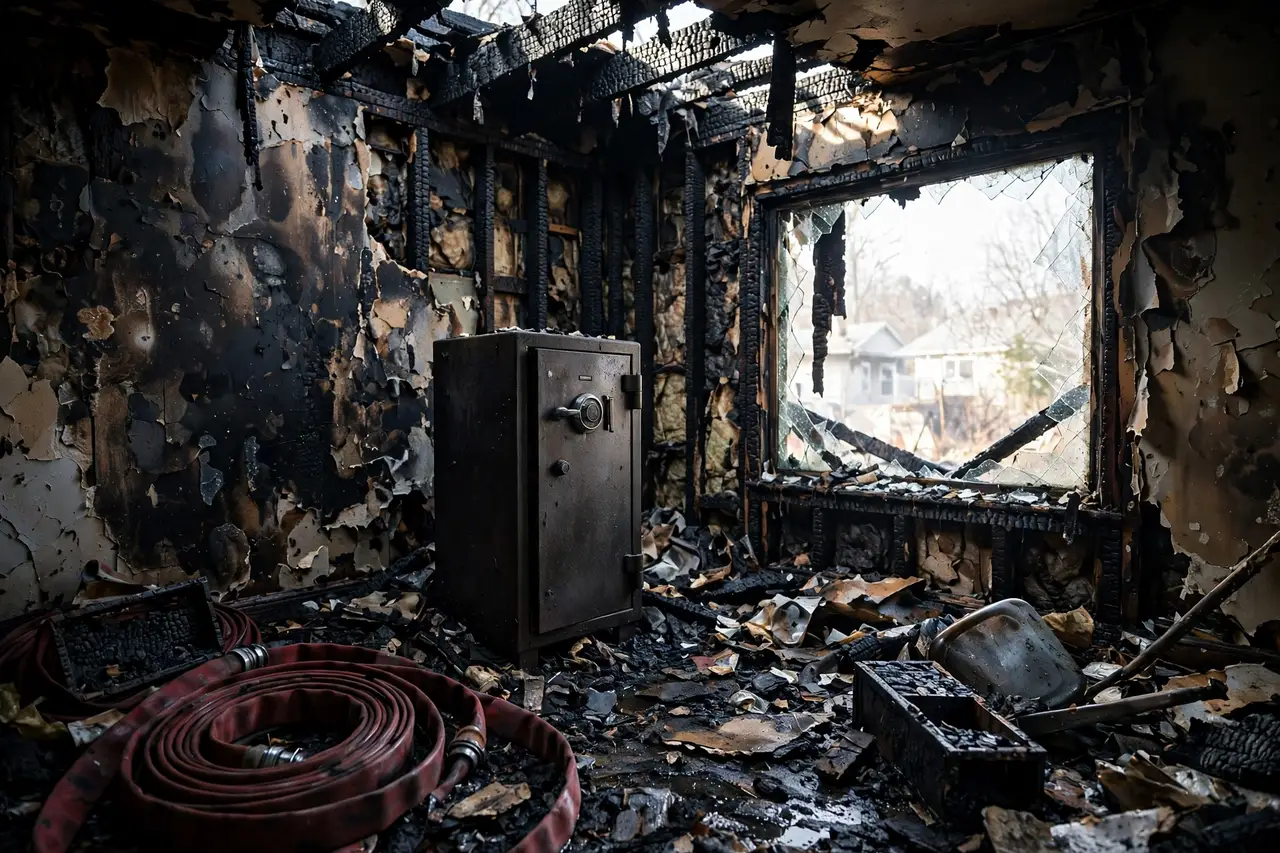
Two safes can both claim “60 minutes at 1,400°F” and perform very differently, because the number hides the build. When you compare safes, look past the headline and check these four construction details.
Fireboard layers, not drywall thickness claims
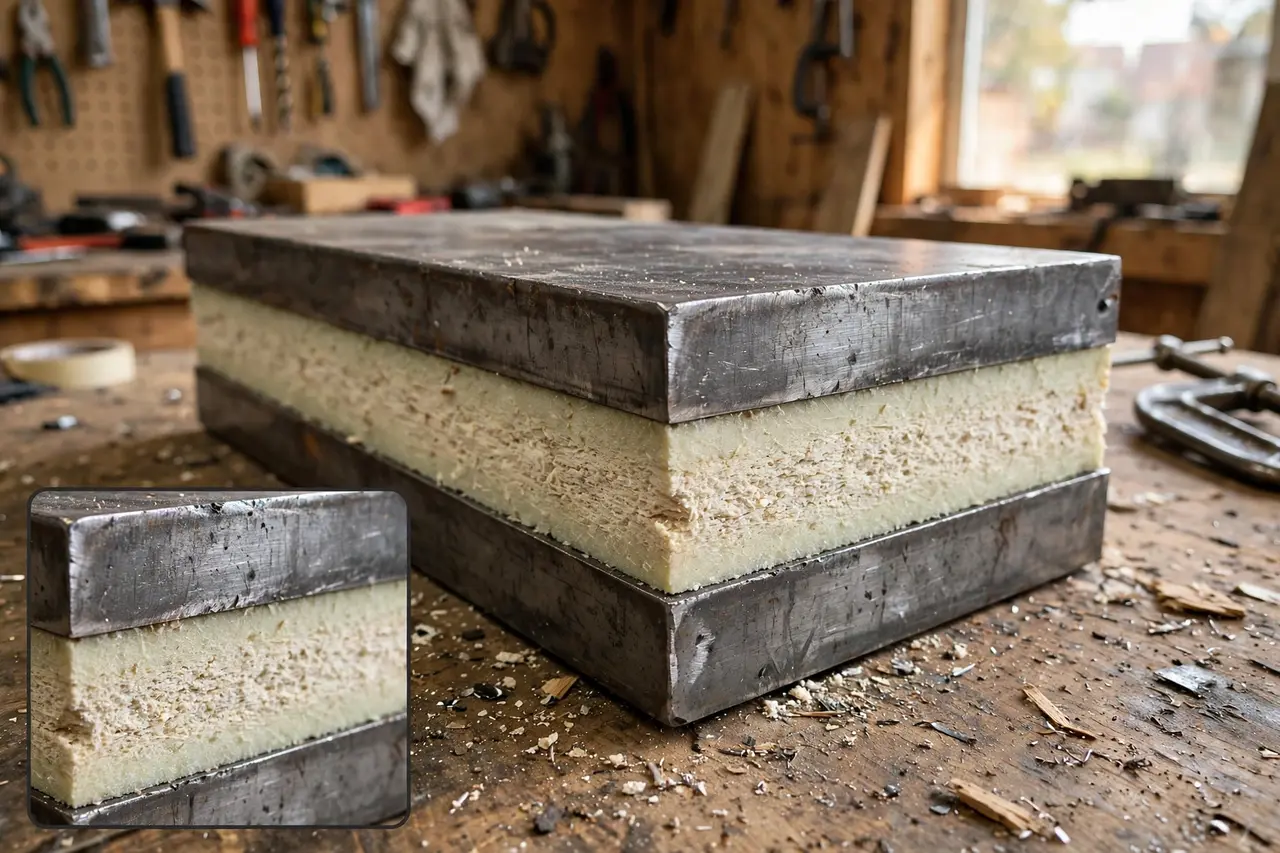
Fire resistance comes from insulation, usually gypsum fireboard, layered inside the steel walls, ceiling, floor, and door. More layers mean more time. Liberty’s entry USA series uses one layer of fireboard for about 30 minutes; its Colonial uses three layers for about 60 minutes; its Franklin and Lincoln use four layers for 90 minutes or more. Ask how many layers a safe has and whether the door is lined too. A safe with an unlined door leaks heat straight through its biggest opening.
Steel gauge
Thicker steel holds its shape longer in a fire and resists prying better. Look for at least 12-gauge steel on the body, with 10-gauge or thicker preferred. Liberty’s top tier uses 7-gauge steel. Thin steel warps, and a warped door breaks the fire seal.
The expanding door seal
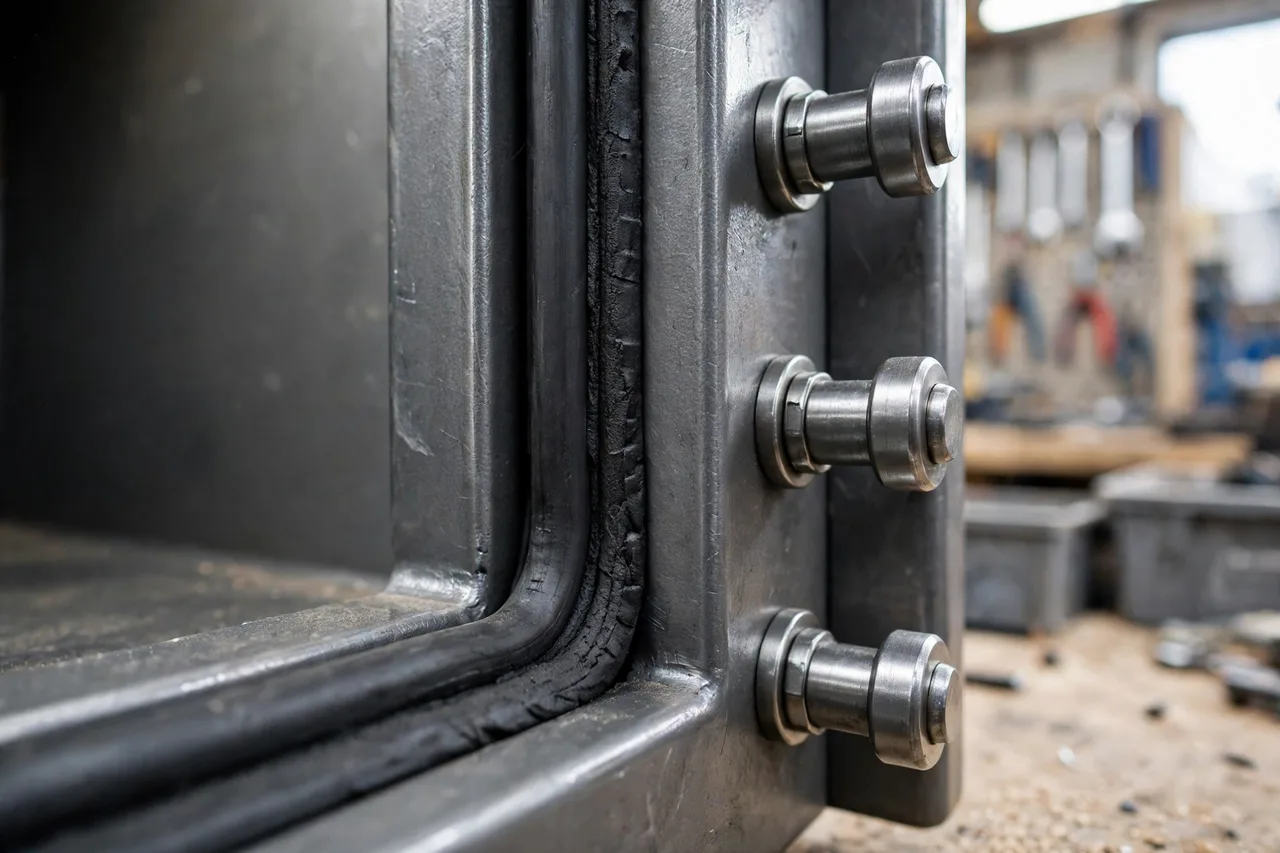
A heat-activated door seal, often made with Palusol, swells as it heats and closes the gap between door and frame. This blocks smoke and hot gas, which is how many safes actually fail: not from heat soaking through the walls, but from hot gas sneaking past the door. Check that the seal runs the full door perimeter.
Bolts and hinges
Locking bolts hold the door in its frame while the house comes apart around it. More bolts on more sides beat fewer bolts on one side. And bolt the safe down. A safe that tips over in a fire, or that a burglar carries away, protects nothing. Concrete floors hold anchors best; on a wooden floor, bolt into a joist.
After a Fire: What to Do (and Not Do)
If your safe has been through a fire, do not rush to open it. The inside may still be heating up from the cool-down effect, and opening the door lets in oxygen and can damage contents that survived. Wait until firefighters say the scene is safe, then call the safe maker and a locksmith who handles fire-damaged safes before you touch the lock.
Document everything for insurance before you clean anything. Photograph the safe from every side, note the model and serial number, and keep the maker’s fire warranty paperwork. Many makers, including Liberty, cover fire damage under warranty, but they will ask for the model number and proof of the fire.
Have a professional check any firearm that was in a fire before you fire it again. Heat can weaken steel, warp barrels, and damage heat-treated parts in ways you cannot see. Ammunition that was in the safe should be treated as suspect and disposed of through your local police or hazardous waste program, never fired.
This is general guidance, not professional advice. A house fire is a job for firefighters, your insurer, and a qualified safe technician, in that order. If you are unsure about anything after a fire, stop and ask one of them before you act.
Buying Checklist: Read the Label Like a Pro
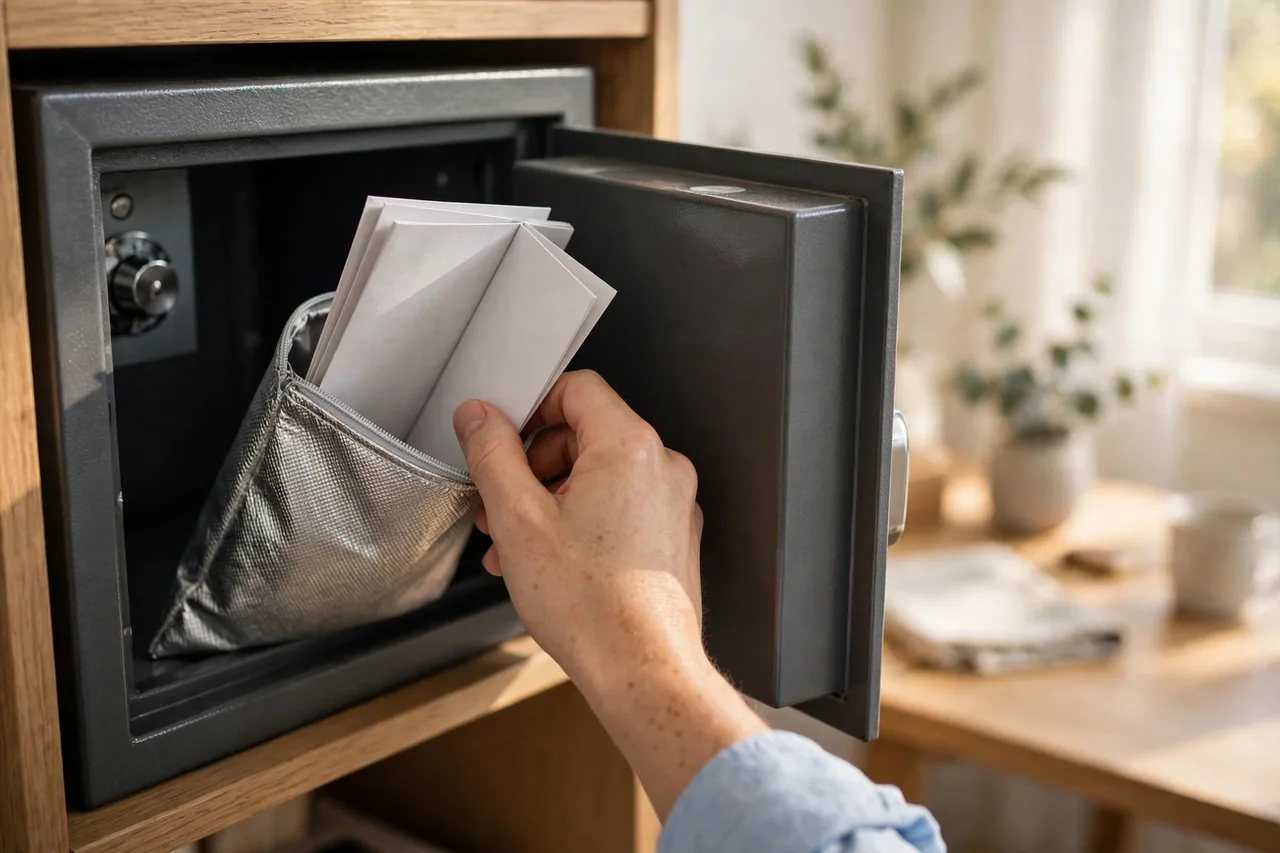
Use this checklist on any gun safe you consider. If the seller cannot answer a question, that is your answer.
- Does the label name a time, a furnace temperature, and an interior limit? A complete claim reads like “60 minutes at 1,400°F, interior under 350°F.”
- Who tested it? UL, Intertek (ETL), or the maker? An independent lab beats a maker claim at the same numbers.
- Is the fireboard lining on every face, including the door and floor?
- Does the door seal expand with heat, and does it run the full perimeter?
- Is the body at least 12-gauge steel, and does it carry a UL RSC burglary rating too?
- Does it have bolt-down holes, and will your floor take anchors?
- Is the listed gun capacity honest? Owners routinely fit about half to two-thirds of the advertised number once scopes and accessories are on the guns.
- Does the warranty cover fire damage, and for how long?
Related Guides
If you are building a full home security setup, a safe is one layer, not the whole plan. Our guide to the best home security camera system shows how cameras cover what a safe cannot see, and our HomeKit alarm system guide explains alarms that work with an Apple home. For the alarm side, see our cellular home security systems guide.
Frequently Asked Questions
Are gun safes fireproof?
No. No gun safe is completely fireproof, and no safe of any kind is. Gun safes are fire resistant, which means the inside stays below a set temperature for a rated number of minutes while the outside burns. A fire rating is a measured window of time, not a guarantee that contents survive any fire.
How many hours can a gun safe be fireproof?
Most residential gun safes offer 30 minutes to 1 hour of fire protection under test conditions. A few heavy models claim up to 2 or 2.5 hours on the maker’s own test, such as Liberty’s Presidential series at up to 150 minutes. Real house fires vary, so treat the rating as a best-case window, not a promise.
What is the difference between a fire rating and a fireproof rating?
There is no such thing as a completely fireproof safe, so “fireproof rating” is a misleading phrase. A fire rating is the honest term: it states how long a safe kept its interior below a set temperature in a test, at a stated outside temperature, measured by a named tester. Always ask for the time, the temperature, and the tester.
How important is the UL rating for a gun safe?
Very important, but know which UL mark you are looking at. UL 72 is the fire standard for record protection equipment, and most gun safes do not carry a UL 72 fire listing. UL RSC is a burglary rating, not a fire rating. A UL 72 listing or an ETL-verified fire rating is the strongest fire evidence a safe can carry.
What internal temperature is safe for firearms and ammunition during a fire?
Paper chars above 350°F, so fire ratings use 350°F as the interior limit, and that limit works as a practical guide for guns too. Wood stocks scorch, plastic parts melt, and optics fail near or below that point, and ammunition can cook off as heat rises. If the inside passes 350°F, assume the contents need professional inspection.
The Bottom Line
No gun safe is fireproof. The best ones buy you time: 30 to 60 minutes of tested protection for most homes, more if you pay for thicker steel and more fireboard. Read the label for time, temperature, and tester, check that the door and floor are lined, bolt the safe down, and keep your papers in a fire bag inside. A safe that buys an hour is a safe that did its job.