Neither type wins on its own. The National Fire Protection Association (NFPA) says an ionization smoke alarm is generally more responsive to flaming fires, while a photoelectric smoke alarm is generally more responsive to smoldering fires — and for the best protection, NFPA recommends both types in your home, or combination alarms that carry both sensors. If you only replace one alarm this weekend, put a photoelectric alarm near the kitchen and keep ionization alarms in bedrooms and living areas.
A photoelectric vs ionization smoke detector choice is really a choice about which fire you fear most. Smoldering fires — a cigarette in a couch cushion, wiring heating up inside a wall — make big, visible smoke particles and can burn quietly for a long time before they burst into flame. Fast flaming fires — paper, grease, flammable liquids — make tiny, nearly invisible particles and spread in seconds. Each sensor type is built for one of those fires, and each is slower at the other. This guide explains how each one works, where each one belongs, and how to cover both without buying twice as many alarms.
The Short Answer: Which Smoke Detector Should You Buy?
Buy a photoelectric alarm for any spot near the kitchen or a bathroom, and buy ionization alarms — or a dual-sensor alarm — for bedrooms and living areas. That split follows the NFPA’s own guidance: photoelectric alarms are the type NFPA names as the best choice near kitchens and bathrooms because they set off fewer nuisance alarms, while ionization alarms answer fast flaming fires a little sooner. If you want the simplest safe answer, buy dual-sensor alarms for the whole house and stop choosing.
The reason is not that one sensor is better. It is that the two sensors fail in opposite directions. A photoelectric alarm can be slow on a fast flaming fire, and an ionization alarm can be slow — sometimes very slow — on a smoldering fire. Smoldering fires cause the most smoke and the most deaths in the home, so that gap matters more than the few seconds an ionization alarm saves on a flaming fire. The table below makes the trade-off plain, and the rest of this guide shows you where each type goes.
Photoelectric vs Ionization Smoke Detectors at a Glance
Caption: Photoelectric vs ionization smoke detectors compared — response, false alarms, and best rooms.
| Feature | Photoelectric | Ionization |
|---|---|---|
| Detects fastest | Smoldering fires | Fast flaming fires |
| Smoke particles | Large, visible particles | Small, nearly invisible particles |
| False alarms | Fewer near kitchens and steam | More from cooking and steam |
| Best rooms | Hallways near kitchens, bathrooms | Bedrooms, living areas |
| Inside the alarm | Light beam and sensor | Charged air chamber |
| Replace every | 10 years from manufacture date | 10 years from manufacture date |
Both types must be tested and listed to the latest UL 217 standard, and both need replacing 10 years after the manufacture date printed on the back. The NFPA’s advice covers the whole home: use both types, or use combination alarms. One item on this list voids the whole plan if you skip it — an alarm with a dead battery protects nobody, and the testing section below shows the monthly check that takes thirty seconds.
How a Photoelectric Smoke Detector Works
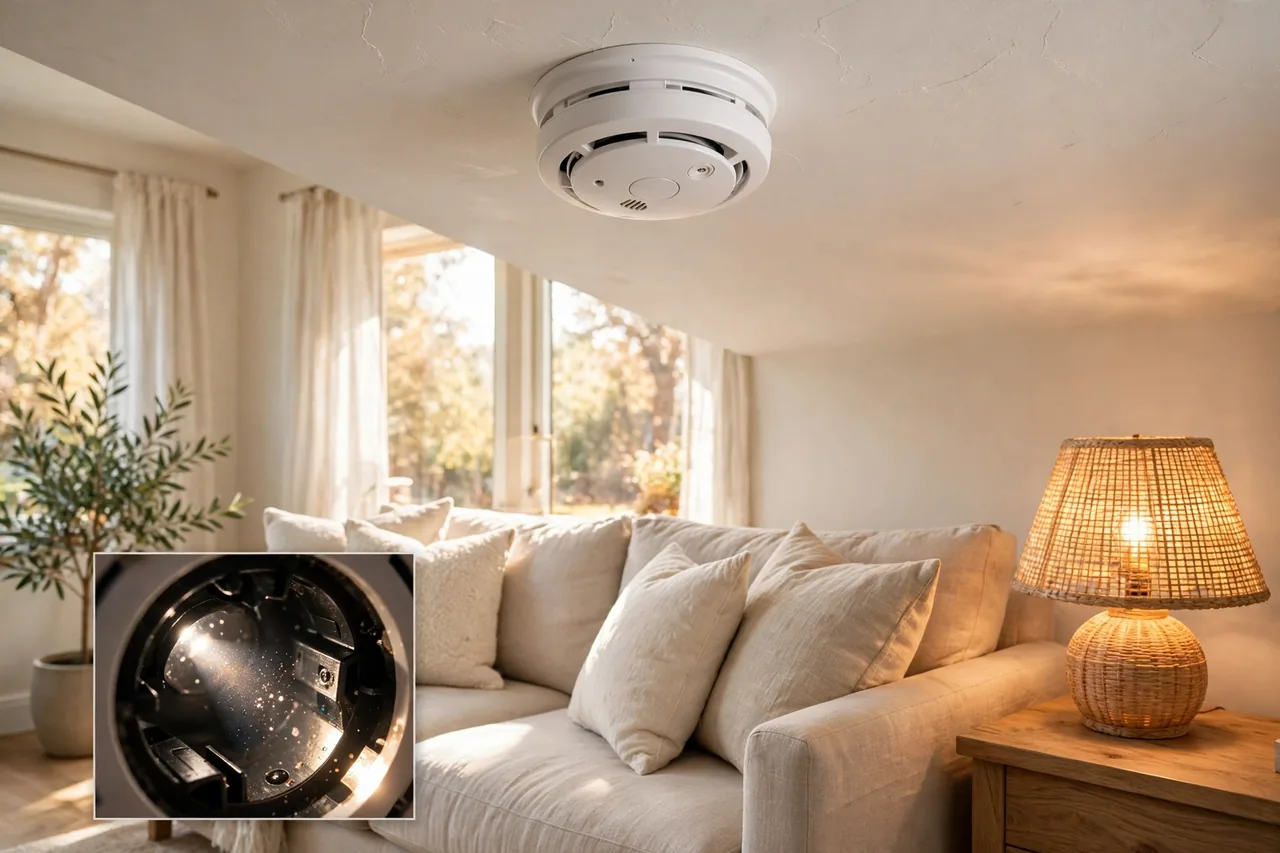
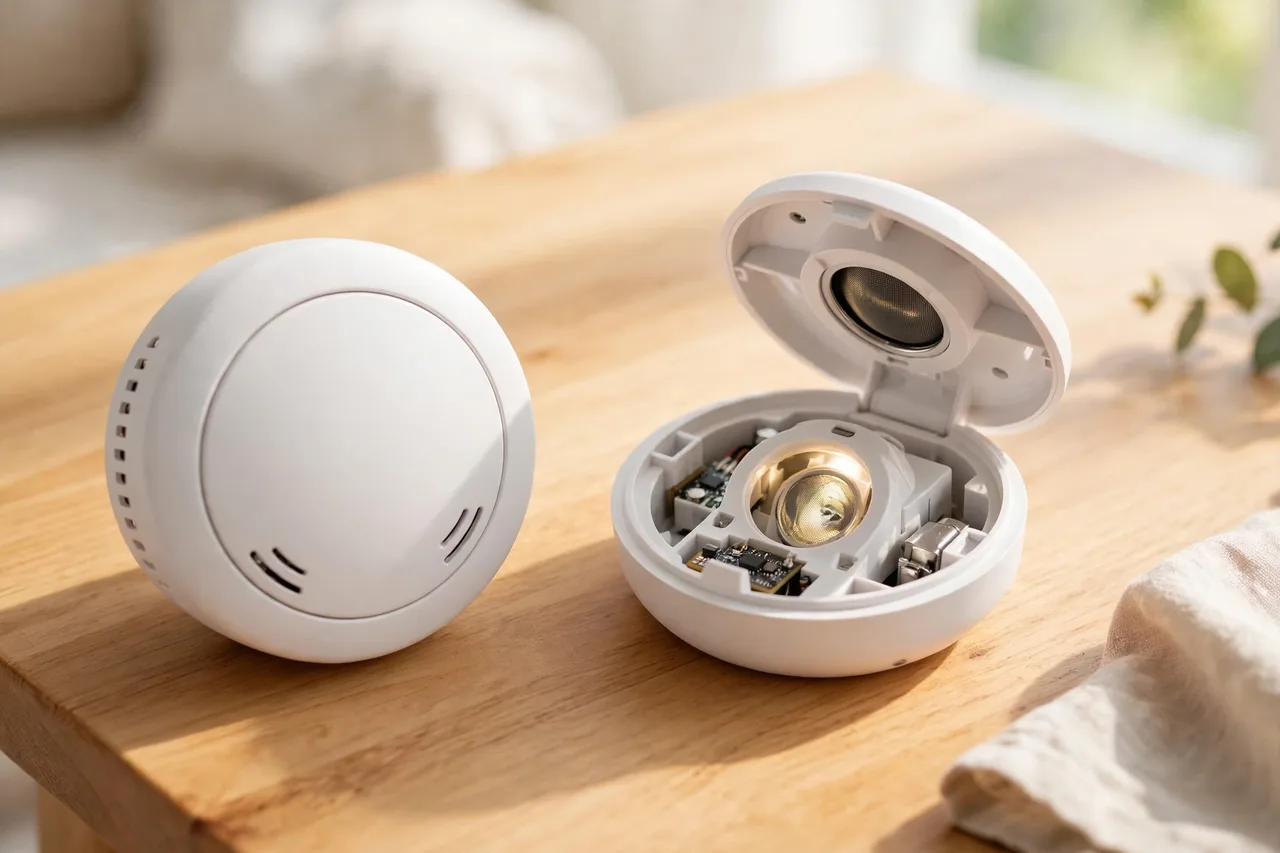
A photoelectric smoke detector watches for light scattered by smoke. Inside the alarm, a light beam shines across a chamber built to stay dark, and a sensor sits where it cannot see the beam directly. When smoke enters the chamber, its particles scatter the light onto the sensor, and the alarm sounds once enough light is scattered. Because smoldering fires make large, visible smoke particles, this sensor catches them early — often 15 to 50 minutes earlier than an ionization alarm, according to fire-service testing summarized by the NFPA and industry studies.
That early warning is the whole point. A smoldering fire can fill a house with smoke while everyone sleeps, and smoke — not flame — is what kills most people in home fires. A photoelectric alarm gives you the most warning where warning matters most: slow, smoky fires. It also tolerates cooking smoke and steam better than an ionization alarm, which is why it is the right sensor near kitchens and bathrooms. It has one real weakness: on a fast, open flame that makes little visible smoke, it can sound seconds later than an ionization alarm. That is why it should not be your only sensor type.
How an Ionization Smoke Detector Works
An ionization smoke detector watches a tiny electric current in charged air. Inside the alarm, a trace amount of americium-241 — a radioactive material sealed inside the chamber — ionizes the air and keeps a small, steady current flowing between two charged plates. When the tiny, nearly invisible particles of a fast flaming fire enter the chamber, they disturb that current, and the alarm sounds. The radiation cannot pass through the plastic case, so the alarm is safe to live with.
Ionization alarms are the older, cheaper, and still most common type in American homes, and they earn their place. An ionization alarm answers a fast flaming fire a little sooner than a photoelectric alarm, usually by seconds. But that same sensitivity is also its flaw: it reacts to the fine particles from toast, a hot oven, or a steaming shower, so it causes far more nuisance alarms. One fire-service review notes ionization alarms cause about 97 percent of nuisance alarms. A nuisance alarm is not just annoying — it is the reason people pull the battery out, and an alarm with no battery is just a plastic disc on the ceiling.
What Most People Get Wrong About Smoke Detectors
Most people believe the alarm that goes off over toast is broken, and the alarm that never sounds is fine. Both beliefs are wrong. The toaster alarm is usually an ionization alarm doing exactly what it was built to do — sensing fine particles — in the wrong spot. And the silent alarm may be ten years old with a worn-out sensor, or it may be the wrong sensor for the fire that would actually start in that room.
The second wrong belief is that one alarm in the hallway covers the house. It does not. The NFPA calls for smoke alarms inside every bedroom, outside each sleeping area, and on every level of the home, including the basement. A closed bedroom door can cut the sound of a hallway alarm nearly in half — from 85 decibels to about 46 decibels — so a sleeper may never hear it. Our smoke detector placement guide shows exactly where each alarm goes, room by room. The fix for a beeping alarm is almost never a new alarm — read our guide to stopping a smoke alarm from beeping before you touch the battery.
Where Each Type Belongs in Your Home
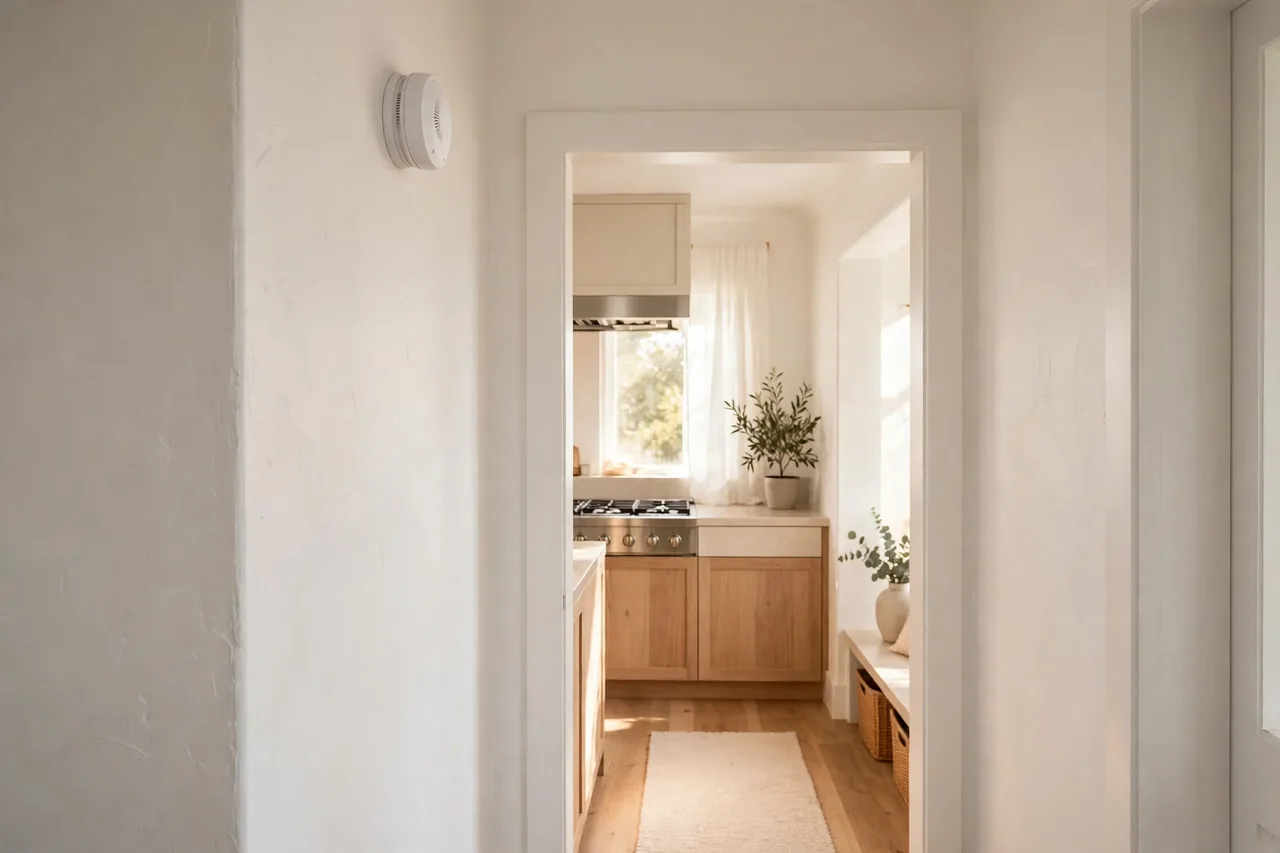
Put photoelectric alarms in the hallway near the kitchen and near bathrooms, and put ionization alarms — or dual-sensor alarms — in bedrooms and living areas. The NFPA says to keep every smoke alarm at least 10 feet (3 meters) from the stove, and photoelectric alarms are the type it names for the spots closest to cooking and steam — the International Association of Fire Chiefs’ placement guide, which follows NFPA guidance, lays out the same distance rules room by room. In bedrooms, either type works, but an ionization alarm adds the fast-flame coverage that matters for fires starting in bedding or curtains.
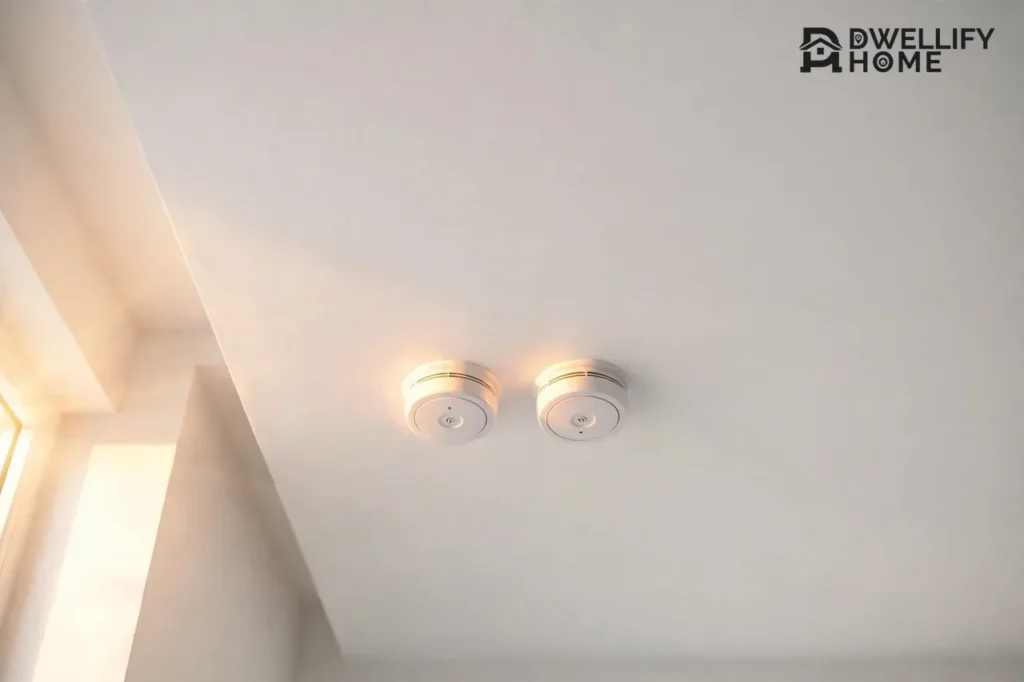
For a small home, the simplest layout is this: a photoelectric alarm in the hallway outside the bedrooms, a dual-sensor alarm inside each bedroom, and one alarm on every level including the basement. Match the sensor to the fire that room is most likely to see, and let a dual-sensor alarm cover the rooms where you are not sure. If your home already has ionization alarms everywhere, do not rip them all out — add photoelectric alarms near the kitchen and keep the ionization alarms where they are. That mix is exactly what the NFPA recommends. If an alarm keeps going off for no clear reason, our smoke alarm false alarm guide walks through the causes, and our guide to alarms that go off randomly covers the ones that sound at 3 a.m.
Dual-Sensor Alarms: The Simplest Safe Choice
A dual-sensor alarm, also called a combination alarm, carries both a photoelectric and an ionization sensor in one unit. Kidde, the largest American smoke alarm maker, strongly recommends installing both ionization and photoelectric alarms for maximum detection, and its dual-sensor models such as the PI9010 put both sensors in a single battery-powered unit with a hush button and an 85-decibel horn. See the Kidde guide to photoelectric and ionization smoke alarms for how the two sensors differ and what to look for on the box.
Dual-sensor alarms cost a little more than single-sensor alarms, and they are worth it for one reason: you stop gambling on which fire your house will have. Buy them when you are replacing old alarms anyway, or when you are fitting out a new home and want every room covered both ways. Keep two cautions in mind. First, a dual-sensor alarm near a kitchen can still false-alarm on cooking smoke, so keep it at least 10 feet from the stove. Second, check the box for the UL or ETL mark — Kidde notes that the UL or ETL mark is the only way to be sure the alarm meets the latest UL 217 standard. The next section covers the one job that matters more than which sensor you buy: keeping the alarms working.
Testing, Batteries, and the 10-Year Rule
Test every smoke alarm once a month with the test button, change batteries at least once a year — or right away when the alarm chirps — and replace every alarm 10 years after its manufacture date. The NFPA states all three rules plainly: test monthly, replace batteries as directed, and replace all smoke alarms when they are 10 years old. The manufacture date is printed on the back of the alarm, so check it when you test. The NFPA’s own fire-safety guidance repeats the same three rules — monthly testing, battery care, and 10-year replacement — and it adds that interconnected alarms give the best protection, so when one sounds, they all sound.
Three out of five home fire deaths happen in homes with no working smoke alarms, according to the NFPA. That number is the real story of this article: the sensor type matters, but a working alarm matters far more. Our guide to testing a smoke detector shows the thirty-second monthly check, and our guide to how often to check your smoke alarm covers cleaning and battery schedules. If your alarm uses a sealed 10-year battery, there is no battery to change — replace the whole unit when it chirps or reaches 10 years. If you are not sure whether the smell of smoke in your home is real or a false alarm, read our guide on whether incense triggers a smoke alarm before you disable anything.
What to Buy: A Simple Shopping List
Buy dual-sensor alarms if you are replacing more than one alarm, buy a photoelectric alarm for the hallway near the kitchen, and buy ionization alarms only if your bedrooms already have photoelectric coverage. Look for the UL or ETL mark, a hush button for silencing cooking alarms, and either a sealed 10-year battery or a battery you will actually change once a year. Hardwired alarms need a qualified electrician to install — the NFPA says only qualified electricians should install hardwired alarms — so do not open your breaker panel for this job unless that is your trade.
Do not buy the cheapest alarm you can find if it lacks the UL or ETL mark, and do not buy a “detector” meant for a commercial fire panel — a home needs an alarm, which is the sensor, the sounder, and the power in one unit. A detector alone only reports to a panel and will not wake you up. One last check before you buy: count your rooms against the NFPA list — inside every bedroom, outside each sleeping area, every level including the basement — and buy that many alarms, plus one spare. A spare alarm on the shelf is the difference between a house protected tonight and a house waiting for a delivery.
A Safety Note Before You Touch Any Alarm
Smoke alarms are life-safety devices, and this guide is general information, not a substitute for your local fire code or a licensed electrician. Battery alarms are a safe do-it-yourself job, but hardwired alarms connect to your home wiring — turn off the breaker, test that the power is truly off, and hire a licensed electrician if you feel unsure at any point. If an alarm sounds and you smell smoke or see fire, leave the house and call 911 from outside; never go back inside to check the alarm or grab belongings. Local codes may require more alarms than the NFPA minimum, so check your city or county rules before you finish the job.
Related Guides
Placement decides whether the right sensor can do its job, so read our smoke detector placement guide next. For the monthly routine, see our guide to testing a smoke detector and our guide to how often to check your smoke alarm. If your house has a monitored system, our monitored fire alarm guide explains what the monitoring center does when an alarm sounds, and our fire escape plan guide turns working alarms into a way out of the house.
Frequently Asked Questions
Which is better, photoelectric or ionization?
Neither alone. The NFPA recommends both types or dual-sensor alarms, because ionization responds faster to flaming fires and photoelectric responds faster to smoldering fires. Use photoelectric near kitchens and bathrooms, and ionization or dual-sensor alarms in bedrooms and living areas.
Is a photoelectric smoke detector better than an ionization one?
For smoldering fires and for spots near kitchens, yes. Photoelectric alarms catch slow, smoky fires earlier and cause fewer cooking false alarms. For fast flaming fires, ionization is a little faster. The safest home has both types, or dual-sensor alarms throughout.
What type of smoke alarm should I install?
Install photoelectric alarms near the kitchen and bathrooms, and ionization or dual-sensor alarms in bedrooms and living areas. Whatever type you choose, buy alarms tested and listed to the latest UL 217 standard, and look for the UL or ETL mark on the box.
How often should I change the batteries in my smoke alarm?
Change batteries at least once a year, or right away when the alarm chirps. Alarms with sealed 10-year batteries need no battery changes — replace the whole alarm when it chirps or reaches 10 years from its manufacture date.
Do I need both types of smoke detectors in my house?
Yes, if you want the broadest protection. The NFPA recommends both ionization and photoelectric alarms, or combination alarms that contain both. A single type leaves a gap: photoelectric is slower on flaming fires, and ionization is slower on smoldering fires.
Can I replace an ionization alarm with a photoelectric one?
Yes, for a battery alarm — just mount the new alarm in the same spot and test it. For a hardwired alarm, hire a qualified electrician, and replace it with the same power type. Never replace a hardwired alarm with a battery-only alarm.
Start tonight: press the test button on every alarm, check the date on the back of each one, and replace any alarm older than 10 years. Then put a photoelectric alarm near the kitchen and make sure every bedroom has a working alarm. That one evening of work is the cheapest life insurance your house will ever get.