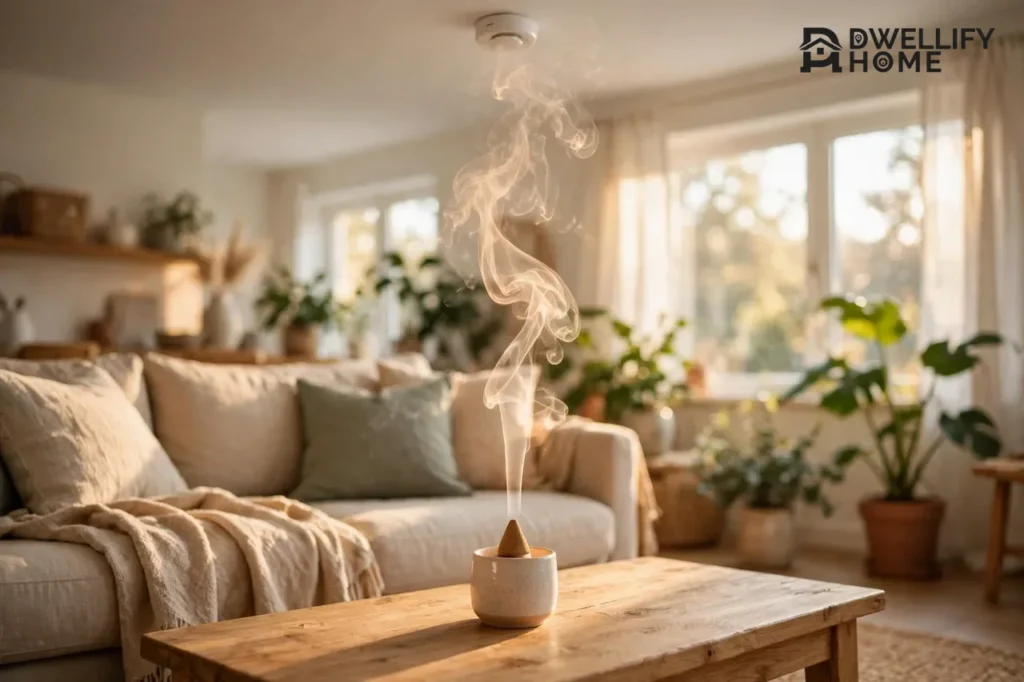
Yes, incense can trigger a smoke alarm, but one stick in a ventilated room usually will not. A smoke alarm detects tiny combustion particles, and burning incense is slow combustion, so the smoke it makes is exactly the kind of particle the sensor watches for. Whether the alarm sounds depends on how much smoke reaches it: one stick far from the alarm in an open room is usually fine, while several sticks, a cone, or incense burned right under the alarm can set it off.
The short answer is about concentration, not about incense itself. A thin wisp drifting across a large room rarely reaches the sensor in enough density to trip it. A thick cloud in a small, closed room, or smoke rising straight into the alarm, often does. Once you know what pushes the smoke over the line, you can burn incense without the siren.
Why Incense Smoke Looks Like Fire to Your Alarm
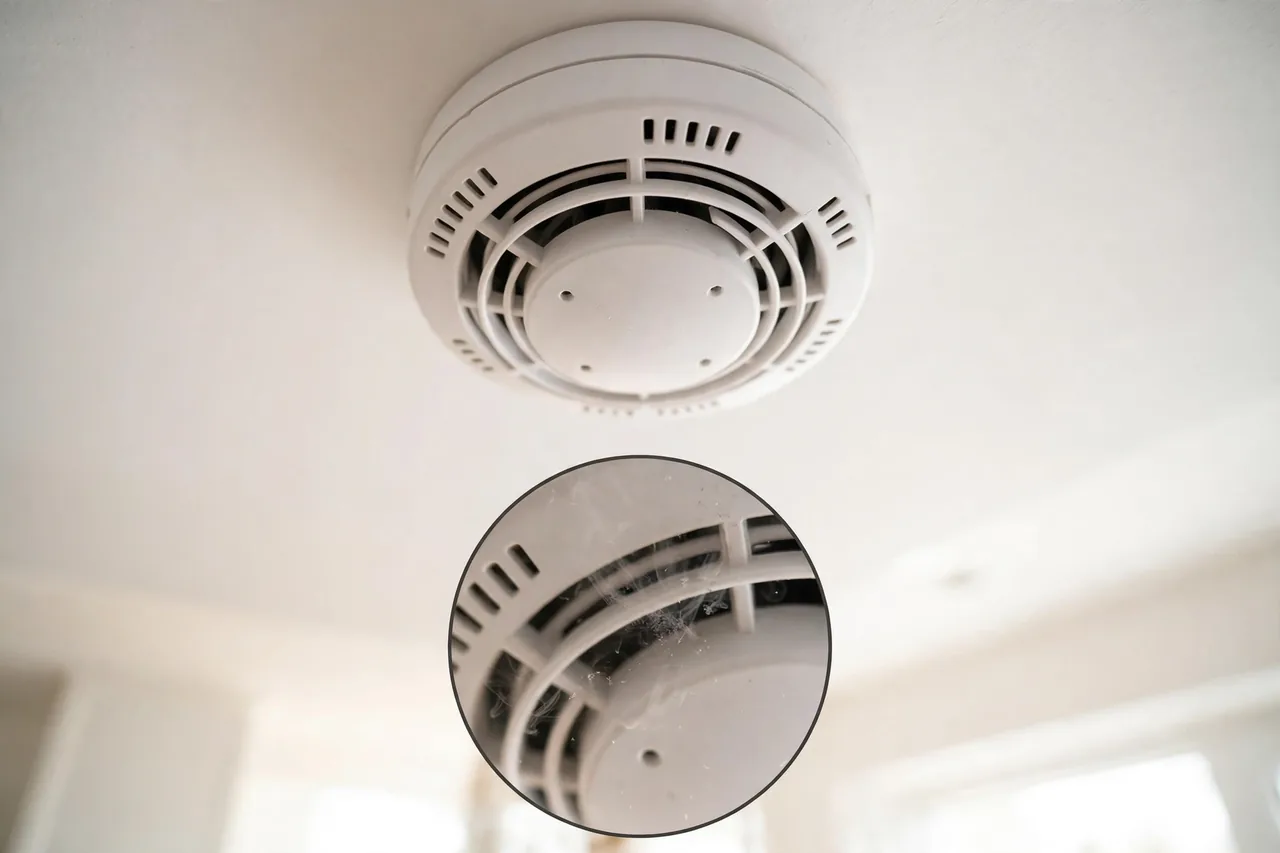
Incense burns slowly and gives off a steady stream of fine particles. Those particles are the same kind of airborne matter a smoke alarm is built to catch. An ionization alarm watches for tiny, fast-moving particles that break a small electrical current between two plates. A photoelectric alarm watches for larger particles that scatter a light beam onto a sensor. Incense smoke carries both sizes, so both alarm types can react to it.
The visible smoke from incense is made of larger, clumped particles, which makes photoelectric alarms quite sensitive to it. The finer, invisible particles from the first moments of burning can trip an ionization alarm too. Many homes use dual-sensor alarms that combine both types, which means they carry the risk from both sides. Incense smoke is real combustion smoke, and your alarm treats it that way.
The amount matters more than the type. Burning a single stick can raise the particle level in a room well above normal background, and the more sticks you burn, the faster that level climbs. In a small room with the door shut, even one stick can build a cloud thick enough to trip a sensitive alarm.
What Makes Incense More Likely to Set Off an Alarm
Five factors decide whether your incense stays a pleasant scent or becomes a siren. Change one of them and the risk drops fast.
1. How close the incense is to the alarm
Proximity is the biggest factor. Smoke burned directly under an alarm rises straight into the sensor before it can spread out and thin. Burn incense in a different part of the room, or in a room without an alarm directly overhead, and the smoke thins long before it reaches the sensor.
2. How much smoke you make
One thin stick makes a light stream of smoke. A cone makes a much thicker cloud in a shorter time. Several sticks at once, or a large coil, multiply the particles fast. Low-quality incense with synthetic binders or charcoal can also make denser, heavier smoke than a clean-burning natural stick.
3. How big the room is and how it breathes
A small, closed room traps smoke. A large room with an open window or a running fan lets it spread and escape. Burning incense in a tiny bathroom with the door shut is far more likely to trip the alarm than burning the same stick in a large living room with a window cracked open.
4. How sensitive your alarm is
Older alarms were often more sensitive than modern ones, and some settings are stricter than others. Dorm rooms, senior living homes, and hotels often use highly sensitive alarms, so even a thin stream of smoke can set them off there. At home, a modern alarm with nuisance resistance gives you more room.
5. How long you burn it
A stick that burns for a few minutes makes a short puff of smoke. One that burns for an hour keeps feeding particles into the air the whole time, and the level climbs. A long session in a closed room is the most likely way a single stick trips an alarm.
Use this table to judge your own setup.
| Your setup | Risk of tripping the alarm | Why |
|---|---|---|
| One stick, large room, window open | Low | Smoke thins before it reaches the sensor |
| One stick, small closed room | Medium | Smoke builds up with nowhere to go |
| Several sticks or a cone, any room | High | Thick cloud reaches the sensor fast |
| Incense right under the alarm | High | Smoke rises straight into the sensor |
| Dorm, hotel, or senior living home | High | Alarms there are set very sensitive |
Incense, Candles, Cigarettes, and Vapes: How They Compare
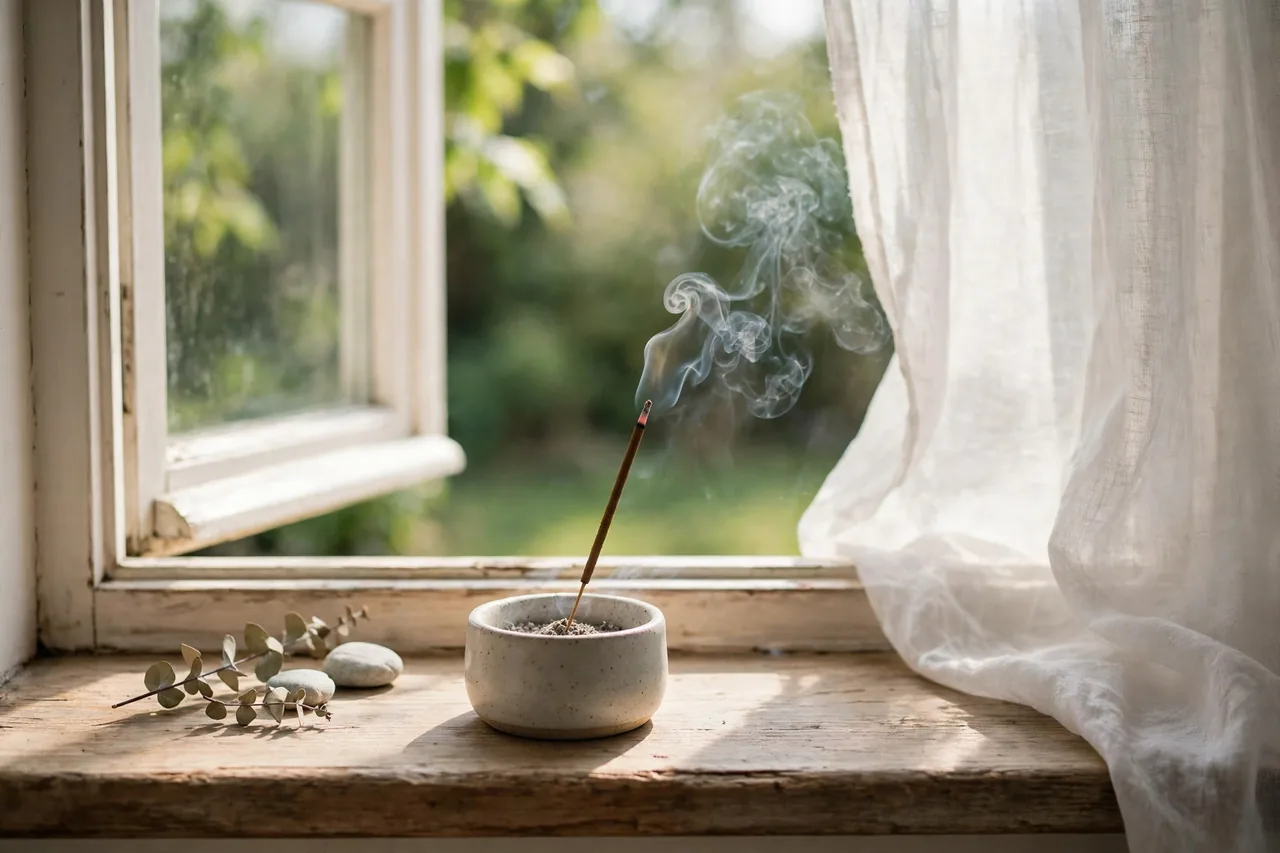
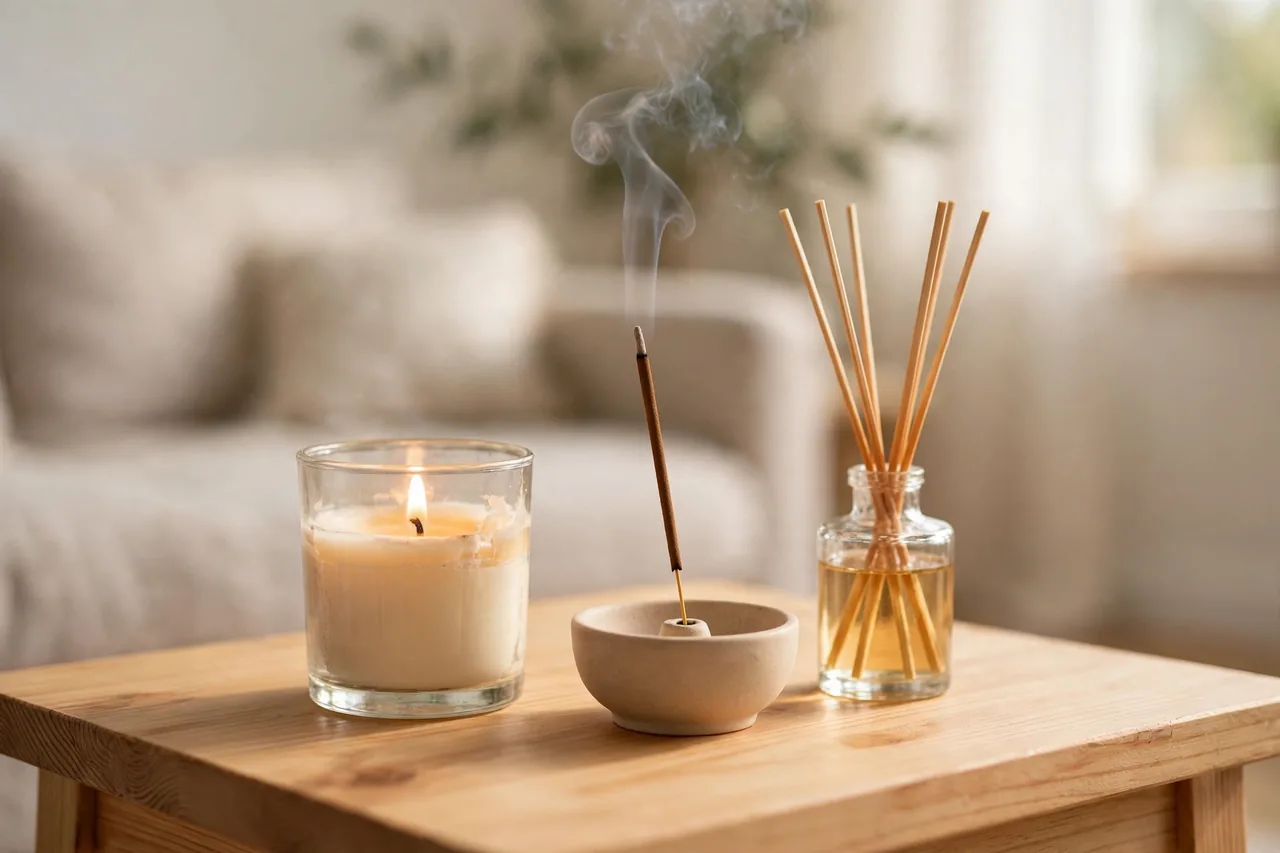
Incense is not the only scented smoke in a home, and the others behave much the same way. A single scented candle is unlikely to trip an alarm if it sits away from the detector, because it makes little smoke. Blowing out a candle, though, sends up a short puff that can trip a sensitive alarm if the candle sits right under it.
Cigarette smoke rarely sets off a home alarm in a ventilated room, because one cigarette makes a modest amount of smoke that spreads thin. Vaping is different: vape clouds are dense aerosols of tiny liquid droplets, and a thick cloud blown near a photoelectric alarm can scatter its light beam and trip it. In fact, vape clouds can be more likely to trip an alarm than cigarette smoke, because the cloud is denser.
The rule is the same for all of them: distance and ventilation decide the outcome. Keep the source away from the alarm, open a window or run a fan, and the risk stays low. Any dense cloud near a photoelectric alarm can trip it, whatever made the cloud.
How to Burn Incense Without Setting Off the Alarm
You do not have to give up incense to keep your alarms quiet. A few small habits keep the smoke thin and far from the sensor.
- Burn incense away from the alarm. Choose a spot on the far side of the room, never directly under a detector.
- Open a window or a door, or run an exhaust fan, so the smoke has somewhere to go.
- Burn one stick at a time instead of several, and avoid cones in small rooms.
- Keep the burn short. Put the stick out when the room smells good enough, rather than letting it burn for an hour.
- Use clean-burning incense when you can, and avoid cheap sticks with heavy synthetic binders.
- Close the door to any room where you do not want smoke to drift, and keep the alarm in that room clear.
- Never cover, remove, or disable the alarm to burn incense. The alarm is there for the night you truly need it.
If you burn incense for prayer or ritual, pick the most ventilated room in the house and keep the session short. A small fan near an open window pulls the smoke out before it can climb to the ceiling alarm. In a dorm or a rented home with very sensitive alarms, ask the building manager where incense is allowed before you light anything, because a triggered building alarm can mean a fine or a fire crew visit.
What to Do If Incense Sets Off Your Alarm
If the alarm sounds while incense is burning, act as if it could be real until you know it is not. Put the incense out at once, open the windows, and check the room for any other source of smoke or heat. If you see flame, smell burning beyond the incense, or feel heat, get everyone out and call 911.
If the room is clear and the only smoke is the incense, press the hush button to quiet the alarm for a few minutes while the air clears. Do not wave a towel at the alarm to clear it faster, because that can push more particles into the sensor. Let the ventilation do the work.
After the air clears, test the alarm with the test button to confirm it still works. A working alarm gives a loud siren. The American Red Cross advises testing smoke alarms every month, so a quick press after an incense alarm keeps your monthly habit on track. If the alarm sounded because of incense once, it will do it again in the same setup, so move the incense farther from the alarm or open a window next time.
Is Incense Smoke Safe to Breathe at Home?
Incense smoke is not harmless, even when it does not trip the alarm. Burning incense releases fine particles and gases into the air you breathe, and in a small closed room those particles can build to levels far above normal indoor air. People with asthma, allergies, or breathing problems often feel it first, with coughing, a tight chest, or itchy eyes.
Good ventilation helps your lungs as much as it helps your alarm. Open a window, keep the burn short, and avoid burning incense in a bedroom where someone sleeps, or in a room with a baby or a person with asthma. If anyone in the house coughs or wheezes when incense burns, switch to a flameless scent, like a reed diffuser or an electric warmer, which gives the fragrance without the smoke.
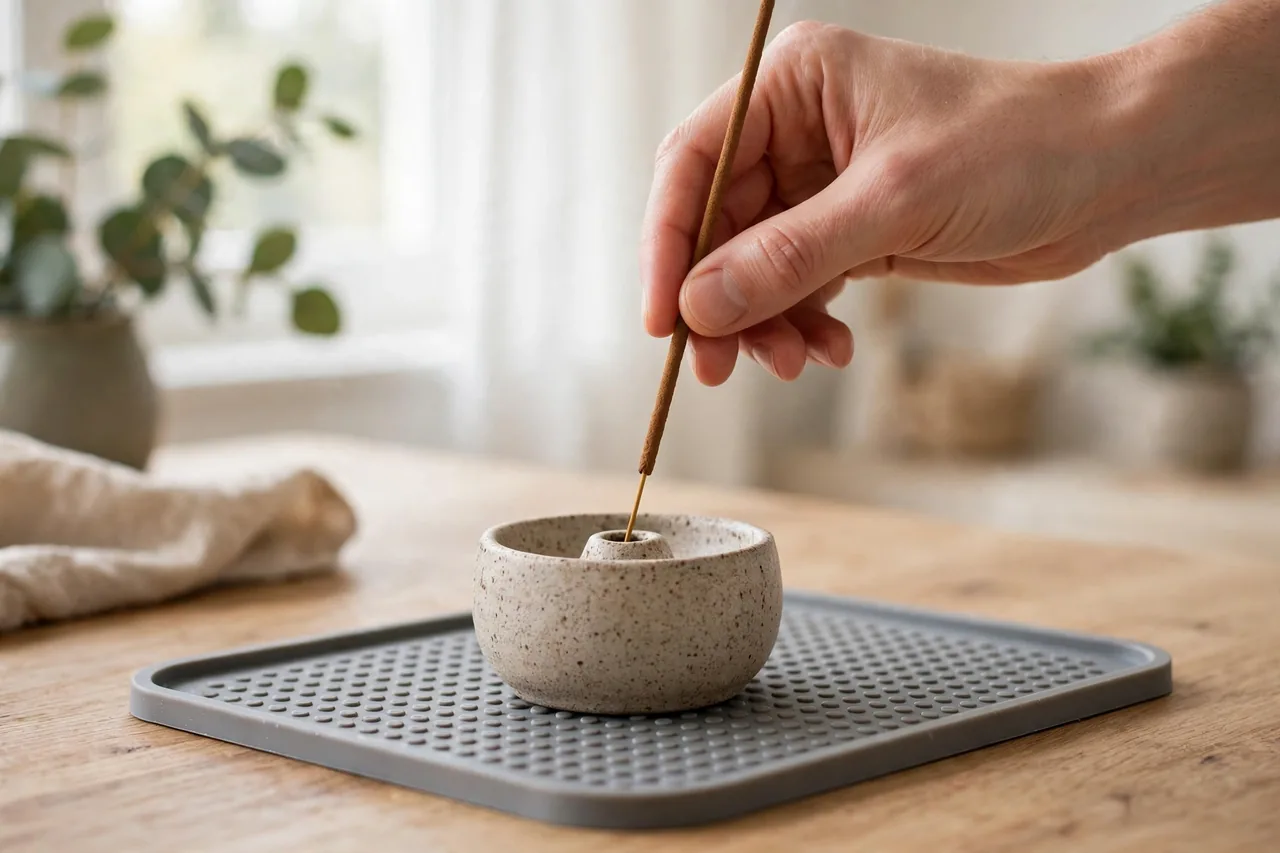
Never leave burning incense unattended, and never burn it near curtains, bedding, paper, or anything that can catch fire. Set the holder on a flat, heat-proof surface, away from the edge of a table, and keep it out of reach of children and pets. A fallen stick can start a real fire long after the scent fades. Ventilate well, burn briefly, and never leave incense burning alone.
Do Air Purifiers Help With Incense Smoke?
An air purifier with a true HEPA filter can catch many of the fine particles incense makes, and a carbon filter can cut some of the smell. Run the purifier in the same room while the incense burns, and keep it on for an hour after you put the stick out so it can clear what is left in the air. A purifier helps your lungs, but it will not stop the alarm from sounding.
That limit matters. The smoke rises straight from the stick to the ceiling alarm, and the purifier sits low in the room pulling air through its own filter. By the time the purifier catches the particles, some have already passed the sensor. So use a purifier as a complement to ventilation, not as a replacement for distance and fresh air.
If incense smoke lingers in your home long after you put the stick out, the smell has soaked into soft surfaces like curtains, cushions, and rugs. Open the windows, wash what you can, and run the purifier on high for a few hours. If the smell still hangs on, a guide to clearing smoke odor from a room will help more than another round of incense.
Stay Safe While Burning Incense

Fire safety and incense go together. Use a proper holder that catches ash, place it on a stable, heat-proof surface, and keep it away from anything flammable. Light the stick with a match or lighter, let the tip glow, blow out the flame, and watch it until the ember is steady.
Put the incense out fully when you leave the room. Press the glowing tip into the holder or into sand until no ember remains. A stick left burning in an empty room is a fire risk, and it is also the most likely way to trip the alarm while no one is there to hush it. The NFPA reminds homeowners to test smoke alarms monthly and replace them every 10 years, so the alarm that guards your incense room is always ready.
Disclaimer: This article gives general home guidance, not professional fire-safety advice. Never disable a smoke alarm to burn incense, candles, or anything else. If an alarm sounds, treat it as real until you prove otherwise, and call 911 if you see flame or smell burning beyond the incense. Check your building rules before burning incense in a dorm, hotel, or rented home.
Related Guides
Keep your home’s air and safety gear in shape with these guides: the best smoke alarm and carbon monoxide detector picks for a replacement, air purifier for smoke odor to clear lingering smells, and Christmas tree safety for seasonal fire risks.
Frequently Asked Questions
Will incense trigger a smoke alarm?
Yes, incense can trigger a smoke alarm, because it is slow combustion and the alarm detects combustion particles. One stick in a large, ventilated room usually will not set it off, but several sticks, a cone, or incense burned right under the alarm often will. Distance and ventilation decide the outcome.
Can incense set off a smoke detector in a small room?
Yes, and a small closed room is one of the riskiest places to burn incense. The smoke has nowhere to go, so the particle level climbs until it reaches the sensor. Open a window or a door, run a fan, and keep the burn short to keep the risk low.
Will incense set off a smoke alarm in a hotel or dorm?
It is more likely there, because alarms in hotels, dorms, and senior living homes are often set very sensitive. Even a thin stream of smoke can trip them. Many of these buildings also ban incense outright, so check the rules before you light anything, because a triggered alarm can mean a fine.
Can a vape set off a smoke alarm?
Yes. Vape clouds are dense aerosols of tiny droplets, and a thick cloud blown near a photoelectric alarm can scatter its light beam and trip it. A big cloud in a small room is the riskiest case. Keep vaping away from alarms, and never vape near a detector in a hotel or on a plane.
How do I stop incense from setting off my smoke alarm?
Burn one stick at a time, away from the alarm, in a ventilated room with a window open or a fan running. Keep the burn short and use clean-burning incense. Never cover or remove the alarm. If the alarm still sounds, move the incense to a larger room or switch to a flameless scent.
One stick, far from the alarm, in a room with fresh air: that is the recipe for incense without the siren. Enjoy the scent, keep the alarm working, and never trade one for the other.