How to Secure a Sliding Glass Door: The Short Answer
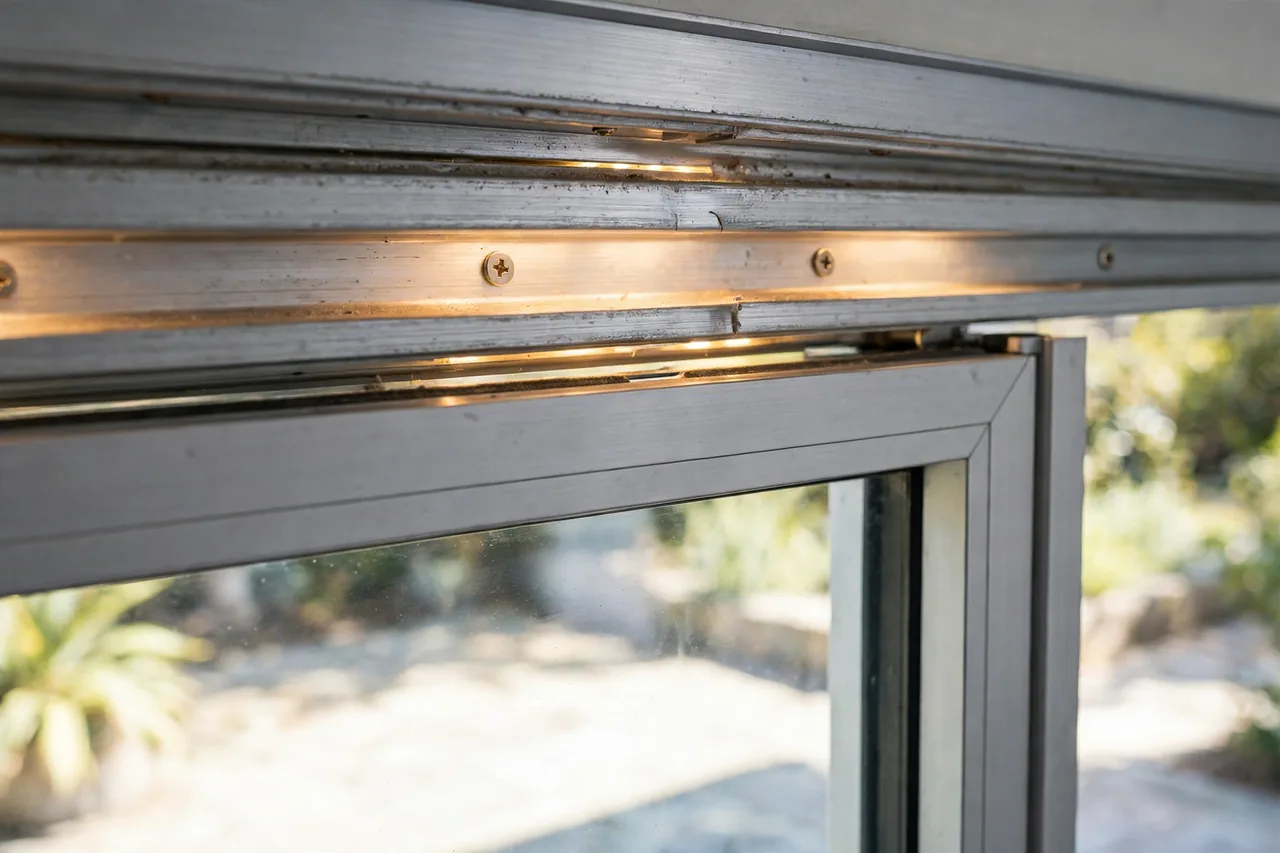
To secure a sliding glass door, layer three fixes: a security bar in the track so the panel cannot slide, anti-lift screws in the top track so the panel cannot be lifted out, and a contact or glass-break sensor so you get an alert if anyone tries. The bar is the single best first buy, because it defeats the two most common attacks at once and costs under $30.
Sliding glass doors are one of the weakest entries in most homes. The factory latch is little more than a thin hook, the glass is a big breakable pane, and the panel can often be lifted right off its track. Vivint notes that about 22% of break-ins come through a back or patio door, and sliding glass doors are a common target because the standard latch is the weakest point of most homes.
The good news is that every common attack has a cheap, specific fix. Work through this guide in order, test your door first, and add layers until the door resists all four attacks below.
The Four Ways Burglars Get Through a Sliding Door
Before you buy anything, learn how the attacks work. Each one has its own fix, and buying the wrong fix leaves the real hole open. Vivint maps the four tactics this way: lifting the panel off its track, prying the latch, kicking or breaking the glass, and walking through an unlocked door.
Lifting is the oldest trick. A strong upward lift pops the sliding panel free of the bottom track, and the door swings inward in seconds. Prying is just as fast: the thin factory latch bends or snaps under a crowbar or even a flathead screwdriver. Breaking the glass lets an intruder reach in and open the latch from inside. And the simplest attack of all needs no tools, because the door was never locked.
Caption: The four sliding-door attacks and the fix that stops each one.
| Attack | How it works | Fix that stops it |
|---|---|---|
| Lifting the panel | Panel lifted up and out of the track | Anti-lift screws or blocks in the top track |
| Prying the latch | Thin hook latch bent open | Foot lock, pin lock, or second lock |
| Breaking the glass | Pane smashed, latch reached from inside | Security film plus glass-break sensor |
| Unlocked door | Door simply slid open | Security bar plus a locking habit |
Notice that no single product stops all four. A bar stops the slide but not the lift. A sensor alerts you but does not slow anyone down. That is why layering matters, and why this guide stacks the fixes in order of value.
Step 1: Test Your Door the Way a Burglar Would
Start with a five-minute test. Stand inside, close and lock the door, then try to lift the sliding panel straight up. If it rises more than half an inch out of the bottom track, the lift attack works on your door. Next, push the locked panel sideways and jiggle the latch. If the latch flexes or the panel rattles, the factory lock is weak.
Then check the track and the rollers. Dirt and worn rollers make a door drag, and a dragging door never seats right in its latch. Vacuum the track, wipe it clean, and spray a silicone lubricant on the rollers. A door that glides smooth locks tight.
Write down what you find: lift gap, latch wobble, dirty track, cracked glass, loose frame. Your list becomes your shopping list. Your list becomes your shopping list, and it stops you buying fixes you do not need.
Step 2: Block the Track With a Security Bar
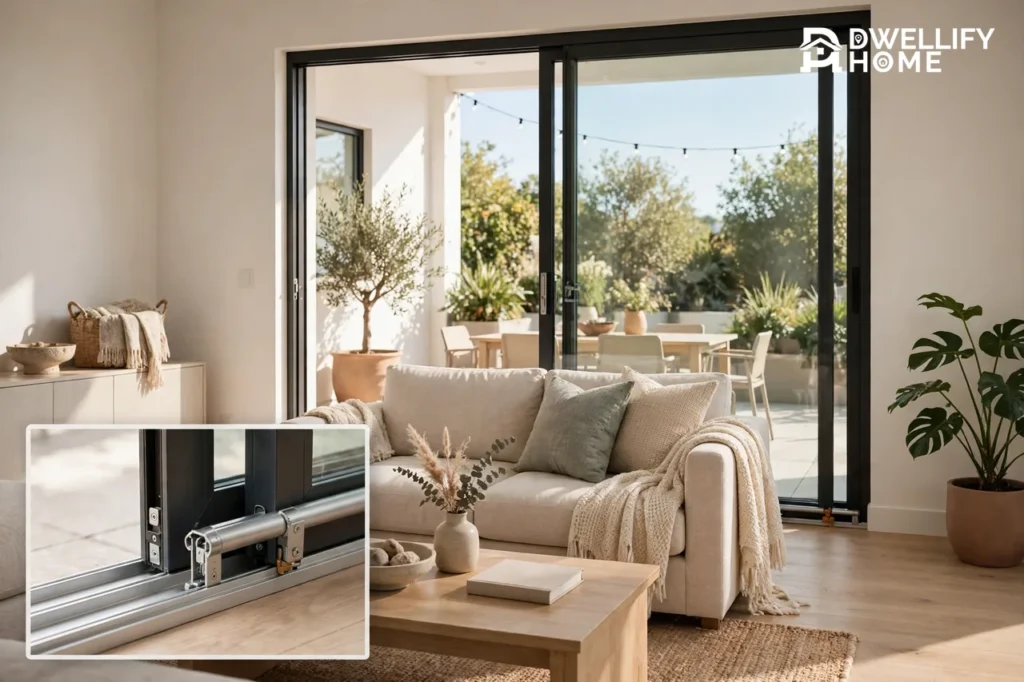
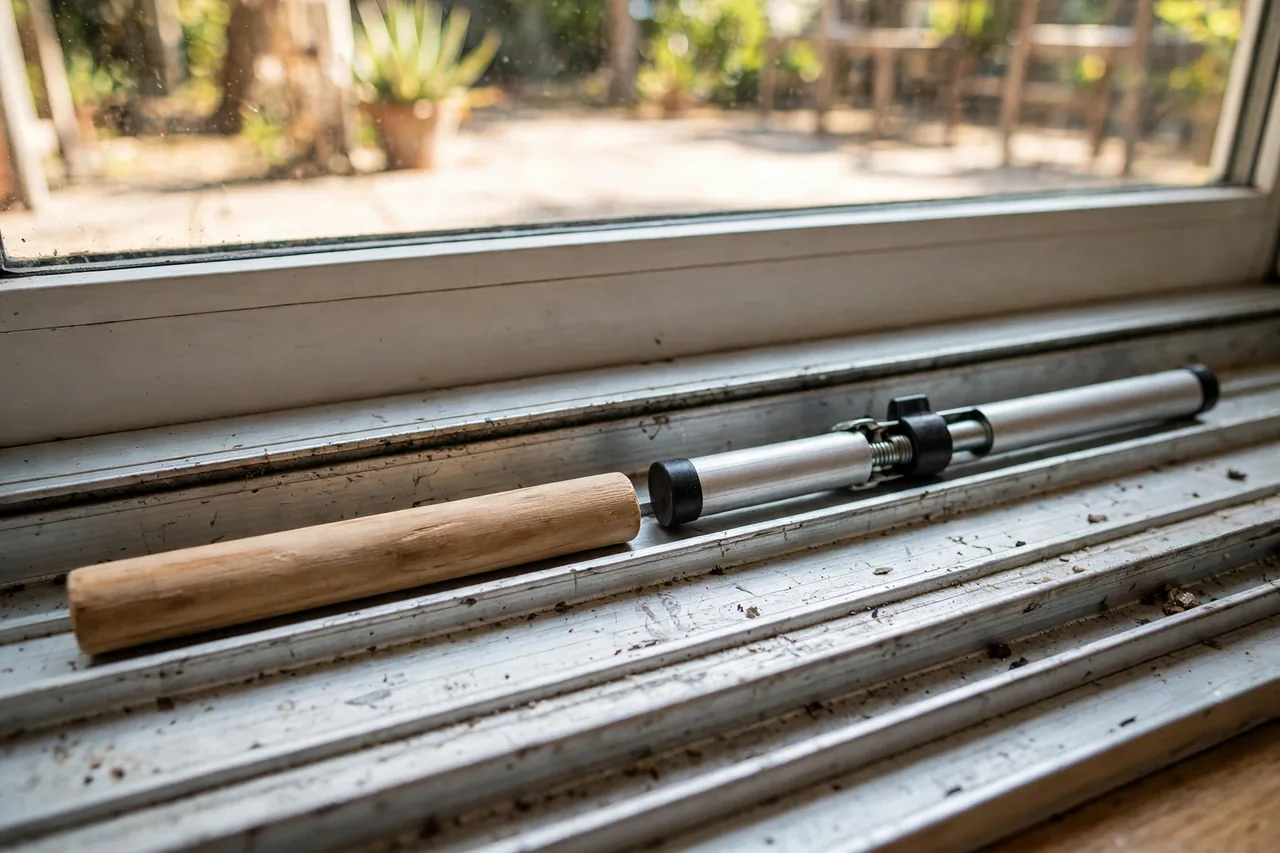
A security bar is a metal rod that sits in the bottom track behind the sliding panel and physically blocks it from sliding open, even if the latch is defeated. A cut wooden dowel or a broom handle does the same job for nearly free. An adjustable metal bar looks neater, stays put, and adjusts to fit, usually for $15 to $35.
Measure the track from the frame to the edge of the closed panel, then cut or adjust the bar to fit snug with no slack. A loose bar lets the door open an inch or two, which is enough to slip a hand through. Place the bar low in the track where it blocks the rollers directly.
A hinged Charlie bar is the tidier version. It mounts to the door frame and folds down into place against the panel, so you never have to pick a loose dowel off the floor. It works best on two-panel doors. For three-panel or multi-slide doors, use a track block or a pin lock instead, because one bar cannot cover every panel.
Dowel or Bar: Which Should You Pick?
Pick a dowel if money is tight and the door rarely moves. Pick an adjustable bar if the door opens daily, because hardware that annoys you is hardware you stop using. Either way, the bar is your first buy, and it is the single highest-value upgrade on a sliding door.
Step 3: Stop the Lift With Anti-Lift Screws
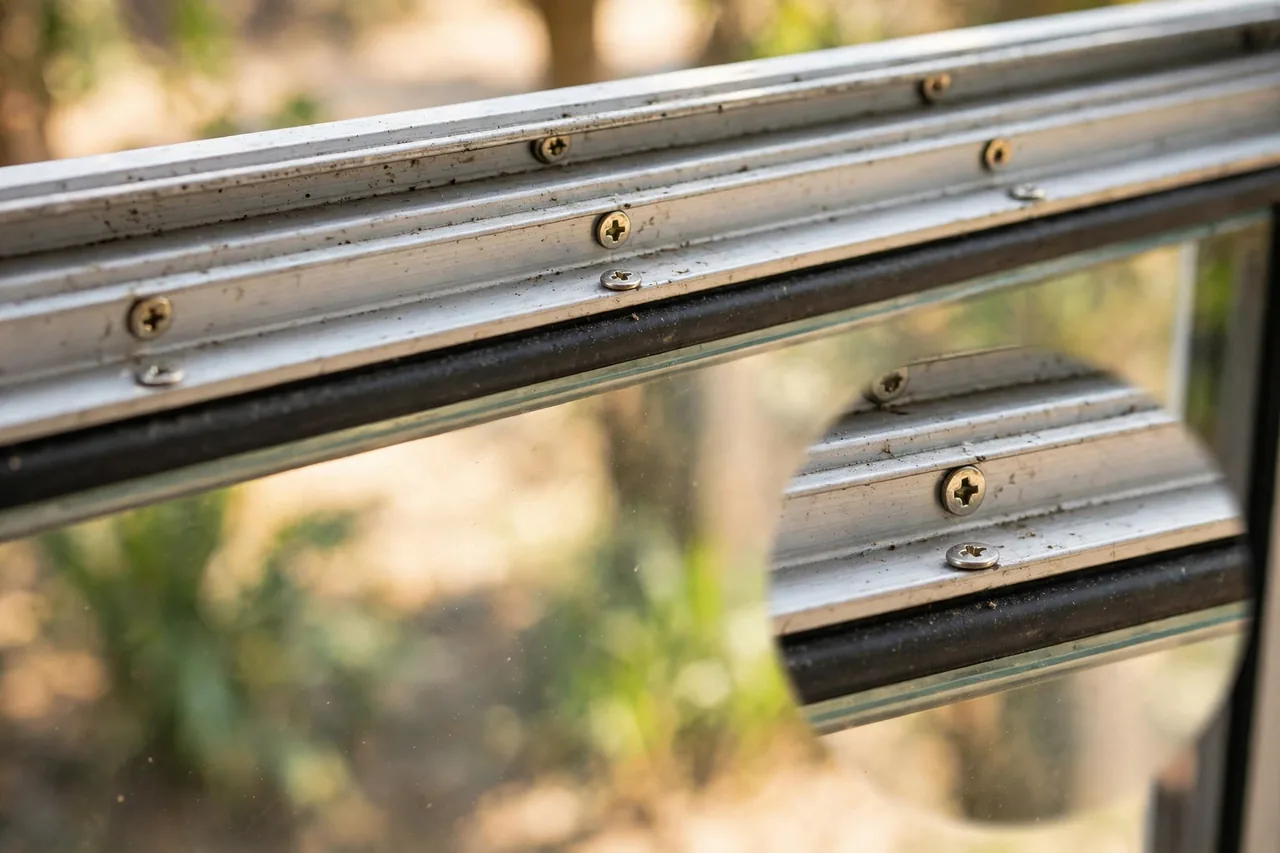
A bar in the track stops the slide, but it does nothing about the lift. A panel lifted out of its track takes the bar with it, so the lift fix is the step most people skip and most burglars count on. Fix it with anti-lift screws, which cost almost nothing and take about 15 minutes.
Drive three or four pan-head sheet metal screws into the upper track, spaced along the run the panel travels. Back each screw out until its head sits about 1/8 inch above the top of the panel: close enough to block a lift, far enough that the door still glides. Test the door after each screw so it never binds.
Anti-lift blocks work the same way if you prefer a bought part over screws. They are small screw-in stops mounted in the upper track, usually $10 to $15 for a set. Either option closes the lift gap, and together with the bar they shut down the two most common attacks for under $30 combined.
The Pin Lock Upgrade
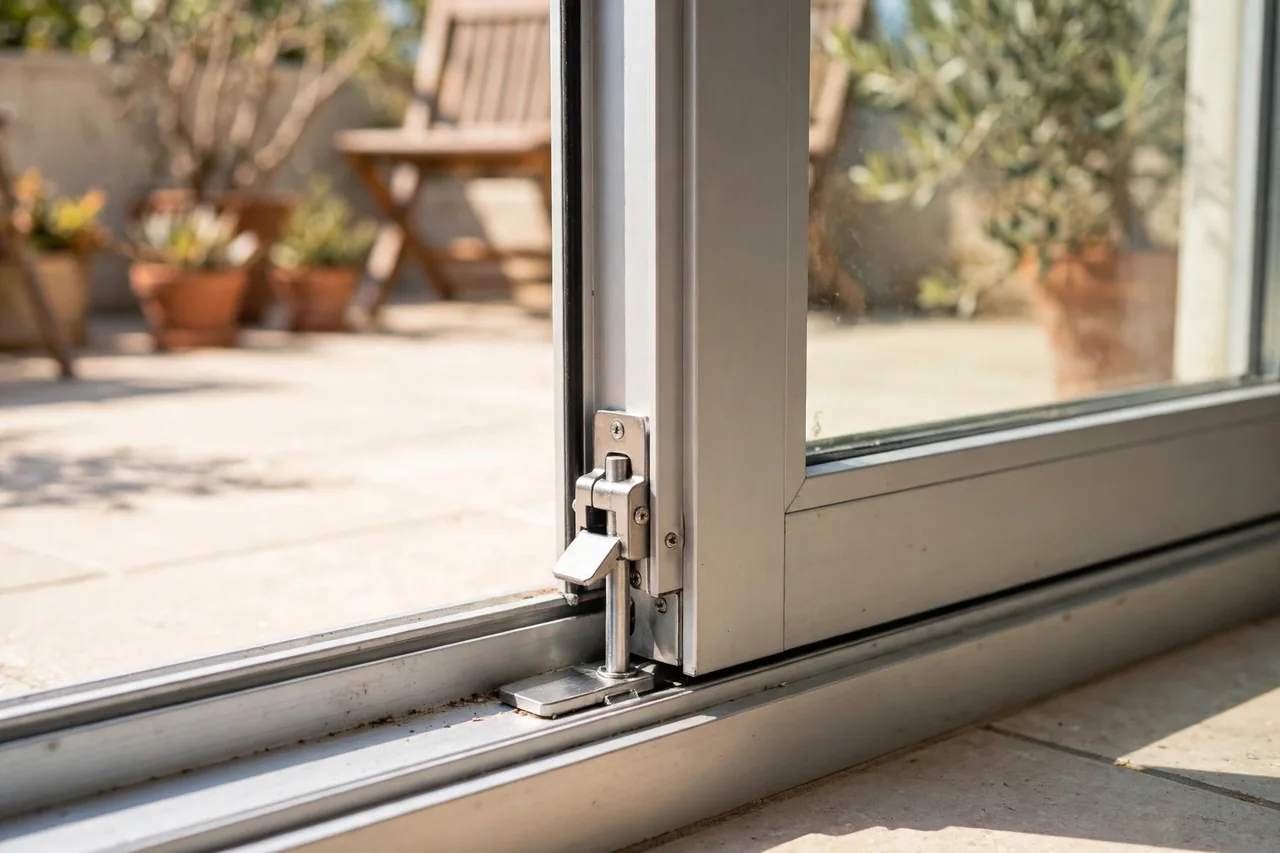
A pin lock puts a hardened steel pin through a hole drilled in the moving panel’s frame and into the fixed panel or jamb behind it. It costs around $15 to $25, needs one drilled hole, and joins the two panels into one solid unit. Reolink recommends a foot-operated step lock at the bottom corner or a top-mounted slide bolt as the same kind of second locking point, and both install in minutes.
Step 4: Add a Second Lock
The factory latch should never be your only lock. A foot lock mounts at the bottom of the sliding panel and drops a heavy pin into the track when you step on it. A keyed track bolt locks the panel from a fixed point and keeps the key out of a child’s reach. A double-bolt lock anchors to both the panel and the frame.
Choose by who uses the door. A foot lock suits families because it is fast and needs no key. A keyed lock suits a door you rarely open, because it adds a lock a child cannot reach. LaCantina advises upgrading a flimsy factory latch to a double-bolt lock or a keyed handle set, and notes that a multi-point locking system, which engages the panel at several points with one throw of the handle, is the strongest factory option on new doors.
Whatever you pick, make it a second locking point, not a replacement latch. Two locks force an intruder to defeat two separate catches in two separate places, and that takes time and noise. Our guide to the best lock types for home explains which lock styles suit which doors.
Step 5: Harden the Glass
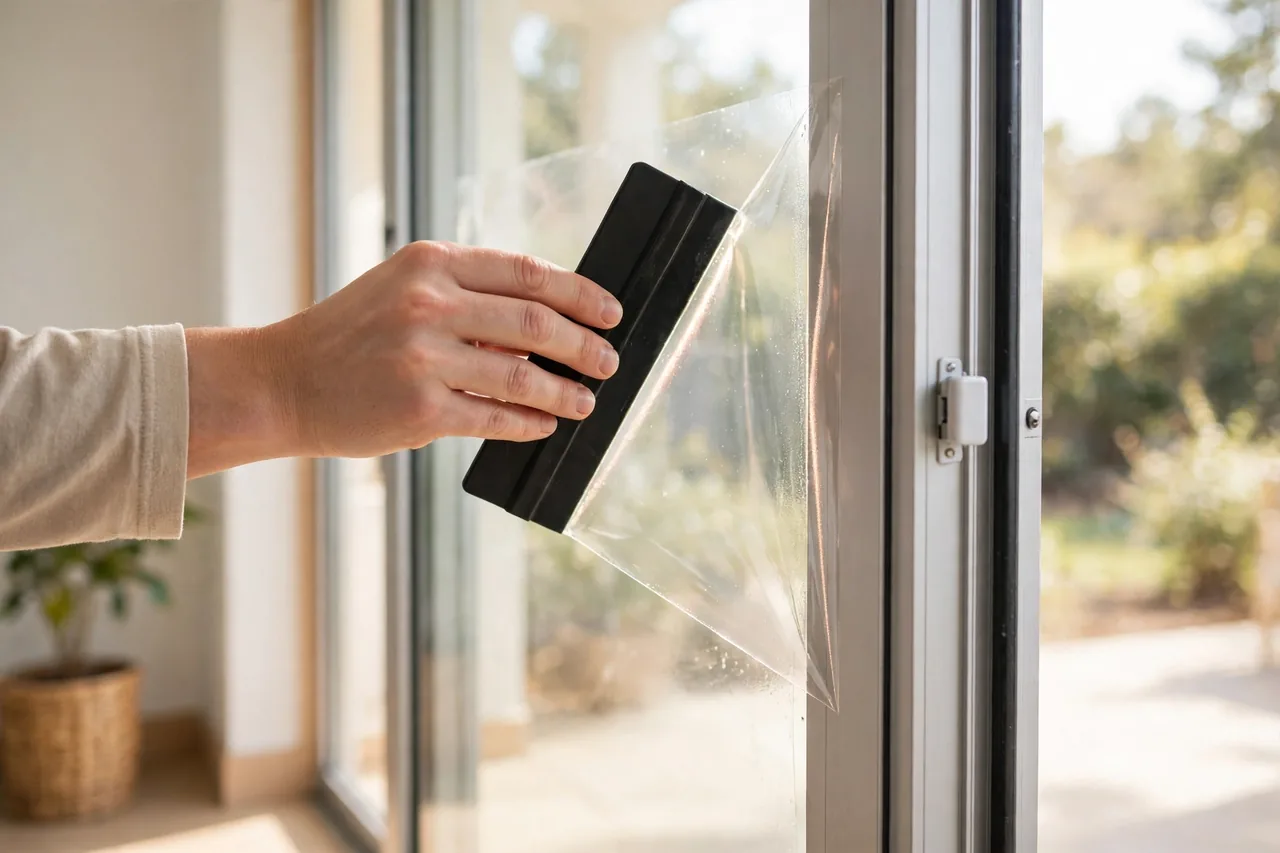
Glass is the attack a bar cannot stop. Security film is a clear, heavy-duty layer, usually 8 to 14 mil thick, applied to the inside of the pane. It holds the glass together when it is hit, turning a quick smash-and-reach into a slow, loud struggle. A roll costs about $40 to $90 per door, and fitting takes one to two hours.
Apply the film to clean, dry glass, and anchor its edges into the frame if your kit allows it. Film without edge anchoring can peel away from the frame under a hard hit. If your door faces harsh sun, pick a film rated for that exposure so it does not bubble or yellow.
For a permanent fix, laminated impact glass replaces the pane with two layers bonded around a plastic core. It costs roughly $400 to $1,200 per panel depending on size, and it also cuts outside noise. Most homes do not need it, but it is the right call on a door that has already been broken once or on a ground-floor door hidden from the street.
Step 6: Add Sensors and a Camera
Physical fixes slow an intruder down. Sensors and cameras make sure you know about it. A magnetic contact sensor on the frame fires the instant the door opens past a couple of inches, whether the lock was defeated or the door was simply left unlocked. A glass-break sensor listens for the sound of breaking glass and catches the attack a contact sensor misses.
Place the contact sensor high on the frame where it is hard to reach from outside, and test it by opening the door slowly. Place the glass-break sensor on the wall or ceiling facing the door, within its rated range. Pair both with your alarm panel or a smart home hub so the alert reaches your phone.
A weatherproof outdoor camera pointed at the patio entry adds the last layer. It records who approaches, and a visible camera makes many intruders pick another house. See the best home security camera system for picks with real five-year costs, and how a glass break alarm hears a break-in before you choose a sensor. Renters can use adhesive sensors and a renter-friendly camera setup with no drilling, and a front porch camera covers the entry from the other side.
Renter-Friendly Fixes and Daily Habits
Renters get most of the same protection without drilling. A tension-fit anti-lift bolt, a security bar in the track, shatterproof film, and adhesive door sensors all install without tools and come off clean. A dowel in the track costs nothing and works tonight.
Habits matter as much as hardware. Lock the door every time you close it, even during the day, and set the bar every night. Keep the track clean so the door seats fully. Trim bushes near the patio so no one can work on the door unseen, and put a light on the patio that comes on at dusk.
If you own the home, go further with drilled anti-lift bolts, a foot lock, and hardwired sensors. The full layered setup, bar plus anti-lift plus second lock plus sensors, costs under $150 in most cases and takes one Saturday morning.
What It Costs to Secure a Sliding Glass Door
Caption: Typical sliding-door security costs, checked November 2026.
| Fix | Typical cost | Time | Stops |
|---|---|---|---|
| Wooden dowel in track | Under $5 | 1 minute | Sliding |
| Security bar or Charlie bar | $15 to $35 | 5 minutes | Sliding |
| Anti-lift screws or blocks | $0 to $15 | 15 minutes | Lifting |
| Pin lock or foot lock | $10 to $50 | 10 to 20 minutes | Prying |
| Security film | $40 to $90 per door | 1 to 2 hours | Glass break |
| Contact or glass-break sensor | $15 to $50 each | 5 to 10 minutes | Alerts you |
| Laminated glass replacement | $400 to $1,200 | Pro install | Glass break |
Costs are typical US hardware-store ranges, checked November 2026, and they vary by brand and store. Start with the bar and the anti-lift screws, then add a lock, then film and sensors as budget allows.
Related Guides
For the rest of your home security layers, read the best home security systems with cameras and how locks fail and what the ratings mean before your next hardware buy.
Frequently Asked Questions
What is the cheapest way to secure a sliding glass door?
A wooden dowel or a metal security bar in the track is the cheapest immediate fix at under $20, followed by a basic contact sensor for around $15 to $20 if you want an alert as well as physical resistance. Add anti-lift screws for free using screws you already own.
How do you secure a sliding glass door?
Drop a track bar or a cut wooden dowel in the bottom track so the door cannot slide, then fit anti-lift blocks or screws in the top track so the panel cannot be lifted out. A pin lock through both frames adds a second lock, and together these cost under $50 per door.
Can a burglar lift a sliding door off its track?
Yes, on many older doors. A strong upward lift pops the panel free of the bottom track in seconds, because the factory latch does nothing to stop it. Anti-lift screws or blocks in the top track close this gap for a few dollars.
Do security bars work on sliding glass doors?
Yes. A bar in the track physically blocks the panel from sliding open even if the latch is defeated, and it is the single highest-value upgrade for a sliding door. It does not stop the lift attack, so pair it with anti-lift screws.
Is security film worth it on a sliding door?
Yes, if glass breakage worries you. Security film holds broken glass together and turns a quick smash-and-reach into a slow, loud struggle. It costs $40 to $90 per door and works best paired with a glass-break sensor.
Can renters secure a sliding glass door without drilling?
Yes. A tension-fit anti-lift bolt, a security bar in the track, shatterproof film, and adhesive door and window sensors all install without drilling. A cut dowel in the track works tonight and costs almost nothing.
Disclaimer: This guide covers basic DIY security add-ons. If your sliding door frame is rotted, the glass is cracked, or the panel will not stay in its track, call a door repair pro before you add hardware. Always check rental rules before drilling.
Start with the bar and the anti-lift screws this weekend. For under $30 and half an hour, your sliding door goes from the weakest entry in the house to one of the hardest to open quietly.