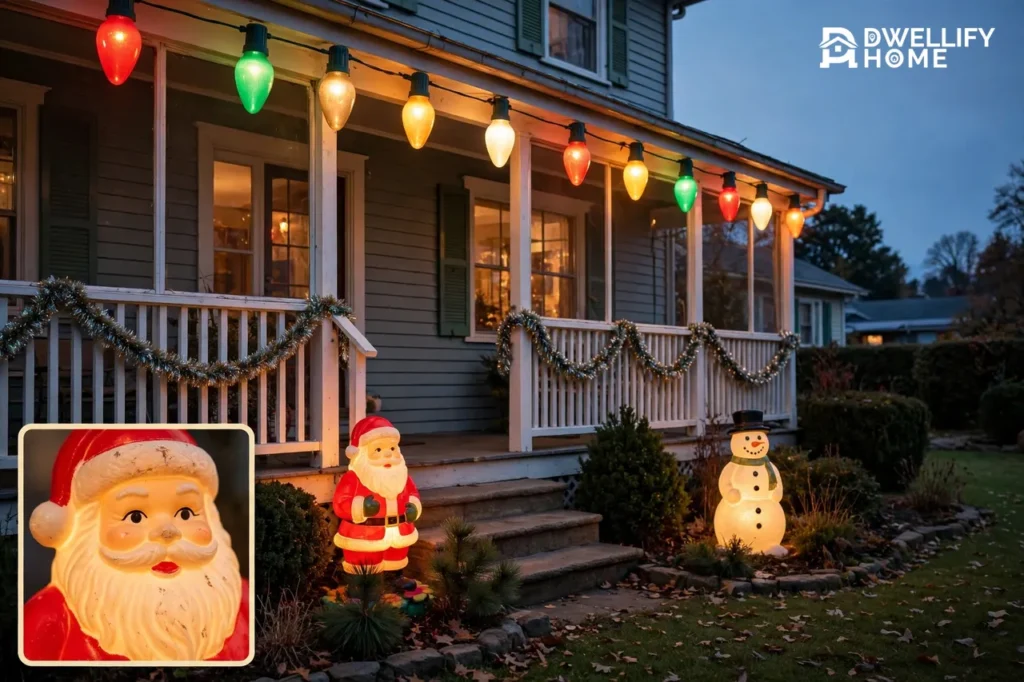
Vintage outdoor Christmas decorations bring back the warm, simple glow of mid-century front yards: lighted blow mold Santas and snowmen, big colorful C9 bulbs along the roofline, and tinsel garlands on the porch rail. You do not need a huge yard or a collector’s budget to get the look. Start with one or two classic pieces, add old-style lights, and keep the colors warm and simple.
That is the whole secret. Old-style outdoor decor works because it looks handmade and human, not perfect. A glowing plastic Santa by the front steps, a wreath with a plain red bow, and a string of fat, jewel-colored bulbs can make a whole house feel like Christmas. This guide shows you what counts as vintage, which pieces matter most, where to find them, how to fix up tired finds, and how to light them safely outside.
What Counts as Vintage Outdoor Christmas Decorations?
Outdoor vintage Christmas decorations are the outdoor styles from about the 1940s through the 1980s. These are the pieces your grandparents may have put out each December: hollow plastic figures that glow from inside, large glass-style bulbs, metal lawn signs, and simple evergreen wreaths with big bows.
True vintage pieces are the originals from those years. Reproductions are new pieces made to look old. Both can work in the same yard, and most displays mix the two. The trick is to keep one era in mind so the yard looks planned, not random. A 1960s blow mold Santa pairs well with C9 bulbs and a tinsel garland. It looks less at home next to a flashing, color-changing light show.
Outdoor retro Christmas decor also has a clear feeling. The colors stay bold and simple: red, green, gold, and bright white. The shapes stay friendly and a little chunky: round snowmen, waving Santas, candy canes, and candles. Nothing needs to move, sing, or flash. The glow does the work.
The Classic Pieces That Make the Look
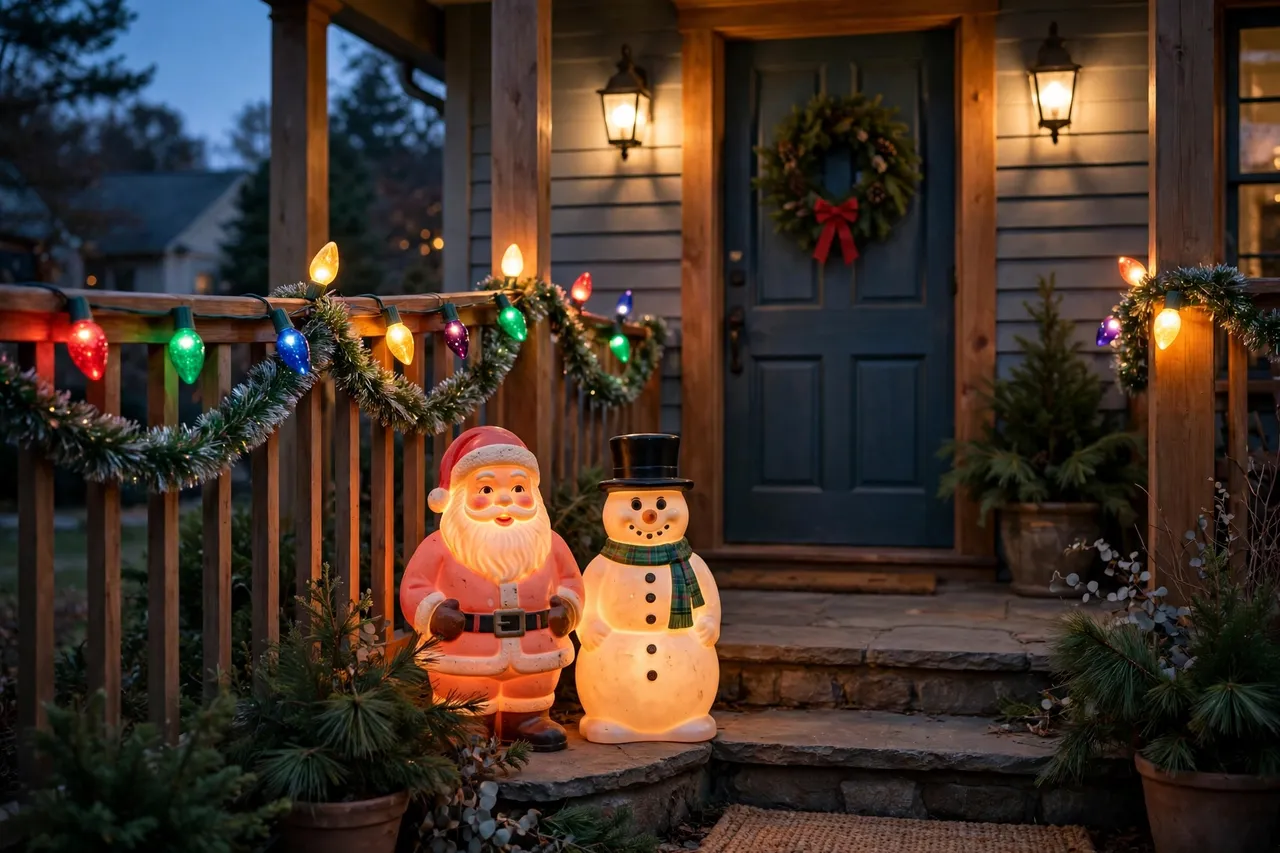
You do not need every vintage piece ever made. A few well-chosen classics carry the whole display. Pick the ones that fit your yard, your porch, and your budget, then repeat their colors across the display.
Blow Mold Figures
Blow molds are hollow plastic figures, such as Santa, a snowman, a reindeer, or a candle, that light up from inside. Makers shaped them by blowing melted plastic into a mold, which made them light, strong, and cheap enough for an ordinary family yard. They became a front-yard staple from the 1960s onward, and collectors still hunt for names like Empire, Union Products, and General Foam Plastics.
Place one large figure where people first look: beside the front door, at the end of the walk, or in a front garden bed. Then add one or two smaller pieces nearby instead of scattering figures all over the lawn. A small group reads as a scene. Single figures spread far apart read as clutter.
Big C7 and C9 Bulbs
C7 and C9 bulbs are the fat, colorful bulbs you see in old Christmas photos. C9 bulbs are the larger of the two, and they give a bold, jewel-like line along a roofline or porch rail. C7 bulbs are smaller and suit a porch rail, a window frame, or a small tree.
For a true vintage feel, choose warm, solid colors: red, green, blue, gold, and warm white. Skip cool white bulbs on old-style pieces, because cool white light can make colored plastic look cold and blue. Warm white keeps the golden, old-photo glow that makes vintage outdoor Christmas decor feel right.
Tinsel Garlands, Wreaths, and Porch Pieces
Tinsel garlands wrapped around a porch rail or door frame give instant vintage charm for very little money. Pair them with a simple evergreen wreath and a plain red bow on the front door. That one-two combination — garland plus wreath — frames the entrance the way old displays did, without crowding it.
Other classic porch pieces include lighted plastic candles in the windows, a wooden sled leaned by the door, and a metal mailbox dressed with greenery. If your porch already has a theme going, keep the vintage pieces in the same spirit. For porch layout ideas, see our guide to Christmas decor on the porch, and for the door itself, our ideas for Christmas decorations on the front door.
Plywood Cutouts and Wire Figures
Flat plywood Santas, snowmen, and candle cutouts were a handmade favorite in older yards. Families painted them, set them near the walk, and stored them flat each year. Wire-frame reindeer and sleighs give a similar old-style outline, especially when you wrap them with a simple string of lights.
These pieces work best as outlines, not as the main event. Put a cutout where it catches light at dusk, and keep it clear of walkways so no one trips over a stake or a cord in the dark.
How to Plan a Vintage Yard Display That Looks Intentional
A vintage yard looks best when you plan it like a small scene, not a collection. Start at the street and walk toward your door the way a guest would. Notice the first thing your eye lands on, then build around that spot.
Choose three to five main focal points for the whole yard. A blow mold group by the steps, a lit wreath on the door, and C9 bulbs on the roofline already make a full display. Add porch garland and one walkway piece, and you have plenty. More pieces do not make a yard look more vintage. They make it look busy.
Next, pick one color story and stick to it. A classic choice is red, green, and warm white. Another is red, gold, and warm white. Use the same colors in the bulbs, the bows, and the figure details. When every piece shares two or three colors, even mixed eras look like they belong together.
Think about day and night. Blow molds look charming in daylight, but their real magic starts at dusk when they glow. C9 bulbs outline the house at night but look like a simple colored line by day. Walk your yard once in daylight and once after dark before you call the display done. Move anything that blocks a path, hides the house number, or crowds the mailbox.
Small yards and rentals can still pull off this look. One glowing figure on a porch, a wreath on the door, and a short run of C7 bulbs on the rail give the full vintage feeling in a tiny space. Renters should skip nails and screws in siding and use clips made for lights, removable hooks, and freestanding figures instead. For broader outdoor styling ideas, browse our Christmas decor exterior ideas.
Vintage or Reproduction? How to Tell Them Apart
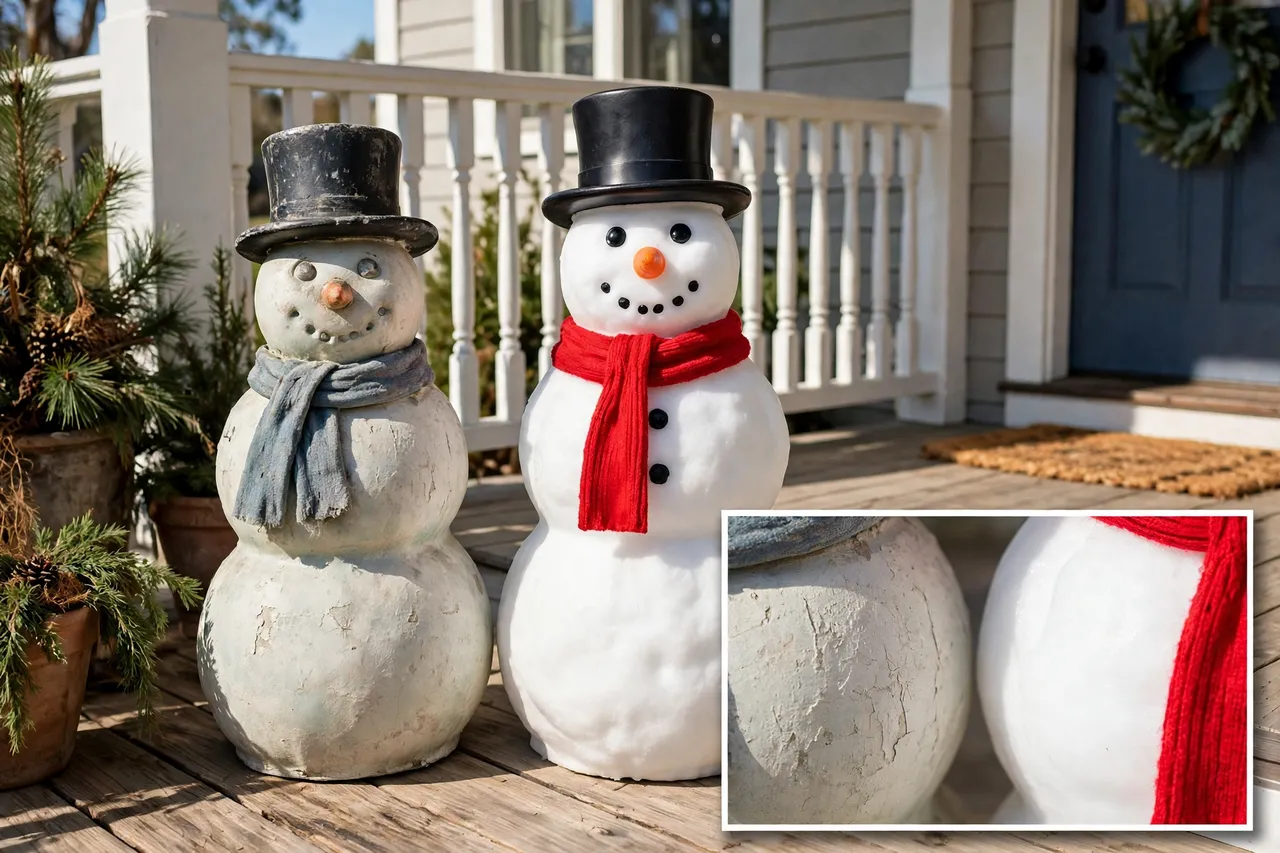
Original vintage pieces carry signs of their age and their maker. Reproductions copy the shape but use newer plastic, newer wiring, and modern safety labels. Neither choice is wrong. The right choice depends on your budget, your patience for repairs, and whether you plan to light the piece every night.
Check the base or the inside of a blow mold for a maker mark, such as Empire, Union Products, or General Foam Plastics. Originals often feel denser than thin modern copies, and their paint shows hand-painted details and honest wear. A seller who calls a piece vintage but shows no photo of the inside or the base deserves a second question before you pay.
Use this quick comparison before you buy:
Table: Vintage originals vs. modern reproductions at a glance
| Feature | Vintage Original | Modern Reproduction |
|---|---|---|
| Look | Softer colors, honest wear | Brighter, sharper colors |
| Weight | Often denser plastic | Often lighter plastic |
| Wiring | Old cords, check closely | New outdoor-rated cords |
| Price pattern | Varies, rare pieces cost more | Steadier retail pricing |
| Best for | Collectors, porch displays | Nightly yard displays |
A smart mix works well for most homes. Use a true vintage figure as the star on a sheltered porch, and use sturdy reproductions for the pieces that face wind, rain, and snow all season. You get the old look where guests see it up close, and you get modern wiring where the weather hits hardest.
Where to Find Vintage Outdoor Christmas Decor
Finding old pieces is half the fun, and it rewards patience. You do not need to buy a whole display in one weekend. Add one or two special pieces each year, and the display grows into something personal.
Thrift stores and flea markets are the classic hunting grounds. Go early, check the holiday section first, and look over each piece in good light before you buy. Estate sales often hold whole collections from one home, so you may find matching figures, lights, and garlands from the same era in one stop.
Online marketplaces like eBay and Etsy help when you hunt for one exact piece, such as a certain blow mold Santa or a matching reindeer. Read the listing photos closely. Ask for a photo of the base, the inside, and the cord if the seller did not show them. A careful seller answers gladly. A vague seller is a warning sign.
Ask family first, before you shop anywhere. Many families still have old yard figures, light strings, and porch candles packed away in a garage or attic. A piece with a family story beats a perfect store-bought piece every time, and it costs nothing but a phone call.
When you buy new, look for reproductions based on the original molds, and check that the lights and cords carry a current outdoor rating. That one check matters more than the shape of the figure, because it decides whether you can safely light the piece outside night after night.
How to Restore Faded Blow Molds and Tired Pieces
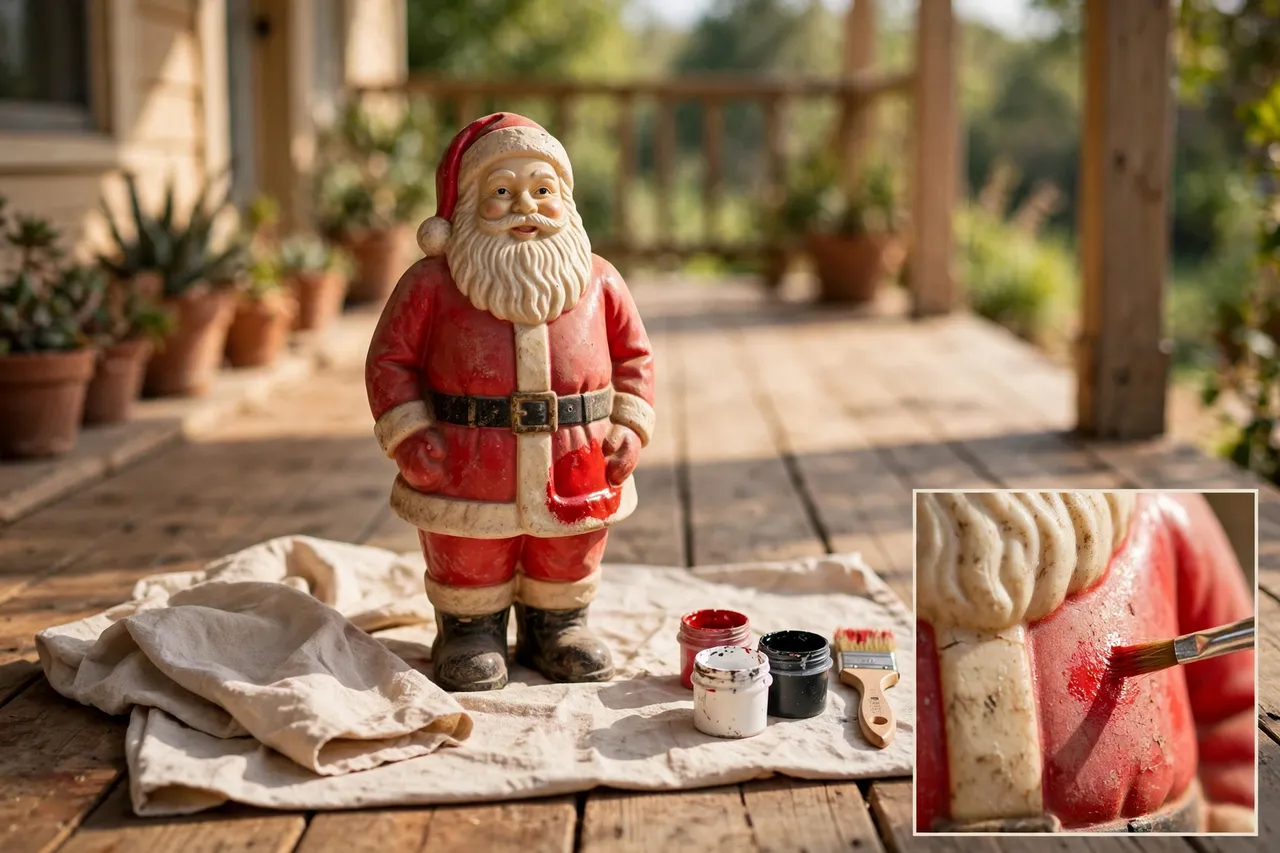
Most old blow molds do not need a full makeover. They need a good cleaning, a little touch-up paint, and honest judgment about the wiring. Work on the plastic first, and deal with the electrics separately, with safety first.
- Clean the piece gently with mild soap and water and a soft cloth. Let it dry fully before you paint or seal anything.
- Check every crack, seam, and faded spot in daylight. Mark the spots that need paint, and leave the details that still look good alone.
- Touch up bare spots with thin coats of paint made for plastic, not one thick coat. Thin coats keep the molded details sharp, and they peel less when the plastic expands and contracts in the cold.
- Seal the repainted areas with a clear, UV-resistant sealant made for plastic once the paint dries. This step slows fading and helps the new paint survive the season.
- Fix small cracks with a plastic adhesive made for this kind of plastic, and follow the product directions closely. Standard household glue often fails on blow mold plastic.
- Step back and look at the whole figure. Stop when it looks charming again, not when it looks brand new. A little honest age is part of the vintage charm.
Leave valuable or rare pieces alone if you plan to sell them one day. Collectors often pay more for original paint, even faded paint, than for a fresh repaint. For ordinary yard figures, though, a careful touch-up brings back the color and keeps the piece in use for more seasons, which beats throwing it away.
Do not repaint over the maker’s mark on the base. That mark is how the next owner, or you in a few years, will know what the piece really is. A quick photo of the mark before you start also helps if you ever need a matching part or a replacement bulb.
How to Light Old Decor Safely Outdoors
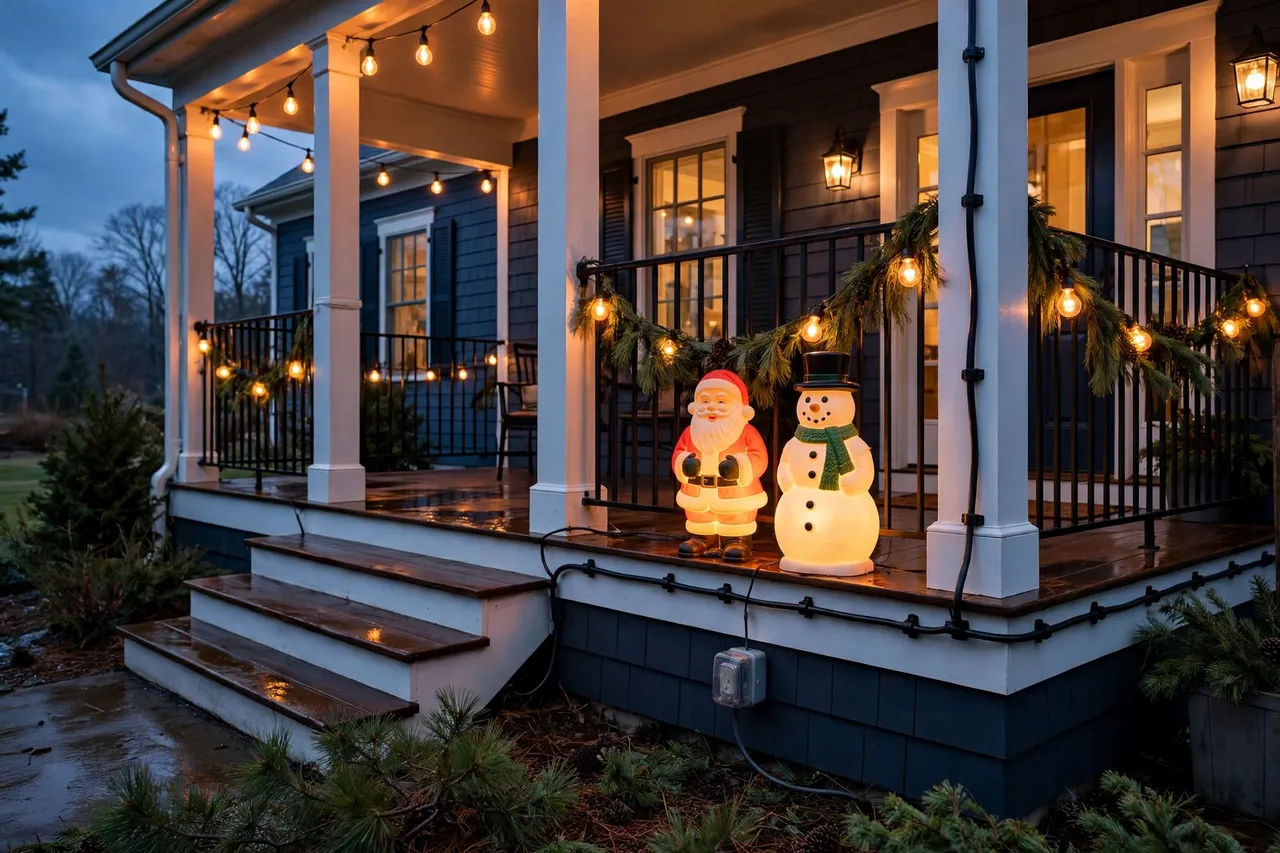
Old decor looks best when it glows, but old wiring deserves respect. This section matters more than any styling tip in this guide, because a cracked cord can turn a pretty display into a real hazard. Check first, light second, every single year.
Start with a hands-on inspection before you plug anything in. Look at every inch of each cord for cracks, fraying, bare wire, loose plugs, and cracked sockets. Throw out any set with damaged wiring. Do not tape over a damaged cord and use it anyway. The U.S. Consumer Product Safety Commission gives the same advice: check each set of lights, new or old, for broken or cracked sockets, frayed or bare wires, or loose connections, and throw out damaged sets. Read their full holiday safety guidance beside this section in the CPSC holiday decorating safety guide.
Use only lights and cords rated for outdoor use outside, and plug them into a ground-fault circuit interrupter (GFCI) protected outlet or a portable GFCI. The CPSC also stresses this point: check labels to confirm outdoor certification, and use a GFCI-protected receptacle for outdoor lights. Keep plugs and connections out of puddles and standing water, and use covers made for outdoor connections where rain or snowmelt can reach them.
Many vintage light strings were made for indoor use only, so never assume an old string is safe outside just because it still lights up. The safest way to keep the vintage look is to keep the old plastic figure and give it new, outdoor-rated lighting: a modern outdoor-rated cord set and warm white or warm-colored LED bulbs in the old C7 or C9 shape. LEDs run cooler than old incandescent bulbs, which also protects aging plastic from heat damage.
Do not rewire old lights yourself unless you truly know the work. Rewiring calls for the right outdoor-rated parts, proper strain relief, and current safety standards. When in doubt, hire a licensed electrician, or retire the old string to display-only use and light the figure with a new outdoor-rated set instead. A display-only piece still looks lovely on a porch by day, and it costs you nothing in risk.
Finally, never overload an outlet or a cord. Follow the maker’s limit on how many strings you can connect end to end, and spread a big display across more than one circuit when it grows. Put the whole display on an outdoor-rated timer, and switch it off when you leave home or go to bed. The CPSC’s holiday hazard demonstration repeats that same simple rule, and it is the easiest safety habit you can build. See their CPSC and NIST holiday decorating hazards page for the full list.
Weather, Wind, and Storage: Keep Vintage Pieces Going Year After Year
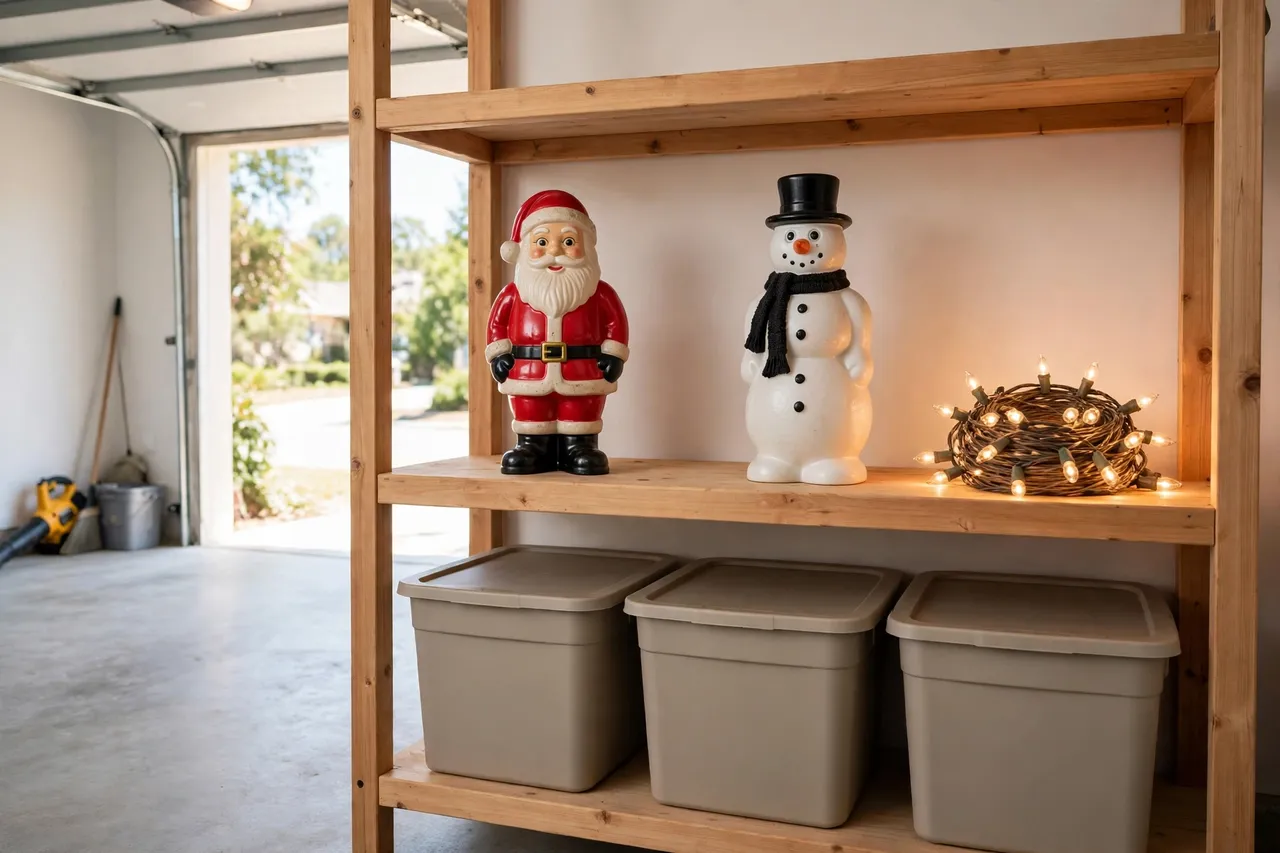
Vintage plastic handles normal winter weather well, but it hates three things: hard knocks, standing water, and wild wind. Stake tall figures so a storm cannot topple them, and keep cords off walkways where feet can snag them. Bring fragile or rare pieces inside during severe storms, and bring the whole display in if ice or heavy snow loads up on it.
After the season, clean each piece before you store it. Dirt left on plastic all year can stain it, and a damp figure stored in a cold garage can crack. Dry everything fully, wrap bulbs separately, and store figures where they will not stack under heavy boxes. Blow molds are light but bulky, so give them their own shelf or bin instead of piling weight on top of them.
Label each bin with what sits inside it. Next December, you will thank yourself when you can find the porch candles without opening six boxes. For storage ideas that protect your holiday gear, see our guide to Christmas tree storage bags, and apply the same label-and-dry rule to every vintage bin.
Mistakes That Spoil a Vintage Display
Most vintage displays go wrong in a few predictable ways, and each one is easy to avoid. First, mixing too many eras at once: a 1950s Santa, a 1980s neon-style sign, and a modern flashing display fight each other. Pick one era as your anchor and let the rest support it.
Second, using cool white light on warm vintage colors. Cool white bulbs make red and gold plastic look harsh and blue. Warm white or warm colors keep the nostalgic glow that drew you to vintage decor in the first place.
Third, hiding the house. If guests cannot see the door, the house number, or the walk, the display has gone too far. Vintage charm welcomes people in. It never blocks their way.
Fourth, trusting old cords without a check. Every vintage display should start with the inspection in the safety section above. A beautiful yard is not worth a damaged cord, and a five-minute check each year protects the whole season.
A Quick Safety Note
Please treat old wiring with care. Inspect vintage cords and sockets before each use, retire any cord that looks cracked or frayed, and use outdoor-rated replacements for anything that lights up outside. Never overload old circuits, and call a licensed electrician when you doubt a cord, an outlet, or a repair. Homes, wiring, and weather vary, so use this guide as general help, not as a substitute for qualified electrical advice.
Related Guides
If you liked this vintage look, these guides take the next step with you: Christmas decor exterior ideas for the whole yard, Christmas decor on the porch for porch layouts, Christmas decorations on the front door for the entrance, and Christmas tree storage bags for packing everything away safely.
Frequently Asked Questions
What are some classic retro outdoor Christmas decorations?
Vintage C7 and C9 string lights, plastic blow mold Santas, snowmen, and reindeer, wire reindeer, tinsel garlands, and simple evergreen wreaths with red bows are the iconic choices. Together, they give a warm mid-century yard glow without moving parts or flashing lights.
Are outdoor retro decorations weather-resistant?
Many vintage pieces are durable, but weatherproofing and safe placement still matter. Original blow molds handle rain and snow well, yet old plastic can crack in hard freezes or sharp knocks. Modern reproductions may offer improved durability, so shelter rare originals and use sturdy copies in harsh spots.
Can you safely rewire old Christmas lights for outdoor use?
Yes, with care, but do not treat rewiring as a casual weekend job. It calls for outdoor-rated parts and current safety standards, so consult a licensed electrician for rewiring to meet those codes. A simpler safe route is to retire the old string and light the figure with a new outdoor-rated set.
Where can I find original retro outdoor décor?
Try estate sales, thrift stores, flea markets, vintage resellers, and online marketplaces that specialize in mid-century collectibles, such as eBay and Etsy. Ask family first, since many homes still hold old yard figures in a garage or attic, and check each piece in good light before you buy.
What are the risks of using older lighting outdoors?
Older lights can pose fire and shock hazards when cords crack, insulation fails, or moisture reaches a connection. Always check wiring, use outdoor-rated cords and bulbs, and plug outdoor lights into GFCI-protected outlets for safety. Retire any set with frayed wires, cracked sockets, or a burning smell at once.
Bring the Old Glow Home This Christmas
Start small this weekend. Pick one glowing figure, one string of warm C9 bulbs, and one simple wreath, and set them where you will see them every evening. You will know at once whether the vintage look feels like home. Then add one piece each year, keep the colors warm, check the cords, and let your yard glow the way front yards used to.