To organize a bookshelf, take every book off the shelf, keep only the books you read, love, or use, and sort them by a system you can actually keep up. Then put heavy books low, daily reads at eye level, and leave a little open space on each shelf so the shelf stays easy to use.
That simple order matters more than any perfect look. A shelf that looks lovely in a photo but hides the book you want will fall apart in a week. A shelf built around how you find books will still look good months later, because you can put each book back without thinking hard about it.
This guide walks you through the whole job, step by step. You will sort your books, pick a system, arrange the shelves, style them without losing the system, and set up a short routine that keeps them tidy.
Start by Emptying the Shelf and Sorting What You Keep
Start with a clean slate. Pull every book off one shelf at a time, or off the whole bookcase if you have room to stack books on a table or the floor. You cannot judge what you own while books hide behind other books.
Wipe each shelf as you empty it. Dust gathers behind rows of books, and a quick wipe now saves you from moving full rows later. Check each shelf for wobble or sag as you go, and move heavy books lower if a shelf already bows in the middle.
Now sort the books into three piles. Keep the books you read again, use for reference, or truly love. Move the books that belong in another room, such as cookbooks that live better near the kitchen. Let go of books you will not read again, books you did not enjoy, and duplicates you do not need.
Be honest during this step, because it decides everything else. A shelf packed edge to edge leaves no room for new books, and it makes every later step harder. If you feel stuck, ask one plain question about each book: would I reach for this again, or am I keeping it out of guilt?
Bag the let-go pile right away. Donate books to a library, school, thrift store, or a friend who will enjoy them. When the pile leaves the room, your shelf gains real space, and the job feels lighter at once.
Sort by How You Actually Use Books
Before you shelve anything, group your keep pile by use. Put current reads together, favorites together, reference books together, and series together. This quick sort shows you how much room each group needs, and it often reveals the system that fits you best.
Keep series in reading order, and keep multi-volume sets together. A split series looks untidy, and it forces you to hunt across shelves for the next book. If a series spans two shelves, keep the order clear from left to right and top to bottom, so the next volume sits where your eye expects it.
Choose a Sorting System That Fits How You Find Books
The best system is the one you will still use in three months. Ask yourself how you look for a book. Do you think, “I want a mystery tonight”? Do you think of the author first? Or do you picture the color of the spine? Your answer points to your system.
Many readers mix systems, and that mix often works best. You can sort by genre first, then by author inside each genre. You can sort by color inside one display shelf and by author everywhere else. The main rule stays the same: one clear rule per section, so you always know where a book belongs.
Organize by Genre or Subject
Genre sorting groups similar books together, so you can browse by mood or topic. Keep fiction apart from nonfiction, then split each side into smaller groups that make sense to you, such as mysteries, history, cookbooks, travel, and books about your work or hobbies.
This system suits most readers, because it matches how people choose their next book. It also makes a wrongly shelved book easy to spot. A cookbook sitting among novels stands out at once, so you can fix it in seconds.
Some books fit two genres, and that overlap causes trouble only if you let it. Pick the one shelf where you would look for that book first, and keep it there every time. Consistency beats perfection here.
Organize by Author
Author sorting lines books up alphabetically by the author’s last name. This system suits readers who search for a specific title or reread favorite writers. It also works well for large collections, because the alphabet gives every new book a clear home.
New books can shift a row, so leave a little space at the end of each letter group when you can. That gap saves you from shifting a whole shelf each time you bring one book home. Within an author’s work, keep books in the order you read them or in publication order, and keep series together.
Organize by Color
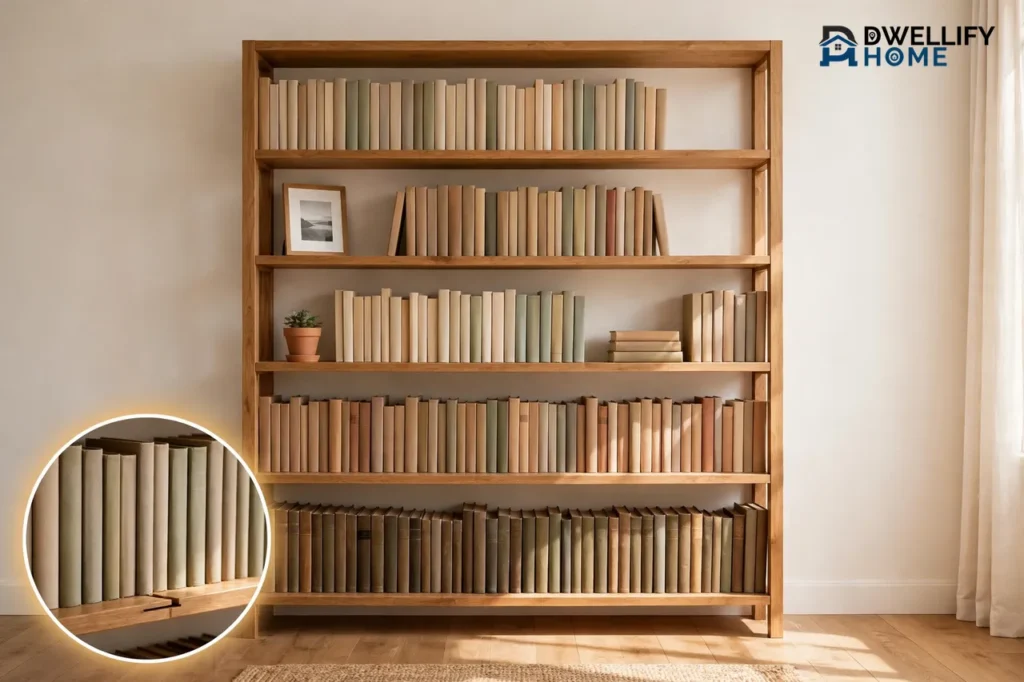
Color sorting groups spines into color families, and it can turn a plain shelf into a striking display. It suits visual readers and shelves that serve as room decor. Soft color groups often look calmer than a strict rainbow, especially on a tall bookcase.
Color alone makes specific titles harder to find, because color tells you nothing about the story inside. If you love the look, use color as a second layer: sort by genre or author first, then arrange spine colors inside each group. You keep the beauty and you keep the book easy to find.
Organize by Size or How Often You Use Books
Size sorting groups tall books together and small paperbacks together. It makes shelves look neat, and it wastes less vertical space, because tall books do not force a whole row of short books to sit under a high shelf. It suits shelves with fixed heights, where a tall art book simply will not fit everywhere.
Sorting by use works just as well for busy readers. Put books you reach for every week at eye level, books you use now and then above or below, and books you rarely open on the highest or lowest shelves. Your hand should find a daily read without a step stool or a deep bend.
Reading status gives you one more useful layer. Keep a small section for books you plan to read next, apart from books you already finished. New books stay visible instead of vanishing into the main collection, and you always know what to pick up next.

Compare the Sorting Systems Before You Commit
Use this quick comparison to pick your main system. Read the “watch out for” column before you commit, because each system trades one strength for one weakness.
Sorting system comparison for a home bookshelf.
| Sorting system | Best for | How it works | Watch out for |
|---|---|---|---|
| By genre or subject | Browsing by mood or topic | Group mysteries, cookbooks, biographies, and similar books together | Some books fit more than one group |
| By author | Finding a specific title fast | Arrange books alphabetically by the author’s last name | New books can shift a whole row |
| By color | A visual display shelf | Group spines into color families | Specific titles take longer to find |
| By size | Neat rows on fixed shelves | Group tall books together and small books together | Series and topics may split apart |
| By use or reading status | Daily reading habits | Keep current reads at eye level and to-read books apart | You must update the sections as you finish books |
This table is the article’s quick-reference module: pick one row as your main system, then borrow a second row only where it helps. If two systems pull a section in opposite directions, the main system wins, and the second system stays a light touch inside it.
Public Storage gives the same practical advice in its own guide: match the system to how you search, and combine approaches when one system alone does not fit your whole collection. You can read its method comparison beside the claims in this section at Public Storage’s guide to organizing a book collection.
Put the Books Back in a Layout That Works
Now map the bookcase before you fill it. Heavy books belong low, because weight down low keeps the bookcase steady and keeps you from lifting heavy volumes from a high shelf. Angi makes the same safety point in its bookshelf guide: heavy books on lower shelves help stop books from falling and keep the display stable, and you can read that advice at Angi’s bookshelf organization tips.
Daily reads belong between knee and eye level, where your hand reaches without strain. Rarely used books, seasonal titles, and sentimental volumes you seldom open belong high up or on the lowest shelf. If your shelves adjust, set the heights now: tall bays for oversized books, standard bays for hardcovers, and tighter bays for paperbacks.
Follow these steps in order, and work one shelf at a time:
- Place the heaviest group on the bottom shelves, with the largest book at the bottom of any stack.
- Fill the eye-level shelves with the books you reach for most, in your chosen system.
- Place oversized books flat or on an adjustable shelf, spine facing out, so they do not force tall gaps elsewhere.
- Leave a small gap at the end of each busy row, so new books fit without a full reshuffle.
- Step back after each shelf, and check that you can read the spines and pull one book out without toppling its neighbors.
- Anchor a tall bookcase to wall studs with the hardware made for it, especially in a home with kids or pets, before you call the job done.
Keep book spines facing out for every book you actually use. Spine-in rows look calm in photos, but they hide titles and turn every search into a guessing game. Save a spine-in look, if you like it at all, for one small decorative shelf, not for books you read.
Align spines near the front edge of the shelf, and keep rows straight but not jammed tight. A row packed too tight bends covers when you pull a book out, and a row packed too loose leans and falls. A snug row with a finger-width of play at the end holds its shape best.
Make the Shelves Look Good Without Losing the System
Good looks and good order can share one shelf. The trick is to let the books lead and let decor play a small, supporting role. When decor crowds the books, the shelf stops working as a shelf, and it starts working as a display cabinet that happens to hold books.
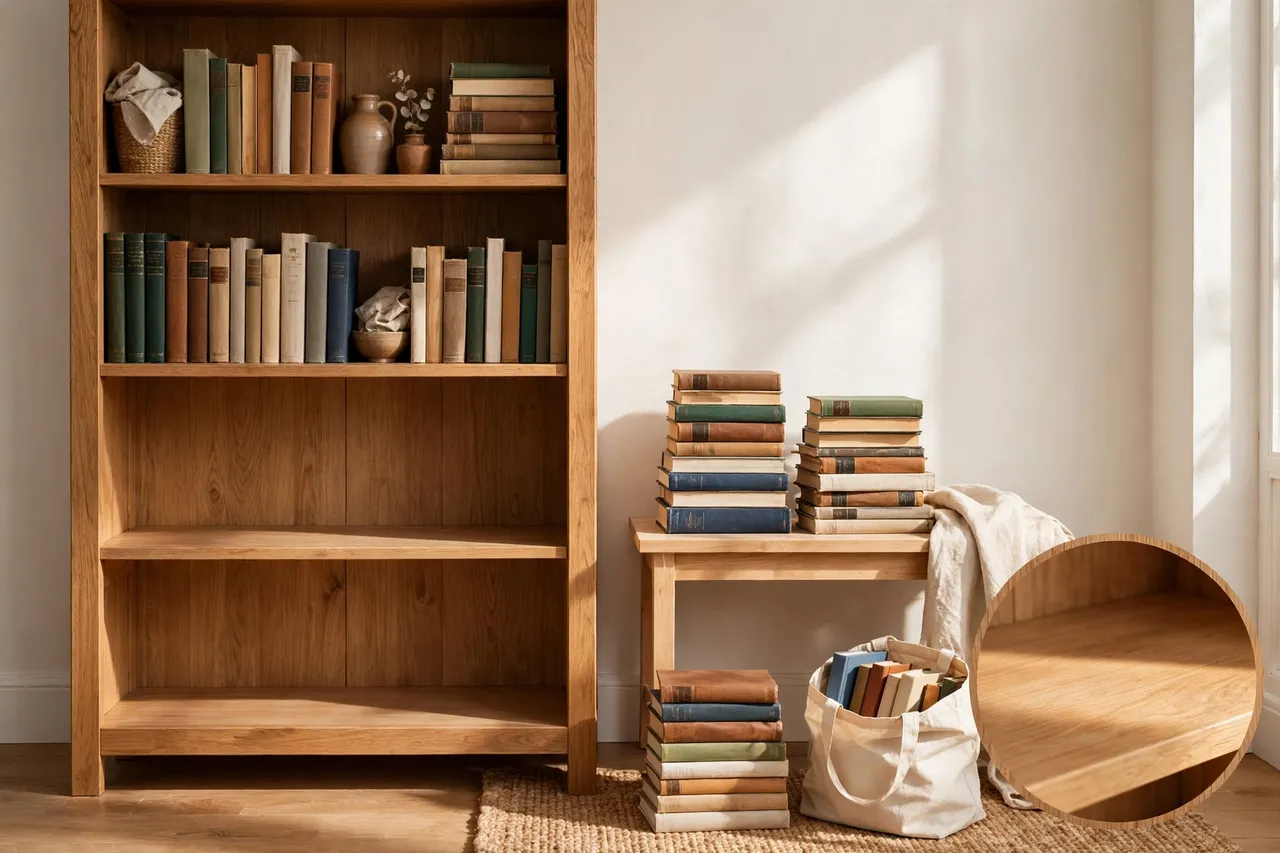
Mix vertical rows with a few horizontal stacks. Stand most books upright, because upright spines stay easy to scan. Then add one low horizontal stack per shelf where the eye needs a break. Stack the largest book at the bottom and the smallest at the top, and keep the stack low enough that you can still lift the top book with one hand.
Leave breathing room on purpose. Do not fill every inch. A small empty stretch between groups gives your eye a rest, gives new books a home, and keeps you from knocking books over when you reach for one. If a shelf looks crowded, the answer is usually fewer books on that shelf, not a tighter squeeze.
Add decor in small groups, not in a scattered line. One plant, one framed photo, or one simple object per shelf usually beats five small trinkets. Repeat a color or material from the room on two or three shelves, so the bookcase feels tied to the room instead of floating apart from it.
Place breakable or heavy decor low, never high where a fall could hurt someone or break the piece. Keep small objects off shelves where kids reach, and keep plants where drips will not soak book covers. A stack of books makes a steady riser for one small object, but it should never hide the titles behind it.

Organize a Bookshelf With a Lot of Books
A large collection needs structure more than style tricks. Start by splitting the collection into clear groups, and give each group its own shelf or part of a shelf. When groups blur together, a large shelf turns back into a wall of spines with no clear order.
Keep multi-volume sets together, and place the heaviest runs low and near the center of the bookcase, where the case stands strongest. If a wide shelf sags, move some weight to a lower shelf, and check that the shelf sits fully on its supports at both ends. A sagging shelf is a warning, not a style choice: lighten it before it bends further.
Break long rows with horizontal stacks and breathing room. A stack every few feet of shelving gives the eye a resting place, and it gives you a spot to set a book you just finished. If you want color harmony without losing the system, sort by genre first, then shade spine colors gently inside each genre. You still find books fast, and the wall reads as one calm display.
Label large collections in a quiet way. A small label under a shelf lip, with a word like “Reference” or “Classics,” helps family members put books back in the right place. Keep labels hidden from straight-on view when you can, so the shelf still looks like a home shelf, not a library aisle.
When books still overflow after an honest edit, rotate them. Keep active reads and favorites on display, and move the rest to a second spot in the home for a season. Swap a few titles back in when your reading changes. Rotation beats cramming, because a crammed shelf hides books and bends shelves, while a rotated shelf keeps every book reachable in its turn.

Small Shelves, Shared Shelves, and Kids’ Books
Small shelves reward strict choices. Pick one system for the whole shelf, keep only books that earn the space, and use the vertical height well: tall books at one end, paperbacks grouped together, and one small stack to break the row. A small shelf looks calm when it holds fewer books with clear gaps, not when it holds every book you own.
Shared shelves need clear zones, because one person’s system rarely matches another’s. Give each reader a shelf or a marked section, and agree on one rule for shared books: they return to their home shelf after reading. A shared shelf stays tidy when everyone knows the boundary, and it falls apart when books drift into the nearest gap.
Make Kids’ Books Easy to Reach and Easy to Return
Kids reach low shelves first, so put picture books and board books where small hands can reach them without climbing. Place chapter books just above, and keep breakable decor out of reach. When kids can see covers and pull books out safely, they put books back more often, because the job feels simple instead of fiddly.
Sort kids’ books by a rule kids can follow. Group by series, by size, or by a simple color cue on the shelf edge, and keep the rule to one idea. A system a child can explain in one sentence is a system a child can keep.
Use One Shelf as Your Working Shelf
Give one eye-level shelf a daily job. Keep your current read, the next book in line, a bookmark, and a small notebook there. Because your hand visits that shelf every day, it stays tidy on its own, and it stops new books from piling on tables and chairs around the room.
When a new book arrives, it goes to the working shelf first, not straight into the main rows. Once you finish it, shelve it in its true group, or pass it on. This one habit stops the most common shelf problem: new books landing wherever a gap opens.
Keep It Organized With a Simple Routine
A bookshelf stays organized through small, regular touch-ups, not through rare big overhauls. Build a routine you can finish in minutes, and tie it to something you already do, such as finishing a book or tidying the living room.
- Each week, return stray books to their groups, and straighten any leaning rows.
- Each month, check the working shelf, and shelve or pass on finished books.
- Each season, pull one shelf at a time, dust it, and remove books you no longer need.
- Each time a new book arrives, give it a home at once, instead of stacking it on top of a row.
- Each time a shelf starts to sag or crowd, move weight lower or rotate books out before the problem grows.
When a shelf slips back into mess, do not redo the whole bookcase. Find the one broken rule, and fix that rule alone. Most slips come from one cause: new books with no home, a group that outgrew its shelf, or decor that slowly took over book space. Fix the cause, and the shelf recovers fast.
If books keep landing in the wrong group, your system may need a simpler rule. Merge two tiny groups into one broader group, or move a group to a shelf with more room. A system that needs constant explaining is too complex for daily life, and a simpler system you actually follow beats a clever system you abandon.
💡 Practical Home Tip: When you finish a book, put it back the same day, while you still remember where it belongs. A book that sits on a table for a week often starts a pile, and a pile soon spreads to the shelf beside it. One book back in place each day keeps the whole bookcase calm with almost no effort.

Related Guides
How to Organize a Small Apartment · Under Stairs Storage Ideas · Decluttering Checklist: A Room-by-Room Guide for Your Whole Home
Frequently Asked Questions
What’s the best way to organize if I’m overwhelmed?
Pick one system, such as genre or size, and commit to it for a week. Do not try to perfect color, size, and author order at the same time. Once that base sits in place, refine one shelf at a time, and let the system grow steadier as you live with it.
Should books be organized by color or author?
Organize books by author when finding specific titles matters most, because the alphabet points straight to the book you want. Organize books by color when your shelves serve mainly as a visual display. Different sections of one collection can use different systems, so you do not need one rule for every shelf.
How do I organize a bookshelf with a lot of books and still make it attractive?
Divide books by category, keep heavy sets low, and break long rows with a few horizontal stacks. Leave breathing room between groups, so the wall does not feel dense. Sort by genre first, then shade colors gently inside each genre, and the shelf stays both findable and good to look at.
What is a simple book organization system?
Group books by genre, keep each series together in reading order, and keep a separate section for books you plan to read next. This system stays easy to update as your collection changes, because each new book has one clear group, and your next read never gets lost among finished books.
How do you organize too many books?
Sort books into groups such as reading now, favorites, reference books, and books to rotate out. Keep the active groups on display, and move the rest to a second spot in the home for a season. Then edit honestly, and pass on books you will not read again, so the shelf keeps room to breathe.
A Calm Shelf You Can Keep
An organized bookshelf does not need a perfect system. It needs a clear system, heavy books low, daily reads close at hand, and a little space left over. Start with one shelf, sort with honesty, and put each book where your future self will look for it.
When you finish, step back and pull out one book you love. If you can find it in seconds and slide it back without a struggle, your system works. Keep that test in mind each time a new book arrives, and your shelf will stay organized long after today’s tidy-up.