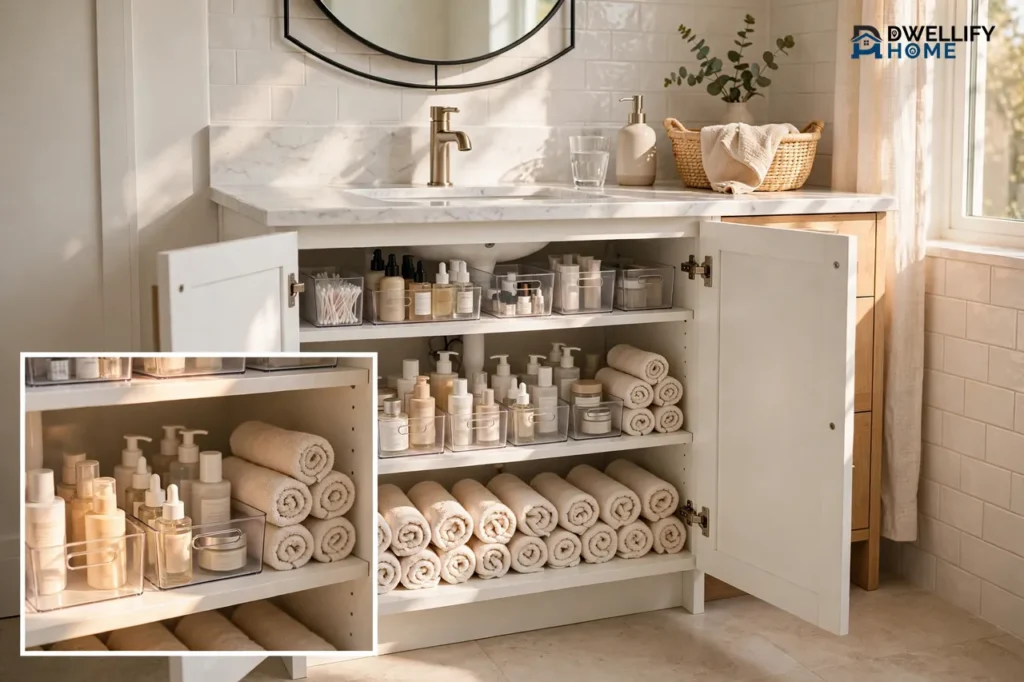
Organizing bathroom cupboards starts with one clear job for each cupboard. Empty the cupboard, keep only what you use there, and group what stays into small zones, such as daily care, hair care, first aid, and backups. Then use bins, labels, and the inside of the door so each item has one home you can reach without digging.
This system works for the cabinet under the sink, the medicine cabinet, the vanity, and a linen cupboard. You do not need fancy organizers or a full remodel. You need a plan that fits your pipes, your shelves, and your daily routine, and a quick reset habit that keeps it neat.
Start With an Empty Cupboard, Not New Bins
Do not buy bins first. Bins bought before you sort often fit nothing, and they hide the real problem: too many items for the space. Start with one cupboard at a time so the job stays small and you can finish it in one sitting.
Take everything out of that cupboard. Wipe the shelves and the floor of the cabinet, and check for damp spots, drips, or a musty smell while it sits empty. A damp spot under a sink needs attention before you put anything back, because wet bins and bottles only hide a leak.
Now sort what you removed into four groups:
- Keep here: items you use in this bathroom, in this cupboard.
- Move: items that belong in another room or another cupboard.
- Backups: unopened extras you will use soon.
- Remove: expired products, empty bottles, dried-up tubes, and items you have not used in a year.
Check dates as you sort. Toss expired medicines and skin care products, and set expired or unwanted medicines aside for safe disposal instead of putting them back in the cabinet. The U.S. Food and Drug Administration (FDA) says the best option for most unused or expired medicines is a drug take-back location or a prepaid drug mail-back envelope, and its guide to disposal of unused medicines explains the home options when no take-back site sits nearby.
Be honest about duplicates. Three half-used bottles of the same shampoo do not give you more choice. They steal shelf space. Keep the one you use, finish it, and then open the next one. That one habit alone frees more room than most new organizers.
Set Up Zones Inside Each Bathroom Cupboard
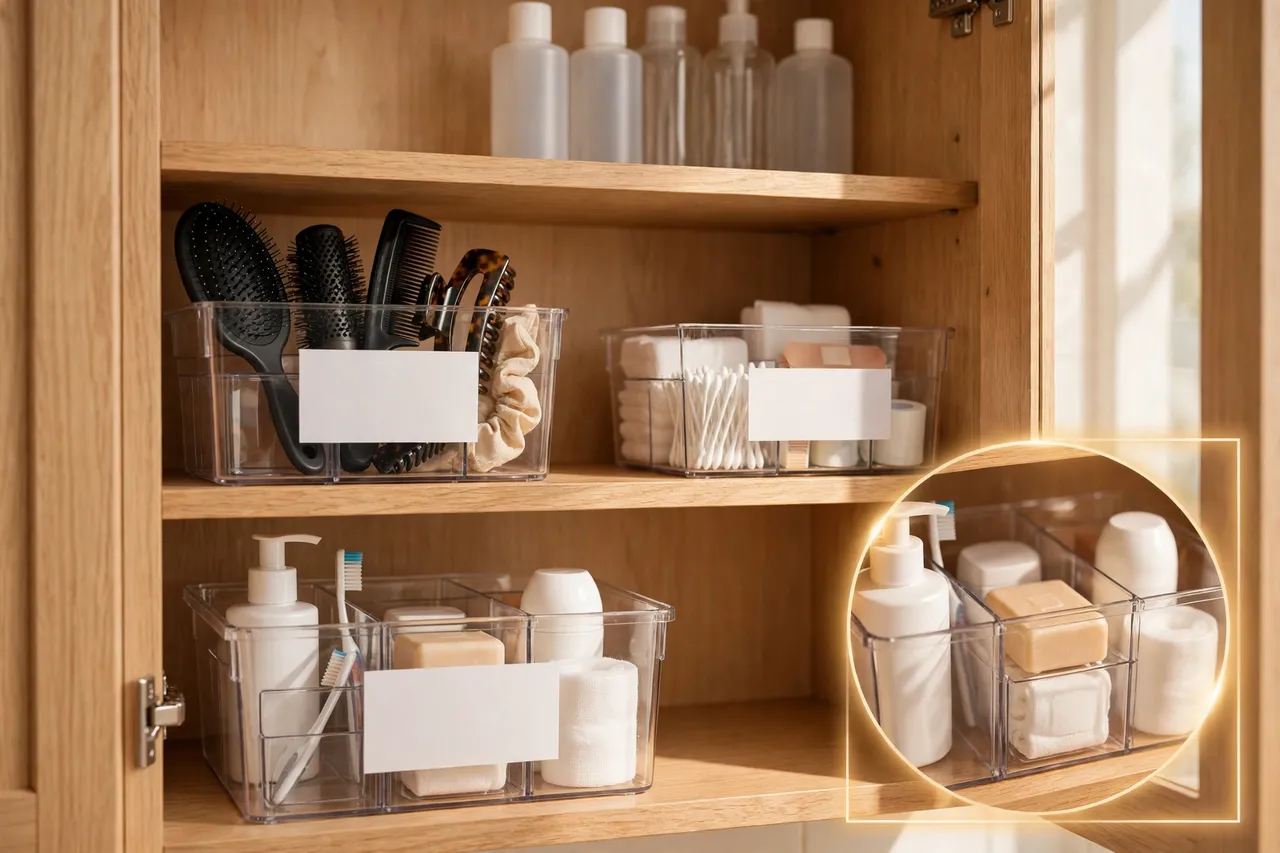
A zone is a small group of items you use for one job. Zones stop the classic bathroom problem: one big pile where toothpaste, hair tools, and cleaning spray all fight for the same shelf. When each zone has its own bin or shelf, you grab what you need and put it back in the same place.
Most bathrooms need only five or six zones. Pick the ones that match your home:
- Daily care: toothbrush, toothpaste, face wash, and deodorant.
- Skin care: moisturizer, sunscreen, and serums you use each day.
- Hair care: brush, styling tools, and hair products.
- First aid: bandages, ointment, and pain relief.
- Cleaning: bathroom cleaner, cloths, and scrub brushes.
- Backups: unopened refills, kept apart from daily items.
Put daily zones at eye level or at the front of the cupboard. Put backups and rarely used items at the back, on a high shelf, or in a separate cupboard. That one rule saves you from moving five bottles every morning just to reach your toothpaste.
Give each person their own zone in a shared bathroom. One small bin per person ends most arguments about borrowed products and mixed-up bottles. Label each bin with a name or a simple word, such as “Mom,” “Dad,” or “Kids,” and keep shared items, like hand soap, in their own shared zone.
If your bathroom feels tight, the zone idea still works. It just works on a smaller scale. For more ideas that fit narrow spaces, read Narrow Bathroom Storage Ideas: Best Slim Cabinets, Shelves and Carts, which covers slim cabinets and carts that suit small bathrooms.
Organize the Cabinet Under the Sink
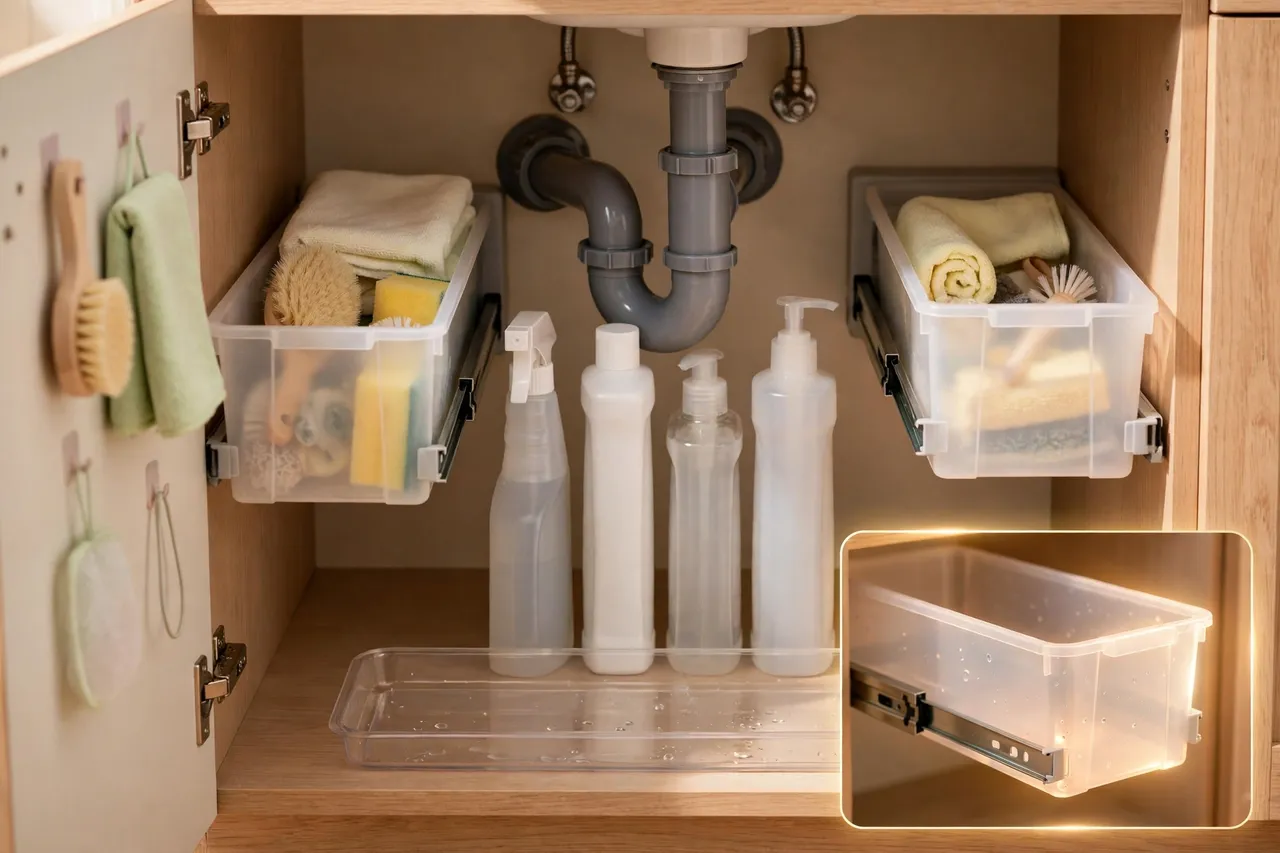
The cabinet under the sink causes the most trouble, because pipes cut the space into odd shapes. Do not fight the pipes. Work around them, and keep the plumbing easy to reach in case you need a repair.
Measure before you buy anything. Note the width on each side of the drainpipe, the depth of the cabinet, and the height from the cabinet floor to the underside of the sink. An organizer that looks perfect online fails fast when it cannot fit around your trap.
Use this step-by-step plan:
- Empty and clean the cabinet. Wipe the floor, check for leaks, and let it dry.
- Divide the space into left, center, and right zones. The pipes form the center, and the two sides hold most of your storage.
- Put a drip tray or washable liner on the floor. It protects the wood and makes a slow leak easy to spot.
- Place tall bottles in the center. Tall cleaning bottles and spare toilet paper fit well where the cabinet runs tallest.
- Use pull-out bins or a U-shaped shelf on the sides. Pull-out storage brings the back of a deep cabinet to you, so nothing hides in the dark corner.
- Hang small items on the door. A door rack holds sponges, brushes, or small bottles without drilling into the cabinet.
Choose wipeable bins here, not cardboard or fabric. Under-sink cabinets sit close to water, so plastic bins and trays clean up fast after a spill. Keep cleaning products in a lidded bin of their own, apart from skin care and hair products, so a leak cannot spread across everything.
Let hot hair tools cool fully before you store them in the cabinet. A heat-proof pouch or a tall upright holder keeps a dryer or flat iron apart from bottles and cloths. Never wrap a cord tightly around a hot tool, and never store a tool on top of cleaning sprays.
Organize the Medicine Cabinet
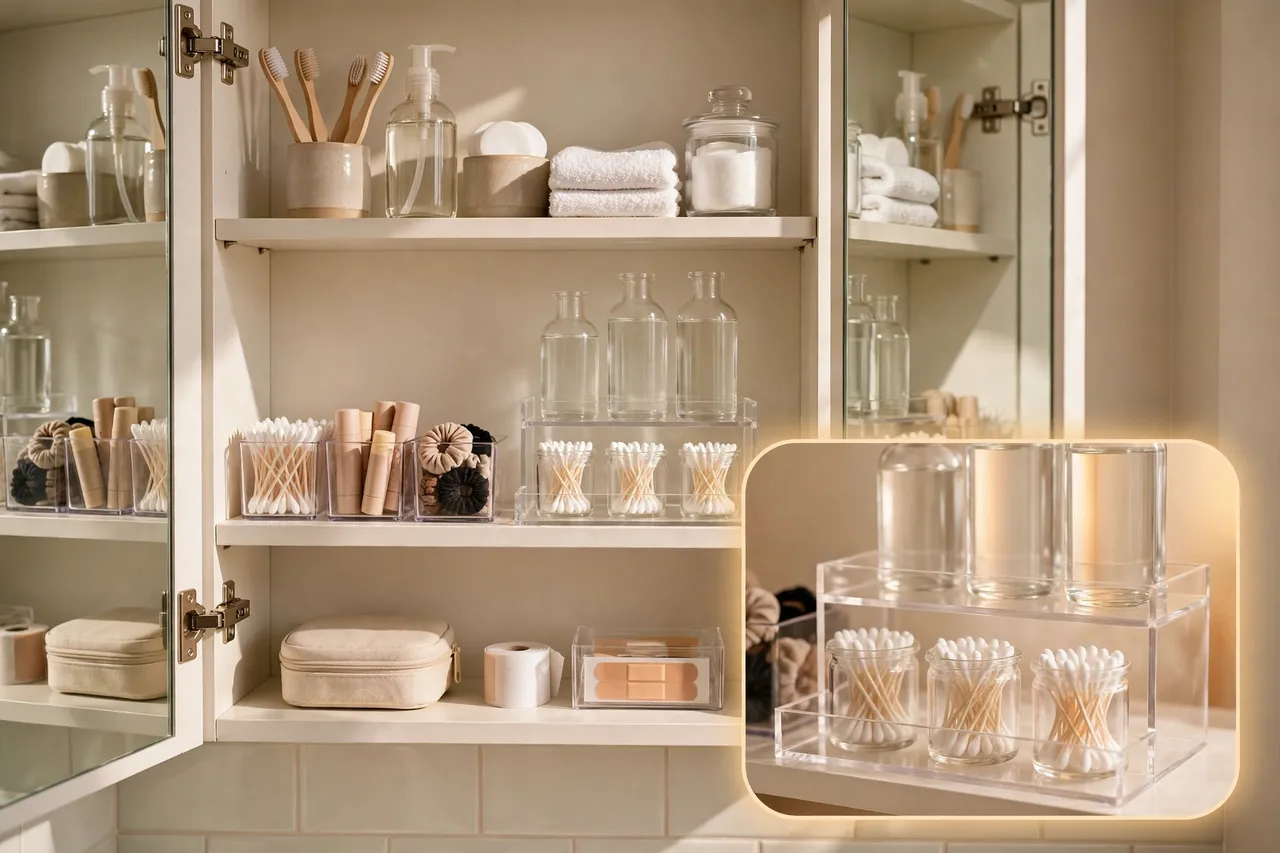
The medicine cabinet is not the same as the vanity below it. The medicine cabinet holds small, daily items at eye level. The vanity holds larger items below. When you mix the two jobs, both cupboards turn messy.
Empty the medicine cabinet one shelf at a time, and check dates as you go. Toss expired products, and move anything you no longer use out of the cabinet. Keep medicines in their original labeled containers, with their instructions and expiry dates easy to read. Never pour medicines into matching jars, because you lose the label, the dose, and the expiry date.
Set up medicine cabinet zones by how often you use them:
- Top or eye-level shelf: daily items, such as vitamins you take each morning, contact lens supplies, and daily skin care.
- Middle shelf: items you use a few times a week, such as nail tools, tweezers, and grooming supplies.
- Lower or side shelf: first aid and as-needed items, such as cold medicine and bandages, kept together in one small kit.
Use small clear bins for tiny items. Cotton swabs, lip balms, hair ties, and bobby pins vanish fast on an open shelf. A small bin keeps each group together, and clear walls let you see when you run low. Add a tiered riser on a tall shelf so short jars sit in front and tall bottles sit behind them, with every label visible.
Use the inside of the door with care. A magnetic strip holds tweezers, nail clippers, and bobby pins where you can see them. A slim door rack holds small tubes. Check that the door still closes fully and nothing hits the shelves when you swing it shut.
Keep daily medicines apart from other household members’ medicines. A mix-up in a shared cabinet can cause real harm, so give each person a labeled bin or shelf. If you plan to replace the cabinet itself, Bathroom Plastic Cabinet With Mirror: Sizes, Lights, Install Tips explains sizes and features to check before you buy.
Organize the Vanity and the Linen Cupboard
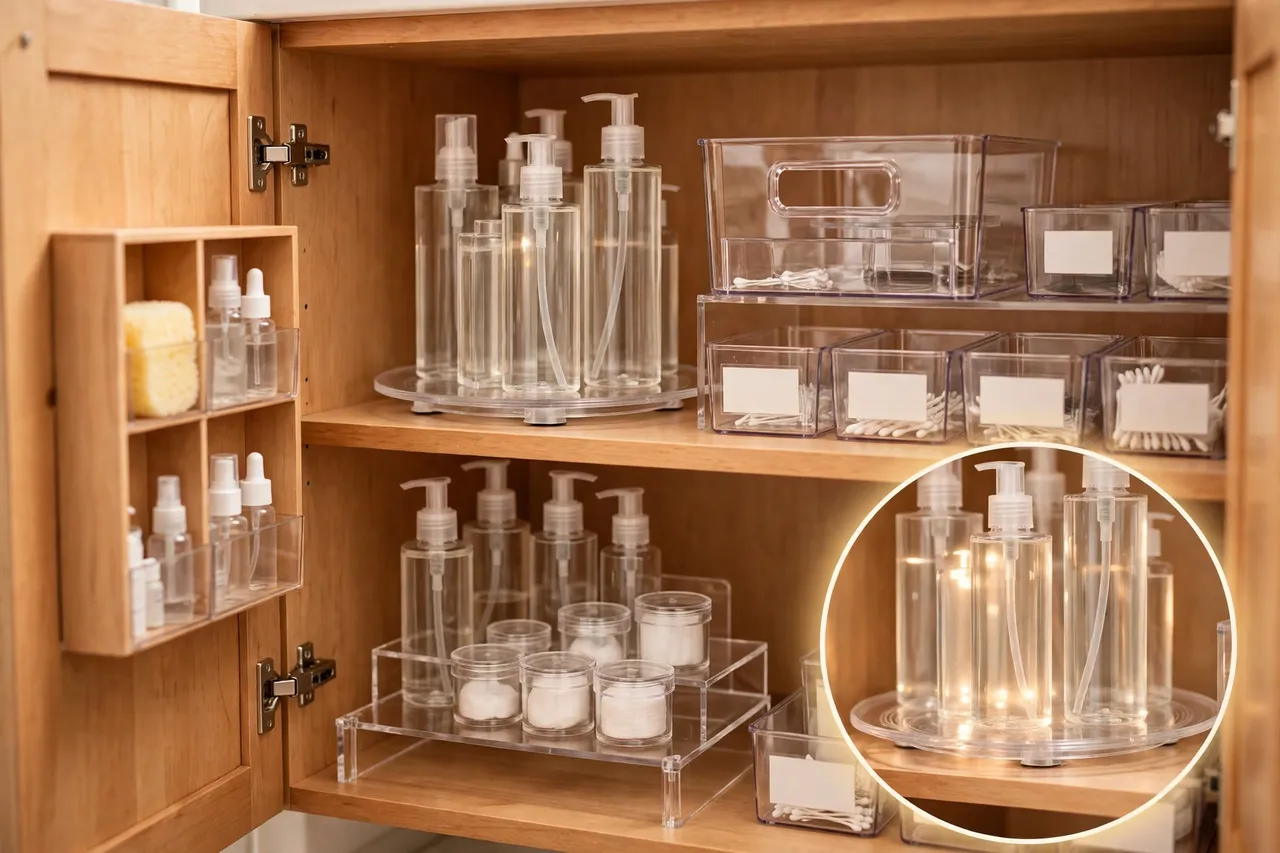
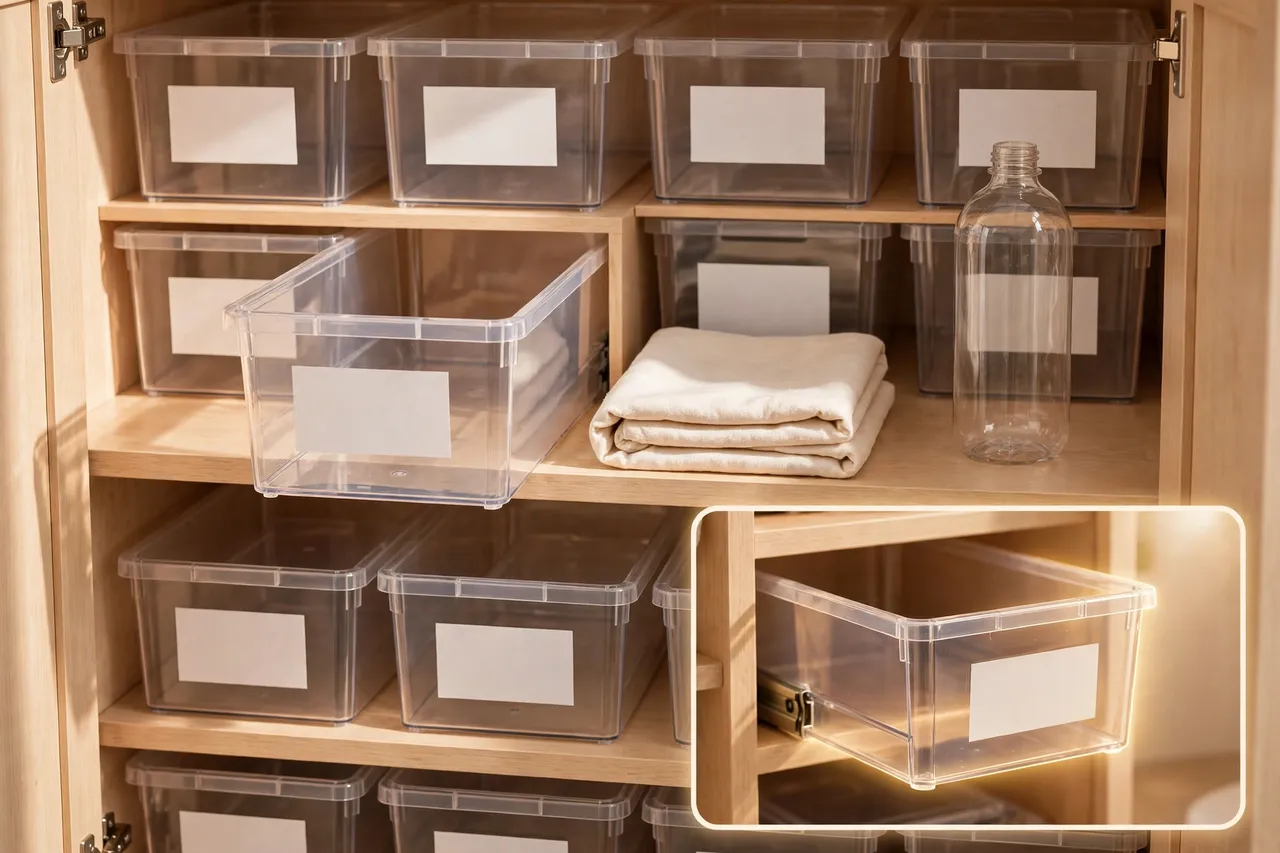
The vanity cabinet usually sits deeper and darker than the medicine cabinet, so it needs the pull-out trick. Treat a deep vanity like a drawer: use clear bins with handles that you can pull all the way out, take what you need, and slide back in. A turntable also works well in a deep corner, because you spin to the bottle you need instead of reaching past five others.
Sort the vanity by task, not by size. Hair tools go in one tall bin, skin care refills in another, and cleaning supplies in a third. Keep daily items at the front and backups at the back. If you must store a spare towel in the linen cupboard, roll it and place it in its own zone, apart from toiletries, so it stays clean and dry and does not bury smaller items.
The linen cupboard follows the same zone rule, with one extra rule: keep the items you use most at arm height. Daily towels and washcloths belong at the middle shelves. Bulky seasonal items and large backup packs belong high up or low down. Label each shelf or bin, such as “Hand towels,” “Bath towels,” and “Backups,” so anyone in the house can put laundry away in the right place.
Before you change a vanity, check its size and layout. 60 Inch Bathroom Vanity Single Sink: Best Fit, Storage, Layout Tips shows how size and layout shape the storage you actually get inside the cabinet.
Use Bins, Labels, and Door Space That Actually Stay Put
Bins work only when they fit the shelf and the items inside them. Measure each shelf, then pick bins that leave a little room on each side so you can lift them out. A bin that wedges tight against the cabinet walls turns into a fixed box you cannot clean behind.
Pick the right bin for each job:
| Job | Best choice | Why it works |
|---|---|---|
| Small loose items | Small clear bins | You see everything at a glance |
| Deep cabinets | Handled pull-out bins | You reach the back without digging |
| Tall bottles | Turntable | You spin to the bottle you need |
| Short jars on tall shelves | Tiered riser | Short items stay visible |
| Under the sink | Wipeable plastic bins | Spills wipe up fast |
Label every bin with a short, plain word. “Hair,” “First aid,” “Backups,” and “Cleaning” beat long, clever labels, because anyone in the house can read them fast and put items back in the right place. Use waterproof labels in damp spots, such as under the sink, so the words stay readable after a splash.
Use door space for light items only. Door racks, hooks, and magnetic strips suit small tools, sponges, and small bottles. Heavy bottles pull doors out of shape and fall when you open the door fast, so keep heavy items on shelves instead.
Do not overfill a bin. A bin should close, slide, and lift with ease. When a bin overflows, the zone fails, because items spill into the next zone. Split an overflowing bin into two zones, or move its backups to another cupboard.
Renters can use this whole system without drilling or gluing anything. Freestanding bins, turntables, risers, and over-door racks move with you when you leave, and they leave no holes to patch.
Keep Medicines and Cleaning Products Safe
Safety shapes where things go, not just how neat they look. Cleaning products and medicines belong in closed containers, in their original labels, and out of reach of young children. A latch alone does not make a low cabinet safe, so move the riskiest items up high when children visit or live in the home.
The U.S. Consumer Product Safety Commission (CPSC) recommends that you keep all household chemicals and medicines locked up, out of sight, and out of reach of children, and that you keep them in their original child-resistant containers with the caps closed securely after each use. Its poison prevention guidance for new parents also gives the Poison Help number, 1-800-222-1222, to call at once in case of a poisoning.
Follow these safety rules inside your cupboards:
- Store medicines and cleaning products in separate bins, never mixed together.
- Keep products in their original containers, with labels facing forward.
- Move cleaning sprays and medicines to a high, locked cabinet when young children can reach the bathroom cupboards.
- Never store medicines or cleaning products in food or drink containers.
- Check expiry dates every few months, and dispose of expired medicines through a take-back option where you can.
Heat and dampness also matter. A bathroom runs warm and humid, so check product labels for storage advice, and move heat-sensitive items to a cooler cupboard when the label calls for it. A medicine cabinet above a steamy shower is a poor home for items that need a cool, dry place.
For routine topics like this one, no long disclaimer belongs in the body. Homes, products, and labels vary, so always follow the label on your own products, and ask a pharmacist or a qualified professional when a storage question affects health or safety.
Keep It Organized With a Five-Minute Reset
An organized cupboard stays organized only when putting things back feels easy. Build a tiny reset habit into a routine you already do, such as your weekly bathroom clean.
Once a week, take two minutes per cupboard. Pull out empties, toss dried-up products, and slide each bin back into its zone. Once a month, take five minutes to check expiry dates and move backups forward. Once a season, empty one cupboard fully and wipe it down, so grime and small leaks never build up unseen.
Use the one-in, one-out rule for backups. When you open a new bottle, finish or toss the old one. When you buy a backup, it goes in the backup zone, not on top of your daily items. That rule stops the slow stockpile that fills most bathroom cupboards.
If a cupboard slips back into chaos, do not reorganize the whole bathroom. Fix one zone, such as the daily care bin, and use it for a week. A small win rebuilds the habit faster than a full-day overhaul, and the rest of the system usually follows. For a wider look at habits that keep a whole home tidy, see Home Organization: 12 Ideas That Make Everyday Spaces Easier.
Related Guides
Towel Storage for Small Bathroom: Smart Ideas That Actually Fit · How to Declutter Your Kitchen, Zone by Zone
- 10 Easy Home Organization Tips That Make Everyday Life Simpler
- White Oak Bathroom Cabinets: Sizes, Styles & Smart Buying Tips
Frequently Asked Questions
How do you organize a messy vanity?
Empty the vanity fully, clean it, and toss expired or unused products first. Then group what stays by task, such as hair care, skin care, and first aid, and place each group in its own bin. Put daily items at the front, backups at the back, and use pull-out bins in deep cabinets so nothing hides out of reach.
How do you organize under the bathroom sink step by step?
Empty the cabinet, clean it, and check for leaks while it sits bare. Measure the space on each side of the pipes, then divide it into left, center, and right zones. Add a drip tray, use pull-out bins or a U-shaped shelf on the sides, place tall bottles in the center, and hang light items on the door.
What is the best way to organize under a bathroom sink?
Work around the pipes instead of fighting them, and measure before you buy any organizer. Use wipeable pull-out bins or a two-tier shelf that fits around the plumbing, group items in labeled bins, and keep daily items in front with backups behind. A drip tray on the floor protects the cabinet and makes leaks easy to spot.
How can I organize my small bathroom storage effectively?
Use small boxes or bins to separate items like makeup, toiletries, and grooming supplies, and give each group its own zone. Use clear containers or labels so you can spot contents fast, and use vertical space with risers or stackable bins. Keep only daily items in the cupboard, and move extra backups to another storage spot.
What should I do about cleaning supplies in the bathroom?
Keep cleaning supplies in their own lidded bin, apart from skin care, hair products, and medicines. Store them in their original labeled containers, out of reach of young children, and move them to a high locked cabinet when children can reach the bathroom cupboard. Keep cloths and scrub brushes with them so cleaning tools stay in one place.
Start with one cupboard today, even if you only have twenty minutes. Empty it, sort it, give it zones, and label one bin. That single neat cupboard makes the next one easier, and soon your whole bathroom works the way it should: everything in reach, nothing buried, and no morning hunt for the item you need.