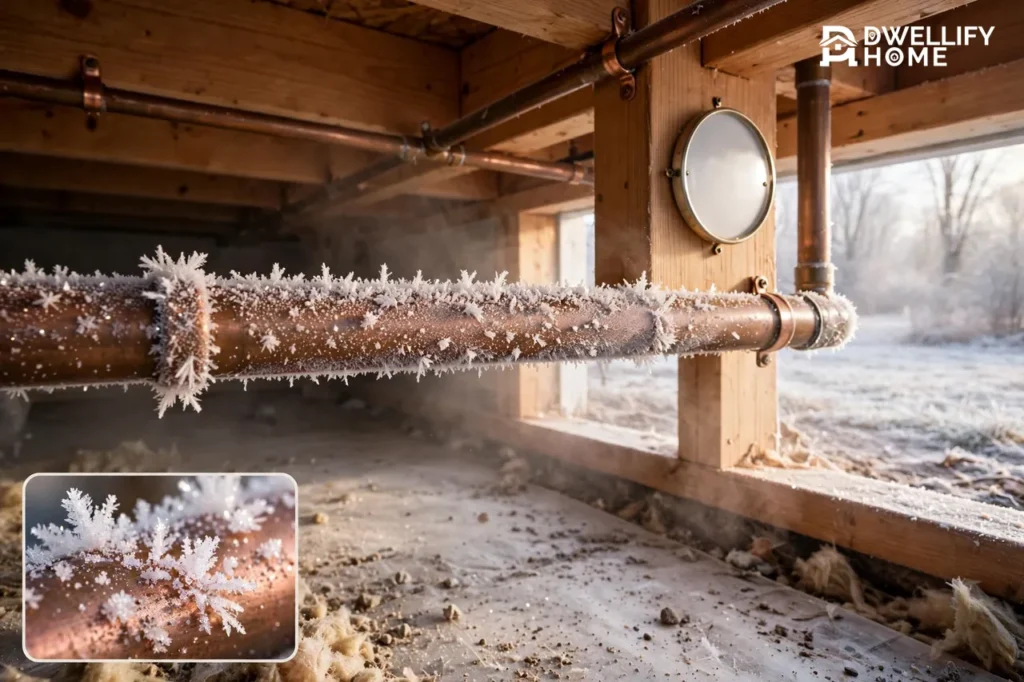
Most pipes freeze within 6 to 8 hours when the temperature stays at 20°F or below. That is the honest middle of the range, not a promise. An exposed pipe with no insulation can start to freeze in about 3 hours at 20°F, while a well-protected pipe deep inside a heated home can hold out for 24 hours or longer.
The clock starts when the air around the pipe drops below freezing and stays there. A short dip to 31°F for an hour will not freeze your pipes. What matters is how cold it gets, how long it stays cold, and what stands between the pipe and the cold air. This guide gives you the timing for each situation, so you can tell whether you have hours or a full day to act.
How Long Does It Take for Pipes to Freeze at Each Temperature?
Temperature sets the pace. The colder the air around the pipe, the faster the water inside it loses heat. The table below pulls the ranges together from plumbers, utility guidance, and lab tests, so you can read your own situation in one glance.
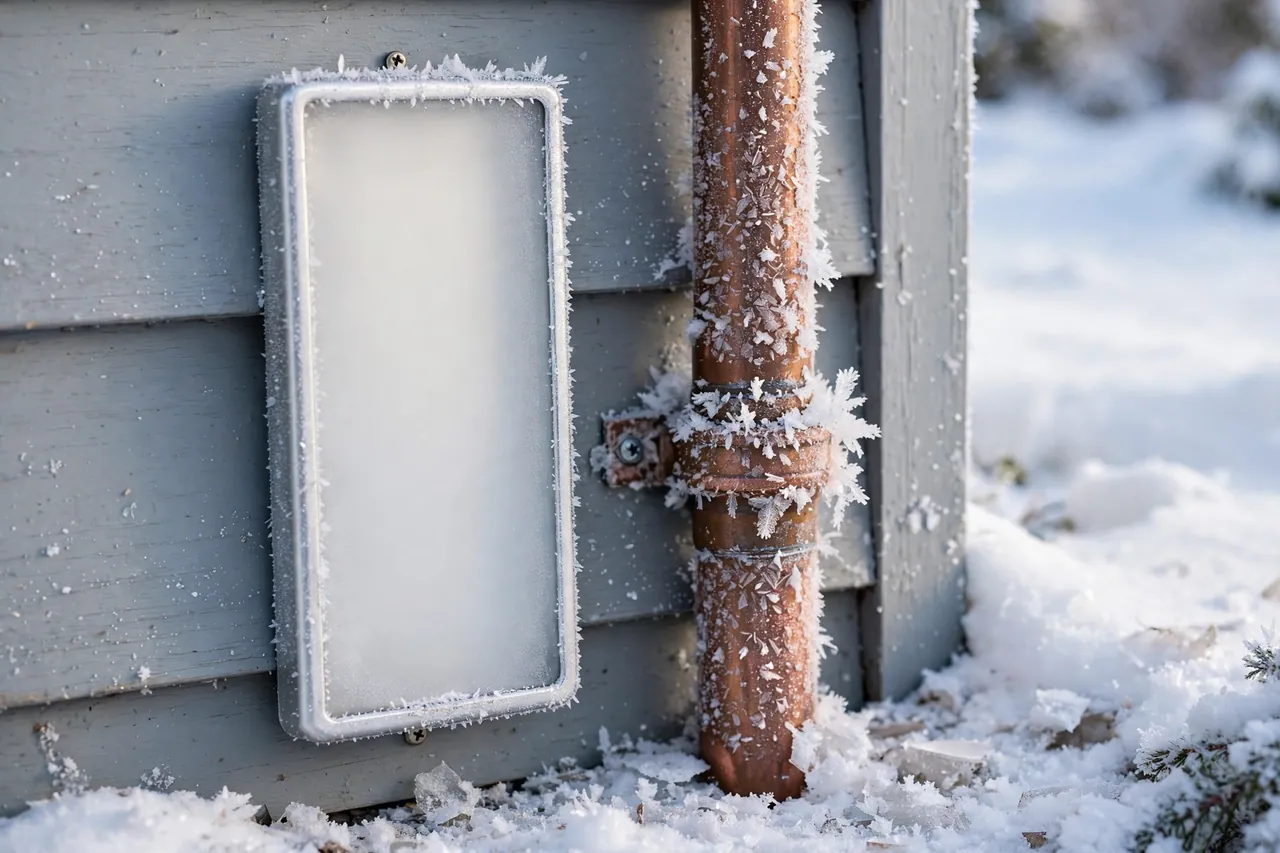
Pipe-freezing times by temperature and protection:
| Temperature outside | Exposed pipe, no insulation | Insulated pipe | Pipe inside a heated home |
|---|---|---|---|
| 28 to 32°F, just below freezing | 12 hours or more | 24 hours or more | Often does not freeze |
| 20 to 27°F, cold | 6 to 8 hours | About 12 hours | 12 hours or more |
| 10 to 19°F, hard freeze | 4 to 6 hours | 6 to 12 hours | 6 hours or more |
| Below 10°F, extreme cold | As little as 2 to 3 hours | 4 to 6 hours | Several hours |
Read the table as a range, not a countdown timer. Two homes on the same street can freeze on very different schedules because their pipes sit in different places and carry different protection. The times above assume the temperature stays in that band the whole time. If the temperature bounces above freezing during the day, the clock resets, and your pipes get extra time.
One more thing the table hides: freezing happens in stages. First the water cools below 32°F. Then ice crystals start to form along the pipe wall. Only later does the ice grow thick enough to block the flow of water. A pipe can be partly frozen, with weak flow, hours before it blocks completely. So if your tap slows to a trickle on a cold night, do not wait for it to stop. That trickle is the warning.
What Lab Tests Found About Freezing Time
Most timing advice comes from plumbers who have seen the damage after the fact. A smaller set of numbers comes from controlled tests, and those numbers are worth knowing because they show the stages. Jeffrey Gordon, a researcher at the University of Illinois, ran pipe-freezing tests that tracked design temperature, pipe material, insulation level, pipe diameter, and water source, and the results still shape how experts talk about freezing time.
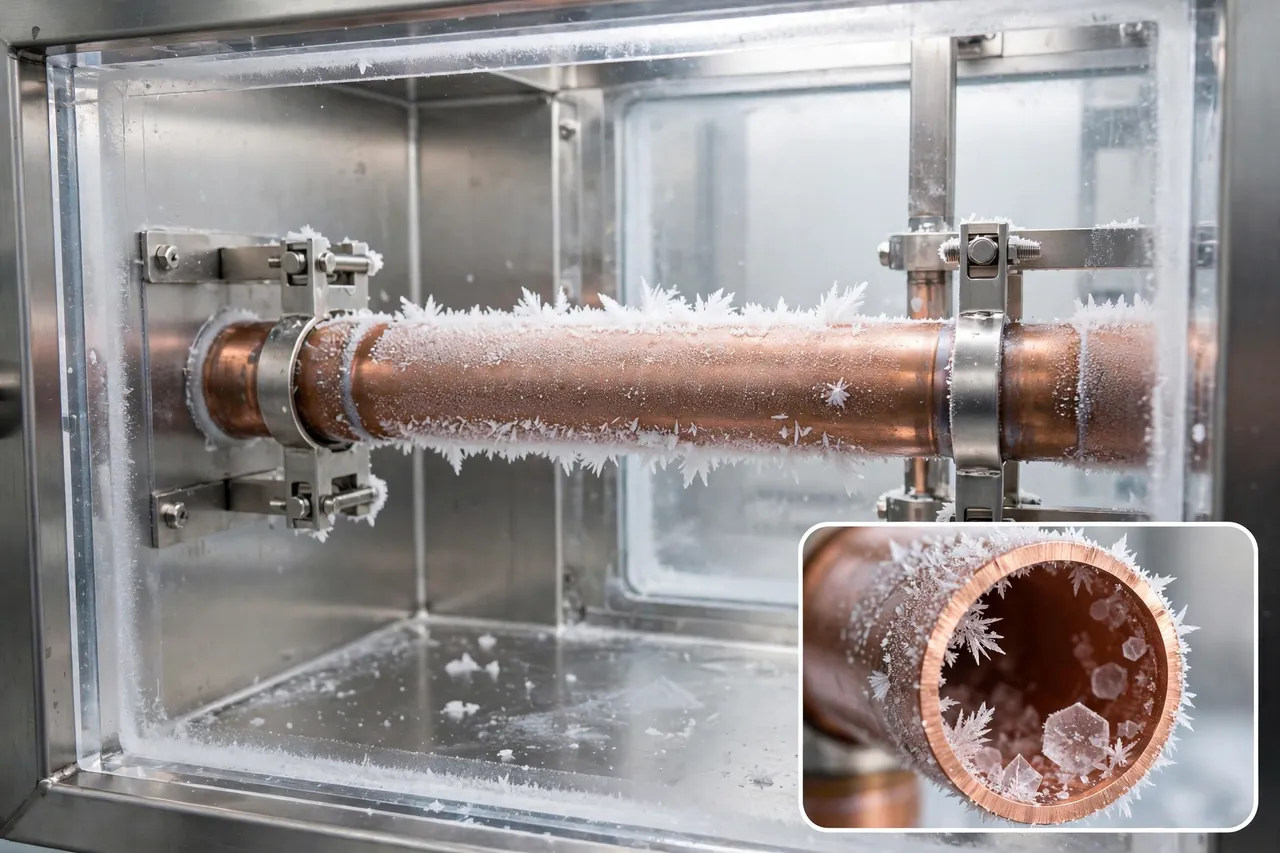
For a 3/4-inch pipe with no insulation, sitting in air at 20°F, the tests found a clear three-step timeline. The water began to freeze after about 3 hours. It took roughly another 3 hours for the water to freeze solid and block the flow, so about 6 hours in total. Lab tests then showed it took about another 3 hours for the pipe to burst, which means a bare 3/4-inch pipe at 20°F can burst in a single night.
Insulation changed the second step, not the first. For the same 3/4-inch pipe wrapped in 1.5 inches of insulation, the water still began to freeze after about 3 hours. But it then took 12 hours for the water to freeze completely and block the flow. In other words, the insulation bought about 6 extra hours before the pipe blocked. Gordon’s research also found that even a thin layer helps: 1/8 inch of insulation delayed ice blockage by 3 hours, and 5/8 inch of insulation provided an 8-hour delay.
The tests also showed why small pipes fail first. A 1/2-inch pipe holds about half as much water as a 3/4-inch pipe, so its freezing time runs roughly half as long. That matters in real homes, because the 1/2-inch lines that feed a single faucet or a toilet are often the ones running through the coldest spots.
Two more findings from the research explain why bursts cause so much damage. First, water expands by about 8 percent by volume as it turns to ice, and the pressure inside a freezing pipe can reach up to 4,000 pounds per square inch before the pipe bursts. Second, the burst does not always happen where the ice sits. The pipe section downstream of the ice blockage feels the same pressure, so a pipe can burst in a warm part of the house, far from the frozen spot. And in Gordon’s tests, no PVC pipes burst at all, which lines up with the wider advice that plastic pipes handle freezing better than metal ones.
What Changes How Fast Your Pipes Freeze
Temperature is only the start. Eight things speed the clock up or slow it down, and most of them are things you can see or change in your own home.
How cold it gets, and how long it stays cold
Duration matters as much as the low number on the thermometer. A night that dips to 25°F for two hours and then warms up is a different risk from a night that sits at 25°F for ten hours straight. Plumbers treat 20°F as the real danger line because, once the air around a pipe holds at or below that level for several hours, even protected pipes start to lose the fight. The American Red Cross and most utility companies agree: it is the long, steady cold that freezes pipes, not a brief brush with freezing.
Pipe material: copper, PEX, and PVC
Copper freezes fastest. Copper is a good conductor of heat, so it hands the water’s warmth to the cold air quickly. PEX and PVC are plastics, and plastic moves heat far more slowly, so the water inside stays warmer for longer. PEX has one more advantage: it can stretch a little as ice expands inside it, while copper cannot. That does not make PEX freeze-proof. It only buys time, and a PEX pipe left in deep cold for long enough will still freeze solid.
Pipe size
Small pipes freeze faster than big ones because they hold less water. Less water means less heat stored inside, so the cold wins sooner. As the lab tests showed, a 1/2-inch pipe freezes in roughly half the time of a 3/4-inch pipe under the same conditions. The thin lines that run to an outdoor spigot, a garage sink, or a bathroom on an outside wall are the ones to worry about first.
Insulation
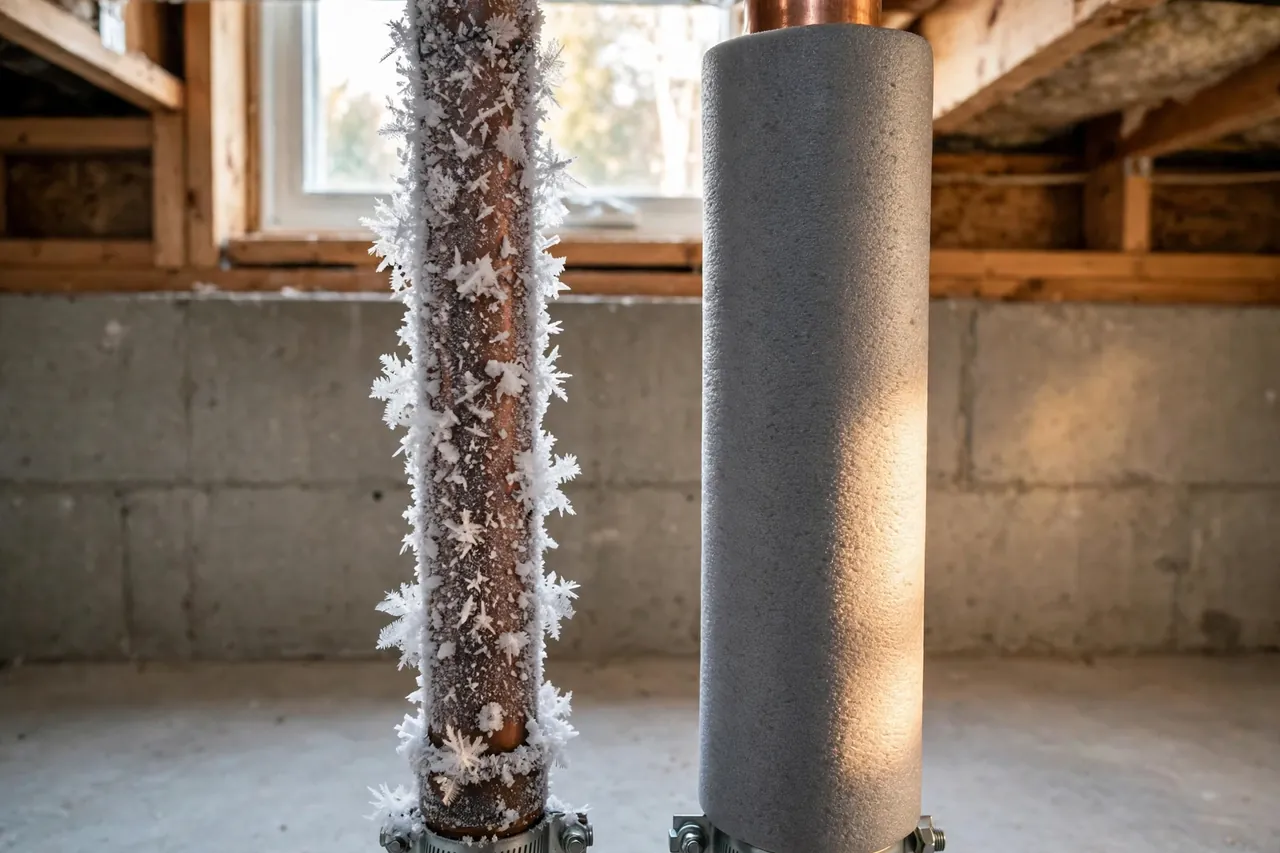
Insulation does not warm a pipe. It slows down how fast the pipe loses heat, and that delay is often the difference between a scare and a burst. A foam pipe sleeve is the usual fix, and the lab numbers above show even a thin sleeve adds hours. But insulation only delays freezing. Leave an insulated pipe in subfreezing air for long enough, and it will still freeze. Think of insulation as extra time on the clock, not a cure. If your attic pipes sit bare, our guide to how to insulate an attic covers the space that protects them.
Where the pipe sits
Location decides how much cold the pipe actually feels. An outdoor pipe feels the full night air. A pipe in an unheated garage, attic, or crawl space feels almost as much. A pipe inside an exterior wall feels the cold through the wall, slowed a little by the wall itself. A pipe deep inside the house, wrapped in warm rooms on every side, may never feel freezing air at all. Angi’s guide puts numbers on this: exposed pipes may freeze after a few hours at 20°F, pipes on an exterior wall may freeze after 2 to 3 hours, and pipes further inside the home can take 6 hours or more to freeze below 20°F.
Wind and drafts
Moving air strips heat away from a pipe much faster than still air. The University of Illinois tests measured this directly. A 12-foot length of 1/2-inch pipe in 20°F air with a 1 mph wind lost about 41.65 BTUs in two hours. Add an 8 mph breeze, and the same pipe lost up to 15 degrees of water temperature per hour on top of the cooling already happening. In one test, water that started at 45°F cooled to just 30°F in a single hour at 21°F with an 8 mph wind. That is why a windy night freezes pipes faster than a calm night at the same temperature, and why a draft through a crack near a pipe can freeze one section while the rest of the house stays fine.
Moving water versus still water
Water that sits still freezes first. Water that moves keeps mixing, which spreads the cold through the whole pipe instead of letting one cold spot turn to ice. That is why a dripping faucet helps, and it helps in two ways at once. The movement slows ice from forming, and the open faucet gives rising pressure somewhere to go, which is what actually bursts pipes. The American Red Cross recommends letting cold water drip from a faucet served by exposed pipes when the weather turns very cold. Note that hot water pipes can freeze too, so drip the cold-water side and do not assume the hot line is safe.
House temperature and heat
Your furnace is the biggest shield your indoor pipes have. Keep the thermostat set to the same temperature day and night, and never below 55°F, even when you leave the house. The American Red Cross gives 55°F as the floor, and the advice holds whether you are home or away. A furnace that quits on the coldest night removes that shield in hours, which is why a heating failure during a freeze is a plumbing emergency too. If your heat has ever cut out in winter, read why your furnace quits on the coldest night of the year so you know the warning signs before the next cold snap.
Which Pipes Freeze First
Not every pipe in your home faces the same risk. If you only have an hour before a freeze, spend it on the pipes at the top of this list, because they will freeze first.
- Outdoor spigots, hose bibs, and sprinkler lines. They sit fully exposed to the night air, and they often hold standing water.
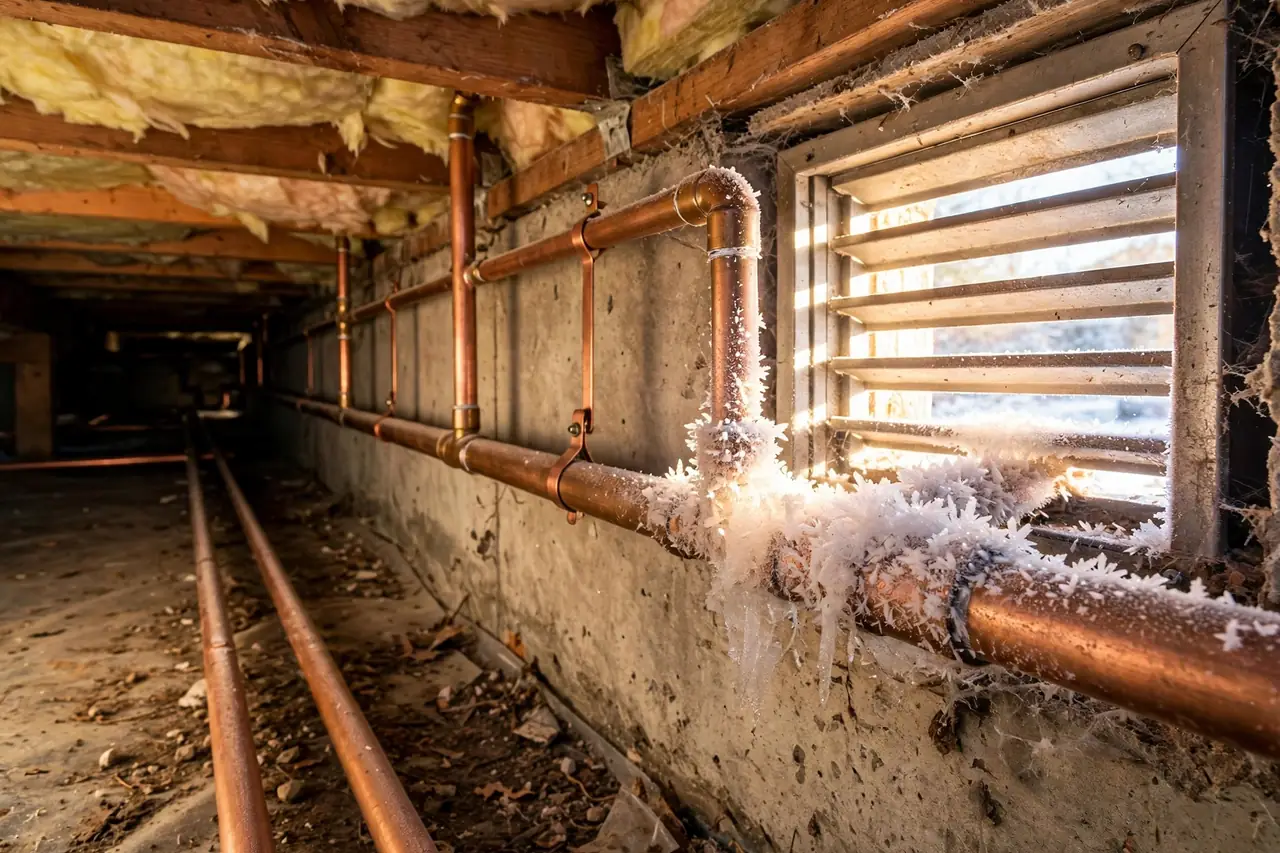
- Pipes in unheated garages, attics, and crawl spaces. These rooms track the outdoor temperature closely, and their pipes get almost no help from your furnace.
- Pipes inside exterior walls, especially on the north and windward sides of the house. Cold soaks through the wall all night.
- Pipes under kitchen and bathroom sinks on exterior walls. The cabinet doors trap cold air around them, and the pipes sit close to the outside wall.
- Pipes near drafty spots, like dryer vents, gaps where pipes pass through walls, and old windows. A thin stream of cold air can freeze one short section.
- Pipes deep inside the house. These freeze last, and usually only if the heat fails or the cold lasts for days.
Walk your home once before winter and find the pipes in the first three spots on this list. Those are the ones worth insulating, and they are the ones to check first when a freeze hits.
Can Pipes Freeze Overnight?
Yes, and overnight is when most pipes freeze. The coldest hours of the night line up with the hours when nobody runs any water, so the pipes sit still and cold for six to ten hours straight. Put the numbers together and the picture is clear: if the temperature falls to 20°F by 10 p.m., an exposed, uninsulated pipe can start to freeze by 1 a.m., block completely by 4 a.m., and burst before sunrise.
That overnight math is why evening preparation matters more than morning reaction. Once you wake up to a frozen pipe, the damage may already be done. Check the forecast in the evening, and if the night ahead holds below 20°F for six hours or more, act before bed: set the heat, start the drip, open the cabinet doors, and close the garage. A few minutes in the evening can save you a burst pipe at 4 a.m.
What to Do in the Hours Before a Freeze
You rarely get days of warning before a freeze, but you usually get hours. Spend them in this order, starting with the steps that protect the most pipe for the least effort.
- Check the forecast for temperature and duration. Note when the temperature drops below freezing and how many hours it stays there. Six hours below 20°F is the line where exposed pipes start to freeze, so that number decides how urgent the rest of this list is.
- Set your thermostat to at least 55°F and keep it steady day and night. Do not use a lower nighttime setting during a freeze. The American Red Cross advises keeping the heat on at no lower than 55°F when you go away in cold weather, and the same floor applies while you are home.
- Let the cold water drip from the faucet farthest from your main water valve. A thin, steady trickle is enough. It keeps water moving and gives pressure a way out if ice starts to form.
- Open the kitchen and bathroom cabinet doors below sinks on exterior walls. Warm room air can then reach the pipes inside. Move any cleaners or chemicals out of reach of children and pets first.
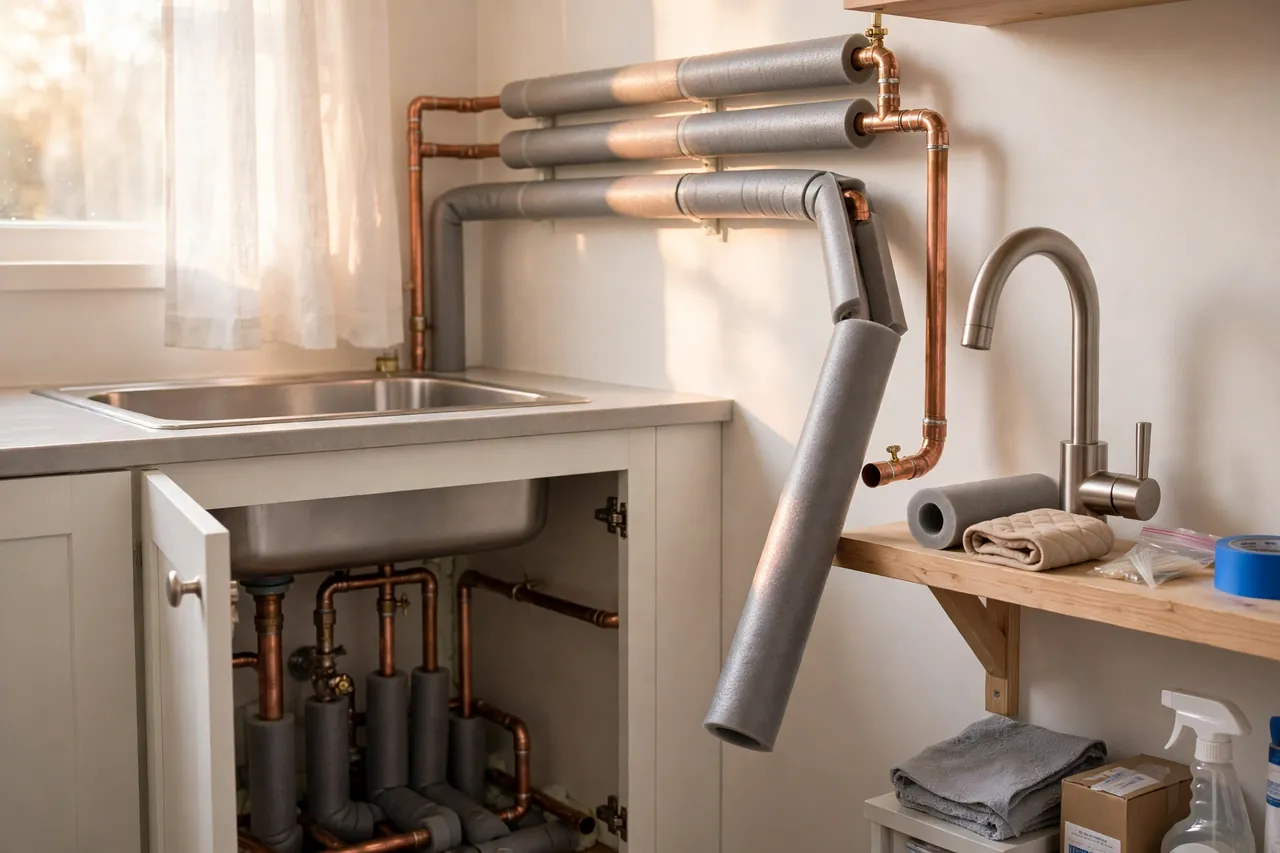
- Wrap exposed pipes with foam sleeves if you have them. If you do not, heavy towels wrapped around the pipe will help for one night. Cover outdoor spigots too.
- Disconnect garden hoses, drain them, and shut the inside valve that feeds each outdoor spigot. Leave the outside valve open so any water left inside can expand without breaking the pipe.
- Close the garage door and any exterior doors, especially if water lines run through the garage. Seal the drafts you can feel with a rolled towel at the base of the door.
- Find your main water shutoff valve now, before anything goes wrong. If a pipe does burst, shutting off the water in the first minutes limits the flooding to a small mess instead of a ruined room.
- If the power goes out, your furnace stops and the clock speeds up fast. Without heat, pipes can freeze in as little as 3 hours at 20°F. Read our guide on how to keep pipes from freezing without heat so you know the no-power steps before you need them.
Do the first four steps every time a freeze is forecast, even a mild one. They take ten minutes, cost nothing, and cover the pipes that freeze most often.
Signs Your Pipes Have Already Started to Freeze
Freezing gives warnings if you know what to look for. The clearest one is water flow: turn on a faucet and only a trickle comes out, or nothing comes out at all. Frost on an exposed pipe is another direct sign. Listen for clanking or banging noises when you turn the water on, and watch for odd smells from a tap, which can mean a blockage is trapping air in the line. Visible cracks, bulges, or leaking water mean the pipe has already burst or is about to.
If you see these signs, keep the faucet open and call a licensed plumber, especially if you cannot find the frozen section or it sits somewhere you cannot reach. Do not use a blowtorch or any open flame on a pipe. If water is leaking or gushing, shut off your main water valve right away and then call for help. Check your other faucets too, because if one pipe froze, others may have frozen as well.
Related Guides
How to Keep Pipes From Freezing Without Heat · How to Insulate an Attic: A Step-by-Step Guide That Starts With Air Sealing · Best Insulation for Ceilings: 7 Picks by Ceiling Type
Frequently Asked Questions
How long does it take for a pipe to freeze?
Most pipes freeze within 6 to 8 hours when the temperature stays at 20°F or below. Uninsulated exterior pipes can freeze in under 6 hours at that temperature, and it takes at least 12 hours for unprotected pipes to freeze at 32°F. Insulation, pipe material, and location all shift the time up or down.
Can pipes freeze in one night?
Yes. Pipes can freeze overnight, especially when temperatures drop fast and stay below freezing for several hours. A single cold night is enough for an exposed pipe to freeze solid and burst, so take precautions before bed during a sudden cold front or a power outage in winter.
What temperature should I set my thermostat to so my pipes don’t freeze?
Set your thermostat to no lower than 55°F when outside temperatures drop below 32°F. For added safety, especially when you are away from home, keeping it between 55°F and 60°F gives enough warmth to keep pipes from freezing and helps you avoid expensive water damage from burst pipes.
How do I know if my pipes are frozen?
The most common sign is little to no water coming out when you turn on a faucet. Other signs include frost on exposed pipes, clanking or banging noises when you turn on the water, unusual odors from the tap, leaking water, and visible cracks in the pipes.
How do I prevent pipes from freezing without power?
Open all sink cabinet doors, set the faucet farthest from the main water valve to drip, and insulate any exposed pipes. If the power stays out for a long time and you cannot heat your home, shut off your water main and drain the pipes to keep them from bursting.
Freezing times are ranges, not guarantees, and every home is different. Your pipes, your insulation, and your local weather decide your real timeline, so use the ranges in this guide as a planning tool and act on the cautious end of them. If you are unsure about a pipe in your home, or if a pipe has already frozen or burst, call a licensed plumber rather than guessing. A short call costs far less than a flooded room.
The next cold night is the one to prepare for, not the one after it. Check the forecast this evening, run through the steps above, and give your pipes the hours they need.