Cellulose vs fiberglass insulation comes down to the room you are insulating, not to one material beating the other everywhere. For most attic floors, blown-in cellulose wins on R-value per inch and coverage. For new walls with open framing, fiberglass batts win on price and easy install. For closed walls in an older home, dense-pack cellulose is the only practical choice of the two.
Both materials are cheap, proven, and widely available. The real differences show up in how deep each one must go, how much it settles, how it handles fire and moisture, and whether it slows air movement. This guide compares them head to head so you can pick the right one for each spot in your house.
Cellulose vs Fiberglass at a Glance
Read this table first if you want the whole comparison in one minute. The sections below explain every row in plain words.
Master comparison table: cellulose vs fiberglass insulation
| Feature | Cellulose | Fiberglass |
| What it is | Recycled paper fiber, treated with borate | Spun glass fiber, sold as batts or loose fill |
| R-value per inch | R-3.2 to R-3.8 | R-2.2 to R-2.9 blown-in; R-3.0 to R-3.7 batts |
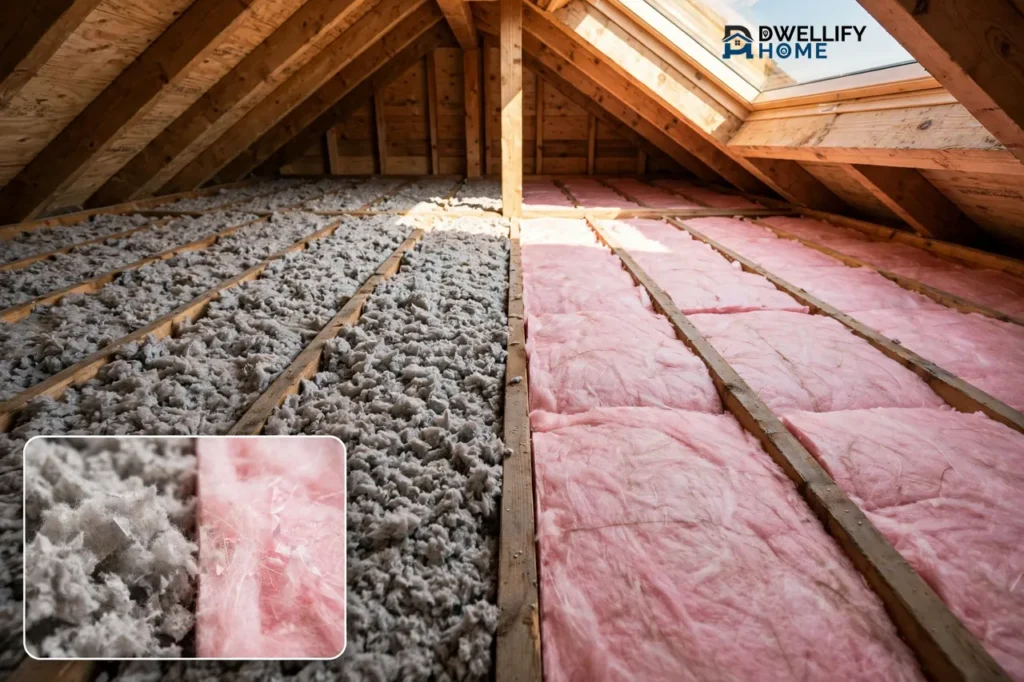
| Depth needed for R-49 | About 14 to 15 inches installed | About 17 inches blown-in |
| Installed cost per sq ft | $0.60 to $2.30 blown-in; $1.50 to $3.00 dense-pack | $0.30 to $1.50 batts; $1.00 to $1.50 blown-in |
| Settling | About 10% loose-fill, up to 20% by some measures | About 1% blown-in; none for batts |
| Fire | Borate-treated, Class A rating | Non-combustible glass, melts at high heat |
| Moisture | Absorbs and releases water; clumps if soaked | Does not absorb water; traps it between fibers |
| Air movement | Slows air flow, best when dense-packed | Air passes through it easily |
| Pests | Borate deters insects | Rodents nest in it readily |
| Recycled content | 75 to 85% recycled paper | About 20 to 30% recycled glass |
| Best for | Attics, closed-wall retrofits, sound control | New walls, tight budgets, damp-prone spots |
R-value and cost figures in this table come from Angi’s cellulose vs fiberglass comparison, updated July 9, 2026, and HomeGuide’s 2026 attic insulation cost guide, checked on 2026-11-05. Prices vary by region, R-value target, and how much air sealing or old-material removal the job needs.
What Each Material Actually Is
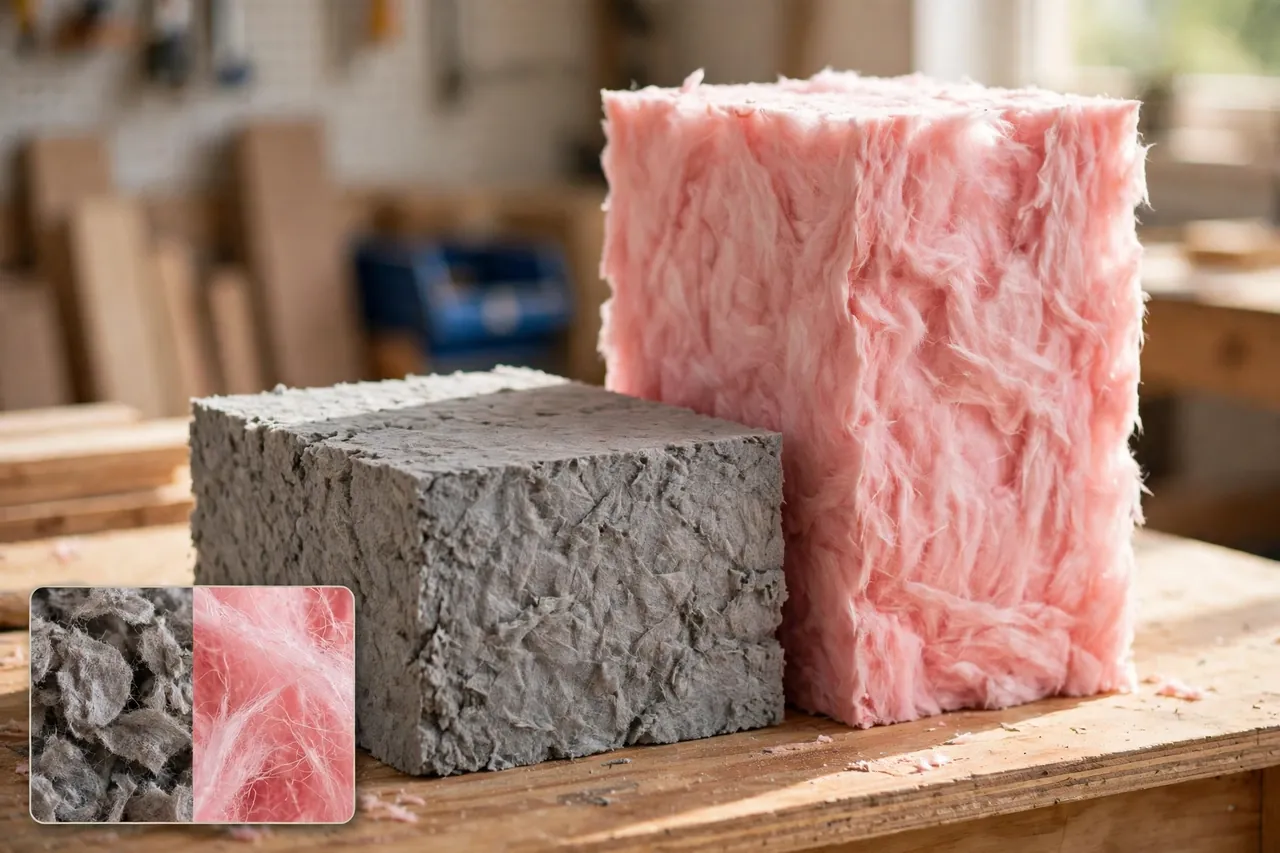
Cellulose and fiberglass look nothing alike, and that difference drives almost everything that follows. One starts as paper. The other starts as glass.
Cellulose Insulation
Cellulose is ground-up recycled newspaper and cardboard, treated with borate chemicals. The borate does two jobs: it acts as a fire retardant, and it deters insects. Angi reports cellulose is 75 to 85 percent recycled material, which makes it the greener of the two by a wide margin.
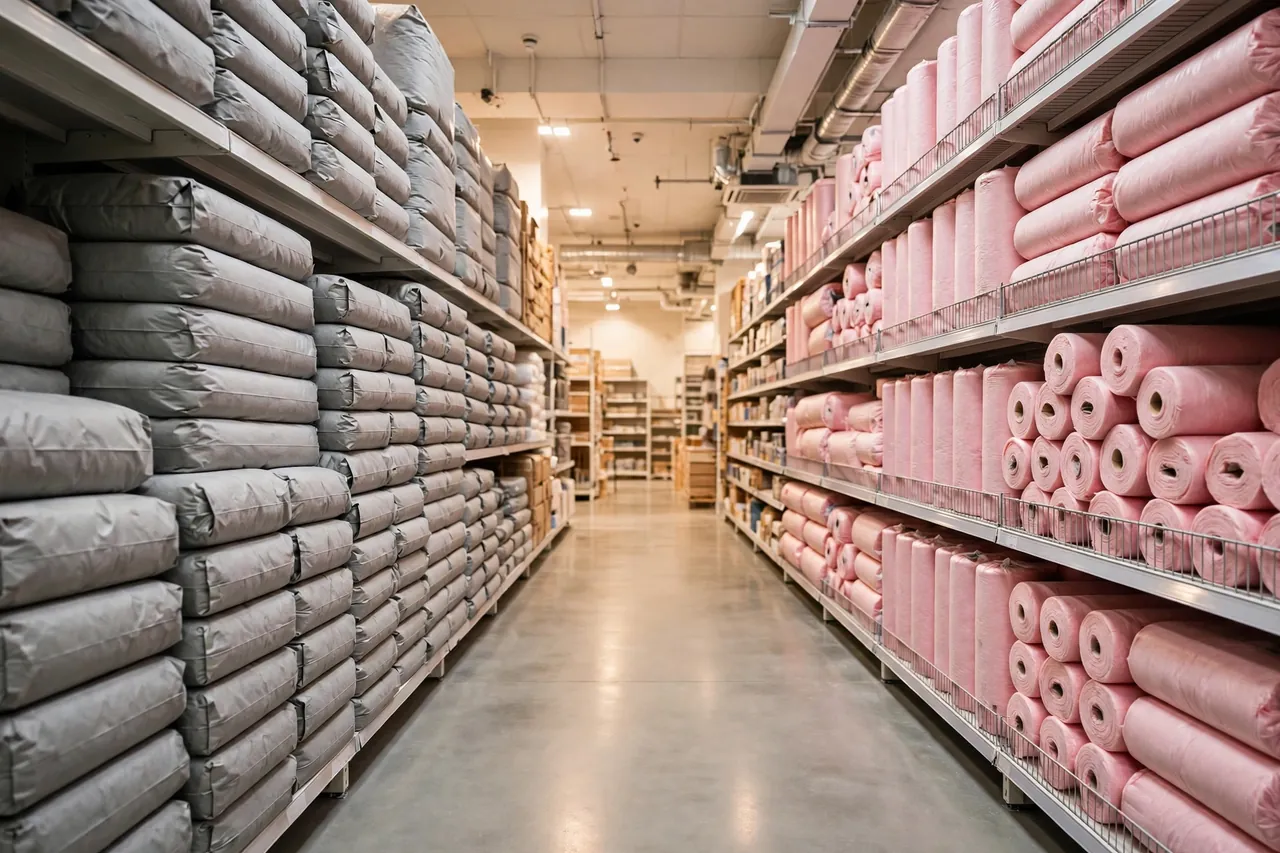
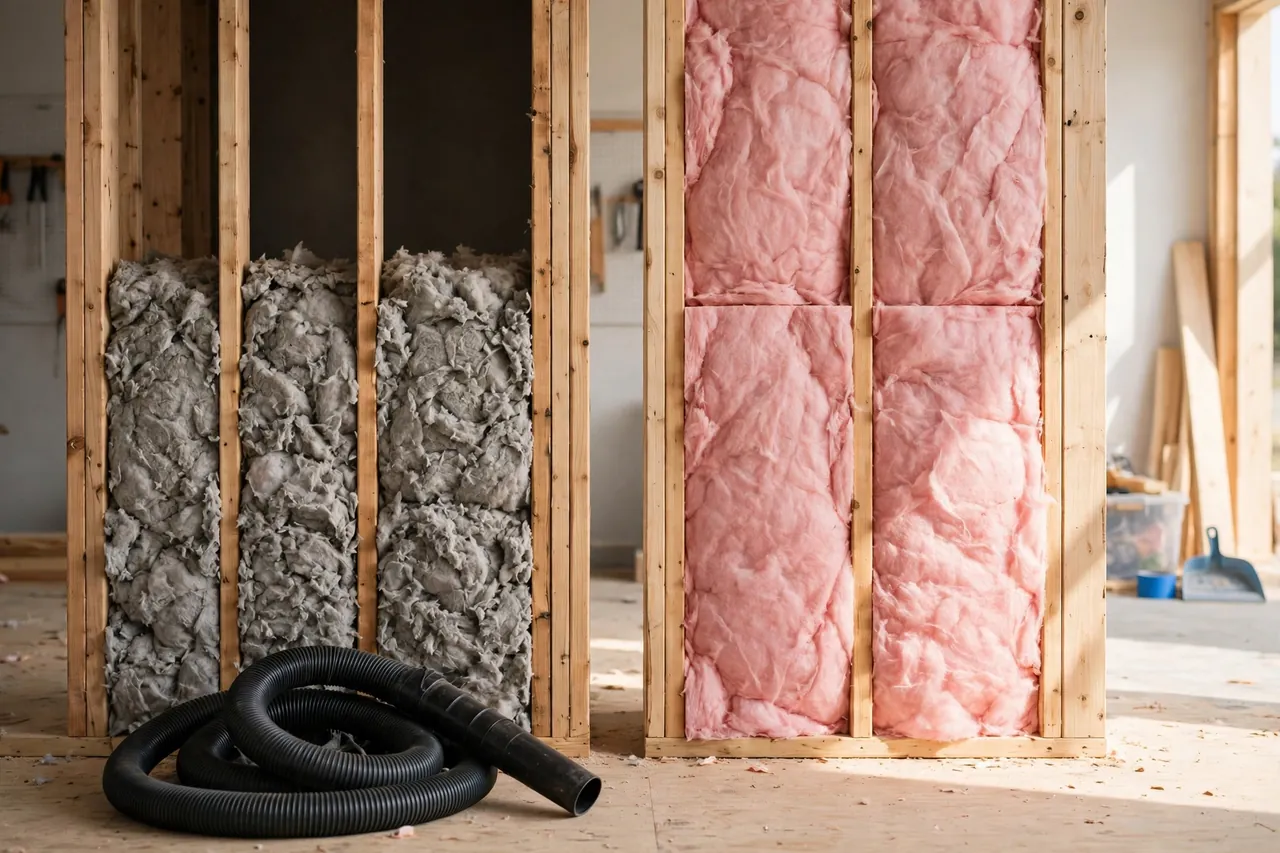
You will find cellulose in two forms. Loose-fill cellulose is blown across an open attic floor. Dense-pack cellulose is blown into closed wall cavities at high density, about 3.5 pounds per cubic foot, until the cavity is packed tight. There is no batt or roll form, so every cellulose job needs a blowing machine.
Fiberglass Insulation
Fiberglass is spun glass fiber, made by melting glass and spinning it into fine strands like cotton candy. It has been the default home insulation in the United States since the 1930s. It comes as batts and rolls cut to standard stud and joist spacing, and also as loose fill for blowing machines.
Glass does not burn, does not absorb water, and does not feed mold. Those three facts are fiberglass’s biggest strengths. Its biggest weakness is air: loose fiberglass lets air move through it, so a drafty attic can underperform its label R-value on a cold, windy night.
R-Value per Inch: How Much Depth Each Material Needs
R-value measures how well a material slows heat flow. A higher number means better insulation. The number that matters for your house is R-value per inch, because it decides how deep the layer must be to hit your target.
Cellulose delivers about R-3.2 to R-3.8 per inch, with an average near R-3.6, according to the Cellulose Insulation Manufacturers Association. Blown-in fiberglass delivers about R-2.2 to R-2.9 per inch. Fiberglass batts do better than blown fiberglass, at R-3.0 to R-3.7 per inch, because the factory lines the fibers up in a uniform mat.
The U.S. Department of Energy recommends attic R-values from R-30 in warm climates up to R-49 to R-60 in cold climates, zones 5 through 8. Here is what each material needs to reach those targets on an attic floor.
Depth needed to reach each attic R-value target
| Target R-value | Cellulose depth | Blown-in fiberglass depth |
| R-30 | About 8 to 9 inches | About 11 inches |
| R-38 | About 10 to 11 inches | About 14 inches |
| R-49 | About 14 to 15 inches installed | About 17 inches |
| R-60 | About 16 to 17 inches settled | About 20 to 22 inches |
GreenFiber’s own coverage chart puts the R-49 numbers in concrete terms: 15.2 inches installed, settling to 13.68 inches, at 83.5 bags per 1,000 square feet for its 19.05-pound bag. Owens Corning’s AttiCat chart calls for 17 inches and about 25 bags per 1,000 square feet for blown fiberglass at R-49. That depth gap matters most near the eaves, where the roof comes down low and space is tight.
One warning about batts: their label R-value assumes a careful fit. Oak Ridge National Laboratory hot-box tests of an R-19 wall measured R-15.4 for a careful batt install and R-13.2 for a typical sloppy one, about a 14 percent loss from gaps and rounded shoulders. Blown-in materials dodge that problem because they fill around wires and pipes on their own.
What Cellulose vs Fiberglass Insulation Costs in 2026
Here is the good news: for blown-in attic work, the two materials cost almost the same. Pick on performance, not on price. Fiberglass batts are the cheapest option of all, and dense-pack cellulose for walls costs the most.
HomeGuide’s 2026 cost guides, checked on 2026-11-05, price blown-in insulation at $1.00 to $2.80 per square foot installed, with most attic jobs running $900 to $3,600 in total. By R-value target, HomeGuide prices 1,000 square feet at $660 to $1,200 for R-30, $1,100 to $1,900 for R-49, and $1,400 to $2,400 for R-60.
Angi, updated July 9, 2026, breaks the two materials apart: fiberglass batts cost $0.30 to $1.50 per square foot, loose-fill fiberglass runs $1.00 to $1.50 per square foot, and cellulose costs $0.60 to $2.30 per square foot. Dense-pack cellulose for closed walls runs $1.50 to $3.00 per square foot installed, and HomeGuide’s wider 2026 range for dense-pack reaches $1.60 to $4.20.
Material-only prices tell the same story at a smaller scale. HomeGuide lists fiberglass material at $0.30 to $1.10 per square foot and cellulose material at $0.30 to $1.80 per square foot. A 25-pound bag of GreenFiber Sanctuary cellulose sells for about $15.97 at big-box stores, based on October 2026 retail listings. You need far more bags of cellulose than fiberglass for the same attic, so the per-bag price does not decide the job cost.
Installed cost per square foot, 2026 US prices checked on 2026-11-05
| Material and form | Installed cost per sq ft | R-value per inch |
| Fiberglass batts | $0.30 to $1.50 | R-3.0 to R-3.7 |
| Blown-in fiberglass | $1.00 to $2.80 | R-2.2 to R-2.9 |
| Blown-in cellulose | $0.60 to $2.30 | R-3.2 to R-3.8 |
| Dense-pack cellulose | $1.50 to $3.00 | R-3.6 to R-3.8 |
Take a 1,000-square-foot attic to R-49 as a worked example. HomeGuide’s 2026 range puts the installed job at $1,100 to $1,900 for blown-in material of either type. The gap between cellulose and blown fiberglass at that size is roughly $100 to $200, which is small next to the total. Air sealing the attic floor and removing failed old insulation move the final quote far more than the material choice does, so get those line items in writing before you compare bids.
Two cost notes for 2026. First, the federal Energy Efficient Home Improvement Credit, known as 25C, ended for projects placed in service after December 31, 2025, so it no longer applies to 2026 insulation jobs. Check your state and utility rebate programs instead, since those still run in many areas. Second, a do-it-yourself blown-in job drops the cost to roughly $300 to $540 in material for a 1,000-square-foot attic at R-49, plus a blower rental of about $100 a day, often free with a 20-bag purchase at Home Depot or Lowe’s.
How Each Material Is Installed
Install method decides more than most homeowners expect. It decides whether you can do the job yourself, whether your walls must come open, and how well the finished layer actually performs.
Attics: Both Materials Work, Cellulose Fills Better
On an open attic floor, a crew blows either material through a hose from a machine parked outside. Cellulose flows around wires, pipes, and odd framing and settles into a dense blanket. Blown fiberglass is lighter and fluffier, so it covers the same floor with fewer bags but needs more depth.
You can also lay fiberglass batts across an attic floor, but blown-in beats batts here. Batts leave gaps around every obstruction, and every gap is a cold spot. If your attic already has sound fiberglass in place, you can usually blow cellulose right over it. The R-values add together, and the cellulose layer evens out the coverage. Check first that the old layer is dry, clean, and not matted down. If it is wet, moldy, or full of rodent droppings, it comes out first.
For the full step-by-step attic process, including air sealing before you insulate, see our guide on how to insulate an attic.
Closed Walls: Dense-Pack Cellulose Is the Standard
This is the clearest win in the whole comparison. For existing walls with the drywall already up, dense-pack cellulose is the standard method. A crew drills small holes, blows cellulose in at about 3.5 pounds per cubic foot until each cavity is packed tight, then plugs and patches the holes. It fills around wiring, plumbing, and fire stops, and it delivers R-12 to R-13 in a standard 2-by-4 wall.
Blown-in fiberglass for closed walls exists, but it is a niche product with far fewer installers, and it does not give the same air-slowing benefit at normal densities. Fiberglass batts cannot go into a closed wall at all without opening it. If your walls are already closed and you want insulation without a remodel, cellulose is the practical answer.
One safety check comes first: never blow cellulose around old knob-and-tube wiring. Have an electrician look at the wiring before the crew starts, and leave damp-sprayed cellulose walls open until they dry.
New Construction: Fiberglass Batts Shine in Open Walls
When the framing is still open, fiberglass batts are fast, cheap, and easy to fit between standard studs. A careful crew can do a whole house in a day. Cellulose works here too, blown in behind mesh netting, and it fills around wires better than batts do. It takes more prep time and costs more, so the choice comes down to budget and how much you value the tighter fill.
For ceilings in new builds and remodels, depth and framing spacing decide the pick as well. Our guide to the best insulation for ceilings walks through which material fits each ceiling type.
Floors and Crawl Spaces: Neither Is the First Pick
For floors over a vented crawl space, batts can work if they stay snug against the subfloor, but they sag over time and leave gaps. Neither cellulose nor fiberglass likes a damp spot. In a wet basement or crawl space, skip both and use a material built for moisture, such as closed-cell spray foam or mineral wool.
Fire Safety: Treated Paper vs Glass That Will Not Burn
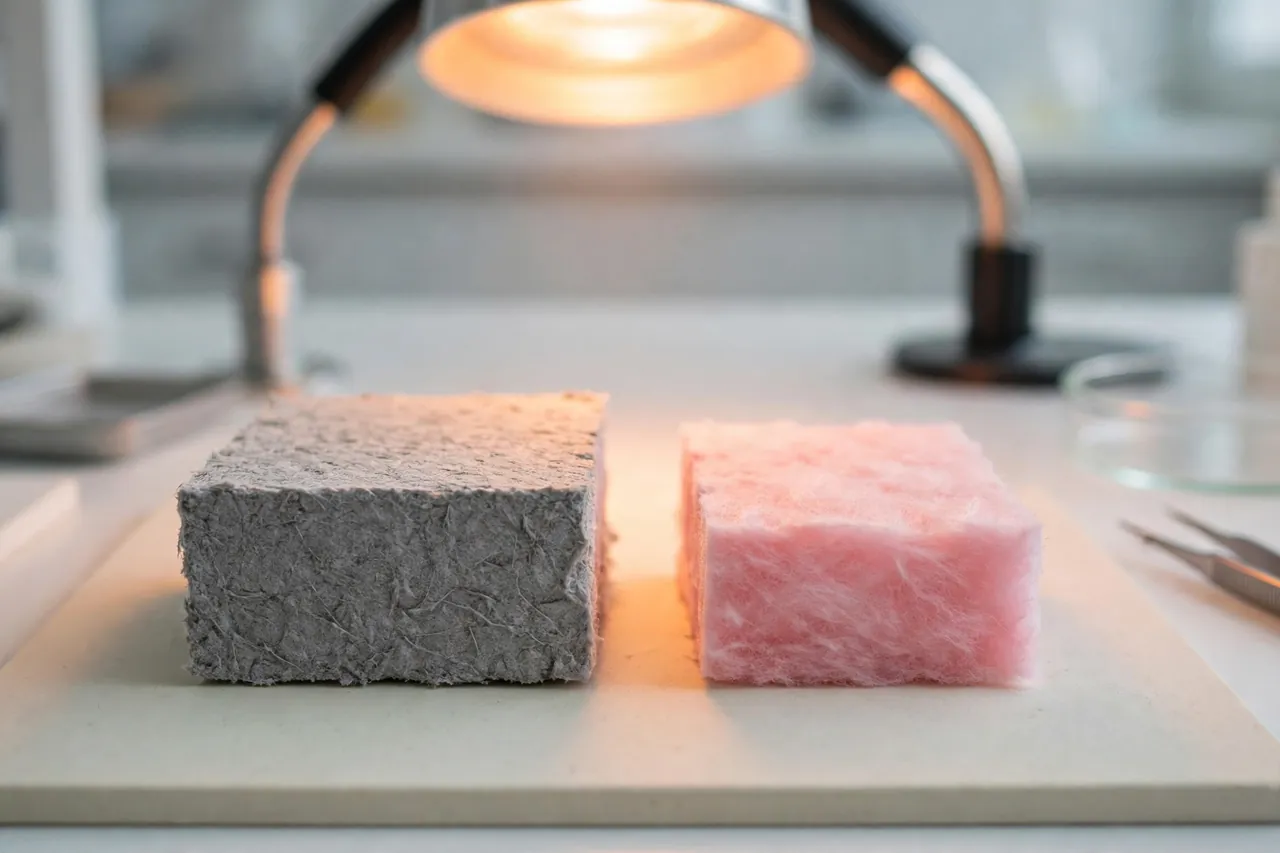
Cellulose starts as paper, so the fire question is fair. Modern cellulose is heavily treated with borate fire retardants, about 15 percent by volume, and it carries a Class A fire rating. It chars rather than catching flame, and its density limits the oxygen that can reach the framing behind it.
Fiberglass wins this round on principle. Glass is non-combustible: it does not ignite or sustain a flame at any normal temperature, and under direct flame it melts. Unfaced fiberglass blankets carry a flame spread index of 25 or less and a smoke development index of 50 or less under ASTM E84, and they pass the non-combustibility test in ASTM E136. No treatment is needed, so nothing can wear off or wash out.
The honest risk with cellulose is moisture. Long exposure to water can leach the borate treatment out, which lowers its fire resistance. That is one more reason to keep cellulose dry and to fix roof leaks before you insulate. Also note that kraft paper facing on fiberglass batts will burn, even though the glass itself will not, so faced batts need the facing covered by drywall in living spaces.
For fire-critical spots such as garage walls, fiberglass or mineral wool is the safer call. GreenBuildingAdvisor’s head-to-head article on fiberglass versus cellulose reaches the same conclusion: cellulose’s treatment is effective under normal dry conditions, but fiberglass is inherently non-combustible.
Moisture, Mold, and Pests
Neither material is waterproof, and neither one belongs in a spot that stays wet. How they behave when they do get wet is where they part ways.
Cellulose is hygroscopic, which means it actively absorbs water from the air and releases it again as conditions dry out. In small amounts this acts as a moisture buffer inside a wall: it soaks up extra humidity and gives it back later, which can protect wood framing from sharp moisture swings. The risk is saturation. Soaked cellulose clumps, sags, dries very slowly, and can support mold on the paper fibers themselves.
Fiberglass does not absorb water into the glass itself, but it traps water in the air spaces between the fibers. When wet, its R-value drops sharply, then recovers once it dries. Glass cannot feed mold, but the trapped moisture can grow mold on the wood framing and paper-faced drywall next to it. So fiberglass recovers more predictably after a one-time wetting, while cellulose buffers small humidity swings better day to day.
Fix the water first, whichever material you pick. A roof leak, a plumbing drip, or a damp foundation will beat any insulation over time. Neither material fixes a leak, and covering a wet spot with fresh insulation only hides the damage.
On pests, cellulose has a real edge. The borate treatment acts as a natural insecticide and fungicide, so carpenter ants, termites, and other wood-boring insects avoid it. Rodents dislike it too. Fiberglass offers no pest resistance at all, and mice nest in it readily. Borate does not replace sealing entry holes, though: mice get in through gaps around the foundation and roofline no matter what sits in the walls.
Air Sealing: Neither One Is an Air Barrier
Here is the sentence most insulation guides skip: neither cellulose nor fiberglass is an air barrier. Both let air pass through, and both need a real air barrier paired with them. The difference is a matter of degree.
Dense-pack cellulose slows air movement through a wall cavity far better than loose fill of either material. At 3.0 to 3.5 pounds per cubic foot, it resists airflow enough to cut drafts and hold its rated R-value on a cold, windy night. Loose-fill cellulose in an attic gives only a small air-slowing benefit. Blown-in fiberglass gives essentially none, and its effective R-value drops more when air moves through it.
That is why air sealing the attic floor comes before insulating, no matter which material you choose. Seal the top plates, plumbing chases, recessed lights, and the attic hatch first. ENERGY STAR reports that air sealing and insulating together save an average of about 15 percent on heating and cooling costs. Once the insulation is down, sealing underneath it is no longer possible without moving it all again.
Settling: The Gap That Shows Up Later
Settling is cellulose’s most talked-about weakness, and it is real. Loose-fill cellulose settles about 10 percent as it reaches its rated density, and some sources, including Angi and GreenBuildingAdvisor discussions, put the long-term figure as high as 15 to 20 percent. Blown-in fiberglass settles about 1 percent or less, because glass fibers are springy and hold their loft.
Here is the part that calms the worry: manufacturer coverage charts already build settling in. The bag chart lists an installed depth that is about 11 percent deeper than the settled depth, and the label R-value is rated at settled density under the FTC R-value Rule, 16 CFR 460. A crew that follows the chart gives you the R-value you paid for after settling happens. Dense-pack cellulose in walls barely settles at all, because the high packing density leaves nowhere for it to compress.
Protect yourself with a simple check. Measure the cellulose depth in six to eight spots across the attic before the installer leaves, and compare it with the installed depth on the bag chart. If it falls short, ask the crew to add more while the machine is still set up. That one check is worth more than any debate about settling percentages.
Health and Safety During the Job
Fiberglass irritates skin, eyes, and lungs during handling. The fine glass fibers itch on contact and sting the eyes, and breathing the dust irritates the airways. Wear an N95 mask, gloves, long sleeves, and eye protection, and change clothes and shower after the job. Fiberglass itself is not classed as a carcinogen for home use, but the irritation is real and every installer plans around it.
Cellulose is gentler on skin and does not itch the way fiberglass does. It still makes plenty of dust when blown, so the crew should wear respirators too. Its borate treatment is low in toxicity to people and pets, and it does not off-gas. One caution: some cheaper cellulose products use ammonium sulfate instead of borate-only treatment, and that compound can corrode metal and give off gas. Ask your supplier which fire retardant the product uses, and pick a borate-only product.
Both materials are safe in a finished home once installed and covered. The safety rules matter during the install, not after it. If anyone in the house has asthma or a dust sensitivity, plan to stay out of the work area on install day and let the dust settle overnight.
Sound, Comfort, and the Planet
Density stops sound, and cellulose is the denser material. Blown into a wall or floor cavity, it fills the space completely and absorbs sound instead of letting it pass. If you are insulating a shared wall, a home office, or a bedroom facing a busy road, cellulose does meaningfully better than fiberglass batts. Fiberglass still dampens sound well for its weight, just not as well as cellulose.
Comfort follows the same pattern as the rest of this comparison. Cellulose holds its performance better in drafty, irregular older homes because it fills gaps and slows air. Fiberglass performs at its best in clean, standard framing with a careful install and a separate air barrier doing the sealing work.
On the environment, cellulose wins clearly. It is made from 75 to 85 percent recycled newspaper and cardboard, it takes far less energy to grind paper than to melt glass, and it breaks down at the end of its life. Fiberglass contains about 20 to 30 percent recycled glass, and melting glass at high temperature uses far more energy. If low impact matters to you, cellulose is the stronger pick.
Which Wins for Attics, Walls, and Floors
There is no single winner, and any guide that crowns one is selling you something. The right pick changes with the room, the age of the house, and the budget. Use this table as your decision guide.
Recommendation by situation: which material to pick
| Your situation | Pick this | Why it wins here |
| Open attic floor, any age home | Blown-in cellulose | Higher R per inch, fills around obstructions, similar cost |
| Attic with low headroom at eaves | Blown-in cellulose | Needs fewer inches to hit R-49 or R-60 |
| Adding over sound old fiberglass | Blown-in cellulose | R-values add up, evens out coverage |
| Closed walls, older home retrofit | Dense-pack cellulose | Only practical drill-and-fill option with air-slowing benefit |
| New walls, open framing | Fiberglass batts | Cheapest, fastest, easy to fit between studs |
| Tightest possible budget | Fiberglass batts | $0.30 to $1.50 per sq ft installed |
| Fire-critical wall, such as a garage | Fiberglass or mineral wool | Non-combustible with nothing to leach out |
| Damp-prone spot | Fiberglass, or neither | Recovers R-value after drying; skip both if it stays wet |
| Shared wall or noisy room | Dense-pack cellulose | Density absorbs sound far better than batts |
| Greenest choice matters most | Cellulose | 75 to 85% recycled paper, lowest making energy |
| Ceiling with tight joist bays | Cellulose | More R-value in the inches you have |
| You want to mix materials | Both, by room | Cellulose in the attic, batts in open new walls |
You do not have to choose just one material for the whole house. A common and sensible split is cellulose in the attic and dense-pack cellulose in old walls, with fiberglass batts in any new walls that are still open. Each material does the job it is best at, and the house ends up better insulated than a one-material job at the same price.
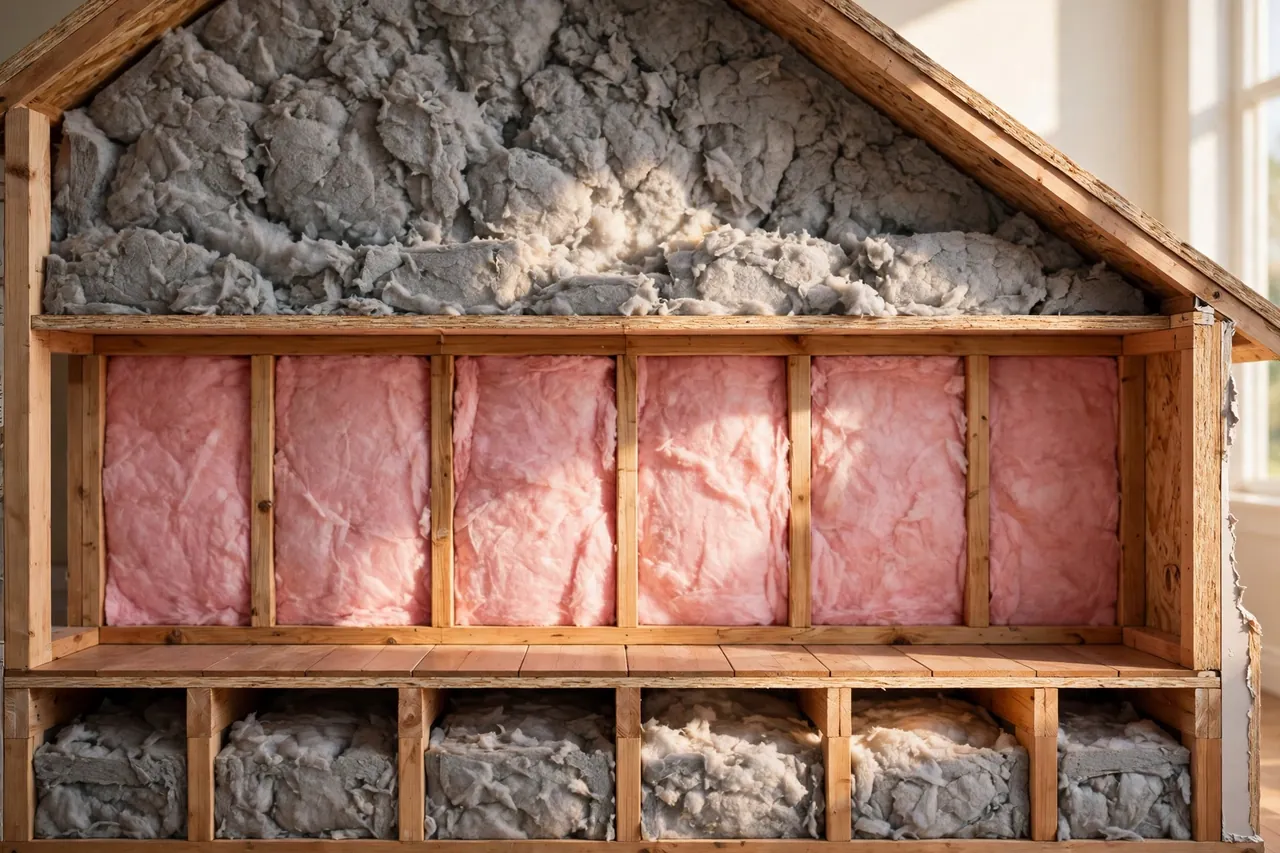
Mistakes to Avoid
Most insulation regrets come from the install, not the material. Watch for these five mistakes, and your job will hold its R-value for decades.
- Insulating before air sealing. Seal the attic floor first, because you cannot reach it after the insulation goes down.
- Skipping the depth check. Measure cellulose depth in several spots before the crew leaves, and compare it with the bag chart.
- Covering wet or damaged old insulation. Remove wet, moldy, or rodent-soiled material first instead of burying it.
- Blocking the soffit vents. Keep baffles at the eaves so air can still flow through the attic.
- Trapping a vapor barrier in the middle. Never lay faced batts over cellulose with the facing sandwiched between layers, since trapped moisture has nowhere to go.
One more check that saves arguments later: ask the installer to leave the empty bags or a written bag count on the invoice. The bag count proves the crew used enough material to hit the target R-value, and it gives you a record if the attic ever underperforms.
Related Guides
How to Insulate an Attic: A Step-by-Step Guide That Starts With Air Sealing · Best Insulation for Ceilings: 7 Picks by Ceiling Type · Best Indoor Propane Heater: 6 Safe Picks for Warm Rooms
Frequently Asked Questions
Which is better for attic insulation — fiberglass or cellulose?
For a blown-in attic floor, cellulose has a slight edge. It gives more R-value per inch, so it needs about 14 inches for R-49 instead of about 17 inches for blown fiberglass, and it fills better around wiring and pipes at a similar cost. Fiberglass settles less and will not burn, so pick it if those two points matter more to you.
Does cellulose insulation settle?
Yes. Loose-fill cellulose settles about 10 percent as it reaches its rated density, and some sources report up to 20 percent over time. Manufacturer coverage charts already allow for this, so a crew that blows to the chart’s installed depth still hits the target R-value after settling. Dense-pack cellulose in walls barely settles because it is packed too tightly to compress.
Can I blow cellulose over existing fiberglass?
Yes, and it is one of the most common attic upgrades. If the old fiberglass is dry, clean, and not matted down, blow cellulose directly over it and the R-values add together. If the old layer has a kraft paper facing, slash the facing first so moisture can pass through. Wet, moldy, or rodent-damaged fiberglass must come out before you add anything.
Is fiberglass insulation better than cellulose?
It depends on the job. Fiberglass is better for new walls with open framing, for the tightest budgets, and for fire-critical or damp-prone spots, because it is cheaper, non-combustible, and recovers after wetting. Cellulose is better for most attics and for closed-wall retrofits, where its higher R-value per inch and tighter fill matter more.
Can you mix cellulose and fiberglass insulation?
Yes. Layering the two is common and sound building practice. The R-values simply add together, as long as the lower layer is dry and uncompressed and no vapor barrier is trapped between the layers. The usual mix is cellulose blown over existing fiberglass in the attic, or cellulose in the attic with fiberglass batts in open new walls.
A Short Note Before You Start
Insulation work looks simple from the ground, but attics hide real hazards: live wiring, recessed lights that run hot, soft spots in old decking, and poor air. Wear a mask, gloves, and eye protection, keep soffit vents clear, and call a licensed pro for knob-and-tube wiring, mold, or any structural doubt. Prices and R-value targets in this guide were checked on 2026-11-05 and vary by region and local code, so confirm your climate zone target and get two or three written quotes before you commit.
Start with the room that loses the most heat, which is usually the attic. Air seal it, pick the material that fits that room, and check the depth before the crew packs up. Do that, and either material will pay you back in comfort and lower bills for years.