A declutter challenge gives you one small task each day for 30 days, so you clear your whole home without a single exhausting weekend. Each task takes 10 to 20 minutes, and the plan below walks you through your home in order, week by week, with catch-up days built in. Start on any day of the month, follow the days in order, and by Day 30 you will have a lighter home and a simple habit that keeps it that way.
This is a dated daily program, not a loose list of ideas. You do Day 1 on your first day, Day 2 on your second day, and so on until Day 30. That order matters, because the early days hand you quick wins, the middle days tackle the hard stuff once your decision muscle is warm, and the last days deal with paper, digital clutter, and the final drop-off. If you want a room-by-room list you can tick off in any order instead, our decluttering checklist is the better tool for that job.
What a Declutter Challenge Really Is
A declutter challenge is a plan with a finish line. You commit to one small decluttering task each day for a set number of days, usually 30, and each day’s task is small enough to finish in one short session. That is the whole secret. Big clean-outs fail because they ask too much on day one. A challenge asks for 15 minutes, and 15 minutes is easy to say yes to.
Most versions of the 30-day decluttering challenge follow the same shape: one area or one category per day, starting with easy spots and moving toward harder ones. Courtney Carver of Be More With Less runs one of the best-known versions, and her rule is simple: commit to just 10 minutes a day, and do only one task per day even if you feel like doing more. That restraint is what builds the habit, and you can read her full day-by-day plan on Be More With Less.
There is also a second, tougher format called the Minimalism Game, created by Joshua Fields Millburn and Ryan Nicodemus, known as The Minimalists. In that game you remove one item on Day 1, two items on Day 2, three on Day 3, and so on until Day 30 asks for 30 items. Finish it and you will have removed 465 items, and every item must leave your home by midnight the same day. The full rules are explained on Minimalist Home. This article uses the gentler area-a-day format, because it works better for a first challenge, and it compares the two formats near the end so you can pick the one that fits you.
The 7 Rules That Keep You Going for 30 Days
Rules sound strict, but these seven exist to protect you from the two things that kill every challenge: a bad day and a hard decision. Follow them and the plan carries you through.
- One task a day, and only one. Even when you feel fired up, stop after today’s task. Saving energy is how you show up again tomorrow.
- Set a timer for 15 minutes. Most days fit in 15 minutes. When the timer rings, stop, even if a drawer is half done. You can finish it on a catch-up day.
- Sort into four piles only. Keep, donate, trash or recycle, and relocate to another room. A fifth pile means a decision you dodged, and dodged decisions are clutter.
- Get the bags out of the house. Put donate bags by the front door the same day and drop them off at least once a week. A full bag sitting in the garage is not decluttered.
- Miss a day, do not double up. Skip the missed day and use the next catch-up day (Day 7, 14, or 21) to cover it. Doubling up is how a missed Tuesday turns into quitting on Wednesday.
- Declutter only your own stuff. Never toss a partner’s, roommate’s, or child’s things without asking. Ask them to do their own day, or skip that spot.
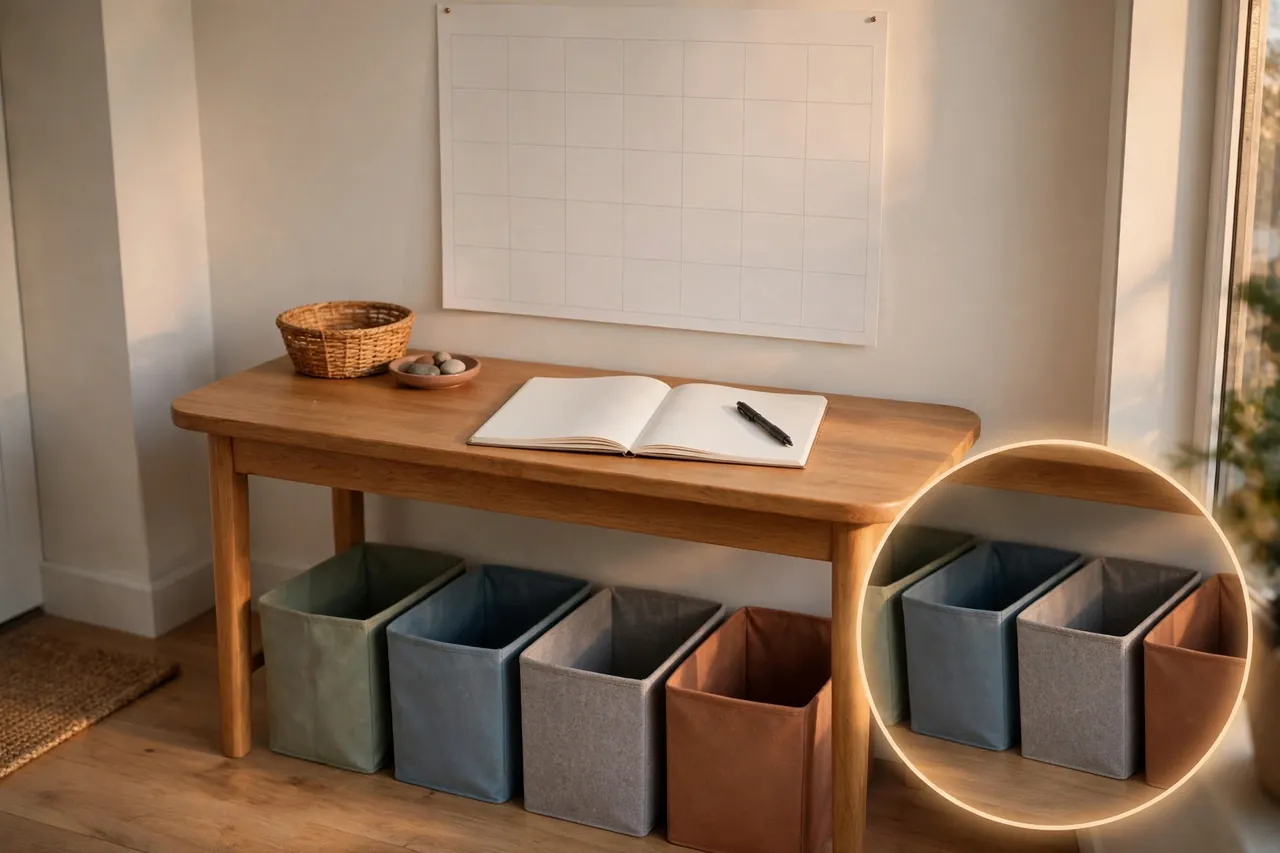
- Buy no bins or organizers until Week 4. You cannot organize clutter into calm. Clear first, then see what storage you truly need.
One more rule sits behind all seven: the challenge runs on calendar days, not on perfect streaks. A missed day is a normal part of a 30-day program, and the plan already expects it. That is why catch-up days exist.
Before Day 1: Your 20-Minute Setup
Do this short setup the evening before you start, and Day 1 will take 15 minutes instead of 45. First, pick your start date and write it on a calendar or in your phone, with Day 30 circled. Second, set up four bags or boxes in one spot and label them Keep, Donate, Trash, and Relocate. Third, pick your daily time, the same time each day if you can, because a fixed time turns a task into a habit. Fourth, choose your donation drop-off point now, before you have bags to carry, and check its hours. The U.S. Environmental Protection Agency notes that local churches, community centers, thrift stores, schools, and nonprofits may accept a variety of donated items, including used books, working electronics, and unneeded furniture, so you likely have more than one good option nearby. Read the EPA’s full guidance on what you can do to reduce, reuse, and recycle.
Finally, grab a notebook or a notes app for tracking. You only need four columns: day number, task, bags out, and a check mark. That little log becomes your proof on the hard days in Week 3, when you can look back and see two full weeks of finished days.
Week 1: Quick Wins — Days 1–7
Week 1 is all about visible spots and fast decisions. Nothing here needs deep thought, and every task ends with a surface you can see. That visible change is the fuel for the rest of the month. Keep each day to 15 minutes.
| Day | Task | Time |
|---|---|---|
| Day 1 | Junk drawer: empty it, toss the broken and dried-out, keep only what you use | 15 min |
| Day 2 | Entryway and coat hooks: shoes, bags, and jackets that do not belong there | 15 min |
| Day 3 | Bathroom counter and medicine cabinet: expired items out, daily items only on the counter | 15 min |
| Day 4 | Living room surfaces: coffee table, side tables, and anything that lives on them | 15 min |
| Day 5 | Fridge and freezer: expired food out, wipe one shelf while you are there | 20 min |
| Day 6 | Wallet, bag, and cords: empty the bag, match cords to devices, recycle the mystery ones | 15 min |
| Day 7 | Catch-up day: finish any missed day, or redo the spot that still bugs you | 15 min |
Day 1 starts with the junk drawer on purpose. It is small, it is contained, and almost everyone has one, so your first win comes fast. If your home has no junk drawer, use the spot where small random things collect instead. Our guide to taming the junk drawer walks through the same job in more detail. Day 4 covers the living room surfaces, and if that room needs a fuller reset after the challenge, our guide on how to organize a room takes you through it step by step.
By the end of Week 1, you should have at least three bags out of the house and seven check marks in your log. If you missed a day, Day 7 is your safety net, so use it and move on without guilt.
Week 2: Kitchen and Bath — Days 8–14
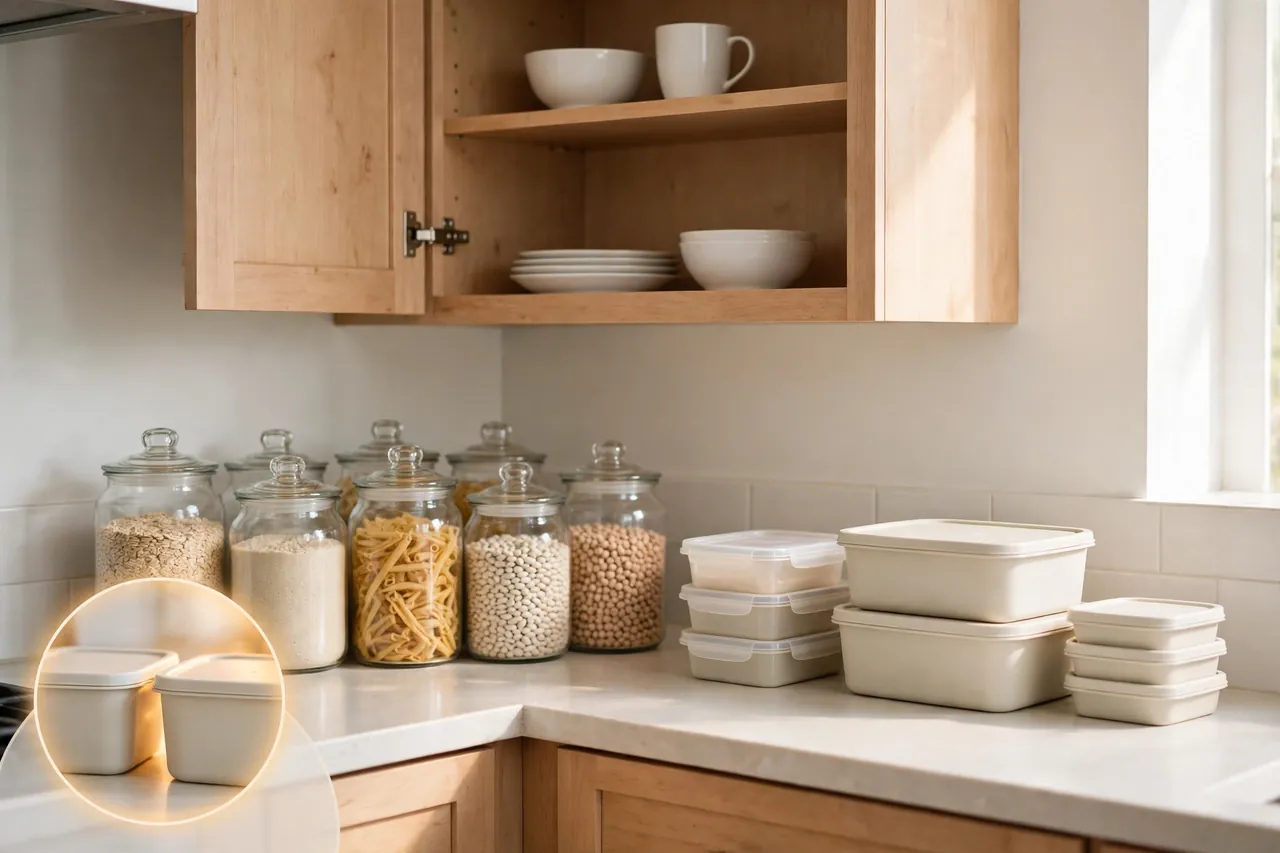
Week 2 moves into the kitchen and bathroom, where duplicates hide. Most homes hold three spatulas, two half-dead blenders’ worth of gadgets, and mugs no one reaches for. Your job this week is simple: keep the best one of each thing and let the rest go. Allow 15 to 20 minutes a day.
| Day | Task | Time |
|---|---|---|
| Day 8 | Pantry: expired food out, group what is left by type | 20 min |
| Day 9 | Food containers and lids: match every lid, recycle the orphans | 15 min |
| Day 10 | Kitchen cabinets: one cabinet at a time, keep only what you use | 20 min |
| Day 11 | Utensils and gadgets: duplicates out, broken tools out | 15 min |
| Day 12 | Small appliances: anything unused for a year leaves the counter | 15 min |
| Day 13 | Linen closet: keep two sets of sheets per bed, two towel sets per person | 20 min |
| Day 14 | Catch-up day: finish a missed kitchen day, then drop off donations | 20 min |
Day 10 is the hardest day so far, because kitchen cabinets hold the “just in case” items. Ask one question per item: have I used this in the past year? If the answer is no, it goes. If you want a deeper kitchen-only plan after the challenge, our declutter your kitchen guide covers the whole room in detail.
Drop off your first donation load on Day 14 at the latest. Carrying bags out of the house is the moment the challenge starts to feel real, and an empty donation zone makes room for Week 3.
Week 3: Clothes and Bedrooms — Days 15–21
Week 3 is the emotional week. Clothes carry memories, gifts, and old versions of you, so decisions take longer here. Give yourself 20 to 30 minutes a day, and use one clear test: keep it only if it fits, is in good shape, and you would happily wear it this week. If you need a slower, clothes-only method after this week, our decluttering clothes guide goes deeper.
| Day | Task | Time |
|---|---|---|
| Day 15 | Everyday clothes: the pieces you reach for most, worn or torn ones out | 20 min |
| Day 16 | Closet, part 1: one half of the closet, try things on, keep what fits and flatters | 30 min |
| Day 17 | Closet, part 2 and shoes: the other half, plus every pair you never wear | 30 min |
| Day 18 | Dresser drawers: empty one drawer at a time, keep only what you love to wear | 20 min |
| Day 19 | Nightstands and under the bed: clear both, keep only what belongs there | 20 min |
| Day 20 | Kids’ clothes and toys, or the guest room if you have no kids | 30 min |
| Day 21 | Catch-up day: finish a missed clothes day, drop off donations again | 20 min |
Two traps wait for you this week. The first is the “maybe someday” pile. If you have not worn it in a year and it needs a different body, a different job, or a different life to work, let it go. The second trap is sorting clothes you already decided to donate. Bag them the same day, because a sorted pile on the bed has a way of creeping back into the closet.
Day 20 covers kids’ things, and Rule 6 matters most here. Let kids choose what leaves from their own toys and clothes. You can set the limit, such as one box out, but they should make the picks.
Week 4: Paper, Digital, and the Finish — Days 22–30
Week 4 clears the invisible clutter: paper piles, digital mess, storage corners, and the car. These tasks feel less dramatic than a closet, but they remove daily friction, like hunting for a bill or a charger. This week also ends the challenge properly, with a donation run and a final walk-through instead of a slow fade.
| Day | Task | Time |
|---|---|---|
| Day 22 | Paper pile and mail: recycle junk mail, file what needs action in one spot | 20 min |
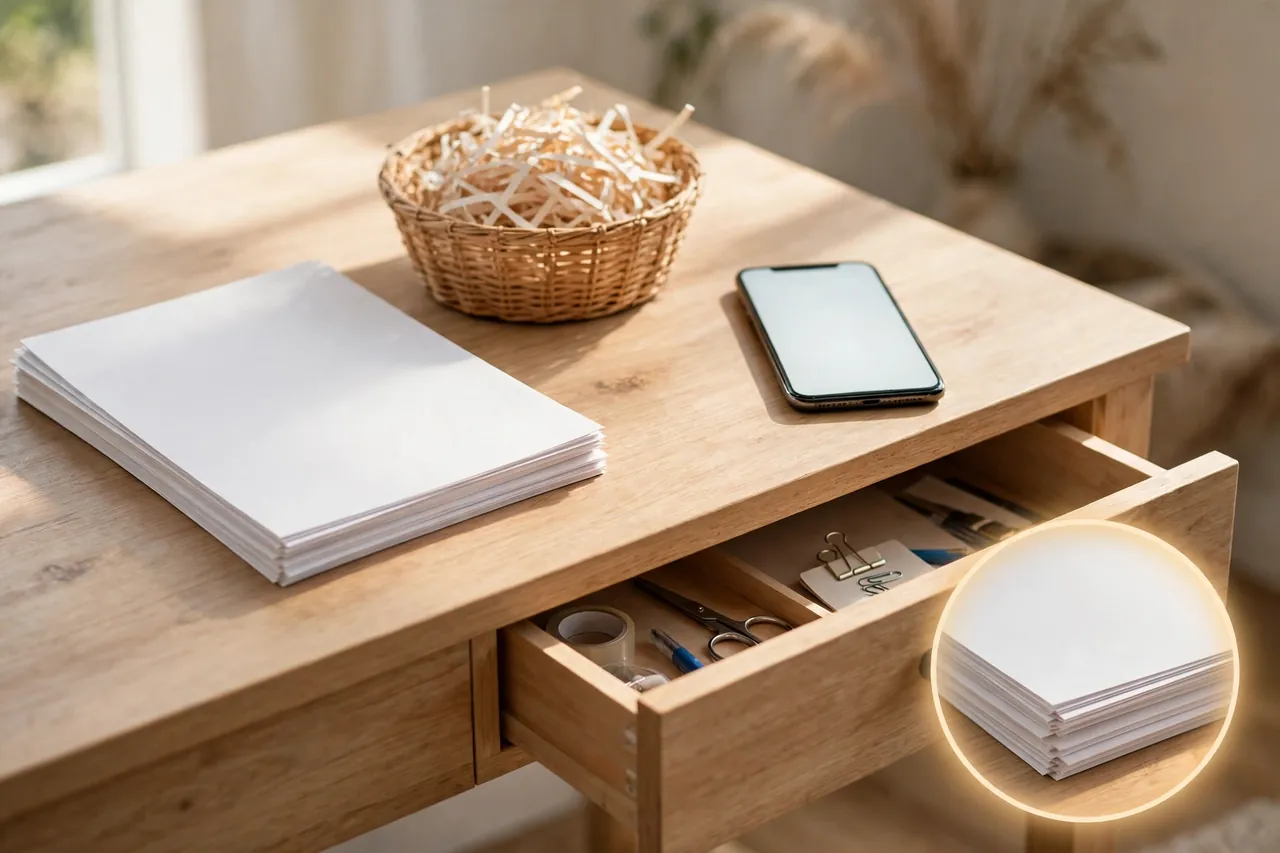
| Day 23 | Files and important papers: one folder at a time, shred what you no longer need | 20 min |
| Day 24 | Books and magazines: keep what you will reread, donate the rest | 20 min |
| Day 25 | Desk and home office: clear the surface, one drawer, and the cable tangle | 20 min |
| Day 26 | Phone and digital: delete unused apps, clear downloads, unsubscribe from emails | 20 min |
| Day 27 | Garage or storage corner: one shelf, wall, or corner only, not the whole space | 30 min |
| Day 28 | The car: glove box, trunk, and back seat, plus anything that migrated there | 20 min |
| Day 29 | Donation day: bag everything left, drop it all off, clear the donation zone | 30 min |
| Day 30 | Final walk-through: tour every room, fix the last small spots, celebrate | 20 min |
Day 26 surprises most people, because digital clutter weighs on you even though you cannot see it. An inbox full of unread sale emails and a phone full of apps you never open create the same low-grade stress as a messy counter. Twenty focused minutes of deleting and unsubscribing pays off every single day after.
Day 27 deserves a warning: do not try to declutter the whole garage in one day. One shelf or one corner is the task. A full garage is a weekend project, and this challenge is built on small daily wins, not heroic weekends.
How to Track Your Progress
Tracking is what turns 30 separate tasks into one challenge you can see. Without it, Week 3 feels like starting over. With it, you can look back and see exactly how far you have come.
Use the simplest log that works: one line per day with the date, the day number, the task, the number of bags out, and a check mark. A notebook page, a notes app, or a printed sheet all work. Count bags, not items, because bag counts stay honest and easy. One kitchen bag and one closet bag are both one bag, and that is fine. What matters is the steady count of bags leaving your home.
Check in with yourself at the end of each week. After Week 1, count your check marks and bags. After Week 2, look at your donation zone and notice it emptying. After Week 3, stand in your closet and see the space. These weekly pauses are built into the plan through the catch-up days, so use them to look back, not just to catch up.
If you like a visible score, add a weekly total row to your log, like the one below. Watching the bag count climb is the best motivation the challenge offers.
| Week | Theme | Bags out |
|---|---|---|
| Week 1 | Quick wins | Write your count |
| Week 2 | Kitchen and bath | Write your count |
| Week 3 | Clothes and bedrooms | Write your count |
| Week 4 | Paper, digital, finish | Write your count |
| Total | 30 days | Write your total |
What to Do When You Fall Behind
You will fall behind. Almost everyone does, usually in Week 2 or Week 3, when life gets busy or a hard day arrives. Falling behind is not failing. Quitting is failing, and the plan has three ways back.
First, use the catch-up days. Days 7, 14, and 21 exist for exactly this reason. If you missed Day 11, do it on Day 14. If you missed two days, do the one that matters most and let the other one go. A skipped utensil drawer will not ruin your home.
Second, shrink the day instead of skipping it. If you have only five minutes, do five minutes of today’s task and stop. Five minutes of a closet beats zero minutes and a guilty evening. The timer rule protects you here: set it for five minutes, do what you can, and call the day done.
Third, if you miss a whole week, do not restart from Day 1. Restart from where you stopped, or jump to the current week and circle back later. Restarting from Day 1 throws away real progress, and thrown-away progress is what makes people quit. If the full 30-day shape no longer fits your month, you can also switch to a slower rhythm, one task every other day, and finish in 60 days. The order still works, and the finish still counts.
What “Done” Looks Like on Day 30
Done does not mean a perfect home. It means every room has been touched once, every donation bag has left the house, and you can find what you need without digging. Walk through your home on Day 30 with fresh eyes and check for the signs: clear counters, a closet where clothes have breathing room, a junk drawer that closes easily, and no donation bags waiting by the door.
Then set up the habit that keeps it done. Pick one small weekly routine, such as a 10-minute tidy every Sunday, and one rule for new things, such as one item out for every item in. A short daily or weekly routine like the one in our daily cleaning schedule keeps the challenge results from sliding back. If you want to go further, the next step is a deeper whole-house method, and our planned guide to decluttering and purging takes that on. If you prefer a repeating rhythm instead of a one-time program, our planned declutter calendar gives you a format you can reuse every month.
Celebrate on Day 30. Take a photo of your favorite cleared spot, tell a friend what you finished, or simply enjoy an evening in a calmer room. You spent 30 days building a skill, not just emptying drawers, and that skill stays with you long after the bags are gone.

Declutter Challenge vs. the Minimalism Game
Both formats clear your home in 30 days, but they ask for different things. Pick the one that matches your energy, not the one that sounds most impressive.
| Feature | Declutter challenge (this plan) | Minimalism Game |
|---|---|---|
| Daily task | One small area per day | A growing item count per day |
| Time per day | 10 to 20 minutes | Grows; Day 30 needs much longer |
| Total removed | Counted in bags, varies by home | 465 items if you finish |
| Best for | First-timers and busy people | Competitive pairs and big purges |
| Hardest part | Showing up daily | Finding 25 to 30 items late in the month |
The Minimalism Game works best with a partner, because you keep each other honest and the daily count gives you something to compare. The area-a-day challenge works best alone, because the task is always clear and the time stays short. If you finish this challenge and want a harder round, the Minimalism Game is a great second month. If you want a lighter ongoing habit instead, a minimalist routine is the next step, and our guides to the minimalist decluttering checklist and how to become a minimalist show you how that looks day to day.
Related Guides
If this challenge sparked a bigger project, these guides pick up where Day 30 leaves off. Start with our decluttering checklist for a room-by-room list you can work through in any order, then go deeper with our declutter your kitchen guide and our decluttering clothes guide. For the habit that keeps your home clear, read our daily cleaning schedule, and for a simpler way of living with less, see how to become a minimalist.
Frequently Asked Questions
What is the 30 day declutter challenge?
There are two versions of the 30 day declutter challenge. One gives you 30 different areas to clear, one per day, so you work through your whole house in a month. The other is a counting game: remove one item on Day 1, two on Day 2, and so on until Day 30. This article follows the first version, one small area per day.
How long should I spend on each daily task?
Most daily tasks fit into 15 to 20 minutes. Larger areas, such as a closet or a garage corner, may need 30 minutes or a split across two days. Set a timer, stop when it rings, and use the catch-up days for anything left over. Short daily sessions beat one long weekend every time.
Where should I start when my home feels cluttered?
Start with a small, visible spot you can finish fast, such as a junk drawer, a countertop, or the entryway. A quick win proves you can do this, and that confidence carries you into the bigger rooms. Never start with the hardest room or with sentimental items.
What’s the fastest way to purge clutter?
Follow a set plan so you never waste time deciding where to start, and work in short daily sessions you can actually keep. Consistency matters more than speed: one small task every day clears far more in a month than one giant weekend that leaves you exhausted and half done.
How can I keep my home organized after the 30-day challenge?
Set aside a short time each week to tidy surfaces, put things away after use, and rotate seasonal items as your needs change. Add a one-in, one-out rule for new purchases, and repeat a short challenge round whenever clutter starts to creep back in.
Thirty days from now, your home can feel lighter, calmer, and easier to live in. Pick your start date tonight, set out your four bags, and do Day 1 tomorrow. One drawer, fifteen minutes, and you are already on your way.