
Spring lawn care starts when your soil reaches 55°F, because that temperature wakes up both your grass and crabgrass at the same time — the Old Farmer’s Almanac puts the pre-emergent window at soil temperatures of 55°F for three straight days, and missing that short window is the costliest spring mistake most homeowners make.
That is why spring lawn care runs on soil temperature, not on the calendar. March on the wall calendar can still mean frozen soil in Minnesota and a greening lawn in Georgia. The tips below follow the season in order — cleanup, mower tune-up, pre-emergent, feeding, overseeding, and the first mow — so you do each job when your lawn is actually ready for it. Do them in this order and your grass heads into summer thick, fed, and ready to crowd out weeds on its own.
When to Start Spring Lawn Care
Start when the ground has thawed, the soil feels dry enough to walk on without leaving deep footprints, and daytime temperatures stay above freezing. Scotts notes that Canadian and northern lawns usually reach this point between late March and early April, while colder areas wait until May or even early June. Your own yard tells you the truth: push a screwdriver into the soil, and if it slides in easily, the ground has thawed.
Cool-season grasses — Kentucky bluegrass, perennial ryegrass, and fescues — wake up first and want early-spring attention. Warm-season grasses — bermuda, zoysia, and St. Augustine — stay brown longer and want you to wait until late spring, when air temperatures sit consistently between 70°F and 90°F. If you are not sure which grass you have, look at when it greens up: grass that greens in April is almost certainly cool-season, and grass that waits until May is warm-season.
A cheap soil thermometer takes the guesswork out of timing. Stick it 2 to 3 inches into the soil in the morning, and check it for a few days in a row. When it reads 55°F, your spring season has officially started.
Your Spring Lawn Care Schedule: Early, Mid, and Late Spring
Spring breaks into three short phases, and each one has its own jobs. Early spring is cleanup and prep. Mid-spring is feeding, weed prevention, and the first mow. Late spring is seeding, spot repairs, and getting ready for summer heat.
Spring lawn care at a glance
| Phase | Cool-season lawns | Warm-season lawns |
|---|---|---|
| Early spring | Clean up debris, tune up mower, test soil | Clean up debris, tune up mower, wait for green-up |
| Mid-spring | Pre-emergent, first feeding, first mow | Pre-emergent, first feeding, first mow |
| Late spring | Overseed bare spots, dethatch if spongy | Overseed and patch, feed again in 6 to 8 weeks |
Keep this table on your fridge. It stops the two most common spring errors: doing warm-season jobs on a cool-season lawn, and doing late-spring jobs a month too early.
Step 1: Clean Up Winter’s Mess
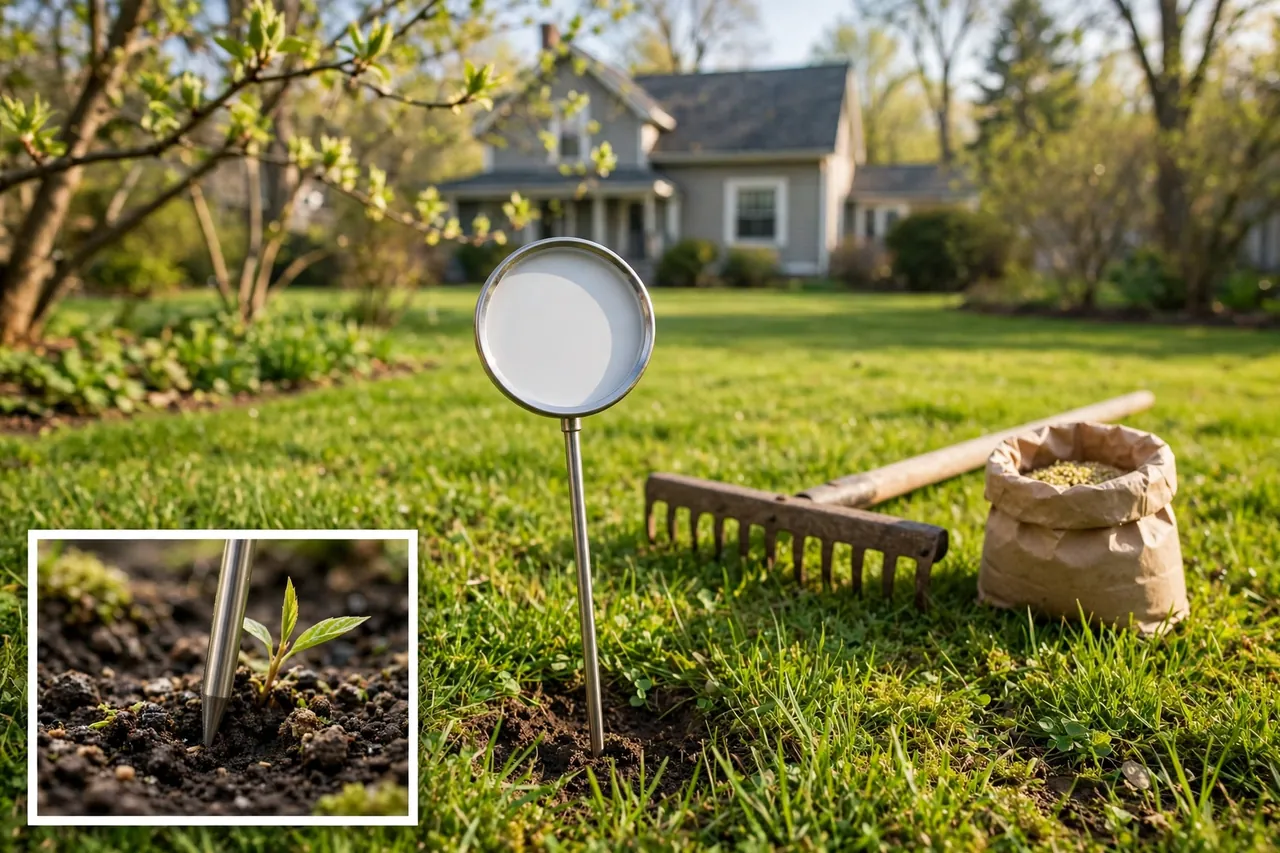
Walk your whole lawn before you do anything else. Pick up sticks, branches, and trash that winter dropped, and rake up matted leaves and dead grass. A thick layer of debris smothers new growth and holds moisture against the grass, which invites snow mold and other spring diseases.
Rake lightly, not aggressively. Your grass is tender after winter, and hard raking tears out live shoots along with the dead ones. Use a leaf rake or a fan rake, and work in one direction so you can see what you have cleared. While you rake, look for the problems winter left behind: bare patches, matted pink or gray areas that signal snow mold, and low spots where water sat.
Bag up the debris instead of leaving piles on the lawn. If you compost, lawn debris makes fine compost material — just keep diseased-looking grass out of the pile. For a full rundown on what to do with everything you rake up, see our guide to fixing a soggy yard if you also find standing water, since drainage trouble shows up first in spring.
Step 2: Tune Up Your Mower and Sharpen the Blade
Do this before the grass needs cutting, not the morning you first need to mow. Change the oil, replace the spark plug if it is fouled, clean or replace the air filter, and fill the tank with fresh gas. Old gas left over winter is the top reason mowers refuse to start in spring.
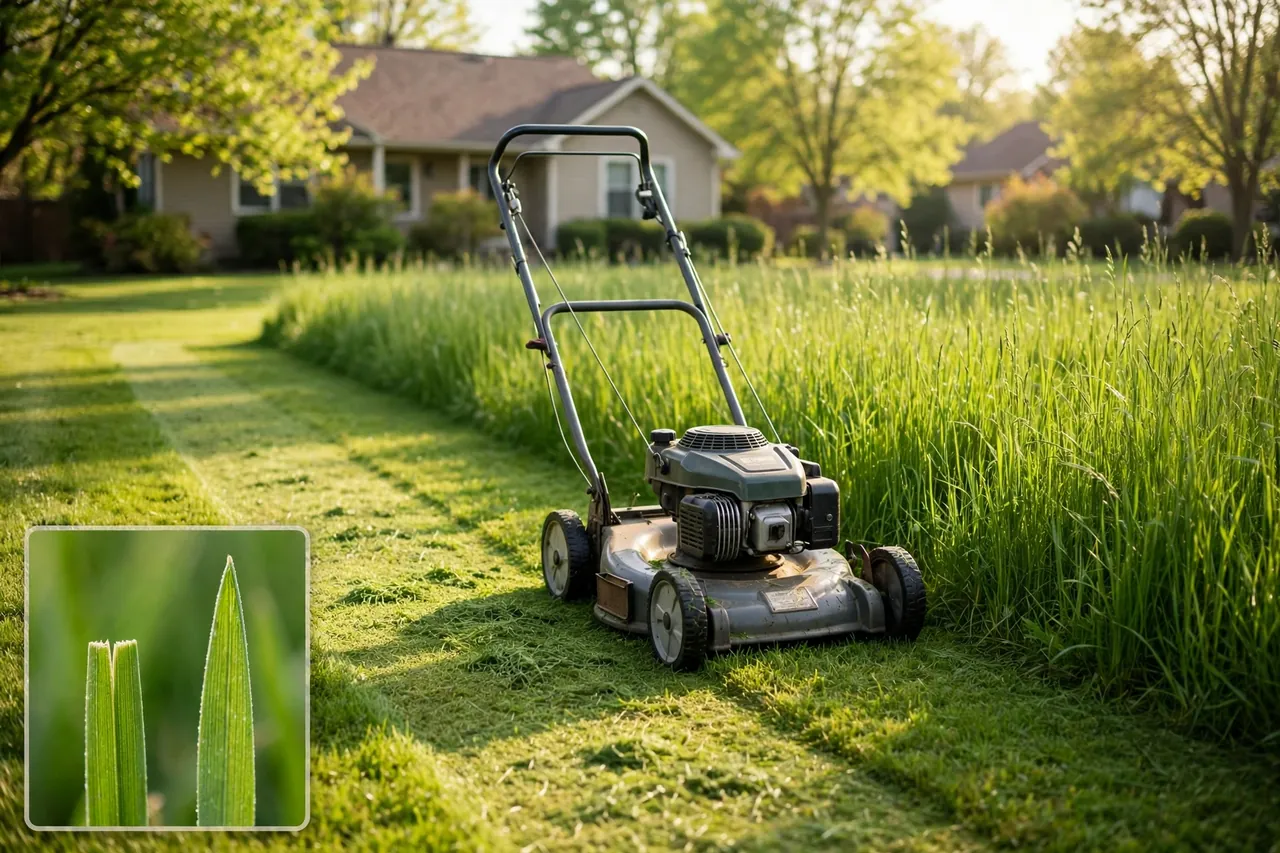
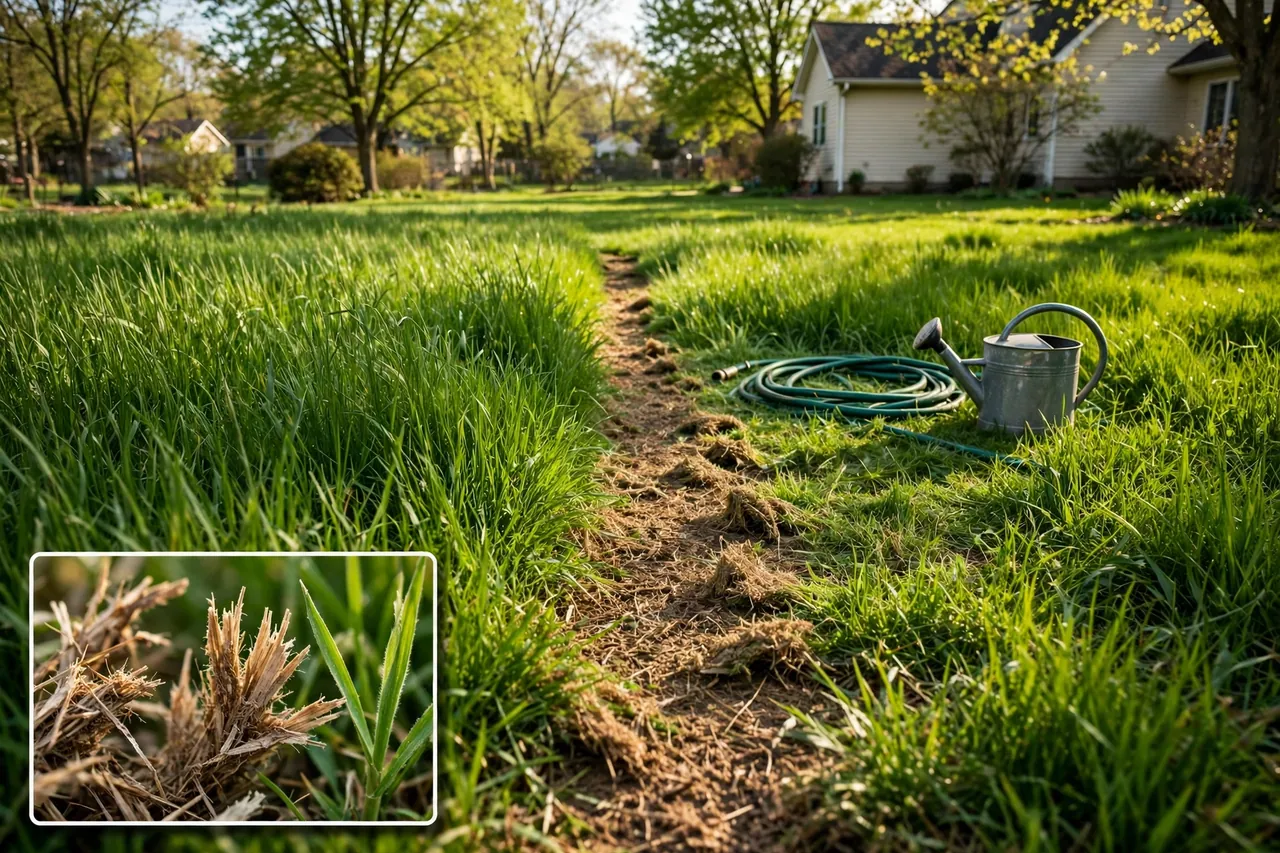
Sharpen the blade at least once a year, and spring is the best time. A dull blade tears grass instead of cutting it, and torn tips turn brown within a day or two. That ragged brown edge is the classic sign of a dull mower blade, and it also opens the door to disease. A sharp blade leaves a clean cut that heals fast and stays green.
Set your deck high before the first mow and leave it there. Scotts recommends cutting at the highest setting for your grass type, and most turf types thrive with a 3- to 4-inch blade height. Tall grass grows deeper roots, shades the soil so weed seeds cannot germinate, and holds moisture better when summer heat arrives.
Step 3: Put Down Pre-Emergent Before Crabgrass Wakes Up
Pre-emergent is the single highest-value spring job, and it has the shortest window. It stops crabgrass and other annual weeds from sprouting, but it only works if it is down before the seeds germinate. Once crabgrass is up, pre-emergent does nothing.
Time it by soil temperature. The Old Farmer’s Almanac gives the rule plainly: soil temperatures need to be at 55°F for three days straight, and once temperatures reach 65 to 70°F, crabgrass spreads rapidly. A soil thermometer costs a few dollars at any garden center and removes all the guessing. In most of the country, that 55°F moment lands around the time of your second mowing.
Follow the label exactly, and water the product in lightly unless the label says otherwise. One warning matters more than the rest: pre-emergent stops grass seed from germinating too. If you plan to overseed bare spots this spring, skip pre-emergent on those areas and seed instead — you cannot do both in the same spot. Choose the job your lawn needs more.
Step 4: Feed Your Lawn at the Right Time
Your lawn wakes up hungry after winter, but feeding too early wastes the meal. Fertilizer spread on dormant grass feeds weeds, not your lawn, and a heavy early feeding can push weak, fast growth that burns out in the first hot spell. Wait until the grass is actively growing and you have mowed at least once.
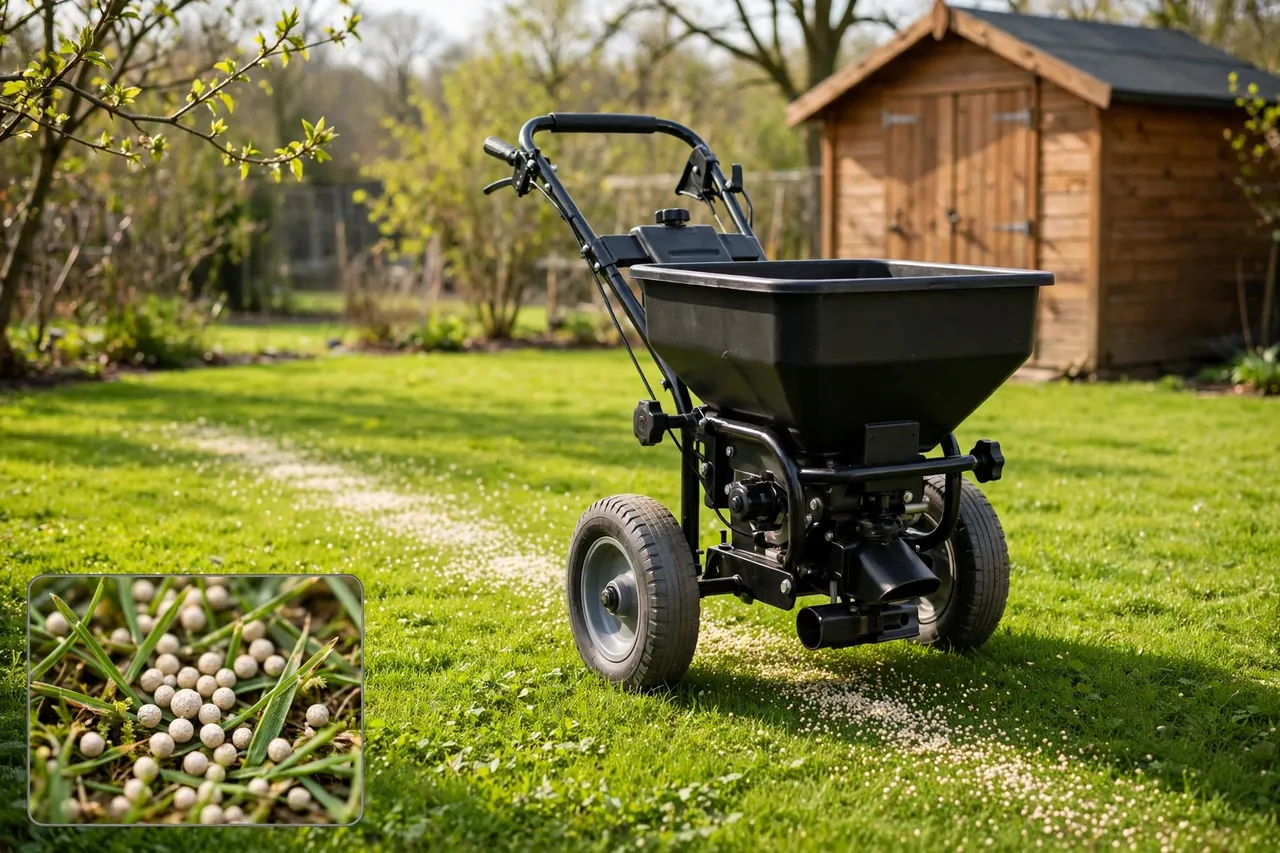
For cool-season lawns, the University of Illinois Extension recommends starting when the soil temperature reaches 55°F, usually mid to late April, and using a granular fertilizer for an even spread. Their recommended N-P-K ratio for home lawns is 3-1-2 or 4-1-2. Scotts suggests feeding around the time of the first mowing, then feeding again 6 to 8 weeks later — the same 6- to 8-week gap the Illinois Extension Q and A gives between spring feedings.
Warm-season lawns follow the same rhythm a little later. Feed once the lawn has fully greened up, then feed again about 6 to 8 weeks after that first application. In the South, a weed-and-feed product can do two jobs at once, feeding the grass while knocking back dollarweed and clover — but read the label first, because weed-and-feed products are not safe on every grass type or on newly seeded areas.
Spread fertilizer evenly and never overlap passes, or you will get dark green stripes where the product doubled up. Water lightly after spreading if the label calls for it, and sweep any granules off driveways and sidewalks back onto the grass so they do not wash into storm drains.
Step 5: Overseed Thin and Bare Spots the Right Way
Late spring is overseeding time, after the soil has warmed and the worst of the cold snaps has passed. Scotts times it simply: aim for an early spring sowing for cool-season grass and a late spring sowing for warm-season grass. In the South, wait until air temperatures hold between 70°F and 90°F before you seed bermuda or zoysia.
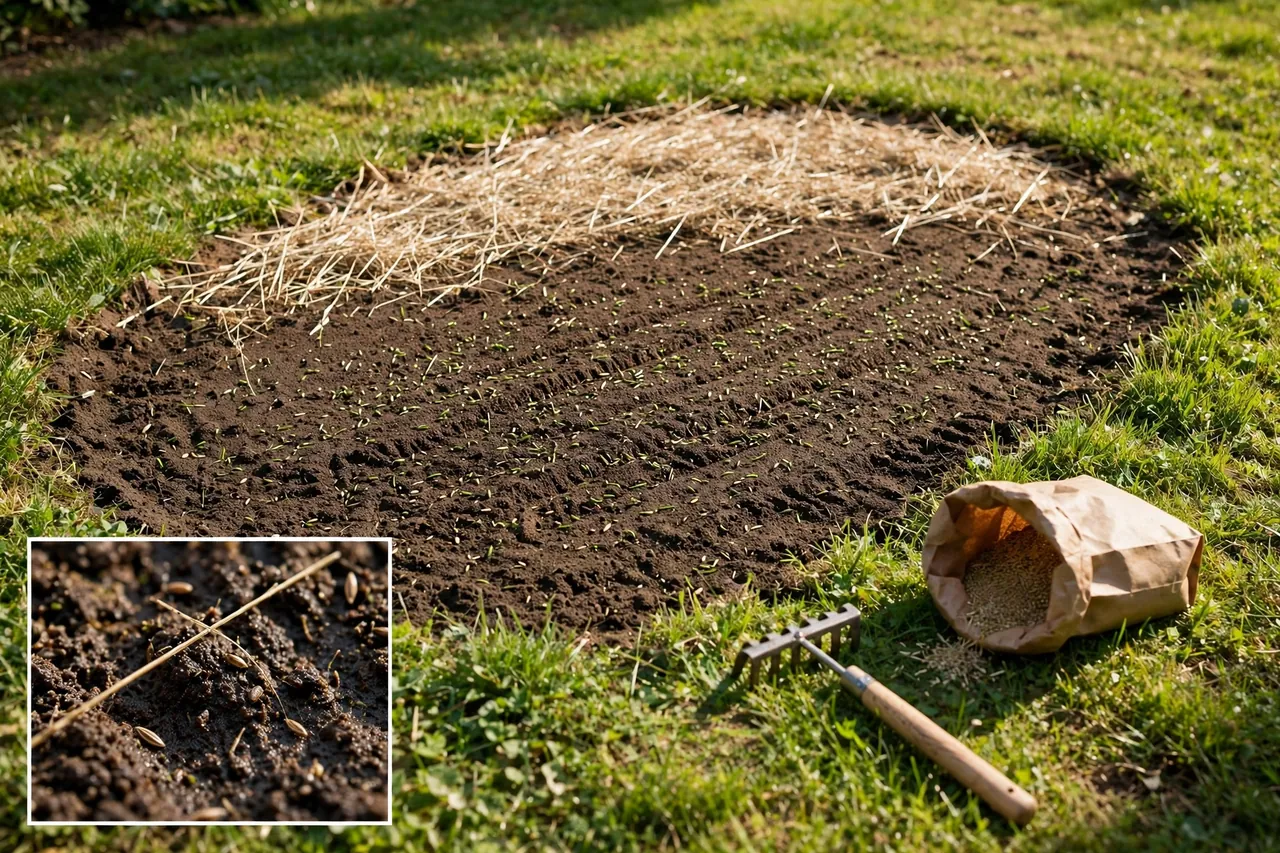
Seed only where seed can touch soil. Rake the bare spot to loosen the top half inch, scatter seed at the rate on the bag, and press it down with your foot or a roller so it makes firm contact. Cover it with a thin layer of compost or straw — no more than a quarter inch — to hold moisture. Then water lightly two or three times a day until the seedlings are up and mowable, because seed that dries out dies fast.
Remember the pre-emergent conflict from Step 3: if you put pre-emergent down this spring, wait until fall to seed those areas. Fall is the better seeding season for sunny cool-season lawns anyway, so spring seeding works best for shady spots and small patches. If you need seed and supplies, buy from a seller you trust — our roundup of the best places to buy plants online covers reliable online sources for seed and plants alike.
Step 6: Aerate and Dethatch Only If Your Lawn Needs It
Not every lawn needs aerating or dethatching in spring, and doing either one to a healthy lawn wastes a weekend. Check first. For thatch, cut a small plug and measure the spongy brown layer between the grass and the soil. If it is thicker than half an inch, dethatch. If it is thinner, leave it — a thin thatch layer protects roots and breaks down on its own.
The Old Farmer’s Almanac advises waiting until late spring to dethatch, because dethatching is rough on tender young grass shoots. A lawn that feels spongy underfoot or stays wet long after rain is the clearest sign of too much thatch. Use a dethatching rake on small areas or rent a power dethatcher for a big lawn, then rake up everything you pull out.
Aerate when the soil is compacted — heavy foot traffic, clay soil, or a lawn that puddles after rain are the usual signs. A core aerator pulls small plugs of soil out and leaves them on the lawn to break down. Spring aeration works, but fall is better for cool-season lawns, so in spring aerate only if compaction is clearly hurting the grass. Skip aerating newly seeded areas entirely.
Step 7: Start Mowing High With the First Mow
Start mowing when the grass reaches about 3 inches tall, and cut it back to no lower than 2.5 to 3 inches. That first cut sets the pattern for the whole season, so get it right: sharp blade, high deck, and never cut more than one-third of the blade in a single mow. The one-third rule is the rule that keeps grass from going into shock, and breaking it is how a healthy lawn turns brown overnight.
Mow high all spring. At 3 to 4 inches, grass shades its own soil, keeps roots cool, and crowds out weeds before they get started. Short grass looks tidy for a day and then struggles — shallow roots, more weeds, and faster drying in the sun. If the grass got away from you during a rainy week, cut it in two passes a few days apart instead of scalping it in one go.
Never mow wet grass. Wet clippings clump, smother the grass underneath, and spread disease. Wait until the dew has dried, and leave the clippings on the lawn — they break down fast in spring and return nitrogen to the soil for free. Bag clippings only if the lawn is diseased or the clippings are so thick they mat down.
Watering in Spring: How Much Is Enough
Most lawns need very little extra water in spring. Rain usually does the job, and overwatering in cool weather invites disease. Start watering only when the lawn shows stress — footprints that stay visible after you walk across it, or blades that fold up instead of springing back.
When you do water, water deeply and infrequently. About 1 inch of water per week, counting rainfall, is the standard Scotts gives for an actively growing lawn. One deep soak trains roots to grow down, while daily light sprinkles train them to stay at the surface, where summer heat kills them first. A tuna can on the lawn tells you when you have hit an inch — simple, free, and accurate.
Water in the morning so the grass dries before nightfall. Evening watering leaves blades wet overnight, and wet blades are where fungus starts. If your area has watering restrictions, check them before you set a schedule — spring is when most towns publish their summer rules.
Spring Weeds, Grubs, and Disease to Watch For
Spring weeds show up in a clear order. Dandelions and clover pop first, then crabgrass once the soil warms. Spot-treat broadleaf weeds like dandelions with a product labeled for your grass type, and pull small patches by hand after rain when the soil is soft and the whole root comes out. A thick lawn is the best weed control there is — every bare spot is an open invitation.
Watch for grubs if you had them last year or if raccoons and birds are digging in your lawn. Mid- to late spring is the right time for a grub preventer, and it only helps if grubs were actually a problem — putting it down “just in case” every year wastes money and adds chemicals your lawn does not need.
Snow mold shows up as matted pink or gray patches where snow sat longest. Light raking usually fixes it once the grass starts growing, since air and sun dry the area out. If a patch stays dead after two weeks of good growing weather, rake it out and overseed it like any other bare spot.
Spring Lawn Care Mistakes to Avoid
Most spring lawn damage is self-inflicted, and every mistake below is easy to skip once you know it exists.
- Seeding and pre-emergent in the same spot. Pre-emergent cannot tell weed seed from grass seed. Pick one job per area.
- Fertilizing dormant grass. Feed only after the grass is growing and you have mowed at least once.
- Scalping the first mow. Cutting more than one-third of the blade shocks the grass and invites weeds.
- Dethatching too early. Wait until late spring, when young shoots can take the rough treatment.
- Watering every day. Shallow daily watering grows shallow roots. Water deeply, once or twice a week at most.
- Ignoring the soil. A simple soil test tells you the pH and what your lawn actually needs. The Old Farmer’s Almanac puts ideal lawn soil pH between 6.2 and 6.7, and below 6.0 your lawn is at higher risk for fungal disease.
- Starting on the calendar instead of the soil. A warm week in March is not spring. Soil temperature is the trigger, not the date.
When to Call a Lawn Pro
Call a professional when the job is bigger than a weekend fix. Widespread grub damage, a lawn that is more weed than grass, heavy thatch across the whole yard, or a grading problem that keeps the lawn wet all spring are all pro-level jobs. A local lawn service can also do a soil test and build a feeding plan for your exact grass and soil, which beats guessing at the garden center.
Get a quote before the spring rush, and ask what is included — some companies bundle aeration, overseeding, and feeding into one spring package that costs less than booking each job separately. If you hire someone, ask them to confirm your grass type first. Half of all spring lawn mistakes come from treating a cool-season lawn like a warm-season one, or the other way around.
For the rest of the year, keep the same rhythm going — summer feeding, fall overseeding, and winter prep — so the spring work pays off all year long.
A note on lawn chemicals: always read the label on any fertilizer, pre-emergent, or weed killer before you use it, and follow its directions for rates, timing, and safety. Keep children and pets off a treated lawn until it is dry or for as long as the label says, wear gloves when you spread or spray, and store products where children cannot reach them. If you are unsure about a product, ask your local extension office — that advice is free.
Related Guides
Fix a Soggy Yard: Drainage That Actually Works · Best Places to Buy Plants Online · How to Get Rid of Crabgrass in Lawn · Cost of Mowing Grass · Low Maintenance Front Yard Landscaping
Frequently Asked Questions
When Should You Start Spring Lawn Care?
Start when the ground has thawed, the soil is dry enough to walk on, and daytime temperatures stay above freezing. For most northern lawns that falls between late March and early April, while colder areas wait until May. Check the soil, not the calendar — a soil thermometer reading 55°F is your real start signal.
How often should I feed my lawn?
Feed four times a year — early and late spring, summer, and fall — with 6 to 8 weeks between feedings. In spring, feed once the grass is actively growing and you have mowed at least once, then feed again 6 to 8 weeks later. A fifth late-fall feeding helps the lawn through winter if timing allows.
When is the best time to start fertilizing my lawn?
Start fertilizing in spring when the soil temperature reaches 55°F, which is usually mid to late April for cool-season lawns. The grass should already be growing by then. Use a granular fertilizer for an even spread, and follow the rate on the bag — more fertilizer does not mean a better lawn.
How many times should I fertilize my lawn?
Plan on fertilizing four to five times from early spring through mid-fall. The first feeding comes when the soil hits 55°F, the next about four weeks later in May, and then every eight weeks through October. Space feedings out so the grass gets steady nutrition instead of one heavy dose.
When should I water the lawn? Before or after fertilizing?
Water the lawn a day before spreading fertilizer, so the moisture helps break down the granules and release nutrients gently into the soil. Do not fertilize right before rain, or the fertilizer can wash away before the grass can use it. If the label says to water the product in, do that after spreading.
Spring is the season that decides how your lawn looks all year. Get the timing right, feed and mow on the soil’s schedule instead of the calendar’s, and fix the thin spots now while the grass is eager to grow. By the time summer heat arrives, your lawn will be thick enough to handle it — and you will spend the summer enjoying it instead of rescuing it.