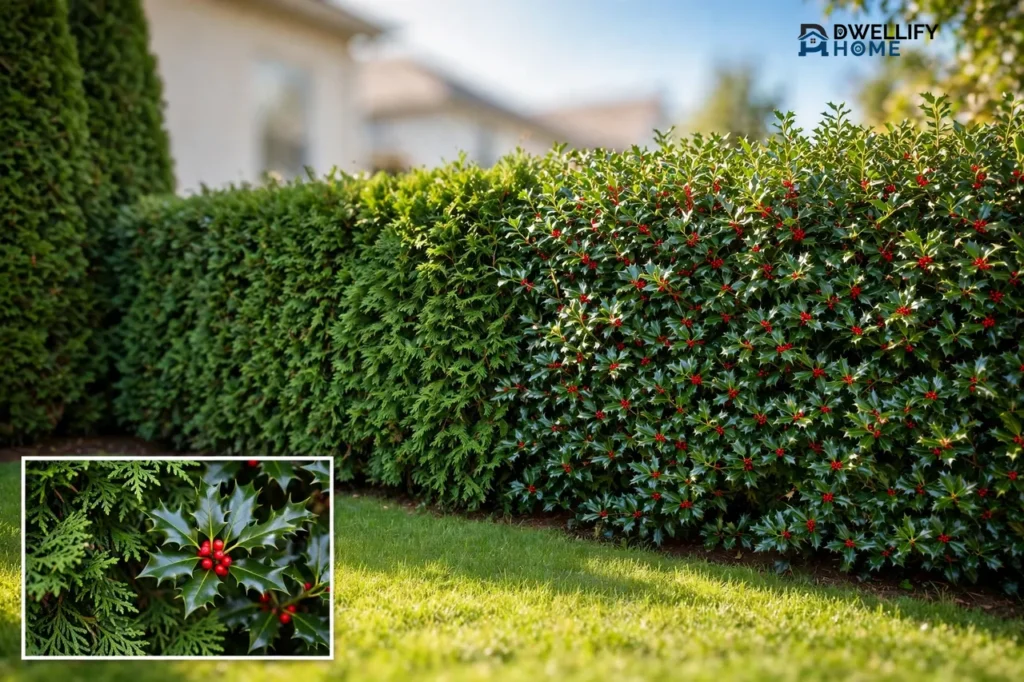
Privacy bushes are dense shrubs planted in a row to form a living fence at least 6 feet tall, and the University of Minnesota Extension says new shrubs need steady deep watering — about 1 to 1.5 gallons of water per inch of trunk width at each watering — until their roots settle in.
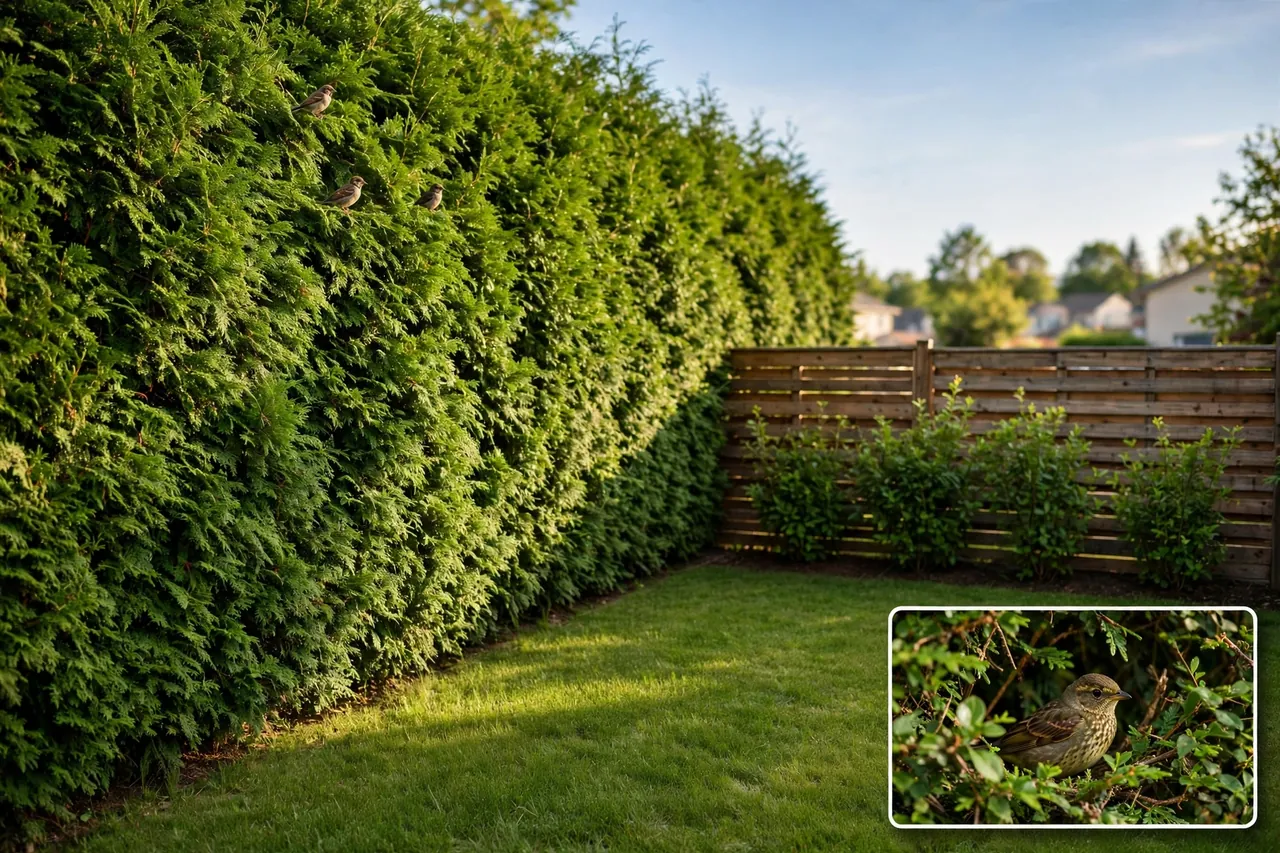
That living wall does more than block a view. It softens street noise, breaks the wind, and gives birds a place to shelter. A fence does the job in a day, but privacy bushes grow into something softer and better looking with every year. This guide shows you which bushes to pick, how far apart to plant them, and how to care for them so the screen fills in thick and stays healthy.
What Makes a Good Privacy Bush?
Not every shrub makes a good screen. A good privacy bush is dense from the ground up, hardy in your climate, and tall enough to block the view you want to hide. If you can see through the branches at eye level, it is not doing its job.
Evergreens give you cover all year. Deciduous bushes lose their leaves in winter, so they only screen you in spring, summer, and fall. Many yards mix the two: evergreens where privacy matters most, and flowering bushes where you want color for part of the year.
Before you buy anything, check three things. First, your USDA hardiness zone — a bush that freezes out in your zone will never screen anything. Second, the sun on the planting spot — full sun, partial shade, or full shade. Third, the mature size on the plant tag — buy for the size the bush will reach, not the size of the pot it comes in.
Evergreen Privacy Bushes
Evergreen bushes keep their leaves through winter, so they are the backbone of most privacy screens. These are the proven picks that show up again and again in expert lists.
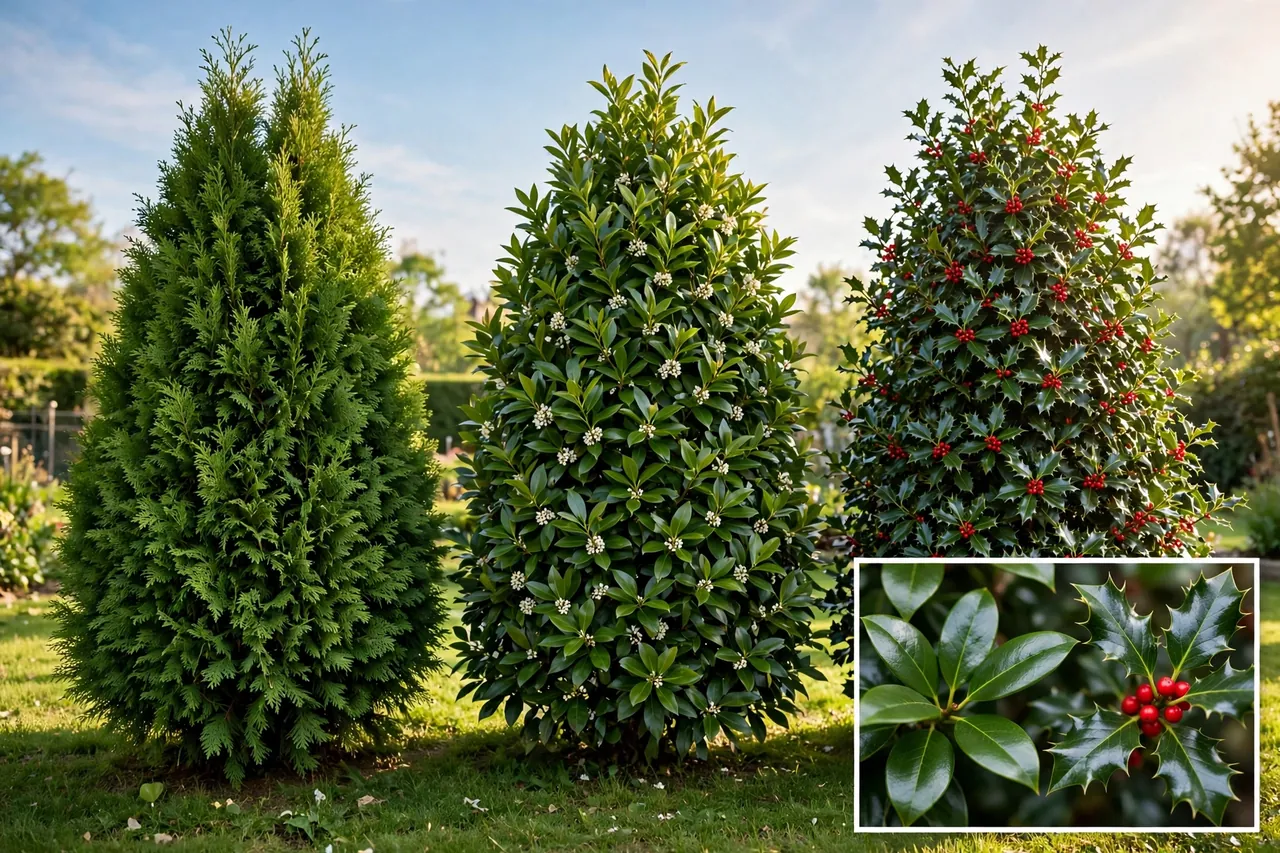
American Arborvitae
American arborvitae is the classic privacy bush, and for good reason. It grows dense and upright, needs little care once it settles in, and comes in sizes from the compact Emerald Green to the towering Green Giant. North Carolina State University Extension lists Thuja occidentalis as a reliable evergreen for screens, borders, and windbreaks. It grows best in zones 3 to 7 in full sun to partial shade. Space plants about 6 feet apart in a single row, and prune so the top stays narrower than the base — that shape sheds snow instead of splitting open under its weight.
Cherry Laurel
Cherry laurel, especially the Schipkaensis type, is a low-maintenance evergreen with thick, glossy leaves and white spring flowers. It grows 10 to 15 feet tall and 5 to 7 feet wide, and it handles shade better than most evergreens. Plant shrubs about 3 feet apart so the branches weave into a thick barrier, and prune right after flowering ends in late spring. One warning matters here: every part of cherry laurel is poisonous if eaten, so keep it away from spots where small children or pets chew on plants.
American Holly
American holly brings year-round green plus red berries that draw songbirds to your yard. It grows slowly, so it suits a spot where you want a screen that stays put and needs little pruning. It grows in zones 5 to 9 and tolerates full sun to shade. Left alone it can reach 40 to 60 feet tall, so buy a shrub form and prune only to shape it. Keep the soil moist and shelter it from harsh winter winds while it is young.
Boxwood
Boxwood is the right pick when your screen only needs to reach 3 or 4 feet — along a front walk, around a patio, or as a low layer in front of taller bushes. Wintergreen boxwood resists winter yellowing and grows in zones 4 to 9. Space plants 3.5 to 4 feet apart, center to center, and spread mulch 2 to 3 inches deep, kept away from the stems. Water once or twice a week until the plants settle in.
Yew Plum Pine
Yew plum pine, also called Podocarpus, is a slow-growing evergreen that handles drought well once it settles in and fits tight spaces. It grows in zones 7 to 9 in full sun to partial shade. Plant shrubs 2 feet apart and trim them often so they knit together. Prune so the top stays slightly smaller than the bottom, and the hedge will stay full from top to base.
Flowering and Deciduous Privacy Bushes
Deciduous bushes trade winter cover for flowers and fall color. They work best as a second layer — in front of evergreens, along a side yard, or where you only need privacy in the warm months.
Ninebark
Ninebark is a tough native shrub that grows fast and asks for little. It blooms in spring for bees and butterflies, its leaves turn yellow and red in fall, and its bark peels in layers through winter. It grows 5 to 8 feet tall in zones 2 to 8. Space shrubs 3 to 6 feet apart, water young plants once or twice a week in summer, and prune after it flowers or no later than mid-August.
Chindo Viburnum
Chindo viburnum is an evergreen with fragrant white spring flowers, glossy leaves, and red fall berries. It grows up to 12 feet tall and 8 feet wide in zones 7 to 11. Water it weekly so the top 3 inches of soil stay moist, prune in late winter or early spring, and plant shrubs half their mature width apart. It is one of the best picks for warm-climate yards that want flowers with their privacy.
Lilac and Other Flowering Shrubs
Lilac, forsythia, and mock orange make loose, informal screens full of spring flowers and scent. They need more room and air than evergreens — plant them at least 6 to 8 feet apart unless you plan to prune them often. Their branches thin out in winter, so treat them as a seasonal screen, not a year-round wall. They shine in a spot where you sit outside in spring and summer and care less about winter views.
Yellow-Twig Dogwood
Yellow-twig dogwood earns its place with bright yellow stems that light up a dull winter yard, plus white spring blooms and berries. It grows 6 to 8 feet tall in zones 3 to 8 and prefers cooler climates. Space shrubs 3 feet apart, center to center, prune in late winter to early spring for airflow, and water at least weekly to keep the soil moist. Deer tend to leave it alone.
How to Pick the Right Privacy Bushes for Your Yard
The best privacy bush is the one that fits your yard, not the one that looks best in a catalog photo. Walk your yard with a tape measure before you shop, and answer these five questions.
First, how tall must the screen be? For real privacy from neighbors and the street, aim for at least 6 feet tall, and check local rules — some towns and HOAs cap hedge height. Second, how much sun does the spot get? A sun-loving bush planted in shade will grow thin and leggy, and the gaps will never close. Third, how much room do you have? Measure the width of the planting bed. A bush that grows 8 feet wide does not belong in a 3-foot strip beside a walkway. Fourth, what is your soil like? Wet clay, dry sand, and rich loam each favor different plants, so grab a soil test before you buy. Fifth, how much care will you give? If you will not prune twice a year, skip the fast, wild growers and pick a slow, tidy evergreen instead.
Match the plant to your USDA hardiness zone first, then to sun and soil. The USDA Plant Hardiness Zone Map tells you the coldest winter temperature your area expects, and every plant tag lists the zones it survives. A bush rated for zones 7 to 11 will not live through a zone 5 winter, no matter how well you water it.
How Far Apart to Plant Privacy Bushes
Spacing decides how fast you get privacy and how healthy the hedge stays. Plant too close and the bushes fight for water and air, which invites disease. Plant too far apart and you will stare through gaps for years.
The rule most experts use is simple: space plants at half to two-thirds of their mature width. A bush that grows 6 feet wide goes 3 to 4 feet apart. A big bush that grows 12 feet wide goes 6 to 8 feet apart. Never space for the size of the nursery pot — space for the size the bush will reach.
The table below gives starting points for common privacy bushes. Your plant tag is the final word, because varieties of the same species can differ by several feet.
Privacy bush spacing at a glance:
| Bush | Mature width | Spacing |
|---|---|---|
| Boxwood | 3 to 5 feet | 3.5 to 4 feet apart |
| Arborvitae | 4 to 15 feet | 3 to 6 feet apart |
| Cherry laurel | 5 to 7 feet | 3 feet apart |
| Yew plum pine | 3 to 5 feet | 2 feet apart |
| Ninebark | 4 to 6 feet | 3 to 6 feet apart |
| Chindo viburnum | 8 feet | 4 feet apart |
| Yellow-twig dogwood | 7 to 8 feet | 3 feet apart |
For a thicker screen sooner, plant a staggered double row. Set two rows about 3 feet apart and offset the plants so each bush in the back row fills a gap in the front row. You buy more plants, but the screen closes faster and stands up to wind better than one crowded line.
Keep trunks at least 18 to 24 inches away from a fence or wall so the bushes can fill out on both sides. And check your property line before you dig — a hedge that grows over the line can start a neighbor dispute that outlasts the bushes.
How to Plant Privacy Bushes
Plant in spring or fall, when the soil is workable and the weather is mild. Fall planting should happen at least six weeks before the first expected frost so roots can settle in before winter. Skip planting in the heat of summer or when the ground is frozen.
- Call 811 before you dig. The free service marks buried gas, water, and electric lines so you do not hit one. Call a few days before planting day.
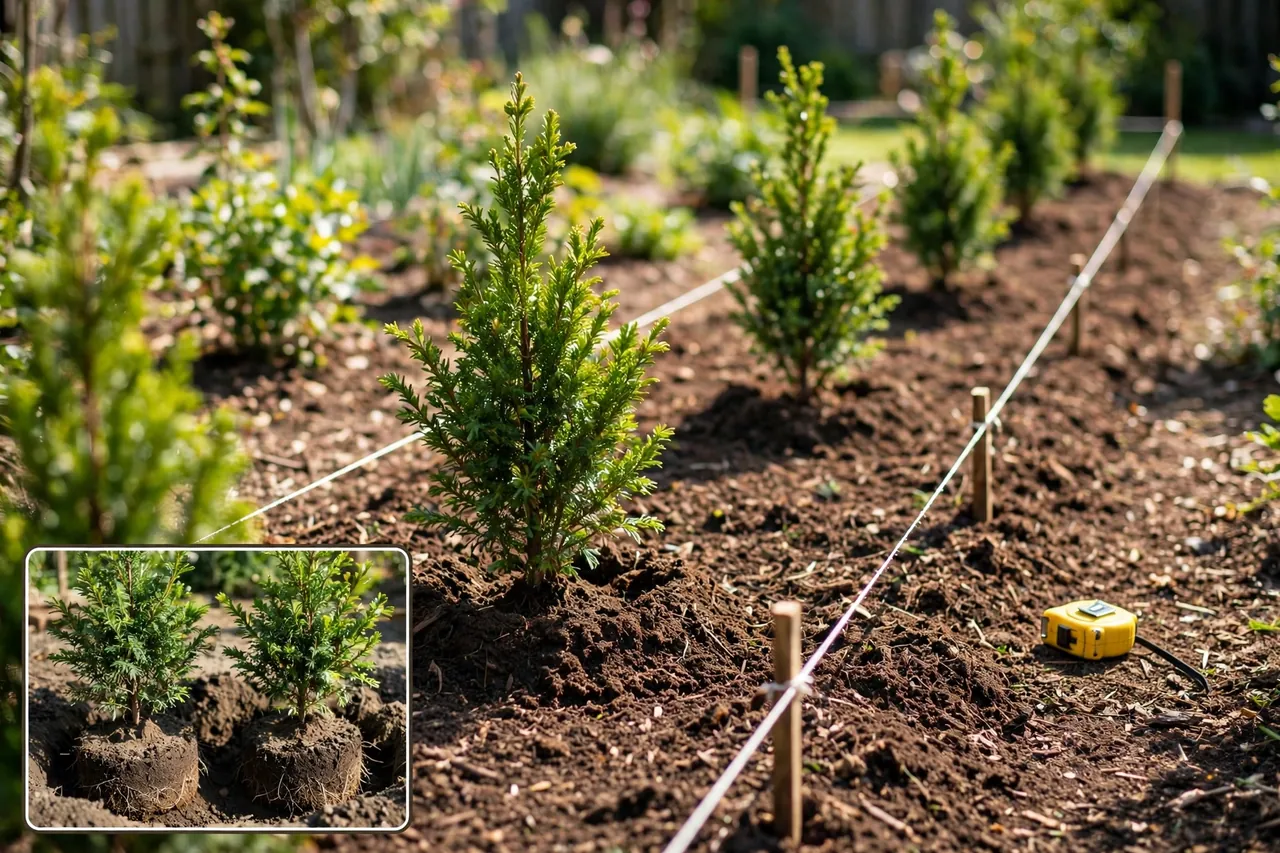
- Mark the line. Stretch a string along the planting line, then mark each plant spot with a stake or a spray of paint so the row stays straight and the spacing stays even.
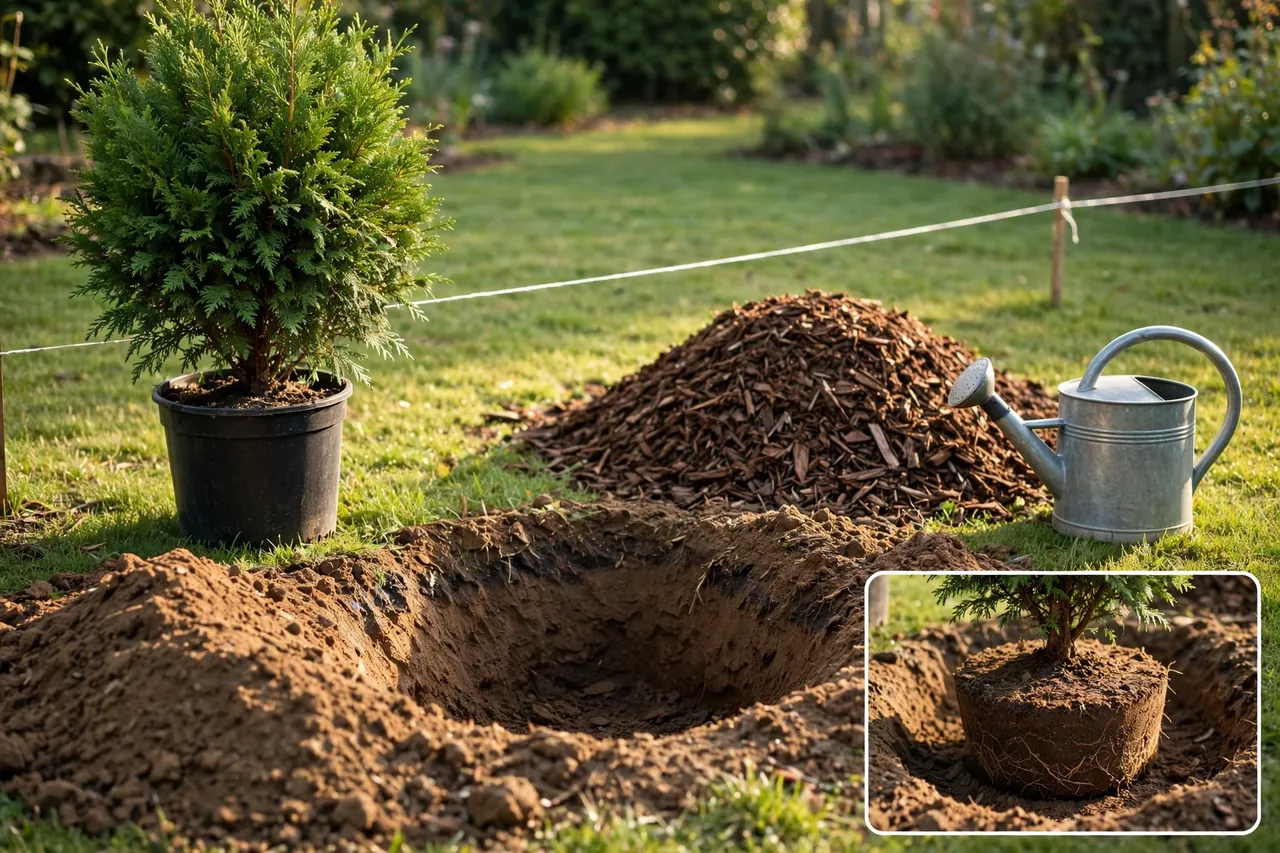
- Dig wide, not deep. Dig each hole twice as wide as the root ball and no deeper than the root ball. Planting too deep suffocates the roots.
- Set the plant at the right depth. Set the root ball so its top sits level with the ground, or about an inch above it in heavy soil. Backfill with the soil you dug out, and firm it gently — do not stomp it down.
- Water deeply right away. Soak the root zone until the soil is wet several inches down. The University of Minnesota Extension recommends about 1 to 1.5 gallons of water per inch of trunk width at each watering for new trees and shrubs.
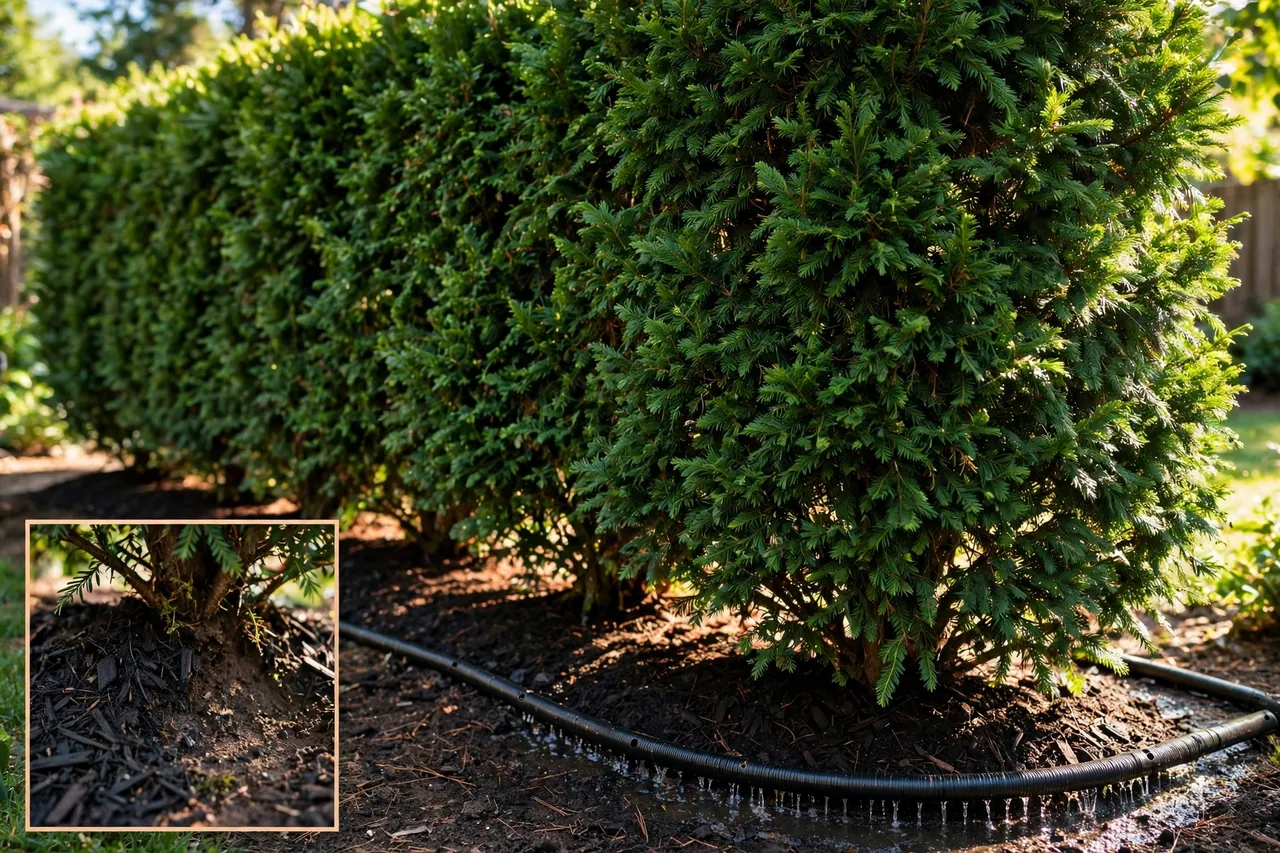
- Mulch the row. Spread 2 to 3 inches of mulch over the root zone, but keep it a few inches away from the stems. Mulch holds moisture, blocks weeds, and keeps the soil cool.
- Water through the first season. Water new shrubs daily for the first week or two, then every two to three days for up to three months, then weekly until the roots take hold. After the first year, most privacy bushes need water only in dry spells.
If you are buying a whole row at once, compare prices and stock before you order — our guide to the best places to buy plants online can help you find a seller that ships healthy stock in your size.
How to Care for Privacy Bushes
A privacy hedge is easy to care for once it settles in, but the first year sets the pattern. Water, mulch, and a little pruning in year one buy you a thick screen for decades.
Watering
Water deeply and less often, not a little every day. Deep watering pulls roots down into the soil, and deep roots survive drought far better than shallow ones. Soak the root zone until the top 6 inches of soil are damp. Young shrubs need water once or twice a week in summer. Mature bushes usually need water only during long dry spells, but evergreens still drink in fall — water them well before the ground freezes so they do not dry out in winter wind.
Mulching and Feeding
Keep a 2- to 3-inch mulch layer over the root zone and top it up each spring. Mulch saves water, feeds the soil as it breaks down, and keeps mower blades away from bark. Do not pile mulch against the stems — that wet collar invites rot and pests. Most privacy bushes need no fertilizer in their first year. After that, a light spring feeding with a balanced shrub fertilizer is enough. Overfeeding pushes soft, weak growth that pests love.
Pruning
Prune evergreen bushes in early spring, before new growth starts. Prune flowering bushes right after they bloom, or you will cut off next year’s flowers. Always shape the hedge so the top is slightly narrower than the base — sunlight must reach the lower branches, or the bottom goes bare and the hedge turns into a row of sticks with green hats. Cut out dead or crossing branches first, then shape lightly. Never shear a hedge into a perfect box in one hard cut; take a little off often instead.
Privacy Bushes for Special Situations
Some yards need more than a standard row of evergreens. Match the bush to the problem, and the screen will do its job with less work from you.
Narrow Spaces
When the bed is only 2 or 3 feet wide, pick columnar bushes that grow up, not out. Emerald Green arborvitae and Sky Pencil holly reach 8 to 10 feet tall while staying 3 to 4 feet wide. Plant them 3 to 4 feet apart and they form a slim green wall that never crowds the walkway or the fence.
Shade
Most privacy bushes want sun, but a few thrive in shade. Cherry laurel, yew, and American holly all handle partial to full shade, and they keep their leaves through winter. In deep shade, expect slower growth and plant a little closer together so the screen still fills in. Our guide to evergreen bushes for landscaping covers more shade-tolerant evergreens for the same job.
Wet Soil
If the planting spot stays soggy after rain, most privacy bushes will drown — their roots rot in standing water. Inkberry holly and winterberry tolerate wet ground, and willow-family shrubs handle it too. But first, fix the water: a hedge planted in a puddle is a hedge that dies young. Read our guide to fix a soggy yard before you plant in a wet spot.
Sloped Yards
On a slope, a privacy row also fights erosion — the roots hold soil that rain would wash away. Plant along the contour of the slope, not straight up it, and mulch heavily so the soil stays put while roots take hold. On a steep bank, build the screen above a low wall so the bushes sit on level ground. Our guide to building a retaining wall on a slope shows how to level a bank the right way.
Deer and Pests
Deer can strip a young hedge in a single night. Arborvitae, boxwood, and cherry laurel resist deer better than most, while yews and hostas invite them. If deer are a real problem in your area, pick a resistant bush and protect new plants with netting for the first season. For insects, healthy bushes in the right spot resist pests on their own — stressed bushes in the wrong soil get attacked first.
Pools and Patios
A hedge around a pool or patio blocks wind and gives you privacy without a tall fence that shades the water. Pick bushes that drop little litter — evergreens beat flowering shrubs here, because petals and berries end up in the filter. Keep the row at least 3 feet from the pool edge so roots never reach the coping. Our rectangle pool landscaping ideas show how a hedge fits into a full pool layout.
Privacy Bushes vs Fences
A fence gives you privacy the day it goes up. Bushes take two or three seasons to fill in. So why pick bushes at all? The table below lays out the real trade-off.
Privacy bushes vs a fence:
| Factor | Privacy bushes | Fence |
|---|---|---|
| Privacy on day one | No — needs 2 to 3 seasons | Yes |
| Year-round cover | Yes, if evergreen | Yes |
| Upkeep | Watering, pruning, mulching | Staining, repairs |
| Looks | Soft, natural, changes with seasons | Hard edge, fixed look |
| Noise and wind | Softens both | Blocks wind, can whistle |
| Wildlife | Food and shelter for birds | None |
| Lifespan | Decades with care | 15 to 25 years for wood |
Many yards use both: a low fence for instant privacy and a hedge in front of it for looks and sound. The hedge hides the fence, the fence covers the gaps while the hedge grows, and together they screen better than either one alone.
Mistakes to Avoid With Privacy Bushes
Most privacy hedges fail for the same few reasons, and every one of them is easy to avoid.
- Planting too close. A row that looks full on planting day turns into a crowded, diseased mess in five years. Space for the mature width, not the pot size.
- Picking the wrong zone. A bush rated for warmer zones will die in your first hard winter. Check the tag against your USDA zone before you pay.
- Planting too deep. Even half an inch too deep can suffocate the root collar and invite rot. Set the root ball level with the ground.
- Skipping the first-year watering. New shrubs die of thirst far more often than of cold. Water deeply through the first growing season.
- Shearing into a box. A hedge with a wide top and narrow base shades its own lower branches bare. Keep the top slightly narrower than the base.
- Ignoring the property line. A hedge that grows over the line or under a fence can spark a dispute. Measure first, plant second.
- Forgetting the fence rules. Some HOAs cap hedge height or ban certain species. Check the rules before you plant, not after.
A quick note on safety: call 811 before any digging, keep cherry laurel away from kids and pets because every part of it is poisonous if eaten, and hire a pro if the job needs heavy digging near buried lines or a tree-sized bush that you cannot lift safely.
Related Guides
fast-growing privacy shrubs · how to fix a soggy yard · how to build a retaining wall on a slope · creeping myrtle vs periwinkle · Evergreen Bushes for Landscaping · Full Sun Shrubs
Frequently Asked Questions
How far apart should I plant a privacy hedge?
Space plants at half to two-thirds of their mature width. For most medium shrubs, that means 3 to 5 feet apart. Large plants like Green Giant arborvitae need 5 to 8 feet. Planting too close causes competition and disease, while planting too far leaves gaps for years.
When is the best time to plant a privacy hedge?
Spring and fall are the best times to plant a privacy hedge. For spring planting, wait until after the last frost. Fall planting should happen at least six weeks before the first expected frost so roots can settle in before winter.
When should I prune my hedge?
Pruning time depends on the plant. Early spring, before new growth starts, is a good time to prune evergreen shrubs. Prune flowering shrubs right after they bloom so you do not cut off next year’s flowers.
What makes good privacy hedges?
A good privacy hedge stands at least 6 feet tall, grows dense enough to block all views, and suits your climate and soil. Evergreens give year-round cover, while deciduous shrubs add flowers and fall color but go bare in winter.
How Far From a Wall Should My Hedge Be?
Plant at least 18 to 24 inches away from a wall or fence for a standard hedge. For a very tall living fence, base the distance on how wide the plants will grow so the mature shrub has room to fill out without crowding the wall.
Privacy bushes reward patience. Pick the right bush for your zone and sun, space it for its mature size, water it well in year one, and prune it so the top stays narrower than the base. In two or three seasons you will have a green wall that looks better than any fence — and it will keep getting better every year. Start by measuring your planting line and checking your hardiness zone, then pick one evergreen from this guide and plant your first row this spring or fall.