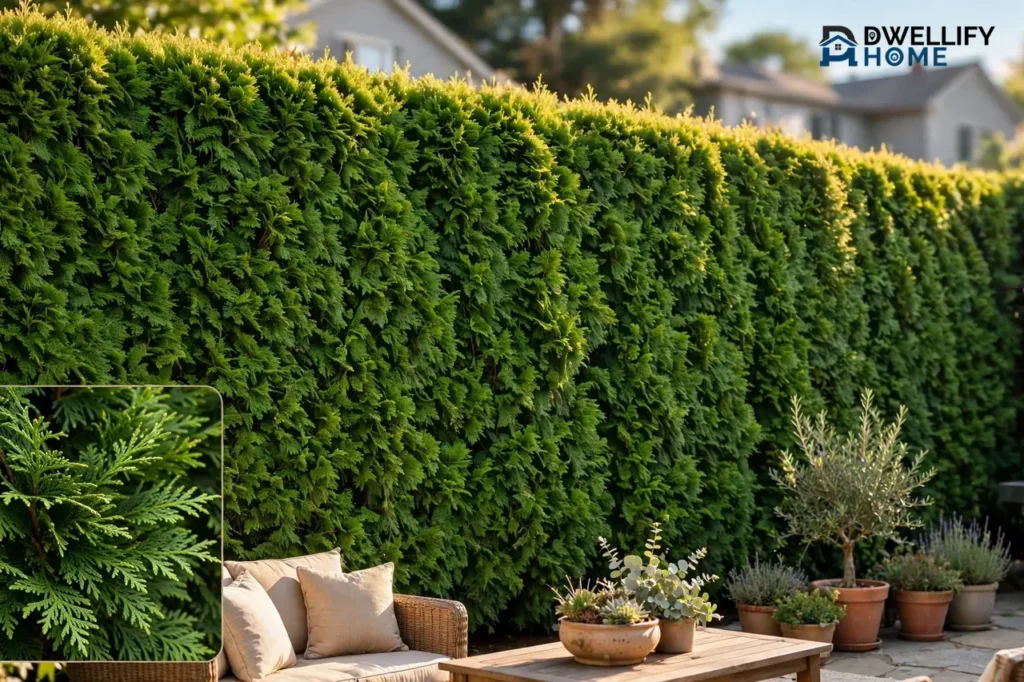
The fastest privacy shrubs add 3 to 5 feet of height every year once they settle in. Green Giant arborvitae grows 3 to 5 feet per year, according to Nature Hills’ side-by-side comparison of Green Giant arborvitae and Leyland cypress, and it can form a solid green wall in just a few years.
That speed is real, but it comes with a catch. No shrub gives you instant privacy on planting day. The first year goes to roots, the second year brings steady growth, and the third year is when your screen takes off. Pick the right shrub for your zone and your yard size, plant it well, and you can block the neighbors’ view in about three years. Pick the wrong one and you get a sick hedge, a giant you cannot control, or a screen full of holes.
This guide covers only the fast growers: their real growth rates, how long each one takes to screen, and the trade-offs that come with speed. If you want the full tour of privacy bush types, spacing, and everyday care, start with our guide to privacy bushes.
What “Fast Growing” Really Means
A fast-growing shrub adds about 2 feet or more of height each year in good conditions. The quickest evergreens add 3 to 5 feet a year. That sounds like a race, but growth rate is only half the story.
A shrub that shoots up fast can still leave gaps at eye level. What blocks a view is dense side branches from the ground up, not just height. A tall, thin shrub with bare lower branches hides nothing. So judge a privacy shrub on two things: how fast it grows up, and how thick it grows out.
Growth rates are not promises. The same shrub can grow 3 feet a year in rich, well-drained soil with full sun, and barely 8 inches a year in heavy clay, deep shade, or a dry spot. Your soil, your zone, and your watering in the first year matter as much as the plant you pick.
How Fast Can You Actually Get Privacy?
Most gardeners follow a simple rule called “sleep, creep, leap.” Nature Hills describes it in their Green Giant versus Leyland cypress comparison. Year one, the shrub sleeps and grows roots. Year two, it creeps with moderate growth. Year three, it leaps and takes off.
That means your timeline looks like this with a fast evergreen planted at 4 to 6 feet tall:
- Year 1: Roots settle in. You may see only a few inches of new top growth. Water deeply every week.
- Year 2: Growth picks up to 1 to 2 feet. Side branches start to fill in.
- Year 3: Full speed. Expect 3 to 5 feet of new growth on the fastest kinds, and the branches of neighbors start to touch.
- Year 4: A real screen. Green Giant arborvitae planted 5 to 6 feet apart interlocks its lower branches in 3 to 4 years, according to Nature Hills.
Want privacy sooner? Buy bigger plants. A 6-foot shrub costs more than a 3-foot one, but it starts two years ahead. For a short stretch, like a patio or a seating area, that extra cost often beats two more summers of feeling watched.
The Fastest Privacy Shrubs for Your Yard
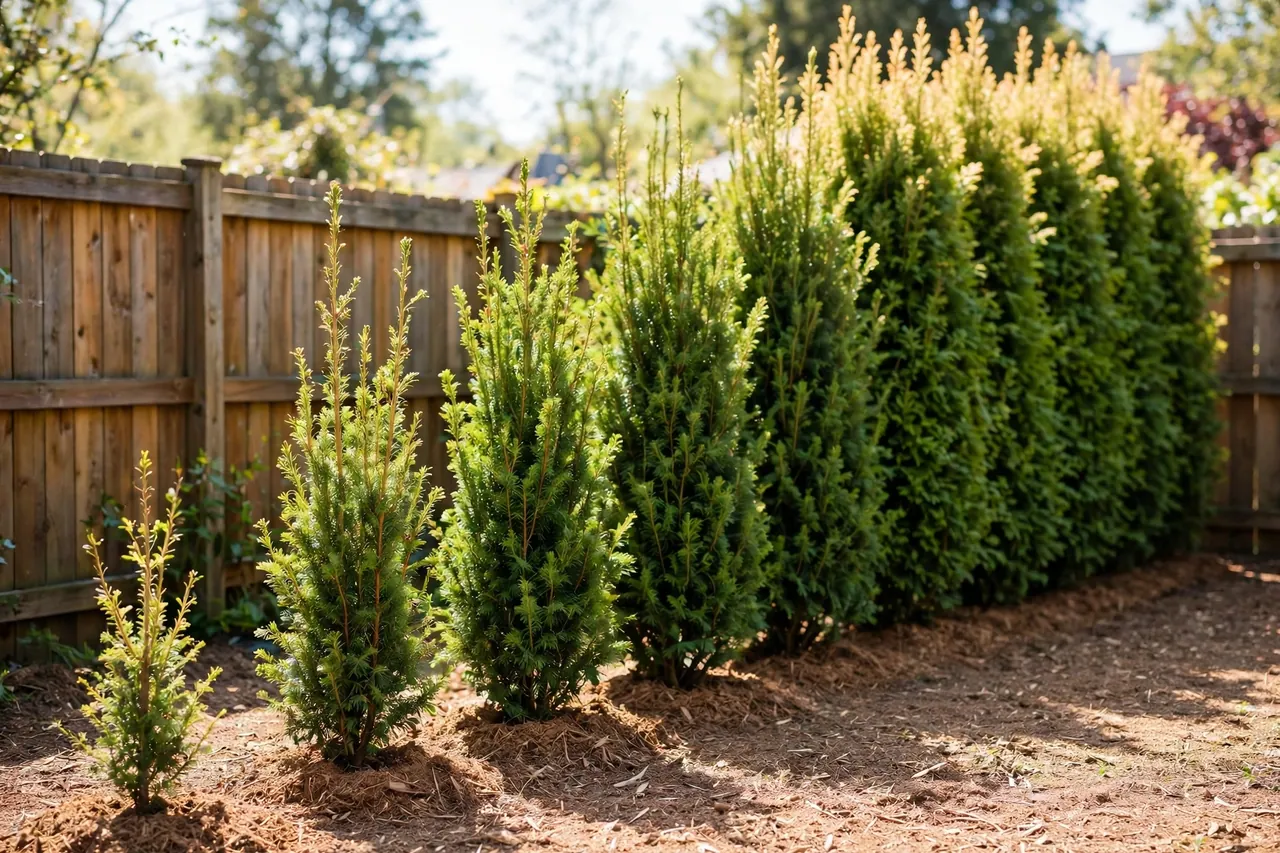
These seven shrubs earn their place on speed plus screening power. Each one lists its real growth rate, its hardiness zones, and its mature size, so you can match the plant to your space before you buy.
1. Green Giant Arborvitae
Green Giant arborvitae is the workhorse of fast privacy screens. It grows 3 to 5 feet per year once established, reaches 40 to 60 feet tall and 12 to 18 feet wide, and thrives in USDA zones 5 through 8, according to Nature Hills. It keeps a dense, pyramid shape with almost no pruning.
It also resists disease, deer, and drought once established, and it can live 40 to 60 years. Plant Green Giants 5 to 6 feet apart for a screen. They need full sun, at least 6 hours a day, to grow at full speed.
The trade-off is size. A 40-foot tree is too big for a narrow side yard or a spot under power lines. Give it room, and it is the safest fast choice for most yards in zones 5 to 8.
2. Leyland Cypress
Leyland cypress is the sprinter of the group. It grows 3 to 4 feet per year in its early years and can reach 50 to 70 feet tall and 10 to 15 feet wide. It grows in zones 6 through 10 and handles coastal salt spray well.
But speed has a price. Leyland cypress is prone to Seiridium canker and root rot, both usually incurable, and it has shallow roots that can topple in wind when the tree gets tall. Nature Hills notes that canker has killed thousands of mature Leylands across the Southeast, and many extension services now recommend Green Giant as the replacement.
Plant Leylands 8 to 10 feet apart. Choose this one only if you live in zones 9 or 10, near the coast, or you want a formal sheared hedge and you will prune it every year.
3. Cherry Laurel
Cherry laurel, also called English laurel, is a broadleaf evergreen with big, glossy leaves. Garden Design lists its growth rate at 1 to 3 feet per year, with a mature size of 10 to 20 feet tall and wide, in zones 6 through 9.
It fills in fast because its wide leaves overlap and block views even before the shrub reaches full height. It also tolerates shade better than most fast evergreens, which makes it a good pick for a north-facing fence line.
Watch out for two things. It needs regular pruning or it turns into a wide, wild bush. And it is known to be invasive on the West Coast, so check your local guidance before planting it there.
4. Wax Myrtle
Wax myrtle is the warm-climate speedster. It grows in zones 7 through 11 and can add up to 5 feet a year in warm, sunny spots with good soil. Its shiny, dense evergreen leaves make a thick screen fast.
It handles heat, humidity, and poor soil better than most privacy shrubs, and it needs little pruning to look full. That makes it a strong pick for Southern yards where cold-hardy evergreens struggle.
The limit is cold. A hard freeze below its zone can damage or kill it, so do not plant wax myrtle in zones colder than 7.
5. Privet
Privet is one of the fastest growing shrubs of all, at 2 to 3 feet per year, according to Garden Design. It grows in zones 3 through 10, reaches 4 to 15 feet tall and wide, and takes well to shearing, which makes it the classic choice for a neat, formal hedge.
It tolerates sun, partial shade, and a wide range of soils. Newer sterile varieties solve the old problem of privet spreading by seed.
The catch is upkeep. Privet grows so fast that it needs clipping several times a season or it gets leggy and overgrown. And old-fashioned privet can be invasive in some areas, so pick a sterile variety and check local rules first.
6. Skip Laurel
Skip laurel is a tougher, narrower cousin of cherry laurel. It grows about 1 to 2 feet a year, reaches 10 to 18 feet tall, and keeps a dense, upright shape that fits narrow spaces better than the wide-spreading cherry laurel.
It stays evergreen through winter, tolerates shade, and handles city pollution and dry spells once established. That mix makes it a smart pick for a side yard or a shady fence line where arborvitae would sulk.
Give it well-drained soil. Like other laurels, it hates wet feet, and soggy roots invite disease.
7. Ninebark
Ninebark is the fast deciduous option. Garden Design notes that some varieties reach their full mature size in the first growing season. It grows in zones 2 through 8, reaches 3 to 10 feet tall and wide, and brings colorful foliage, spring flowers, and peeling bark for winter interest.
It is a native shrub with exceptional hardiness, and it needs almost no care once established. Use it where you want a shorter screen, about 6 feet, with color and wildlife value.
The trade-off is winter. Ninebark drops its leaves, so it screens views only from spring through fall. Pair it with an evergreen behind it if you need year-round privacy.
Green Giant vs Leyland Cypress: The Big Decision
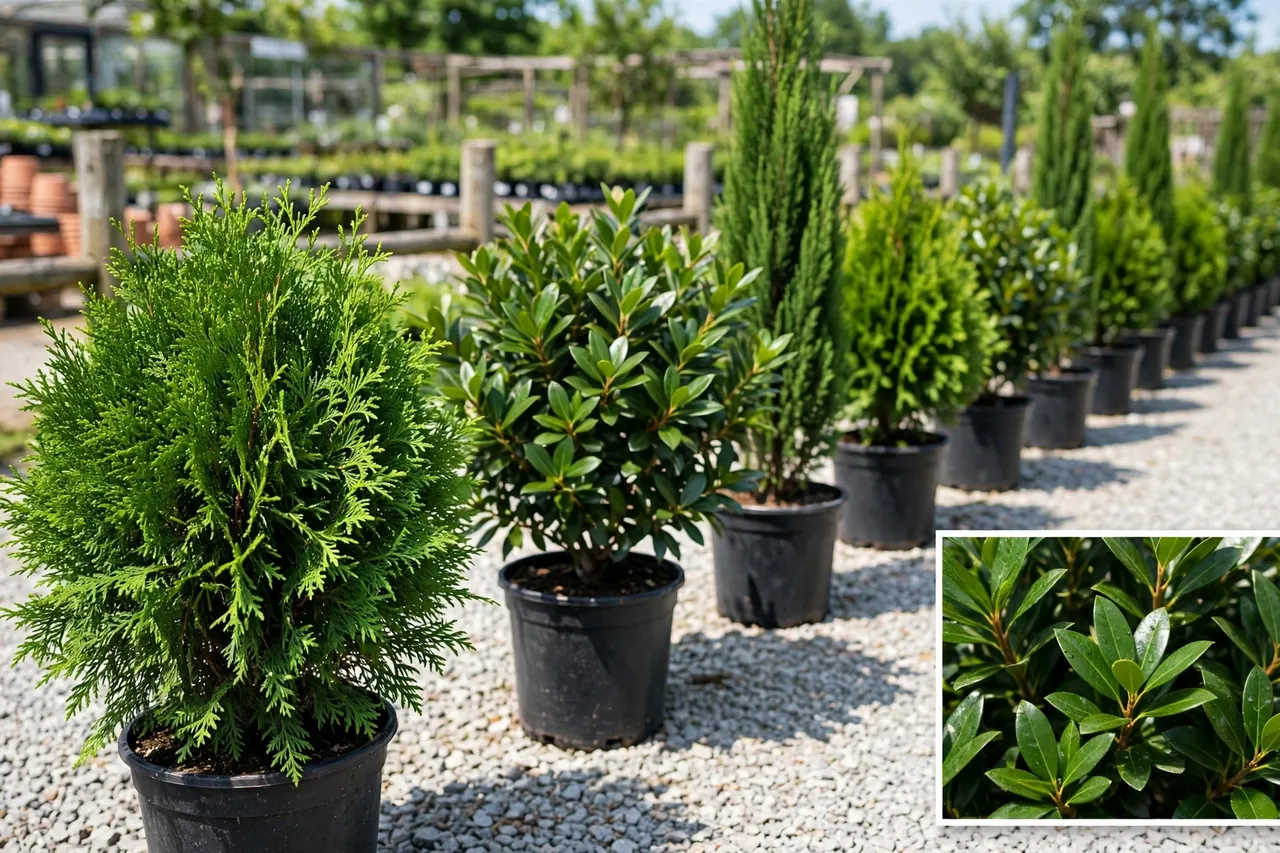
Most shoppers narrow the choice to these two. They grow at nearly the same speed, but they are very different plants over the long run. Here is the honest side-by-side, based on Nature Hills’ comparison.
| Feature | Green Giant Arborvitae | Leyland Cypress |
|---|---|---|
| Growth rate | 3 to 5 feet per year | 3 to 4 feet per year |
| Mature height | 40 to 60 feet | 50 to 70 feet |
| Mature width | 12 to 18 feet | 10 to 15 feet |
| Hardiness zones | 5 to 8 | 6 to 10 |
| Disease resistance | High | Low, canker and root rot |
| Deer resistance | Yes | Moderate |
| Lifespan | 40 to 60 years | 20 to 50 years |
| Pruning needs | Rarely needed | Regular pruning required |
| Screen spacing | 5 to 6 feet apart | 8 to 10 feet apart |
For most yards in zones 5 through 8, Green Giant wins. It grows just as fast, resists the diseases that kill Leylands, needs almost no pruning, and lives decades longer. Pick Leyland only for coastal salt spray, zones 9 and 10, or a formal sheared hedge you truly enjoy maintaining.
Evergreen vs Deciduous: Which Screens All Year?
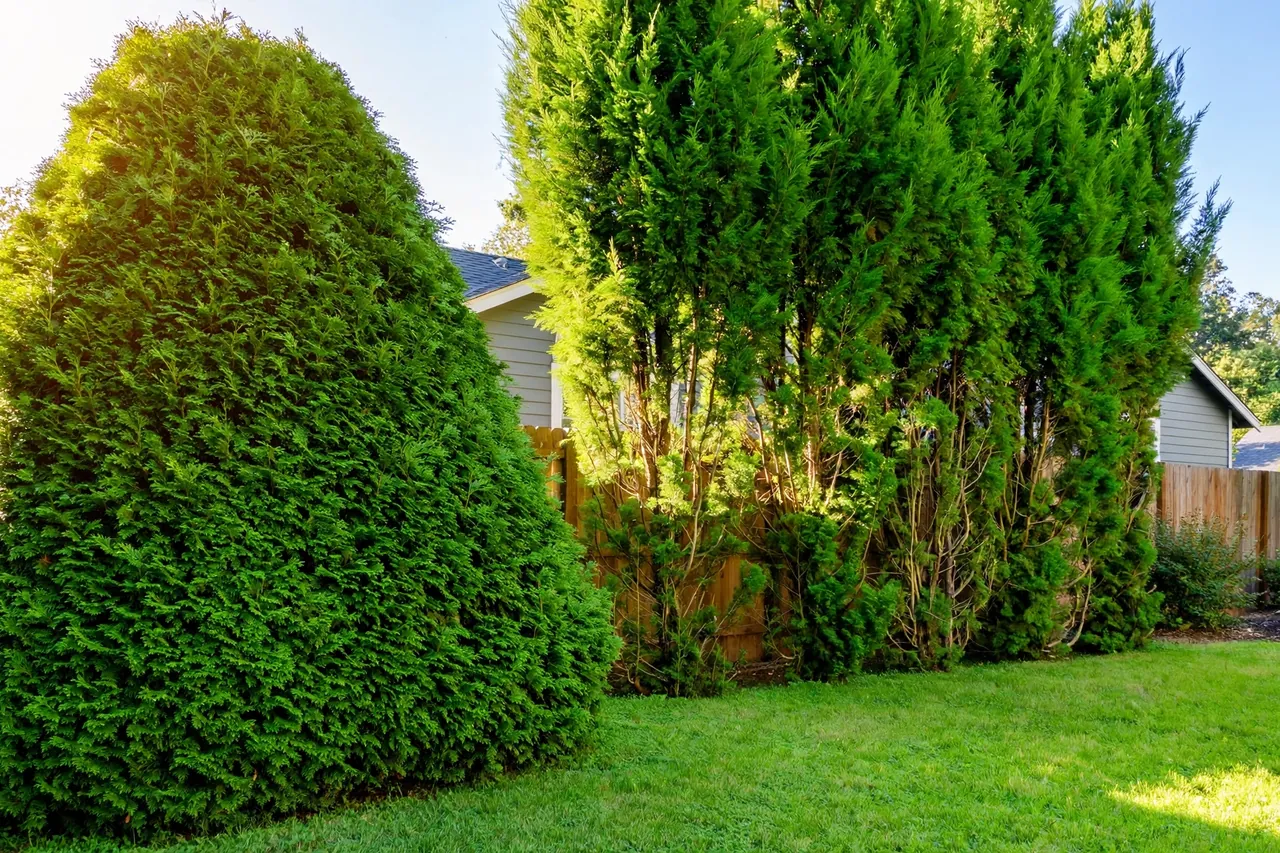
Evergreen shrubs keep their leaves all year, so they screen your yard in January just as well as in July. Green Giant, Leyland cypress, cherry laurel, wax myrtle, and privet (in mild zones) all do this job. If privacy is the whole point, evergreen is the right call.
Deciduous shrubs lose their leaves in winter. Ninebark, forsythia, lilac, and rose of Sharon grow fast and look great, but they leave you exposed for months. Rose of Sharon, for example, grows up to 2 feet a year and reaches 8 to 12 feet tall, yet it stands bare all winter.
That does not make deciduous shrubs useless. They cost less, grow in colder zones, and add flowers and fall color that evergreens cannot match. The smart move is a mixed screen: evergreens along the sightlines that matter most, like the patio and the neighbors’ windows, with flowering deciduous shrubs in front for color. For the full evergreen lineup, see our guide to evergreen bushes for landscaping.
How to Plant a Fast Privacy Hedge
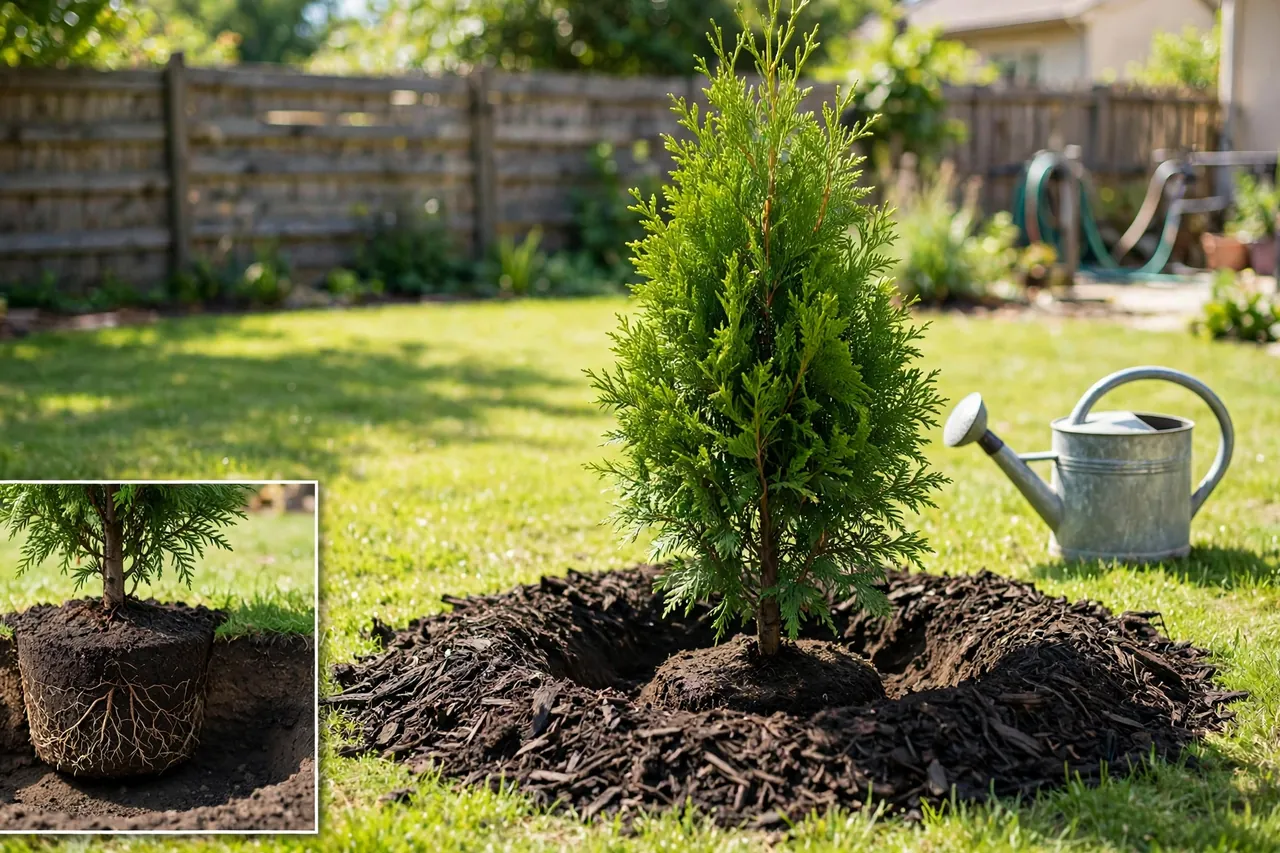
Fast growth starts before the shrub goes in the ground. A well-planted shrub can outgrow a poorly planted one of the same kind by a full year. Follow these steps in order.
- Check your zone first. Find your USDA hardiness zone on the USDA Plant Hardiness Zone Map and buy only shrubs rated for it. A zone 9 shrub planted in zone 5 will not survive its first winter, no matter how fast it grows.
- Measure the mature width, not the pot. A 3-foot shrub that grows 15 feet wide needs 5 to 6 feet of space from its neighbor. Planting too close is the most common mistake, and it causes thin, sick hedges.
- Dig wide, not deep. Dig each hole twice as wide as the root ball and no deeper than the root ball. Set the shrub so the top of the root ball sits level with the soil surface.
- Loosen the roots. If the roots circle the pot, gently tease them outward with your fingers. Circling roots keep strangling the plant for years if you skip this.
- Backfill with native soil. Fill the hole with the soil you dug out. Do not fill it with pure potting mix or compost, which makes roots stay inside the hole instead of spreading.
- Mulch 2 to 3 inches deep. Spread mulch in a wide ring, but keep it a few inches away from the trunk. Mulch holds moisture and keeps weeds down.
- Water deeply. Soak the root zone slowly until the soil is wet 12 inches down. Deep, weekly watering builds deep roots, and deep roots grow fast.
When you are ready to buy, compare sellers before you order. Our guide to the best places to buy plants online shows where to find healthy shrubs and what to check before you pay.
How to Make Them Grow Even Faster
You cannot beat a shrub’s genetics, but you can remove everything that slows it down. These five habits give you the fastest growth your shrub is capable of.
- Water the first year like it matters, because it does. New shrubs need deep watering every week through the first growing season, and into the second if the summer runs dry. Shallow daily sprinkles grow shallow roots.
- Give them full sun. Most fast evergreens grow fastest with 6 to 8 hours of direct sun a day. A Green Giant in shade may grow half as fast as one in sun.
- Mulch every spring. A fresh 2 to 3 inch layer of mulch keeps soil cool and moist, and it feeds the soil as it breaks down.
- Feed lightly in early spring. A slow-release fertilizer in early spring supports new growth. Do not overfeed, because soft, forced growth breaks easily and invites pests.
- Prune at the right time. Lightly tip-prune young evergreens in late winter or early spring to encourage side branches. Never shear a fast grower hard in late summer, because the tender new growth will freeze.
One honest limit: fertilizer and water cannot fix the wrong plant in the wrong spot. A shade-loving shrub in blazing sun, or a cold-hardy shrub in a hot zone, will grow slowly no matter what you feed it.
The Trade-Offs Nobody Tells You
Fast growth is a deal, and every deal has terms. Know them before you plant, because fixing a bad hedge costs far more than picking the right shrub.
Fast growers get big. Leyland cypress can reach 60 to 70 feet tall. A shrub planted 3 feet from your house or under a power line becomes a removal bill in ten years. Always check the mature height and width on the tag, not the size in the pot.
Fast growers need more pruning. Privet and cherry laurel can turn into a wild thicket in one season if you skip pruning. If you hate pruning, pick Green Giant, which holds its shape on its own.
Fast growers can get sick fast. Leyland cypress canker spreads quickly through a crowded row, and one sick tree can infect the rest. Space shrubs for airflow, and do not plant a single species in a long, unbroken line if you can mix in a second kind.
Some fast growers spread where they should not. Privet, butterfly bush, and English laurel are invasive in some regions. Check your state or local extension guidance, and choose a sterile variety when one exists.
Fast growth means fast water use. A row of thirsty young shrubs can dry out a bed in a hot week. Plan for deep watering in the first two summers, or your screen will stall just when it should leap.
Mistakes That Slow Your Screen Down
Most slow hedges are not slow shrubs. They are good shrubs planted the wrong way. Avoid these five mistakes.
- Planting too close together. Crowded shrubs fight for light, water, and roots. They grow tall and thin, then die back at the bottom, which leaves gaps at eye level.
- Planting too deep. A root ball buried under extra soil suffocates. The top of the root ball should sit level with the ground.
- Skipping the first-year watering. The sleep year is when roots form. A dry first summer can set a shrub back a full year.
- Choosing on speed alone. The fastest shrub for your neighbor’s yard may be the wrong shrub for yours. Zone, sun, soil, and mature size come first, and speed comes second.
- Ignoring the neighbors’ side. A hedge on a property line grows on both sides. Talk to your neighbor before planting, and check local rules on height and setbacks, so you do not have to cut a healthy screen down later.
What If Your Shrub Stops Growing?
A shrub that stalls usually has a simple cause. Check these in order, cheapest first.
First, check water. Push a finger 3 inches into the soil near the roots. If it feels dry, water deeply and slowly until the soil is wet a foot down. Second, check the mulch. Mulch piled against the trunk rots bark and invites disease, so pull it back a few inches. Third, look at the leaves. Yellow leaves with green veins often mean the soil pH is wrong or the roots sit in water. Fourth, check for bagworms on arborvitae and juniper. Small brown cone-shaped bags hanging from branches mean bagworms, and you should pick them off by hand early.
If the shrub keeps declining after you fix water, mulch, and light, ask your local cooperative extension office for help. They can test your soil and identify diseases for free or for a small fee. For a tall, dead, or leaning tree near a house, roof, or power line, hire a certified arborist. Do not climb a ladder with a chainsaw to remove a large tree yourself.
Frequently Asked Questions
What is the fastest growing shrub for privacy?
Privet is one of the fastest growing shrubs for privacy, growing 2 to 3 feet per year and reaching up to 15 feet tall within a few years, with thick leaves that form a solid hedge. Green Giant arborvitae matches that speed at 3 to 5 feet per year and keeps its shape with far less pruning, so it is the better pick for most yards.
How fast does Green Giant Arborvitae grow compared to Leyland Cypress?
Green Giant Arborvitae grows 3 to 5 feet per year. Leyland Cypress grows 3 to 4 feet per year. Both are among the fastest-growing evergreens available, but Green Giant keeps its dense shape longer, resists canker disease, and lives 40 to 60 years, while Leyland Cypress often needs regular pruning and has a shorter life.
How far apart should I plant Green Giant Arborvitae for a privacy screen?
Plant Green Giant Arborvitae 5 to 6 feet apart, center to center, for a dense privacy screen. The lower branches interlock naturally within 3 to 4 years. For a windbreak where full density matters less, you can space them 8 to 12 feet apart.
Can deer eat Green Giant Arborvitae?
Green Giant Arborvitae is significantly deer resistant. Its foliage is less tasty to deer than other arborvitae varieties, so it is one of the most reliable deer resistant evergreens. No plant is fully deer proof, and hungry deer may still sample it in late winter, but Green Giant is the safer bet in deer country.
Why is my Leyland Cypress dying?
Leyland Cypress is prone to Seiridium canker and Botryosphaeria canker, both of which cause branch dieback and are typically incurable. Root rot from poor drainage is another common killer. If your Leyland Cypress is dying, consider replacing it with disease-resistant Green Giant Arborvitae, which many extension services now recommend as the replacement.
Related Guides
Privacy Bushes · Evergreen Bushes for Landscaping · Front of House Landscaping
- Privacy Bushes — the general guide to privacy bush types, spacing, and care.
- Evergreen Bushes for Landscaping — year-round evergreen picks for every part of the yard.
- Best Places to Buy Plants Online — where to find healthy shrubs and what to check before you order.
Pick one fast grower that fits your zone and your space, plant it right, and water it well through the first year. By year three, your screen will be doing the job, and by year four, you will wonder why you waited so long to plant it.