Xeriscape plants are drought-tolerant plants that thrive with little extra water once their roots are established, and a xeriscape design can cut outdoor water use by 60% or more, according to Lawn Love. That single fact is why so many homeowners in dry regions now build their yards around these plants instead of thirsty lawns and flower beds.
This guide is a plant list, not a design guide. You will find drought-tolerant perennials, shrubs, ground covers, grasses, succulents, and trees, with each plant’s USDA hardiness zone, sun needs, soil needs, and water needs. Pick the plants that match your zone and your yard, group them by how much water they need, and you get a yard that stays colorful with far less watering. If you want the design side, our xeriscaping ideas guide covers layout and principles; this article sticks to the plants — one group from our landscape plants guide.
What Makes a Plant a True Xeriscape Plant?
A true xeriscape plant does more than survive a dry spell. It grows, blooms, and holds its shape on rainfall and a little extra water once it is established. Most of these plants share a few traits: deep roots that reach moisture below the surface, small or silvery leaves that lose less water, or fleshy leaves and stems that store water for dry weeks.
Drought-tolerant does not mean waterless. Every plant on this list needs steady water in its first growing season while its roots settle in. Colorado State University Extension makes the same point for trees and shrubs: give them enough water during the first years of establishment, then cut back little by little. A plant that gets deep, rare watering grows deep roots. A plant that gets a light sprinkle every day grows shallow roots and stays thirsty.
Native plants often make the best xeriscape plants, because they already fit your rainfall, soil, and winters. A desert native that loves Arizona heat can rot in a wet Pacific Northwest winter, and a Northeast native that loves clay can fail in sandy Great Plains soil. Match the plant to your place first, and the water savings follow.
How to Pick Xeriscape Plants for Your Yard
Picking xeriscape plants takes three checks: your zone, your sun and soil, and your water groups. Skip any one of them and even a tough plant can fail. Do the checks before you buy, not after you plant.
Start With Your USDA Hardiness Zone
Find your USDA Plant Hardiness Zone before you shop. The USDA Plant Hardiness Zone Map divides the United States into zones based on average annual minimum winter temperature, and the USDA updated the map in 2023. A plant rated for your zone can survive your coldest winters. A plant rated for a warmer zone may die in its first winter with you.
Every plant in this guide lists its zone, so you can filter fast. As a rule, buy plants rated for your zone or a colder one. Lawn Love notes that you can use a plant from a lower, colder zone, but a plant from a higher, warmer zone may not survive your lowest winter temperatures. When in doubt, check the zone on the USDA Plant Hardiness Zone Map and on the plant tag before you pay.
Match Sun and Soil Before You Buy
Most xeriscape plants want full sun, which means six or more hours of direct sun a day. A few, like Carolina azalea, prefer partial shade, and several others take partial shade in hot climates, where afternoon shade cuts heat stress. Read the tag, then match it to the actual spot, not the yard in general. A south-facing wall can bake, while a north-facing corner can stay cool and damp.
Soil matters just as much as sun. Most xeriscape plants need soil that drains well, because wet roots rot fast. Sandy and rocky soils drain well but hold little food and water. Heavy clay holds water and can drown a drought lover. Dig a hole, fill it with water, and watch: if it still holds water after a few hours, that spot drains poorly. Mix in gravel or coarse sand, or plant on a low mound, and pick plants that accept your soil type. If your yard holds water after rain, fix the drainage first; our guide to fixing a soggy yard walks through the common causes and fixes.
Group Plants by Water Need
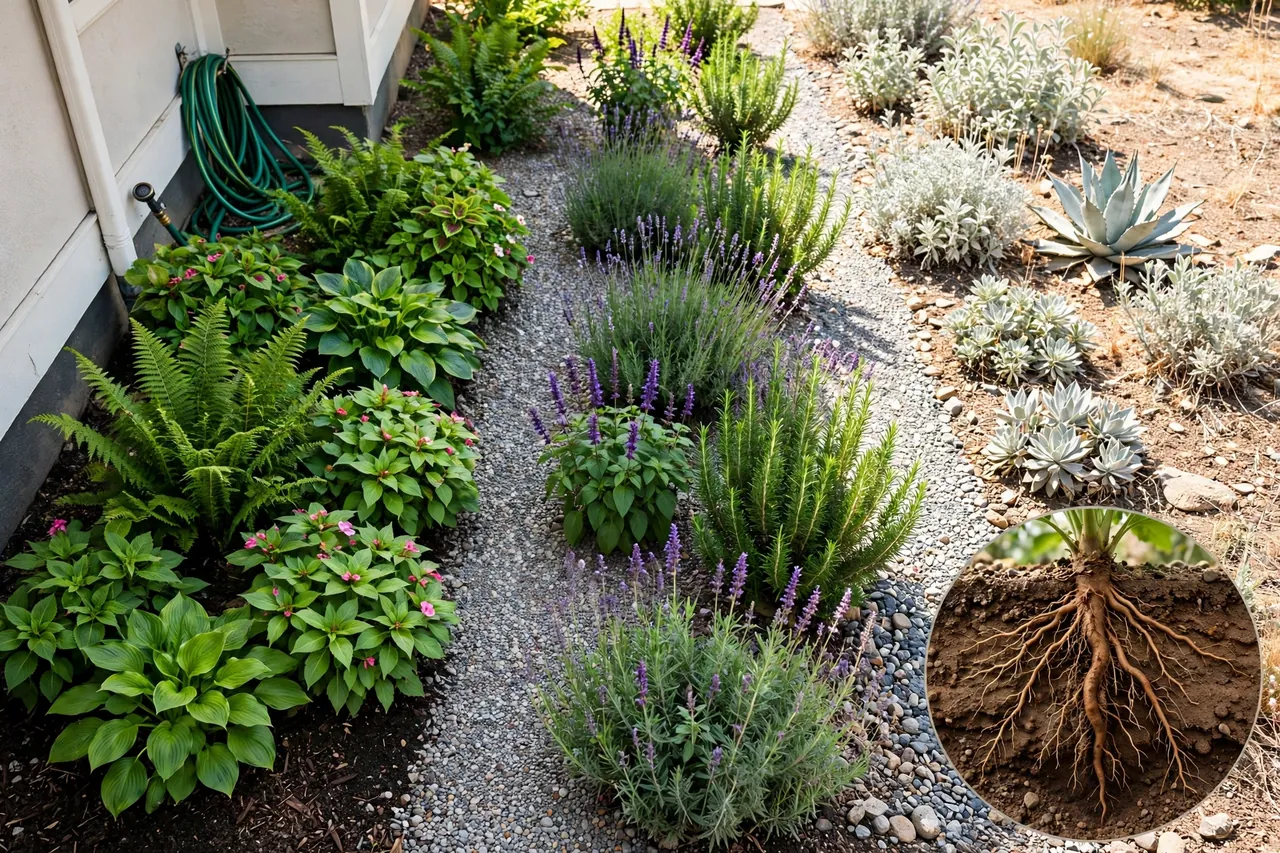
Grouping plants by water need is called hydrozoning, and it is the habit that makes a xeriscape work. Put the thirstiest plants close to the house and the hose. Put the toughest, driest plants at the far edges, where they live mostly on rain. Never plant a thirsty rose beside a sedum and water them the same way: one of them will suffer.
Use three simple groups. Low-water plants need a deep soak only every few weeks once established. Medium-water plants need a deep soak about once a week in dry weather. Moderate plants sit between the two. Keep each group on its own watering routine, and mulch each bed to slow evaporation. This one habit saves more water than any single plant choice.
Best Xeriscape Plants for Full Sun
These perennials bring the color. They bloom in sun, handle dry spells once established, and come back year after year. Plant them in drifts of three or five for a full look, and mix bloom times so something is always in flower.
Purple Coneflower
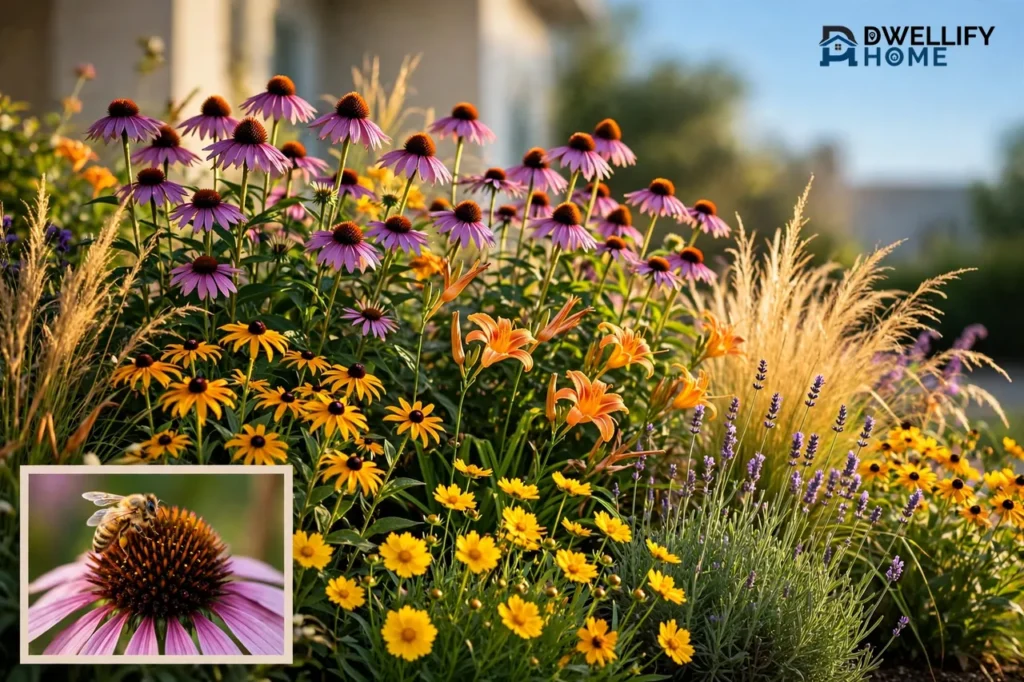
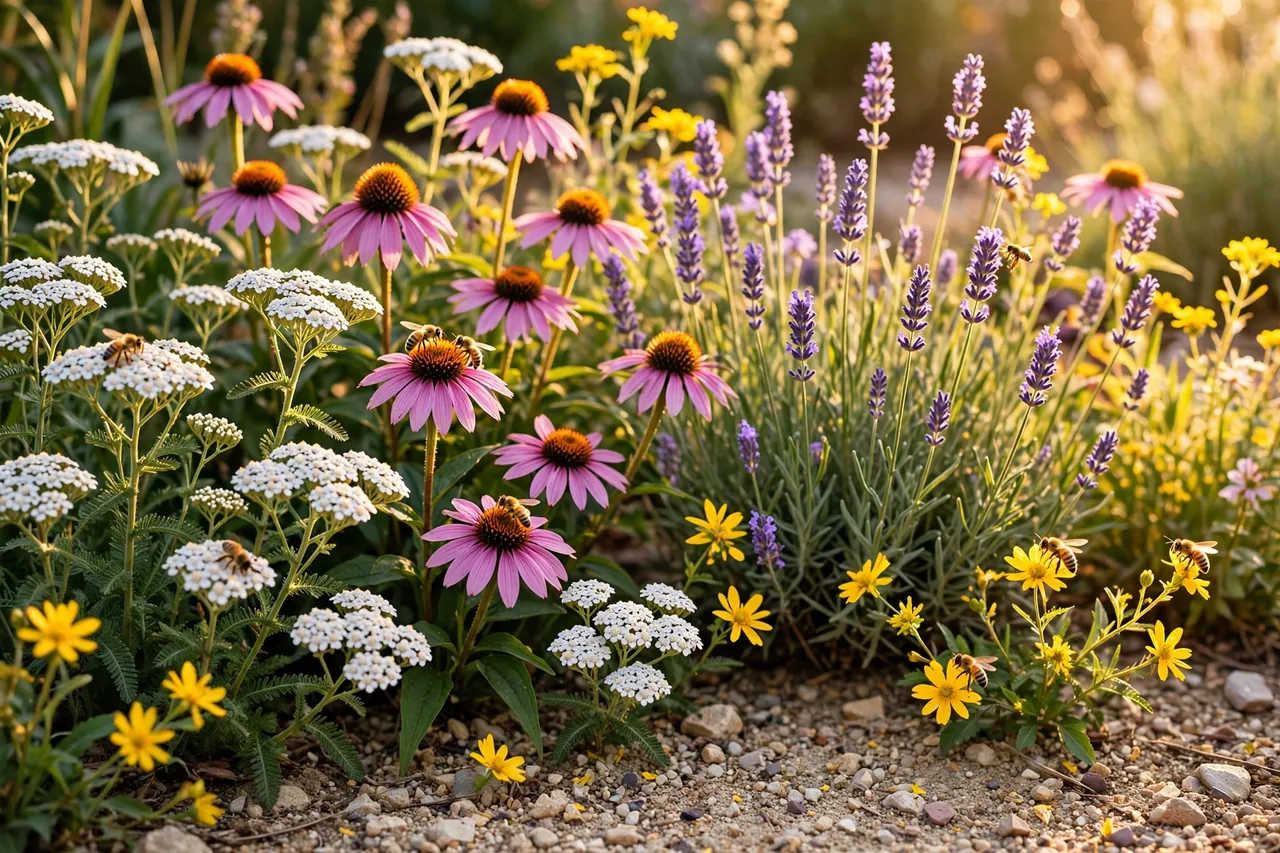
Purple coneflower (Echinacea purpurea) is the easiest starting point for most yards. It grows 2 to 5 feet tall in zones 3 to 8, takes full sun or partial shade, and likes sandy, well-drained soil. Its pink-purple daisy flowers bloom from midsummer until frost, and birds eat the seeds through winter. It is deer-resistant, and its water need is medium once established. It also shows up in our low-maintenance plant lists, because it asks for so little care.
English Lavender
English lavender (Lavandula angustifolia) gives you scent, purple flower spikes, and bees in one tough shrub. It grows 1 to 3 feet tall in zones 5 to 9, needs full sun and sharp drainage, and wants low water once established. It likes sand, chalk, or loam, and it hates wet feet, so never plant it in a low spot that stays soggy. Cut the spent flower stems after bloom to keep the plant tidy and full.
Common Yarrow
Common yarrow (Achillea millefolium) is a North American native herb with flat clusters of small pink or white flowers on stems up to 3 feet tall. It grows in zones 4 to 8, takes full to partial sun, and likes well-drained, sandy loam. Its water need is medium, but it tolerates dry spells well. Butterflies and bees visit it often. Keep it away from dogs, cats, and horses, because it is toxic to them if eaten.
Largeflower Tickseed
Largeflower tickseed (Coreopsis grandiflora) is a bright yellow perennial from the southeastern United States, also called Sunfire for its golden blooms with auburn centers. It grows 1.5 to 2.5 feet tall in zones 4 to 9, needs full sun and well-drained soil, and blooms from summer into fall. It attracts butterflies and bees, and it works well in borders, city gardens, and containers.
Showy Penstemon
Showy penstemon (Penstemon spectabilis) is a California native with lavender or rose-colored flowers on leafy stems up to 4 feet tall. It grows in zones 8 to 11, needs full sun and well-drained soil, and wants low water. Wet soil can cause root rot, so plant it high and water it little once it is settled. It draws butterflies and hummingbirds, and it fits mixed borders and cottage-style beds.
Bush’s Coneflower
Bush’s coneflower (Echinacea paradoxa), also called yellow coneflower, is the only coneflower species without purple blooms. It grows about 3 feet tall in zones 3 to 8, takes full to partial sun, and likes dry to medium, well-drained soil. Its deep taproot helps it survive drought, its yellow flowers carry a dark center, and it is non-toxic, which makes it a good pick for yards where children play.
Berlandier’s Sundrops
Berlandier’s sundrops (Calylophus berlandieri) are yellow cup-shaped flowers on dark green foliage, native to Oklahoma, Texas, New Mexico, and parts of Mexico. They grow up to 30 inches tall in zones 7 to 11, take full sun to partial shade, and need low water. They bloom from March to September, attract bees and butterflies, and shine in rock gardens. Water them deeply about once a week in containers, but do not overwater them in the ground, since too much moisture can bring root rot.
Drought-Tolerant Shrubs That Give Your Yard Structure
Perennials bring color, but shrubs give a yard its shape. They hold the edges, screen a view, and keep the garden looking full in winter when flowers are gone. These shrubs all handle dry conditions once established, and most of them feed pollinators too.
Germander Sage
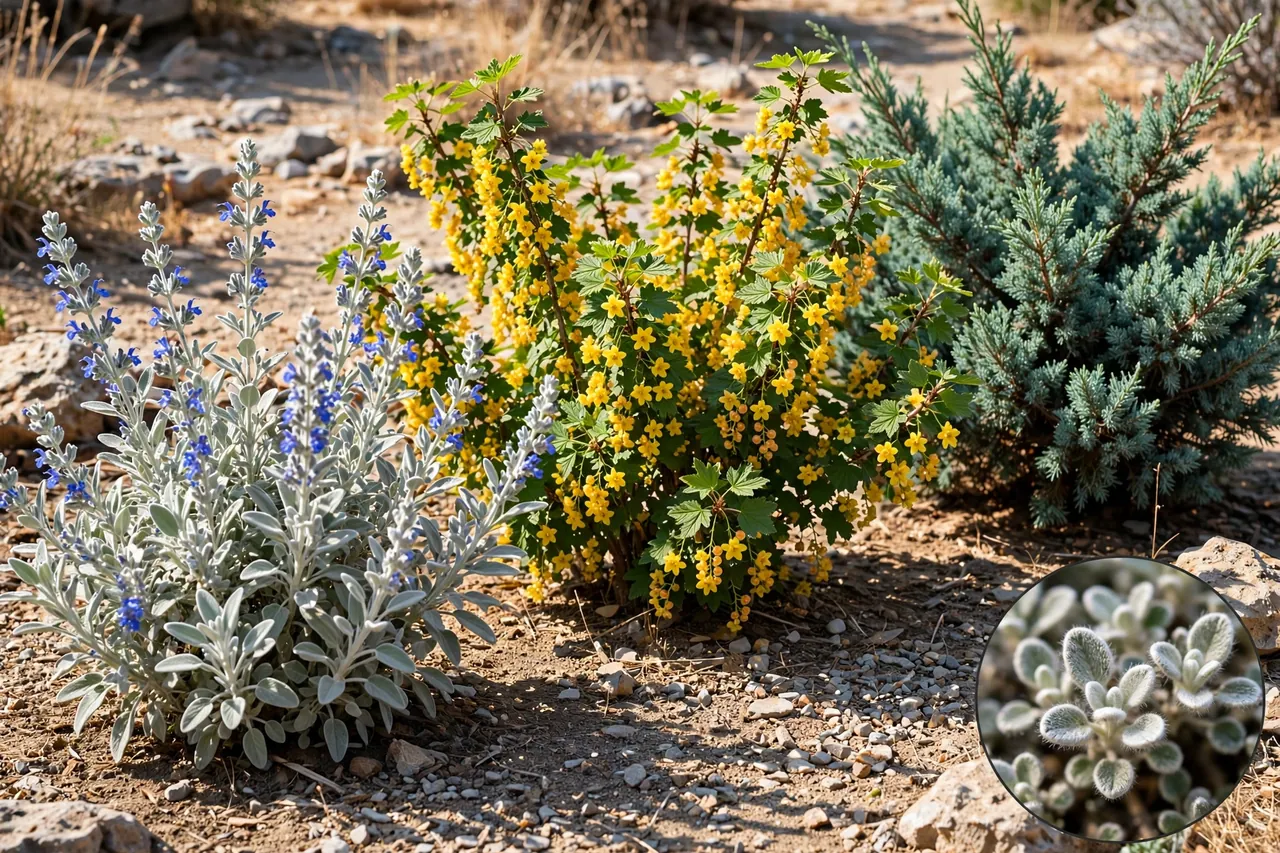
Germander sage (Salvia chamaedryoides) is a low evergreen shrub with silver-white leaves and rich blue flowers that hummingbirds and butterflies love. It grows 12 to 18 inches tall and 3 to 4 feet wide in zones 7 to 11, takes full sun or partial shade, and needs low water. It likes loam, chalk, or sand, as long as the soil drains well. It is deer-resistant and works well in wall-side borders and small city gardens.
Big Sagebrush
Big sagebrush (Artemisia tridentata), also called Great Basin sagebrush, is a Western native shrub that can grow 3 to 15 feet tall. It grows in zones 4 to 9, needs full sun and dry, rocky soil, and tolerates drought well. Its small silvery leaves smell sweet and pungent, and its yellow-green flowers appear from June into November. Plant it on slopes for erosion control or as a loose hedge, and keep it away from fire-prone spots, because it burns easily.
Golden Currant
Golden currant (Ribes aureum) is one of the friendliest shrubs for family yards. It grows 3 to 10 feet tall in zones 3 to 8, takes full to partial sun, and needs low water once established. Its yellow flowers smell of cloves, and its black fruit appears in summer and is edible. Birds and butterflies visit it often. Check your state rules before you plant it, because it is banned in some states: it can host pine blister rust, a disease of pines.
Carolina Azalea
Carolina azalea (Rhododendron carolinianum) is the shade pick on this list. This native shrub grows up to 6 feet tall in zones 7 to 9, takes partial shade, and likes well-drained, gravelly loam. It blooms delicate white or light pink flowers, and its glossy green leaves turn purplish in fall. It needs low water but cannot stand soggy soil. Keep it out of reach of children and pets, because it is toxic if eaten.
Rocky Mountain Juniper
Rocky Mountain juniper (Juniperus scopulorum) is a native evergreen tree or large shrub that Colorado State University Extension lists for xeriscapes. It grows about 30 feet tall, prefers full sun, and carries blue-green foliage with dark blue berry-like cones in its second year. It works as a screen or a specimen plant, and it holds its color through winter. Give it room and good drainage, and it will stand for decades with little care.
Ground Covers and Grasses That Hold the Soil
Ground covers and grasses do the quiet work in a xeriscape: they cover bare soil, stop erosion on slopes, and keep weeds down. They also replace thirsty lawn in spots where grass struggles. Plant them where you need coverage, not just color.
Broadleaf Stonecrop
Broadleaf stonecrop (Sedum spathulifolium) is a low succulent ground cover with yellow flowers in mid-spring and leaves that shift from blue to red-purple as they mature. It grows 2 to 6 inches tall in zones 5 to 9, takes full sun to partial shade, and needs low water in dry, well-drained soil. It attracts bees and butterflies, and it does well on slopes and ledges. Plant several about 6 to 12 inches apart so they can fill in, since only some of them take hold.
Ice Plant
Ice plant (Delosperma species) is a vivid ground cover with pink, yellow, purple, or orange flowers. Its name comes from tiny hairs on its leaves that catch the light like ice crystals. It grows 3 to 6 inches tall and 2 to 4 feet wide in zones 5 to 9, prefers full sun, and needs low water in sandy, dry soil. It blooms in partial shade too, just less. Use it on slopes, in rock gardens, and in raised beds with good drainage.
Shore Juniper
Shore juniper (Juniperus conferta) is a low evergreen ground cover that spreads 6 to 8 feet wide while staying only 6 to 12 inches tall. It grows in zones 6 to 9, takes full sun or partial shade, and likes well-drained sandy soil. It resists deer and air pollution, controls erosion on slopes, and drapes well over retaining walls. Its blue-green needles turn bronze-green to yellow-green in winter.
Blue Grama and Buffalograss
Blue grama and buffalograss are the two native grasses most often named for xeriscaping, along with purple needlegrass. They stay tough in heat, help prevent erosion with deep roots, and need far less water than a traditional lawn once established. Use them as a low-water lawn replacement in sunny spots, or mix them with wildflowers for a meadow look. They go brown in winter dormancy in cold regions, then green up again in spring, so set expectations before you plant a whole yard of them.
Succulents and Cacti for Hot, Dry Spots
Succulents and cacti store water in their leaves, stems, or roots, which makes them the most drought-tolerant plants on this list. They suit the hottest, driest corners of a yard: south-facing beds, rocky slopes, and spots near walls that reflect heat. Give them sharp drainage and full sun, and water them rarely once established.
Whale’s Tongue Agave
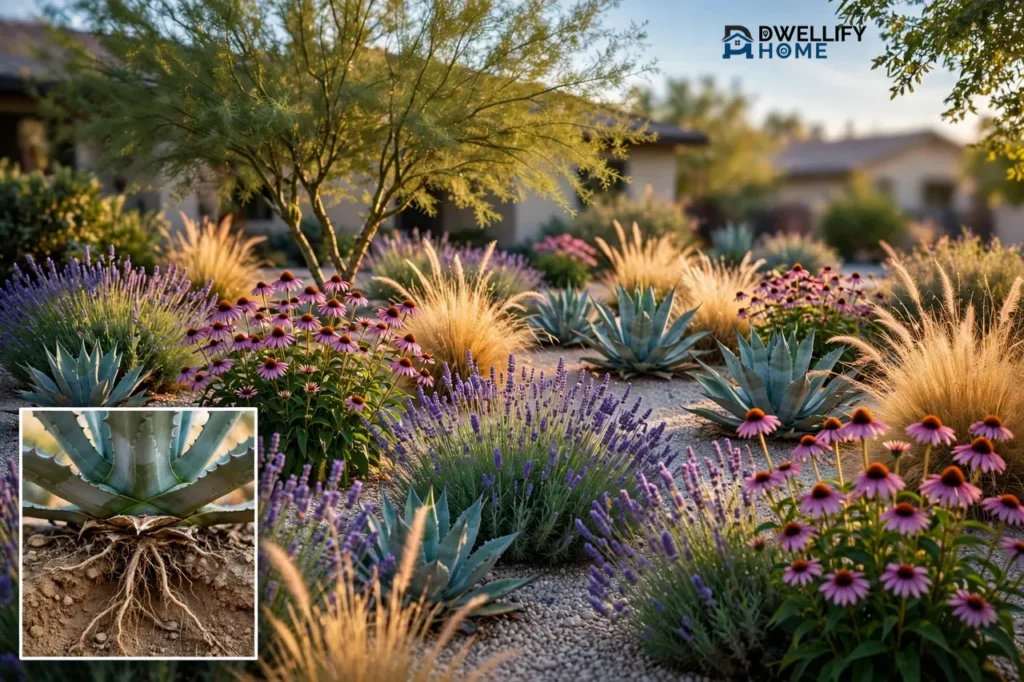
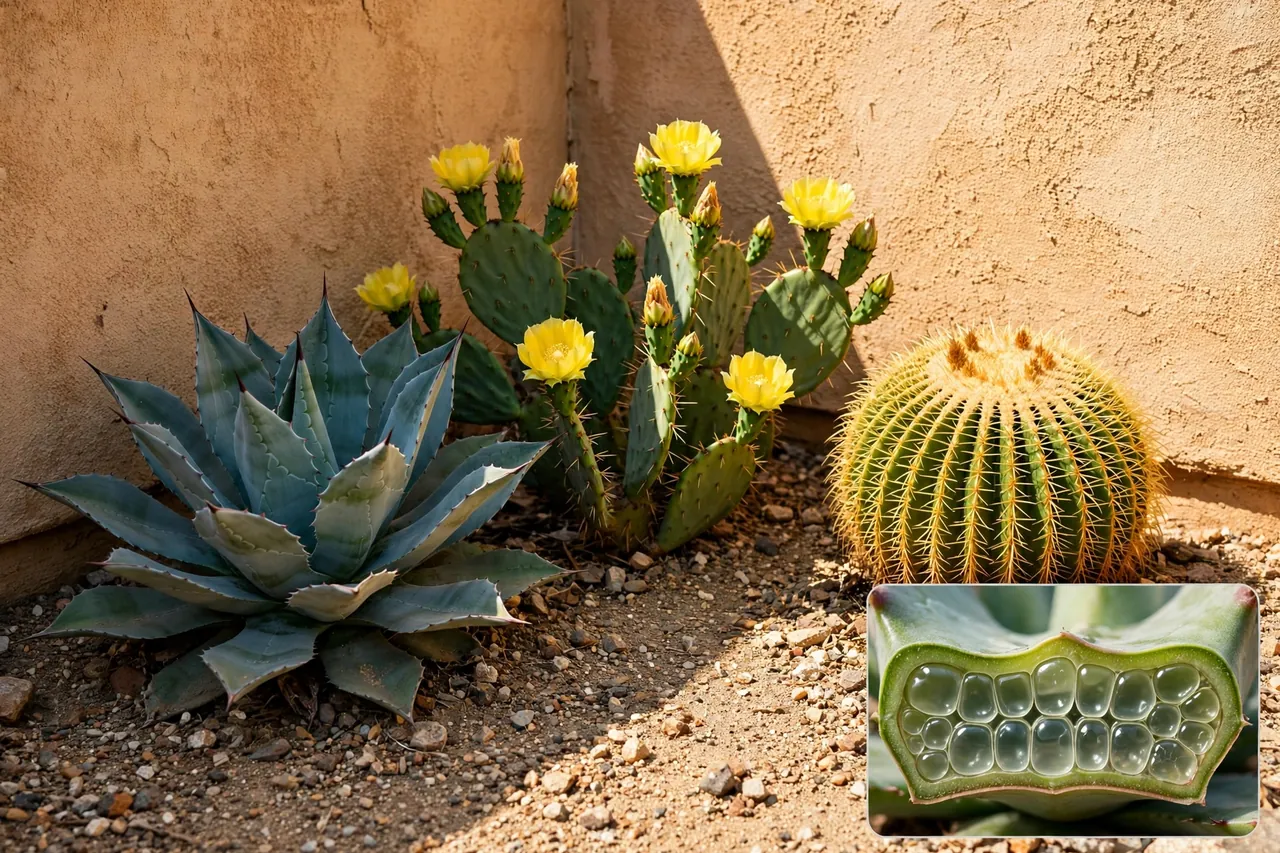
Whale’s tongue agave (Agave ovatifolia) is a bold succulent with thick, blue-green leaves in a low rosette 3 to 4 feet tall and 4 to 6 feet wide. It grows in zones 7 to 11, takes full sun or partial shade, and needs low water in loam, chalk, sand, or rocky soil. It also withstands harsh winters for a desert plant. After about ten years it blooms once with greenish-white flowers, then dies. Keep it away from foot traffic, because the leaf edges are sharp and the sap can irritate skin.
Spanish Dagger Yucca
Spanish dagger (Yucca aloifolia) is a dramatic shrub that grows 10 to 15 feet tall in zones 8 to 10. It takes full sun, likes sandy, well-drained coastal soil, and needs low to medium water. Its white flowers bloom in spring or summer and attract moths, hummingbirds, and butterflies. Plant it where no one walks past it, because the leaf tips are sharp enough to cut, and some parts are mildly toxic. It suits homeowners without small children or pets nearby.
Prickly Pear and Other Hardy Cacti
Prickly pear (Opuntia species), hedgehog cacti, and golden barrel cactus all belong in hot, dry xeriscapes where winters allow them. They need full sun, gravelly or sandy soil, and almost no extra water once established. Their flowers are a bonus: prickly pear blooms in bright yellow, and hedgehog cacti bloom in pink and magenta. Wear thick gloves when you handle them, plant them away from paths and play areas, and never water them on a lawn schedule, because wet soil rots their roots.
Xeriscape Trees for Shade Without the Thirst
A xeriscape still needs shade, and these trees give it without the water bill of a maple or a birch. Plant trees first, before the smaller plants, so their shade pattern is set and the plants under them get the light they actually need. Water trees deeply and rarely, and keep them in beds separate from any irrigated lawn.
- Mesquite: a Southwest native with filtered shade, fragrant flowers, and very low water needs once established. It suits hot, dry yards and feeds wildlife.
- Palo verde: a desert tree with green bark, yellow spring flowers, and low water needs. It gives light, airy shade that lets plants grow beneath it.
- Desert willow: a small tree with trumpet-shaped flowers that hummingbirds love. It needs little extra water after establishment and suits warm regions.
- Chinese juniper: an evergreen that grows 50 to 60 feet tall in zones 4 to 9, takes full sun, and tolerates drought and city air pollution. Prune it as a tree or keep it as a large shrub.
- Bigtooth maple: a small tree or large shrub, about 25 feet tall and wide, that Colorado State University Extension lists for xeriscapes. It tolerates dry, alkaline soils, and its dark green leaves turn red-yellow in fall.
Check the mature size before you plant any tree. A tree that grows 30 feet wide will crowd a house, a fence, and a path if you plant it too close. Measure the mature spread, then plant at least that far from buildings and buried lines.
Xeriscape Plants by Region
No single plant list fits the whole country. A plant that loves the Southwest may rot in the Southeast, and a plant that loves the Northeast may fry in Texas. Use this table as a starting point, then confirm each plant against your zone and your local extension office.
| Region | Strong picks | Watch out for |
|---|---|---|
| Southwest and desert West | Agave, prickly pear, palo verde, mesquite, penstemon, desert marigold | Summer heat and reflected heat from walls |
| Mountain West and Front Range | Penstemon, yarrow, blue grama, golden currant, Rocky Mountain juniper | Cold winters and late spring snow |
| California and Mediterranean climates | Lavender, California lilac, manzanita, showy penstemon, ice plant | Wet winters and dry summers |
| Southeast and Gulf Coast | Blanket flower, black-eyed Susan, coreopsis, muhly grass, yucca | Humidity and heavy rain that rots dry-loving roots |
| Northeast and Midwest | Purple coneflower, yarrow, bush’s coneflower, switchgrass, goldenrod | Cold winters and clay soil that stays wet |
| Pacific Northwest | Shore juniper, sedum, yarrow, Oregon grape, kinnikinnick | Wet winters; give dry lovers sharp drainage |
Native plants are usually the safest bet in each region, because they already fit local rain, soil, and pests. Your local extension office can confirm which natives are available at nearby nurseries. When you are ready to buy, our guide to the best places to buy plants online can help you compare sellers before you order.
How to Plant and Water Xeriscape Plants in the First Year
The first year decides whether a xeriscape plant lives or dies. New plants need water while their roots grow out, even if the same plant will need almost none later. Follow these steps, and do not rush the process.
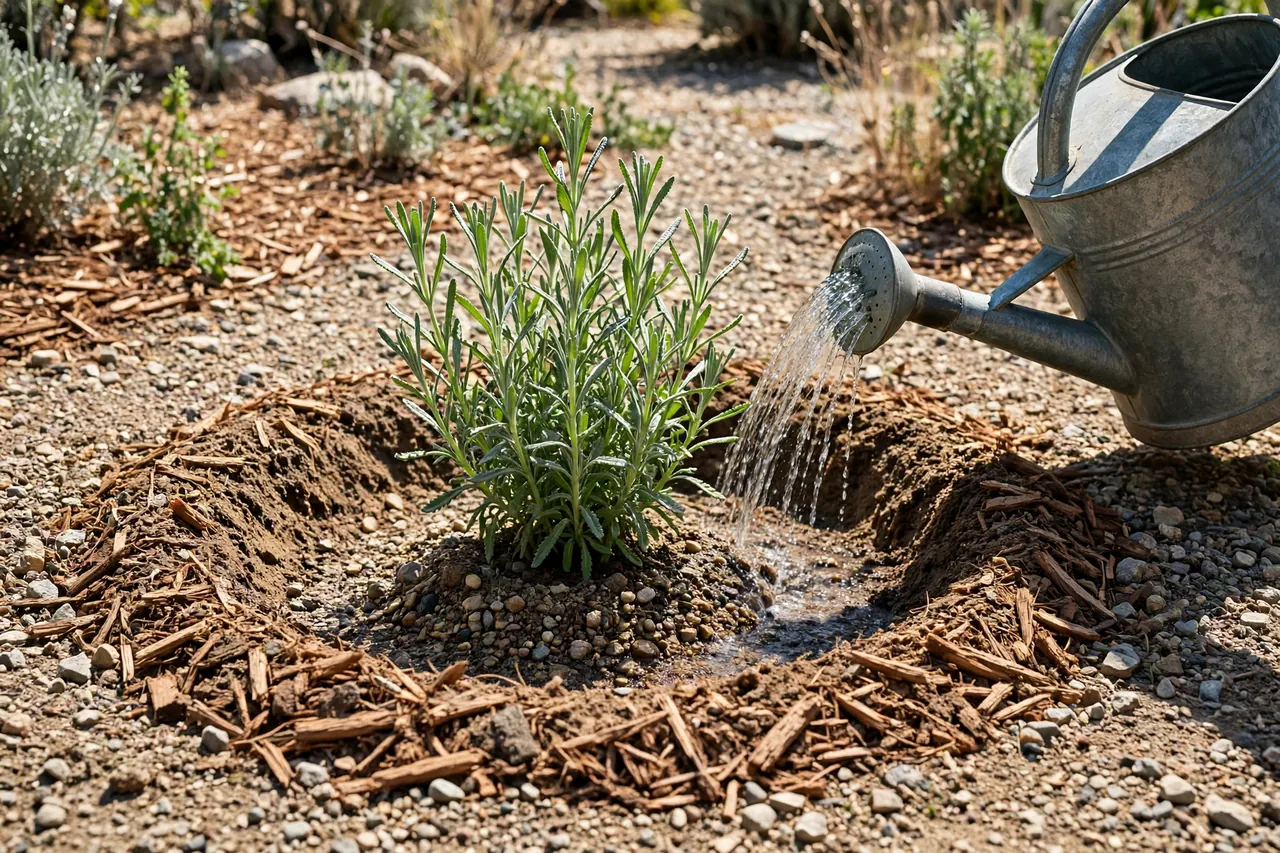
- Dig a hole twice as wide as the pot, but no deeper. Set the plant at the same depth it grew in its pot, so the crown sits at soil level, not buried.
- Backfill with the soil you dug out. Skip heavy compost in the hole for desert plants, since rich, wet soil can rot their roots.
- Water deeply right after planting, so the soil settles around the roots and air pockets close up.
- Spread 2 to 3 inches of mulch around the plant, keeping it a few inches away from the stem. Mulch slows evaporation and keeps roots cool.
- Water deeply once or twice a week through the first growing season, then stretch the gap. Deep, rare watering grows deep roots.
- Watch the plant, not the calendar. Wilting in the first weeks means water; yellow, soft leaves often mean too much water, so let the soil dry before you water again.
- After the first full season, cut back to the plant’s normal low-water routine. Most plants on this list need only a deep soak every few weeks after that.
Do not feed xeriscape plants like a lawn. Most of them grow best in lean soil, and extra fertilizer pushes soft, thirsty growth that wilts in the first dry spell. A light top-dressing of compost in spring is enough for most of them.
Mistakes That Kill Xeriscape Plants
Most xeriscape failures come from a few repeatable mistakes, not from the plants being weak. Avoid these, and your plants get a fair chance.
- Watering on a lawn schedule. Daily sprinkling keeps roots shallow and rots desert plants. Water deeply and rarely instead.
- Planting a warm-zone plant in a cold zone. Check the zone on the tag, and do not trust a pretty plant to beat your winter.
- Mixing thirsty and dry plants in one bed. Hydrozone first, so each plant gets the water it actually wants.
- Planting in a low, soggy spot. Most xeriscape plants die from wet roots faster than from drought. Raise the bed or pick a drier spot.
- Skipping mulch. Bare soil dries fast, heats up, and invites weeds. Mulch is cheap insurance.
- Buying without checking invasiveness. Some tough plants spread fast and crowd out natives. Check your state list before you plant.
- Expecting a finished look in month one. Xeriscape plants fill in over two to three seasons. Give them time, and fill gaps with mulch or rock while they grow.
If a plant dies, treat it as information, not failure. Note the spot, the soil, and the watering, then try a different plant that fits those conditions. Even good gardeners lose plants while they learn a yard.
Related Guides
Best Places to Buy Plants Online · Modern Landscape Design Trends Homeowners Love · Cheap DIY Garden Path Ideas · How to Fix a Soggy Yard Drainage · Xeriscaping Ideas · Best Plants for Small Gardens · Low Maintenance Yard Ideas
Frequently Asked Questions
What are the best plants for xeriscaping?
The best plants for xeriscaping are drought-tolerant grasses, perennials like purple coneflower, succulents, and low-water trees and shrubs that can handle your local heat and rainfall with little extra watering. Start with natives from your region, check each plant’s USDA zone, and group plants with the same water needs together.
Which perennials are suitable for xeriscaping?
Good xeriscape perennials include yarrow, lavender, coneflower, penstemon, coreopsis, and black-eyed Susan. They are hardy, bloom well, and handle dry spells once their roots are established. Pick the ones rated for your zone, give them full sun and well-drained soil, and water them deeply in their first season.
Can succulents be used in xeriscaping?
Yes, succulents are ideal for xeriscaping because they store water in their leaves and stems. That makes them a great fit for hot, dry areas with infrequent watering. Agave, sedum, ice plant, and prickly pear all work well, as long as the soil drains sharply and they get full sun.
Are there any trees that are suitable for xeriscaping?
Yes. Good xeriscape trees include mesquite, palo verde, and desert willow. They provide shade, support wildlife, and typically need little extra water after establishment, depending on your region. In colder regions, Chinese juniper, bigtooth maple, and Rocky Mountain juniper are strong choices.
Do all xeriscaping plants need full sun?
No. Many xeriscape plants love full sun, but some drought-tolerant options do fine in part shade, especially in hotter climates where afternoon shade can reduce stress. Carolina azalea prefers partial shade, and coneflower, yarrow, and shore juniper all tolerate partial shade.
Can you use plants outside of your area’s USDA hardiness zone?
Yes, you can, but only use plants from a lower, colder zone. Plants from a higher, warmer zone may not survive the lowest winter temperatures in your area. Plants inside your zone grow well with the least effort, because they have already adapted to your area.
Start with three or four plants from this list that fit your zone, your sun, and your soil. Plant them well, water them deeply through their first season, then step back and let them do what they evolved to do. A yard built on the right xeriscape plants gets easier every year, not harder, and it stays green and colorful on a fraction of the water a lawn demands.