
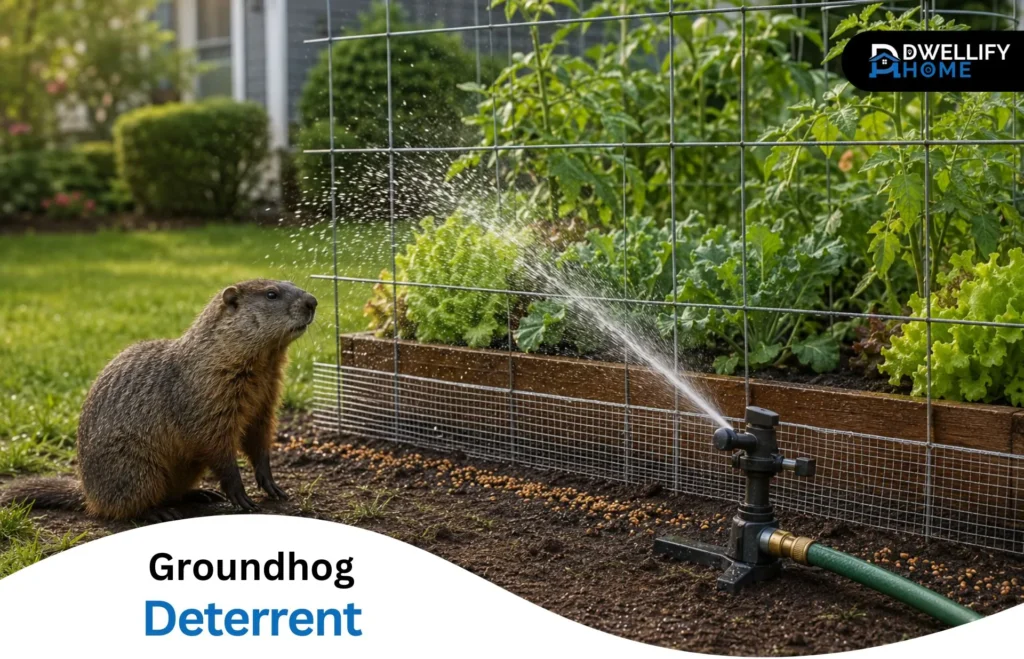
A groundhog can strip tender plants, slip beneath a weak fence, and retreat to its burrow before the damage is noticed. The most dependable groundhog deterrent isn’t a single strong-smelling spray. It’s a protection system built around physical exclusion, with repellents or motion devices used where they genuinely help.
The right approach depends on whether you have an occasional garden visitor, a repeated entry route, or an established burrow.
Short Definition
A groundhog deterrent is a barrier, repellent, or scare device used to discourage groundhogs from eating garden plants, entering protected areas, or establishing burrows near a home.
Mission Statement
DwellifyHome helps homeowners, renters, and home lovers make practical, stylish, and informed choices for more comfortable living spaces.
What Is the Best Groundhog Deterrent?
The best groundhog deterrent for a garden is a properly installed wire fence designed to prevent both digging and climbing. Motion-activated sprinklers and labeled repellents can provide extra protection, but they’re less reliable on their own because scents fade, products wash away, and animals can become accustomed to scare devices.
Wildlife agencies consistently give physical exclusion more weight than temporary repellents. The fence must extend below or outward along the ground and have a top that’s difficult to climb. A standard upright fence with open gates or an exposed bottom is rarely enough.
First, Make Sure a Groundhog Is Causing the Damage
Confirming the animal prevents wasted money and unnecessary changes to the garden. Determine whether the groundhog is merely feeding there or living in a nearby burrow.
Signs of Groundhog Feeding and Burrowing
Groundhog activity may leave several clues:
- Large bites or entire young plants disappearing
- Damaged beans, peas, lettuce, squash, or other tender crops
- A broad, round burrow entrance with excavated soil nearby
- Openings beside fences, shrubs, sheds, decks, or woodpiles
- Fresh digging beneath an existing garden barrier
- A stocky brown animal feeding during daylight hours
A trail camera aimed at the damaged bed or suspected entrance can confirm activity without relying on guesswork.
How to Rule Out Other Garden Animals
Small, low bites may indicate rabbits, while higher browsing and hoofprints suggest deer. Moles and other underground animals usually leave different surface tunnels or mounds and don’t remove rows of vegetables in the same way.
Look at the height and size of the damage, nearby tracks, and possible entry points. A camera is especially useful when several animals visit the yard.
Groundhog Deterrents Compared: What Works and What Falls Short
No method fits every property. Compare options by durability, maintenance, and the area needing protection.
| Method | Best use | Expected role | Main limitation |
| Buried wire fencing | Whole gardens | Primary long-term protection | Requires correct installation |
| Mesh cages or bed covers | Raised beds and individual plants | Targeted protection | Awkward around tall crops |
| Low electric strand | Supporting an existing fence | Extra climbing and digging control | Requires safe setup and maintenance |
| Commercial repellent | Small beds or temporary pressure | Supporting measure | Label restrictions and reapplication |
| Homemade scent remedy | Short-term trial | Variable support | Limited evidence and weather exposure |
| Motion-activated sprinkler | A known entry route or small area | Humane scare device | Needs water and careful positioning |
| Ultrasonic or stationary scare device | Supplemental use only | Low-confidence option | Habituation and weak supporting evidence |
Physical Barriers and Exclusion
A well-built fence is the most dependable choice because it removes access rather than trying to change the animal’s behavior.
Common wildlife-agency guidance recommends:
- A wire fence approximately 3 to 4 feet above ground
- Mesh openings small enough to block young groundhogs
- A lower section buried about 12 inches or bent outward as an L-shaped apron
- A loose or outward-angled top that’s difficult to climb
- Secure gates, corners, and joins without ground-level gaps
Specifications vary by site and wildlife authority, but the design must address both climbing and digging. Humane World for Animals and the North Carolina Wildlife Resources Commission provide examples of suitable exclusion designs.
Commercial and Homemade Repellents
Commercial sprays and granules commonly use taste or odor ingredients intended to make plants or treated areas less appealing. Check that the label names the target animal, permits the intended application, and explains whether it can be used around edible crops.
Cayenne, garlic, castor oil, predator odors, blood meal, hair, and aromatic plants frequently appear in homemade advice. Results are inconsistent. Rain, irrigation, and fading odors reduce their effect, while an established groundhog may tolerate an unpleasant smell to reach a reliable food source.
Treat these options as supporting measures—not substitutes for exclusion.
Motion-Activated Sprinklers and Scare Devices
A motion-activated sprinkler can protect a defined entry route or small garden by delivering an unexpected burst of water. Position it where the groundhog approaches rather than in the center of an area it has already entered.
Reflective tape, pinwheels, radios, lights, and moving objects may provide temporary relief. Rotate or reposition them because a stationary object quickly becomes part of the surroundings.
Low-Evidence or Unsafe Methods to Avoid
Outdoor ultrasonic and vibration devices have weak support. The University of Florida IFAS Extension lists these tactics among those that are generally ineffective outdoors.
Avoid putting mothballs in gardens or burrows. They are pesticides intended for specific labeled uses, not general wildlife repellents, and outdoor use can expose children, pets, soil, water, and wildlife. The National Pesticide Information Center specifically warns against this misuse.
Chewing gum, soap, and improvised poisons aren’t responsible deterrents. They offer no dependable garden protection and may harm animals or non-target wildlife.
How to Groundhog-Proof Your Garden Step by Step
A layered plan protects valuable plants immediately while creating a more durable perimeter.
Protect Vulnerable Plants and Raised Beds Immediately
Place sturdy wire cages over young plants or secure mesh around raised beds. Anchor the material at ground level so it can’t be lifted or pushed aside.
Harvest ripe produce, remove fallen fruit, and cover the crops receiving the most damage first. Lightweight fabric alone may not stop a determined groundhog unless supported and firmly secured.
Install a Fence That Stops Digging and Climbing
Build the fence around the smallest practical area to reduce cost and maintenance. Extend the bottom underground or create an outward-facing apron secured with landscape staples and soil.
Leave the upper portion slightly flexible or angle it outward. Inspect beneath gates, around trellises, and where the fence meets another structure—these are common weak points.
Add Repellents or Motion Devices as Backup Protection
Place a motion sprinkler along the most likely approach. Apply a commercial repellent only as directed, paying close attention to instructions for vegetables, pets, and direct plant contact.
Temporary products may need renewed after rain, irrigation, or fresh plant growth. Don’t apply more than the label permits in an attempt to improve performance.
Monitor Entry Points and Adjust the Setup
Check the garden regularly for fresh bites, disturbed soil, lifted mesh, and tracks beneath the fence. A trail camera can reveal whether the animal is climbing, digging, or using an overlooked gate opening.
Repair the specific failure rather than adding random remedies around the yard.
What Should You Do About an Active Groundhog Burrow?
An active burrow requires more caution than a groundhog that only visits to feed. Groundhog burrows may have several entrances and could contain dependent young, so never seal a hole simply because the animal isn’t visible.
How to Check Whether the Burrow Is Active
Locate as many entrances as possible. Loosely place grass clippings or crumpled newspaper in each opening and watch for disturbance.
Humane World recommends monitoring for approximately three to five days in clear summer weather before treating a burrow as vacant. A camera provides additional confirmation. Seasonal inactivity can complicate the assessment, so seek local guidance when uncertain.
Closing and Securing a Vacant Burrow
Once vacancy is reasonably confirmed, backfill the entrance and cover the area with strong welded wire extending beyond the opening. Bury or securely anchor the mesh so another animal can’t immediately dig around it.
Continue checking for fresh soil or attempts to reopen secondary entrances.
Burrows Beneath Sheds, Decks, or Other Structures
A burrow near a structure doesn’t automatically mean major foundation damage, but its location deserves attention. Avoid digging, flooding, fumigating, or sealing the opening without confirming occupancy.
Professional inspection is sensible when there is damaged skirting, visible settlement, cracking, several entrances, or uncertainty about where the tunnels lead.
How to Keep Groundhogs From Returning
Removal alone doesn’t make a property less attractive. Another groundhog may use the same food source, sheltered route, or abandoned burrow.
Remove Food, Cover, and Easy Shelter
- Collect fallen fruit and harvest produce promptly.
- Use a closed compost bin.
- Don’t leave pet food outdoors.
- Mow tall grass and clear dense vegetation near buildings.
- Remove unused brush and unstable woodpiles.
- Seal accessible structural gaps after confirming no animal is inside.
These changes work best alongside fencing rather than as a replacement for it.
Maintain Fences and Reapply Temporary Deterrents
Inspect the fence after storms, landscaping work, and seasonal soil movement. Clear vegetation from electric strands and repair loose mesh before a small opening becomes an established route.
Follow product-label instructions for repellent reapplication. Don’t assume one treatment will protect the garden for an entire growing season.
Watch for New Damage or Attempts to Reopen Burrows
Fresh soil, renewed plant damage, or disturbed wire can reveal a returning animal early. Continue monitoring former entrances and likely approach routes, particularly when tender new growth appears.
Early repairs are easier than correcting an established feeding pattern.
When to Call a Wildlife Professional
Professional help is appropriate when the animal can’t be excluded safely, a burrow is beneath a vulnerable structure, dependent young may be present, or legal removal becomes necessary.
Trapping and Relocation Rules Vary by State
Never assume a captured groundhog can be transported elsewhere. Some states restrict relocation or require on-site release, permits, or specific handling. For example, North Carolina and Michigan place significant restrictions on moving captured groundhogs.
Check with your state wildlife agency, local Cooperative Extension office, or a licensed wildlife control operator before setting a trap.
Situations That Need Professional Exclusion or Removal
Consider qualified assistance when:
- The burrow is beneath a house, slab, deck, or occupied structure
- You can’t determine whether the burrow contains young
- Multiple entrances make exclusion uncertain
- A trapped animal can’t be handled lawfully or safely
- Repeated fence repairs and deterrents haven’t stopped the damage
- Structural movement or damage is visible
Ask whether the service includes both removal and exclusion. Removing the animal without correcting access points can leave the property open to another occupant.
Safety Around Trapped, Injured, or Abnormally Behaving Groundhogs
Don’t approach or corner a groundhog. Keep children and pets away, especially if the animal is trapped, injured, unusually aggressive, disoriented, or approaching people without caution.
Contact local animal control or a licensed wildlife professional rather than attempting to handle it.
Groundhog Deterrent FAQs
What Smells Do Groundhogs Dislike?
Capsaicin, garlic, and predator-based odors may temporarily discourage groundhogs, but no smell is as dependable as a properly built barrier. Scent treatments fade in rain and may be ignored when food is readily available. Use them as supporting measures and follow product labels around vegetables, pets, and children.
Does Epsom Salt Deter Groundhogs?
Epsom salt is a widely repeated home remedy, but it shouldn’t be treated as a proven or lasting control method. Rain and irrigation quickly disperse it, and unnecessary application adds magnesium and sulfur to the soil. Use a soil amendment only when the garden actually needs it—not as the main wildlife barrier.
Do Ultrasonic Groundhog Repellents Work?
Ultrasonic stakes aren’t considered dependable outdoor groundhog control. Their effective range may be limited, obstacles can interfere, and animals may become accustomed to the stimulus. A motion-activated sprinkler produces a direct response, but properly installed fencing remains the stronger long-term choice.
Are Groundhog Repellents Safe Around Pets and Vegetables?
Safety depends on the exact product and application. “Natural” doesn’t automatically mean harmless. Use only products whose labels permit the intended location, target animal, and edible-garden use. Keep pets away during application when directed, and never improvise with mothballs, poisons, or irritating household chemicals.
Can You Trap and Relocate a Groundhog?
Possibly, but legality and permitted handling vary by state and locality. Relocation can also separate a mother from dependent young or leave an animal in unfamiliar territory. Contact the state wildlife agency before trapping, and use a licensed wildlife control operator when the rules or safe handling requirements are unclear.
Protect Your Garden With a Layered Deterrent Plan
Start with exclusion: protect valuable plants and install a fence that addresses both digging and climbing. Use motion sprinklers or labeled repellents as backup, then remove attractants and monitor weak points.
The lasting solution isn’t the strongest smell or loudest device. It’s a practical barrier, sensible maintenance, and a response matched to the way the groundhog is using the property.
Disclaimer
DwellifyHome content is for general informational purposes only. Homes, needs, preferences, budgets, and circumstances vary. Consult a qualified professional for safety, installation, repair, legal, structural, electrical, plumbing, HVAC, or major property decisions.