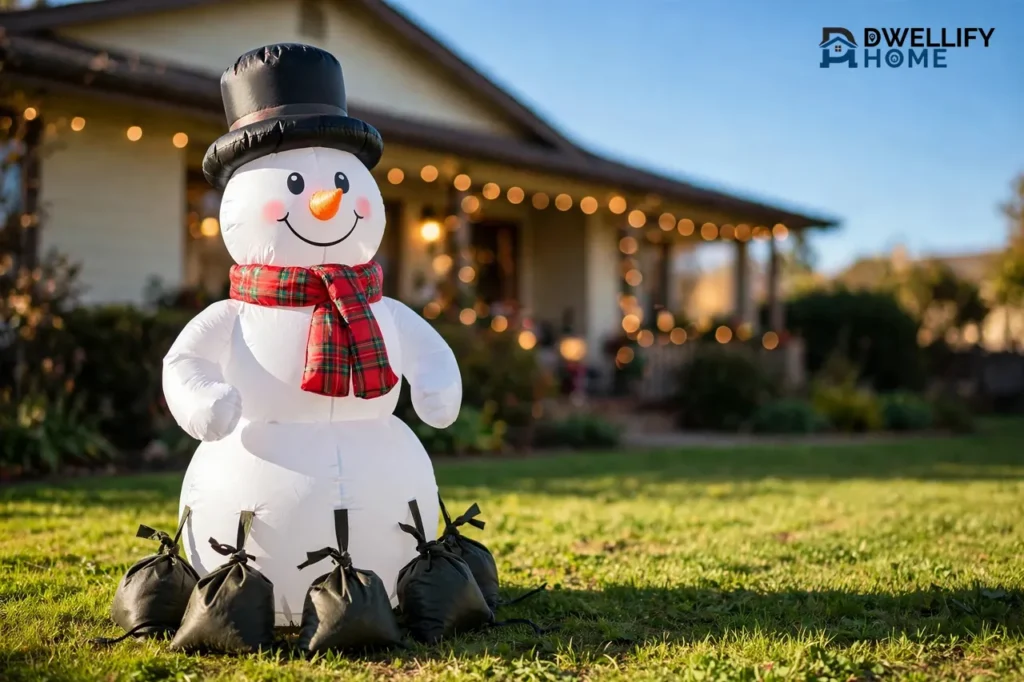
Weights for outdoor Christmas decorations work best when you match the weight to the decoration, spread it across every anchor point, and pair it with tethers on soft ground. Use sandbags, weight bags, gravel bags, or another heavy ballast when stakes cannot hold, when the ground is frozen or sandy, or when you set up on concrete, a patio, or a deck. On a lawn, weights add backup to stakes. They do not replace stakes on their own for a tall inflatable in a strong wind.
Think of it this way: a tall inflatable catches wind like a sail, while its fabric body weighs very little. Weight fights that lift. It pulls the base down, lowers the center of gravity, and stops the decoration from rocking, sliding, or tipping. This guide shows you how to choose the right kind of weight, how much to use, where to put it, and when to take the whole display down instead of adding more weight.
Why a Light Decoration Needs Heavy Anchoring
Most yard decorations look solid, but many weigh far less than they appear to weigh. An inflatable is mostly air. A hollow plastic figure is mostly empty space. A plywood cutout is flat and broad. Wind pushes on all that surface area, and it keeps pushing all night.
That push does two things at once. It shoves the decoration sideways, and it lifts the upwind edge. Once one edge lifts, wind gets underneath and the lift grows stronger. A decoration that rocks in a breeze today can walk across the lawn tonight, tear at its seams, or land in the street.
Weight breaks that cycle. It keeps the base planted so wind cannot get a grip underneath. It also steadies the decoration, so tethers stay taut and stakes stay put. Weight alone will not tame a storm, and this guide never asks it to. It gives a calm-weather and breezy-weather display a much wider margin of safety.
Start With the Anchors Your Decoration Already Has
Before you buy a single sandbag, read the manual that came with your decoration. Look for every loop, D-ring, strap, and tether point on the base and the body. Count them. Your anchoring plan should use all of them, not just the two that look easiest to reach.
Many inflatables ship with short plastic stakes and thin tether lines. Those parts suit calm weather on firm soil. They often fall short in soft soil, on a slope, or in a gusty yard. That does not mean you throw them away. It means you treat them as the starting point, then add stronger stakes, better rope, and weights where the setup needs help.
Check the manual for a wind limit too. Some makers warn clearly against inflating in unusually strong wind and tell you to let the decoration deflate and wait for safer weather. One widely used inflatable manual puts it plainly: do not attempt to inflate the unit during unusually strong winds, and if it becomes too windy for safe operation, allow it to deflate and wait for safer conditions. That advice, from the manufacturer’s own safety instructions, outranks any tip in this guide.
Finally, inspect the decoration itself. A torn loop, a frayed tether, or a cracked base will fail no matter how much weight you stack on it. Fix or replace weak anchor points first, then add ballast.

How Much Weight Do You Actually Need?
There is no single magic number that fits every yard decoration, and you should distrust any guide that hands you one. The right amount depends on the size of the decoration, its shape, the surface under it, and how exposed your yard is. A small, low figure near a fence needs far less help than a tall, broad inflatable standing alone in an open yard.
Use this qualitative sizing guide instead of a fixed pound figure. It keeps you honest, and it lets the manufacturer’s rating win whenever one exists.
Size Your Ballast to the Decoration
For a small, low decoration, such as a short pathway figure or a compact lighted shape, start with one modest weight bag at each base corner or anchor loop. Test it with a firm push from several directions. If it does not shift, you have a sensible starting point for calm weather.
For a medium decoration, such as a typical standing figure or a mid-size inflatable, spread weight across every anchor point rather than piling it all in one spot. Four well-placed bags beat one very heavy bag, because they resist tipping from every direction and they keep the base level.
For a large or tall decoration, such as a big inflatable Santa, an arch, or a tall yard figure, treat weights as backup, not the whole plan. Combine them with stakes or guy lines on soil, or with ties to fixed points on hard surfaces. The taller and broader the piece, the more leverage wind has, so the more anchor points you need working together.
Use the Push Test, Not a Guess
Set the decoration up, anchor it, and then push it firmly from the front, the back, and each side. Watch the base. If a corner lifts, slides, or rocks, add weight at that corner or tighten that tether, then test again. Repeat the test after the first windy night, because stakes loosen and bags settle.
Add weight in small steps and retest each time. A display that stands firm under your push, with taut tethers and no rocking, is ready for ordinary breezy weather. A display that still shifts after you add reasonable weight is telling you something important: move it to a more sheltered spot, add stakes or guy lines, or take it down when the forecast turns rough.
Never stack weight so high that it crushes the base, blocks the fan intake on an inflatable, or creates a trip hazard for visitors. More weight helps only while it stays low, stable, and tied to the decoration.
Sandbags, Weight Bags, and Other Ballast Options
Not all ballast behaves the same way. Sand stays put and packs tightly. Gravel drains well and resists freezing into a solid lump as readily as wet sand can. Water weighs a lot for its size, but it can freeze, slosh, and leak. Concrete blocks hold firm, but they can scratch a patio and hurt a toe if they tip. Choose the filler that fits your surface and your weather.
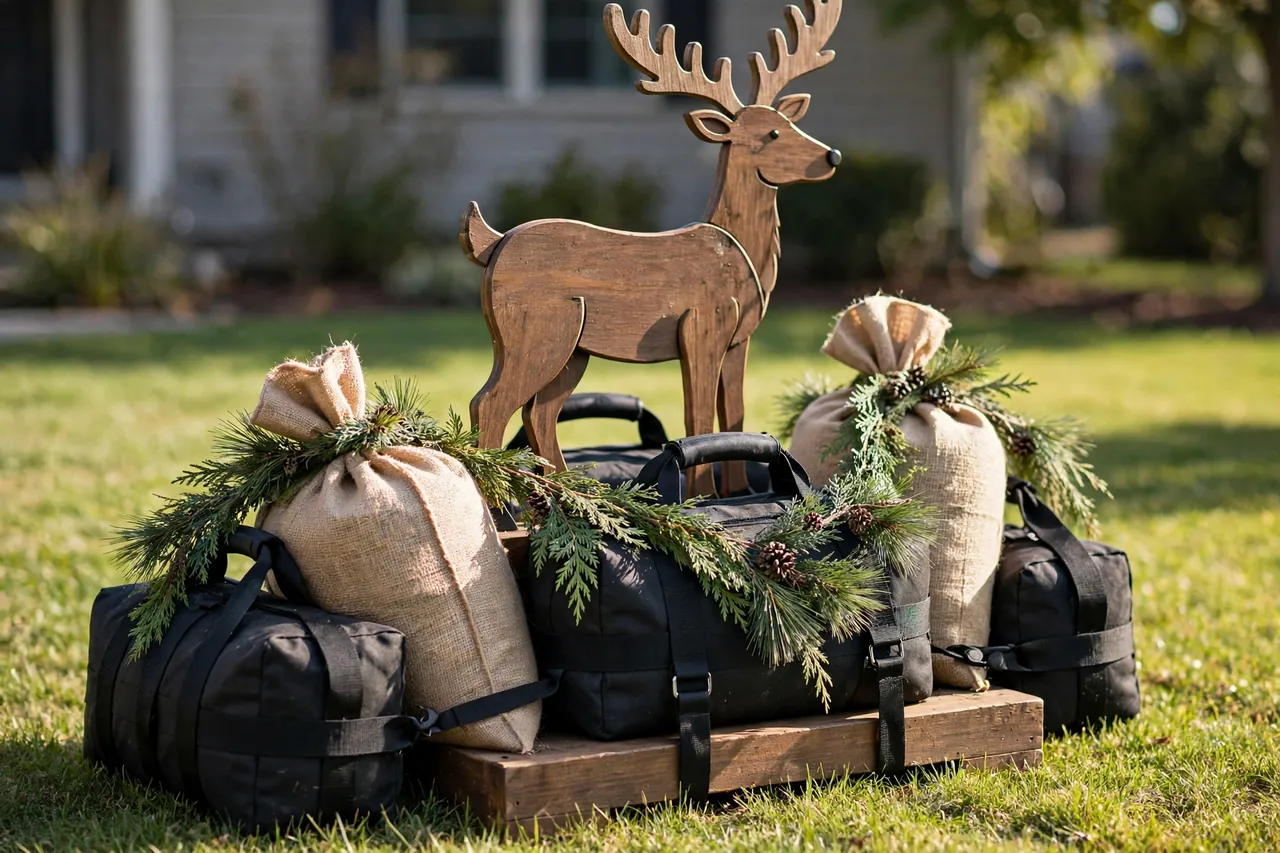
Buy or make bags with a strong handle, loop, or D-ring. You need a secure place to tie the bag to the decoration. A bag with no attachment point slides away from the job, no matter how heavy it is. Tie each bag to a loop or tether with rope, webbing, or a sturdy strap, and keep the tie short so the bag cannot wander.
Cover or disguise the bags if you want a tidy look. Tuck them behind the base, drape a bit of garland over them, or let snow cover them naturally. Just keep them reachable, because you will check and retighten them through the season.
| Ballast type | Best for | Watch out for |
|---|---|---|
| Sandbags | Lawns, patios, and driveways | Wet sand grows heavy and can freeze solid |
| Gravel bags | Wet or freezing weather | Sharp gravel can wear thin bag fabric |
| Weight bags with handles | Quick setup and storage | Check the stitching and handles before each season |
| Concrete blocks | Large pieces on hard surfaces | They scratch surfaces and need a soft pad underneath |
| Water weights | Short-term use in mild weather | Water can freeze, slosh, and leak |
For most home displays, sandbags and gravel bags give the best mix of weight, grip, and easy storage. Empty them at the end of the season, dry the bags, and store them flat. You will thank yourself next December.
Stakes vs Weights: Which One Wins Where?
Stakes and weights solve the same problem in different ways. A stake grips the soil and resists pull. A weight presses down and resists lift. On soft ground, stakes usually give you more holding power per dollar. On hard ground, weights are often your only option. In gusty weather, the two together beat either one alone.
Use stakes as your main anchor on a lawn whenever the soil allows it. Drive long, sturdy stakes at an angle, pointing away from the decoration, and attach every tether to a stake. Add weights at the base for extra steadiness, especially on tall pieces. Use weights as your main anchor on concrete, asphalt, pavers, and decks, where stakes cannot go in at all. Tie the weights to the decoration and, where you can, to a fixed point such as a sturdy post or railing.
Neither tool rescues a bad spot. A tall inflatable on a hilltop, at an open corner, or in a wind tunnel between two buildings will fight you all season. Move it near a windbreak first, then anchor it. Shelter plus anchoring beats anchoring alone every time.
| Surface or situation | Best first choice | Add this too |
|---|---|---|
| Firm lawn | Long stakes at an angle | Weight bags at the base |
| Soft or sandy soil | Longer auger-style stakes plus weights | Guy lines to extra anchor points |
| Frozen ground | Weights, since stakes may not go in | Ties to fixed posts or railings |
| Concrete, patio, or deck | Weights tied to every anchor loop | Ties to fixed points where possible |
| Tall or broad display | Stakes plus guy lines | Weights spread across the base |
Anchor Your Display Step by Step
Work in this order and you will avoid the most common mistake, which is inflating first and hunting for anchors second. Anchors go in before the decoration goes up.
- Pick a flat, sheltered spot with room for tethers to run outward, and keep the display clear of sidewalks, driveways, and streets so a leaning figure lands on grass.
- Read the manual, count every anchor loop, and lay out your stakes, ropes, and weight bags before you inflate anything.
- Drive stakes at an angle away from the decoration on soil, or set weight bags in place on hard surfaces, and test each anchor with a firm pull.
- Inflate or stand the decoration, then tie every tether and loop, working around the base so tension stays even on all sides.
- Push the decoration firmly from several directions, add weight or tighten tethers where it shifts, and retest until the base stays planted.
- Walk the display each evening in windy weather, reset any loose stake, snug up slack tethers, and reposition any bag that has slid.
Placement That Makes Your Weights Work Harder
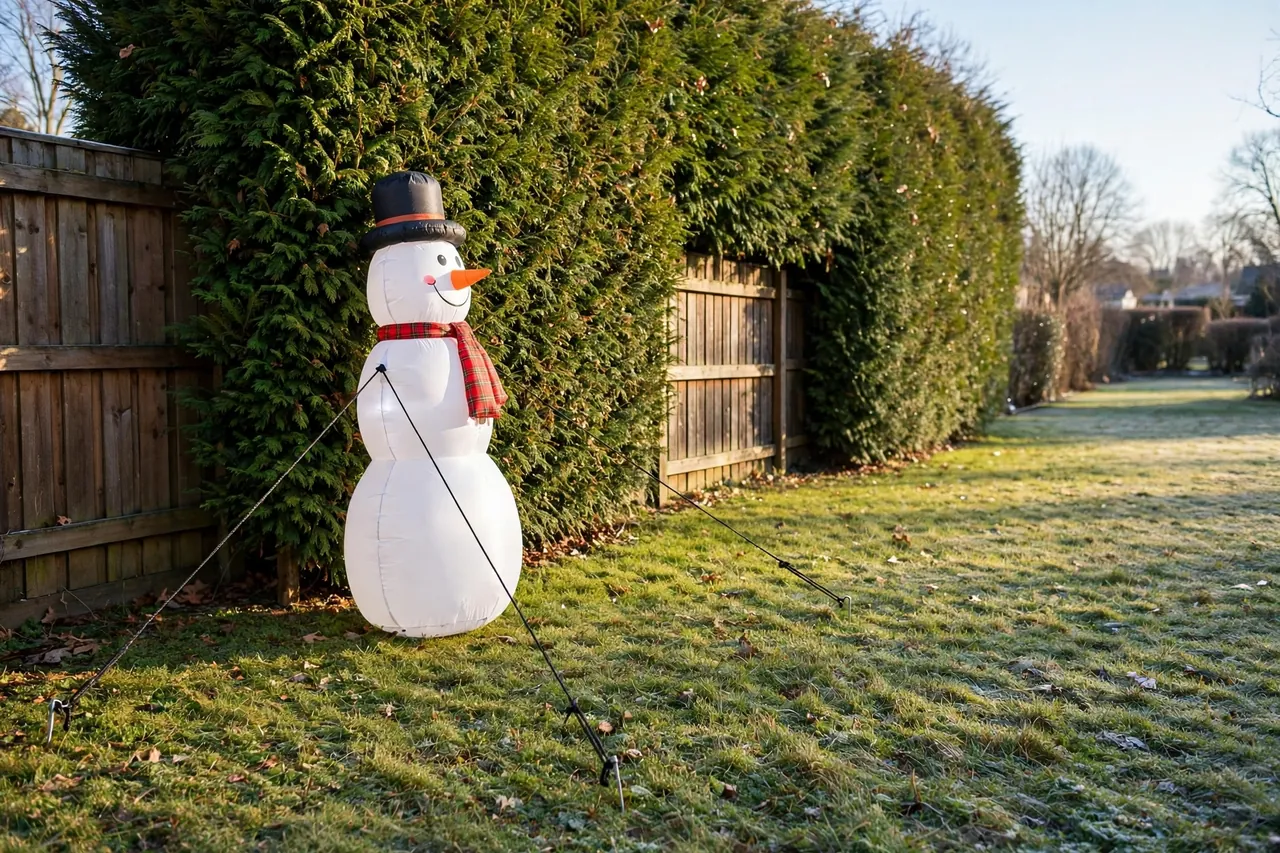
Placement is free anchoring. A fence, a hedge, a wall, or the house itself breaks the wind before it reaches your display, a point practical setup guides also stress when they advise placing inflatables near a windbreak rather than in a wide-open, wind-prone spot, as Christmas Central’s inflatable guide does. Set the decoration on the sheltered side, with its narrowest face toward the wind direction that dominates in your yard. Keep it off slopes and hilltops, where gusts speed up and the base sits unevenly.
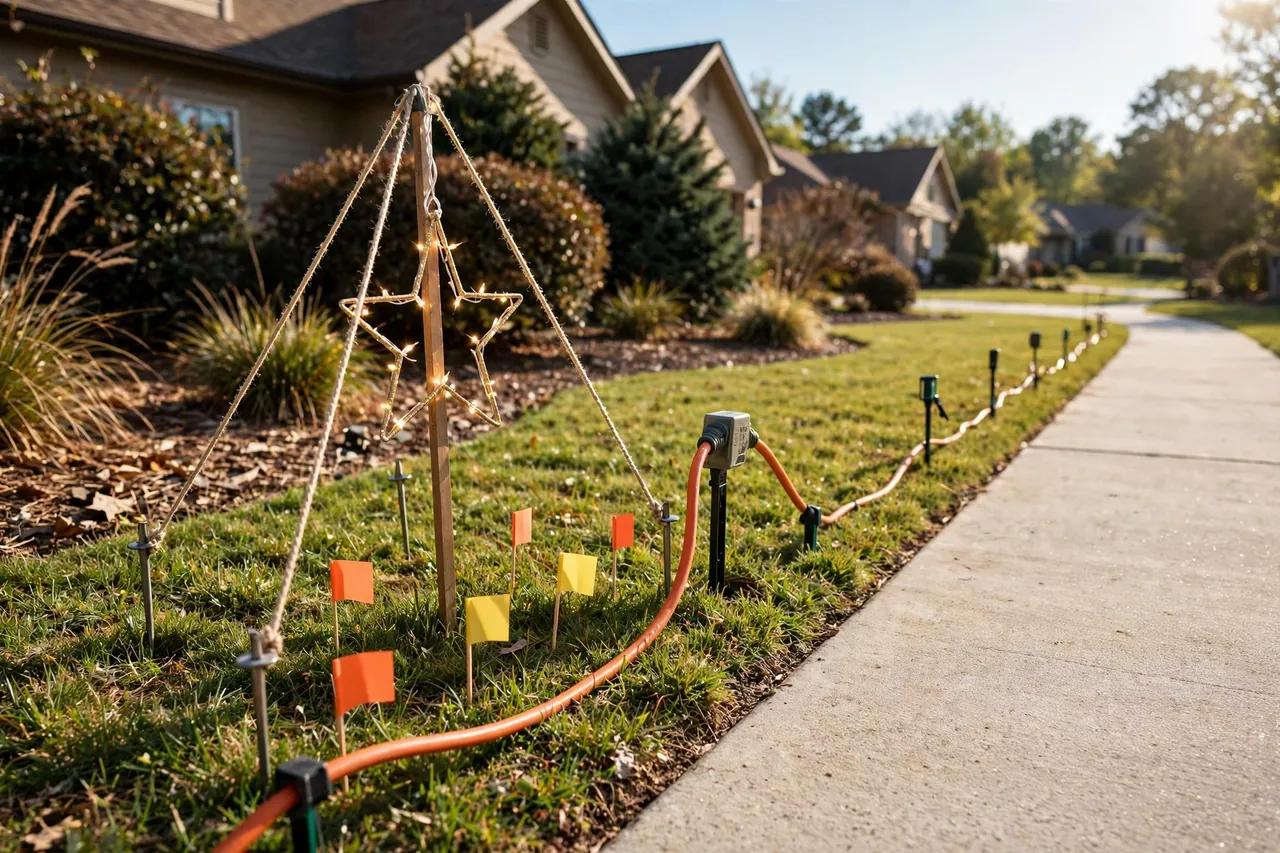
Give tethers room. A tether tied partway up a figure and run outward at roughly 45 degrees reaches the ground some distance from the base, so plan for that ring of rope and stakes around the piece. Keep guy lines visible at night, or mark them, so guests do not trip over them on the way to your door.
For more ideas on choosing and placing the inflatables themselves, see our guide to inflatable outdoor decorations, which covers the display types this anchoring guide is built to hold in place.
Hard Surfaces: Driveways, Patios, and Decks
Hard surfaces change the rules. You cannot stake into concrete, and a weight bag on smooth concrete can slide if it has no grip. Put a rubber mat, an old rug scrap, or a non-slip pad under each bag. That small pad adds friction and protects the surface from scratches, especially under concrete blocks.
Tie each weight bag directly to an anchor loop on the decoration with a short, strong tie. Long, loose ties let the decoration rock before the weight catches it. Where a sturdy post, railing, or deck support sits nearby, run an extra tie to it as well. That fixed point turns a free-standing weight into a true anchor.
On a deck, check the weight of the whole setup against what the deck handles with ease, and keep heavy blocks off railings and board edges. On a driveway, keep the display and its weights fully clear of the path cars use. A weight bag that creeps into a tire track will not stay a weight bag for long.
If your driveway display pairs with a wider entrance setup, our guide to decorating a driveway for Christmas helps you plan the layout so anchors, lights, and foot traffic do not fight each other.
Frozen, Sandy, Soft, and Sloped Ground
Each tricky surface defeats a different anchor, so match your fix to the ground you actually have.
Frozen Ground
Set inflatables up before the ground freezes solid if you can, because frozen soil can refuse a stake entirely. If the ground already froze, switch to weights and ties to fixed points. Never hammer stakes into frozen ground with brute force near a walkway or a buried line, and never chip at ice with a sharp tool around cords or fabric.
Sandy and Soft Soil
Short stakes pull straight out of sand and soft soil. Use longer, spiral or auger-style stakes that bite deeper, drive them at an angle, and add weights at the base so the decoration does not depend on grip alone. Spread the load across more anchor points, and check the setup after rain, when soft soil gives way even more easily.
Slopes
On a slope, level the base if you can, and put extra weight and extra tethers on the downhill side, where gravity already pulls the decoration. If the slope is steep, move the piece to flatter ground. No reasonable pile of sandbags makes a steep, exposed slope a safe home for a tall inflatable.
Wind Safety: When to Deflate and Bring It In
Here is the honest limit of this guide: weights and stakes handle breezy evenings, not storms. When the forecast calls for strong gusts, heavy rain, or a storm, unplug the fan, let an inflatable deflate, and fold it or bring it inside until the weather passes. Bring light figures, cutouts, and loose yard art inside too if the wind could turn them into projectiles.
Watch for warning signs during the season. A decoration that leans more than it did yesterday, tethers that keep going slack, stakes that keep working loose, or bags that keep sliding all tell you the setup has reached its limit. Add shelter, add anchors, or take the piece down. Do not wait for a gust to make the decision for you.
Keep the area around the display safe as well. A blown decoration can hit a car, block a walkway, tangle in power lines, or hurt a passerby. If a piece ever breaks loose, stay clear of it while it moves, and never chase it into the street or near overhead lines.
Stay Safe Around Stakes, Cords, and Power
Caution comes before you drive a single stake. Underground gas, electric, water, and internet lines can sit just inches below the surface, and driving a stake into one can cause an outage, a costly repair, or a serious injury. Call 811 before you drive stakes for a display, especially if you are placing long stakes or working in a new spot. The free service connects you with your local one-call center, which arranges for utility lines to be marked. Colorado 811, for example, lists driving landscaping stakes into the ground among the jobs that call for a locate first.
For inflatables and lighted figures, use only outdoor-rated cords and plugs, and keep every connection off the ground and out of standing water. Plug inflatables into a ground-fault protected outdoor outlet where one is available, and never run a cord across a walkway where guests can trip on it. If a cord looks frayed, cracked, or damaged, replace it before you plug anything in.
Keep decorations clear of overhead power lines and the roof edge, so a leaning or falling figure cannot reach a line. Keep guy lines and tethers clear of walkways, or mark them clearly at night. A safe display is one that stays put and lets everyone enjoy it without dodging ropes or cords.
For a fuller look at the figures themselves, including sturdy yard figures that pair well with a weighted base, see our guides to Santa and sleigh yard decorations and outdoor animal Christmas decorations. If you build your own flat yard art, our guide to wooden Christmas yard art pairs naturally with the bracing and ballast advice here.
Mistakes That Undo Good Weights
Most failed displays do not fail for lack of weight. They fail because the weight never connected properly to the decoration. Watch for these traps.
- Setting a sandbag beside the decoration instead of tying it to a loop, so the bag stays put while the decoration blows away.
- Anchoring only the front of a piece and leaving the back free to lift in a gust from behind.
- Using one very heavy bag instead of several spread bags, so the display tips toward its unweighted side.
- Leaving slack in tethers, which lets the decoration build momentum before the anchor catches it.
- Trusting the short plastic stakes from the box in soft soil, sand, or a gusty corner without upgrading them.
- Placing weights where they block a fan intake, crush a light strand, or trip a visitor.
- Forgetting the nightly check, so a stake that loosened on Monday fails on Tuesday night.
Fixing any one of these often matters more than adding another bag. Walk the display, tug each tie, and look at it the way wind will look at it: from every side, at its weakest point.
Troubleshooting: When Your Display Still Will Not Stay Put
- Decoration rocks in a light breeze: tighten every tether, add a weight bag at the rocking corner, and retest with a firm push from each side.
- Stakes pull out of soft soil: switch to longer spiral or auger-style stakes, drive them at an angle away from the piece, and add base weights so grip is not the only defense.
- Weights slide on concrete: put a rubber pad under each bag, shorten the ties, and add a tie to a fixed post or railing where one is nearby.
- One side keeps lifting: move the display to a more sheltered spot, turn its narrowest face toward the prevailing wind, and add guy lines on the lifting side.
- Ground froze before setup: skip stakes, use weights and fixed-point ties, and plan next year setup before the first hard freeze.
- Display leans after a windy night: reset every stake, snug up all tethers, reposition slid bags, and check the fabric and loops for tears before the next night.
- Nothing holds in a forecast storm: deflate inflatables, bring light pieces inside, and wait for safer weather rather than piling on more weight.
Packing Weights Away After the Season
Weights last for years when you store them well. Empty sand and gravel bags, brush them out, and let them dry fully before you fold them away, or damp sand will cake and mildew inside. Coil ropes and straps without knots, and store stakes clean and dry so they do not rust into a bundle.
Label each bag if you use several sizes, and keep the heaviest bags low on the shelf. Next December, you will set up faster, and you will already know which corner of the yard needed the extra bag last year.

Disclaimer: this guide gives general home-display advice, not engineering advice for large commercial displays. Always follow your decoration maker’s manual, local rules, and utility-marking requirements first. If a display feels unsafe, deflate it or bring it inside, and get help from a qualified professional for electrical or structural questions.
Related Guides
For the displays these weights are made to hold, start with our guide to inflatable outdoor decorations. It covers the inflatable types, bases, and tether points behind the anchoring steps above.
Frequently Asked Questions
Can I use weights instead of stakes on paved surfaces?
Yes. On driveways, sidewalks, or patios where staking is not possible, use weighted bases. Tie sandbags, gravel bags, or concrete blocks to the decoration’s anchor loops with short, strong ties, put a non-slip pad under each weight, and add a tie to a fixed post or railing where one is nearby.
How do you keep an inflatable from blowing over?
Stake every base loop into the lawn before you inflate it, then tie the upper tethers outward at roughly 45 degrees and stake them snug. Put the display where a house, fence, or hedge blocks the prevailing wind, add weight bags at the base, and take it down before strong gusts or a storm.
How do I anchor on gravel or pavers without damaging the surface?
Skip stakes on gravel and pavers and use weights instead. Set sandbags or gravel bags on rubber pads, tie them to the decoration’s loops, and keep ties short so the piece cannot rock before the weight catches it. Move the display to a lawn if you need stakes for a tall piece.
Do I still need stakes if I use sandbags?
On a lawn, yes, for most tall or broad pieces. Stakes grip the soil and resist sideways pull, while sandbags press down and resist lift. Together they cover both forces. On a hard surface where stakes cannot go in, weights plus ties to fixed points take over the whole job.
When should I take a weighted decoration down instead of adding more weight?
Take it down when the forecast calls for strong gusts or a storm, when stakes keep pulling loose, when bags keep sliding, or when the piece leans more after each windy night. Weights help in breezy weather, but deflating an inflatable or bringing a light piece inside is the safe move in a storm.
Weights work best as part of a system: a sheltered spot, every anchor loop used, tight tethers, and ballast spread low across the base. Set that system up once, check it each windy evening, and your yard will stay festive, steady, and safe all season long.