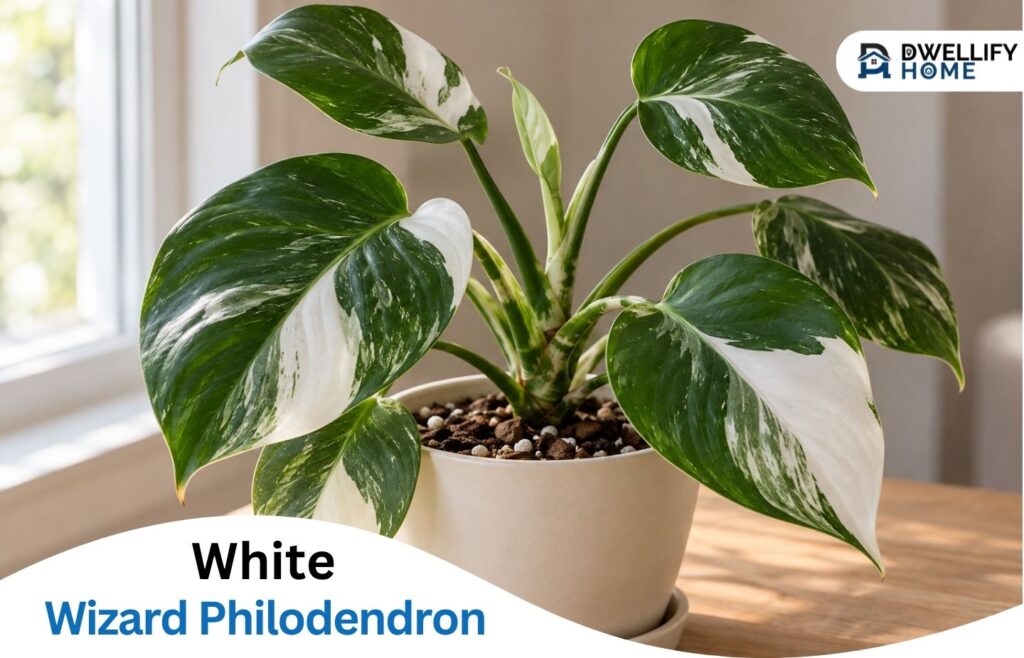
The white patches on a White Wizard Philodendron draw attention, but they can also raise questions. Why is one new leaf mostly green? Does a brown edge mean the plant needs more water, less sunlight, or something else?
Start with the basics: bright, filtered light, an airy potting mix, and watering based on soil moisture. Those conditions support healthy growth. From there, watching the whole plant tells you more than judging one leaf.
Short Definition / Direct Answer
White Wizard Philodendron is a climbing houseplant with green leaves and white patches. It grows best with bright, filtered light, an airy potting mix, and watering guided by soil moisture.
Practical Home Tip
Before watering, check below the dry surface and lift the pot to judge its weight. Empty any water collected inside the decorative outer pot. A dry top layer doesn’t always mean the roots below need more water.
Mission Statement
DwellifyHome helps homeowners and renters make informed, practical choices for comfortable, stylish living spaces—with clear advice that fits everyday needs.
Before-You-Water Checklist
- Check whether the top 1–2 inches of mix feel dry.
- Check deeper moisture if the pot still feels heavy.
- When needed, water thoroughly and allow excess water to drain.
- Empty the saucer or decorative outer pot.
- Adjust timing as light, temperature, and growth change.
What Is a White Wizard Philodendron?
White Wizard is a climbing philodendron grown for its green leaves with white patches. These different-colored areas are called variegation. The amount and pattern of white can vary between leaves, so two plants may look quite different.
A useful botanical label is Philodendron ‘White Wizard’. It belongs to the Araceae family, which also includes several other common houseplants.
Its stems are green and may carry white stripes. Those markings help distinguish it from similar plants, although identification can be harder when plants are young.
| Care need | Practical starting point |
| Light | Bright, filtered daylight |
| Water | Check when the top 1–2 inches of mix feel dry |
| Soil | An airy potting mix in a container with drainage |
| Temperature | Around 65–80°F, or 18–27°C |
| Humidity | Avoid very dry locations; measure before making changes |
| Support | A stake, trellis, or suitable pole as the stem grows |
These are starting conditions, not a fixed schedule. Pot size, room conditions, and the mix affect how quickly water is used. Cultivar guidance supports partial drying, good drainage, and climbing support.
Keep the plant where pets and young children cannot chew it. Philodendrons contain calcium oxalate crystals that can cause painful mouth irritation and swelling when eaten. Contact a veterinarian after suspected pet ingestion; seek poison-control advice for human exposure.
How to Care for Your White Wizard Philodendron
A useful care routine begins with checking conditions. Watering, feeding, and moving the plant should respond to what it needs.
Choose Bright, Filtered Light
Choose a bright spot near a window, with protection from strong afternoon sun. An east-facing window may work well, while a sunnier window may need a sheer curtain. Nearby buildings, trees, and distance from the glass also affect the light.
White Wizard is not a good choice for a dim corner. A room can look bright to you while providing little useful light where the plant sits. The Sill recommends bright indirect light and warns against harsh afternoon exposure.
Watch new growth. Long stretches of bare stem between leaves can suggest insufficient light. Consider a brighter position or a grow light, following the light manufacturer’s placement guidance. Avoid moving a shaded plant straight into intense sunlight.
Better light supports growth, but it does not guarantee a particular white pattern.
Check the Soil Before Watering
Check the top 1–2 inches of potting mix with your finger. When that layer feels dry, assess the pot below it too. A dry surface over a heavy, wet root ball is a reason to wait.
The top-layer check is supported by White Wizard care guidance, but it should not become an automatic rule for every container.
Lift the pot occasionally to learn its weight after watering and as it dries. A wooden skewer can also help you check moisture deeper down.
When watering is needed, wet the mix thoroughly and let excess water escape. Empty the saucer or decorative outer pot afterward. Small daily splashes make it harder to know whether the roots received enough water.
Check regularly rather than watering every Sunday. A small plant in a warm, bright room may dry faster than one in a larger pot during winter. Container material, temperature, humidity, and growth all influence water use.
Use an Airy Mix and a Pot With Drainage
The best soil for White Wizard Philodendron holds some moisture while leaving air around the roots. It should drain freely without becoming a dense, muddy mass.
An indoor potting mix amended with orchid bark and perlite is one option. Bark adds structure, while perlite helps keep the mix open. You can also buy a ready-made aroid mix, but a specialty label does not make it automatically better.
Choose a mix that suits your watering habits and room. Very coarse blends can dry quickly; finer mixes usually need closer attention to moisture.
Drainage holes are essential to this setup. A nursery pot inside a decorative container works well if you remove collected water. Avoid using garden soil indoors, where it may drain poorly and introduce unwanted organisms.
Keep Temperature, Humidity, and Feeding Steady
Typical indoor temperatures around 65–80°F suit philodendrons. Keep the plant away from cold drafts and direct blasts from heating or air-conditioning vents.
Measure humidity before buying equipment. A small humidity meter can show whether the location is unusually dry. Moving the plant away from a radiator may be more useful than changing its watering routine.
A humidifier gives more control when extra humidity is needed. Pebble trays offer a smaller, local benefit, while misting does not provide a lasting increase. Keep the pot above any tray water.
During active growth, use a balanced houseplant fertilizer according to its label. Avoid stacking several fertilizers or treating extra feeding as a cure for slow growth. Reduce feeding when growth slows, particularly under weaker winter light.
Support, Repotting, and Growth
A mature White Wizard Philodendron needs more consideration than a small nursery plant. Plan for its climbing stem, increasing weight, and access to light.
Give the Stem Room to Climb
White Wizard is a climber, so offer support as its stem lengthens. A simple stake or trellis can hold the plant upright. A moss pole is another option, but it brings extra maintenance if you intend to keep the moss moist.
Attach the main stem gently with soft ties. Avoid fastening individual leaf stalks, which need room to move.
Roots growing above the pot are called aerial roots. They are a normal feature of many philodendrons and can help the plant attach to support. Guide them toward the support when practical rather than treating them as a problem.
There is no single useful “full-grown” size for every home. Light, time, support, and pruning affect the space a large plant occupies. Choose a location that allows upward growth without crowding a walkway.
Repot When the Plant Needs More Room
Check for a crowded root ball, roots pressing through drainage holes, or a pot that dries much faster than before. One exposed root alone does not always mean repotting is urgent.
When the roots are crowded, move up one container size rather than choosing a much larger pot. Refresh the mix and keep the plant at roughly its previous planting depth.
Repotting every year is not a requirement. The condition of the roots and mix matters more than the date.
White Markings, Brown Spots, and Other Common Problems
A changing leaf does not always call for immediate treatment. First ask whether the issue affects one old leaf, several leaves, or the newest growth.
Why New Leaves May Have More or Less White
Variegated plants can produce uneven patterns. One leaf may have a broad white patch, followed by another with much more green.
Green tissue contains chlorophyll, the pigment that helps plants capture light for growth. Completely white growth lacks that same ability, so more white is not always better for the plant. General horticultural guidance also shows that variegated plants can develop all-green or unpigmented shoots.
Give your plant suitable light, but do not expect existing green leaves to develop white patches after a move. Likewise, one greener leaf is not enough evidence to declare permanent reversion.
If a whole stretch of new growth remains green, inspect the stem and earlier growth before considering pruning. Cutting back may encourage a different shoot, but it cannot guarantee the pattern of future leaves.
What to Check When Leaves Turn Brown or Yellow
White Wizard Philodendron brown spots can have several causes. Their location, texture, and progression are more useful than color alone.
| What you notice | What to check first |
| Crisp brown edges | Dry mix, very dry air, strong light, or fertilizer buildup |
| Yellow leaves with persistently wet soil | Drainage, watering frequency, and root condition |
| Drooping leaves | Moisture before adding water; both dry and damaged roots can cause wilting |
| A patch where a leaf was bent or rubbed | Physical damage and whether the mark is spreading |
| Speckling, webbing, or small bumps | Leaf undersides and stems for pests |
| Expanding, wet-looking lesions | Possible disease; separate the plant while seeking advice |
These signs overlap. University extension guidance lists multiple possible causes for wilting, yellowing, and leaf damage, so the table is a checking guide rather than a diagnosis.
Do not assume browning on a white patch is harmless without checking the rest of the plant. Problems affecting green areas, stems, or several new leaves deserve closer attention.
Persistently wet mix combined with decline warrants a root inspection. Brown or black, soft roots and a deteriorating stem base can indicate rot. Avoid adding more water simply because the leaves droop.
Photograph suspicious marks so you can judge whether they spread. For persistent, unexplained damage, a local extension service may help you narrow down the cause before treatment.
What to Check When Growth Slows
Check light, season, and recent changes before reaching for fertilizer. Shorter days can reduce growth and water use, especially in homes without supplemental lighting.
Then consider whether the roots are crowded or the mix remains wet for too long. Also inspect for pests and recall any recent move, repotting, or temperature change.
Change one likely problem at a time when the plant is otherwise stable. Moving it, repotting it, and feeding it heavily together makes the response harder to understand.
How to Propagate a White Wizard Philodendron
White Wizard Philodendron propagation starts with a suitable stem cutting. Find a node: the point on the main stem where a leaf attaches. This is different from cutting off a leaf with only its stalk.
Choose a healthy section with green leaf tissue and a sound node. Do not select a cutting solely because it has the whitest leaf.
- Prepare clean tools and a container. Use sharp scissors or pruners and clean water or a suitable rooting mix.
- Cut below a node. Keep a healthy leaf above it, removing any lower leaf that would sit underwater or beneath the mix.
- Position the cutting. Place the lower node in water or moist rooting medium, keeping leaves above the surface.
- Provide gentle conditions. Use bright, indirect light and steady warmth.
- Monitor roots and moisture. Replace water regularly, or keep the rooting medium moist without saturating it.
Once water-grown roots are a few inches long, transfer the cutting into a small pot of suitable mix. Handle the roots gently and monitor moisture closely while it settles.
Rooting speed varies. Judge progress by healthy roots and subsequent growth, not a promised number of days.
White Wizard vs. White Princess vs. White Knight
The clearest starting point is the stem and the petiole, which is the stalk connecting a leaf to the main stem. White leaf patches alone are not enough.
| Plant | Typical identification clues |
| White Wizard | Green stems with possible white striping; no characteristic pink or burgundy pigmentation |
| White Princess | Green stems and leaf stalks with pink and white markings |
| White Knight | Burgundy or dark purplish stems, often with white markings |
Leaf shape can support the comparison, but young plants may look similar. Examine several healthy stems and leaf stalks rather than relying on one leaf or a store label. Brown damaged tissue is not the same as natural burgundy pigmentation.
For an online purchase, ask for clear photographs of the actual plant when identification matters.
What to Check Before Buying
When comparing a White Wizard Philodendron for sale, look beyond its most dramatic leaf. Ask whether the listing is for a rooted plant, an unrooted cutting, or a young plant needing extra attention.
Check for:
- A firm stem and healthy-looking recent growth.
- Enough green leaf tissue to support growth.
- No obvious pests or spreading damage.
- Clear information about pot size and rooted status.
- Shipping charges and weather-related delivery arrangements.
Compare the total price for similar plants. A small starter and a larger plant in a ceramic container are different purchases.
A White Wizard Philodendron Home Depot listing was available during research, but a product page does not confirm stock at your nearby store. Check the current listing and local availability.
If a seller uses a name such as “Golden White Wizard,” ask what plant that label describes. Do not assume an extra sales name identifies the same cultivar.
Frequently Asked Questions
Is White Wizard Philodendron Rare?
It is offered through both specialist nurseries and major retail listings, so describing every White Wizard as rare can be misleading. Availability still varies by location, plant size, and seller. Compare current options before paying a premium based only on a “rare plant” label.
Can White Wizard Philodendron Grow in Water?
Stem cuttings can root in water, and philodendron cuttings may remain there for an extended period. However, water rooting and maintaining a large plant long term are different tasks. A jar of plain water should not be treated as a complete, permanent care plan. For beginners, transferring rooted cuttings to potting mix is a straightforward approach.
Is White Wizard Philodendron Suitable for Beginners?
It can be a reasonable choice for a beginner who has suitable light and is willing to check soil moisture. Start with a healthy, rooted plant rather than a delicate cutting. It is less suitable for someone wanting a plant for a dark corner or a rigid, once-a-week watering routine.
Build a Routine Around Your Plant
Give your White Wizard a bright location, a pot that drains, and attention to how its mix dries. Watch new growth and investigate changes before making several adjustments. Healthy roots and steady growth matter more than getting a large white patch on every leaf.
Disclaimer
This guide provides general plant-care information. Home conditions and individual plant needs vary. Seek expert help for persistent plant problems and poison-control or veterinary advice after suspected ingestion.