A thin stalk has appeared between your snake plant’s upright leaves, and now it’s covered in small buds. It looks nothing like the usual new growth. You may even notice sticky drops before the first flower opens.
A snake plant flower is part of the plant’s natural reproductive growth, though blooms are uncommon indoors. An established plant may flower under suitable conditions, but the stalk alone doesn’t tell you whether its care is ideal.
For an otherwise healthy plant, start with observation rather than a new care routine. Let the flowers develop, check the soil before watering, and watch for the scent and droplets that can accompany the display.
Short Definition / Direct Answer
A snake plant flower is an uncommon indoor bloom that grows along a slender stalk. The flowers are often pale and fragrant, and their appearance alone does not mean the plant needs a different care routine.
Practical Home Tip
A few faded flowers don’t always mean the whole display is finished. Check for unopened buds before cutting the stalk, and place a washable tray underneath to catch sticky drips. The total flowering period can vary.
Mission Statement
DwellifyHome helps homeowners and renters make informed choices for practical, comfortable, and stylish living spaces, with clear guidance they can use every day.
Flowering Snake Plant Care Checklist
- Look for buds along the stalk to identify flowering growth.
- Check soil dryness before watering; don’t add water simply because flowers appeared.
- Keep drainage holes clear and empty collected water from the saucer.
- Protect nearby surfaces from sticky nectar.
- Keep the plant and fallen flowers away from pets and young children.
- After the flowers finish, cut the stalk near its base with clean tools.
- Continue suitable care without trying to force another bloom.
What Does a Snake Plant Flower Look Like?
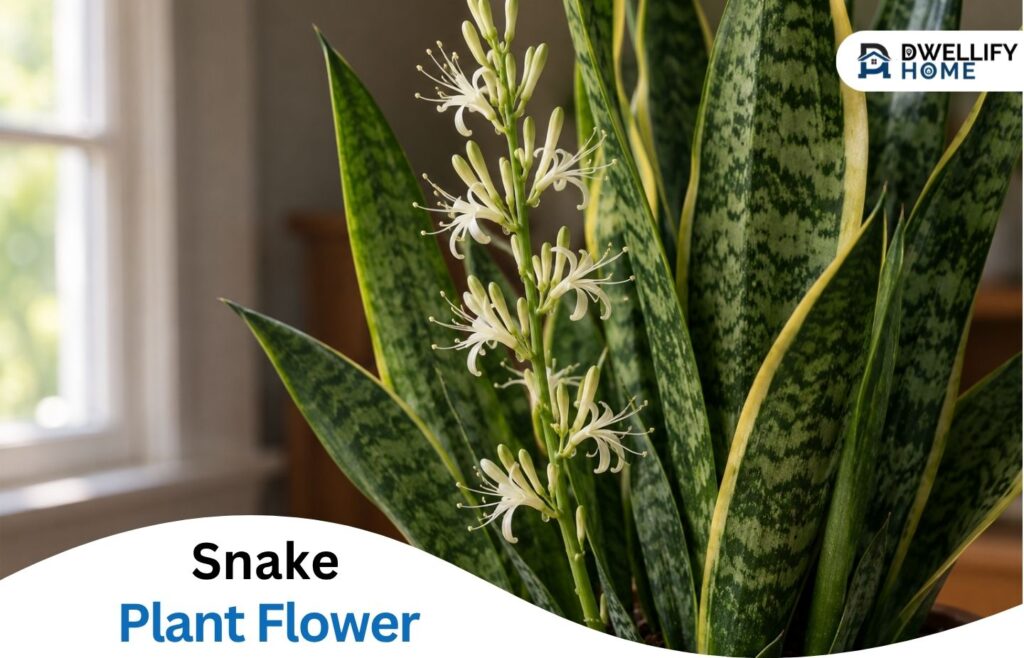
The common snake plant produces small, pale flowers along a slender stalk. They are usually greenish-white or cream, with narrow parts that spread outward as they open. Their delicate appearance is quite different from the plant’s thick, firm leaves.
The plant most people recognize is Dracaena trifasciata, formerly called Sansevieria trifasciata. You may see either name on a nursery label, along with “mother-in-law’s tongue.” Its flowers are fragrant and rarely seen on indoor plants.
To tell a flower stalk from a new leaf, look for small buds spaced along a narrow stem. A new leaf develops into another blade resembling the surrounding foliage. A flower stalk carries separate buds that become individual blooms.
Take a photo when the stalk first appears. Comparing it a few days later can help you see the buds developing without bending the stalk or pulling leaves apart.
Different plants sold as snake plants can have different flower arrangements. Use the common pale-flowered type as a guide, but check your plant’s identity before expecting every detail to match. A photo of another species may show a different shape or size.
Why Is My Snake Plant Flowering?
Maturity, light, and root conditions can all be relevant to flowering. Mississippi State Extension notes that blooms tend to appear on established plants and are more likely with bright, indirect light and slightly crowded roots. These are helpful clues, not a guaranteed formula.
“Root-bound” means the roots have grown crowded within their container. That can happen as a plant grows in the same pot over time. However, a snug pot and a badly overcrowded plant are different situations. There is no reason to keep a plant in a failing container just to chase flowers.
You may read that a snake plant blooms because it is stressed. That explanation is too broad to guide care on its own. “Stress” could describe very different conditions, and it doesn’t tell you whether to water, repot, or move your particular plant.
A more useful approach is to separate two questions: “Why might it be flowering?” and “Does anything actually need fixing?” The first may not have one clear answer. The second depends on what you can observe in the leaves, pot, and soil.
Indoor flowering is unusual enough to surprise owners, but there is no dependable age at which every snake plant should bloom. An older plant without flowers is not automatically receiving poor care.
Species also matter. In an interview about growing snake plants, specialist Colin Walker described large differences in flowering habits and emphasized that there is no quick fix. Some types flower more readily than others under his growing conditions.
Treat a bloom as something to enjoy and learn from. You don’t need to recreate every missed watering or recent change in the hope of repeating it.
How to Care for a Flowering Snake Plant
You can leave the flowers in place to enjoy the display. Their arrival is a good reason to check the plant, but it does not automatically call for more water, stronger fertilizer, or a larger pot.
Work through this short checklist:
- Check the light. A bright position with indirect light is a sensible choice. Avoid moving the plant into harsh direct sun just because it has buds.
- Check the soil. Let the potting mix dry before watering again.
- Check drainage. The container needs drainage holes so excess water can escape.
- Check the plant’s stability. Make sure tall leaves and the stalk aren’t leaving the pot easy to knock over.
- Check for a real problem before repotting. A stalk by itself is not a reason to disturb the roots.
Snake plants tolerate snug containers, but severe crowding can eventually damage a pot. Penn State also identifies overwatering and root rot as common problems, making drainage and soil condition more useful checks than a bloom-based watering rule.
Avoid a rigid schedule such as watering every Sunday. Light, room temperature, pot size, and potting mix all affect how quickly moisture is used. A plant near a bright window may dry differently from one farther inside the room.
When watering is needed, wet the mix thoroughly, allow excess water to drain, and empty the saucer. Check inside a decorative outer pot too; hidden water can collect there even when the surface looks dry.
There is also no need to buy a special bloom fertilizer simply because flowers appeared. If you already feed the plant during active growth, follow the product’s directions. Don’t increase the dose to make the display last longer; excess fertilizer can damage roots.
Keep changes purposeful. Before changing something, name the problem you are trying to solve. “The pot is cracked” is a useful reason to act. “It has flowers now” is an observation.
What to Expect From the Flowers
Why the Flowers Smell Stronger at Night
The scent can become more noticeable in the evening. Snake plant flowers are night-opening, and specialist descriptions note that fragrance is often strongest late in the evening before fading toward morning.
You may notice the smell before you notice an open flower. Descriptions of fragrance are personal, so your impression does not have to match someone else’s comparison with jasmine or hyacinth.
Take a moment to check the plant after daylight fades. This is also a useful time to photograph open flowers rather than the closed buds you may see during the day.
Enjoying the scent is optional. A smell that seems pleasant across a living room may feel too strong beside your pillow. If it bothers you, consider a different room with suitable light and a secure place for the pot. You don’t need to keep the plant beside your usual seat to appreciate the flowers.
Why the Flower Stalk Has Sticky Droplets
Clear, sticky droplets around a blooming stalk can be nectar. Snake plants can produce this secretion near the flowers, and it may drip onto nearby leaves. Its presence during flowering does not, by itself, mean the plant has been injured.
Nectar and sap are different. Nectar is a sugary secretion. Sap moves through plant tissues and may escape when those tissues are cut or damaged. Calling every sticky drop “sap” can make an ordinary part of flowering sound like a wound.
Protect nearby surfaces before cleanup becomes a daily annoyance. For example, a washable tray beneath the pot can help catch drips above a wooden shelf. Position it so it also supports the container securely.
For residue on the leaves, try a soft cloth lightly dampened with plain water. Support the leaf while wiping, and keep cleaning gentle around the flower stalk. Don’t add household cleaning sprays to the plant.
Look at where the stickiness appears. Droplets around flowers fit the nectar explanation. Sticky areas elsewhere, especially with visible insects or unusual leaf damage, deserve a closer inspection. Neither the presence of flowers nor clear droplets should replace checking what is actually happening.
How Long the Flowers Last
An individual flower and the entire flowering display have different lifespans. A flower may open for a single night, while other buds open later. This succession can keep the plant in flower for a week or more, with variation among plants.
That distinction helps explain why some flowers look finished while others are still closed. One fading flower does not necessarily mean the whole stalk is done.
Check for unopened buds before deciding that the display has ended. Focus on what the stalk is doing rather than expecting every flower to remain fresh together.
Avoid treating a stated number of weeks as a deadline. The practical question is whether fresh flowers are still opening. A simple photo record can help you notice the sequence and enjoy changes that are easy to miss during a busy week.
Keep Flowers Away From Pets and Children
Keep the plant and fallen flowers out of reach of pets and young children. Flowering does not make the plant edible. NC State includes flowers among the plant parts that can cause poisoning if swallowed and notes that sap may irritate skin.
Snake plants contain saponins, compounds associated with poisoning in cats and dogs. Possible signs include nausea, vomiting, and diarrhea. If you suspect a pet has eaten part of the plant, contact your veterinarian or ASPCA Poison Control at 888-426-4435 promptly. A consultation fee may apply.
Choose placement based on actual access. A high shelf may still be reachable by a climbing cat, and a tall floor plant may sit directly beside a toddler’s play area.
Do not taste nectar or use the flowers in food or homemade remedies. Wear gloves when cutting the stalk, and clear away the cut material afterward.
What to Do After the Flowers Fade
Remove the Faded Flower Stalk
Once the flowers have finished, you can cut off the stalk near its base. The Royal Horticultural Society recommends removing it after the blooms fade; you do not have to wait for the entire stalk to become brown.
First, look along the stalk for any remaining unopened buds. When the display is over, use clean, sharp scissors or small pruning shears.
Trace the stalk down between the leaves so you know exactly what you are cutting. Leave a small piece if reaching farther would risk damaging healthy leaves. There is no benefit in making an invisible cut at the expense of the surrounding plant.
Cut rather than pulling or twisting. Gather the removed stalk and fallen flowers, dispose of them where pets cannot retrieve them, and clean your tools afterward.
The goal is simply to remove finished growth. Avoid trimming healthy leaves to make the plant look more even around the old flower stalk.
Care for the Plant Without Forcing Another Bloom
Continue caring for the plant according to its growing conditions. The end of flowering is not, on its own, a signal to feed heavily, repot immediately, or start withholding water.
Snake plants are long-lived and can remain in a container for years, though growing roots eventually need more room. Assess crowding and the pot’s condition as separate maintenance questions rather than following an automatic “repot after flowering” rule.
If you want to understand what may have supported the bloom, keep a few simple notes. Record the plant’s location, when you first noticed the stalk, and whether anything had recently changed. These notes can describe your plant’s history without proving what caused the flowers.
For a plant that has never bloomed, start by reviewing ordinary care and light. Avoid turning it into an experiment in severe drought or crowding. A flower is a possible outcome of growing the plant, not a reliable measure of your success.
Another bloom may come, but there is no useful promise that it will happen next spring or every year. Enjoy healthy foliage between displays rather than treating the waiting period as a problem.
Common Questions About Snake Plant Flowers
Does a Snake Plant Die After Flowering?
A flower stalk alone is not a reason to assume your snake plant is dying. The common snake plant is a long-lived perennial, meaning it can live for many years. Treat any decline in the leaves or roots as a separate problem to investigate.
Do not confuse faded flowers with the loss of the whole plant. Equally, don’t ignore damaged foliage simply because someone says flowering proves that everything is fine.
What Are the Benefits of Snake Plant Flowers?
The clearest benefits are their appearance, fragrance, and the pleasure of watching a familiar plant produce something unexpected. They offer another part of the plant’s growth to observe, especially as buds open in sequence.
You do not need to attach a health claim to enjoy them. Flowering should not be treated as proof that the plant now improves sleep, cleans a room’s air more effectively, or provides a medicinal benefit.
Is a Snake Plant Flower a Sign of Good Luck?
You can give a bloom personal meaning, including seeing it as a happy surprise or a sign of good luck. That is a belief rather than a botanical explanation.
There is no established scientific reason to expect flowering to bring money, protection, or a change in fortune. Enjoy the symbolism if it matters to you, while making care decisions from the plant’s actual needs.
Enjoy the Flowers and Keep Care Simple
An unexpected bloom gives you a reason to look more closely at a familiar plant. Watch the buds open, notice the evening scent, and protect surfaces from sticky droplets.
Keep watering tied to soil dryness, keep the plant safely placed, and remove the stalk after the flowers finish. You can appreciate this display without making the next one a goal your plant has to meet.
Disclaimer
This information provides general plant-care guidance. Plant types, home conditions, and growing needs vary. For persistent plant problems, contact a local extension service. For suspected ingestion by a person or pet, seek advice from Poison Control or a veterinarian, as appropriate.