A room can feel bright enough to live in yet offer little light where you want a plant. That empty corner beside the sofa may be much darker than the windowsill across the room.
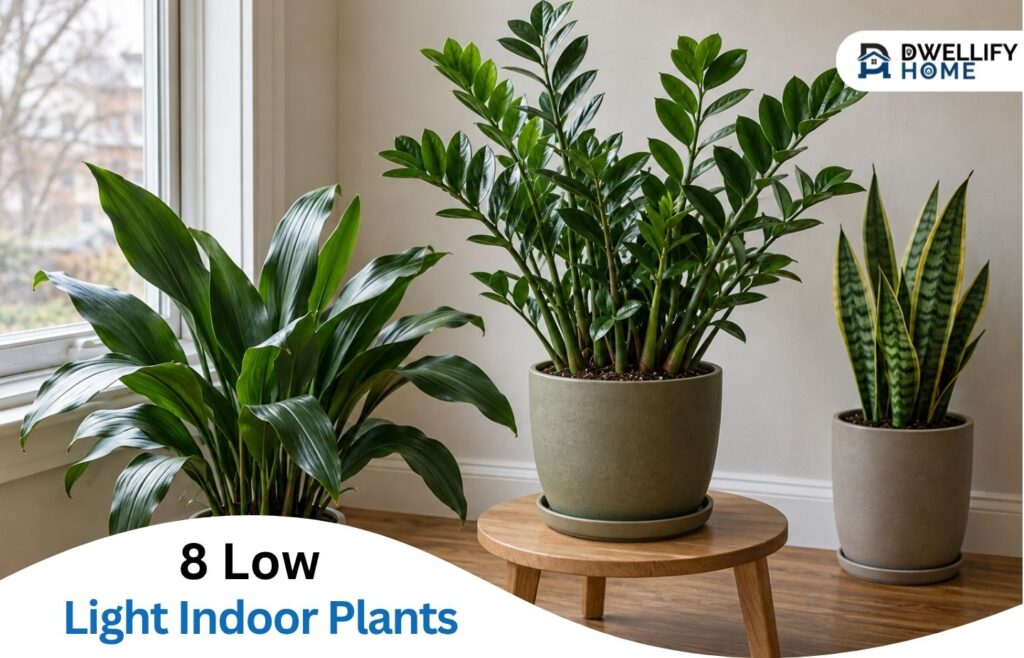
ZZ plants, snake plants, and cast iron plants are useful low light indoor plants to consider. Pothos and heartleaf philodendron offer trailing growth, while parlor palms bring softer, upright foliage. The right choice depends on your space, watering habits, and pets.
Start with one limit: low light does not mean no light. These plants still need daylight or suitable artificial lighting to stay healthy.
Short Definition
Low light indoor plants tolerate limited daylight but still need usable light to stay healthy. Options include ZZ plants, snake plants, and cast iron plants, with different watering needs and pet-safety considerations.
Practical Home Tip
Check the light where the leaves will sit, not just how bright the room feels. Move a pot out from behind curtains or furniture to give it better access to daylight. A windowless spot may still need a grow light.
DwellifyHome Mission Statement
DwellifyHome helps homeowners and renters make informed, practical choices for comfortable, welcoming spaces that reflect their style and fit everyday life.
Before You Choose a Plant
- Check daylight at the intended plant position.
- Compare the plant’s current size with its expected growth.
- Match its watering needs to your care routine.
- Verify its exact name and toxicity status if you have pets.
- Choose a pot with drainage and empty collected water.
- Plan suitable artificial lighting for a windowless spot.
What Does Low Light Mean Indoors?
Low light describes a spot that receives limited light, usually without direct sun striking the leaves. An unobstructed north-facing window can offer these conditions. So can a shaded position near another window.
However, window direction alone cannot tell you whether a spot is suitable. Trees, neighboring buildings, curtains, and deep roof overhangs can reduce the light reaching a plant.
Check the exact position where the leaves will sit. A shelf tucked behind a curtain gets different light from a table beside the same window. Look at that position in the morning and afternoon, with your room lights switched off.
Also, distinguish slow growth from declining health. A plant may tolerate a dim position while producing fewer leaves or flowers. Long, thin stems and increasingly sparse growth can mean it needs a brighter location. Moving it closer to useful light is often the first adjustment to consider.
8 Low Light Indoor Plants to Consider
Choose by the care you can provide, not appearance alone. Some plants cope with dry soil; others need more regular moisture checks.
The size descriptions below refer to general growth habits. Check the variety before buying, since compact and larger forms can differ considerably.
| Plant | Size and form | Watering cue | Cats and dogs |
| ZZ plant | Upright; tabletop or floor plant | Let the potting mix dry between waterings | Toxic if chewed |
| Snake plant | Compact rosettes or tall, narrow leaves | Let the mix dry between waterings | Toxic if chewed |
| Cast iron plant | Broad, upright clump | Allow some drying; avoid soggy soil | Non-toxic |
| Pothos | Trailing or climbing vine | Let the mix dry moderately | Toxic if chewed |
| Heartleaf philodendron | Trailing or climbing vine | Keep lightly moist, never waterlogged | Toxic if chewed |
| Parlor palm | Upright, spreading fronds | Let the mix dry slightly | Non-toxic |
| Chinese evergreen | Bushy; size varies by variety | Allow partial drying; avoid prolonged dryness | Toxic if chewed |
| Peace lily | Compact to large leafy clump | Let the mix dry slightly | Toxic if chewed |
The pet classifications reflect ASPCA guidance. “Non-toxic” identifies suitable alternatives; it does not mean a plant should be offered as food.
ZZ Plant
The ZZ plant, Zamioculcas zamiifolia, has glossy leaflets along thick, upright stalks. It suits someone who wants a substantial-looking plant without frequent watering.
Its thick underground stems store water, helping it handle dry periods. Let the potting mix dry between waterings, and use a container with drainage holes. Persistent moisture is a bigger concern than an occasionally missed watering.
ZZ plants tolerate low light but grow best with brighter, indirect light. A position that receives daylight is a better choice than a windowless corner with no dedicated lighting. Expect measured growth rather than a rapid burst of new foliage.
Snake Plant
Snake plant, Dracaena trifasciata, is still commonly sold under its older name, Sansevieria. Its upright leaves make it useful where you want height without a wide spread.
Check the variety carefully. Some form short rosettes, while others develop long, upright leaves. A small pot at the store does not necessarily contain a permanently small plant.
Allow the potting mix to dry before watering again. In a dim room, that may take longer than expected, so avoid watering simply because another week has passed. Snake plants tolerate low light, but they can also use brighter conditions; darkness offers them no advantage.
Cast Iron Plant
Cast iron plant, Aspidistra elatior, produces broad leaves in an upright clump. It works well beside furniture where you want leafy fullness rather than a trailing vine.
This is a strong candidate for a shaded indoor position. Its slow growth also makes it easier to accommodate in a settled room layout. Keep it away from harsh direct sun, which it does not tolerate well.
Give it well-drained potting mix and allow some drying between waterings without leaving it parched for long periods. Its tolerance of neglect is useful insurance, not a care routine. Cast iron plant is also one of the non-toxic choices for homes with cats or dogs.
Pothos
Pothos, Epipremnum aureum, is useful for a shelf or hanging pot where its stems can trail. Position the pot so the leaves receive daylight instead of hiding it deep inside a bookcase.
It prefers bright, indirect light but tolerates lower levels. Leaves with cream or yellow markings may lose some of that coloring in dim conditions. Choose it mainly for foliage and trailing form rather than expecting rapid growth.
Allow the mix to dry moderately between waterings. Trim overly long stems when needed to keep the plant manageable. Because pothos is toxic to pets, consider whether a cat can reach its vines as they lengthen.
Heartleaf Philodendron
Heartleaf philodendron, Philodendron hederaceum, has slender stems and green, heart-shaped leaves. It can trail from a pot or climb a support, making it a flexible choice for small rooms.
It tolerates low light, although moderate light supports better growth. Aim for lightly moist potting mix with good drainage. Unlike a ZZ plant, it should not repeatedly sit in completely dry soil for extended periods.
“Lightly moist” means the mix retains some moisture without staying soaked. Check before adding water, particularly in a cool or dim room. Keep its stems away from pets and young children who may chew the leaves.
Parlor Palm
Parlor palm, Chamaedorea elegans, brings fine, arching fronds to a room. It is a useful option when you prefer a softer shape than the rigid leaves of a snake plant.
It tolerates low light but benefits from a position near a suitable window. Let the potting mix dry slightly between waterings, then water thoroughly and drain. Avoid both constantly wet soil and repeated, lengthy dry periods.
Growth is slow, so buy a plant close to the size you want. A tiny palm will not quickly fill an empty floor space. Leave room around the pot for the fronds to spread without constant contact with furniture.
Chinese Evergreen
Chinese evergreen, Aglaonema, offers bushy growth and patterned leaves. It can suit a side table or a larger display, depending on the variety.
Choose a named variety when possible, so you can check its expected size and care needs. For a dimmer position, a shade-tolerant selection such as ‘Maria’ is worth considering rather than assuming every colorful form performs identically.
Keep the mix from staying soggy, but avoid repeatedly drying the whole pot completely. Protect the plant from cold drafts and watch its response after placement. Chinese evergreen is toxic if chewed, so it is unsuitable within reach of plant-chewing pets.
Peace Lily
Peace lily, Spathiphyllum, has broad, glossy leaves and white flower structures. It can tolerate low light, but brighter indirect light generally supports better growth and flowering. Choose it for its foliage first if the room is dim.
Let the soil dry slightly between waterings while keeping the root area lightly moist. Do not wait for dramatic collapse every time before watering. Repeated excessive drying can damage the leaves.
Peace lilies come in very different sizes, so check the variety before choosing a narrow shelf or small table. They are toxic to pets and children if eaten, despite the gentle-sounding name.
Choose a Plant That Fits Your Home
Small Spaces, Shelves, and Floor Plants
For small low light indoor plants, look for a compact snake plant variety or a suitably sized Chinese evergreen. A young plant is not automatically a compact variety.
Pothos and heartleaf philodendron suit shelves where there is room for stems to hang. Before buying, check that you can lift the pot down safely for watering.
For a floor display, consider a taller snake plant, an established ZZ plant, or a parlor palm. Measure the available width as well as height. A plant that blocks a walkway will soon become inconvenient.
A smaller plant may fit your budget, but it also means waiting for growth. Choose a larger specimen when filling the space now matters more than growing it on.
Homes With Cats or Dogs
Cast iron plant and parlor palm are the two non-toxic options in this shortlist. Check the scientific name on the label, especially with palms: similar common names can refer to different plants.
A high shelf is not a dependable barrier for an agile cat. Trailing stems can also become reachable as they grow.
Keep labels or take a photo when you buy a plant. Accurate identification helps if a pet chews it. After suspected ingestion of a toxic plant, contact your veterinarian or an animal poison service for advice.
Bathrooms and Other Dim Rooms
Choose low light indoor plants for a bathroom by checking the window first. A humid room still needs enough light to support growth.
Look at the actual plant position. A pot near the bathroom window may receive useful daylight, while one behind a shower curtain receives very little.
Then consider your routine. ZZ plants and snake plants suit people who sometimes miss watering. Peace lilies need more consistent moisture checks. A bathroom location does not remove those differences or tell you when the soil needs water.
How to Care for Plants in Low Light
Check the Soil Before Watering
Use a reminder to check plants, not an instruction to water them all. Pot size, potting mix, temperature, and the plant itself affect drying.
Feel below the surface and notice the pot’s weight. For plants that need to dry between waterings, a dry crust on top does not prove the lower mix is dry.
When watering is needed, wet the mix thoroughly and let excess water drain. Empty the saucer before returning the plant to its spot. A nursery pot inside a decorative outer pot works well, provided you remove collected water.
Avoid keeping a peace lily and a ZZ plant on the same watering schedule. Their shared ability to tolerate lower light does not give them identical moisture needs.
Make the Most of Available Daylight
Choose the brightest suitable position available within your room. There is no benefit in pushing a shade-tolerant plant farther from a window just because it can cope.
Wipe dusty, smooth leaves gently with a damp cloth. Support each leaf while cleaning rather than pulling against its stem.
Recheck placement as the seasons change. Curtains, outdoor foliage, and shorter winter days can alter the light reaching the same spot.
Keep feeding modest and follow plant-specific directions. Extra fertilizer cannot replace missing light, and heavy feeding can damage sensitive plants such as peace lilies.
Add a Grow Light When Needed
A grow light makes sense when the intended spot receives too little daylight and moving the plant is impractical. Choose a fixture suited to houseplants, then follow its distance guidance.
For foliage houseplants, roughly 12–14 total hours of light daily is a useful starting point. A timer makes this easier. Light strength matters too: extending the hours cannot always compensate for a weak lamp far from the leaves.
Ordinary room lighting may contribute, but a ceiling light used briefly each evening should not be assumed sufficient.
Signs Your Plant’s Spot or Care Needs to Change
Look for patterns rather than diagnosing from one damaged leaf.
- Long stems with wide gaps between leaves: Check whether the plant needs more light.
- Increasingly sparse growth: Reassess placement, especially if conditions have become darker.
- Yellow leaves: Check soil moisture, drainage, and light before deciding to water.
- Wilting while the soil is wet: Do not add more water automatically.
- Soil that remains wet between repeated checks: Investigate drainage, pot size, and whether the plant receives enough light.
Low light can cause stretched growth and poor flowering, while watering problems can produce overlapping symptoms.
Start with the clearest problem. Empty standing water, improve a blocked position, or adjust watering according to the soil. Avoid changing the pot, fertilizer, location, and watering routine all at once unless there is an urgent reason.
Judge improvement through stable leaves and healthier new growth. Existing damage may remain even after care improves.
Frequently Asked Questions
Which Indoor Plants Need the Least Light?
Cast iron plants, ZZ plants, and snake plants are useful candidates for lower-light rooms. There is no single winner for every home. Choose among them by available light, watering habits, and pets, and avoid interpreting their tolerance as an ability to grow indefinitely in darkness.
Can Indoor Plants Live in a Windowless Room?
Yes, with suitable artificial light. A window is not essential, but a usable light source is. Provide enough light at leaf level for an appropriate daily period. A bathroom or office that stays dark most of the day needs a lighting plan before it needs a plant.
Do Low-Light Indoor Plants Clean the Air?
Ordinary houseplants do not meaningfully clean the air in a typical home. Laboratory studies showing pollutant removal used conditions unlike occupied rooms. Enjoy plants for their appearance, but do not rely on a few pots to replace ventilation or other appropriate indoor-air measures.
Start With a Plant That Suits Your Space
Choose one spot and assess its light before buying. Then narrow your options by size, pets, and the care you can provide.
A suitable plant in a workable position is easier to manage than one chosen only for its looks. Start with one, check its soil, and let its growth guide your next adjustment.
Disclaimer
This guide provides general plant-selection and care information. Light, temperature, plant varieties, household needs, and budgets vary, so adjust your choices and care accordingly. Contact a veterinarian after suspected ingestion of a toxic plant by a pet.