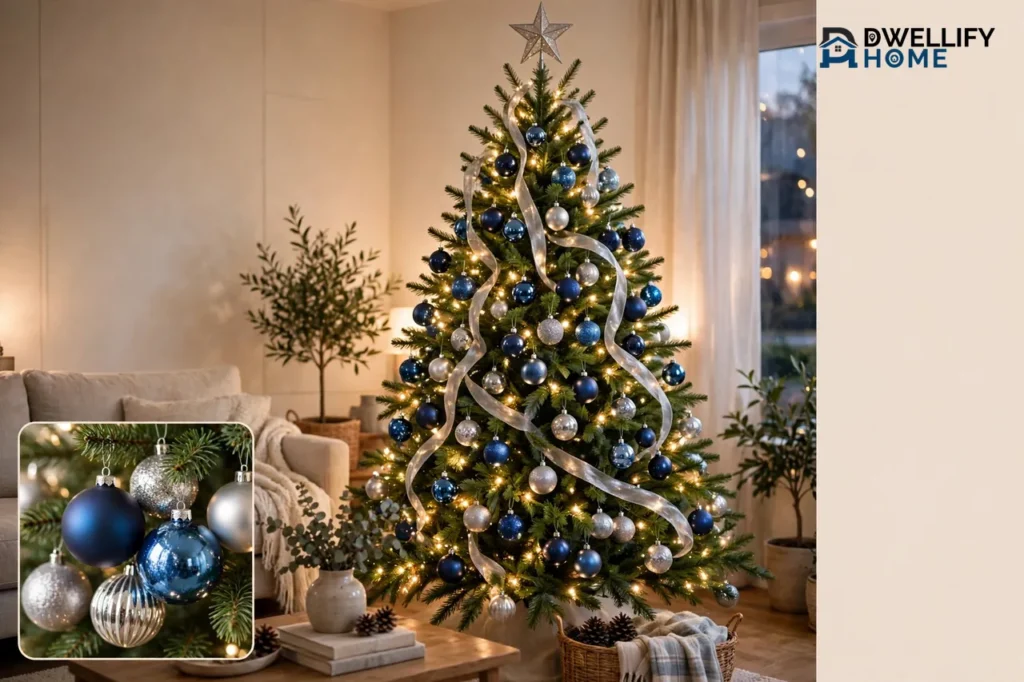
Blue Christmas tree decorations work best when you pick two or three shades of blue and pair them with one metal, either silver, white, or gold. Add cool white lights, mix matte, shiny, and glitter finishes, and layer big ornaments deep in the branches with smaller ones near the tips. That simple formula gives you a tree that looks calm, elegant, and wintery instead of cold or random.
Blue is a bold break from the usual red and green, yet it still feels like Christmas. It calls up a snowy night sky, fresh snowfall, and a quiet winter evening. And because blue comes in so many shades, from pale ice blue to deep navy, you can shape the same color story to fit a small apartment, a family living room, or a formal front room.
This guide walks you through the whole look, step by step. You will pick a palette, choose the right tree, count your lights and ornaments, and hang everything in the order that pros use. By the end, your blue decorated Christmas tree will look planned, not patched together.
What Blue Christmas Tree Decorations Really Mean
When people search for blue Christmas tree decorations, they usually want one thing: a tree built around the color blue, not a green tree with a few blue balls tossed on. Blue leads the look, and every other color plays a supporting role. Silver adds sparkle, white adds snow, and gold adds warmth.
That is what makes this color story different from a generic tree. On a red tree, the ornaments fight for attention. On a blue tree, the shades work together like a winter sky at dusk, with darker blues low down, lighter blues up high, and silver catching the light between them.
Blue also changes the mood of the room. Red feels loud and festive. Blue feels calm and elegant. If your home already has gray walls, white trim, or silver fixtures, a blue tree will fit right in. If your home runs warm, with wood floors and cream walls, add gold to keep the blue from feeling chilly.
Pick Your Blue Palette Before You Buy Anything
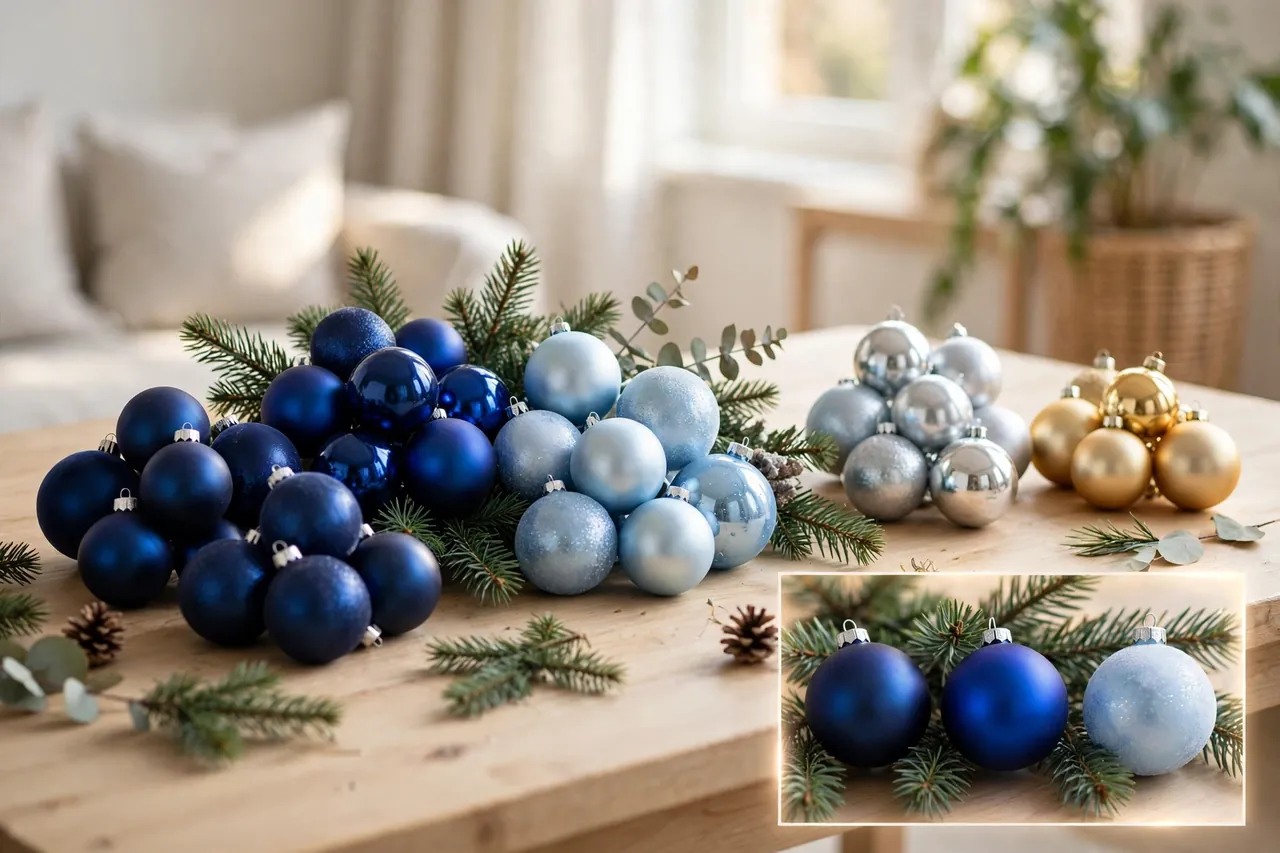
Stop and choose a palette first, because this one choice decides everything else. Shoppers who buy random blue ornaments end up with a tree that looks messy, even when each ornament is pretty on its own. Pick one row from the table below and stick to it.
The table below is your quick-reference palette guide. Each palette names its blues, its partner color, its best tree color, and the mood it creates, so you can choose in one glance and shop with confidence.
| Palette | Blues to Use | Partner Color | Best Tree | Mood |
|---|---|---|---|---|
| Blue and Silver | Navy, royal, and ice blue | Silver and chrome | Green or flocked | Cool, elegant, wintery |
| Blue and White | Ice blue and sky blue | Crisp white and frost | White or flocked | Fresh, snowy, airy |
| Blue and Gold | Royal blue and navy | Warm or champagne gold | Green | Rich, classic, warm |
| Navy Statement | Navy and midnight blue | Silver with a little gold | Green or flocked | Bold, dramatic, grown-up |
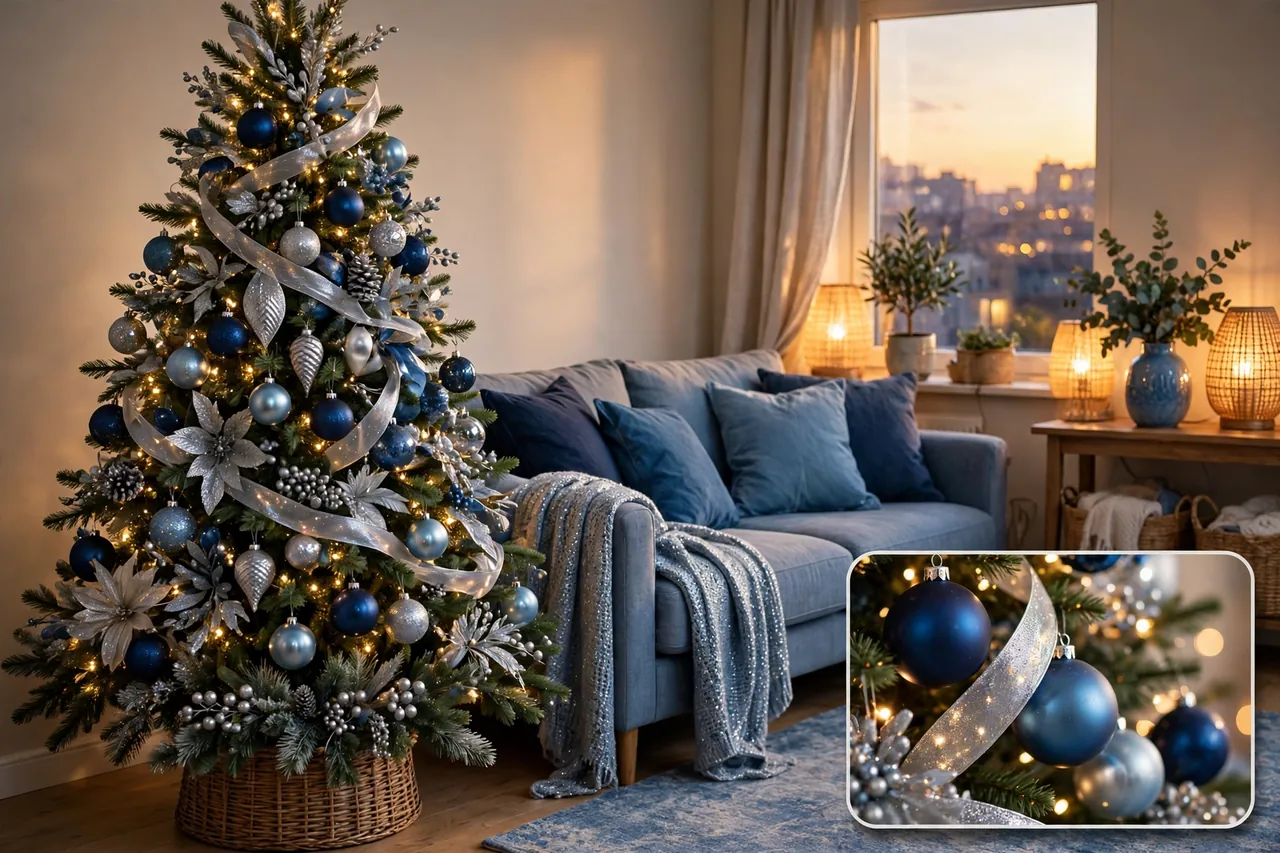
Blue and silver Christmas tree decorations give you the classic winter look. Silver reflects the lights, so the tree glows even in a dim room. This is the safest choice if you want elegance without much risk.
Blue and white Christmas tree decorations feel lighter and fresher. White ornaments and a flocked tree read like fresh snow, and pale blue keeps the look soft. This palette suits small rooms and white or light-colored walls best.
Blue and gold Christmas tree decorations feel warmer and more traditional. Gold softens navy and royal blue, so the tree glows instead of chilling the room. If your living room has warm wood and cream tones, choose this palette.
Navy blue Christmas tree decorations make the boldest statement. Deep navy looks rich against green branches, and a little silver keeps it from going dark. Use navy as your main shade, not your only shade, and mix in one lighter blue so the tree still has depth.
One warning: do not use all four palettes at once. Silver, white, and gold can all appear on one tree, but one of them must lead. When two metals fight for the lead, the tree looks busy. Pick your lead metal, then let the other one appear only in small touches.
Choose the Right Tree for a Blue Look
Your tree color matters more with blue than with most other themes. A green tree gives blue ornaments a natural backdrop, like a night sky over pine branches. A flocked or white tree makes blue pop harder, but it also shows every gap, so you must fluff it well.
Green trees suit every blue palette, and they forgive small mistakes. If you already own a green artificial tree, keep it. Spend your money on ornaments and ribbon instead of a new tree.
Flocked trees suit blue and silver and blue and white best. The white flocking acts like snow, so icy blues and silver look right at home. Flocked trees do shed a little, so lay a sheet under the tree while you decorate and shake the skirt out before guests arrive.
White trees suit pale blue and white palettes best. A white Christmas tree with blue decorations looks clean and modern, almost like a snow sculpture. Skip heavy gold here, because strong gold can clash with a stark white tree.
A blue artificial tree is a fun choice, but it needs care. On a blue tree, blue ornaments can vanish into the branches. If you go this route, lean on silver, white, and crystal ornaments for contrast, and use lights generously so the shape of the tree still shows.
If you want a fuller guide to matching a tree to a whole room, read our Christmas tree themes guide before you shop. It helps you match the tree to the rest of your holiday decor, not just to itself.
How Many Lights and Ornaments Do You Need?
Nothing ruins a blue tree faster than too few lights. Blue absorbs light more than red or gold does, so a dim blue tree looks flat and gray. Plan on about 100 small lights per foot of tree height as a starting point, which means roughly 600 lights for a 6-foot tree and 700 for a 7-foot tree. If you love a bright tree, go up to 150 per foot. This widely used rule of thumb comes from lighting guides such as the Christmas Light Emporium lights-per-foot guide, and it holds up well for blue trees because it keeps the blue glowing instead of dull.
For ornaments, aim for 10 to 15 ornaments per foot of tree as a starting point. A 6-foot tree needs about 60 to 90 ornaments, and a 7.5-foot tree needs about 75 to 110. Use fewer if you also use wide ribbon or thick garland, because ribbon fills gaps that ornaments would otherwise fill.
Mix your ornament sizes on purpose. Buy large ornaments, medium ornaments, and small ornaments in roughly equal shares, and mix matte, shiny, and glitter finishes in each size. One finish alone looks flat. All three together catch the light from every angle, which is exactly what a blue tree needs.
Match your light color to your palette. Cool white or bright white lights suit blue and silver and blue and white trees, because they keep the blues true instead of turning them greenish. Warm white lights suit blue and gold trees, because they warm the gold. Never mix warm white and cool white strands on one tree, since the clash shows at once. If you want blue lights too, tuck one or two blue strands deep near the trunk for an inner glow, then use white lights on the outer branches.
Use shatterproof ornaments for the inner layers and for the lowest branches if you have kids or pets. Save glass and crystal pieces for the branch tips and the upper half, where they catch the light and stay out of reach. This one habit protects both your ornaments and your little ones.
Decorate Your Blue Christmas Tree Step by Step
Decorating in the right order saves you from the most common mess: lights buried under ornaments, ribbon trapped behind baubles, and bare patches you only spot at the end. Follow these steps in order, and step back to look at the tree after every two steps.
- Set the tree in its final spot and fluff every branch. Spread each branch tip outward and fill the gaps. A blue tree shows gaps more than a red tree does, so take your time here.
- Test every light strand before it goes on the tree, then start at the bottom near the trunk. Run each strand out to a branch tip and back to the trunk, then move to the next branch. This trunk-to-tip method hides the wire and makes the tree glow from inside.
- Put the topper on now, while you can still reach the top without knocking ornaments off. A silver star, a blue bow, or a crystal topper all work with this palette.
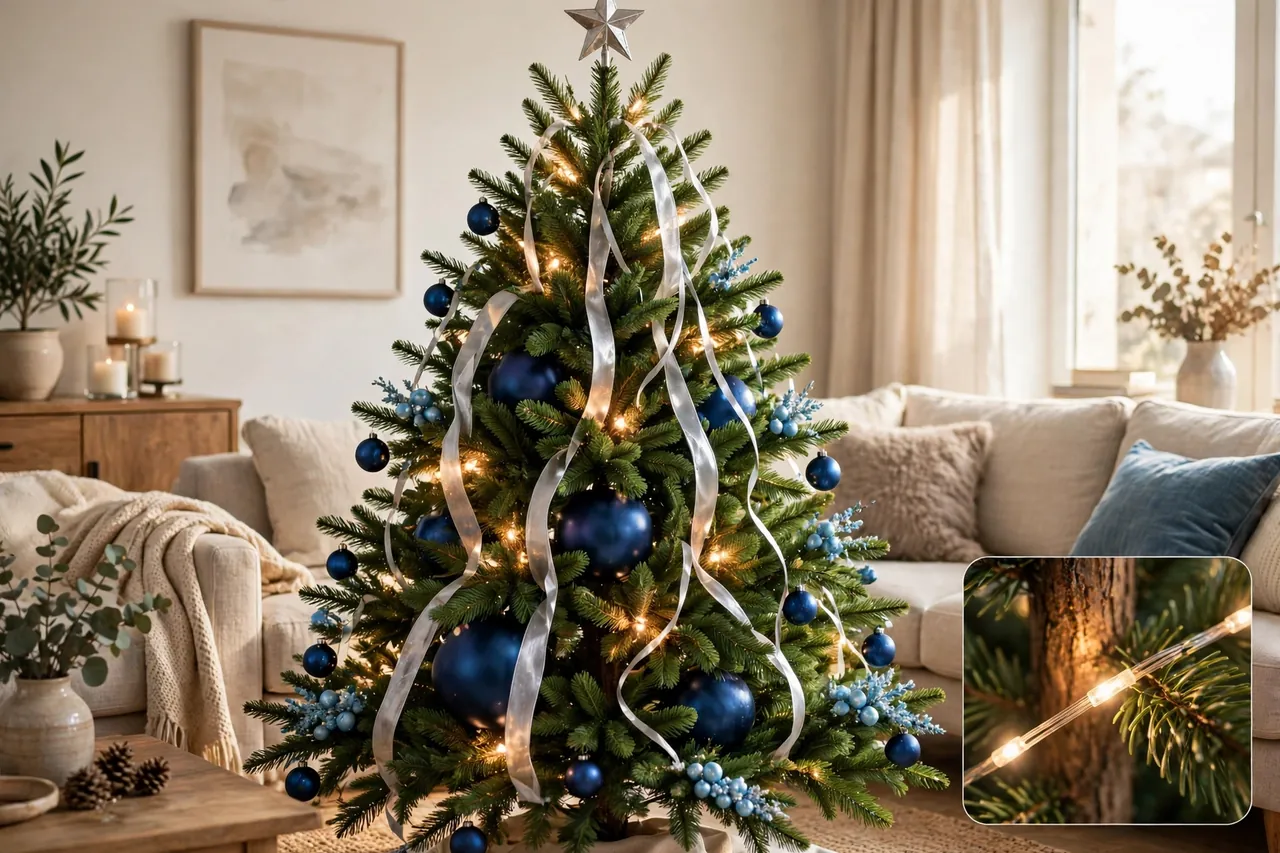
- Add ribbon or garland next. Weave wide wired ribbon in and out of the branches in soft vertical cascades, or drape beaded garland in loose swoops. Start at the top and work down.
- Hang the large ornaments deep inside the branches first. These plain, bold pieces fill gaps and give the tree its body. Spread each blue shade around the tree in a loose zigzag, never in straight rows.
- Fill in with medium ornaments, then small ones near the branch tips. Mix silver pieces evenly through the blue so no side of the tree looks all blue or all silver.
- Add picks, icicles, and snowflakes last. Tuck crystal icicles, silver pinecones, and frosted berry picks into any gap you can still see. These small pieces add the sparkle that makes a blue tree feel finished.
- Finish with the tree skirt, then step across the room and squint. Dark holes show up at once from a distance, and those are the spots that need one more ornament or a loop of ribbon.
This order comes from the same layering approach that tree makers such as Balsam Hill recommend for blue and silver trees: lights first, then ribbon, then large ornaments deep in the branches, then smaller pieces on the outside. It works because each layer sits on top of the last one instead of fighting it.
Ribbon, Garland, and Texture: The Secret to a Blue Tree That Feels Warm
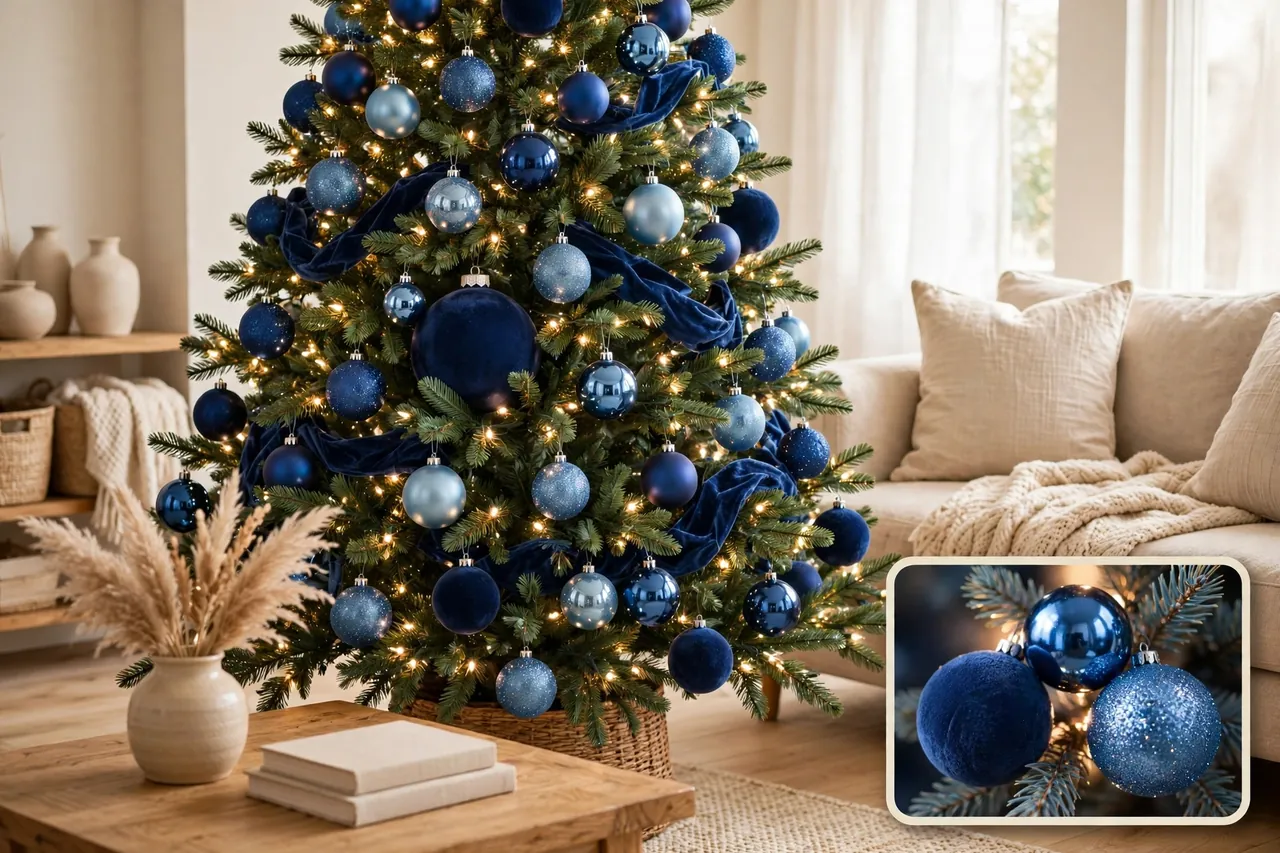
Blue trees have one real risk: they can look cold. Silver and ice blue are beautiful, but a tree made only of shiny balls can feel like a display window instead of a home. Texture fixes that. Velvet ribbon, frosted branches, pinecones, and soft garland add warmth that shine alone cannot give.
Use wired ribbon, because it holds its shape. Cut it into 1 to 3 foot strips if long lengths tangle, or run it in long cascades if you feel confident. A wide navy velvet ribbon looks rich against green branches, while a sheer silver ribbon adds sparkle without weight. Layer a thin ribbon over a wide one for a designer look.
Add one natural texture to break up the shine. Silver-dipped pinecones, frosted berry picks, or a few snowy branches tucked into the tree keep the blue from feeling flat. You do not need many. Five to seven natural pieces on a 6-foot tree is plenty.
Beaded garland in silver or blue adds a second kind of sparkle. Drape it in loose swoops, not tight spirals, so it looks like it fell there naturally. If your tree already has wide ribbon, use a thin beaded garland instead of a thick one, or skip garland and let the ribbon do the work.
If your tree sits against a wall, you can leave the back lighter. Decorate the front and sides fully, and put just lights and a few large ornaments on the back. Nobody sees the back, and your best pieces deserve the front.
Topper and Tree Skirt: Finish the Look
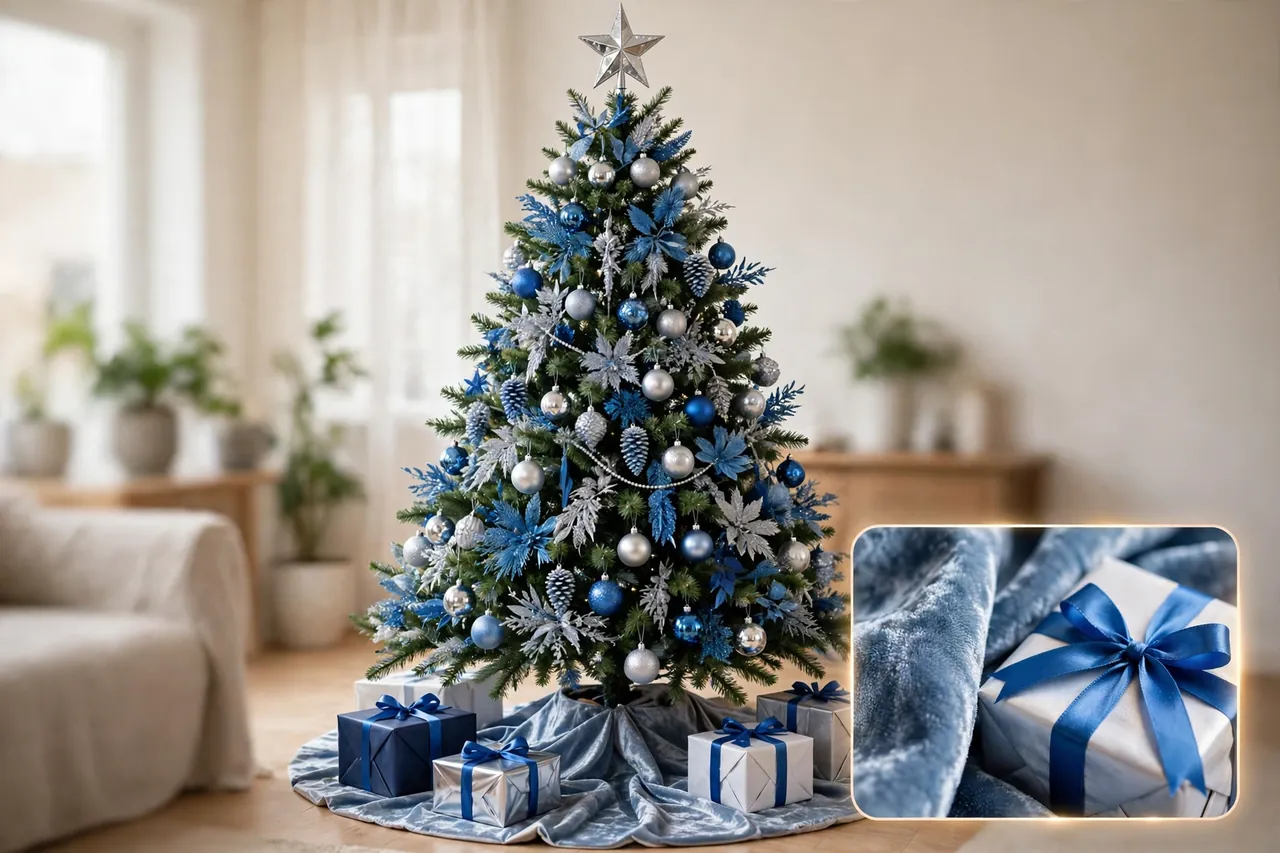
Your topper should match your lead metal. A silver star suits blue and silver trees. A gold star or angel suits blue and gold trees. A big blue bow suits a navy tree and softens its drama. Whatever you pick, keep it in scale: a tiny topper vanishes on a tall tree, and a huge topper makes a small tree look top-heavy.
Your tree skirt grounds the whole look. A silver or blue velvet skirt suits most blue trees, while a white faux-fur skirt suits blue and white trees and flocked trees. A champagne gold skirt warms up a blue and gold tree. Skip a red skirt here, because red pulls the eye away from the blue story you just built.
If you use wrapped gifts under the tree, wrap them in your palette too. Navy, silver, and white wrapping paper with blue ribbon extends the tree into the whole corner of the room. It costs nothing extra if you already wrap gifts, and it makes the tree look twice as planned.
Carry the Blue Beyond the Tree
A blue tree looks best when the room echoes it, even a little. You do not need to redecorate the whole house. Three small touches are enough to make the tree feel like part of the home instead of a lone display.
Start with the mantel if you have one. A few blue ornaments in a bowl, a silver garland, and two blue candles tie the fireplace to the tree without much work. Our guide to Christmas ideas for decorating a fireplace mantel shows how to layer a mantel so it supports the tree instead of competing with it.
Next, echo the palette in the living room. Blue throw pillows, a silver tray, or a white blanket on the sofa pick up the tree colors without shouting. If you want a full room plan, our decorating ideas for your living room at Christmas and our indoor Christmas decorations guide both help you spread one palette through a room the calm way.
Finally, think about the white tree question. If you love this blue look but also love white trees, compare the two before you commit. Our white Christmas tree decorations guide covers the white-tree version of this style, so you can see which one fits your home better.
Keep the rest of the house simple. When the tree carries the blue story, the rooms around it only need a hint of it, not a repeat of it.
Mistakes That Make a Blue Tree Look Cold or Messy
Most blue trees fail for the same few reasons, and every one of them is easy to avoid once you know it.
- Using only one shade of blue. One flat blue looks dull. Mix at least two shades, such as navy and ice blue, so the tree has depth.
- Using only shiny ornaments. Shine without matte looks harsh. Mix matte, shiny, and glitter finishes in every size.
- Hanging everything on the outer branches. A tree with bare insides looks thin. Push large ornaments deep into the branches first.
- Mixing warm white and cool white lights. The clash turns blue ornaments muddy. Pick one light color and stick to it.
- Adding red or green accents. A few red balls turn a blue tree into a confused tree. If you want warmth, use gold, not red.
- Skipping texture. Ribbon, velvet, and pinecones warm a blue tree up. Without them, even a costly tree can feel cold.
- Overloading the top. Heavy ornaments near the crown draw the eye up and leave the bottom bare. Keep the heaviest pieces in the middle and lower branches, where the branches are strongest.
Fix these seven mistakes and your tree will already look better than most blue trees people post online. The ranking articles on this topic mostly show photo lists with little how-to detail, which is why a clear step-by-step guide like this one stands out.
Keep Your Blue Tree Safe
Blue trees need the same safety care as any other tree, and a few rules matter most. The National Fire Protection Association (NFPA) advises keeping the tree at least three feet from any heat source, including fireplaces, radiators, candles, and heat vents, and watering a real tree daily so it does not dry out. Use only lights that carry the label of a recognized testing laboratory, replace any strand with worn cords or loose bulbs, and never decorate a tree with lit candles.
Turn the tree lights off before you leave home or go to bed. This one habit prevents most tree-light fires, and a simple timer makes it automatic. Set the timer to switch the lights on at dusk and off at bedtime, so you never have to remember.
Keep the tree out of exit paths, and do not block a door or window with it. After Christmas, get rid of a dry real tree right away instead of leaving it in the house or garage. A dry tree is a fire hazard, and it does not belong indoors once the needles drop easily. For more detail, see the NFPA holiday fire safety tips summarized there.
If you have small children or pets, hang breakable ornaments higher, keep light cords out of walkways, and anchor a tall tree to the wall if it wobbles. A blue tree full of glass looks lovely, but safety comes before sparkle every time.
Quick safety note: homes, budgets, and conditions vary. If your tree wiring looks damaged, or your tree sits near a heat source you cannot move, ask a qualified electrician or fire safety professional for advice before you decorate. This guide gives general decorating advice, not professional safety advice.
Store Your Blue Decorations So Next Year Looks Just as Good
Blue ornaments show scratches and dust more than dark ornaments do, so pack them with care. Wrap glass pieces one by one in tissue paper, keep silver pieces away from damp spots, and label each box by palette, such as “blue and silver” or “blue and gold.” Next December, you will thank yourself when you open the right box first.
Store ribbon on its spool or rolled loosely, never crushed flat, so wired ribbon keeps its shape. Coil light strands around a piece of cardboard so they do not tangle. And when you pack the tree away, our Christmas tree storage bags guide helps you pick a bag that fits your tree and keeps it clean until next year.
Related Guides
If you enjoyed this blue tree look, these guides from Dwellify Home carry the same palette through the rest of your home: Christmas ideas for decorating a fireplace mantel, indoor Christmas decorations, decorating ideas for your living room at Christmas, white Christmas tree decorations, Christmas tree themes, and Christmas tree storage bags.
Frequently Asked Questions
What colors go well with blue Christmas tree decorations?
Silver, white, and gold pair best with blue Christmas tree decorations. Silver adds cool sparkle, white adds a snowy feel, and gold adds warmth. Pick one as your lead partner color, then use the others only in small touches so the tree stays calm, not busy.
How do I decorate a Christmas tree with blue and silver?
Start with cool white lights, then add silver ribbon and large blue ornaments deep in the branches. Fill in with medium and small silver ornaments, mix matte, shiny, and glitter finishes, and finish with a silver star and a blue or silver tree skirt. Step back often to check the balance.
How many ornaments do I need for a blue Christmas tree?
Plan on 10 to 15 ornaments per foot of tree height. A 6-foot tree needs about 60 to 90 ornaments, and a 7.5-foot tree needs about 75 to 110. Use fewer if you add wide ribbon or thick garland, since ribbon fills gaps that ornaments would otherwise fill.
Can blue and silver decorations work on any type of tree?
Yes, blue and silver decorations work on green, flocked, and white trees. Green trees give a natural backdrop, flocked trees add a snowy feel, and white trees make pale blue pop. Match your light color to the tree, and use more silver contrast on a blue artificial tree.
What does a blue Christmas tree symbolize?
A blue Christmas tree often symbolizes peace, calm, and winter imagery. It is a modern take on the traditional green tree, calling up cold winter skies and icy landscapes. Many families choose blue when they want a serene, elegant holiday look instead of a loud, traditional one.
Your Blue Tree, Ready to Glow
You now have the full formula: pick one palette, match your lights to it, layer big ornaments deep and small ones near the tips, and warm the whole look with ribbon and texture. Start with the palette table, shop only in that row, and decorate in order. Your blue Christmas tree decorations will reward you every evening when the lights come on.
Hang your first ornament tonight, step back, and enjoy the calm blue glow. That quiet winter feeling is exactly why blue trees win so many hearts.