You do not need a bookshelf to store your books well. Bins, baskets, under-bed boxes, closets, built-ins, neat stacks, and storage furniture all give your books a real home, and the best choice depends on how often you read them. Put daily reads where you can grab them fast, and tuck the books you rarely open into safe, dry, out-of-the-way spots.
This guide covers book storage ideas for every kind of home, from small apartments to houses with a spare closet or an empty space under the stairs. You will learn which spot suits each type of book, what to avoid, and how to keep your books safe wherever they live.
Start With How You Actually Use Your Books
Before you buy a single bin, sort your books into three simple groups. Daily reads are the books you reach for right now. Keepers are the books you love and want close by, even if you do not open them every week. Long-term books are the ones you want to keep but rarely need, like old textbooks, reference sets, and childhood favorites.
Each group deserves a different spot. Daily reads belong near your chair, bed, or desk. Keepers work well in baskets, crates, or a closet you open often. Long-term books belong in labeled boxes in a dry, stable spot you can still reach when you want them.
This quick sort saves you money, too. You may find you already own enough baskets, boxes, and empty closet space for the whole job. If you want a full-room plan first, these easy home organization tips pair well with the ideas below.
Bins, Baskets, and Crates That Keep Books Tidy
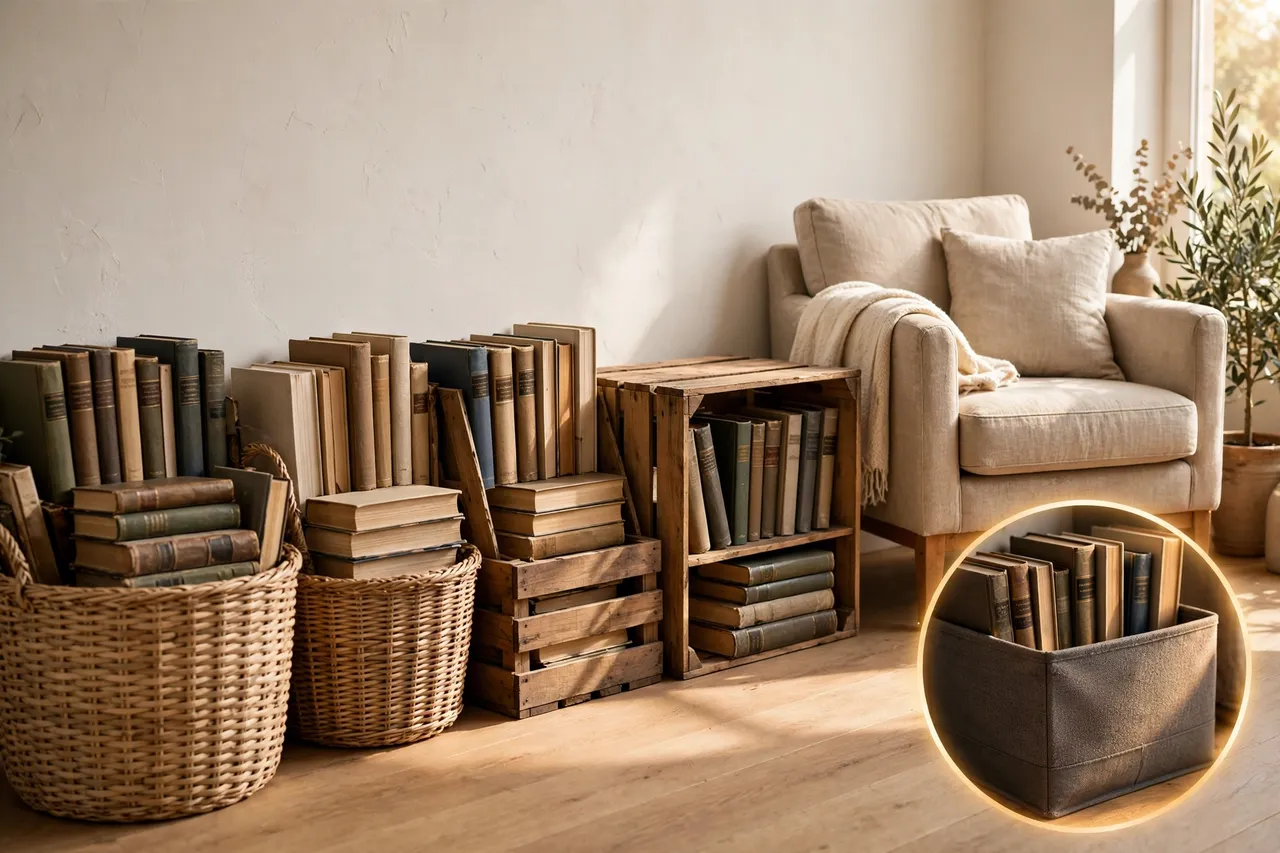
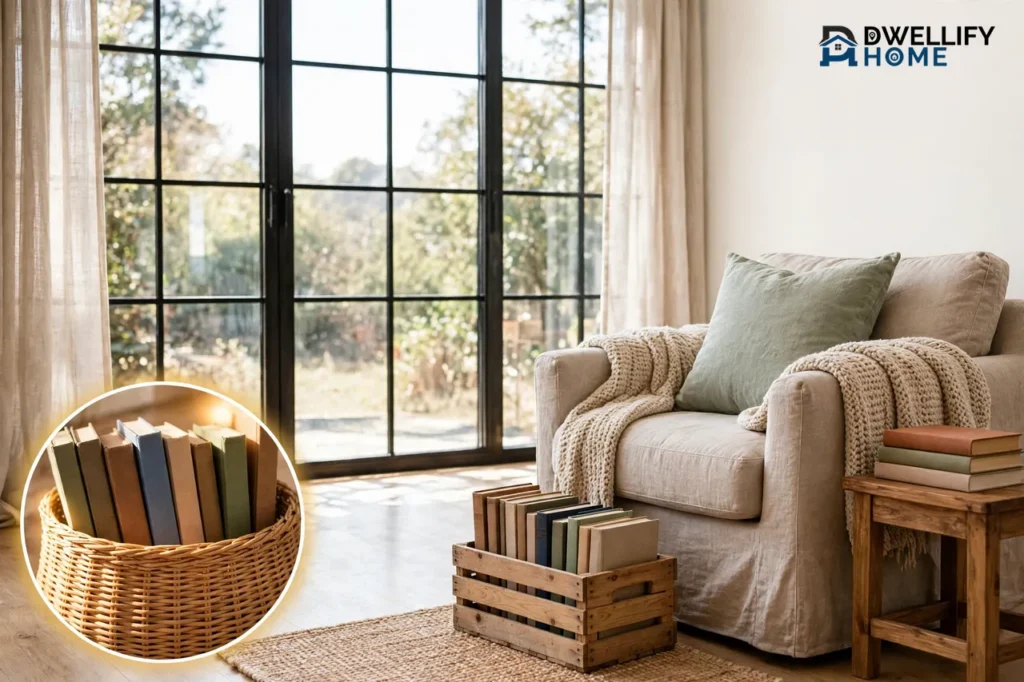
Bins, baskets, and crates are the easiest book storage ideas to start with, because you can move them, label them, and stack them. Use open baskets for books you read often, and lidded bins for books you want to protect from dust. Label each container by topic, like cookbooks, kids’ books, or novels, so you never dig through a whole box to find one title.
Pick sturdy containers that match the weight of books. Books get heavy fast, so choose thick fabric bins with solid bottoms, strong woven baskets, or wooden crates. Keep each container light enough to lift with one hand, and put the heaviest books at the bottom.
Crates work well in rows along a wall, under a window, or beside a chair. Turn a crate on its side and it becomes a small open cubby. Stack crates no more than three or four high, keep the heaviest crate at the bottom, and push the stack against a wall so it cannot tip.
Baskets suit living rooms and bedrooms because they look soft and warm. Slide a basket under a side table, next to the sofa, or by your bed for the books you read before sleep. For a whole-home view of this kind of storage, see these smart storage ideas for making the most of every room in your home.
Under-Bed Storage: The Hidden Spot Most Homes Already Have
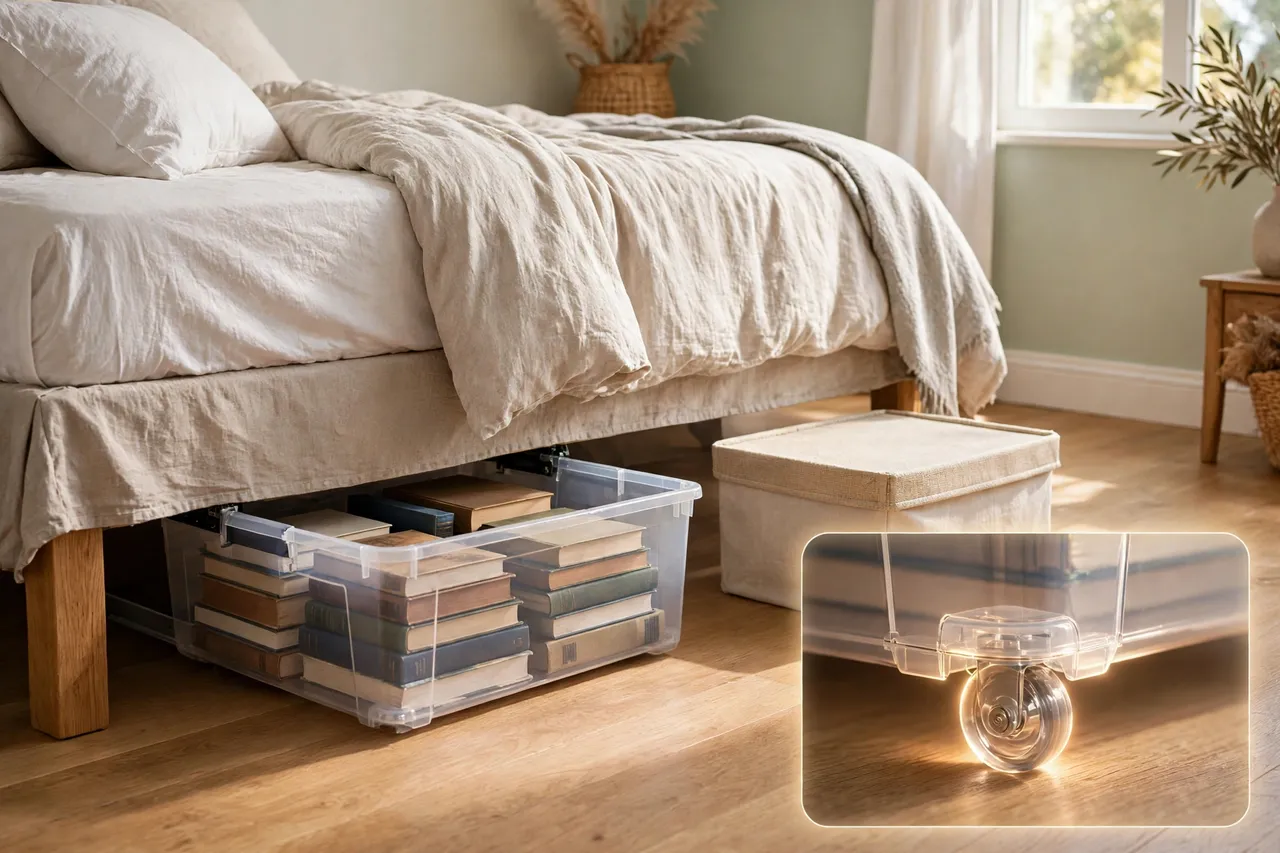
The space under your bed is one of the best book storage ideas for small homes, because it uses room you already own. Flat rolling bins, shallow boxes with lids, and fabric bags all slide under most bed frames. Clear bins let you see what is inside, while fabric bags keep dust out and look tidier when they peek out from under the bed skirt.
Use under-bed storage for books you do not need every day, like reference books, old favorites, and books you plan to reread someday. Keep your current reads somewhere easier to reach, so you do not have to pull out a bin every night. If your bedroom feels tight overall, these small bedroom interior design ideas can help you free up even more room.
Check the spot before you fill it. The floor under the bed should feel dry, and the bins should slide in and out without scraping. Wipe the bins now and then, and skip this spot if the room ever floods or feels damp, since moisture harms books fast.
Turn a Closet Into a Book Nook
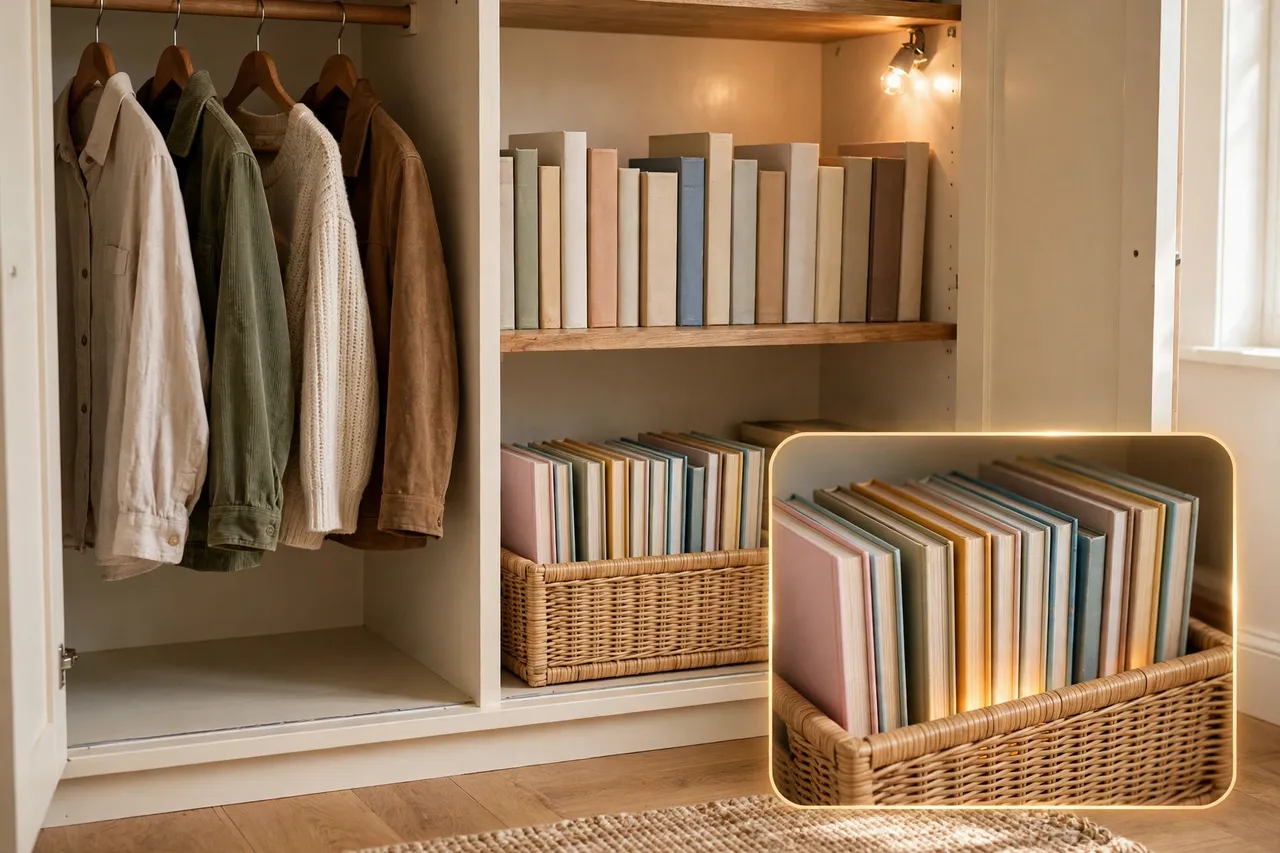
A closet you barely use can become a small home library. Clear one shelf, or clear the floor of the closet, and you have a ready-made book spot with a door that keeps dust out. Hang a small light inside if the closet feels dark, so you can actually find the book you want.
Use the closet in layers. Put daily reads on the shelf at eye level, where you can grab them without bending. Put labeled bins or crates on the closet floor for the books you read less often. If the closet still holds clothes, give books one shelf or one side, and keep the two groups apart so clothes do not press against book covers.
Closets also work well for kids’ books. A low bin inside a hall closet lets kids pull out a book and put it back on their own. Keep the bin light, keep the books upright or flat in neat rows, and leave a little air space so the books do not pack so tight that pulling one out tears a cover.
Built-Ins, Alcoves, and Under-Stair Spaces
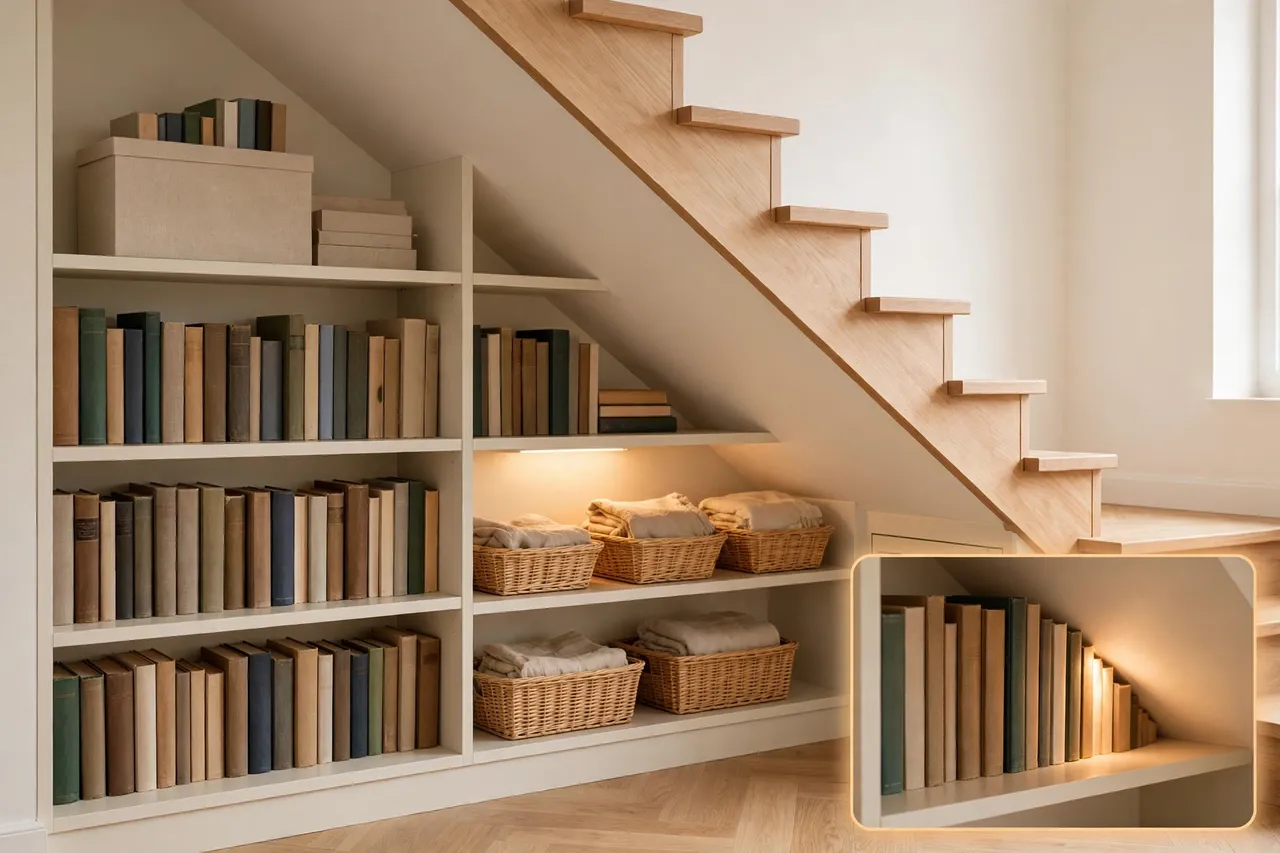
Built-ins, alcoves, and the space under the stairs turn dead space into book storage. A recessed wall niche, the nook beside a fireplace, or the cupboard under the stairs can hold a surprising number of books without taking any floor space from the room. Measure the space first, then fit shelves or bins to it, instead of forcing a standard unit into an odd corner.
Under-stair storage needs a little care. The ceiling slopes, so measure the height at the front and the back before you plan shelves. Put tall books and boxed sets where the ceiling is highest, and shallow bins where it drops low. Add a small light under the top shelf if the space feels gloomy, and you will actually enjoy browsing it.
Alcoves beside a fireplace or a window work the same way. A few shelves cut to fit the exact width of the alcove look built-in, even on a small budget. Paint the shelves the same color as the wall behind them, and the whole nook reads as part of the room instead of a bulky add-on.
Stacks That Look Good and Stay Safe
Neat stacks are the simplest book storage idea of all, and they suit books you want to see. Stack books flat, largest at the bottom and smallest on top, beside an armchair, at the end of a sofa, or against a wall. A sturdy stack can even serve as a side table for a lamp or a cup of tea.
Keep stacks low and stable. A stack that rises above your knee can topple, and a tall pile of heavy hardcovers can bend the covers of the books at the bottom. As a rule, stop while the stack still feels rock-solid when you tap it, and keep stacks away from walkways where someone could bump them.
Look for flat surfaces you already own. A mantel, a deep windowsill, a bench, or the top of a dresser all hold a short stack of books well. A non-working fireplace also makes a charming spot: stack books inside the opening with their spines facing out, and you turn an empty hearth into a cozy focal point. Never store books in a fireplace you still use, and keep them clear of heat sources.
Storage Furniture That Hides Books in Plain Sight
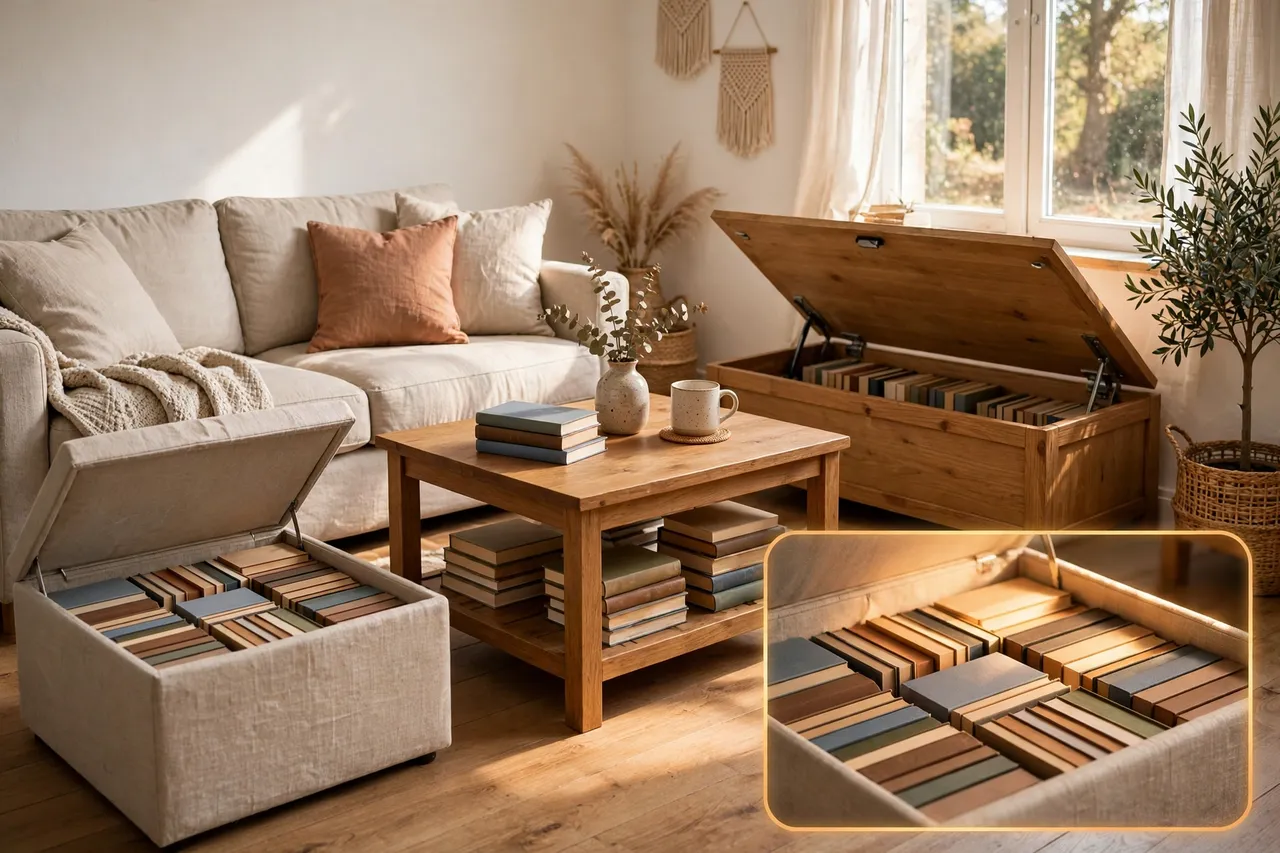
Storage furniture hides books while it does another job, which makes it perfect for small rooms. A storage ottoman holds paperbacks and magazines and still gives you a footrest. A bench with a lift-up seat stores books by the door or at the foot of the bed. A coffee table with an open shelf underneath keeps your current reads right where you sit.
Bed frames with built-in drawers or a hollow base work the same way. They hold a whole row of books without taking a single extra inch of floor space, which matters a lot in a bedroom that already feels full. A bench with drawer storage is another strong pick, since its drawers keep books dust-free and easy to pull out.
When you shop for storage furniture, check the size before you buy. Measure your tallest book, then check that the drawer, shelf, or ottoman opening fits it with a little room to spare. Oversized art books and boxed sets often need a deeper drawer than paperbacks do, so plan the spot around your biggest books, not your smallest ones.
Small-Space Book Storage: Walls, Ledges, and Rolling Carts
Small rooms reward storage that climbs the wall instead of eating the floor. Floating shelves above a desk, a sofa, or a bed turn empty wall space into book space. Picture ledges, which are narrow shelves made to hold framed art, also hold a row of books with their covers facing out, so your favorite covers become wall decor. Apartment Therapy’s small-space book storage ideas show the same principle at work, from bed frames with built-in storage to rolling carts and mantel stacks.
Fix wall storage into studs or solid masonry whenever you can. Books weigh more than they look, and a shelf full of hardcovers can pull out of weak drywall anchors. Keep each shelf run short, leave enough height between shelves for your tallest book, and put the heaviest books on the lowest shelf.
Rolling carts are another small-space win. A three-tier cart holds a surprising number of paperbacks, rolls out of the way when you need floor space, and rolls to your reading chair when you want it close. Carts work well for kids’ books, magazines, and library books you plan to return soon. For more space-saving furniture picks, see these small home, smart furniture solutions that actually work.
Keep Your Books Safe Wherever You Store Them
Every storage idea in this guide works better when the spot itself treats books kindly. The Library of Congress advises storing books in a cool place at 70 degrees Fahrenheit or below, with relative humidity between 30 and 55 percent, and away from spots with big temperature swings. You can read their full storage guidance in the Library of Congress guide to storing your books.
That advice rules out a few popular spots. Skip attics, garages, and unfinished basements for books you care about, since those rooms swing hot and cold, run damp, and carry a higher risk of leaks. A plastic bin does not fix a bad room: it may keep dust out, but it cannot stop heat and humidity from aging paper, and sealing a damp book inside an airtight box can invite mold.
Light matters, too. Keep books out of direct sunlight, which fades spines and weakens paper over time. A sunny windowsill looks charming, but it suits a few books you rotate often, not a collection you want to keep for years. Dust your books and their containers on a regular schedule, since dust absorbs moisture and attracts pests.
Store most books upright and supported, so they do not lean or slump, or lay them flat in full support. Never store a book spine-up, since gravity can loosen the pages from the cover over time. If a book already feels fragile, a box or enclosure protects it better than an open stack.
Quick Picker: Match the Spot to Your Books
Use this table to pick fast. Find your situation in the first column, then read across for the spot that fits it best.
| Situation | Best storage spot | Watch out for |
|---|---|---|
| Books you read every day | Basket or stack by your chair or bed | Keep stacks low and stable |
| Books you love but read rarely | Closet shelf or labeled bin | Keep the spot dry and dust-free |
| A small apartment | Wall ledges, rolling cart, under-bed bins | Anchor wall shelves into studs |
| Heavy hardcovers and boxed sets | Floor stacks, low crates, storage bench | Keep each container light to lift |
| Books to keep for years | Lidded boxes in a cool, dry room | Never use attics, garages, or damp basements |
| Kids’ books | Low bins in a closet or by the bed | Keep bins light and easy to reach |
Mistakes That Damage Books in Storage
Most book damage comes from a few avoidable mistakes. Packing books so tight that you must yank one free can tear covers and loosen bindings. Piling heavy books on top of paperbacks bends the soft covers underneath. Storing books against a cold outside wall or near a radiator invites damp and warped pages.
Fix these fast. Leave a little breathing room in every bin and shelf, put heavy books at the bottom of every stack, and move books away from radiators, vents, and damp walls. Check stored books once or twice a year, and pull out anything that smells musty or shows spots, so one damp book does not harm its neighbors.
💡 Practical Home Tip: Start with one spot, not the whole house. Pick the ten books you reach for most, give them a basket or a stack by your favorite chair, and put the rest into labeled bins by topic. You will feel the difference tonight, and the rest of the collection gets much easier to place once your daily reads already have a home.
Related Guides
How to Organize Room: A Simple System That Works in Any Room · Coat Closet Organization
Frequently Asked Questions
How do I preserve my books?
Keep your books somewhere cool, clean, relatively dry, and out of direct sunlight. Store most books upright and supported, or lay them flat with full support. Dust them regularly, handle them with clean, dry hands, and act fast if a book gets wet or shows mold.
Is it safe to store my books in the basement/attic/garage if I put them in plastic bags or bins?
No, not for books you value. The Library of Congress warns that basements, attics, and garages run unsuitable temperatures and humidity and carry a higher risk of leaks and floods. Bags or bins may block dust, but they cannot fix heat, humidity, or a leak.
How should I pack books for storage or shipping?
Choose a box that is not too large, since a big box of books gets too heavy to lift safely. Pack books flat with heavier, larger volumes at the bottom, or pack them upright with the spine down. Fill empty space with padding, avoid overpacking, and center the weight in the box.
How can I protect my books from damage with these methods?
Avoid direct, prolonged sunlight, which fades spines, and dust your books regularly, especially books stored in the open. Keep storage areas dry, and skip spots prone to dampness, like a basement floor or a drafty fireplace. Check stored books now and then for musty smells or spots.
What is the best way to store heavy hardcover books without traditional shelves?
Use sturdy, low solutions that carry weight safely: floor stacks with the largest books at the bottom, wooden crates mounted securely into wall studs, or a storage ottoman or bench. Keep each container light enough to lift, and put the heaviest books at the bottom of every stack.
Your books do not need a bookshelf to live well in your home. They need a dry spot, a little support, and a place that matches how often you read them. Start with one basket, one bin, or one closet shelf this week, and build from there. For a broader whole-home plan, browse these home organization ideas next.