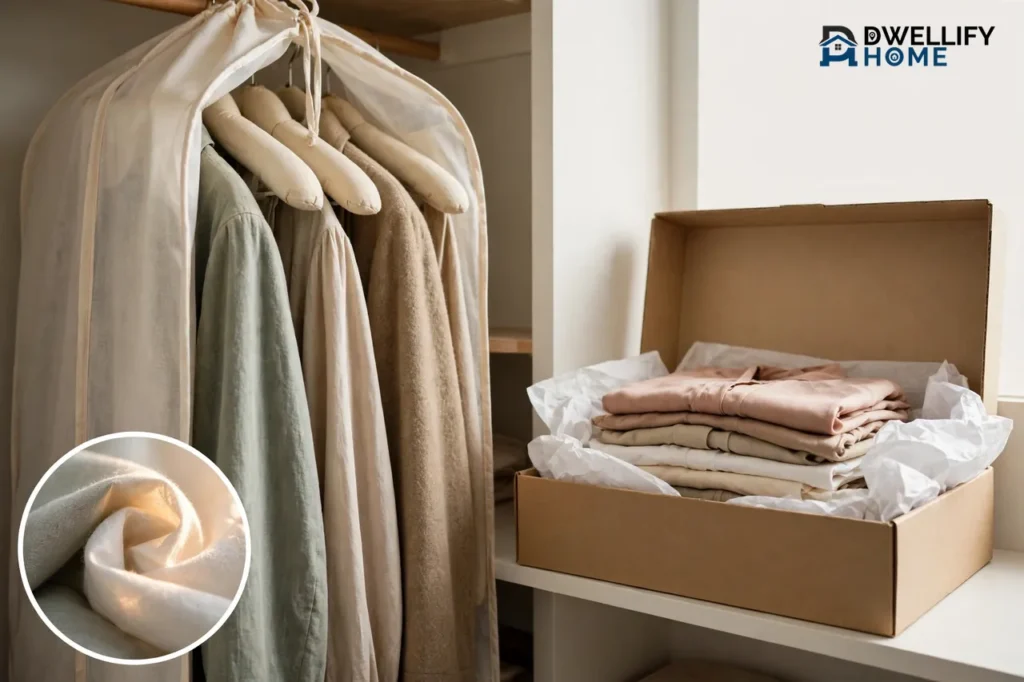
The best ways to store vintage clothing properly start with one simple rule: store each piece clean, dry, and fully supported, in a cool, dark, stable spot, away from plastic bags, damp rooms, and harsh light. Hang only sturdy pieces on padded hangers, fold fragile, heavy, beaded, and knit pieces flat with acid-free tissue, and check them every few months for pests, damp, and new creases.
That sounds like a lot of care for clothes you may wear only once a year. Yet vintage fabric is not like new fabric. Years of wear, washing, sunlight, and age already weaken its fibers, so small storage mistakes can turn into yellow marks, stretched shoulders, faded color, or moth holes that you cannot undo. Good storage does not need fancy equipment, but it does need the right materials, the right place, and a little patience before you close the box.
Why Vintage Clothes Need Special Storage
Think of vintage clothing as fabric with a history. Cotton, linen, silk, and wool all age in their own ways, and older dyes, trims, and glues can age faster than the main fabric. A beaded dress, for example, can look perfect on a hanger and still tear at the shoulders because the beads pull the base fabric down, hour after hour.
Five forces do most of the damage in storage. Light fades color and weakens fibers. Heat and damp speed up decay and invite mold. Acids from ordinary cardboard, newspaper, and wood can yellow fabric over time. Gravity stretches knits, bias-cut pieces, and heavy garments. And pests, above all clothes moth larvae, feed on wool, silk, fur, and feathers, especially when the fabric still holds body oil, food, or sweat.
The good news is that you can fight all five forces with the same plan. Keep the piece clean, keep it supported, keep it in the dark, keep the air steady, and keep pests out. When you must choose between a quick fix and a slower, safer fix, choose the slower one. A garment that waits one more day to dry fully will last far longer than a garment packed away damp.
Clean Before You Store, Every Time
Never store a vintage piece that still smells of wear, food, or perfume, even if it looks clean. Dirt and body oil attract pests, and stains can set or darken during long storage. The National Archives gives the same warning in plain terms: store textiles as clean as possible, and stay alert for holes, staining, webbing, and other signs of insects, especially in damp conditions.
Start by reading the care label, if one survives, and by testing a hidden spot before you clean the whole piece. If the label is gone, the fabric is fragile, the piece has beads, sequins, fur, leather trim, or old glue, or you feel unsure at all, stop and ask a cleaner who works with vintage or delicate clothing. A good cleaner will tell you what they can and cannot do safely, and that honest answer protects the garment far better than a brave guess at home.
- Inspect the piece in bright, indirect light. Note loose seams, weak spots, missing buttons, and stains, so you can handle those areas with extra care.
- Brush off surface dust outdoors or over a clean sheet, and air the piece in shade. Never use heat to rush this step.
- Clean only in the way the fabric allows. Wash sturdy, washable pieces gently by hand when the label allows it, and leave silk, velvet, beaded, and fragile pieces to a specialist.
- Dry the piece fully, flat or on a padded hanger in shade, before it goes anywhere near a box or bag. Damp fabric in a closed container invites mold and mildew.
- Remove the plastic dry-cleaner bag as soon as you get home, and let a dry-cleaned piece air in shade before you pack it, so cleaning fumes do not sit against the fabric.
If you are setting up a better laundry space for this kind of gentle care, a guide to laundry room renovations can help you plan folding space, drying room, and storage that make careful handling much easier.
Hang or Fold? Decide by Garment Type
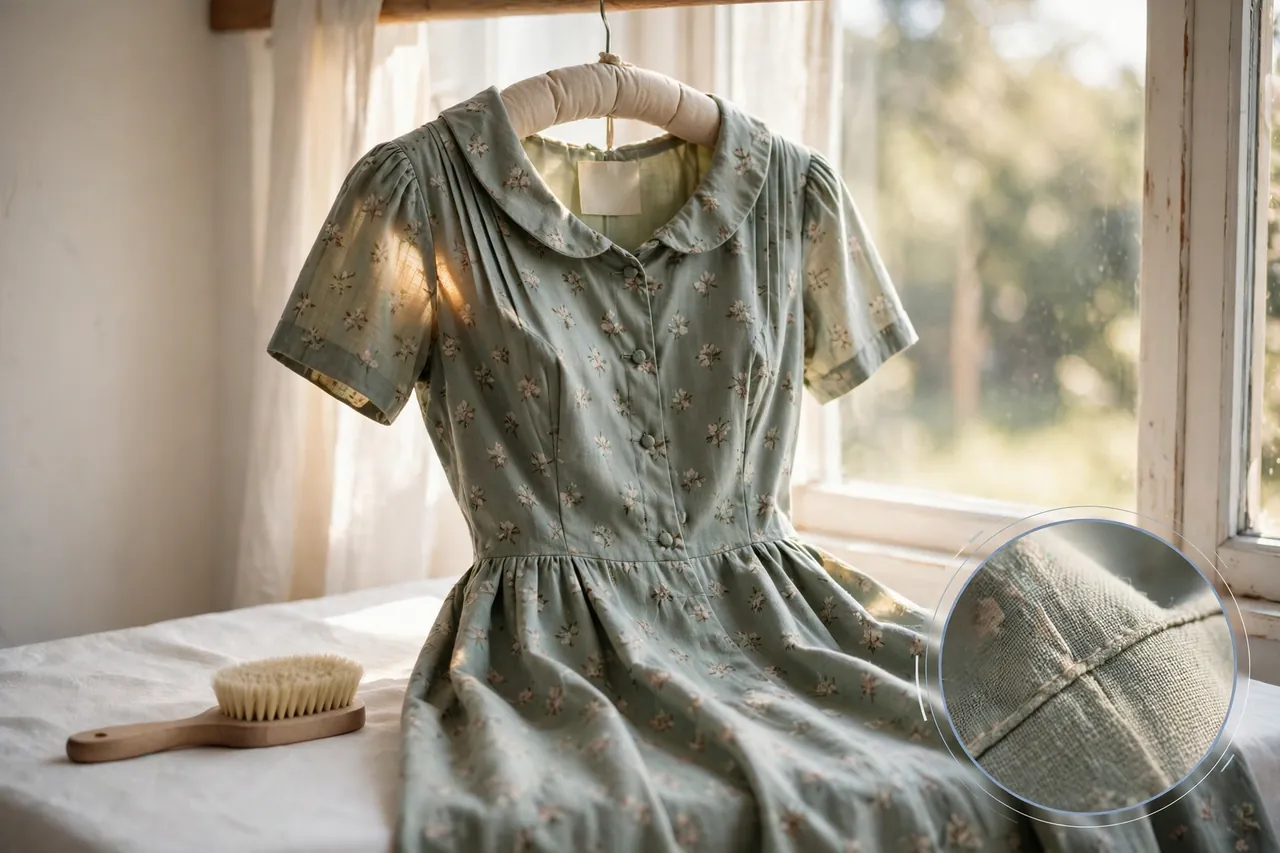
This is the decision most people get wrong, because the answer is not one rule for the whole closet. Gravity helps sturdy jackets keep their shape on a hanger, but it harms knits, bias-cut dresses, and heavy beaded pieces. The Postal Museum puts it clearly: structurally unsound or heavy garments belong flat in boxes, not on hangers, and knitted garments should not hang because they stretch.
Use this quick test before you hang anything. Hold the garment up and ask three questions. Can the shoulders and seams carry its weight without pulling? Is the fabric strong, with no weak or torn spots? Will the shape stay true if gravity pulls on it for months? If you answer no to any one of them, fold it flat instead.
The table below sums up the choice, so you can sort a whole collection in one pass.
| Garment type | Best storage | Why this works |
|---|---|---|
| Sturdy jackets, coats, and tailored dresses | Padded hanger, cotton garment bag | The frame holds the shape, and the bag blocks dust and light while air still moves. |
| Knit sweaters and knit dresses | Folded flat | Hanging stretches knits out of shape, often for good. |
| Beaded, sequined, or heavily embroidered pieces | Folded flat, tissue between layers | The weight of the trim can tear shoulders and strain the base fabric. |
| Bias-cut, sheer, lace, or fragile pieces | Folded flat or rolled on a wide tube | These fabrics pull, snag, and distort under their own weight. |
| Hats, bags, and shaped accessories | Boxed, lightly stuffed with tissue | Tissue holds the shape without crushing trim or bending a brim. |
Hang These Pieces, and Hang Them Well
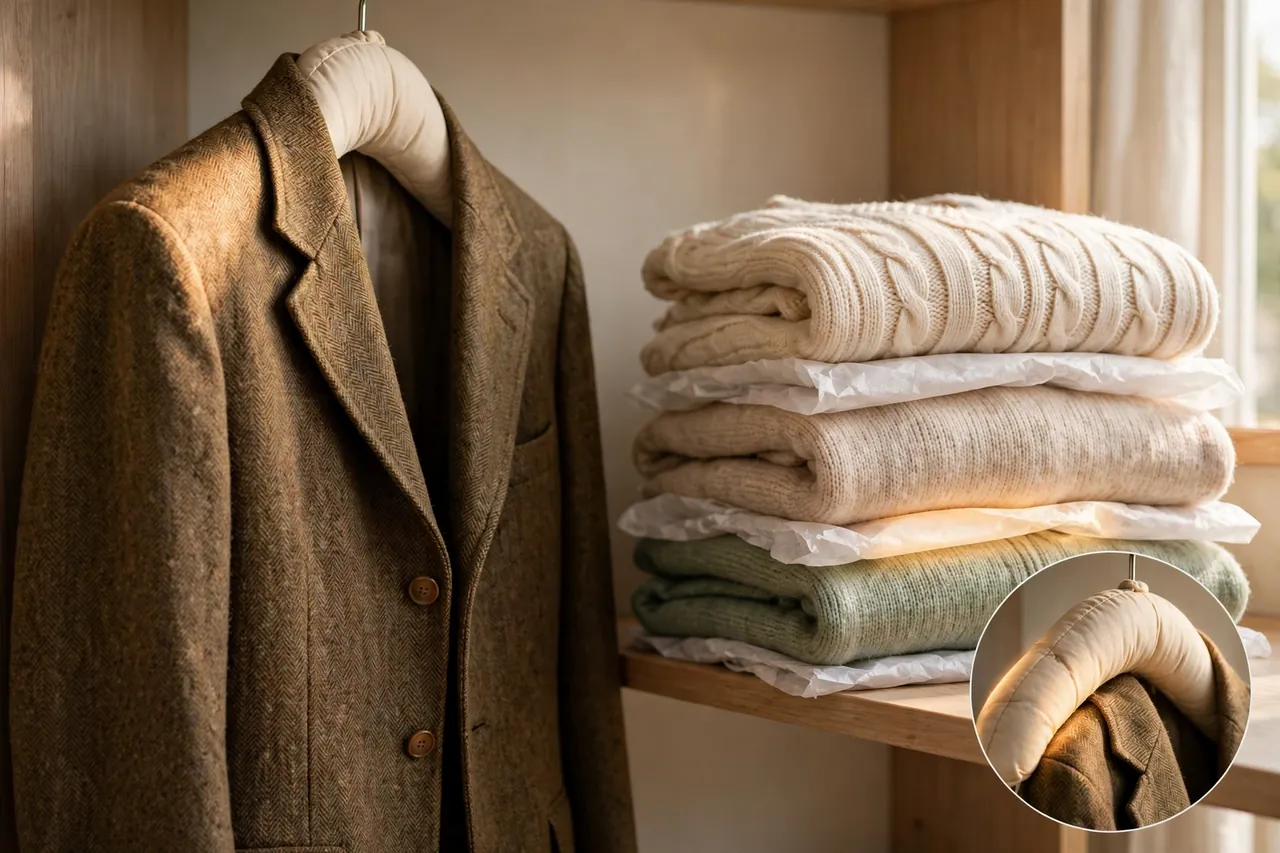
Hang only sturdy pieces in good condition, with strong shoulders and seams. Use a padded hanger that matches the width of the garment, so the shoulders rest on a broad, soft curve instead of a thin edge. Button or zip the piece closed, fasten any inner hanging ribbons, and give it room to breathe. Crowded hangers rub fabric, catch beads, and press marks into velvet and other soft surfaces.
Cover hanging pieces with a clean cotton or linen garment bag. The bag blocks dust and light, yet still lets air move. Skip wire hangers for vintage pieces. Thin wire digs into shoulders, bends out of shape, and can rust and stain fabric over time.
Fold These Pieces, and Fold Them Softly
Fold knits, beaded pieces, bias-cut dresses, sheer fabrics, and anything weak, heavy, or fragile. Fold along natural lines, such as the waist or a seam, and use as few folds as you can. Pad each fold with a soft roll of acid-free tissue, so the fabric bends in a gentle curve instead of a sharp crease. Place tissue between layers, inside sleeves, and around shoulders to hold the shape.
Put the heaviest pieces at the bottom of a box and the lightest, most fragile pieces on top. Never cram a box full. Pressure presses folds into permanent creases, and a tight pack traps damp air. Large flat pieces, such as quilts and long gowns, can also roll around a wide acid-free tube, which avoids folds altogether.
Acid-Free Materials: Why They Matter So Much
Ordinary paper, cardboard, and tissue look harmless, but most of them carry acids that can yellow and weaken fabric over time. Museum Textile Services warns that textiles should have no direct contact with wood, regular tissue, or other wrapping paper, because most paper tends to be acidic, and acid is especially damaging to textiles. That is why archivists reach for acid-free materials again and again.
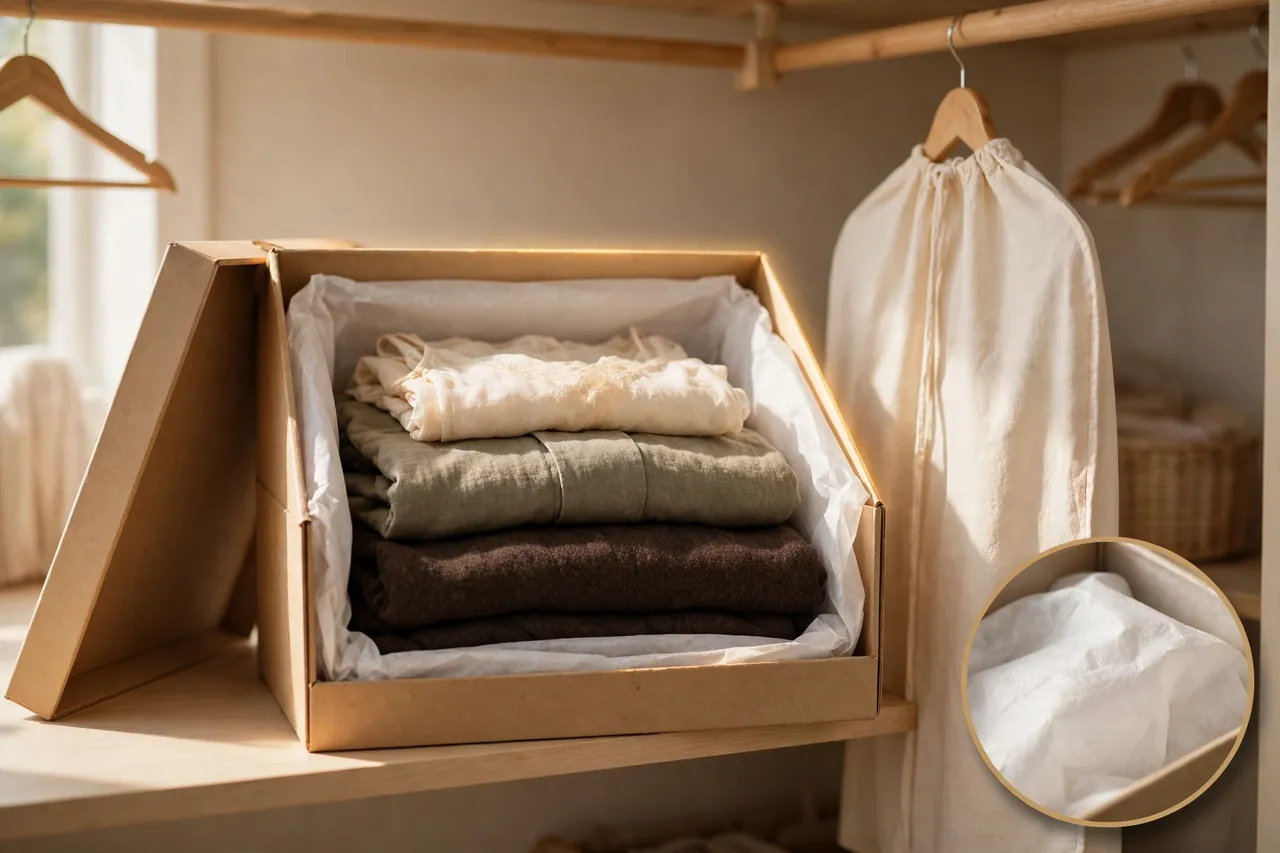
Acid-free tissue is pH neutral, so it does not react with the fabric it touches. Use it to line a box, wrap a garment, pad a fold, stuff a sleeve or a hat, and separate one piece from the next. Acid-free boxes give the same protection at a larger scale, and they also block light and dust. If you cannot find acid-free boxes right away, wrap each piece fully in clean, white, unbleached cotton cloth, such as a washed sheet or muslin, so the fabric never touches raw cardboard or wood.
A few material rules will save you from the most common damage. Never tape tissue or labels to the fabric itself, and never use rubber bands, safety pins through the fabric, or plastic wrap against a garment. Avoid colored or printed tissue and newspaper, which can transfer dye and acid. Label the box or the outer wrap, not the garment, and use a pencil on an acid-free tag if you must label a wrap.
💡 Practical Home Tip: When you buy acid-free tissue, buy more than you think you need. You will use it to pad folds, stuff sleeves, line boxes, and separate layers, and running out halfway through a packing session is how sharp, unpadded folds happen.
Choose the Right Container
The best container for most vintage pieces is an archival acid-free box, or a clean drawer lined with acid-free tissue or white cotton cloth. Boxes protect against light, dust, and bumps, and they make it easy to lift a piece out without dragging it. Choose a box that fits the garment without forcing it, and leave a little air space so the fabric can breathe.
Breathable cotton or linen garment bags work well for hanging pieces. They shield against dust, light, and pests while still letting air move. Museum Textile Services makes the key point here: fabrics need some air movement, so they should not sit sealed in airtight plastic bags or containers, where moisture can condense and cause damage.
That rule shapes how you should treat ordinary plastic boxes and vacuum bags. A sealed plastic box or a vacuum bag may look tidy, but it can trap damp air, press delicate fibers flat, and set wrinkles that never come out. If you already own plastic boxes, leave the lids off or ajar, line them fully with cotton cloth, and use them only for short-term storage, not for years of rest. For long-term storage, choose the breathable box or bag instead.
Raise boxes off the floor on a shelf or a clean pallet, so a small leak or spill does not reach them. Keep boxes out of direct sun, even indoors, and do not stack heavy boxes on top of fragile pieces. A flat, stable stack, with the heaviest box at the bottom, protects everything below it.
Get the Climate Right: Cool, Steady, and Dark
Climate may sound like a museum worry, but it decides how fast your vintage pieces age at home. Heat speeds up chemical decay, damp invites mold and pests, and wild swings between hot and cold, wet and dry, stress fibers and dyes. The best home storage spot feels comfortable to you, stays steady through the seasons, and stays dark.
The George Washington University Museum and The Textile Museum describe a climate of 65 to 70 degrees Fahrenheit and 40 to 50 percent relative humidity as ideal for textiles, and stress that a stable environment, with as little fluctuation as possible, matters most. The Smithsonian Museum Conservation Institute reports a similar museum aim, about 70 degrees Fahrenheit and 45 percent relative humidity, and notes that acid-free boxes and tissue help buffer small changes in temperature and humidity. You do not need museum equipment at home, but you can aim for that same steady, comfortable range, and you can use a simple indoor thermometer and humidity gauge to check it.
Light deserves its own warning. All light fades dyes and weakens fibers over time, and sunlight and fluorescent light cause the most harm. The National Archives states the rule simply: textiles last longest when stored in the dark, because light fades colors and weakens fibers. Keep stored pieces in closed boxes or covered bags, keep the storage room dark when you are not using it, and never place a box where sun falls on it through a window.
That climate rule also tells you which rooms to avoid. The National Archives warns against trunks or boxes in hot attics or damp basements or garages, because damp conditions encourage mold and attract insects. An attic swings from hot to cold, a basement can stay damp, and a garage adds dust, fumes, and pests. A spare bedroom closet, an interior closet, or a dry, climate-controlled room in the main part of your home will serve your collection far better.
Keep Pests Out Without Harming the Fabric
Clothes moth larvae and carpet beetles feed on wool, silk, fur, feathers, and other animal fibers, and they love dark, quiet, undisturbed places. They also love dirty fabric, because food stains and body oil feed the larvae. That is why cleaning before storage is pest control, not just good housekeeping. Clean the storage space too: vacuum shelves, corners, and closet floors, and wipe surfaces before you put clean garments back.
Start with isolation. When a new vintage piece comes home, or when you spot holes, webbing, tiny cases, or grain-like droppings, keep that piece away from the rest of your collection until you know it is clean and pest-free. Check seams, folds, pockets, and linings closely, because eggs and larvae hide in exactly those spots. For a valuable or fragile piece with signs of pests, ask a textile conservator or a pest professional before you treat it yourself, because the wrong treatment can harm the fabric as much as the pests did.
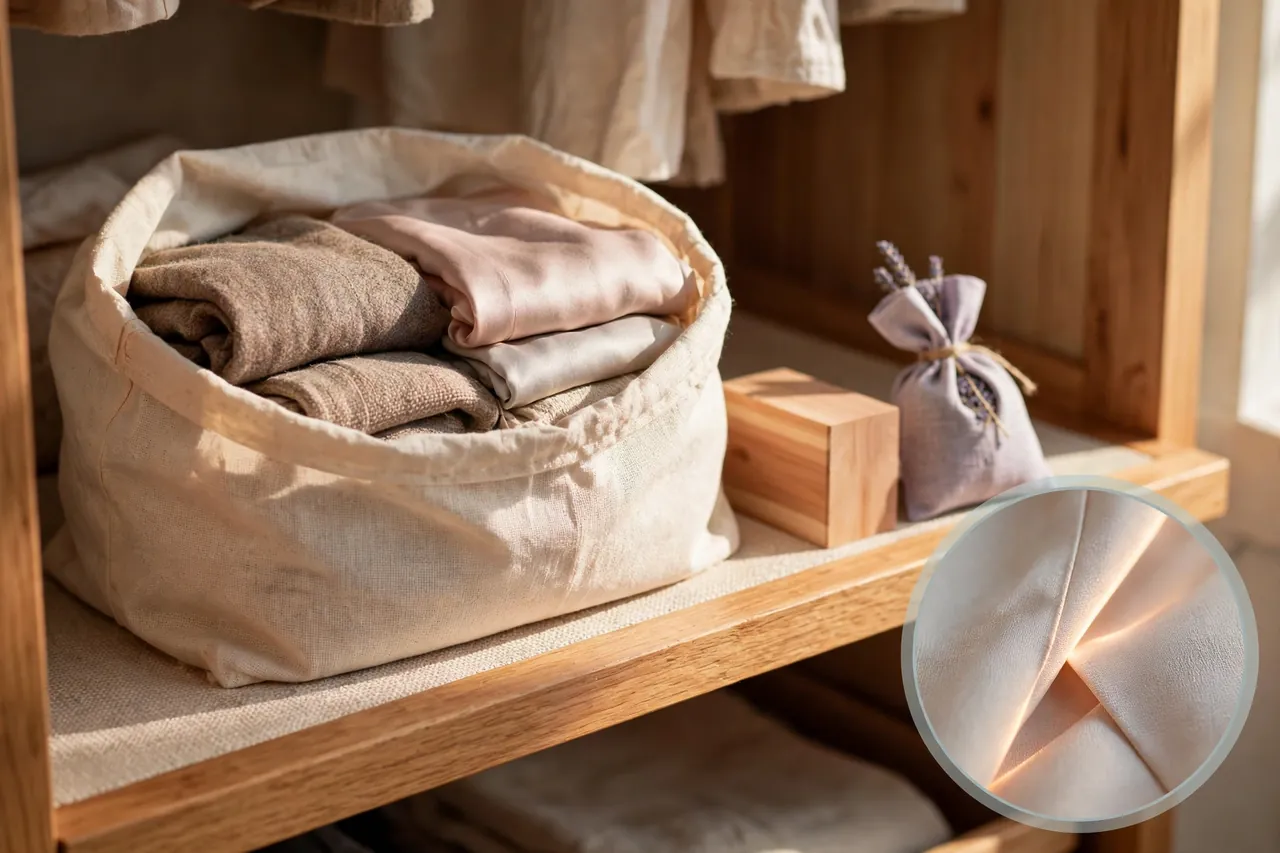
Do not rely on scent alone. Cedar blocks, lavender sachets, and similar products may help as one small part of a clean, well-checked storage routine, but their scent fades, and they cannot rescue a dirty or infested piece. Mothballs and other chemical pest products are pesticides, so use them only exactly as the label directs, never in direct contact with fabric, and never as a casual air freshener in a closet. If you have children, pets, or breathing concerns in the home, skip chemical products and lean on cleaning, isolation, and regular checks instead.
Freezing and heat can kill clothes moths, but both need care, and fragile pieces can suffer if the method or timing is wrong. Treat freezing and heat as options to research from a trusted extension or conservation guide, or to leave to a professional, rather than as a quick home fix for a precious garment. The safest daily habit is simpler: keep pieces clean, keep storage tidy, and look inside boxes and bags on a regular schedule, so a small problem stays small.
What Never to Do With Vintage Clothing
Some storage habits feel protective and still cause real harm. The plastic dry-cleaner bag is the best-known example. The National Archives and museum guides agree: do not store textiles in plastic dry-cleaner bags or sealed plastic totes, because trapped moisture and chemicals from the plastic can harm fibers and change dye colors. Remove that thin bag the day the garment comes home.
Wire hangers belong in the same never-do list. They offer almost no shoulder support, they bend, they catch on fabric, and they can rust and stain. Untreated wood can also cause trouble, because wood and its finishes can react with fabric and transfer color or acid. Padded hangers, or wide, smooth hangers covered in clean cotton, give vintage shoulders the support they need.
Attics, damp basements, garages, and sunny spare rooms all fail the climate test, even when they feel convenient. Vacuum bags fail the support test, because they crush fibers and set deep wrinkles. Storing a garment dirty fails the pest test, because stains feed larvae. And packing pieces so tight that you must tug them out fails the handling test, because every tug risks a tear at a weak seam.
If you remember only one warning from this guide, make it this one: never seal a vintage piece away dirty, damp, or in plastic, and never hang a heavy or fragile piece just because a hanger is handy. Those two shortcuts cause more vintage damage than almost anything else in home storage.
Check Stored Pieces Over Time
Storage is not a one-time job. Fibers settle, folds press in, pests arrive quietly, and a small leak or damp patch can change a whole box. A short, regular check keeps every piece safe, and it takes far less time than repairing damage after years of neglect.
- Open each box and bag every few months. Look for holes, webbing, droppings, damp spots, mold marks, and new stains, and smell for mustiness.
- Refold folded pieces now and then, and move the folds to a new spot. This stops one sharp crease from becoming permanent.
- Check hanging pieces for stretched shoulders, sagging hems, and tight neighbors. Give each piece room, and re-pad any hanger that has gone flat.
- Replace soiled or crushed tissue, and refresh cotton covers that have grown dusty. Clean tissue protects far better than old, dusty tissue.
- Keep a simple note on each box: what is inside, when you cleaned it, and when you last checked it. That note saves you from opening every box to find one dress.
When you find a problem, act on it at once, but act gently. Move a damp piece to dry, shaded air, isolate a piece with pest signs, and set aside a torn or weakened piece for a specialist instead of forcing it back into storage. Early action turns most storage problems into small fixes. Late action turns them into losses.

Related Guides
Laundry Room Shelving: Practical Ideas, Heights, and Storage That Works · Decluttering Checklist: A Room-by-Room Guide for Your Whole Home · Minimalist Decluttering Checklist
Frequently Asked Questions
Should I hang or fold vintage clothing?
Hang only sturdy pieces with strong shoulders and seams, on padded hangers with room to breathe. Fold knits, beaded pieces, bias-cut dresses, sheer fabrics, and anything heavy, weak, or fragile flat, with acid-free tissue padding each fold. When in doubt, fold it, because gravity harms a hanging piece slowly and quietly.
Can I store vintage clothes in plastic bags or boxes?
No, not for long-term storage. Sealed plastic traps moisture, can give off chemicals that harm fibers and dyes, and presses delicate fabric flat. Use breathable acid-free boxes or cotton garment bags instead. Use sealed plastic only for short-term isolation of a piece you suspect has pests, and only until you treat it properly.
What temperature and humidity are best for vintage clothing?
Aim for a cool, steady room at about 65 to 70 degrees Fahrenheit and 40 to 50 percent relative humidity, the range The Textile Museum describes as ideal, with as little fluctuation as possible. Keep pieces dark, dry, and in the main part of your home, never in a hot attic, damp basement, or garage.
Do I need to clean vintage clothes before storing them?
Yes, always. Dirt, sweat, and food attract moth larvae and can stain or weaken fabric during storage. Clean each piece in the way its fabric allows, or take fragile, beaded, or valuable pieces to a cleaner who works with vintage clothing. Store only fully dry pieces, because damp fabric invites mold and mildew.
How do I stop moths from eating stored vintage clothes?
Store only clean, fully dry pieces, vacuum the closet and shelves first, and check stored pieces every few months for holes, webbing, or droppings. Isolate any piece with pest signs at once, and get professional help for valuable pieces. Cedar and lavender may help a little, but they cannot replace cleaning, isolation, and regular checks.
How often should I check stored vintage clothing?
Check stored pieces every few months, and refold folded garments now and then so creases do not set in one place. Each check takes only a few minutes per box, yet it catches damp, pests, and pressed folds early, when you can still fix them.
A Simple Plan You Can Start Today
Start with the piece you love most. Clean it the safe way, or book it with a vintage-aware cleaner, and let it dry fully in shade. Then sort it by the hang-or-fold test, pad it with acid-free tissue, and place it in a breathable box or cotton bag in a cool, dark, steady closet. Write what is inside on the box, and set a reminder to check it in a few months.
Work through the rest of your collection the same way, one piece at a time, heaviest at the bottom of each box and most fragile on top. You do not need to buy everything at once. A few acid-free boxes, a roll of acid-free tissue, and a set of padded hangers will cover most home collections, and each piece you store well today will still look like itself when you open the box years from now.
For a valuable, fragile, or badly damaged piece, talk to a textile conservator before you clean, repair, or store it. The American Institute for Conservation offers a referral service that can help you find a conservator near you, and that expert advice is worth far more than a guess on a piece you cannot replace.