Playroom organization works best when every toy has one clear home, the room splits into simple play zones, and storage sits low enough for kids to reach. That is the whole system: sort toys into groups, give each group a labeled bin or shelf spot, and keep only part of the collection out at a time.
This guide builds that system step by step. You will edit the toy pile first, map out zones, pick storage that fits how kids really play, and set up a rotation that keeps the room fresh without buying a wall of new bins. No perfect room is required. A corner, a spare bedroom, or a shared family space can all work with the same plan.
Start With a Toy Edit, Not a Shopping Trip
New bins cannot fix a room that holds too many toys. Start by pulling everything out of the playroom so you can see the full pile at once. When toys hide in five different spots, you cannot judge what the room truly holds.
Sort everything into four clear piles:
- Keep: favorites and toys that get regular play.
- Rotate: good toys that can wait in storage for a later swap.
- Donate: working toys your kids have outgrown or lost interest in.
- Toss: broken toys, dried-out markers, and games with missing pieces.
Work in one section at a time if the full pile feels like too much. One shelf, one cabinet, or one toy type still follows the same four piles. A smaller pile also makes every later step faster, because you only find homes for toys that earn a spot.
Set a simple limit for the room before you put anything back. For example, each toy group gets one bin, and a bin that overflows means something leaves the room. This rule protects the system later, when birthdays and holidays bring new toys in. If you want a room-by-room declutter plan first, this guide to decluttering your home without the overwhelm walks through the same edit on a bigger scale.
Divide the Room Into Play Zones
Zones turn one big messy room into a set of small, clear areas. Each zone holds one kind of play, its own toys, and its own storage. Cleanup gets easier too, because a block found in the reading corner clearly belongs back in the building zone.
Most playrooms work well with four or five zones. Pick the ones that match how your kids actually play, not a list from a catalog. A child who never paints does not need a big art zone, and a child who builds all day needs more floor space than shelf space.
Five play zones and what lives in each:
| Zone | What lives there | Storage that fits |
|---|---|---|
| Building | Blocks, bricks, tracks, and vehicles | Shallow bins and a flat building surface |
| Pretend play | Play kitchen, dolls, dress-up clothes, and figures | Low rack, hooks, and open bins |
| Art and craft | Paper, crayons, markers, and stickers | Rolling cart or caddy with small containers |
| Reading | Books, a soft seat, and good light | Front-facing shelves or low book ledges |
| Games and puzzles | Board games and puzzles | Higher shelf or closed cabinet for small pieces |
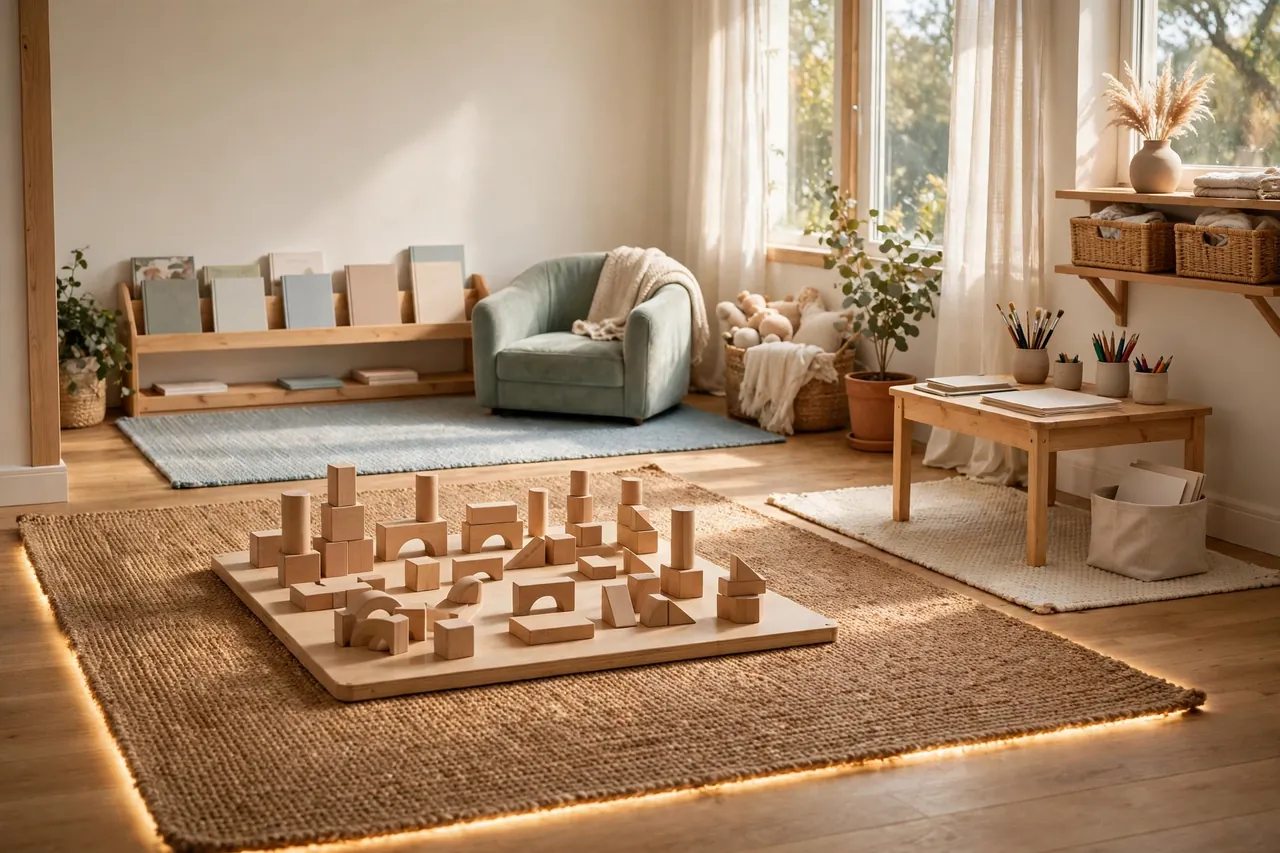
Mark each zone in a way kids can see. A rug under the building area, a small table for art, and a soft seat in the reading corner all act as clear borders. You do not need walls or dividers. A rug edge or a shelf turned sideways can define a zone just as well.
Put noisy, active zones away from quiet ones. Keep the building floor space and any ride-on toys far from the reading corner, so one kind of play does not spill into the other. Place the art zone on a floor you can wipe clean, and near a table, so paint and markers stay in one place.
Choose Storage That Fits How Kids Play
Good playroom storage follows one rule: the toy a child uses every day must sit where that child can reach it without help. If cleanup needs an adult to lift, unlock, or climb, the system will fall apart within a week.
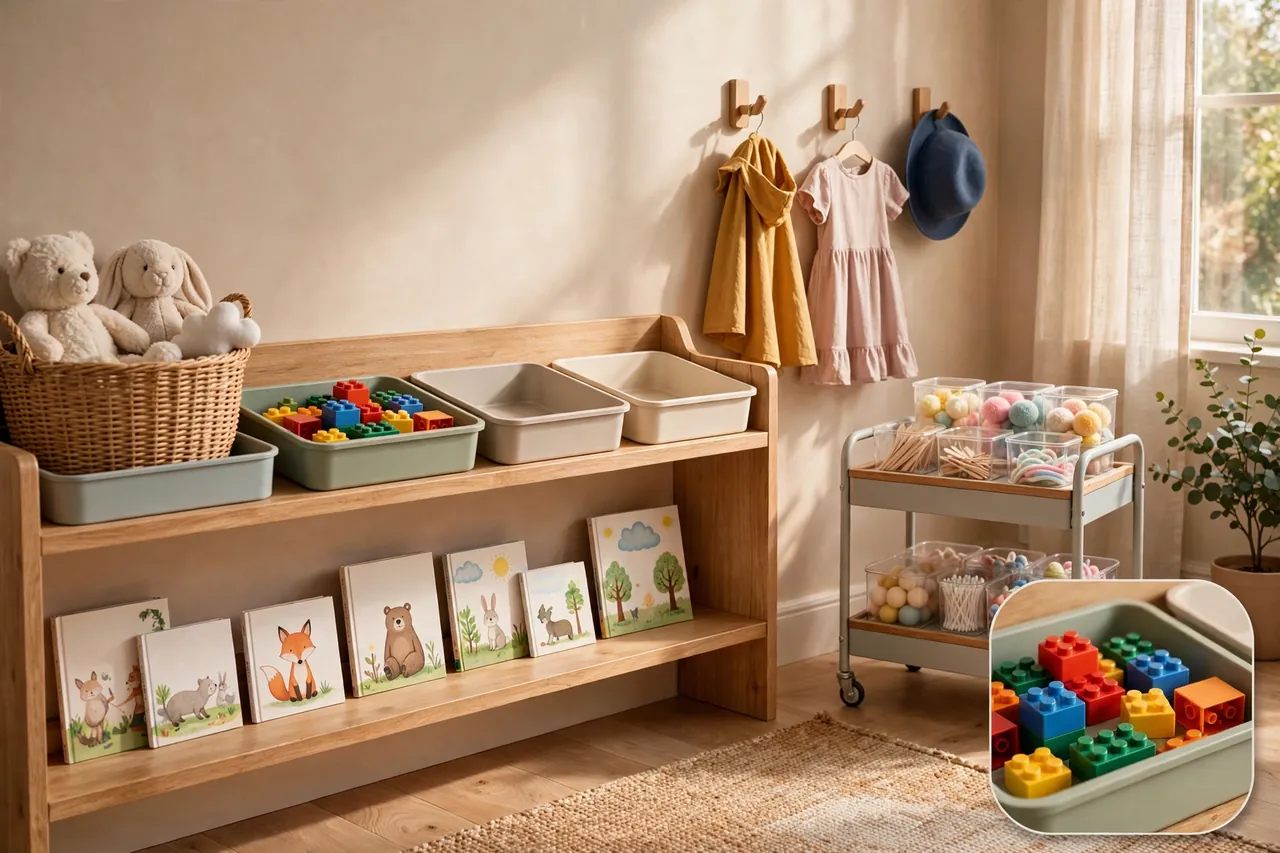
Low, open shelving with clear bins works well for most families. Open bins beat lidded boxes for daily toys, because little hands can grab and return toys fast. Deep tubs cause trouble too. Small pieces sink to the bottom, so kids dump the whole tub to find one car. Shallow bins and trays solve that problem, since kids can see what sits inside at a glance.
Match the container to the toy group:
- Building bricks: shallow bins or trays, plus a play mat that folds into a bag for fast cleanup.
- Stuffed animals: a large basket, a soft bin, or a hanging net, with a firm limit on how many live in the room.
- Dress-up clothes: a low rack or wall hooks, which beat a trunk where everything gets buried.
- Books: front-facing shelves, because young kids recognize covers faster than spines.
- Art supplies: small clear containers sorted by type, kept in a rolling cart or a carry caddy.
- Puzzles and games: zippered pouches labeled with the game name, which save space and replace broken boxes.
- Small pieces: higher shelves or a closed cabinet, out of reach until an adult brings them out.
Use one category per bin. The “everything bin” feels easy, but it hides toys and slows cleanup, because nobody knows where one toy ends and the next begins. One bin for cars, one for animals, and one for doll clothes keeps every search short.
Storage furniture can pull double duty. A bench with drawers gives kids a seat and hides bulky toys at the same time, and this guide to choosing a bench with drawer storage covers sizes and styles that suit a playroom. For whole-home ideas, these smart storage ideas for every room show how the same low-and-open logic works outside the playroom too.
Set Up a Toy Rotation System
Toy rotation means only part of the collection lives in the playroom at once. The rest waits in labeled storage, and you swap groups in and out every few weeks. Fewer toys out at once means faster cleanup, less clutter on the floor, and old toys that feel new again when they return.
Set the rotation up in four steps:
- Divide the kept toys into groups. Mix the types in each group, so every rotation has building toys, pretend toys, books, and art supplies.
- Pick one group to stay out. This group fills the zones you mapped earlier. Keep favorites out all the time if your kids play with them daily.
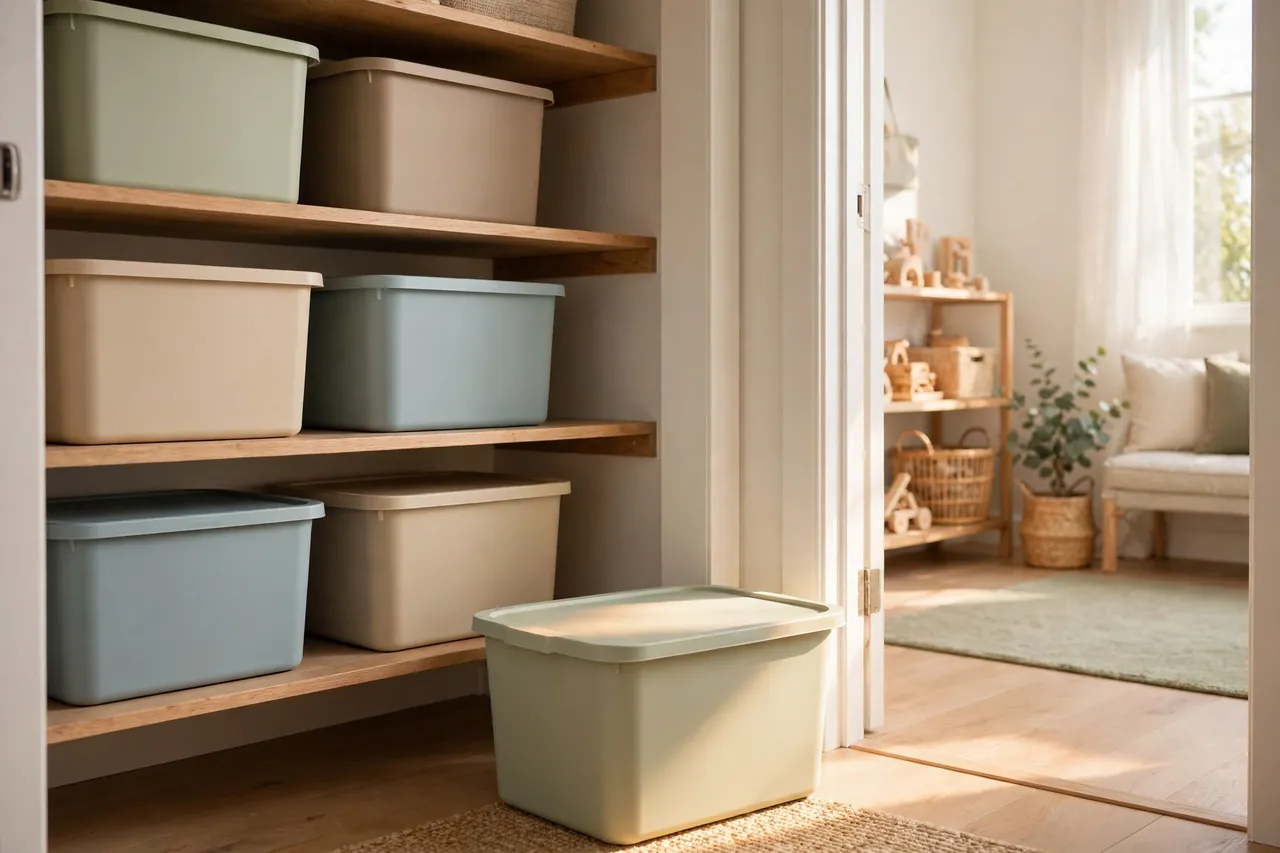
- Store the other groups in clear, labeled bins. A closet or a high shelf inside the home works better than a garage, where heat and damp can warp plastic and fade colors.
- Swap one group at a time. Trade a single group, not the whole room, so the change feels fresh without turning the room upside down.
Watch which toys nobody asks about. If a group comes back from storage twice and still gets ignored, it belongs in the donate pile. Rotation doubles as a quiet test of what your kids truly play with, and it keeps the room honest about its size.
Keep the rotation simple enough to run in ten minutes. If swapping toys needs a full afternoon and a spreadsheet, the system will not survive a busy month. One bin out, one bin in, labels facing forward, and the job is done.
Label Every Bin So Cleanup Runs Itself
Labels turn a bin into a clear instruction. Without them, every cleanup turns into a guessing game, and toys land wherever they fit. With them, anyone who uses the room — kids, grandparents, babysitters, and friends — can put a toy back in the right spot.
Use words and pictures together. Pre-readers follow a photo or a simple drawing of what belongs inside, and early readers get practice from the word beside it. A phone photo of the actual toys, printed small and taped to the bin, works better than a fancy label maker for this job.
Label the shelf spot too, not just the bin. When a bin leaves the shelf, its label stays behind and marks the empty home. That small detail stops bins from drifting to the wrong shelf over time.
Keep labels short and exact. “Cars” beats “vehicles and transportation toys,” and “doll clothes” beats “accessories.” Short labels are easier to read at a glance, and they leave no doubt about what goes inside.
Organize a Playroom in a Small Space
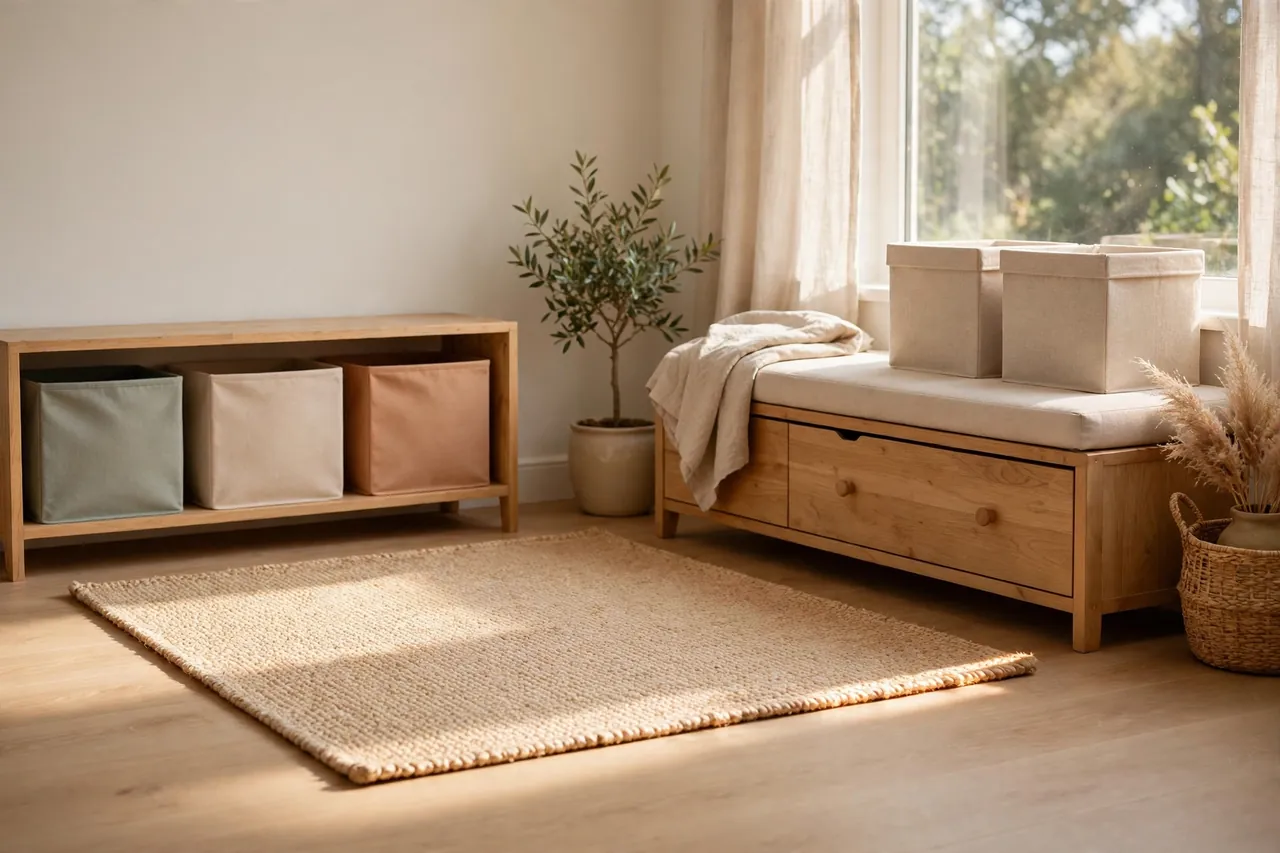
No spare room? The same system still works. A play corner needs only three things: a clear boundary, storage at kid height, and a small amount of open floor. A rug marks the boundary, a low shelf holds the bins, and the floor space in front stays clear for play.
Use the walls and the furniture you already own. Mount shelves or a pegboard above kid height for display and supervised items, and let the low shelf carry daily toys. A storage ottoman or a bench with drawers hides toys in plain sight and still works as seating for adults when guests visit.
Small spaces need stricter limits. One bin per toy group matters even more here, and rotation matters most of all, because a small room shows clutter faster than a big one. When a bin overflows, something leaves the room before anything new comes in.
If the play area shares a living room, pick closed bins that match the room and keep the rug as the visible border. The goal is a corner that looks planned when guests arrive, not a toy explosion across the whole room. For a full small-space setup, this guide to setting up a toddler play corner in a small home covers layouts that fit tight rooms, and these space-saving furniture ideas for small homes show pieces that store toys without eating floor space.
Keep the System Working Week After Week
A playroom system fails slowly, not all at once. One bin overflows, one shelf drifts out of place, and a month later the room looks like it did before. A short weekly reset stops that slide, and it works best when it stays a room job, not a big event.
Run a ten-minute reset once a week:
- Walk the zones. Return every stray toy to its labeled bin and every bin to its labeled shelf spot.
- Empty the reset basket. Keep one basket by the door for items that belong in other rooms, and carry it out during the reset.
- Check for overflow. Any bin that no longer closes or any shelf that no longer holds its bins needs an edit before the next week.
- Pull broken items out. Toss or repair broken toys right away, so they never drift back into the bins.
Run a bigger edit once a season. Check every bin, pull outgrown toys for donation, and refresh labels that have peeled or faded. Birthdays and holidays deserve an edit too, because new toys arrive fast and the room only holds what its bins can hold. For whole-home habits that support this reset, these home organization ideas and these easy home organization tips keep the rest of the house on the same system.
Let the room grow with your kids. Swap bin contents as interests change, move the art table up in size when crafts grow bigger, and turn a building zone into a homework spot when schoolwork needs the table. Modular shelves and bins that swap contents make these changes cheap, because the system stays the same while the toys inside it change.
Safety First: Anchor Heavy Furniture Before You Fill It
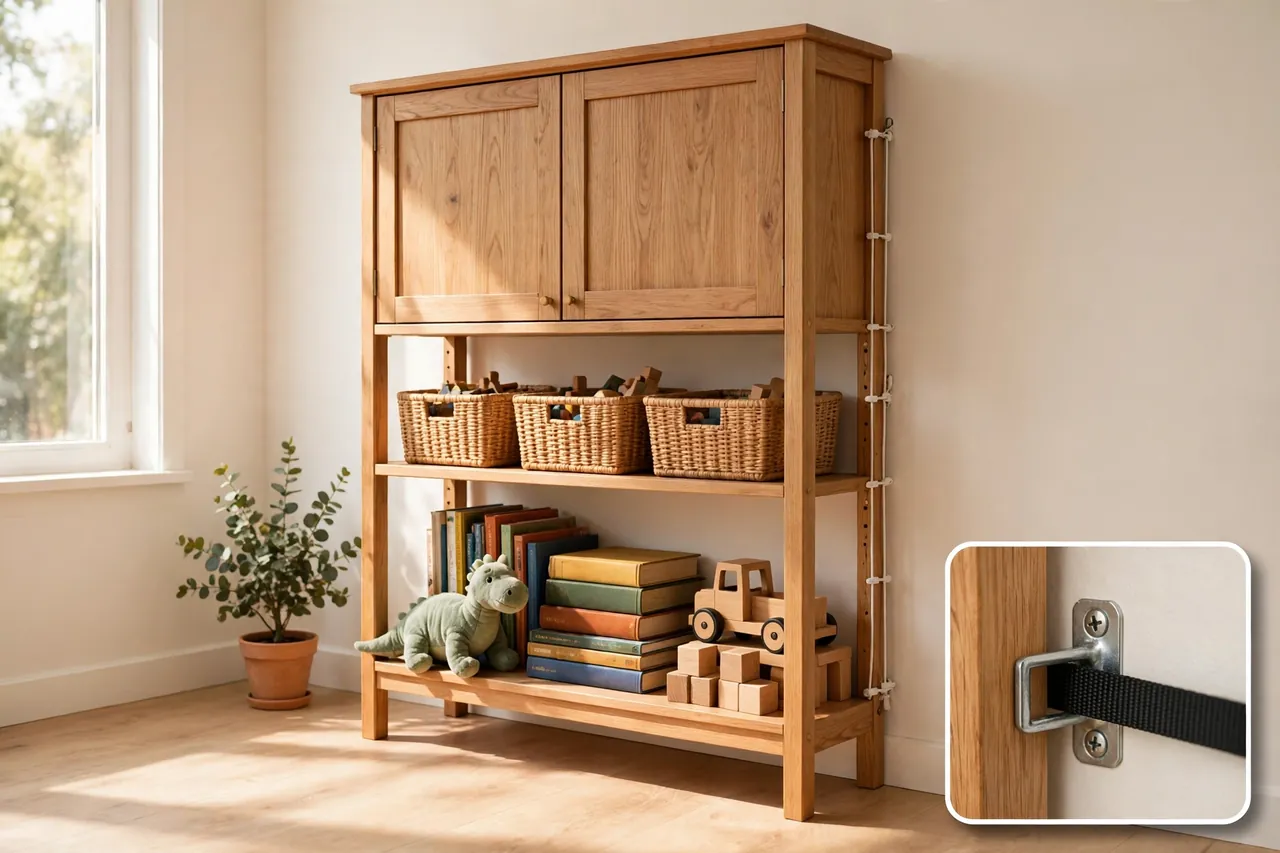
Finish the safety steps before you fill the shelves. Kids climb, pull drawers open like steps, and reach for toys stored up high. A tall shelf or bookcase that looks stable can tip forward when a child climbs it, so anchoring comes first, not last.
Anchor every tall shelf, bookcase, dresser, and TV stand to the wall, and follow the hardware instructions for your wall type. The U.S. Consumer Product Safety Commission’s Anchor It! guidance tells families to secure TVs and furniture, place TVs on sturdy low bases, and keep tempting items like toys off the tops of furniture so kids have no reason to climb. The American Academy of Pediatrics’ reporting on furniture tip-over safety standards notes the same core steps: anchor heavy furniture, keep heavier items low, and keep cords out of reach.
Place heavy toys and books on the lowest shelves, and keep small parts, paints, and messy supplies up high or in a closed cabinet. Cover unused outlets, clear cords from walkways, and leave open floor space around active zones so kids can move without tripping over bins. A safe room is part of the organization system, not an extra step after it.
Note: every home and every child differs, so treat this guide as general room setup advice. For wall types you are unsure about, or furniture that feels unstable even after anchoring, ask a qualified installer for help before kids use the room.
Related Guides
How to Organize Room: A Simple System That Works in Any Room · Coat Closet Organization
Frequently Asked Questions
How do I organize toys in a playroom?
Sort toys into groups, set up one play zone per activity, and give each group a low, open bin with a word-and-picture label. Keep daily toys at child height, store small-piece and messy items higher up or in a closed cabinet, and rotate the rest so only part of the collection sits out at once.
What is the best storage for a playroom?
Low, open shelving with clearly labeled bins works well for most families. Add shallow bins for building toys, a rack or hooks for dress-up clothes, front-facing shelves for books, and a few higher or closed spots for messy or small-piece items that need adult supervision.
How many toys should be out at once?
There is no perfect number. A good guide is to keep out only what your kids can put away on their own in a few minutes, and rotate the rest. If cleanup feels impossible or every bin overflows, too many toys sit out, and the room needs another edit.
How often should I rotate toys?
Every few weeks works well for most families. Swap one group at a time rather than the whole room, keep daily favorites out all the time, and store the rest in clear, labeled bins. If a group returns twice and nobody plays with it, donate it.
How often should we declutter toys?
Run a quick check every season, and a bigger edit before birthdays and holidays, when new toys are likely to arrive. Pull broken toys out right away, donate outgrown toys in good shape, and re-check any bin that overflows, since overflow signals that the room holds too much.
Start with the toy edit this weekend, and let the zones and bins follow from what you actually keep. A playroom that cleans up in ten minutes is not a lucky room. It is a room where every toy has one home, every home has a label, and only part of the collection sits out at once.