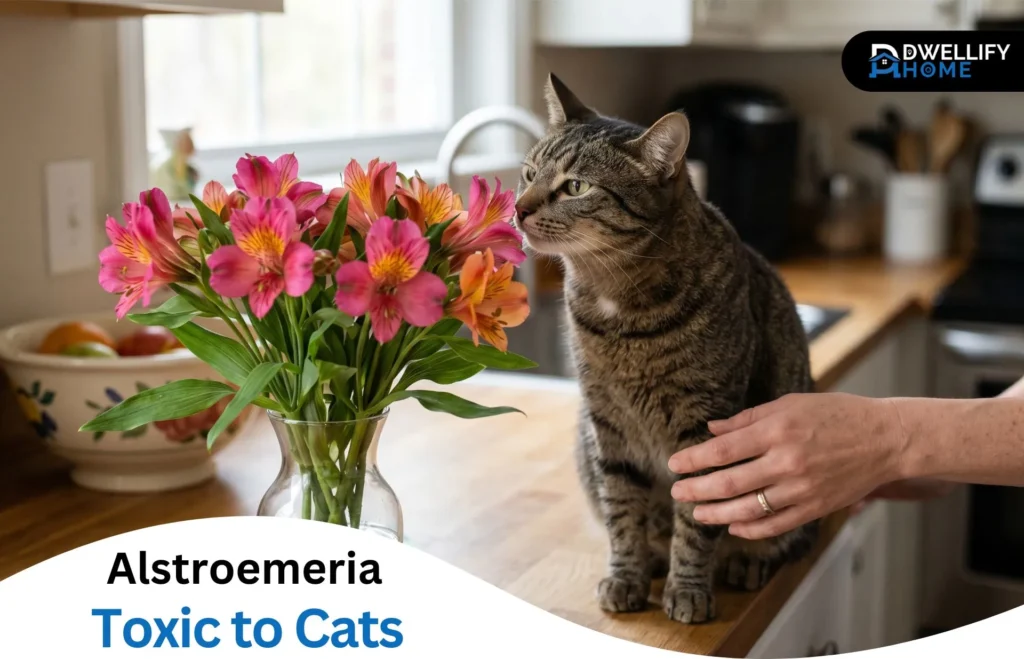
Phone calls about flower bouquets are some of the most common ones we field at the clinic, especially around Mother’s Day, Valentine’s, and birthdays. The conversation usually goes the same way. A worried owner has just brought home a beautiful arrangement, the cat got curious, and now they’re staring at a chewed petal on the kitchen floor wondering if they need to rush to the emergency vet.
Alstroemeria comes up in those calls a lot. It’s everywhere in supermarket bouquets and florist arrangements because it lasts forever in a vase. So let’s clear up exactly what cat owners need to know about this flower, what happens if your cat nibbles on it, and how to actually keep your home safe without giving up flowers altogether.
Mission Statement
At Dwellify Home, we help homeowners create spaces that are stylish, practical, and genuinely livable. From décor choices to garden planning and everyday home solutions, our goal is to give clear, honest guidance that supports informed decisions and the people, plants, and pets you share your home with.
Quick Answer: Is Alstroemeria Toxic to Cats?
Here’s the short version: alstroemeria is mildly toxic to cats, not life-threatening like true lilies. A cat that licks or chews a petal will usually be uncomfortable, not in danger.
You may see conflicting information online. The ASPCA lists Peruvian lily as non-toxic, while the Pet Poison Helpline classifies it as mildly toxic. Both are right in their own way. The plant won’t cause kidney failure or death, but it can absolutely upset your cat’s stomach and irritate their skin or mouth.
So if your cat just had a quick taste, take a breath. Watch them closely, but you’re most likely not facing an emergency.
Alstroemeria vs. True Lilies: Quick Comparison for Cat Owners
| Factor | Alstroemeria (Peruvian Lily) | True Lilies (Lilium / Hemerocallis) |
| Toxicity Level | Mild | Severe |
| Toxic Compound | Tulipalin A | Unknown nephrotoxin |
| Main Symptoms | Vomiting, drooling, skin irritation | Kidney failure, collapse |
| Recovery Time | 12–24 hours | Often fatal without treatment |
| Emergency Vet Needed? | Rarely | Always, immediately |
| Safe in Bouquets? | Low risk | Never |
Key Takeaways for Cat Owners
- Alstroemeria is irritating but not life-threatening to cats
- Tulipalin A causes the digestive and skin reactions
- Symptoms usually clear within a day with simple supportive care
- Mixed bouquets often hide more dangerous flowers alongside it
- Cat-safe alternatives include roses, sunflowers, snapdragons, and orchids
Understanding Alstroemeria: The Flower Behind the Confusion
Alstroemeria is a flowering plant native to South America, specifically the Andes region. It produces clustered, trumpet-shaped flowers in shades of pink, orange, white, red, purple, and yellow, often with darker streaks running through the petals.
What makes it so popular is its vase life. Cut alstroemeria can stay fresh for two weeks or longer, which is why florists love it and why you’ll find it tucked into almost every mixed bouquet sold today.
Common Names You May See on Bouquets and Plant Tags
Florists rarely use the word “alstroemeria” on packaging. You’re more likely to see it labeled as something familiar-sounding. Watch for these names:
- Peruvian lily
- Lily of the Incas
- Princess lily
- Inca lily
- Parrot lily
They all refer to the same plant. This naming confusion is exactly why so many cat owners panic when they hear “lily.”
Why It’s Often Mistaken for a True Lily
The flower has a vague trumpet shape and the word “lily” stuck to its common name centuries ago. Botanically, though, it’s not in the true lily family at all. It belongs to the Alstroemeriaceae family, which is genetically closer to plants like daylilies and tulips than to the dangerous Lilium species cats need to avoid.
That single piece of confusion has saved a lot of cats from unnecessary emergency visits and caused others to be ignored when they shouldn’t have been.
Alstroemeria vs. True Lilies: The Critical Difference Cat Owners Must Know
This is the most important distinction in this whole article, so I’ll be direct.
True lilies, meaning plants in the Lilium and Hemerocallis genera, are extremely toxic to cats. Even brushing against the pollen and grooming it off can trigger acute kidney failure within 24 to 72 hours. Two petals or a sip of vase water has been enough to kill cats I’ve seen.
Alstroemeria does not do this. It contains a different compound entirely and works on the body in a different way. The reaction is local irritation and digestive upset, not organ failure.
That said, never assume a flower is safe based on the word “lily” in its name. Always check the Latin name on the plant tag. Lilium and Hemerocallis are the dangerous ones. Alstroemeria is not.
What Makes Alstroemeria a Risk to Cats
The plant isn’t harmless, just less harmful than its more dangerous cousins. The risk comes from a specific irritant compound the plant produces as a natural defense.
The Role of Tulipalin A
The active irritant in alstroemeria is tulipalin A, the same compound found in tulips and hyacinths. It’s a natural chemical the plant produces to protect itself from being eaten.
When your cat chews or rubs against the plant, tulipalin A is released and causes contact irritation in the mouth, throat, and stomach lining. In some cats, it also triggers a skin reaction called irritant dermatitis, sometimes a day or two after contact.
The good news is the compound doesn’t accumulate in the body or damage internal organs. The bad news is it can make a cat genuinely miserable for a day or so.
Which Parts of the Plant Are Most Harmful
The highest concentration of tulipalin A sits in the bulbs and roots, which is why florists who handle the plant for years sometimes develop their own form of dermatitis on their hands. For cats, the more accessible parts matter more.
The petals, leaves, and stems all contain enough irritant to cause symptoms if chewed. Cut flowers in a vase still pose a risk, both from the plant itself and from any vase water that’s been sitting with the stems.
Symptoms of Alstroemeria Exposure in Cats
The reactions I’ve seen in clinic fall into three predictable patterns. Knowing what to look for helps you separate a mild reaction from something that needs a real vet visit.
Digestive Reactions to Watch For
These are the most common signs after ingestion:
- Drooling more than usual
- Vomiting, sometimes with bits of flower visible
- Diarrhea, occasionally loose for a day
- Loss of appetite for a meal or two
- Lethargy or hiding behavior
Most cats clear these symptoms on their own within 12 to 24 hours.
Skin and Mouth Irritation Signs
Some cats develop a red, irritated patch on the lips, gums, or paws. You may notice them pawing at their mouth, licking obsessively at one spot on their leg, or shaking their head. The reaction can show up immediately or develop a couple of days later, which catches people off guard.
How Quickly Symptoms Usually Appear
Digestive signs usually start within 30 minutes to a few hours of ingestion. Skin reactions can take longer, sometimes appearing 24 to 48 hours after contact.
If you see these signs but your cat is otherwise alert, eating eventually, and drinking water, you’re typically dealing with a self-resolving issue. Persistent vomiting, dehydration, or refusal to eat for more than a day deserves a phone call to your vet.
What to Do If Your Cat Eats or Touches Alstroemeria
Acting quickly and calmly makes the biggest difference. Panicking owners sometimes do things that make the situation worse, like trying to induce vomiting at home.
Immediate Steps to Take at Home
Here’s what I tell owners when they call:
- Remove the flowers and any plant pieces from your cat’s reach right away
- Gently wipe your cat’s mouth and paws with a damp cloth to remove plant residue
- Offer fresh water, but don’t force it
- Take a clear photo of the flower or save a piece in a bag for identification
- Note the time of exposure and roughly how much they ate
Don’t try to make your cat vomit unless a vet specifically tells you to. Hydrogen peroxide and salt water are both unsafe for cats and can cause serious harm.
When to Contact a Vet or Pet Poison Helpline
Call your vet or a poison helpline if your cat is showing repeated vomiting, can’t keep water down, has visible swelling around the mouth, becomes very weak, or you simply aren’t sure what they ate. The Pet Poison Helpline and ASPCA Animal Poison Control both run 24/7 lines for situations exactly like this.
When you call, have the plant name ready, your cat’s weight, and a rough estimate of how much was ingested. That information speeds up the advice you get.
How Veterinarians Typically Treat Alstroemeria Exposure
Most cats brought in for alstroemeria exposure don’t need aggressive treatment. The standard approach is supportive care — fluids if the cat is dehydrated from vomiting, an anti-nausea injection to settle the stomach, and sometimes a bland diet recommendation for a couple of days.
If a skin reaction is severe, a short course of anti-inflammatory medication may be prescribed. Hospitalization is rare and usually only happens if the cat ate a large amount or has an underlying health condition that complicates recovery.
The contrast with a true lily case is night and day. With a true lily ingestion, we’re talking IV fluids for 48 to 72 hours, kidney monitoring, and often an emergency referral.
The Hidden Risk: Alstroemeria in Store-Bought Bouquets
This is where most exposures actually happen. Someone receives flowers, sets them on a coffee table, and the cat treats them like a salad bar that night.
Mixed bouquets are tricky because alstroemeria is rarely the most dangerous flower in the arrangement. Bouquets often contain true lilies, baby’s breath, or carnations alongside it, and any of those can be more concerning than the alstroemeria itself.
My honest advice to clients: assume every bouquet is risky until you’ve identified every single stem in it. Ask your florist for a written list of contents if you’re unsure.
How to Cat-Proof Your Home Around Alstroemeria
Keeping flowers in the house with a cat takes a bit of planning. The cats most likely to investigate are usually the young, bored, or recently adopted ones who haven’t yet learned the rules of their new environment.
A few things that genuinely work:
- Place bouquets in rooms your cat doesn’t access, like a home office with the door shut
- Use tall vases on stable, high surfaces rather than coffee tables
- Don’t leave fallen petals on the floor for your cat to find later
- Refresh vase water daily and keep the container covered when possible
- Watch your cat’s behavior the first hour after new flowers arrive
Cats who show strong interest in flowers usually keep showing it. Once you know your cat is a flower-chewer, plan accordingly.
Safe Flower Alternatives to Alstroemeria for Cat Owners
The good news is plenty of pretty cut flowers are genuinely safe around cats. These are the ones I confidently recommend to clients with curious pets:
- Roses, with thorns removed
- Sunflowers
- Snapdragons
- Gerbera daisies
- Orchids
- Freesia
- Statice
- Stock
- Waxflower
When ordering, ask for a “cat-safe” or “pet-friendly” bouquet specifically. Many florists now offer these as standard options.
Growing Alstroemeria Outdoors When You Own a Cat
Outdoor exposure is generally less risky than indoor exposure. Cats roaming a garden have many distractions and rarely zero in on alstroemeria the way they might on a single bouquet sitting at nose level on the dining table.
That said, plant the flowers in a raised bed or in a section of the garden your cat doesn’t frequent. Avoid planting them right next to a sunny patio spot where your cat naps, and clean up fallen blooms regularly.
If you’re a serious gardener with multiple alstroemeria plants, wear gloves when handling them. The contact dermatitis from repeated exposure is something gardeners learn the hard way.
Common Myths About Alstroemeria and Cat Safety
A few persistent myths come up over and over:
- “It’s listed as non-toxic, so it must be totally safe.” Non-toxic in pet databases usually means non-life-threatening, not symptom-free.
- “Cats won’t eat flowers if they’re not hungry.” Plenty of well-fed cats chew plants out of pure curiosity or boredom.
- “Vase water is harmless.” Stagnant flower water can carry bacteria and dissolved plant compounds that cause stomach upset.
- “Indoor cats are safe from plant toxicity.” Most plant exposures we treat happen indoors, not outdoors.
Treating these myths skeptically tends to keep cats safer.
Frequently Asked Questions
Can a small lick of an alstroemeria petal hurt my cat?
Usually not. A small lick may cause mild drooling or no reaction at all. Keep an eye on them for a few hours.
My cat drank water from the vase. Is that dangerous?
It can cause stomach upset but isn’t typically an emergency. Offer fresh water and watch for vomiting.
How long does alstroemeria irritation last in cats?
Digestive symptoms usually clear within 12 to 24 hours. Skin reactions may take a few days to fully resolve.
Are dried alstroemeria flowers still toxic?
Yes, the irritant compound remains active in dried plant material, so dried arrangements can still cause symptoms.
Is alstroemeria pollen dangerous like true lily pollen?
No. Alstroemeria pollen is not associated with kidney failure the way true lily pollen is.
How can I keep my cat away from alstroemeria?
Place bouquets in rooms your cat can’t access, use tall vases on stable high surfaces, and pick up fallen petals quickly. Cats with a history of chewing flowers should never be left alone with any arrangement.
What are the most toxic flowers to cats?
True lilies (Lilium and Hemerocallis species) are the most dangerous and can cause kidney failure. Other high-risk flowers include tulips, daffodils, hyacinths, oleander, azaleas, and lily of the valley.
Are all types of alstroemeria toxic?
Yes, all alstroemeria varieties contain tulipalin A in their petals, leaves, stems, and bulbs. The toxicity level stays mild across colors and cultivars, but every type can cause irritation if chewed.
Can cats have lemons?
No. Lemons and other citrus fruits contain essential oils and psoralens that are toxic to cats, causing vomiting, diarrhea, and in some cases nervous system effects. Keep citrus peels and juice out of reach.
What should I do if my cat ate a piece of alstroemeria?
Remove the plant, wipe your cat’s mouth with a damp cloth, offer fresh water, and watch for vomiting or drooling. Call your vet or the Pet Poison Helpline if symptoms persist or worsen.
Final Thoughts: Keeping Your Cat Safe Without Sacrificing Beauty
You don’t have to live in a flower-free home just because you share it with a cat. Knowing that alstroemeria is mildly toxic to cats but not deadly takes a lot of the panic out of owning these flowers and lets you make calm, informed decisions instead.
Watch for the symptoms, keep arrangements out of reach, and switch to confirmed cat-safe flowers when you want to be fully relaxed about it. The cats I’ve seen recover from alstroemeria exposure all had one thing in common: owners who paid attention quickly and acted without panicking. That’s really the whole game.
Disclaimer
This article is provided for general informational purposes only and does not replace professional veterinary advice. Individual situations, pet health histories, and reactions may vary. If you suspect your cat has been exposed to a toxic plant, contact your veterinarian or a qualified pet poison helpline right away.