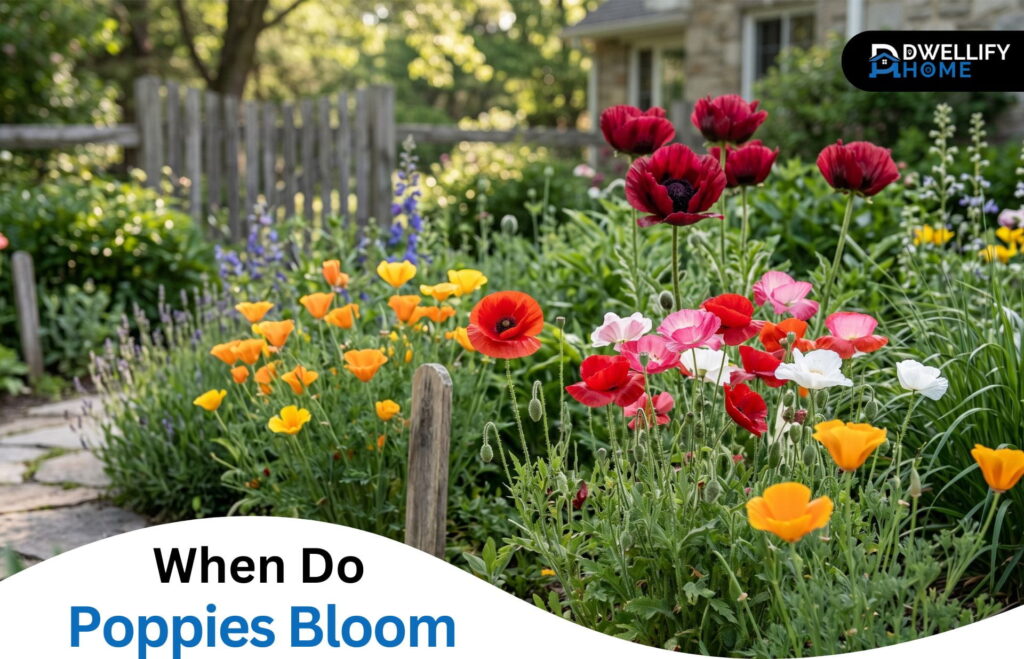
Poppies have a way of catching you off guard. One morning the bed looks like nothing but feathery green foliage, and the next, dozens of crinkled silk petals are unfurling toward the sun. After growing them across half a dozen climates and more varieties than I can count, I’ve learned that the question of when do poppies bloom doesn’t have a single tidy answer.
The bloom window depends on which poppy you’re growing, where you live, and what kind of winter and spring you’ve just had. Some varieties open in late February in warm regions. Others wait until late June in cooler zones. Knowing what to expect is the difference between disappointment and a garden that delivers exactly when you’re hoping it will.
This guide walks through every angle that actually matters — variety, region, season length, and the small things that quietly shift bloom times by weeks.
Snippet-Ready Definition
Most poppies bloom from mid-spring through early summer, usually between April and June. California poppies peak in March and April, Oriental poppies flower in late May and June, and Iceland poppies bloom longest in cool climates.
Mission Statement
At Dwellify Home, we help homeowners make practical, stylish, and informed decisions for every part of their living space — from modern interiors and home solutions to gardens, outdoor areas, and lifestyle choices. Our goal is to make trusted home guidance feel approachable and genuinely useful.
When Do Poppies Bloom? The Quick Answer
Most poppies bloom from mid-spring through early summer, with the heaviest flowering happening between April and June across most of the United States. In warmer regions, you can see blooms as early as February. In cooler northern zones, peak bloom often pushes into late June or even early July.
The reason answers vary so much online is that “poppy” covers a wide group of plants. Annual poppies, perennial Oriental poppies, Iceland poppies, and California poppies each have their own internal clock. Once you know which type you’re dealing with, the timing becomes predictable.
Quick Bloom Time Reference
| Poppy Variety | Peak Bloom Window | Bloom Duration |
| California Poppy | Mid-March to May | 6–10 weeks |
| Oriental Poppy | Late May to June | 10–14 days |
| Iceland Poppy | Late spring to summer | 6–8 weeks |
| Shirley / Corn Poppy | May to June | 4–6 weeks |
| Breadseed Poppy | Early to mid-summer | 2–3 weeks |
Key Takeaways
- Most poppies bloom from April through June across the United States and Europe
- California poppies are the earliest, often starting in late February in warm regions
- Oriental poppies are perennials and bloom for only 10 to 14 days each year
- Cool nights, full sun, and winter rainfall all influence bloom timing
- Fall sowing produces stronger plants and earlier spring blooms
Poppy Bloom Times by Variety
California Poppies (Eschscholzia californica)
California poppies are the early risers of the family. In their native range, blooming usually starts in mid-March and peaks through April and May. In warm coastal areas, I’ve seen the first blooms appear as early as late February.
They keep going as long as nights stay cool and the soil holds some moisture from winter rains. Once the heat settles in, the show winds down, though they often surprise gardeners with a second flush in fall if temperatures drop again.
Oriental Poppies (Papaver orientale)
Oriental poppies are the showstoppers, but they’re also the most patient. They bloom in late spring to early summer — typically late May through June, sometimes stretching into July in cooler northern gardens.
Each plant only flowers for about ten to fourteen days, then the foliage yellows and disappears entirely by midsummer. First-time growers often think the plant has died. It hasn’t. The roots are dormant, and new leaves return in early fall.
Iceland Poppies (Papaver nudicaule)
Iceland poppies have one of the longest bloom seasons of any poppy. In cool climates, they flower from late spring well into summer, and in milder regions they can bloom from early spring through to fall if temperatures stay friendly.
They struggle in heat. If you garden somewhere with hot, humid summers, treat them as a cool-season annual and enjoy them in spring before the weather turns.
Shirley and Corn Poppies (Papaver rhoeas)
These are the classic red poppies most people picture — the same flower used as the symbol of remembrance. Sown in fall or very early spring, they bloom from late spring into early summer, usually May through June.
Their bloom window lasts roughly four to six weeks. Deadheading helps stretch it, but in regions with hot summers, they finish quickly once temperatures climb above the mid-80s.
Breadseed Poppies (Papaver somniferum)
Breadseed poppies bloom slightly later than Shirley poppies, typically peaking in early to mid-summer. They have a short but intense flowering period — often just two to three weeks — followed by the ornamental seed pods that many gardeners actually grow them for.
In warmer southern climates, fall sowing produces blooms by late April. In cooler zones, expect flowers in June or early July.
When Do Poppies Bloom by Region
California and Warm Western States
California sees the earliest poppy displays in the country. Wild blooms can begin in mid-February in low-elevation deserts, with the famous Antelope Valley peak typically falling between mid-March and mid-April. Higher elevations bloom later, sometimes into May.
Garden poppies in California follow a similar pattern, with bloom timing tied closely to winter rainfall. A wet winter often means a heavier and earlier bloom the following spring.
North Carolina and the Southeast
In North Carolina, fall-sown poppies start blooming in April and finish by late May or early June, before the humid heat takes over. The corn poppies you see along Southern interstates are usually in peak form during this window.
Summer heat is the limiting factor here. Once daytime temperatures stay consistently above 85°F, most poppies stop flowering and set seed.
Michigan, the Midwest, and Northern States
Michigan and other northern states see poppies later. Most varieties bloom from late May through June, with Oriental poppies often peaking around the second or third week of June. Some gardeners in cooler microclimates get blooms into early July.
Cold winters actually help here. Poppy seeds need a chill period to germinate well, and northern winters provide that naturally when seeds are sown in fall.
The UK and Cooler European Climates
Across the UK, poppies bloom from June through September, which is one of the longest bloom seasons anywhere. The mild summers suit them perfectly. Wild red poppies in fields and roadsides are usually at their best in late June and July.
Garden varieties like Oriental and Iceland poppies follow a similar pattern, often producing a second light flush in late summer if conditions stay cool.
How Long Do Poppies Bloom?
Lifespan of a Single Poppy Flower
An individual poppy flower is short-lived. Most blooms last between two and five days before the petals drop. Oriental poppies tend to give you the longest single-flower lifespan, while Shirley poppies sometimes drop their petals within a day, especially in warm or windy weather.
This is why poppies look so dynamic in the garden — yesterday’s flowers are gone, but new buds are opening every morning.
Length of the Overall Blooming Season
The bloom season for any single poppy plant typically runs three to six weeks. Annual poppies generally bloom longer than perennial ones because they produce continuous waves of buds. Oriental poppies, despite their drama, only bloom for about two weeks per year.
If you want a longer overall display, plant a mix of varieties. I usually combine Iceland, Shirley, and Oriental poppies in one bed, which keeps something flowering from late spring through midsummer.
Do Poppies Bloom All Summer or Into Fall?
Most poppies don’t bloom all summer. Heat is their natural off-switch. Once daytime highs stay consistently above the mid-80s, the plants stop producing buds and shift their energy into setting seed.
That said, a few situations bring poppies back into bloom in fall. In regions with cool autumns, self-seeded annual poppies sometimes germinate in late summer and produce a second flush in September or October. Iceland poppies and California poppies are most likely to do this. Oriental poppies, on the other hand, stay strictly dormant until the following spring.
Key Factors That Affect When Poppies Bloom
Temperature and Spring Weather
Cool nights and gradually warming days are the perfect combination. A cold, wet spring can delay blooms by two or three weeks. A warm, dry one pushes them earlier but often shortens the overall season.
Sunlight Exposure
Poppies need full sun to bloom well — at least six hours of direct light a day. In partial shade, plants might survive, but the flowers are smaller, fewer, and often won’t open fully on cloudy mornings.
Rainfall and Soil Moisture
Winter and early spring rainfall is the single biggest factor for wild poppies, especially California ones. A dry winter means a thin bloom or none at all. In garden settings, consistent moisture during the bud stage produces stronger, longer-lasting flowers.
Hardiness Zone and Location
Hardiness zone determines both your variety options and your bloom window. Oriental poppies thrive in zones 3 through 7 and struggle south of that. California poppies prefer zones 6 through 10. Knowing your zone keeps you from fighting nature.
How Long Do Poppies Take to Grow From Seed?
From germination to first bloom, most annual poppies take 60 to 90 days. Seeds sown in early spring usually flower by late May or June. Fall-sown seeds get a head start over winter and bloom earlier and stronger the following spring.
Perennial Oriental poppies are slower. Started from seed, they often won’t bloom until their second or even third year. There’s an old gardener’s saying — “first year sleep, second year creep, third year leap” — and Oriental poppies are a textbook example.
When to Plant Poppies for the Best Bloom
For most varieties, fall sowing produces the best results. Seeds settle in over winter, get the cold treatment they need, and germinate naturally in early spring. This timing leads to bigger plants and earlier flowers.
In zones 5 and colder, where fall-sown seeds sometimes wash out, I sow as soon as the ground can be worked in late winter or very early spring. Poppy seeds handle frost without trouble. The one mistake to avoid is sowing too late — poppies sown after the weather warms rarely bloom well, since they need cool temperatures to establish.
How Tall Do Poppies Grow When in Bloom?
Height varies a lot by variety. California poppies stay compact at about 8 to 12 inches. Iceland poppies usually reach 12 to 18 inches. Shirley and corn poppies grow 18 to 30 inches tall, while Oriental and breadseed poppies can stretch up to 3 or even 4 feet in good conditions.
Knowing the mature height matters when planning a bed. Tall poppies look best toward the back, with shorter varieties or companion plants in front to hide the foliage gap when they go dormant.
Where to See Poppies in Peak Bloom
The Antelope Valley California Poppy Reserve in Los Angeles County is the most famous wild poppy destination in the country. Peak usually falls between mid-March and mid-April, though it shifts each year with rainfall. Other places worth visiting in California include Walker Canyon at Lake Elsinore, Carrizo Plain National Monument, Anza-Borrego State Park, and Chino Hills.
One thing first-time visitors don’t always know: poppies close on cold, cloudy, or windy days. The best time to see them open is mid-morning to early afternoon on a sunny day. Always stay on marked trails — walking through the flowers compacts the soil and prevents future blooms in that spot.
How to Make Your Poppies Bloom Longer
A few practical habits stretch the bloom window noticeably:
- Deadhead regularly. Removing spent flowers before they set seed pushes the plant to keep producing buds.
- Water during dry spells, but don’t overdo it. Poppies prefer slightly dry soil over soggy roots.
- Avoid fertilizer. Rich soil grows leaves, not flowers. Compost worked in once at planting is plenty.
- Plant in succession. Sowing seeds two to three weeks apart in spring extends the overall bloom period across the bed.
Why Your Poppies Aren’t Blooming (and How to Fix It)
When poppies don’t bloom, the cause is usually one of a handful of things I see come up year after year.
Too much shade is the most common. Move them or thin out nearby plants. Overfertilizing is the second — high-nitrogen feed pushes leafy growth at the cost of flowers, so cut back or stop entirely. Young perennial poppies often skip their first year, which isn’t a problem, just patience.
Wet winter soil rots Oriental poppy roots before spring even starts, so check drainage. And finally, if you grew them from seed and they didn’t germinate, the seeds may have been buried too deep — poppy seeds need light to sprout and should sit right on the soil surface.
Caring for Poppies After They Finish Blooming
Once the flowers fade, the plant’s behavior depends on whether it’s annual or perennial. Annual poppies finish their cycle, set seed, and die back. Leave a few seed heads on if you want them to self-sow for next year.
Perennial Oriental poppies go dormant. Their foliage yellows and disappears by mid to late summer, leaving a bare patch. Plant something nearby that fills out later in summer to cover the space — Baby’s Breath, daylilies, or hardy geraniums work well. New foliage emerges in early fall and stays through winter, ready for the next spring’s display.
Frequently Asked Questions
Do poppies bloom every year?
Perennial poppies like Oriental varieties bloom every year once established and can keep going for decades. Annual poppies technically only live one season, but they self-seed so reliably that most gardeners see new plants returning each year without replanting.
What month do poppies bloom the most?
May and June are the peak bloom months across most of the United States and Europe. California poppies peak earlier, in March and April, while northern zones often peak in late June.
Will poppies bloom the first year from seed?
Annual poppies will bloom in their first year, usually 60 to 90 days after germination. Perennial Oriental poppies grown from seed typically don’t bloom until their second or third year.
Do poppies bloom more than once a season?
Most poppies have one main bloom period per year. With deadheading and cool weather, annual poppies can produce continuous waves of flowers for several weeks. Some varieties offer a small second flush in fall when temperatures drop.
What months do poppies flower?
Most poppies flower between April and June, with peak bloom in May. California poppies start earlier, often in March, while northern climates see peak bloom push into late June or early July.
Why is it illegal to grow poppies?
Most ornamental poppies are perfectly legal to grow. The restriction applies specifically to Papaver somniferum (opium poppy) when grown for narcotic extraction. Growing it as an ornamental flower or for culinary seeds is generally allowed in most regions, though laws vary by country and state.
Do poppies come back each year?
Perennial poppies like Oriental varieties return every year and can keep blooming for decades once established. Annual poppies technically die after one season but reseed themselves so reliably that new plants usually return on their own each spring.
Can I just sprinkle poppy seeds?
Yes. Poppy seeds need light to germinate, so sprinkling them on prepared soil and lightly pressing them in works better than burying them. Fall sowing gives the strongest spring blooms in most climates.
How long does a poppy bloom last?
A single poppy flower lasts two to five days, but the plant produces continuous waves of buds. Most varieties bloom for three to six weeks total, though Oriental poppies finish in just under two weeks.
Conclusion: Knowing When to Expect Your Poppies to Bloom
The honest answer to when do poppies bloom comes down to two things: which variety you’re growing and the climate you’re growing it in. Once you know those, the timing becomes far less mysterious — and much easier to plan around.
Pick varieties that match your zone, sow at the right time, and let the plants do what they do best. A good poppy patch rewards patience with one of the most striking displays any garden can produce.
Disclaimer
The information in this article is provided for general informational purposes only. Bloom times, growing conditions, and plant performance can vary based on climate, soil, region, and individual care. Readers should consider their local conditions and consult a qualified horticulturist or local extension service for advice specific to their situation.