Some flowers carry too much meaning to throw away. The bouquet from a wedding, the single rose from an anniversary dinner, the garden bloom your grandmother grew, the funeral arrangement from someone you loved — these are the ones people bring to me wrapped in damp paper towels, hoping there’s still time.
And most of the time, there is. Knowing how to preserve a flower properly means you can hold onto something that mattered, long after the petals would have naturally faded. The trick is choosing the right method for the right flower — because what works beautifully for a sturdy rose can completely ruin a delicate tulip.
This guide walks you through every method I’ve used over the years, with honest notes on what works, what doesn’t, and what most beginners don’t realize until it’s too late.
Snippet-Ready Definition
Preserving a flower means removing its moisture or sealing it in place to keep its shape and color long after it would naturally fade. People preserve flowers to save sentimental bouquets, decorate their homes, or create lasting keepsakes from special moments.
Mission Statement
At Dwellify Home, we help homeowners make practical, stylish, and informed décor decisions — from modern home solutions to garden, outdoor, and lifestyle ideas. Our goal is to share clear, trustworthy guidance that turns everyday spaces into homes you genuinely enjoy living in.
What to Know Before You Start
Timing is everything. Flowers preserve best when they’re still fresh — ideally within 24 to 48 hours of receiving them. Once the petals start to droop or brown at the edges, no method will fully bring them back. They’ll dry, but they’ll dry sad.
The bloom stage matters too. Catching a flower just before it fully opens gives you the best color retention. Fully opened blooms tend to lose more pigment as they dry, and overly tight buds may not open at all once the moisture is gone.
Moisture, sunlight, and air are the three things that fight you the entire process. Dry rooms are your friend. Direct sunlight is not. And good airflow during drying prevents the silent killer of preserved flowers — mold.
Quick Method Comparison
| Method | Time Needed | Best For | How Long It Lasts |
| Air Drying | 2–3 weeks | Sturdy flowers, full bouquets | 1–3 years |
| Pressing | 1–2 weeks | Frames, bookmarks, art | 5–10 years |
| Silica Gel | 2–7 days | Color and 3D shape | 2–5 years |
| Microwave | Minutes | Quick projects, flat blooms | 1–2 years |
| Glycerin | 2–3 weeks | Soft, pliable petals | Several years |
| Wax Dipping | Same day | Short-term display | 2–4 weeks |
| Resin | 1–3 days | Permanent keepsakes | A lifetime |
| Freeze-Drying | Professional | Wedding bouquets | 5–10+ years |
Key Reasons People Preserve Flowers
- To keep wedding, anniversary, or sentimental bouquets
- To create wall art, jewelry, or shadow box displays
- To extend the life of fresh-cut blooms for home décor
- To turn garden flowers into long-lasting keepsakes
- To save flowers from a meaningful moment or person
Choosing the Right Flower for the Right Method
Not every flower preserves the same way, and choosing wisely from the start saves a lot of disappointment.
Best Flowers for Drying
Roses, lavender, baby’s breath, hydrangea, and statice are the easiest to dry. Their petals have lower moisture content and tend to hold their shape and color through the process. Strawflowers and yarrow also dry beautifully if you can get your hands on them.
Best Flowers for Pressing
Flat-faced flowers with a single layer of petals press the best. Pansies, daisies, violets, ferns, cosmos, and small wildflowers come out clean and vibrant. Anything thick or rounded will fight you.
Flowers That Rarely Preserve Well
Tulips, lilies, begonias, and most fleshy-petaled flowers are tough cases. They hold too much water, mold easily, and often turn brown no matter what you do. They can sometimes work in resin if dried slowly with silica, but expect color shifts.
How to Preserve a Flower by Air Drying
This is the method most people start with, and for good reason — it costs nothing and works on most sturdy flowers.
Strip the lower leaves, bundle the stems with a rubber band (twine slips as the stems shrink), and hang the bunch upside down in a dark, dry, well-ventilated spot. A closet or unused room works well. Avoid bathrooms and kitchens — humidity ruins this method.
Give it two to three weeks. The petals should feel papery when ready. A light mist of unscented hairspray once they’re dry helps lock everything in place.
How to Preserve a Flower by Pressing
Pressing is the oldest method around, and the results can last for decades when done right. It’s perfect for bookmarks, frames, and pressed flower art.
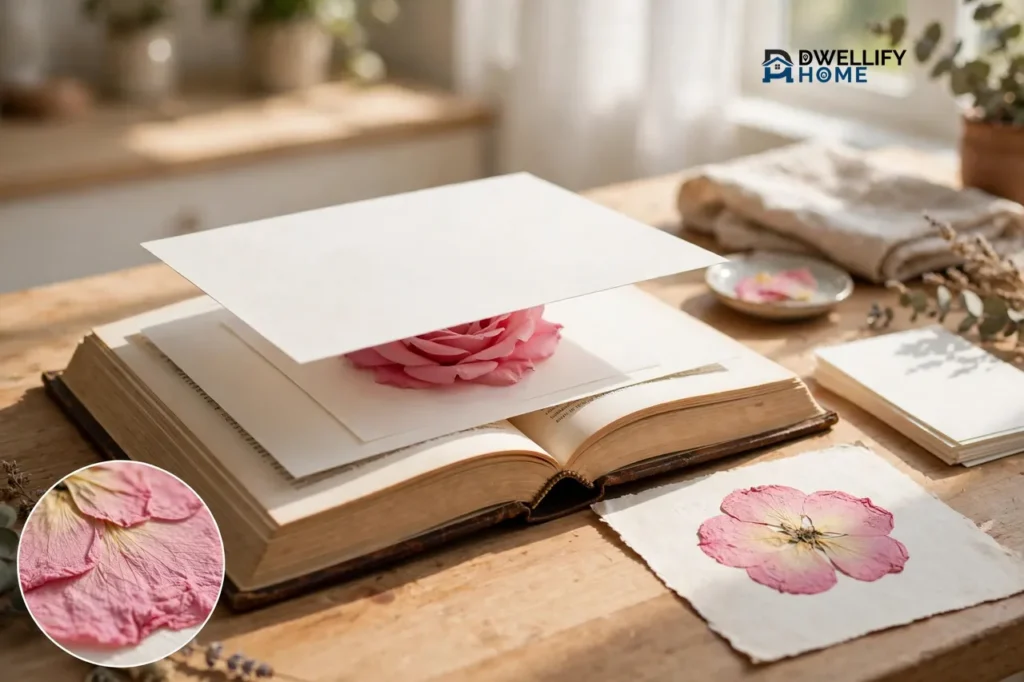
Place the flower between two sheets of parchment or absorbent paper — newspaper works, but plain printer paper gives cleaner results. Tuck the whole thing inside a heavy book, then stack more weight on top. Leave it for one to two weeks, swapping the paper if it feels damp on day three or four.
For thicker flowers like roses, slice them in half lengthwise before pressing. A dedicated wooden flower press gives more even pressure if you plan to do this often.
How to Preserve a Flower with Silica Gel
Silica gel is what I reach for when color and shape matter most. It pulls moisture out fast while keeping the flower’s three-dimensional form almost perfectly intact.
The Container Method
Pour an inch of silica gel into an airtight container. Trim the stem short, place the bloom face-up, and gently spoon more gel around and over the petals until fully covered. Seal the container and wait two to seven days, depending on the flower’s thickness.
The Microwave-Assisted Method
Same setup, but place the open container in the microwave at low power for one to two minutes. Check, then continue in 30-second intervals. Once dry, let the container cool with a loose lid for 24 hours before unburying the flower. This is how you preserve a flower in a hurry without losing color.
How to Preserve a Flower in the Microwave
For pressed-style results in minutes, microwave drying works well — but it’s the easiest method to ruin if you rush.
Place the flower between two paper towels on a microwave-safe plate. Run it on low power for 30 seconds at a time, checking after each round. Most flowers need one to three minutes total. Heavy or wet petals scorch quickly, so patience pays.
This works best for flat flowers like pansies and daisies. For round blooms, stick with silica gel.
How to Preserve a Flower with Sand
Before silica gel became common, fine sand was the go-to drying agent. It still works, especially for hardy flowers, and costs almost nothing.
Pour half an inch of clean, dry sand into a sturdy box. Lay the flower on top, then slowly trickle more sand around and over the petals until covered. Let it sit undisturbed for two to three weeks, then carefully pour the sand off.
Sand is heavier than silica, so it can flatten delicate petals. Use it for thick-stemmed, robust flowers — not anything fragile.
How to Preserve a Flower with Glycerin
Glycerin is the only method that keeps petals soft and pliable instead of papery. The flower stays bendy, almost like it’s still alive, and it’s a great answer for anyone wondering how to preserve flowers without resin.
Mix one part glycerin with two parts hot water until clear. Trim the stems at an angle and stand them in three to four inches of the solution. The flower drinks the mixture up over two to three weeks, replacing its water with glycerin.
Foliage like eucalyptus and ferns takes to this beautifully. Expect a slight color deepening — leaves often go olive-toned, and petals take on a softer, vintage feel.
How to Preserve a Flower with Wax
Wax dipping gives flowers a glossy, lifelike finish, but it’s a short-term method. Expect two to four weeks of beauty, not years.
Melt paraffin or soy wax to around 135°F — hot enough to coat, not hot enough to scorch. Hold the flower by the stem, dip the bloom in one smooth motion, lift, shake off the excess, and stand it upright to cool.
Soy wax is more forgiving, melts at a lower temperature, and cleans up with soap and water. Paraffin gives a slightly clearer coating but requires more care.
How to Preserve a Flower in Resin
Resin is how you turn a flower into something permanent. Done right, you get a glass-clear keepsake that holds its color for decades.
The flower must be completely dry first. Fresh flowers in resin will rot, brown, and ruin the piece — I’ve seen it happen too many times. Dry your flower with silica gel for the best color, then arrange it face-up in a silicone mold.
Use a deep-pour epoxy resin, mixed exactly to the manufacturer’s ratio. Pour slowly to minimize bubbles, and pop any that rise with a heat gun or toothpick. Cover the mold and let it cure for the full recommended time — usually 24 to 72 hours. Demold gently, and you’ve got a keepsake that’ll outlive you.
How to Preserve a Flower with Hairspray
Hairspray isn’t a preservation method on its own — it’s the finishing touch that makes the others last longer. Once a flower is fully dried by air, pressing, or silica gel, a light mist of unscented hairspray seals the petals against humidity and minor handling.
Hold the can about 12 inches away and apply two or three light coats, letting each dry for ten minutes. Skip this step on wax-dipped or resin-cast flowers — they’re already sealed.
Freeze-Drying — When to Choose a Professional Service
Freeze-drying is the gold standard for preserving wedding bouquets and heirloom-grade flowers. The process locks in color, shape, and even fragrance better than any DIY method.
The catch is the cost and equipment. Professional freeze-drying runs anywhere from $200 to $700 depending on bouquet size, and you’ll need to ship the flowers within days of your event. For brides preserving once-in-a-lifetime bouquets, it’s worth every dollar. For everything else, the methods above will do.
Which Method Should You Choose? (Quick Comparison)
Here’s how the methods stack up at a glance:
- Air drying — Free, slow (2–3 weeks), good shape retention, moderate color loss. Best for sturdy flowers and full bouquets.
- Pressing — Free, slow (1–2 weeks), flat results, good color. Best for art, frames, and bookmarks.
- Silica gel — Moderate cost, fast (2–7 days), excellent color and 3D shape. Best for single blooms and detailed flowers.
- Microwave — Free, very fast (minutes), variable results. Best for quick projects and flat flowers.
- Sand — Cheap, slow (2–3 weeks), good shape, moderate color. Best for hardy blooms.
- Glycerin — Moderate cost, slow (2–3 weeks), soft texture, deepened color. Best for foliage and pliable arrangements.
- Wax — Cheap, fast, vivid color, short lifespan (weeks). Best for events and short-term display.
- Resin — Higher cost, slow cure (days), permanent results. Best for keepsakes and jewelry.
- Freeze-drying — High cost, professional only, near-perfect results. Best for wedding bouquets.
How to Preserve Flowers Without Resin
Plenty of people prefer to skip resin — it’s chemical-heavy, takes practice, and isn’t beginner-friendly. The good news is you have plenty of alternatives.
Pressing gives you flat, frame-ready results. Glycerin keeps petals soft and lifelike. Wax dipping offers a glossy finish for short-term display. Air drying combined with hairspray makes a long-lasting bouquet. And sealed jars or shadow boxes protect dried flowers from dust and humidity beautifully.
For most sentimental keepsakes, a pressed flower in a frame or a dried bloom in a sealed jar holds up just as well as resin — without any of the mess.
Creative Ways to Display Preserved Flowers
How you display preserved flowers matters as much as how you preserve them. The right display protects them and turns them into something you’ll actually keep around.
In a Jar
A clear glass jar with a tight lid is one of the cleanest ways to display a single dried bloom. Tuck a small silica packet at the bottom to absorb stray humidity, and the flower stays vibrant for years. This works especially well for a single rose or a small bouquet — and it’s a popular answer to how to preserve flowers in a jar without overcomplicating things.
In a Frame or Shadow Box
Pressed flowers framed behind glass last longer than almost any other display. For fuller flowers, use a shadow box with a deeper rabbet so nothing gets crushed. Mount petals on acid-free paper with a tiny dab of glue, and keep the finished frame out of direct sunlight to prevent fading. This is exactly how to preserve flowers in frame the right way.
In a Vase
Some flowers, especially hydrangeas, dry beautifully right in the vase they came in. Let the water evaporate naturally instead of replacing it, and the petals dehydrate slowly while keeping their shape. It’s the simplest answer to how to preserve flowers in a vase — and it doubles as how to preserve fresh flowers for decoration with almost no effort.
How to Save Flowers From a Special Someone
The flowers that come from someone you love deserve special care. The most popular keepsake ideas I see are also the simplest.
Pressing the flowers and slipping them into a clear bookmark sleeve is a sweet, low-effort option — perfect for a single rose from a date. A shadow box filled with the dried bouquet from an anniversary or birthday holds up for years. Resin pendants or earrings made from small petals turn a wedding or engagement bouquet into wearable jewelry.
If you’ve been wondering how to save flowers from boyfriend gifts in a way that lasts, start by drying them quickly — within a day or two — and decide on the keepsake style afterward. Once they’re dry, you have time. Once they’re wilted, you don’t.
Common Mistakes That Ruin Preserved Flowers
A few small missteps cause most preservation failures, and almost all of them are avoidable.
- Waiting too long to start. Once flowers wilt, no method can fully recover them.
- Drying in humid or sunny rooms. Humidity invites mold; sunlight strips color.
- Skipping the sealant. Unsealed dried flowers shed petals at the slightest touch.
- Storing fresh flowers near fruit. Apples, bananas, and citrus release ethylene gas, which ages flowers fast.
- Using fresh flowers in resin. They’ll rot inside the cure and turn brown within weeks.
How Long Do Preserved Flowers Last?
Lifespan depends entirely on method and care. Realistic expectations help you choose:
- Air-dried flowers: 1 to 3 years displayed, longer if sealed and stored well.
- Pressed flowers: 5 to 10 years framed behind glass, sometimes far longer.
- Silica-dried flowers: 2 to 5 years if kept dry and out of sunlight.
- Resin-cast flowers: A lifetime, with no real expiration.
- Wax-dipped flowers: 2 to 4 weeks of peak beauty.
- Glycerin-preserved flowers: Several years, with a slightly deepened color.
- Freeze-dried flowers: 5 to 10 years or more, depending on display conditions.
How to Care for Preserved Flowers (Make Them Last Longer)
Once preserved, flowers need a little ongoing care to stay looking their best.
Keep them out of direct sunlight — UV light fades color faster than anything else. Avoid humid rooms, especially bathrooms. Dust them gently with a soft makeup brush or a hairdryer set to cool. If you used hairspray as a sealant, refresh the coat once a year.
Store seasonal pieces in acid-free tissue inside a sealed box. Small silica packets tossed in with them keep humidity at bay during long storage.
Frequently Asked Questions
Can I preserve a flower that’s already wilting?
You can try, but expect compromises. Wilting petals will dry into the wilted shape, and color loss is much steeper. Silica gel gives you the best chance of recovering some of the original look.
What’s the easiest method for beginners?
Air drying. There’s no equipment, no chemicals, and no real way to mess it up if you keep the flowers dry and out of sunlight.
Do preserved flowers keep their fragrance?
Most don’t. Drying removes the volatile oils that carry the scent. Freeze-drying retains the most fragrance, while wax dipping and resin remove it almost entirely. A drop of essential oil can refresh dried flowers if scent matters to you.
Can you preserve a single rose in a jar?
Yes, and it’s one of the prettiest displays you can make. Air dry the rose first, then place it in a sealed glass jar with a small silica packet. Done well, it lasts for years.
Is it safe to preserve flowers without chemicals?
Absolutely. Air drying, pressing, sand drying, and the dry-vase method all work without any chemicals at all — which is exactly how to preserve flowers naturally and how to preserve fresh flowers permanently using nothing but time and patience.
How do you permanently preserve flowers?
Resin and freeze-drying are the only truly permanent methods. Resin seals the flower in a clear cured shell that protects it from air, light, and moisture. Freeze-drying removes moisture while keeping the original shape and color almost perfectly intact.
What is the 3-5-8 rule for flowers?
The 3-5-8 rule is a floral arrangement guideline, not a preservation rule. It suggests grouping flowers in sets of 3, 5, or 8 stems for the most visually balanced look. It applies to bouquets and centerpieces, not to drying or preservation methods.
Can immunocompromised people keep preserved flowers nearby?
Dried and preserved flowers can collect dust and, if stored in humid spots, may develop mold. For anyone with a weakened immune system, sealed displays like jars, shadow boxes, or resin pieces are safer choices than open dried bouquets. A doctor’s input is always worth seeking.
What are the most common flower preserving mistakes?
Waiting too long to start, drying flowers in humid or sunny rooms, skipping a sealant like hairspray, storing fresh flowers near fruit (which releases ethylene gas), and placing fresh flowers in resin before they’re fully dry are the mistakes that ruin most preservation attempts.
Can you preserve a flower without any chemicals?
Yes. Air drying, pressing, sand drying, and the dry-vase method all work without chemicals. They rely only on time, gravity, and a dry environment to remove moisture naturally from the petals.
Choosing the Right Way to Preserve Your Flower
There’s no single best method — only the right one for the flower in your hands and the keepsake you want to make. A wedding bouquet calls for silica gel or freeze-drying. A pressed pansy from a garden walk wants a heavy book. A single rose from someone special might be happiest in a sealed jar or a small frame.
The real skill in learning how to preserve a flower isn’t the technique itself — it’s matching the method to the moment. Start with what you have, choose based on how long you want it to last, and trust the process. The flower already meant something. Now it gets to keep meaning something.
Disclaimer
The information in this article is for general informational purposes only. Individual results may vary based on flower type, environment, materials used, and technique. Always test methods on a small sample first, and consult a professional preservation service for high-value or irreplaceable flowers.