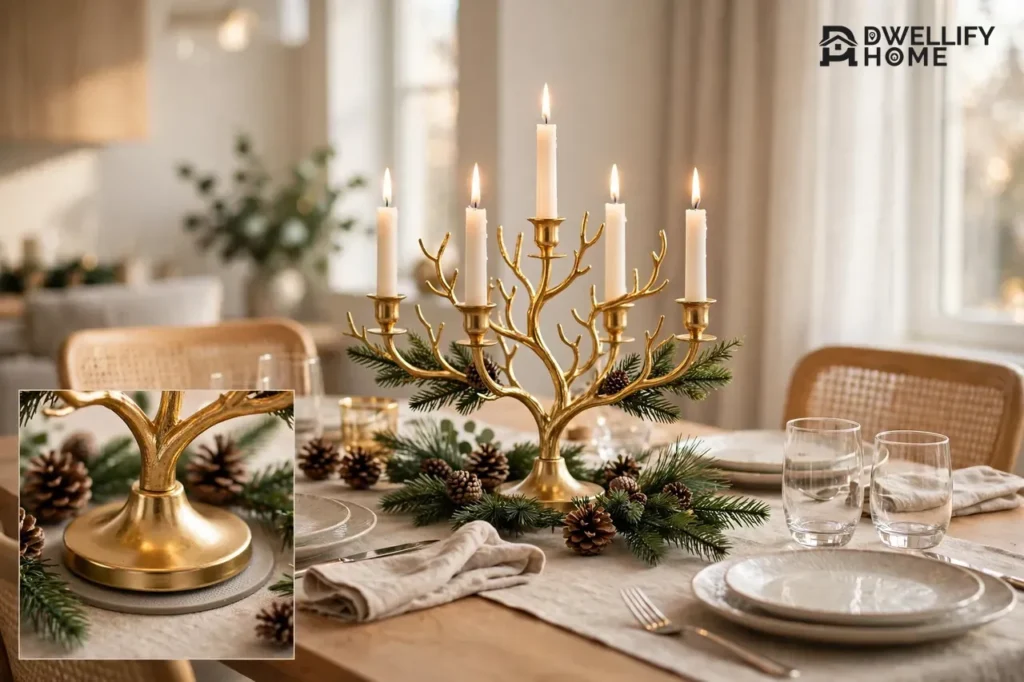
A Christmas candelabra is a branched candle holder made for the holidays. It holds several candles on one base, so you get a warm, glowing centerpiece with far less fuss than a row of single candlesticks. Pick a size that fits your table, choose real or flameless candles, and keep every flame at least 12 inches from anything that can burn.
If you love candlelight but feel unsure about open flames around garlands, curtains, and excited kids, this guide is for you. You will learn the main types of Christmas candelabras, the materials that suit each room, and a simple way to style one as a centerpiece. You will also learn the safety steps that matter most, plus when a battery-powered version is the smarter choice.
What Is a Christmas Candelabra?
A candelabra is a candle holder with two or more arms that branch out from a central stem or base. A Christmas candelabra takes that classic shape and dresses it for the season. It may come in gold, silver, deep red, or frosted green, and it may carry pinecones, berries, or evergreen details at its base.
Do not confuse a candelabra with a single candlestick. A candlestick holds one candle. A candelabra holds several candles at once, which makes it a natural focal point. That is also why it works so well at Christmas. One piece can light a whole table, a mantel, or a window, and it looks finished even before you add anything else.
Some candelabras stay up all year, while others come out only in December. A Christmas version often feels more festive because of its color, its greenery, or its shape. A candelabra tree, for example, stacks candle cups in tiers like a tiny tree, so it reads as Christmas at a glance, even with plain white candles.
Types of Christmas Candelabras
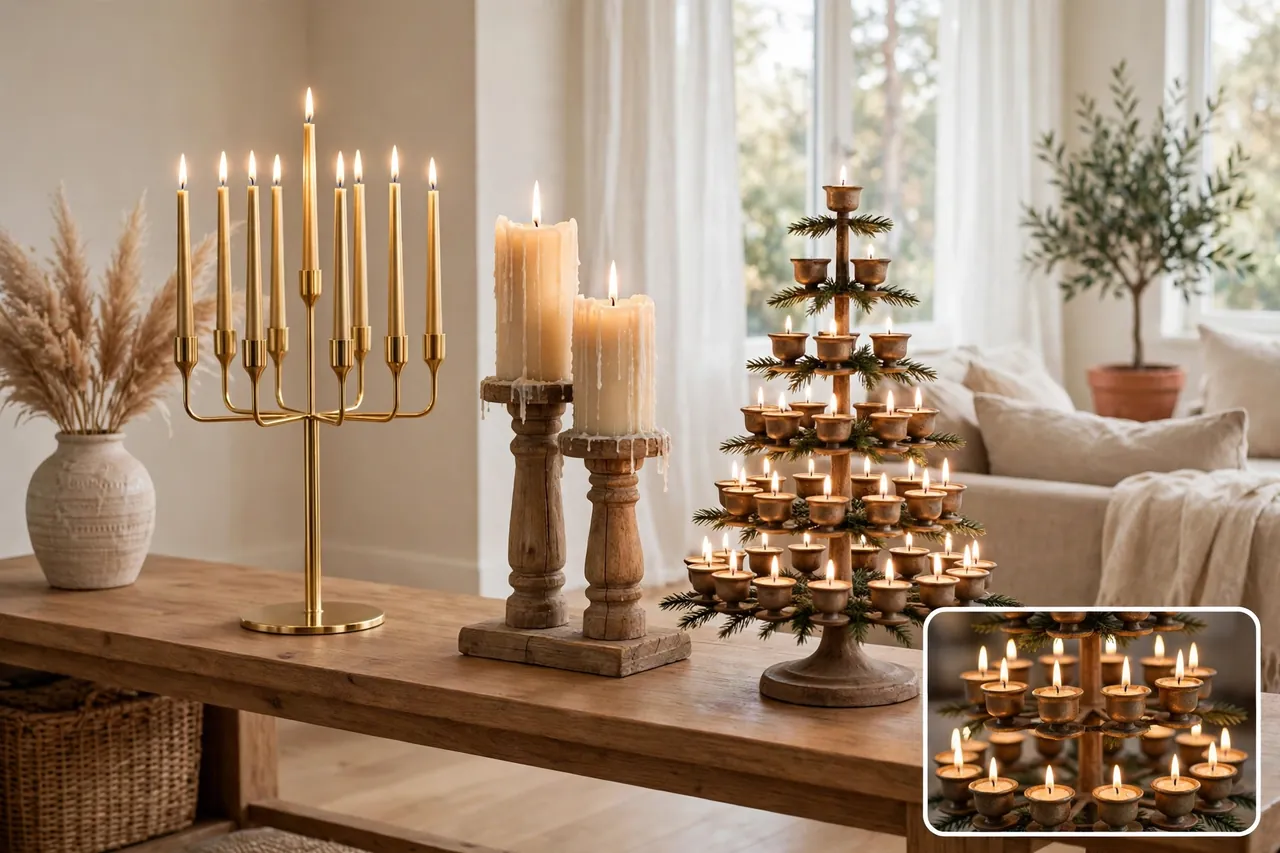
Most Christmas candelabras fall into three groups: taper, pillar, and candelabra trees. Each one gives a different look, and each one suits a different spot in your home. Once you know the difference, choosing gets much easier.
Taper Candelabras
A taper candelabra holds tall, slim taper candles. It gives the most classic look of all, the kind you picture at a formal holiday dinner. The flames sit high, so the light falls softly across faces and plates, and the whole table feels a little more special.
Taper candelabras work best on a dining table, a sideboard, or a mantel where guests will see them from a distance. They need a steady surface, because tall candles tip more easily than short ones. If you have small children or lively pets, place a taper candelabra where little hands and wagging tails cannot reach it.
Choose dripless tapers when you can. They still need a holder that catches wax, but they drip far less than plain tapers, so your tablecloth and your candelabra stay cleaner. Trim each wick to about one-quarter inch before you light it, since a long wick burns unevenly and drips more.
Pillar Candelabras
A pillar candelabra holds thick, sturdy pillar candles. It looks fuller and more relaxed than a taper version, and it suits rustic, farmhouse, and cozy modern rooms. Because pillar candles are wide and heavy, they sit more securely, which many beginners find reassuring.
Pillar candelabras shine on a coffee table, a hearth, or a wide console, where their solid shape can anchor the display. You can mix heights for interest, with the tallest pillar in the center or at the back. Keep the candles far enough apart that their flames do not lean toward each other or toward nearby greenery. A pillar candle also burns longer than a slim taper, so you spend less time swapping candles during the season. Just stop burning a pillar before it gets too close to its holder, and never let a flame burn down to the decorative base.
Candelabra Trees
A candelabra tree arranges candle cups in tiers, like the branches of a small tree. Some are simple metal frames, while others wrap the tiers in greenery, berries, or tiny ornaments. They look festive on their own, so you need fewer extra decorations around them.
These trees suit an entry table, a side table, or a spot beside the fireplace, where guests can enjoy them without crowding the dinner table. They also make a lovely choice for a smaller home, because one tiered piece gives the feel of a full display without taking over a room.
Check the spacing before you buy. On a good candelabra tree, each flame has clear air around it, and no branch, ornament, or ribbon hangs above a flame. If anything dangles near a cup, move it or skip that piece. A tree shape should never put decoration directly over fire.
Christmas Candelabra Materials: What Works Where
Material changes the whole mood of a candelabra, and it also changes how much care it needs. Brass and gold-toned metal feel warm and traditional, and they pair beautifully with red berries and deep green garlands. Silver and chrome feel cooler and more formal, and they shine beside white, icy blue, or silver decorations. Wood brings a rustic, cabin-like warmth, while glass and crystal catch the light and make a small room feel brighter.
Think about weight, too. A heavier candelabra stays put when someone brushes past the table, and that stability matters more than a perfect finish. A light, top-heavy piece may look lovely in the store, but it can wobble at home. Pick it up, check its base, and make sure it sits flat. If you want low upkeep, choose a darker metal or a simple shape with smooth cups that wipe clean in seconds.
How to Choose the Right Christmas Candelabra
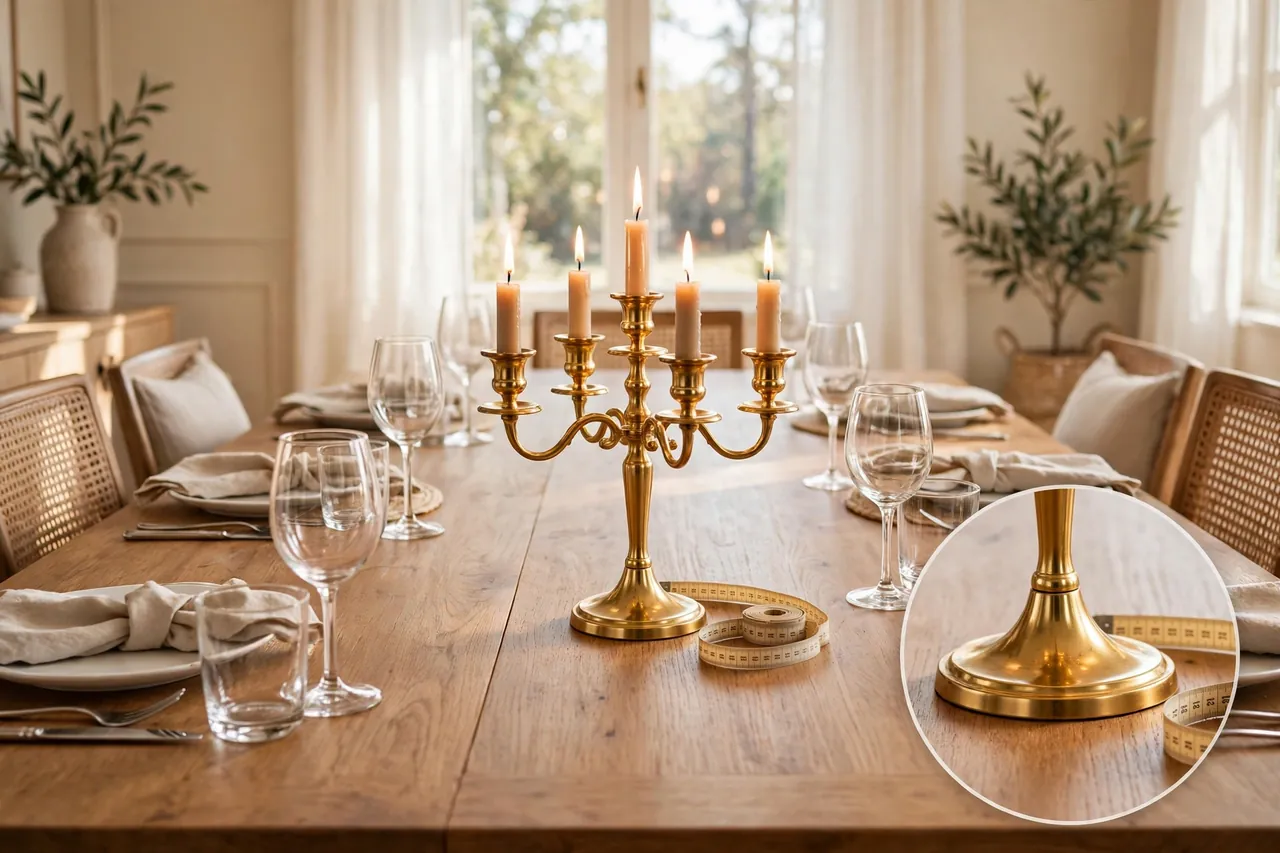
Start with the spot, not the store display. Measure your table or mantel first, then shop for a candelabra that fits that space. A centerpiece should take up no more than about two-thirds of your table length, so plates, glasses, and serving dishes still have room.
Next, match the height to the room. On a dining table, guests should see each other across the flames, not through them. If the candelabra blocks faces, choose a lower design or move it to a sideboard. On a mantel or console, a taller piece works well, because nobody sits behind it.
Then match the style to your other decorations. A gold taper candelabra suits a traditional red-and-green room, while a simple wooden pillar holder suits a calm, natural theme. You do not need to match every ornament. You only need one shared thread, such as warm metal, natural wood, or a single accent color.
Finally, decide on real or flameless candles before you buy. Real candles give a living flicker and a gentle scent, but they need watching. Battery candles give a steady glow with no flame, no wax, and no worry, which makes them ideal for windows, bedrooms, and homes with kids or pets. Many candelabras accept both, so you can switch by occasion.
Table: Christmas candelabra types at a glance
| Type | Best spot | Look and feel |
|---|---|---|
| Taper candelabra | Dining table, mantel | Tall, classic, formal |
| Pillar candelabra | Coffee table, hearth | Full, cozy, relaxed |
| Candelabra tree | Entry, side table | Tiered, festive, compact |
| Electric or battery | Window, bedroom | Safe, steady, easy |
How to Style a Christmas Candelabra as a Centerpiece
A candelabra already does half the work, so styling should stay simple. Start with the candelabra itself, then add just enough greenery and sparkle to make it feel like Christmas. Stop before the display looks crowded. Empty space lets the candlelight breathe, and it keeps flames away from decorations.
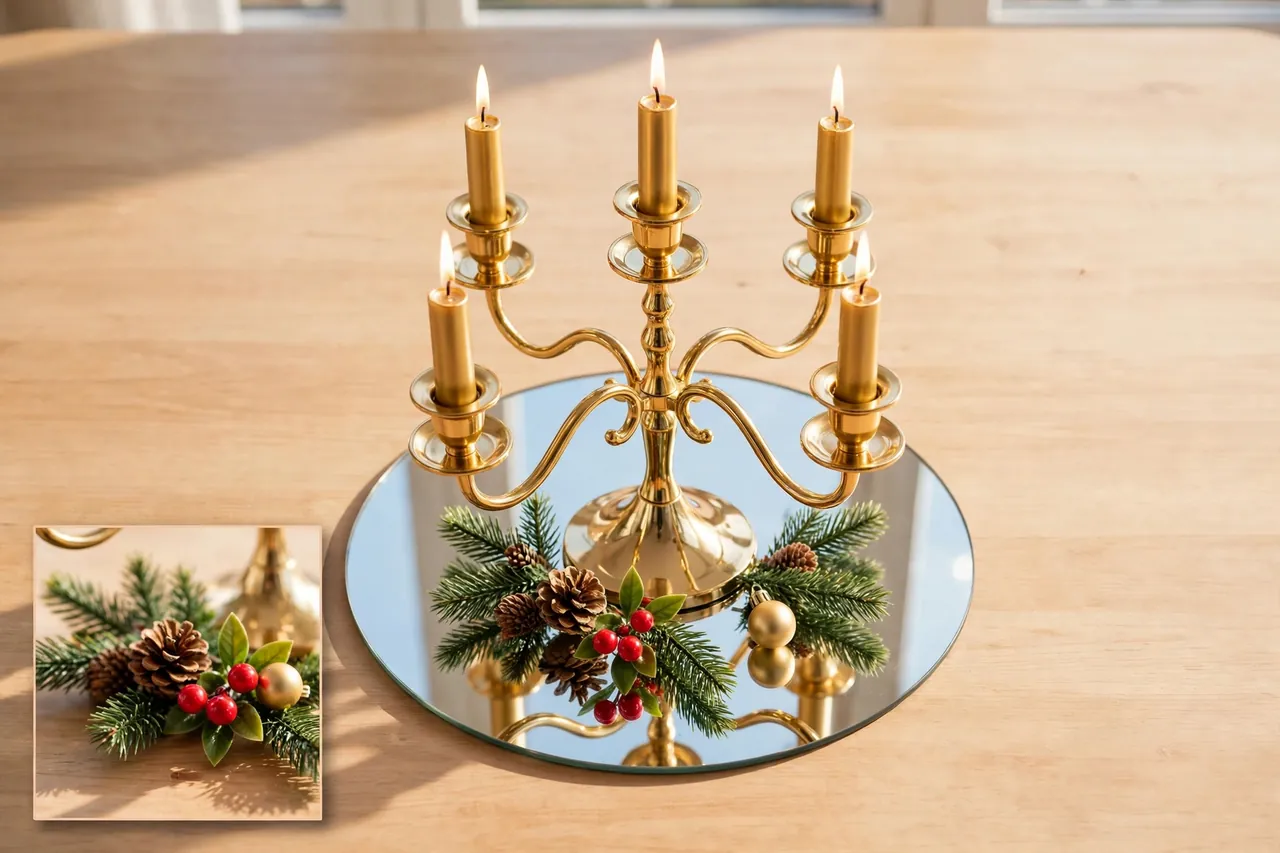
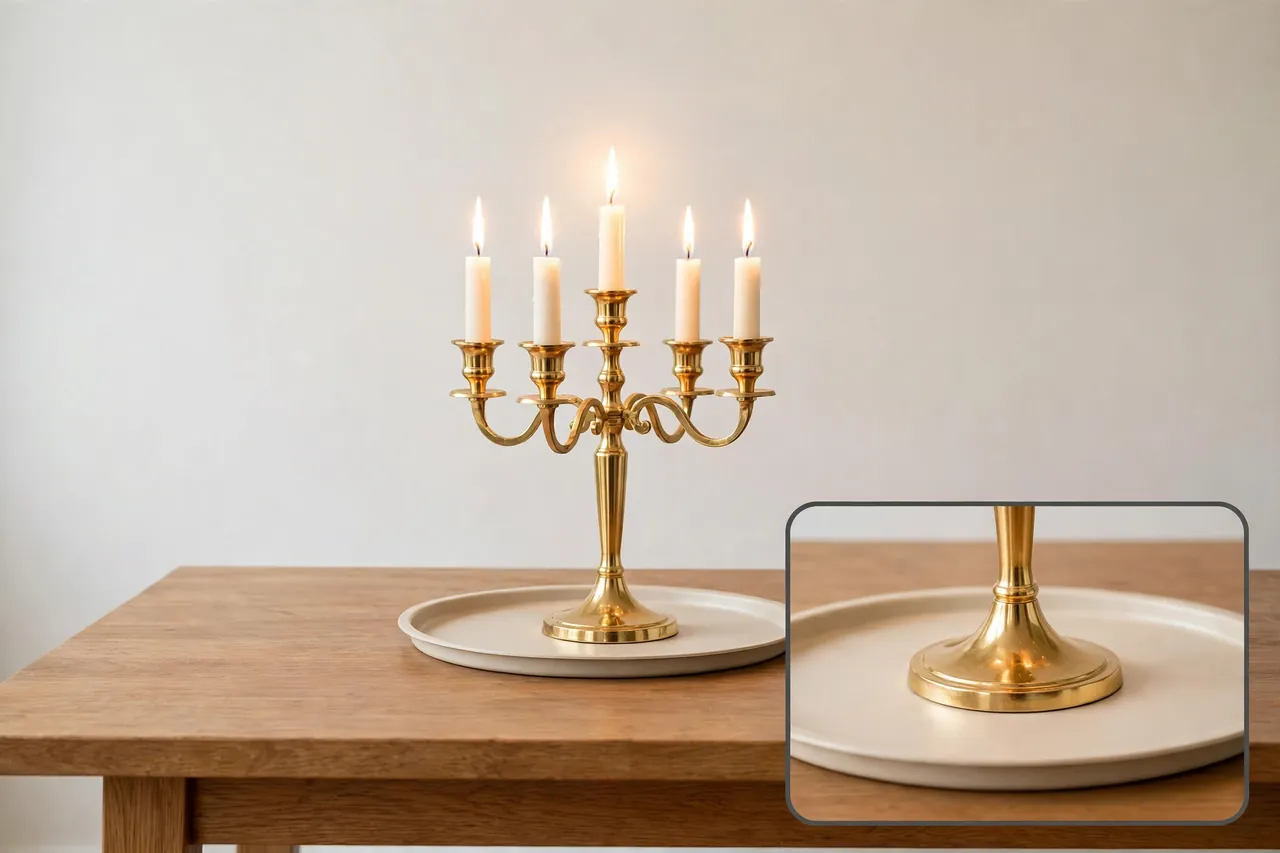
Place a tray or a heat-safe plate under the candelabra first. The tray catches wax, protects your table, and pulls the whole display together. A round mirrored tray suits a formal table, while a wooden board suits a rustic one. Make sure the tray sits flat and does not wobble.
Next, tuck greenery around the base, not near the flames. Use short sprigs of faux evergreen, a few pinecones, and a small cluster of berries at the bottom of the piece. Keep every sprig low and well away from each flame. Fresh greenery dries out fast near heat, so faux greens are the safer choice beside real candles.
Then add one accent, not five. A few gold ornaments, a short strand of beads, or a scattering of faux snow can finish the look. If you add ribbon, keep it flat on the table and far from the flames. Never drape ribbon, garland, or fabric over a candelabra arm.
For more table ideas that pair well with candlelight, see our guide to ideas for Christmas table settings, which shows how a centerpiece fits with plates, glasses, and place settings. If your candelabra will live in the living room instead, our Christmas decor on the coffee table guide offers calm, low-profile styling that keeps a flame display safe and visible.
A Simple Styling Routine That Works Every Time
- Set the candelabra on a flat, heat-safe tray in the center of the table or surface.
- Step back and check sight lines. Guests should see each other, and no flame should sit under a shelf, a hanging decoration, or a curtain.
- Add low greenery and pinecones around the base only, keeping at least 12 inches between each flame and anything that can burn.
- Add one accent, such as berries or small ornaments, and remove anything that crowds the flames.
- Light the candles last, after everything else sits in place, and enjoy the glow.
This order matters. When you decorate first and light last, you never reach across a flame to move a pinecone, and you spot risky gaps before the candles burn. It takes only a few extra minutes, and it prevents the most common styling mistake: building a beautiful display that is too close to fire.
Where to Place a Christmas Candelabra
The dining table is the classic home for a Christmas candelabra, but it is far from the only one. A mantel gives a candelabra a grand stage, especially when you flank it with stockings or a simple garland kept well below the flames. A console in the entryway greets guests with warm light the moment they walk in.
A window is a lovely spot for an electric candelabra, and it is a traditional one, too. Window candelabras glow outward in the evening and look charming from the street. Use battery or plug-in candles here, because a real flame near curtains and blinds is a risk even when it looks beautiful. A coffee table can work with a low pillar candelabra, as long as nobody needs to reach across it for drinks or snacks. Keep the display to one side, so the other side stays clear for everyday use.
A bedroom, on the other hand, is a spot to skip for real candles. Fire safety guidance advises against burning candles where people may fall asleep, and a flameless version gives you the same glow without that worry.
For a softer glow elsewhere in the room, Christmas lantern decorations pair nicely with a candelabra, since lanterns enclose their light and suit porches, hearths, and corners where an open flame would feel risky.
Christmas Candelabra Safety: The Rules That Matter Most
Candlelight feels cozy, but a candle is still an open flame, and December is the peak month for home candle fires. The good news is that most candle fires share the same preventable causes: a flame too close to something that can burn, or a candle left burning with nobody watching. Both are easy to avoid once you build the habit.
The U.S. Fire Administration advises keeping candles at least 12 inches away from anything that burns, using stable holders on a sturdy surface, and blowing out candles when you leave a room or go to bed. The National Fire Protection Association reports that three out of five home candle fires start when something that can burn sits too close to the candle, which is why that 12-inch gap matters so much around garlands, curtains, and paper decorations. You can read the full guidance on the U.S. Fire Administration candle fire safety page and the Kidde candle safety guide.
Before you light anything, run this caution check first. Never light a candelabra under a curtain, a shelf, or a hanging decoration, and never light it when you plan to leave the room soon. Check that the base sits flat, the candles sit firmly in their cups, and no greenery, ribbon, or ornament touches a flame or leans over one. If anything feels unstable or crowded, fix it before you strike a match.
Safe Lighting and Burning Steps
- Trim each wick to about one-quarter inch, and remove any loose matches, paper, or packaging from the area.
- Place the candelabra on a sturdy, uncluttered, heat-safe surface, away from drafts, curtains, and foot traffic.
- Light the candles with a long lighter, keeping your hair, sleeves, and loose clothing away from each flame.
- Stay in the room while the candles burn, and blow them out before you leave, eat in another room, or go to bed.
- Snuff each flame fully, check that no wick still glows, and let the candles cool before you move the candelabra.
Keep children and pets away from a burning candelabra, and never let a child stay alone in a room with a lit candle. Keep matches and lighters up high or locked away. If a candle burns unevenly, flickers hard in a draft, or starts to smoke, blow it out, trim the wick, and move the candelabra away from the draft before you relight it.
Troubleshooting Common Candelabra Problems
- Problem: wax drips onto the table. Fix: switch to dripless tapers, check that each candle sits straight in its cup, and add a tray or drip catcher under the candelabra.
- Problem: flames lean or flicker hard. Fix: move the candelabra away from vents, fans, and open windows, and space the candles so their flames do not pull toward each other.
- Problem: the candelabra wobbles. Fix: set it on a flat surface, check that the base sits level, and move it away from spots where people brush past it.
- Problem: greenery near the base looks dry or scorched. Fix: blow out the candles at once, remove the dry greenery, and replace it with faux greens kept low and far from the flames.
- Problem: soot marks appear on the wall or ceiling above. Fix: trim the wicks, shorten burning time, and move the candelabra away from the wall or from anything hanging above it.
- Problem: you cannot stay in the room. Fix: blow out every candle before you leave, and use battery candles next time you want light that runs on its own.
Real Candles or Electric: Which Should You Choose?
Real candles give the truest candlelight. The flame moves, the glow feels alive, and the room smells faintly of wax and winter. They suit a holiday dinner, a quiet evening at home, and any moment when you can stay nearby and enjoy them. Their cost is attention. You must watch them, trim them, and blow them out on time.
Electric and battery candles give a different kind of freedom. Many use real wax bodies and flickering LED flames, and some come with a remote and a timer that switches them off after a few hours. They suit windows, bedrooms, homes with kids or pets, and long evenings when you want glow without worry. They also suit a candelabra tree on a high shelf, where reaching up to light real candles would feel awkward.
The honest answer is that many homes do best with both. Use real candles for the dinner table, where you sit beside them and enjoy them. Use flameless candles for the window, the entryway, and the overnight glow. That split keeps the magic where you can watch it, and the safety where you cannot.
When you shop for flameless candles, check the fit before you buy. Taper cups usually take slim candles about three-quarters of an inch wide, while pillar holders take wider candles. Measure your cups, check whether the candles need AA or AAA batteries, and test the remote and timer on the first night, so you are not hunting for batteries on Christmas Eve.
Care, Cleaning, and Storage After Christmas
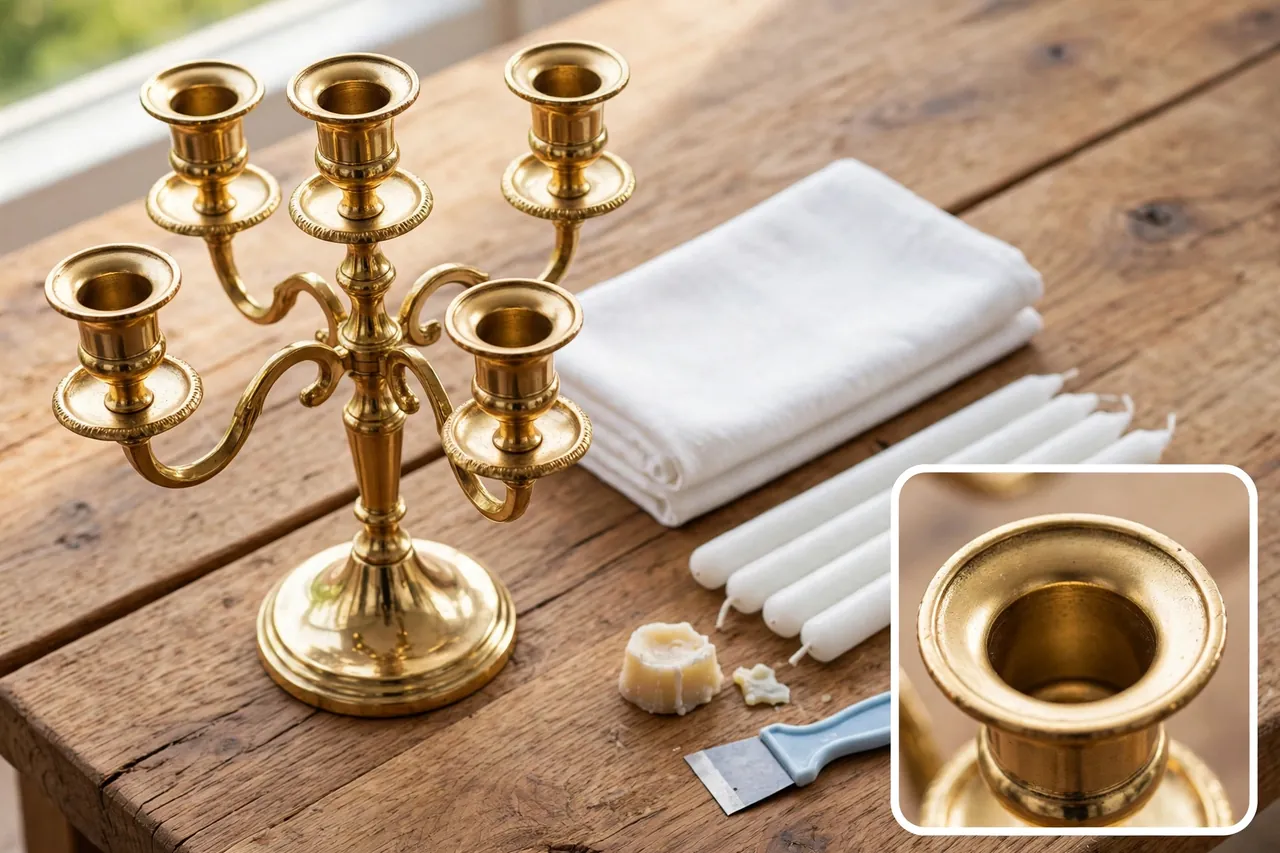
A little care keeps a Christmas candelabra looking good for years. Let the candles cool fully before you touch the piece, then lift out the candles and wipe the cups with a soft, dry cloth. For stuck wax, let it harden, then lift it gently with a plastic scraper or a fingernail. Avoid sharp metal tools on brass, silver, or painted finishes, since they scratch easily.
Polish metal only when it needs it, and follow the polish maker’s directions for that finish. Glass and crystal cups wash best in warm, soapy water, dried right away so no spots remain. Wooden candelabras need only a dry dusting and a quick check for wax or heat marks before you pack them away.
Store the candelabra in its own box or wrapped in soft cloth, with the cups protected so they do not bend or chip. Keep spare candles upright in a cool place, away from heat and sunlight, so they do not warp before next December. Label the box clearly, so next year’s decorating starts with the candelabra, not a search through the attic. Our Christmas decor boxes guide has practical ideas for packing fragile holiday pieces so they survive storage in good shape.
A Quick Safety Note
Enjoy your Christmas candelabra, and treat every flame with respect. Keep candles at least 12 inches from anything that can burn, never leave burning candles unattended, and blow them out when you leave the room or go to bed. Homes, decorations, and conditions vary, so use your judgment, follow the candle maker’s directions, and choose flameless candles whenever real flames feel risky. If a fire ever starts, leave the house at once and call emergency services rather than trying to fight it yourself.
Related Guides
If you love the warm glow of a candelabra, these guides will help you style the rest of the room around it. Explore ideas for Christmas table settings for a complete holiday table, Christmas decor on the coffee table for living-room styling, Christmas lantern decorations for enclosed glow, and Christmas decor boxes for packing everything away safely after the season.
Frequently Asked Questions
What is a Christmas candelabra?
A Christmas candelabra is a branched candle holder that holds several candles on one base, styled for the holidays with festive colors, greenery, or a tiered tree shape. It works as a centerpiece on a dining table, mantel, or entry console, giving warm, multi-flame light from a single piece.
What is the difference between a candelabra and a candlestick?
A candlestick holds one candle, while a candelabra holds two or more candles on branching arms or tiers. A candelabra makes a stronger focal point and lights a wider area, while single candlesticks suit smaller surfaces or a simple row of light along a table.
Are Christmas candelabras safe to use?
Yes, when you follow basic fire safety rules. Use a sturdy holder on a flat surface, keep flames at least 12 inches from curtains, greenery, and other items that can burn, and never leave burning candles unattended. Blow out every candle when you leave the room or go to bed.
Should I choose real or battery candles for a candelabra?
Choose real candles for a dinner table where you stay nearby and enjoy the living flame. Choose battery candles for windows, bedrooms, homes with kids or pets, and any spot you cannot watch. Many candelabras accept both, so you can use real candles for dinner and flameless ones elsewhere.
How do I keep wax from dripping on my table?
Use dripless taper candles, set each candle straight in its cup, and place the candelabra on a tray or heat-safe plate that catches drips. Trim wicks to about one-quarter inch before lighting, keep the candelabra away from drafts, and let the wax harden before you clean it.
Where should I put a Christmas candelabra?
Put a real-flame candelabra on a dining table, mantel, or console where guests can see it and you can watch it. Put a battery candelabra in a window, entryway, or bedroom for worry-free glow. Avoid bedrooms for real candles, and never place any lit candelabra under curtains, shelves, or hanging decorations.
A Warm Glow Worth Doing Right
A Christmas candelabra earns its place in your home the first night you light it. The room softens, the table feels dressed, and the whole evening slows down a little. Pick the type that fits your space, style it simply, and respect the flame, and you will enjoy that glow all season long.
Your next step is easy. Measure your table or mantel, choose taper, pillar, or a candelabra tree, and decide whether real or battery candles suit that spot. Then style it low, light it last, and blow it out before bed. That is all it takes to make candlelight the warmest part of your Christmas.