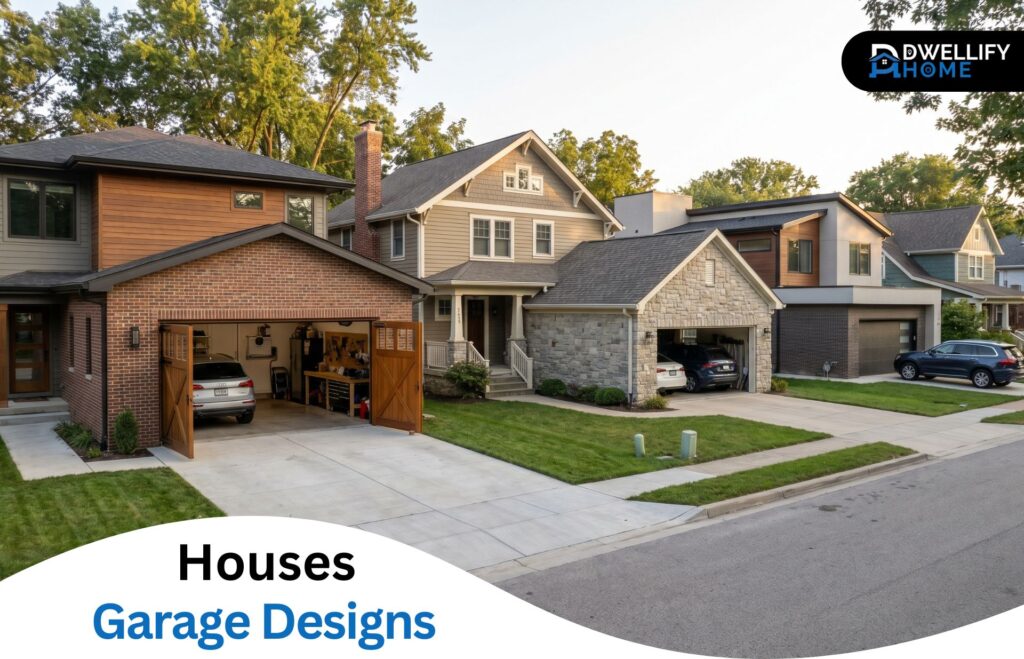
Most homeowners spend months choosing paint colors, countertops, and flooring — then spend about two weeks deciding on their garage. That imbalance costs them. After working with homeowners and contractors on residential projects for over a decade, I’ve seen one pattern repeat itself: the garage gets treated as an afterthought, and the consequences show up in daily inconvenience, resale friction, and missed property value.
The garage is one of the few parts of a home that touches everything — curb appeal, function, security, storage, and even income potential. Whether you’re buying a house with garage already in place, planning a new build, or trying to figure out what kind of structure fits your lot, this guide covers the ten most practical and proven garage designs available for residential homes today.
The Short Answer
A houses garage is a dedicated structure on a residential property used to park vehicles, store equipment, and extend functional living space. Homeowners choose it to protect vehicles, increase property value, and add versatile space that serves everyday practical needs.
Mission Statement
At Dwellify Home, we help homeowners make practical, informed decisions about their living spaces — from garage design and outdoor planning to home solutions that genuinely fit real life. Our goal is to provide clear, reliable guidance that makes your home work better for the way you actually live.
What Makes a Garage Design Actually Work for Your Home?
A garage design works when it matches three things at once: the way your household actually lives, the physical constraints of your lot, and the architectural character of your home. A design that checks only one or two of those boxes tends to create problems within the first year of ownership.
The Three Core Setups — Attached, Detached, and Built-In Explained Simply
These three configurations form the foundation of every residential garage decision. An attached garage shares a wall with the main house. A detached garage is a standalone structure on the same property. A built-in garage is physically integrated into the home’s base — tucked underneath the living space, not added onto it. Each one behaves differently in terms of cost, access, safety, and design flexibility.
How Garage Type Affects Home Value, Daily Life, and Resale Appeal
A new garage adds an estimated $18,200 in home value on average, with roughly a 65% return on investment. But the real-world impact goes beyond numbers. The right garage type reduces daily friction — getting groceries in from the rain, keeping tools organized, storing seasonal gear — while the wrong one creates habits you’ll work around forever.
Quick Comparison Table — Garage Setup at a Glance
| Garage Type | Best For | Avg. Build Cost | Key Advantage |
| Attached | Daily convenience, families | $10,500–$30,000 | Direct home access |
| Detached | Flexibility, workshops, studios | $14,200–$54,600 | Design freedom, noise separation |
| Built-In (Integral) | Sloped lots, seamless architecture | $40–$70 per sq ft | Space efficiency on difficult terrain |
| Side-Load | Curb appeal on wider lots | Varies with attached cost | Clean street-facing facade |
| Tandem | Narrow urban lots | Lower than standard two-car | Fits constrained footprints |
| Barn-Style | Storage-heavy, rural/semi-rural | $14,000–$50,000+ | Maximum interior volume |
| Garage + ADU Above | Rental income, in-law suites | $20,000–$100,000+ | Revenue potential and added sq ft |
| Prefab / Kit | Budget-conscious, fast install | From $2,800–$3,500 | Cost efficiency and quick delivery |
Key Benefits of Having a Garage on Your Property
- Adds an estimated $18,200 in home value with approximately 65% ROI on new builds
- Protects vehicles from weather damage, theft, and vandalism year-round
- Creates flexible extra space usable as a workshop, gym, office, or storage area
- Strengthens buyer appeal and reduces time on market in most suburban and urban areas
- Opens the door to rental income through ADU or apartment-above configurations
- Reduces daily friction — weather-protected access to vehicles and stored equipment
1. Attached Garage — The Most Practical Setup for Everyday Living
An attached garage connects directly to the home through a shared wall and an interior door, making it the most convenient option for daily access. It’s the most common garage design in North American suburbs, and for good reason — it simply makes everyday life easier.
What Separates an Attached Garage from Other Types
The interior access door is the defining feature. You can walk from your car into your kitchen in seconds, without stepping outside. This matters more than most people expect until they’ve lived without it — especially in cold climates or with young children in the car.
Attached garages typically cost around $30 per square foot to build, making them more affordable than detached structures because they share an existing wall and tie into the home’s existing utilities.
Best Home Styles and Lot Sizes for an Attached Design
Attached garages work best on suburban lots where the driveway runs directly from the street to the side or front of the home. They integrate naturally with ranch-style homes, two-story colonials, and craftsman designs. Narrow urban lots can accommodate them, though a single-car attached setup is usually the realistic option there.
The Real Pros and Cons — Including What Most Guides Leave Out
The convenience is real, but so are the trade-offs. Engine fumes, solvent smells, and noise from power tools can travel through shared walls into living areas — especially if insulation and fire separation aren’t done properly. Building codes in most jurisdictions require fire-rated drywall between an attached garage and the home’s interior, and that’s not always confirmed in older properties.
Before buying a home with an attached garage, check that the fire separation is in place. It’s a small thing that most buyers never ask about.
2. Detached Garage — The Most Flexible Design You Can Build
A detached garage is a standalone structure fully separate from the main house, offering design freedom, functional versatility, and privacy that attached designs can’t match. It costs more to build but gives you more options, both now and in the future.
Why More Modern Homeowners Are Choosing Detached Over Attached
The detached garage has been gaining ground, particularly among homeowners who use the space for more than parking. A separate structure means noise from woodworking, auto work, or band practice stays completely contained. It also means your home’s facade isn’t dominated by a large garage door — a design issue that affects curb appeal significantly on front-load attached setups.
Where to Place a Detached Garage on Your Lot
Placement depends on lot size, access points, and local setback regulations. Rear-yard detached garages are the most popular because they keep the front of the home clean. Side-yard placement works well on wider lots where a rear location would require a long driveway run. Always check your local zoning requirements — minimum distances from property lines and the main house vary by municipality.
Beyond Parking — Using a Detached Garage as a Workshop, Studio, or Office
This is where the detached design earns its extra cost. A well-built detached garage with insulation, proper electrical, and climate control becomes one of the most used spaces on the property. I’ve seen them function as full woodworking shops, home gyms, recording studios, and remote work offices. That kind of flexibility is simply not available in an attached setup without affecting the rest of the house.
3. Built-In (Integral) Garage — When the Garage Is Part of the House Itself
A built-in garage — sometimes called an integral or tuck-under garage — is built into the base of the home’s structure, with living space occupying the floor directly above it. It doesn’t have its own roof; the house itself forms the ceiling.
How a Built-In Garage Differs from an Attached One
The distinction is architectural. An attached garage is an extension added onto the home. A built-in garage is designed as part of the original structure — the living space sits on top of it. This creates a seamless exterior look but comes with more complex construction requirements, typically running $40–$70 per square foot.
Drive-Under Designs and Hillside Lot Applications
Built-in garages are especially practical on sloped or hillside lots where a drive-under approach is the most natural use of the terrain. Instead of fighting the grade, the garage occupies the lower level while the main living space sits above. It’s an efficient use of difficult land.
Cost and Design Trade-Offs Worth Knowing Before You Build
The structural integration makes built-in garages more expensive and harder to modify later. Sound transmission from the garage to the room above is also a real consideration — vibration from garage doors, vehicles, and stored equipment travels upward. Proper insulation and structural isolation at the ceiling level matter here more than most builders emphasize.
4. Side-Load Garage — The Curb Appeal Upgrade Most Homeowners Don’t Consider
A side-load garage positions its door on the side of the structure rather than facing the street, which keeps the home’s facade clean and visually balanced.
Front-Facing vs. Side-Facing Garages — The Visual Difference
On a typical front-load attached garage, the door takes up a significant portion of the street-facing wall. On wider lots, this often means the garage dominates what visitors and buyers see first. A side-load design shifts that door out of the primary sightline, allowing windows, architectural details, and the front entry to do more of the visual work.
Lot Width and Driveway Requirements for a Side-Load Setup
You need adequate lot width to make this work — generally at least 70 to 80 feet for a comfortable side-load driveway approach with a two-car garage. The driveway runs along the side of the house rather than straight from the street, which requires more paved area but pays off in how the home presents itself.
5. Tandem Garage — The Smart Solution for Narrow or Constrained Lots
A tandem garage parks two vehicles in a single-width bay — one behind the other — rather than side by side. It’s a practical response to limited lot width, particularly in dense urban areas.
How a Tandem Garage Layout Works in Daily Use
The layout is straightforward: one car parks near the garage door, and the second parks deeper inside. The trade-off is access — to use the rear vehicle, you need to move the front one first.
Who Benefits Most — and When It Becomes a Frustration
Tandem works well for households where one vehicle stays parked most of the day — a commuter’s car paired with a weekend vehicle or a rarely-used second car. It frustrates households where both vehicles are used daily on different schedules. Before choosing this layout, be honest about your actual driving patterns. On paper it sounds efficient; in practice it often gets used as a one-car garage with a storage room behind it.
6. Carriage House Garage — Character and Architecture in One Structure
A carriage house garage takes its visual language from 19th-century coach houses — wooden panel doors, decorative hardware, cupolas, and crafted detailing that makes the garage itself a design feature rather than a utility box.
What Makes a Garage a True Carriage House Design
The defining elements are the door style and roofline. Carriage-style doors are paneled and often swing outward or are designed to mimic that look in an overhead format. Cupolas, exposed timber accents, and gabled rooflines complete the aesthetic. These aren’t purely decorative — the proportions and materials are what give the structure its architectural weight.
Home Styles That Pair Best with Carriage House Garages
Traditional farmhouses, craftsman bungalows, colonial homes, and Victorian-era properties all benefit from this pairing. The carriage house design adds a sense of age and permanence that a flat-panel modern door simply doesn’t provide in those contexts. It’s a style worth considering seriously for any property where character and curb appeal drive value.
7. Barn-Style Garage — Maximum Space, Height, and Storage in One Build
A barn-style garage uses a gambrel roof — the classic two-slope barn shape — which dramatically increases the usable volume inside the structure compared to a standard gable roof.
What the Gambrel Roof Actually Gives You Inside
The gambrel profile creates a second slope that rises steeply from the eaves before flattening near the ridge. This geometry produces significantly more headroom and usable space in the upper portion of the structure than a conventional gable roof of the same footprint. A 24-foot-wide gambrel garage can comfortably support a full loft that a standard gable cannot.
Loft Storage, Workshop Setups, and Overhead Organization
That upper volume opens up genuine options — a full storage loft, an overhead platform for seasonal gear, or a finished space for a workshop or studio. Barn-style garages work naturally on rural and semi-rural properties, and they’re increasingly being incorporated into modern farmhouse designs where the aesthetic fits.
8. Garage with Living Space Above — When Your Garage Becomes a Genuine Asset
A garage with an apartment or living unit above it combines vehicle storage with habitable square footage, creating one of the highest-value configurations available for residential properties. Done correctly, it functions as an accessory dwelling unit (ADU) that generates rental income or accommodates extended family.
Garage Apartment, ADU, and In-Law Suite — What’s the Difference?
A garage apartment is a self-contained unit above a detached garage — typically with a kitchen, bathroom, and sleeping area. An ADU is a legally recognized secondary dwelling on the same property, subject to local zoning approval. An in-law suite tends to be less formal — a livable space that may not meet full ADU requirements. The distinctions matter legally and financially.
Zoning Rules and Permit Basics Before You Build Up
Before committing to this design, verify local ADU regulations. Many municipalities now actively encourage ADU construction to address housing density, but size limits, setback requirements, and utility connection rules vary widely. A conversion from a standard garage into a legal apartment typically costs between $20,000 and $100,000 depending on scope, with an average ROI of around 80%.
Houses Garage for Rent — Making It Work as a Revenue Space
In markets where housing demand is high, a well-built garage apartment can generate meaningful monthly income. Properties with a houses garage for rent setup are increasingly attractive to buyers, particularly in urban and suburban markets where rental income helps offset mortgage costs. That income potential also makes the property more competitive when it comes time to sell.
9. Multi-Car Garage — Designed for More Than Just Vehicles
A multi-car garage — two, three, or more bays — provides the square footage to do significantly more than park vehicles. It’s where function and lifestyle start to intersect most clearly.
Two-Car vs. Three-Car Garage — What the Extra Space Really Buys You
A two-car garage typically runs 20 by 20 feet. A three-car adds roughly 10 to 12 feet of width. That extra bay doesn’t just hold another vehicle — in practice, it becomes dedicated workshop space, a fitness area, or organized long-term storage. Many homeowners find they park two cars and use the third bay as the most useful room in the house.
Smart Features Worth Adding — EV Charging, Climate Control, and Organization
If you’re building or renovating a multi-car garage now, rough in electrical for at least one Level 2 EV charging outlet — even if you don’t currently own an electric vehicle. It’s an inexpensive addition during construction and a genuine selling point in the current market.
Other features worth including: epoxy-sealed concrete floors (durable, cleanable, and sharp-looking), overhead storage racks, wall-mounted organization systems, and insulation for year-round usability. These additions cost a fraction of what they would to retrofit later.
10. Prefab and Kit Garage — The Budget-Smart Option That’s Better Than It Sounds
A prefab garage is manufactured off-site and delivered as a kit — walls, roof panels, hardware, and instructions included. They’ve improved considerably in quality and have become a genuinely practical option for homeowners who need a functional garage without a full custom build.
Prefab vs. Custom-Built — When the Kit Makes More Sense
Wood garage kits start around $2,800 to $3,500 for a 12 by 20 foot structure. For homeowners who need a basic detached garage quickly, don’t want to manage a contractor build, and have a straightforward flat site, prefab delivers solid value. The limitations show up with complex lots, irregular sizes, or when the garage needs to match a home’s specific architectural style closely.
What to Check When a Prefab Garage Already Comes with a Property
When viewing houses garage for sale listings that include an existing prefab structure, check three things: the foundation it sits on (a proper concrete slab vs. gravel or dirt), the electrical condition, and the roof — particularly the fascia and ridge cap, which are the first areas to deteriorate on a prefab build. A well-maintained prefab on a solid slab is a genuine asset. A neglected one on bare ground is often more work than starting fresh.
How to Match Your Garage Design to Your Home’s Architecture
A garage that clashes with the main house visually can hurt curb appeal even if the structure itself is well-built. Matching them isn’t complicated, but it requires deliberate choices.
Matching Roof Style, Siding Material, and Exterior Finish
The most important alignment is the roofline. A craftsman home with a low-pitched gable roof looks best paired with a garage that mirrors that pitch. A farmhouse with board-and-batten siding benefits from a garage finished in the same material. You don’t need an exact replica — you need enough visual consistency that both structures read as intentional.
Contemporary homes are more forgiving. A clean metal-siding detached garage can complement a modern home even with some design variation, as long as the proportions and color palette are coordinated.
Using a Breezeway to Connect a Detached Garage to Your Home
A covered breezeway — a roofed walkway connecting the garage to the main house — solves the primary practical complaint about detached garages: you still have to go outside to reach the car. A breezeway provides weather protection without merging the two structures. It also adds an architectural element that ties the property together visually.
Which Garage Setup Is Right for Your Property?
The right garage design is the one that fits your specific lot, budget, lifestyle, and local market — not the one that looks best on a floor plan website.
Lot Size, Shape, and Orientation — What Limits Your Options
Small urban lots often restrict you to attached or tandem designs. Larger suburban lots open up detached and side-load options. Sloped lots are often best served by built-in or drive-under designs. Lot orientation relative to the street affects where a garage door can face without creating driveway complications.
Budget Snapshot — Cost Range by Garage Type
- One-car attached garage: $10,500–$27,000
- Two-car attached garage: approximately $30,000
- Detached garage (custom-built): $14,200–$54,600
- Built-in integral garage: $40–$70 per square foot
- Prefab kit garage: starting around $2,800–$3,500
These are construction costs only. Permits, site prep, electrical, and finishing vary by region and project scope.
Climate, Weather, and Year-Round Usability
In cold climates, an attached garage with insulated walls and a heated interior is genuinely valuable — both for the vehicles and for using the space through winter. In mild climates, a detached structure with basic insulation serves most needs without the added cost. If you plan to use the garage as a workshop year-round, climate control becomes a practical necessity rather than an upgrade.
Resale Value and What Buyers in Your Market Expect
In most suburban markets, a two-car garage is a baseline expectation. Dropping below that in a neighborhood where two-car garages are standard will limit your buyer pool. In urban markets, any dedicated garage — attached or detached — commands a premium because parking scarcity makes it genuinely valuable. Knowing your local market’s baseline before designing or buying is more important than any national average figure.
Frequently Asked Questions About House Garage Designs
What type of garage adds the most value to a home?
An attached two-car garage typically delivers the strongest return on investment in suburban markets, where it aligns with buyer expectations. A detached garage with an ADU apartment above it can outperform in urban markets with high rental demand. The type that adds the most value is always the one that matches what local buyers are actively searching for.
Is it worth building a detached garage if I already have an attached one?
Yes, in many cases. A second detached structure creates dedicated space for a workshop, gym, studio, or additional vehicle storage without compromising the convenience of the attached garage. It also adds square footage and storage capacity that buyers value. The key question is whether your lot can accommodate it without creating a cramped or poorly laid-out property.
How close to the house can a detached garage legally be built?
Setback requirements vary by municipality, but most jurisdictions require a detached garage to be at least 5 to 10 feet from the main house and 3 to 5 feet from property lines. Some areas have additional rules near easements or drainage corridors. Always check with your local planning or zoning office before finalizing placement — setback violations are one of the most common and expensive mistakes in DIY garage projects.
Can a garage be converted into living space later?
Yes, and it’s one of the most cost-effective ways to add livable square footage. A garage-to-bedroom conversion costs roughly $5,000 to $17,000. A full apartment conversion runs $20,000 to $100,000 depending on scope. The main requirements are raising or leveling the floor, adding proper insulation, meeting egress standards, and obtaining a permit. Conversion ROI averages around 80%, making it a financially sound project in most markets.
Do I need a permit to build a garage on my property?
In almost every jurisdiction, yes. Garage construction — whether attached, detached, or prefab — typically requires a building permit. Permit costs average $1,000 to $2,000 for standard residential garages. Skipping the permit process creates problems when you sell: unpermitted structures can delay or derail a sale, affect your home insurance, and in some cases require the structure to be modified or removed. It’s not worth the risk.
Conclusion
Choosing the right garage comes down to understanding what your property actually needs — not what looks appealing in a showroom or a listing photo. Whether you’re searching for houses garage for sale with a specific setup already in place, planning a new build from the ground up, or evaluating what you already have, the ten designs covered here represent the full range of practical, proven options for residential properties.
Start with your lot constraints, work through your daily use patterns honestly, then factor in budget and resale context for your specific market. That sequence gets you to the right answer faster than any other approach — and avoids the kind of decision you’ll be working around five years from now.
Disclaimer
The content published on Dwellify Home is intended for general informational purposes only. Cost estimates, design recommendations, and property value data reflect general market research and may vary based on your location, project scope, and individual circumstances. Always consult a qualified contractor, architect, or local authority before beginning any construction or renovation project.