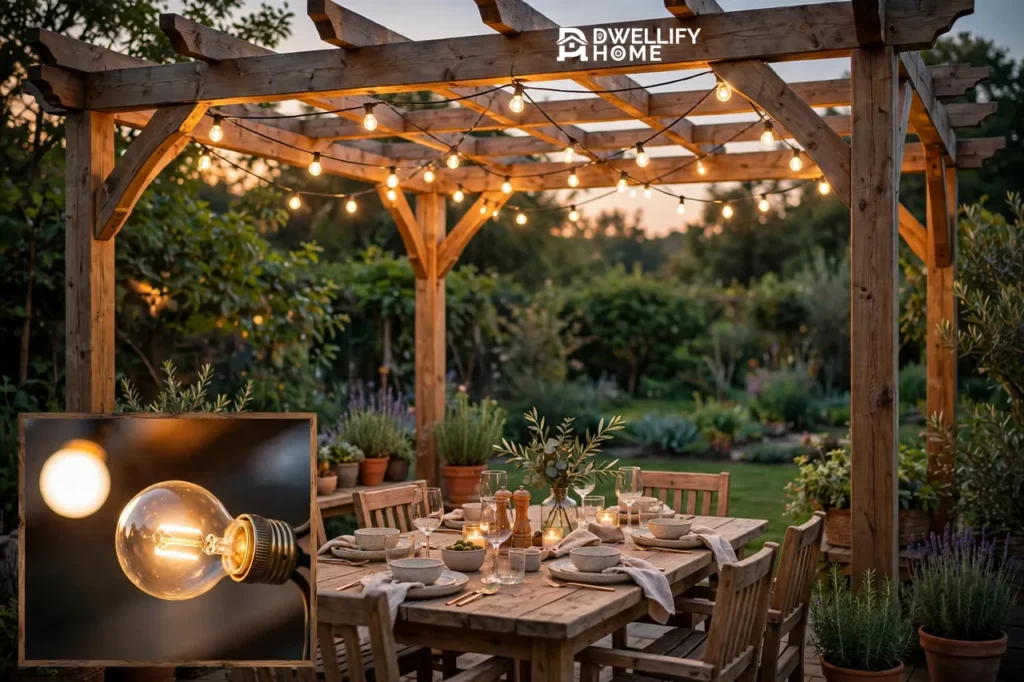
Hang outdoor-rated LED string lights on your pergola with hooks every 2 to 3 feet, keep the lowest bulb at least 8 feet off the ground, and plug them into a GFCI-protected outlet. That is the whole job in one sentence, and it works because a pergola already gives you strong beams at the right height, so you do not need poles, trenches, or an electrician for a basic install.
This guide shows you how to pick the right lights, how many feet you actually need, which pattern looks best on your pergola, and how to hang the strands so they stay put through wind and rain. You will also learn the safety checks that matter, because outdoor lights mix water and power, and a small mistake there is not a small problem.
Pergola String Lights at a Glance
Pergola string lights are outdoor-rated strands of bulbs hung across the beams of a pergola to give warm, even light over a patio at night. They turn a pergola from a daytime shade structure into the place where dinner runs long and guests stay past sunset.
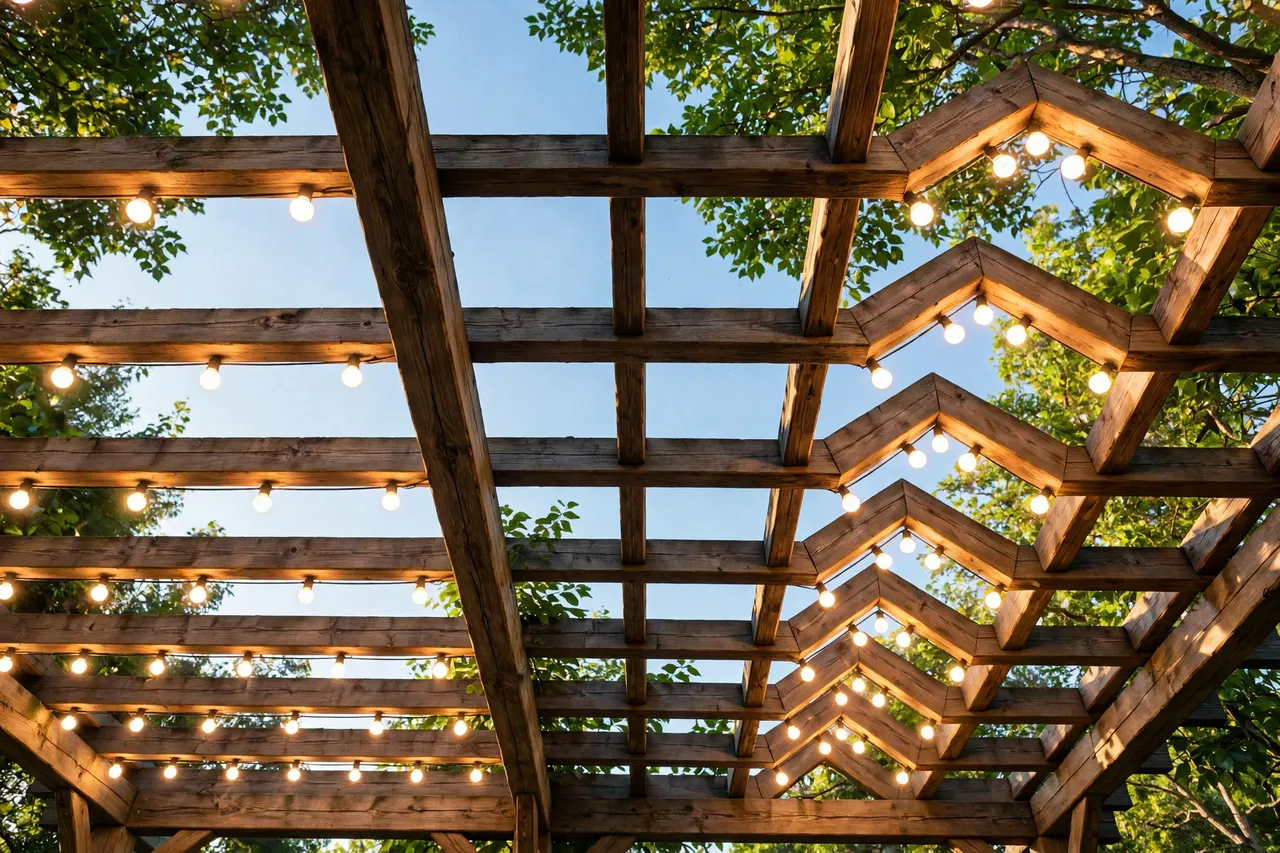
The table below sums up the main choices. Most homeowners land on warm white LED cafe lights, hung in a zigzag or parallel pattern, on a timer.
Pergola string light choices at a glance
| Choice | Best pick for most pergolas | Why it works |
|---|---|---|
| Bulb type | LED, warm white 2700K | Runs cool, uses little power, lasts years |
| Bulb spacing | 12 to 24 inches apart | Even glow without a crowded look |
| Weather rating | IP44 covered, IP65 open | Handles rain on an uncovered pergola |
| Pattern | Zigzag or parallel runs | Covers the space evenly |
| Power | Plug-in with a timer | Steady light, no charging worries |
| Height | Lowest bulb 8 to 10 feet up | Light falls on tables, not in eyes |
A pergola is the easiest place in the yard to hang string lights, because the beams are already there, already level, and already strong. If you are still choosing the structure itself, read our guide to Struxure pergola cost before you buy, so the frame and the lights fit one plan. And if your pergola covers a patio you also want to light more broadly, our outdoor string lights guide covers the rest of the yard.
Outdoor-rated LED lights are the safe default for a pergola. Indoor strands crack, fade, and fail fast outside, and that failure is not just ugly, it is unsafe.
Pick the Right Lights for Your Pergola
Start with the label, not the look. The box must say the lights are for outdoor use, and it should carry a UL or ETL safety mark. That mark means a lab tested the set for fire and shock risk, and it is the first thing to check on any strand you buy.
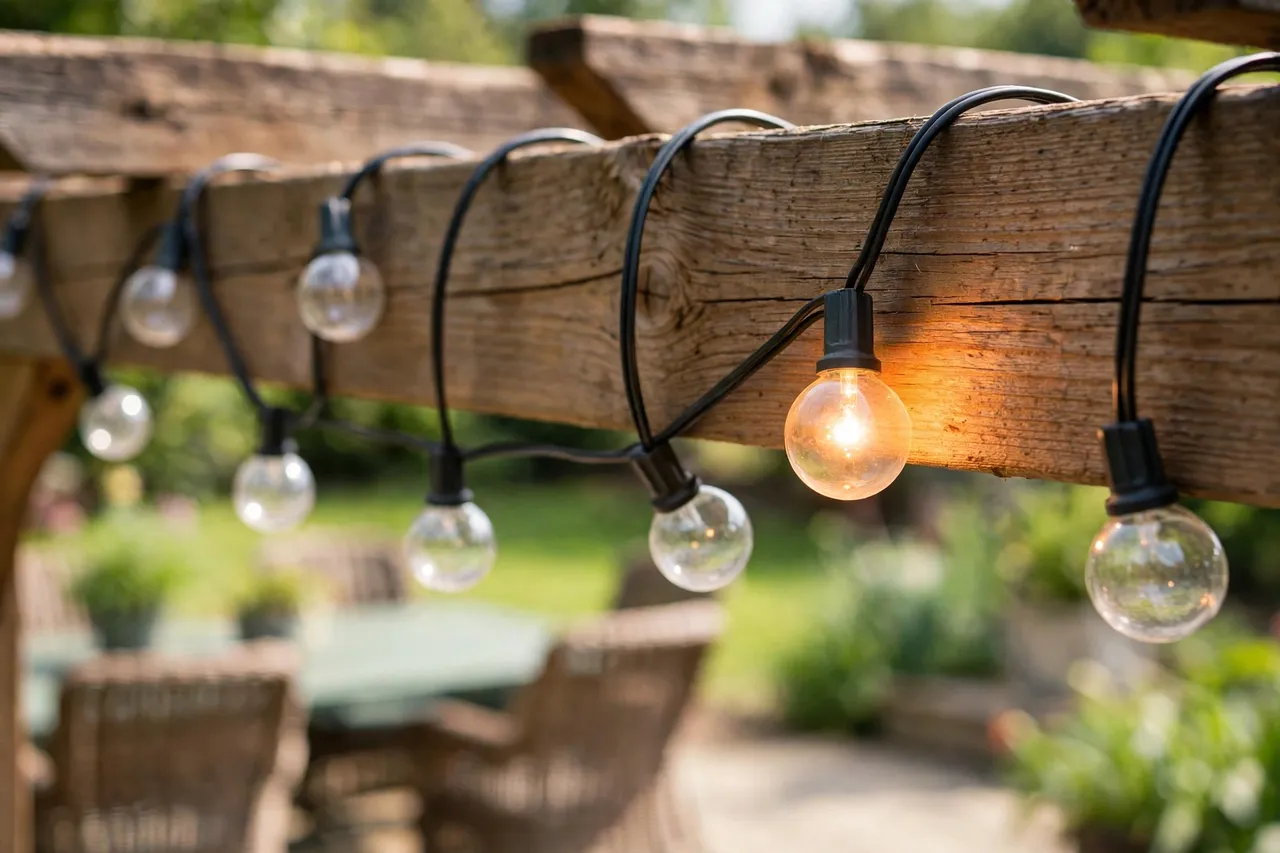
LED beats incandescent on a pergola for three plain reasons. LED bulbs run cool, so they will not heat the wood above them. They use far less power, so you can link more strands on one outlet. And they last far longer: LED outdoor string lights typically last 25,000 to 50,000 hours of use, which is three to five seasons of nightly lighting. Glass incandescent bulbs look lovely, but they break, run hot, and cost more to run.
Pick warm white light, around 2700K, for a pergola where people eat and talk. Warm light flatters faces and food, and it feels like candlelight. Cool white light looks harsh outdoors and turns a cozy patio into a parking lot. If you like color for parties, choose a set that switches back to warm white for everyday use.
Check the weather rating, written as an IP number. IP44 means the lights handle splashing water, which is enough under a covered pergola. IP65 means they handle water jets from any direction, and that is the rating to buy for an open pergola with no roof. Skip any strand with no IP rating at all.
Choose shatterproof bulbs when the pergola sits over a dining table or a play area. Plastic or polycarbonate bulbs do not rain glass if a branch hits them or a bulb gets knocked. They also survive a drop during install, which glass bulbs rarely do.
Solar string lights work on a pergola only when the panel gets real sun. A pergola shades the panel for much of the day, so pick a set with a detachable panel on a long cable and place the panel in full sun at the edge of the structure. For most pergolas, a plug-in set is simpler and brighter, and a timer handles the on and off for you.
Warm white, 2700K, shatterproof LED is the combination to buy when you want one answer. IP65 for an open pergola is the rating that keeps that answer safe in the rain.
How Many String Lights Do You Need for a Pergola?
Measure the path the lights will travel, not the size of the pergola. A 12 by 12 foot pergola with three zigzag runs needs far more strand than its 12-foot width suggests, because every crossing adds length. Sketch the pattern first, then measure each run with a tape, and add the runs together.
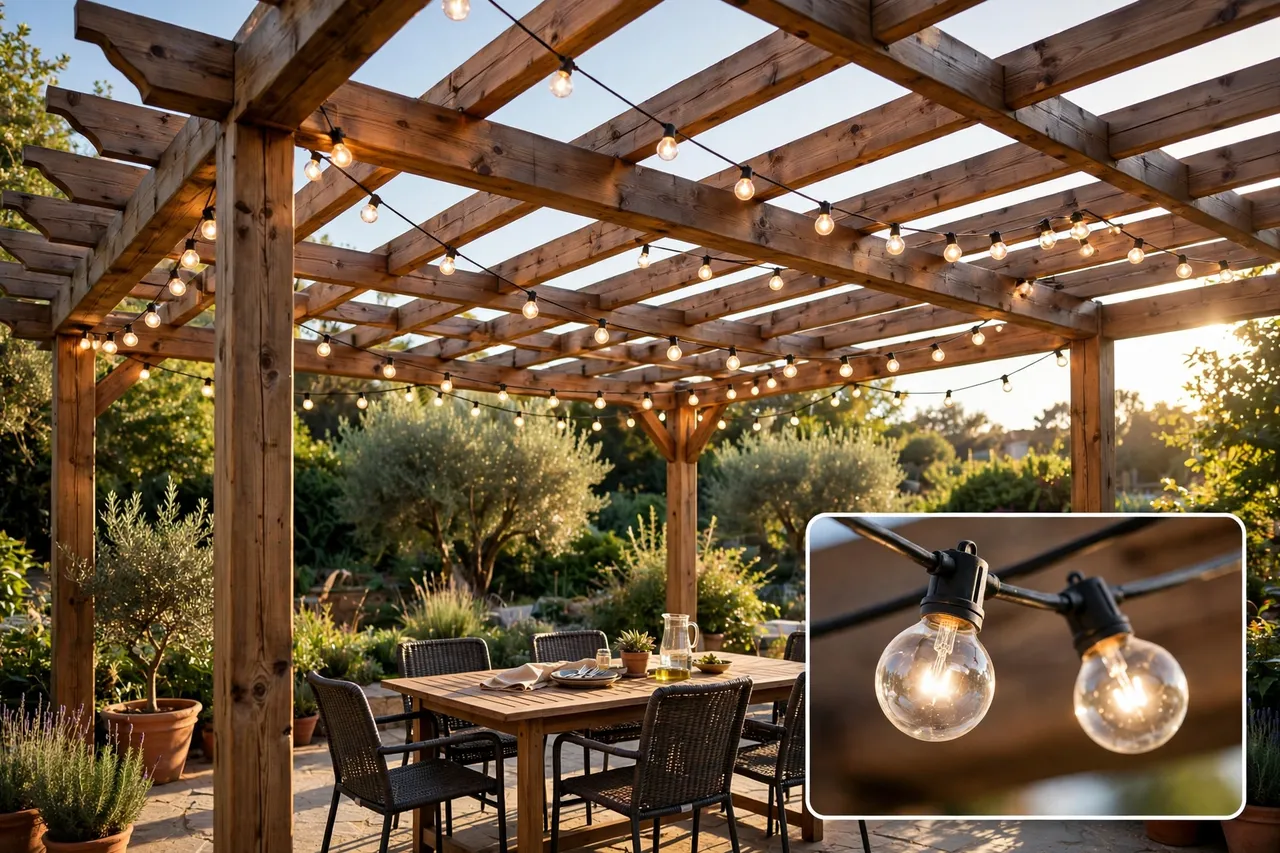
Use this simple formula: total run length in feet, divided by the bulb spacing in feet, gives you the number of bulbs. A 48-foot run with bulbs every 2 feet needs 24 bulbs. Then buy 15 to 20 percent extra length for the swag, the droop between hooks that gives string lights their relaxed look, and for the lead back to the outlet. Without that slack, the strand looks strained and never reaches the last hook.
Standard pergolas run 10 to 12 feet per side. A single 27-foot strand covers two sides of a 12-foot pergola with a little slack left over. A zigzag across a mid-size pergola usually takes 50 feet or more. The table below gives starting lengths for the most common sizes.
String light length by pergola size
| Pergola size | Parallel runs | Zigzag canopy |
|---|---|---|
| 10 by 10 feet | About 30 feet | About 48 feet |
| 12 by 12 feet | About 36 feet | About 50 to 60 feet |
| 12 by 16 feet | About 48 feet | About 75 feet |
| 16 by 20 feet | About 60 feet | About 100 feet |
Check the connection limit on the tag before you link strands together. Every set lists the maximum number of strands you can connect end to end, and that limit protects the thin wire in the first strand, not your breaker. LED sets often allow 20 or more, but the tag is the number that counts, so read it and do not pass it. When one chain is not long enough, run a second chain from a different outlet instead of forcing more strands onto the first one.
Add 15 to 20 percent extra length to every measurement. A strand that is a little long drapes beautifully, and a strand that is a little short never reaches.
5 Pergola String Light Patterns That Look Good
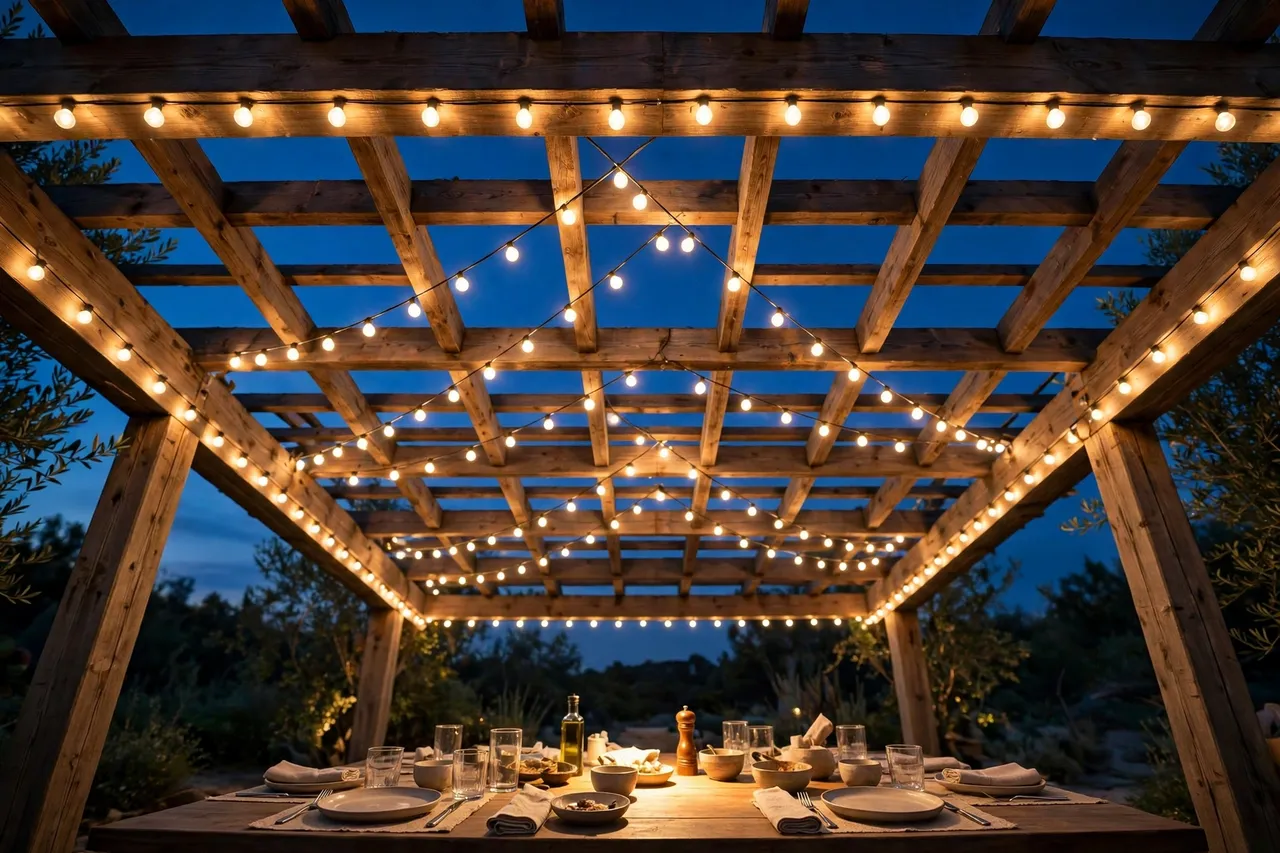
The pattern decides whether your pergola looks planned or thrown together. Pick the pattern from the shape of your pergola and where people sit, not from a photo of a different yard. Every pattern below works, and each one suits a different space.
1. Parallel runs
Run the strands straight across the beams, side by side, spaced evenly. Parallel runs suit a long, narrow pergola and a dining table that runs the same way. The look is calm and tidy, and it is the easiest pattern to measure and hang. Space the runs 2 to 3 feet apart so the light spreads evenly.
2. Zigzag canopy
Run the strands back and forth across the beams so they cross the pergola in a zigzag. The zigzag fills a square pergola better than any other pattern, because it puts light over every seat, not just along one line. It takes the most strand, so measure carefully and buy the extra length the formula calls for.
3. Perimeter run
Run one strand around the outside edge of the pergola, following the beams. A perimeter run frames the space without cluttering the middle, and it works well when a fan, a heater, or a chandelier already hangs in the center. It also uses the least strand, so it is the cheapest pattern to try first.
4. Canopy from a center point
Anchor the strands at one high center point, then fan them out to the corners and edges like a tent. The canopy pattern makes a small pergola feel grand, and it pulls the eye up to the middle of the space. It needs one strong center anchor, so use a beam or a bracket rated for the load, not a single small hook.
5. Curtain edge
Hang short vertical strands down from one edge beam, like a glowing wall. A curtain edge suits a pergola beside a fence or a neighbor’s window, because it gives privacy and glow at the same time. Keep the drops short and even, and keep them clear of walkways so nobody walks through them.
Layer the light when the pergola is your main evening room. String lights give the warm ambient glow, and a brighter light over the grill or the table handles the real work. Our patio lighting ideas guide shows how to layer the two without turning the patio into a floodlit yard.
A zigzag covers a big square pergola best, and a perimeter run is the smart first try on a small one.
How to Hang String Lights on a Pergola
Plan the whole job on paper before you climb a ladder. Mark the pattern, the outlet, and every anchor point on a quick sketch, and lay the strands out on the ground first to check the length. The hang itself takes an afternoon, and most of that time goes to measuring, not to hanging.
Follow these steps in order:
- Measure the pergola and map the pattern. Measure the length and width, then mark the actual path each strand will travel, including every crossing. Add 15 to 20 percent for swag and the lead to the outlet.
- Find the outlet and test it. Use an outdoor outlet with a GFCI test button, press the button, and confirm the power cuts off. If the outlet has no test button, or the button does not trip, fix that before you hang anything.
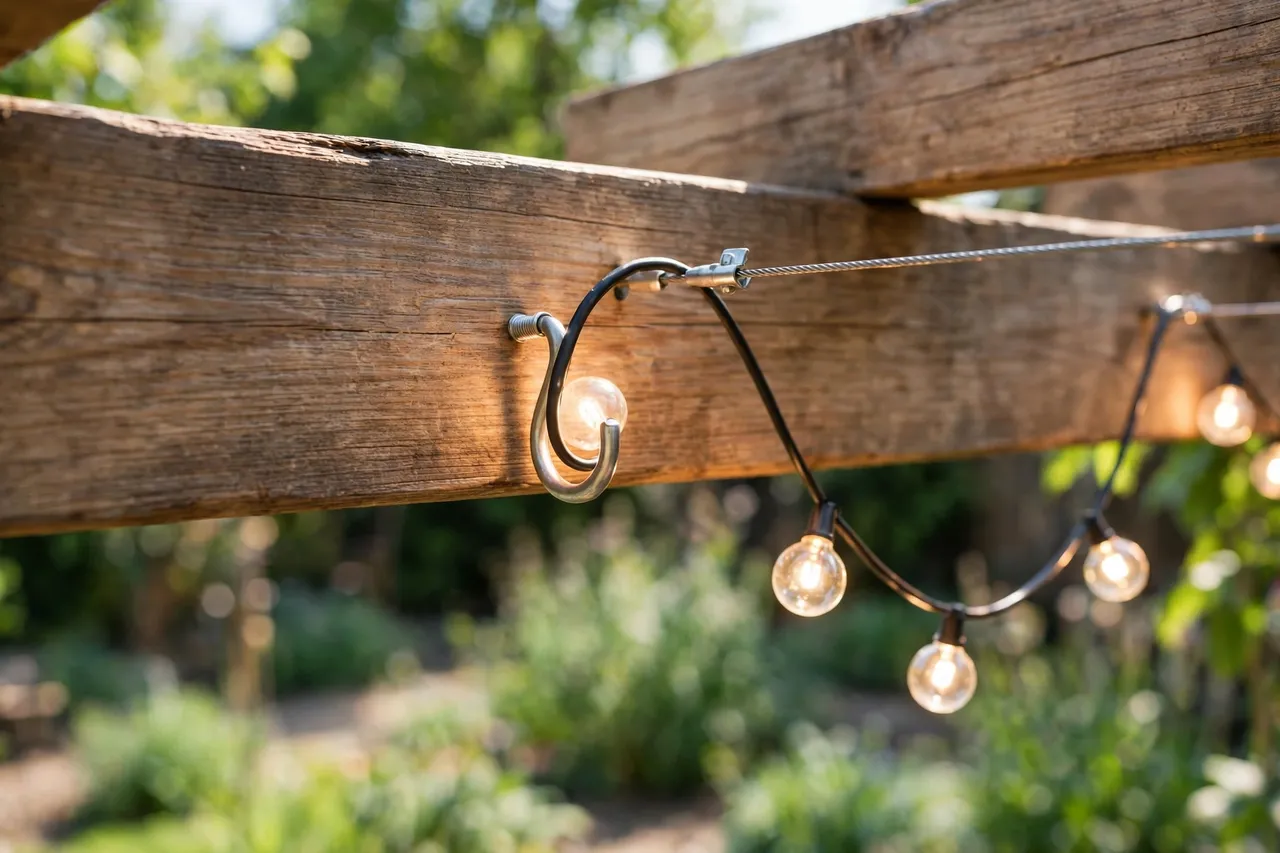
- Mount the hardware. On wood beams, drive screw-in cup hooks or eye bolts every 2 to 3 feet along each run. On metal frames, use outdoor-rated clips or cable ties instead of drilling. Keep hooks level so the strands hang evenly.
- Add a guide wire for long spans. For any run longer than 15 feet, run a steel guide wire between the anchors first, tension it with a turnbuckle, and clip the light strand to the wire with outdoor-rated zip ties every 12 to 18 inches. The wire carries the weight, so the light cord never does.
- Hang the strand taut, then drape it. Run each strand tight between anchor points to set the line, then ease it down into a gentle swag. A swag of 6 to 12 inches per 20-foot span looks relaxed and gives the cord room to move in the wind.
- Connect the strands and plug in. Link strands only up to the limit printed on the tag, keep every connection off the ground, and plug the lead into the GFCI outlet through an outdoor timer.
- Step back and check at dusk. Look for dark corners, glare in anyone’s eyes, and strands that hang too low. Move a hook before you call the job done, because a small shift at dusk saves a season of annoyance.
LIFX, the maker of outdoor string lights, gives the same mounting advice in its install guide: support the strand every 50 to 70 centimeters, use a tension wire for long spans, keep connectors raised and away from standing water, and plug into a GFCI-protected outlet. Read their full guide at LIFX’s outdoor string light installation guide.
Hang taut, then drape, and the strands will look intentional instead of saggy. A guide wire for spans over 15 feet is what keeps a long run straight through the whole season.
How to Hang Pergola String Lights Without Drilling
Not every pergola can take a screw, and not every homeowner wants holes in the beams. Renters, metal and vinyl pergolas, and new structures all call for a no-drill hang, and it works just as well when you match the hardware to the weight.
Outdoor adhesive hooks and clips stick to smooth, flat beams and pull off cleanly, and they suit light LED strands best. They hold only a small weight each, often about half a pound, so use plenty of them, spaced close together, and never trust one clip to carry a long span. Check the rating on the pack before you buy.
Beam clamps and C-clamps grip the edge of a beam with no holes at all, and they hold far more weight than adhesive clips. They suit wood and metal beams with a flat edge to grab, and they come off in seconds when the season ends. Wrap the clamp jaw with a strip of rubber or cloth if you want to protect the finish.
Zip ties are the simplest no-drill fastener of all. Loop a UV-resistant zip tie around the beam and through the strand’s hanging loop, and pull it snug, not tight. Replace the ties each season, because sun makes cheap ties brittle, and a brittle tie is the one that lets go in a storm.
For a pergola with no good edge to clip, run a guide wire between the posts and hang the lights from the wire. The wire takes the load, the clips take almost none, and the whole setup comes down without a mark on the structure. This is the best no-drill option for a wide pergola.
No-drill clips hold light LED strands well when you use enough of them and space them close. Heavy glass-bulb strands need clamps or a guide wire, not adhesive alone.
Power and Safety: The Part You Must Not Skip
String lights mix water and power, so the safety steps are not optional extras. Get them right once, and the lights are safe for years. Skip them, and a wet plug or an overloaded strand becomes a real hazard.
Plug outdoor lights only into a GFCI-protected outlet. A ground-fault circuit interrupter cuts the power the instant it senses current leaking where it should not go, which is exactly what a wet connector or a nicked cord causes. The National Electrical Code has required GFCI protection on outdoor home outlets for decades, so most modern homes already have it. Press the test button on the outlet before the season starts, and if it does not click off, have an electrician check it.
Use an in-use cover on the outlet while the lights are plugged in. The cover is the bubble-style hood that stays weatherproof with a cord in place, and it keeps rain off the plug itself. Keep every connection between strands raised off the ground and pointed down where possible, so water sheds away instead of pooling inside a socket.
Never exceed the connection limit on the tag, and never run indoor-only lights or indoor extension cords outside. Indoor cords crack in sun and cold, and their insulation fails exactly when the ground is wet. The U.S. Consumer Product Safety Commission advises buyers to use only certified decorative lighting products and to inspect every set for broken sockets, frayed wires, and loose connections before hanging them. Read their safety guidance at the U.S. Consumer Product Safety Commission’s holiday safety page.
Keep strands clear of the grill and the fire pit, and keep bulbs away from dry leaves, fabric, and anything that can catch heat. LED bulbs run cool, but the cord and the sockets still deserve space from open flame. The CPSC estimated about 14,900 people were treated in emergency rooms for holiday decorating injuries in the 2023 season, and nearly half of those injuries involved falls, so use a steady ladder, work with a helper, and never lean past your balance to reach one more hook.
Plug into a GFCI-protected outlet every single time, with no exceptions. Never exceed the tag’s connection limit, because the limit protects the strand’s own wire, and your breaker cannot do that job.
Safety note: this guide covers hanging lights on a pergola, which is outdoor electrical work. If your outlet has no GFCI protection, if you need a new outdoor outlet, or if any cord is damaged, stop and call a licensed electrician. Homes, wiring, and weather vary, and a pro visit costs far less than a shock or a fire. Outdoor-rated lights, GFCI protection, secure attachment, and no overloaded circuits are the four rules that keep this project safe.
Can You Leave Pergola String Lights Up All Year?
Yes, most outdoor-rated lights can stay up all year, and many homeowners do leave them up. The real question is whether your lights and your climate are built for it. A strand rated IP65 with shatterproof bulbs and a heavy-duty cord handles a full year outside in most of the United States. A cheap indoor-rated set will not survive one wet season, let alone a winter.
Check the strands every season, even when you leave them up. Look for cracked sockets, frayed wires, faded insulation, and loose hooks, and replace any damaged strand instead of patching it. Govee, a maker of outdoor string lights, gives the same advice in its hanging guide: most outdoor-rated lights can stay up all year, but you must check them seasonally for damage, especially after harsh weather. See their full guide at Govee’s guide to hanging outdoor string lights.
In places with hard freezes and heavy snow, taking the strands down for winter is the safer call. Ice adds weight the cord was never rated for, and a strand left tensioned against ice load can snap a hook or split a socket. In mild climates with no hard freeze, year-round hanging is normal, and the main enemy is sun, not cold: UV slowly breaks down plastic lenses and wire insulation over two to three years, so strands hung under a pergola roof last longer than strands in full sun.
When you do take lights down, coil them loosely, never tight, and store them in a dry bin out of the sun. A tight coil kinks the wire and cracks sockets, and a damp bin grows mold on the cord. Label the bin with the length and the pergola it belongs to, so next spring starts with a plan instead of a tangle.
Check them every season, whether they stay up or come down. A five-minute look in spring catches the damage that causes the failures in summer.
7 Mistakes to Avoid With Pergola String Lights
Most pergola lighting disappointments come from a short list of avoidable mistakes. Check your plan against this list before you order anything.
- Buying indoor lights for an outdoor pergola. If the box does not say outdoor use and carry a UL or ETL mark, do not hang it outside.
- Measuring the pergola instead of the light path. The zigzag path is always longer than the footprint, so measure the runs, not the sides.
- Skipping the extra length. Without 15 to 20 percent slack, the strands pull tight, sag badly, and never reach the last hook.
- Hanging the lowest bulb below 8 feet. Low bulbs glare into eyes, catch tall guests, and get grabbed by kids and pets.
- Skipping the guide wire on long spans. Any run over 15 feet sags without a support wire, and a sagging strand strains its own cord.
- Plugging into an outlet with no GFCI protection. Outdoor power without GFCI is the one mistake that can hurt someone, not just look bad.
- Chaining too many strands together. The tag limit protects the first strand’s thin wire, so pass it and you risk overheating, even on a circuit with room to spare.
The cheapest fix is the one you do once, with the right lights, the right length, and the right outlet.
Related Guides
If you are planning the whole patio, these guides pick up where this one leaves off:
- Outdoor String Lights — the full guide to string lights across the whole yard, not just the pergola.
- Patio Lighting Ideas — layered lighting for patios, from ambient glow to task light.
- Patio Ideas — layouts, styles, and features for every size of patio.
- Small Patio Designs — seven layouts that make a tiny patio feel bigger, with or without a pergola.
- Covered Patio Ideas — roofed patios where lights and furniture stay dry.
- Covered Patios Attached to House — attached patio covers and how lighting works under them.
- Paver Patio Renovation Cost — what the patio floor under your pergola really costs.
- Christmas Light Ideas — seasonal ways to reuse the same strands through the holidays.
- Patio Shade Ideas — shade options for the patio under and around your lit pergola.
- Outdoor Patio Tiles — the floor under the pergola, from layout to materials.
Frequently Asked Questions
How do you hang string lights on a pergola?
Measure the path the lights will travel, mount cup hooks or clips every 2 to 3 feet along the beams, add a steel guide wire for any span over 15 feet, hang each strand taut and then ease it into a gentle swag, and plug into a GFCI-protected outlet. The whole job takes an afternoon, and most of the time goes to measuring.
How many string lights do I need for a pergola?
Divide the total run length by the bulb spacing to count the bulbs, then buy 15 to 20 percent extra length for swag and the lead to the outlet. A 12 by 12 foot pergola needs about 36 feet for parallel runs or 50 to 60 feet for a zigzag canopy. A single 27-foot strand covers two sides of a standard 12-foot pergola.
Can you leave pergola string lights up all year?
Yes, most outdoor-rated lights can stay up all year, but check them every season for cracked sockets, frayed wires, and loose hooks. In places with hard freezes and heavy snow, take them down for winter, because ice adds weight the cord was never rated for. In mild climates, UV wear is the bigger enemy.
Do I need a guide wire to hang string lights on a pergola?
Yes, for any run longer than 15 feet. A steel guide wire, tensioned with a turnbuckle, carries the weight so the light cord never does, and it keeps long runs straight instead of sagging. For short runs under a pergola roof, hooks alone are enough, because the beams support the strand every few feet.
How far apart should string light poles or anchors be?
Space hooks and anchors 2 to 3 feet apart along pergola beams for a taut, even line. For open spans with no pergola, support poles usually sit 10 to 15 feet apart, and spans over 15 feet need a guide wire. Keep the lowest bulb 8 to 10 feet off the ground so tall guests walk under without ducking.
Can pergola string lights stay up in the rain?
Yes, when they are outdoor-rated for wet weather. IP44-rated lights handle splashing rain under a covered pergola, and IP65-rated lights handle direct rain on an open pergola. Keep every connection raised off the ground and use a GFCI-protected outlet with an in-use cover, so rain never reaches a live plug.
A pergola with string lights is the cheapest way to make your patio the best room in the house after dark. Pick outdoor-rated LED lights in warm white, measure the real light path, hang them taut and then drape them, and plug them into a GFCI outlet. Do that once, check them each season, and the glow will be there every evening you want it.