French door security starts with one fix: lock the inactive door to the frame with flush bolts at the top and bottom, because the two doors only latch to each other and a kick pries them apart at the center. Add a multi-point lock, security film on the glass, and three-inch screws in the hinges and strike plates, and a door that was the easiest break-in in the house becomes one of the hardest. Most of these fixes cost under $100 and take an afternoon.
French doors look beautiful and let in wonderful light, but they are the weakest exterior door in most homes. There is no fixed post in the middle, the glass is easy to break, and the factory lock is often a single latch. This guide explains why French doors fail, the seven fixes in order of impact, what each one costs, and the one mistake — a double-cylinder deadbolt with no key in reach — that can trap you inside during a fire. One fix on this list costs less than a pizza and stops the most common attack — it is in the flush bolt section below.
Why French Doors Are Easy to Break Into
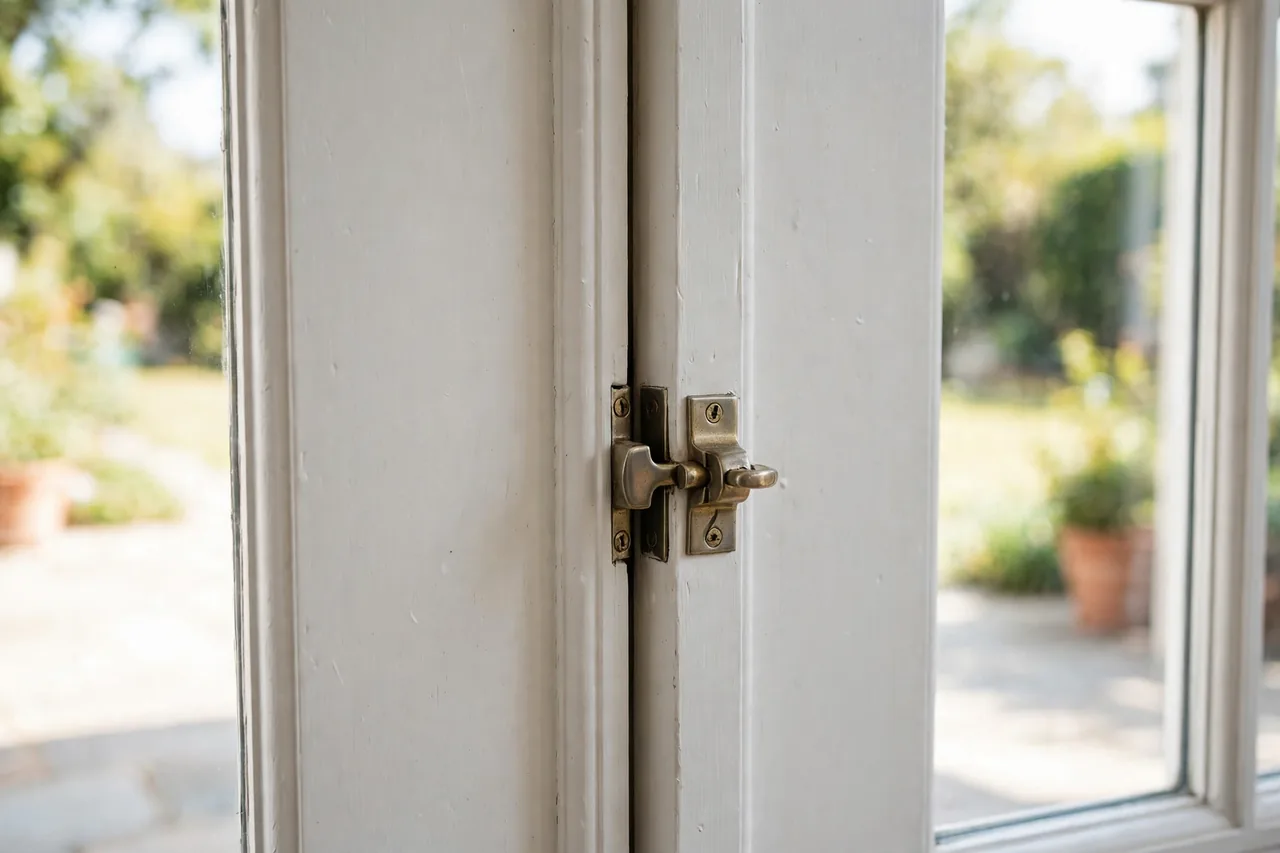
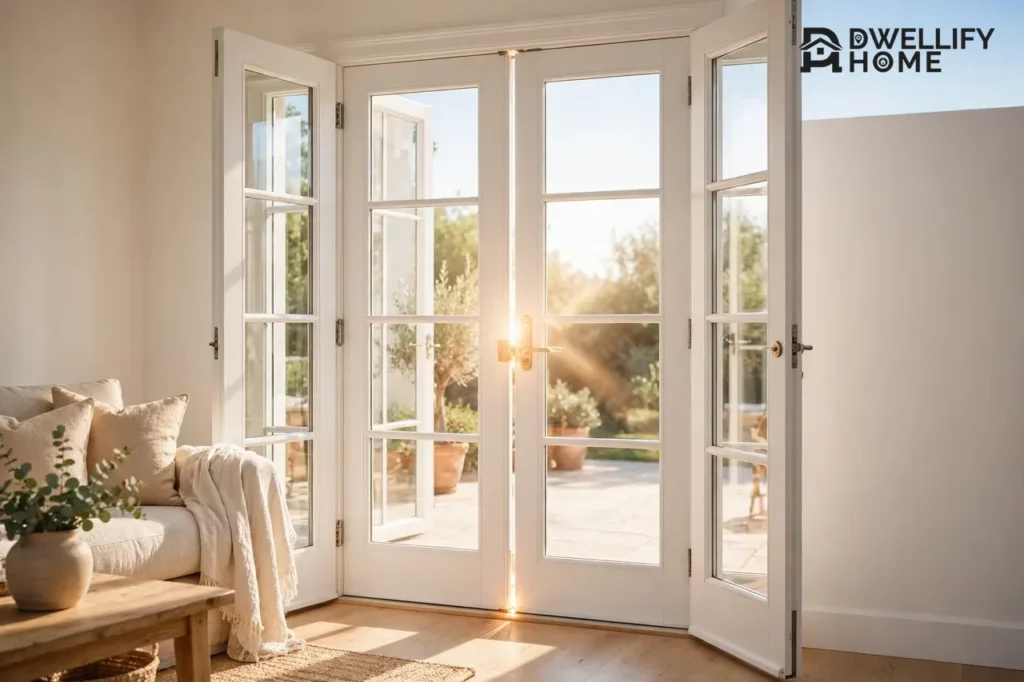
French doors are easy to break into because the two door panels lock to each other instead of to a fixed frame, so a pry or a kick at the center seam defeats the main lock. A standard single door bolts into a solid jamb; a French door’s active leaf bolts into the inactive leaf, which is itself held only by small flush bolts or a single latch. Pry the doors apart a little at the middle and the lock slips free. Bob Vila’s French door security guide puts it plainly: the two doors latch and lock to each other, so when they are locked, two mobile panels are secured to each other rather than to a fixed point. Read their five steps for enhanced French door security for the same diagnosis from a second source.
Glass is the second weakness. French doors are mostly glass, and a burglar who breaks one pane can reach in and turn the thumb latch. The third weakness is the hinges: old or short hinge screws let the door be lifted or kicked out of the frame. The good news is that every one of these weaknesses has a cheap fix, and you do not need a new door to apply any of them.
Fix 1: Lock the Inactive Door With Flush Bolts
Lock the inactive door with flush bolts at the top and bottom, because everything else you do depends on the inactive door staying put. Flush bolts are slide bolts mortised into the edge of the inactive door so they sit flush with the surface. Slide the levers, and steel rods shoot up into the header and down into the threshold, anchoring the inactive panel to the frame at two points. Without flush bolts engaged, your main lock holds nothing but a moving door.
Check yours today: open the active door and look at the edge of the inactive door. If you see two small levers, slide them and feel for a solid stop at both ends. If the bolts are missing, loose, or only engage halfway, replace them with heavy-duty manual flush bolts. Automatic flush bolts engage on their own when the active door closes, which is convenient, but they need regular cleaning and oiling or they stick. Manual bolts are simpler and harder to defeat, so most locksmiths prefer them. This is the pizza-priced fix: a pair of good flush bolts costs less than a takeout dinner and stops the most common French door attack cold.
That fixes the foundation. The lock itself is next, and it is where most people stop too early.
Fix 2: Upgrade to a Multi-Point Lock
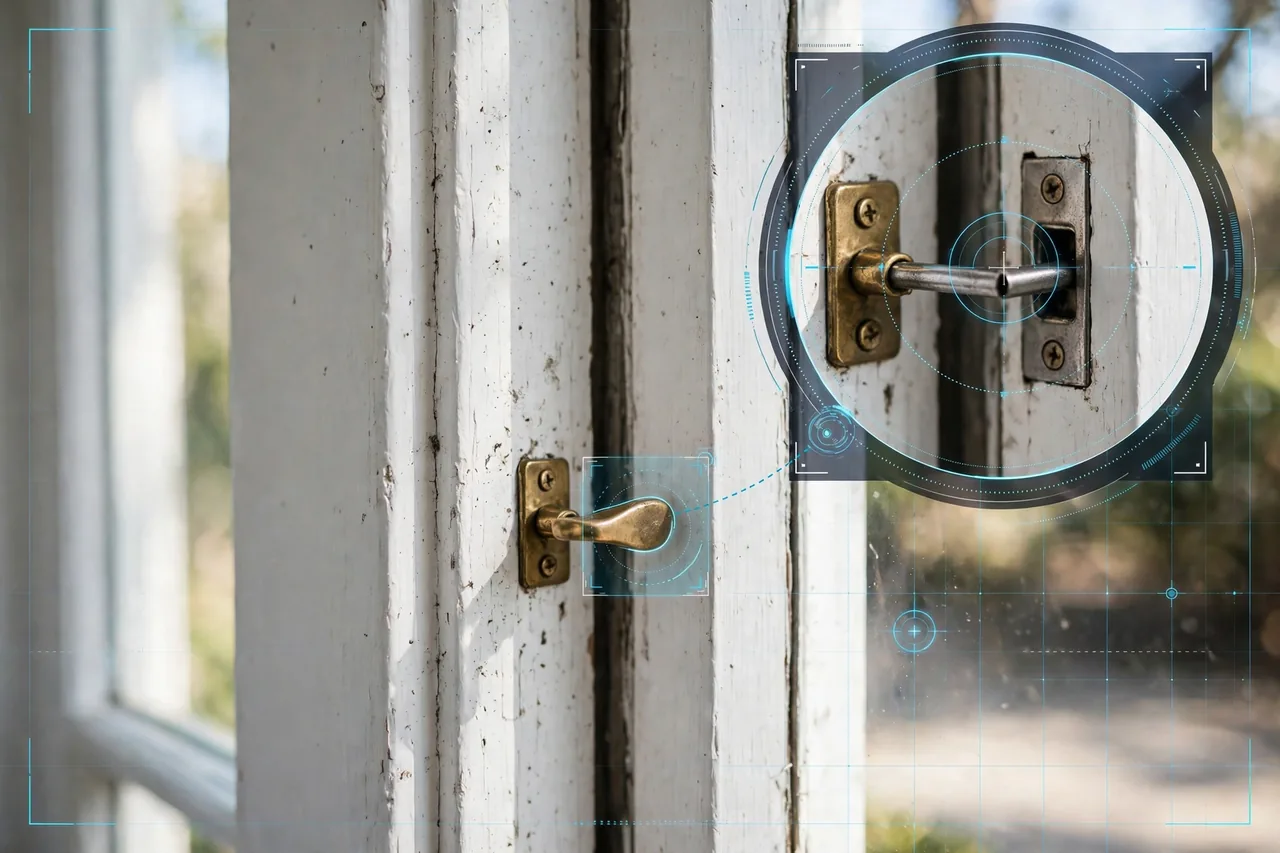
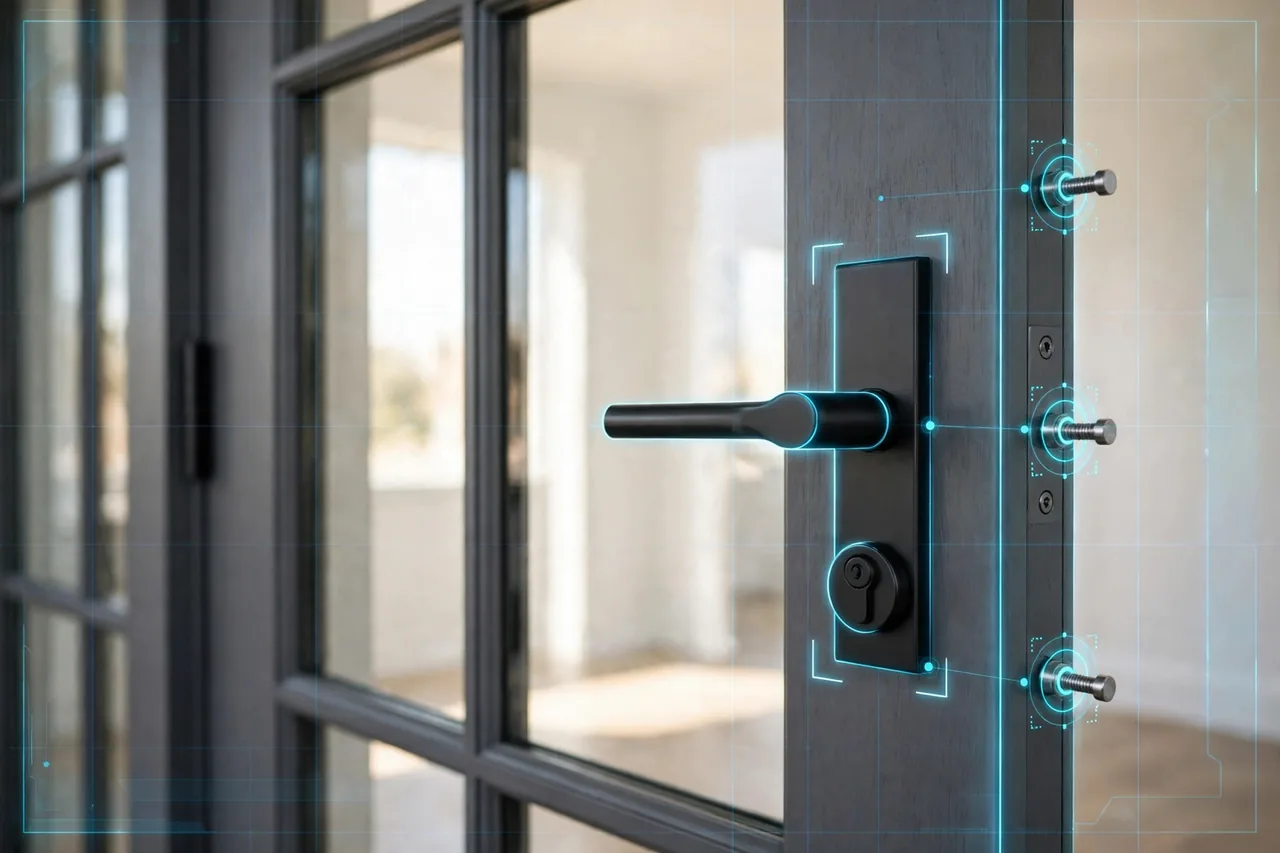
A multi-point lock is the gold standard for French door security because it bolts the active door to the frame at three to five points at once — top, middle, and bottom — with one lift of the handle or turn of the key. A single deadbolt holds one point, so a kick bends the door away from the frame above and below it. A multi-point system spreads the force, and the door stays flat against the frame. If you are buying new French doors, order the multi-point lock from the factory; retrofitting one into an existing door costs more and needs a pro.
If a full multi-point system is out of budget, add a mortise lock with a deadbolt on the active door as the next best step. A mortise lock sits in a pocket cut into the door edge, with a separate deadbolt throw that reaches deeper into the strike than a handle latch. Pair it with a reinforced strike plate and three-inch screws, and you have most of the benefit for a fraction of the price. Engineer Fix’s guide to locking French doors explains the same ladder — flush bolts first, then a mortise lock or multi-point system — in their guide to properly locking and securing French doors. Either way, test the lock after install: the bolts should slide home with the door resting naturally, not with you lifting or pushing it.
Fix 3: Put Security Film on the Glass
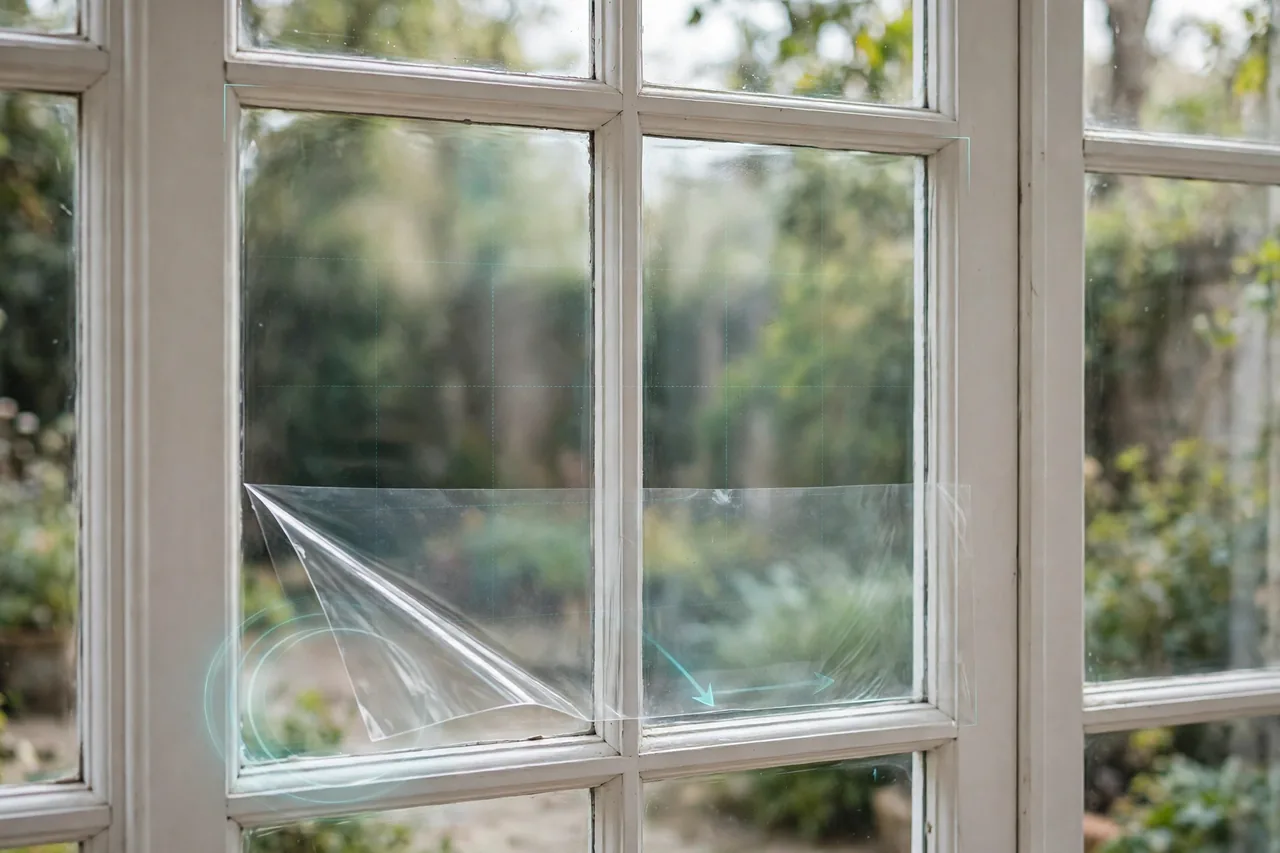
Security film is a thin vinyl sheet applied to the glass that holds the shards together when the pane breaks, so a burglar cannot punch through and reach the lock. It does not make the glass unbreakable — it makes the broken glass stay in the frame, which buys time and noise, and most burglars move on to an easier house. Apply it to both sides of the glass on exterior French doors, and cut it to fit each pane. Clear film keeps your view; frosted or patterned film also blocks the view inside, so nobody can see what is worth stealing.
Film is a DIY job on small panes and a pro job on big ones, because bubbles and wrinkles weaken the bond. New French doors can also come with laminated or impact-rated glass built in, which does the same job better and costs more. If your budget covers only one glass fix, film wins on price; if you are replacing the doors anyway, order laminated glass. Window security film installation covers the same technique for the windows beside your doors.
Fix 4: Harden the Hinges and Strike Plates
Harden the hinges and strike plates with three-inch hardened screws, because the screws are what a kick actually attacks. Replace the short factory screws in every hinge with three-inch screws that bite into the wall stud behind the jamb, and do the same for the strike plates. Three-inch screws into the stud are the cheapest hardening you can buy for any door.
Swap old or rusty hinges for strong hinges at least three inches long, and pick hinges with a hinge bolt — a screw that drives into the hinge and stops the door from being lifted off its pins. On French doors, hinge bolts matter because the doors are heavy and the pins are exposed when the door is open. While you are at it, check the screws on the flush bolt keepers too; a keeper held by two short screws pops out with one good kick.
Fix 5: Add a Security Bar or a Deadbolt
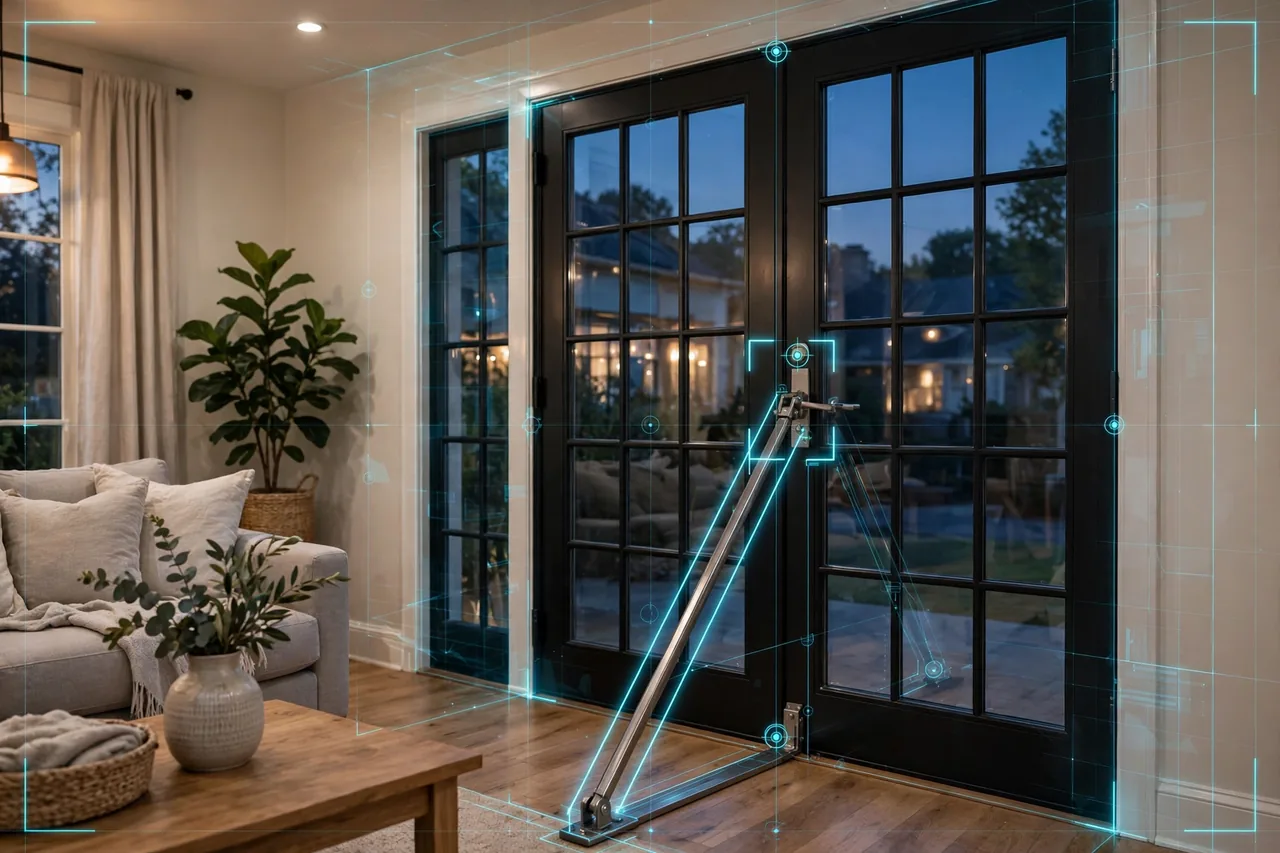
A security bar braces the active door handle diagonally down to the floor, or slides into floor and header brackets, and it stops the door from opening even if every lock fails. It is the best non-permanent fix for renters and for anyone who wants a visible deterrent at night. Put it on every night, take it off in the morning — it takes five seconds and needs no tools after the first install.
A keyed deadbolt on the active door adds a second layer. For doors with glass panels, a double-cylinder deadbolt — key on both sides — stops an intruder from breaking the glass and turning a thumb latch. But read the warning below before you fit one: a double-cylinder lock can trap you inside during a fire if the key is not in the lock. Keep the key in the lock at night or hanging on a hook right beside the door, and never fit a double-cylinder deadbolt on a door that is your only exit from a room.
Fix 6: Add a Smart Lock or a Door Sensor
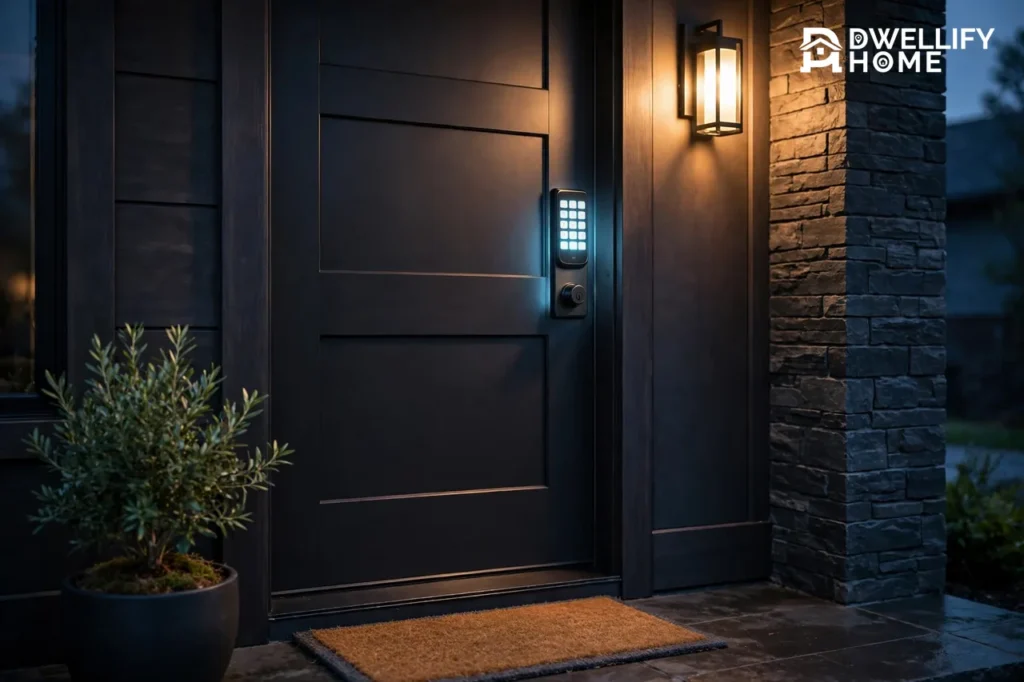
A smart lock or a door sensor does not make a French door stronger, but it tells you the moment someone tries. A smart lock with a keypad lets you lock up from bed and see whether the door is actually locked, which matters on French doors because the flush bolts are easy to forget. A door sensor — the small two-part magnet on the door and frame — pings your phone the second the doors part, and most alarm systems treat it as a full entry point.
Do not buy electronics before you buy bolts. A sensor that tells you the door opened is useless if the door opens in three seconds, and a smart lock on a door with no flush bolts locks one moving panel to another. Harden the door first, then add the sensor as the alarm layer. Our best home security camera system guide shows how cameras and sensors work together, and a front porch camera watching the same entry catches the face of anyone who tests the doors.
What Most People Get Wrong About French Doors
Most people get French door security wrong by buying a stronger lock and stopping there. The lock is the third thing to fix, not the first: flush bolts first, hinges and strike plates second, lock third, glass fourth. A heavy deadbolt on an unbolted inactive door is a strong lock holding a door that moves, and it fails the same way the factory lock did. Another common mistake is fitting a double-cylinder deadbolt and then hiding the key “somewhere safe” — during a fire, somewhere safe is nowhere.
The third mistake is forgetting the doors need maintenance. Flush bolts gum up with dust, multi-point locks go stiff, and security film peels at the corners when the sun hits it year after year. Once a year, clean and oil the bolts, work the lock ten times, and press the film edges flat. Five minutes a year keeps the whole system working.
How Much Does French Door Security Cost?
French door security costs $30 to $600 for most homes, depending on how far you go. Flush bolts and three-inch screws cost $15 to $40. Security film runs $30 to $80 for a DIY kit that covers both doors. A security bar costs $25 to $60. A good mortise deadbolt costs $60 to $150, and a factory multi-point lock system costs $300 to $600 installed. A full door replacement with laminated glass and a multi-point lock starts near $1,500 and climbs fast — which is exactly why the retrofit fixes above are worth doing first.
Caption: French door security fixes by cost and impact.
| Fix | Cost | Impact |
|---|---|---|
| Flush bolts (inactive door) | $15 to $40 | Highest — anchors the whole door |
| Three-inch hinge and strike screws | Under $10 | High — stops kick-outs |
| Security film on glass | $30 to $80 DIY | High — blocks reach-in |
| Security bar | $25 to $60 | High at night |
| Mortise deadbolt | $60 to $150 | Medium — needs bolts first |
| Multi-point lock system | $300 to $600 | Highest — best single upgrade |
Start with the first three rows — flush bolts, screws, and film — for under $100 total. That trio fixes the three real weaknesses: the moving door, the weak screws, and the breakable glass. Add the bar or the deadbolt next, and save the multi-point system for a door replacement or a bigger budget.
A Safety Warning Before You Change Any Lock
French door locks sit on your escape route, so every security upgrade has to leave you a fast way out. Never fit a double-cylinder deadbolt without keeping its key in the lock or on a hook within arm’s reach, and never fit one on the only exit from a bedroom. Test every new lock from inside with the lights off: you should be able to open the door in seconds, by feel, without hunting for a key. If anyone in the house cannot work the lock quickly — a child, an older parent, a guest — the lock is a hazard, not a help. This guide is general information, not professional security advice, and a locksmith can check your exact doors in one visit if anything here feels unsure.
Related Guides
French doors are usually the back or patio entry, so guard the whole perimeter the same way: a security screen door installation hardens the front entry with steel mesh and a three-point lock, and our best home security camera system guide puts cameras and sensors on every entry at once. A driveway security camera watches the approach to the back door, and a garage security camera closes the other common entry point burglars test first.
Frequently Asked Questions
Are French doors easy to break into?
Yes, compared with a standard single door. The two panels lock to each other instead of to a fixed frame, the glass is easy to break, and the factory lock is often a single latch. Flush bolts, a multi-point lock, and security film close the three main gaps.
How do you secure French doors from burglars?
Lock the inactive door with flush bolts top and bottom, upgrade to a multi-point lock or a mortise deadbolt, put security film on the glass, use three-inch screws in the hinges and strike plates, and add a security bar at night. Harden the door first, then add a sensor or camera.
What is the best lock for French doors?
A multi-point lock is the best, because it bolts the door to the frame at three to five points with one motion. If that is out of budget, a mortise lock with a deadbolt plus a reinforced strike plate is the next best step.
Can you put a deadbolt on French doors?
Yes. Fit a mortise deadbolt on the active door and make sure the inactive door is anchored with flush bolts first, or the deadbolt holds nothing solid. A double-cylinder deadbolt stops reach-in attacks through broken glass, but keep its key within reach for fire safety.
Does security film really work on French doors?
Yes, for its real job: it holds broken glass in the frame so an intruder cannot punch through and reach the lock. It does not make glass unbreakable. Apply it to both sides of exterior French doors and pair it with a good lock.
Should French doors have a security bar?
A security bar is a strong, cheap night-time extra. It braces the active door to the floor and stops the door even if the locks fail. It takes five seconds to fit each night and suits renters, because it needs no permanent changes.
Start tonight: check the flush bolts on the inactive door, and if they are missing or loose, order a pair before you buy anything else. Then read our best home security camera system guide and put a sensor on the door you just fixed.